
Episode 4 The Legacy of the Magna Carta
1215: Years That Changed History
Dr Dorsey Armstrong (2019)
Film Review
According to Armstrong, the main modern legacies of the Magna Cara are due process (the right to a speedy trial) and trial by jury* for persons accused of crime.
After King John persuaded the Pope to condemn the Magna Carta, his regime faced repeated uprisings and rebellions until his death in 1216.
William Marshal (1146-1219), regent to the king’s nine-year old son Henry III, wisely reaffirmed the Magna Carta after amending certain clauses following King John’s death. In 1217, Marshal caused all clauses related to forest issues to be removed from the 1215 document and issued as a separate Charter of Forests.
Once he came of age, Henry III reaffirmed the Magna Carta annually, as well as causing it to be read out twice a year in Parliament.
In 1297 Edward I ordered the Magna Carta copied into Parliament’s statute rolls. Starting in 1347, members of Parliament had to swear to uphold the Magna Carta.
Over time the phrase “lawful judgement by equals” was reflected in statute as “trial by jury.”
During the 17th century the Stuart monarchs’ (James I and Charles I) claimed the divine right of kings exempted them from obligations laid down in the Magna Carta. Lord Chief Justice Edward Coke (1552-1634) overruled them, asserting the document applied to all English men and women, including the king. In 1649, it was used to justify the execution of Charles I and the establishment of an English republic (which lasted 11 years).
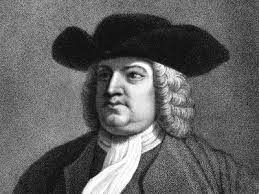
The founder of Pennsylvania colony William Penn (1644-1718) used the Magna Carta as the basis of Pennsylvania’s colonial government.
Using it in its 1948 declaration of human rights, the UN proclaimed that all people had a right to life, liberty and security of person, that no one should be subject to arbitrary arrest or detention, and that no one should be arbitrarily deprived of property.
The other Magna Carta clause reflected in current English law is number 13 – that the City of London shall retain all its traditional rights and privileges.
* Initially juries were appointed by community magistrates to compile evidence to assist in the prosecution of criminals. According to Terry Jones in Medieval Lives, Henry I (1068-1135 fourth son of William the Conqueror and father of King John I) granted local juries the addition authority of determining guilt or innocence. See The 24-hour Day, Anesthesia, Juries and other Medieval Inventions
Film can be viewed free with a library card on Kanopy.
 The Most Revolutionary Act