

Episode 16 Indian Parsis, Jews and Christians
A History of India
Michael Fisher (2016)
Film Review
The historic Parsi (Zoroastrian), Jewish and Christian district, mainly located India’s west coast, began as diaspora trading communities during the first millennium AD.
Indian Parsi (Zoroastrians)
Many Zoroastrians immigrated to India’s southwest coast following the Muslim conquest of Persia. According to Fisher, Persia had a well-established trade network with west Indian ports prior to the Muslim conquest. The Parsis were some of the earliest Indian shipbuilders, producing European-style ships with Indian teak wood. India’s vast Tata Group conglomerate was started in 1868 by a Parsi philanthropist.
Thanks largely due to their strong Parsi trade networks, Surat and Bombay were the most successful Indian cities under British colonization. Parsi merchants were early brokers for arriving European settlers, as well as working with native artisans who produced products for the European market.
At present India has a population of 60,000 Parsi.
Indian Jews
Jewish traders first arrived in India around in the 8th city BC in the cities of Cochin, Surat and Bombay on India’s southwest coast. By the 8th century AD, it was typical for Jews to have relatives living in all major trading ports of the known world. This enabled the formation of an extensive trust network in an industry (overseas shipping) that could take over a year to produce profits.
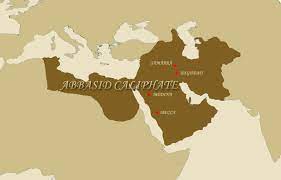
Jewish immigration to India reached its peak following the establishment of the Abbasid Caliphate (where Jews paid a special tax to be treated as special subjects).* After the Mongols sacked Baghdad in 1258 AD, the prosperity of the Cochin Jews declined. Now many Jewish immigrants from Persia to Bengal on India’s east coast. There they established extensive trade in and out of the Bay of Bengal.
Jewish settlers subsequently set up a third major settlement known as Bene Israel, on India’s northwest coast.
Following Indian independence in 1947 and Israeli independence in 1948, there was a major exodus of Indian Jews to Israel. At parent, only about 5,000 Jews reide in India.
Nestorian Christians
After splitting off from the Catholic Church in the 5th and 6th century, large groups of Nestorian (Syrian) Christians immigrated to India (Kerala). They honor the legacy of the apostle Thomas, who traveled to India in 52 AD. He was martyred on the Tamil Coast and is buried near Madras.
The Nestorian Christians, who recognized the authority of the Syrian patriarchs, also established an extensive trade diaspora network.
There would be major conflict between the Catholic Portuguese who settled India’s west coast in the 16th century and established Nestorians, who the former regarded as heretics.
*The Abbasid Caliphate (750 – 1517 AD) was the third to succeed the Islamic prophet Muhammad. Prior to Muslim conquest, Baghdad was long a major center for Jewish learning
 *https://www.kanopy.com/en/pukeariki/video/366254/366203
 The Most Revolutionary Act
It is interesting how these different groups can still be traced. I wonder whether they did not at all mix with the Indian population? Is it because of their religion that they kept separate?
LikeLike
They didn’t keep separate. Unless male immigrants brought their families with them, they intermarried with native Indian women, with most of the wives adopting the new religion.
LikeLike