

Episode 14 Northwest and North India
A History of India
Michael Fisher (2016)
Film Review
Following the fall of the Mauryan Empire, the Gupta Empire (4th-6th century AD) was the only major kingdom in north India. Arising in the fertile Gangetic plain, the Gupta Empire increased agricultural production and trade sufficiently over time to conquer various kingdoms to its south and west.
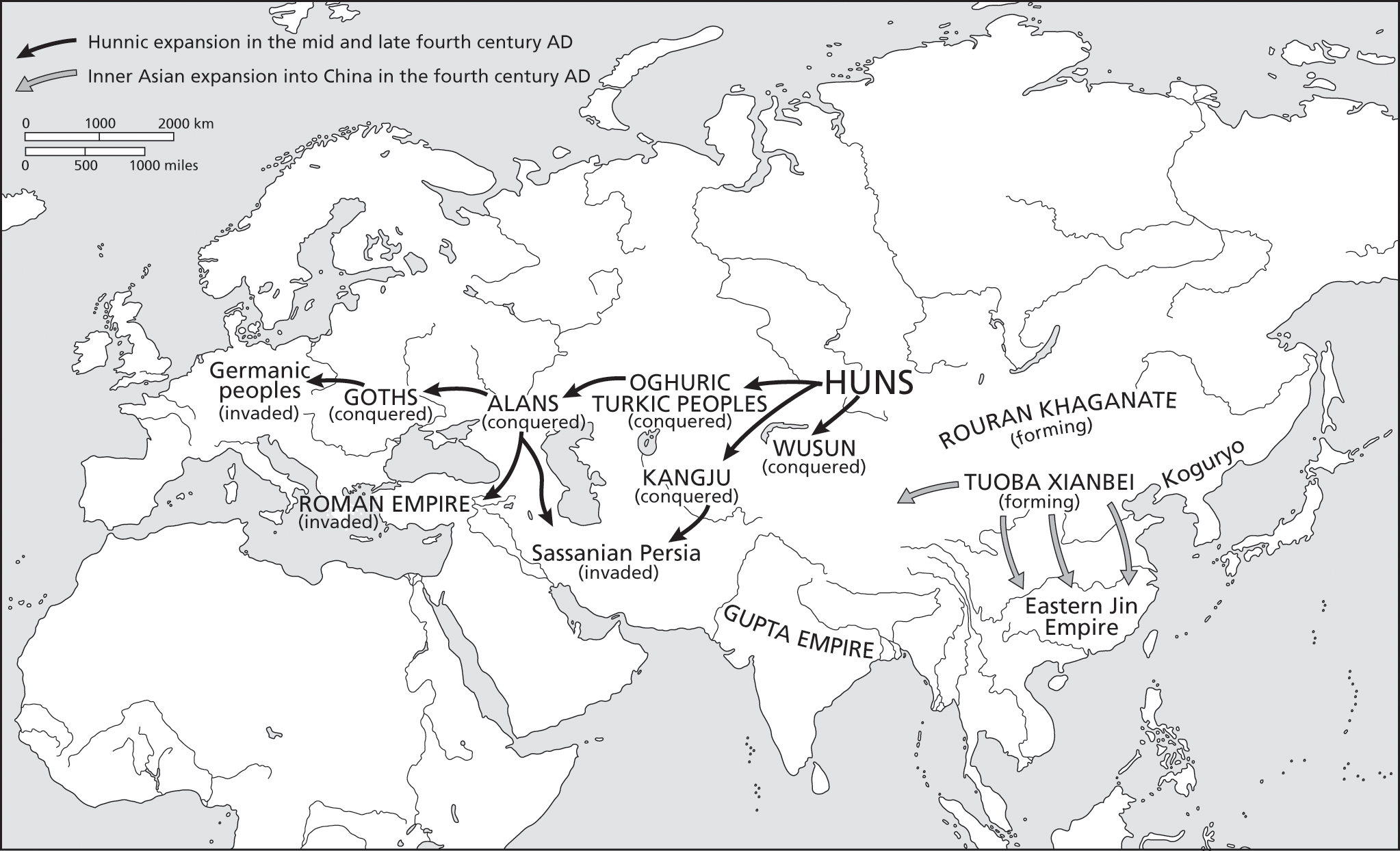
During this period the population of north India consisted mainly of so-called Indo-Greek Bactrians.* Destablization by the 327 BC invasion by Alexander Great subjected the region to a regular influx of Central Asian tribes. During the 2nd century BC, the Scythians eventually conquered much of modern day Gujarat and Rajistan. During the 1st-3rd century AD, the Kushans,** who dominated the Silk Road, occupied the Indus Valley. In the 3rd-4th century AD, the Persian Sassanian Empire conquered the Indus valley with the rest of the Kushan. At the end of 5th century, the Huna (Huns), driven west by China would assume control of the Indus Valley.

Surviving 200 years, the Gupta dynasty eventually conquered all of north India. Chandragupta II (taking his name from the founder of the Mauryan empire Chandragupta Maurya) was the third Gupta king (375-415 AD). His armies were known with their prowess with the steel longbow and the elephants they rode into battle (thanks to abundant iron, coal and elephants in Magadha, his main power base).
He extended his rule across the entire Gangetic plain and acquired new territory on the Deccan Plateau by intermarrying with a Deccani royal family. Flourishing urban economies caused Sanskrit literature, astronomy and mathematics to flourish during a period that also saw the rise of Ayurvedic medicine and the concept of zero.
Paying Brahman priests to advise them, the Gugta emperors mainly embraced Brahmanism, except for the Indus Valley, where support from the Kushan Empire empowered Mayahana Buddhism.
Weakened by numerous Hun invasions, the Gupta empire collapsed in 550 AD and splintered into numerous smaller warring kingdoms.
Owing to a lack of archeological remains, most evidence from comes from coins and the records of visiting Chinese Buddhists.
*Bactria is the Roman term for an ancient Persian kingdom on the Central Asian steppes.
**SeeThe Role of the Kushan Empire in the First Silk Road
Film can be viewed free with a library card on Kanopy.
https://www.kanopy.com/en/pukeariki/watch/video/366254/366199
 The Most Revolutionary Act