
Lecture 23: Reconstructing the Greek Teireme
Understanding Greek and Roman Technology: From the Catapult to the Pantheon
Dr Stephen Ressler (2013)
Film Review
Reaching its peak with the trireme in the 5th century BC, Greek long ship construction subsequently declined. When wrecked, triremes could be swamped but not sunk (owing to their light weight and buoyancy). Thus none were left on the ocean floor for future archeologists to discover. Thus historians and engineers have relied on ancient texts and artwork to reconstruct what they looked like.
The first Greek long ships appeared during the 3rd millennium BC. By the time of the Trojan War (12th century BC), they were fully evolved. Homer writes about them in the 8th century BC as the primary vehicle for troop transport. By that time the bireme (with oarsmen on two levels) emerged (late 8th century BC) the long ship had become an offensive weapon used to ram other ships.
Early in the 7th century BC, either the Phoenicians or the Corinthians added a third level of rowers (creating the trireme). Essential for any regime wishing to assert their political dominance, the Persians used them to suppress the Ionian Revolt, the Greeks to defeat. The Persians used them to suppress the Ionian Revolt, the Greeks to defeat the Persians in the first Greco-Persian war and the Athenians in the Peloponnesian War despite their ultimate defeat. Ressler believes the golden age of Athens would have been impossible without them
Classical Greeks also designed a quadrireme, employing two banks of oars with two men per oar and a quinquireme. It had three banks of oars with two men per oar on the two upper levels and one per oar on the lowest level.
Under Alexander the Great, the purpose of naval vessels changed from ramming other boats to boarding and capturing and capturing. His long ships became heavier to carry more soldiers and and artillery.
The Romans opted for triremes and quadriremes as standard warships to carry their seaborne warriors. However they built nothing to compare to the Hellenic trireme of the 3rd century BC. The Hellenic Empire built thousands over three centuries in Greece, Egypt and the Levant.
A tireme’s standard crew consisted of
- 1 captain
- 1 helmsman
- 10 infantry
- 4 archers
- 1 purser
- 1 shipwright (to make repairs)
- 1 piper to help keep the rowing rhythm
- 10 deckahnds
- 170 rowers
Rowers were highly trained specialists forbidden to serve as warriors because they were too valuable.
Triremes carried two sails, which were used for long voyages. However when vessels were cleared for battle, the masts and sails were left ashore. They had a maximum speed of 7-8 knots (8-9 mph).
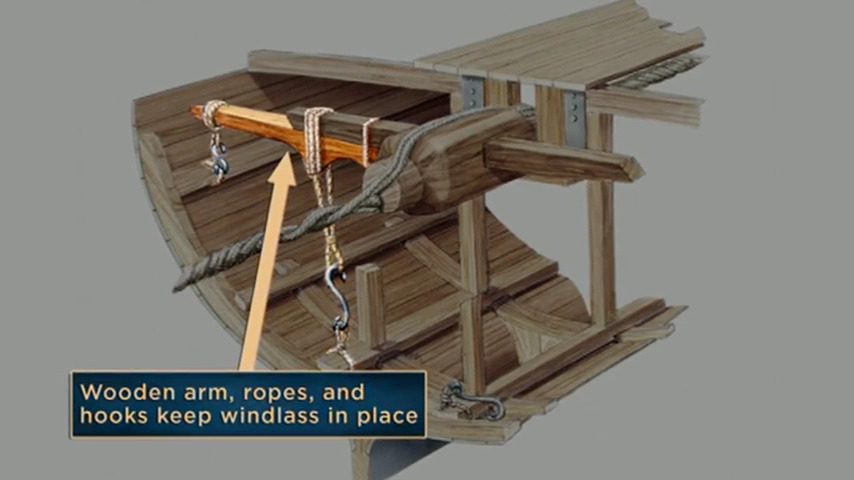
All triremes had a hypozoma, a loop of heavy rope anchored near the bow and stern to prevent hogging.* It used a windlass to twist and tighten the hypozoma.
 In June 1987, the Greek government commissioned the Olympias Project to reconstruct a fully operational reconstruction of the trireme (top image).
*Hogging is the stress a ship’s hull or keel experiences (on op of a wave) that causes the center or the keel to bend upward.
Film can be viewed free with a library card on Kanopy.
https://www.kanopy.com/en/pukeariki/watch/video/146678/146724
 The Most Revolutionary Act
Pingback: Etruscan | The Most Revolutionary Act
Pingback: Etruscan Warfare and Weapons | The Most Revolutionary Act
Pingback: The Ancient Greeks: Crucible of Civilization Episode 2 Golden Age | The Most Revolutionary Act
Pingback: The Ancient Greeks: Crucible of Civilization Episode 2 Golden Age MEK Enterprises Blog - Breaking News, SEO, Information, and Making Money Online!The Number 1 Online Blog Worldwide!
Pingback: Xerxes War on Greece 480-479 BC MEK Enterprises Blog - Breaking News, SEO, Information, and Making Money Online!The Number 1 Online Blog Worldwide!