The Most Revolutionary Act

Uncensored updates on world events, economics, the environment and medicine

The Most Revolutionary Act

The Corporate Big Tech Censors Are Failing

By Alex Berenson

Facebook: Daily Active Users Fall for First Time in 18-Year History

Facebook shares are getting crushed today, down almost 25%. The company’s value has fallen today by more than Boeing and General Motors are WORTH.

Why? For the first time ever, the number of Facebook users is shrinking. (The ridiculous rebranding to “Meta Platforms” probably doesn’t help.)

Apparently deplatforming every person and group who has a non-woke thought isn’t working out as well as Mark Zuckerberg had hoped.

Meanwhile, things are going great at Twitter too:

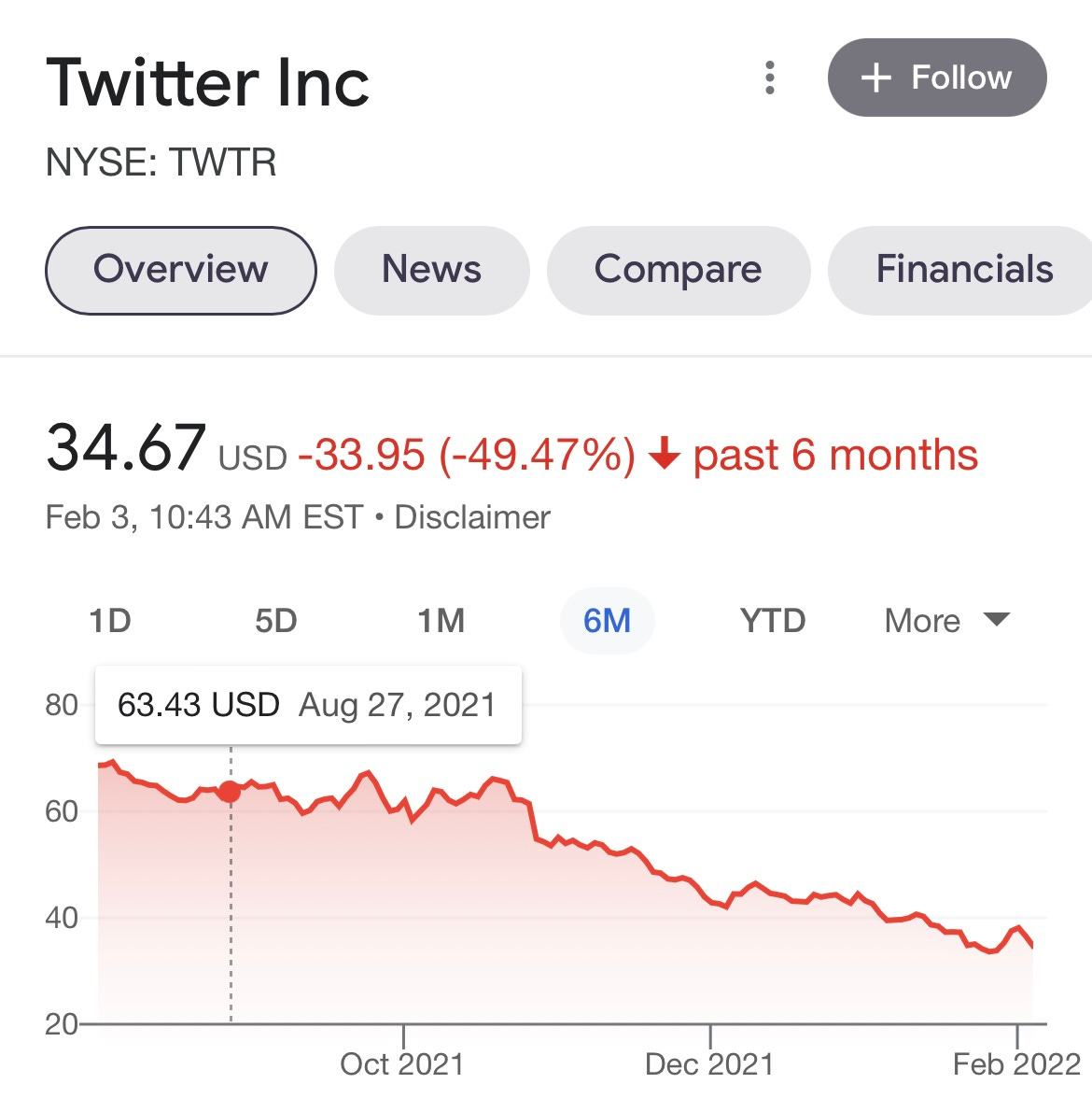
Twitter banned me on August 28. Since then, shares of the little bird have fallen almost 50 percent.

Censorship isn’t just un-American and contrary to the First Amendment and California and federal law.

It’s terrible for business.

Especially when this (from a blog post in February 2021) is your stated corporate reason for being:

Twitter exists to empower voices to be heard, and we continue to make improvements to our service so that everyone — no matter their views or perspective — feels safe participating in the public conversation.

SOURCE

Everyone, huh?

Like those old movie theater ads for THX said, The audience is listening.

And they don’t like what they’re hearing.

[…]

Via https://alexberenson.substack.com/p/the-corporate-big-tech-censors-are/comments


We Need to Radically Reimagine Our Food System. Here’s How.

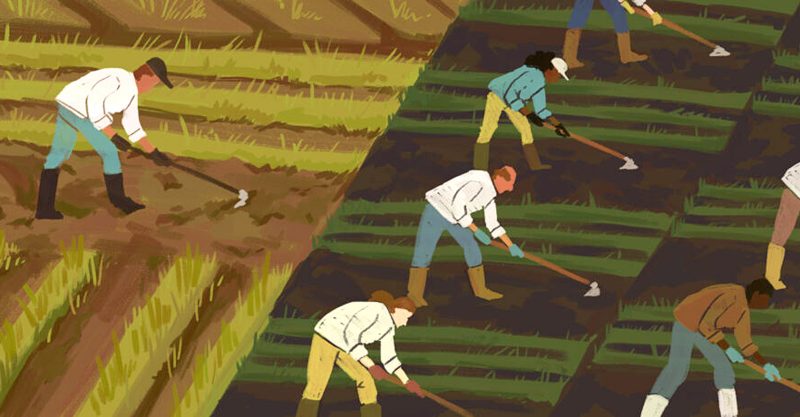
A global food system that is both truly sustainable and sufficiently productive will consist, not of a few massively scaled practices, but rather a vast patchwork quilt of smaller scale solutions that vary dramatically from place to place, over space and over time, in an interplay with local climate, ecology and culture.

Radically reimagining our food systems is a task that is critical to solving the world’s biggest social and ecological problems. It’s also one that garners substantial and often heated debate.

But are we asking the right questions when it comes to evaluating what works, and what doesn’t, for achieving more climate-friendly and food-secure futures?

Scholars and analysts are carefully exploring the potential of a wide range of solutions, from cellular agriculture to regenerative grazing, and asking whether they will scale — that is, whether they can be implemented widely around the globe.

We see this question in all manner of debates over food practices — for example, in claims that agroecology and organic agriculture cannot feed a growing population or that cattle are universally problematic.

In many cases, however, this is entirely the wrong question to ask, and the answers it generates lead us to downplay essential and potentially transformative solutions.

Industrial thinking

It seems sensible enough: If our current food production practices use too much water or emit too much greenhouse gas, we ought to replace them with practices that use less or generate less.

Better yet, we can replace them with practices that also reverse ecological harm and improve soil and water health while meeting current and future food needs.

However, evaluating radical new solutions based on whether they scale can be directly at odds with the very nature of these solutions.

Approaches like agroecology and regenerative grazing do not entail a set of standard practices meant to be implemented everywhere. They’re meant to be highly tailored and responsive to the specifics of a place.

It is effectively meaningless to evaluate one set of agroecological practices in say, Thailand, based on how those practices would perform if cloned and applied by different people of different cultures in different places around the world.

Scalability as a value derives from an industrial way of thinking: that the best solutions are those that can be replicated and implemented widely, and that uniformity breeds efficiency and productivity.

This may work in a factory, but ecosystems are not factories. Ecosystem productivity derives not from uniformity but from diversity, flexibility and change.

Accordingly, these, not scalability, are the traits that are key to success for the most exciting food systems innovations.

A patchwork of solutions

What this means is that a global food system that is both truly sustainable and sufficiently productive will consist, not of a few massively scaled practices, but rather a vast patchwork quilt of smaller scale solutions that vary dramatically from place to place, over space and over time, in an interplay with local climate, ecology and culture.

Consider the debate over animal-based proteins. It is not uncommon to see this presented as a sort of global average that implies inherent impacts, regardless of where and how those proteins are being produced.

Yet, there is tremendous place-based variability to how different kinds of livestock are raised. In western Ireland, cattle are used at a small scale to great effect for ecological restoration.

[…]

Via https://childrenshealthdefense.org/defender/reimagine-our-global-food-system/

Plastics: Killing ourselves for convenience

Eats Shoots and Leaves

Plastics, developed only in the last century and widely used only after the end of the Second World War, have become ubiquitous in our everyday lives.

Indeed, it’s getting hard to find things that don’t contain plastic, and if they do, odds are they’re packaged in containers may with plastic.

Indeed, as I write, I do so on a plastic keyboard looking at a plastic-encased monitor, sipping coffee from a plastic-topped cup while wearing a robe made of plastic microfibers.

Do what’s wrong with this picture?

We begin with a public service announcement from the Plastic Pollution Coalition:

First, some background, via the National Academy of Science:

The plastics industry began in the early 1900s when the first synthetic plastic was created in the U.S. Since the industry began, annual global plastic production has exploded from some 1.5 million metric tons in 1950 to 359 million metric tons in 2018. The cumulative production of plastic surpassed eight billion metric tons worldwide, and it is expected to further increase in the coming decades. Plastics cause pollution at almost every stage of their lifecycle, starting with the use of fossil fuels for their production.

And while they add convenience to our fast-paced lives, plastics may also be killing us.

From Norwegian SciTech News:

Hundreds, maybe thousands, of chemicals from plastics can leach into water under natural conditions. This water may contain substances that we know are toxic under laboratory conditions, says Martin Wagner, an associate professor at NTNU’s Department of Biology.

Wagner is part of a research group that has investigated how ordinary plastic products leach chemicals into the water under natural conditions.

The plastic we surround ourselves with contains up to 20 000 different chemical compounds. Many of these chemicals are toxic under laboratory conditions, but so far we have known precious little about how harmful this plastic is for us.

These chemicals wouldn’t pose a danger to us if they stayed bound to the plastic and weren’t released into the environment. But we may not be so fortunate.

All plastics leach chemicals

“We examined 24 common plastic products over ten days to see if they leached chemical substances into water under natural conditions. We then examined the water for chemicals and toxicity,” says Wagner.

All of the products leached chemicals into the water. Several of the substances have potentially toxic effects.

Oxidative stress was associated with 22 of the 24 plastic products that leached substances into the water. This can damage cells and cause inflammation and chronic disease.

Thirteen of the products leached antiandrogens, which can affect men’s fertility.

One of the plastic products leached oestrogens that can affect fertility in women and men.

Plastics leach very differently

A single plastic product could leach up to 8700 different substances into the water. However, the amount of chemicals leached into the water varied greatly for different types of plastics. One product could release anywhere from 1 to 88 per cent of the assorted chemicals it contains.

The research group was able to identify with certainty only a small proportion – about 8 per cent – of the substances that leached into the various water samples. This means we still know very little about the effects of the rest of the chemicals.

Much more leaching than suspected

“Our research shows that plastic products leach many more chemicals than we previously knew about,” says Wagner.

Humans and other animals are far more exposed to various substances from plastic than we’ve previously known.

We know that some of these chemicals are toxic under laboratory conditions. Plastics used for wrapping food and for drinks are perhaps of particular concern.

“This study shows us that humans and other animals are far more exposed to various substances from plastic than we’ve previously known or than is reflected in Norway’s current health guidelines and health policy,” says Wagner.

All but one of the products that were screened came from Germany, but there is no indication that these plastics are any different in Norway.

Zdenka Bartosova, a staff engineer in NTNU’s Department of Biology, was also part of the research group. NTNU researchers collaborated with the Goethe-Universität and the Institute for Social-Ecological Research, both in Frankfurt am Main.

New studies reveal that one class of so-called forever chemicals linked to a wide range of physical ailments, are ubiquitous in our environment.

They’re called forever chemicals because they don’t degrade, remaining dangerous for decades and even centuries.

[…]

Via https://richardbrenneman.wordpress.com/2022/02/02/plastics-killing-ourselves-for-convenience/

Occupy Ottawa Day 4: All Eyes on Alberta as Truckers Stand Firm Against Threats and Police Stand Down!

https://healthimpactnews.com/wp-content/uploads/sites/2/2022/02/canadian-Police-truckers.jpg

by Brian Shilhavy
Editor, Health Impact News

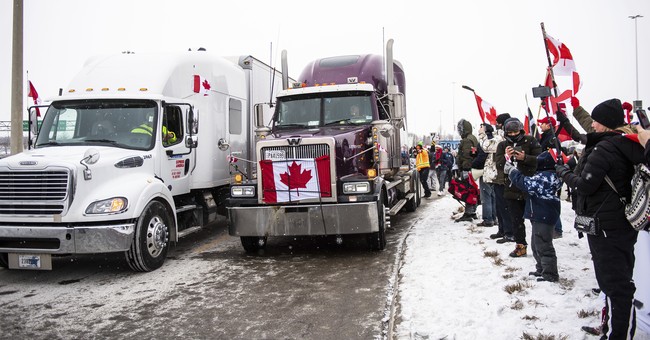
Today’s update on the Trucker Freedom Convoy switches to where the most intense action has been for the past couple of days in Coutts, Alberta, where Truckers are finishing up their 4th day of protesting at the border between Alberta and Montana.

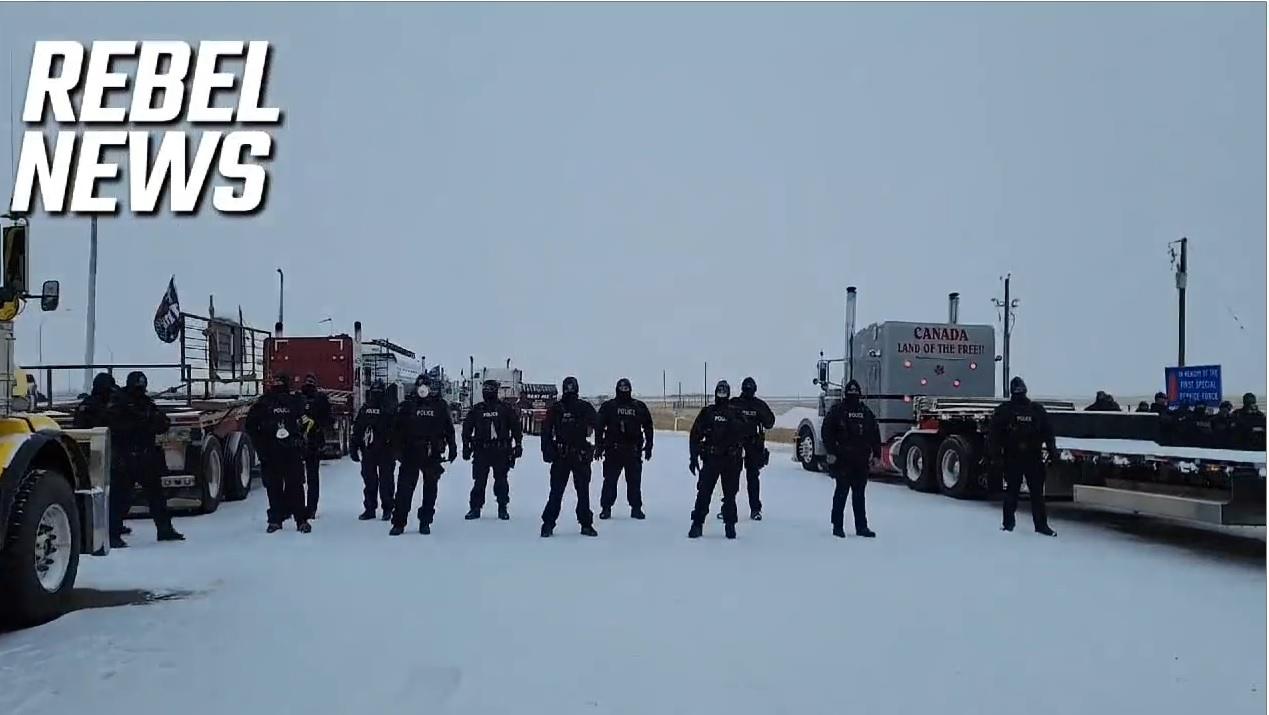
The Truckers were actually blocked in by the police, so there seems to be some confusion as to who is actually closing the border. The Truckers were willing to open a lane, but the police originally did not want to negotiate.

Yesterday, Canadian police sent two officers to negotiate with the Truckers, who had agreed to open a lane to pass through the border, and the police apparently promised the truckers that while they would not allow more vehicles to join their group, they would allow food to be brought into them.

However, it was soon discovered that they did not make good on their promise, and Truckers had to brave blizzard like conditions to walk several miles to get food.

When the officers returned, the Truckers repeated their demands, which are to end the vaccine mandates, and dismissed the police, who promptly left.

Today, an attorney arrived to represent the Truckers in their negotiations, and the Canadian police sent two new officers, apparently tactical officers, who read their demands to the Truckers to surrender themselves immediately or face the consequences.

The Truckers stood their ground, and the police had no choice but to retreat. They apparently made a tactical error by sending a multitude of SWAT teams and other forces which left the check points unattended, which allowed many of the hundreds of other truckers waiting to join them to come through and join the protest, including farmers driving tractors and other equipment.

Rebel News has had people embedded with the Truckers the whole time giving multiple video reports and interviews throughout the four days, and they are also helping to support the Truckers with legal fees.

I have compiled all of their video reports from the past four days into one video. These videos were posted on their Twitter account, and collected here.

[…]

Via https://healthimpactnews.com/2022/occupy-ottawa-day-4-all-eyes-on-alberta-as-truckers-stand-firm-against-threats-and-police-stand-down/


Hidden History: Slave Rebellions and Forced Native American Evacuation

https://image.slideserve.com/648263/slide10-l.jpg

Episode 9: Rebellion and Removal: Tightening of Slavery

A New History of the American South

Dr Edward Ayers (2018)

Film Review

This lecture covers the major slave rebellions occurring in South Carolina and Virginia between 1830-1850, as well as the forced removal of Native Americans from the southeastern US.

Ayers begins by describing the slave rebellion freeman Denmark Vesey organized with a slave called Gulla Jack in Charleston South Carolina in June 1832. The plan was to free as many slaves as possible and escape with them to Haiti.* They called the rebellion off after another slave betrayed the plot. The city militia arrested and hung sixteen of the leaders.

Ayers talks at length about the background of Nat Turner, who organized the slave rebellion in Southhampton County Virginia in 1831. An enslaved African American preacher, Turner saw visions and heard the voice of God telling him to gather arms and free local slaves from their masters. Turner eventually recruited 28 men, who moved from farm to farm killing white families. They attacked 15 homesteads before other white families learned of the revolt spread and abandoned their plantations. Turner and his followers were eventually arrested and executed.

Increasingly paranoid, white residents of North and South Carolina and Virginia (being greatly outnumbered by their slaves) began to see slave rebellions everywhere. This led to heated debates in the Virginia legislature about the “debilitating” effects of slavery on economic development. Western Virginia, which had the fewest slaves, petitioned the legislature to take steps towards ending slavery. One proposal put forward was for the state to purchase all slaves born after 1840 and either colonize them in Africa or sell them to plantations further south. Instead legislators passed harsher laws to limit the ability of free Blacks to move or gather.

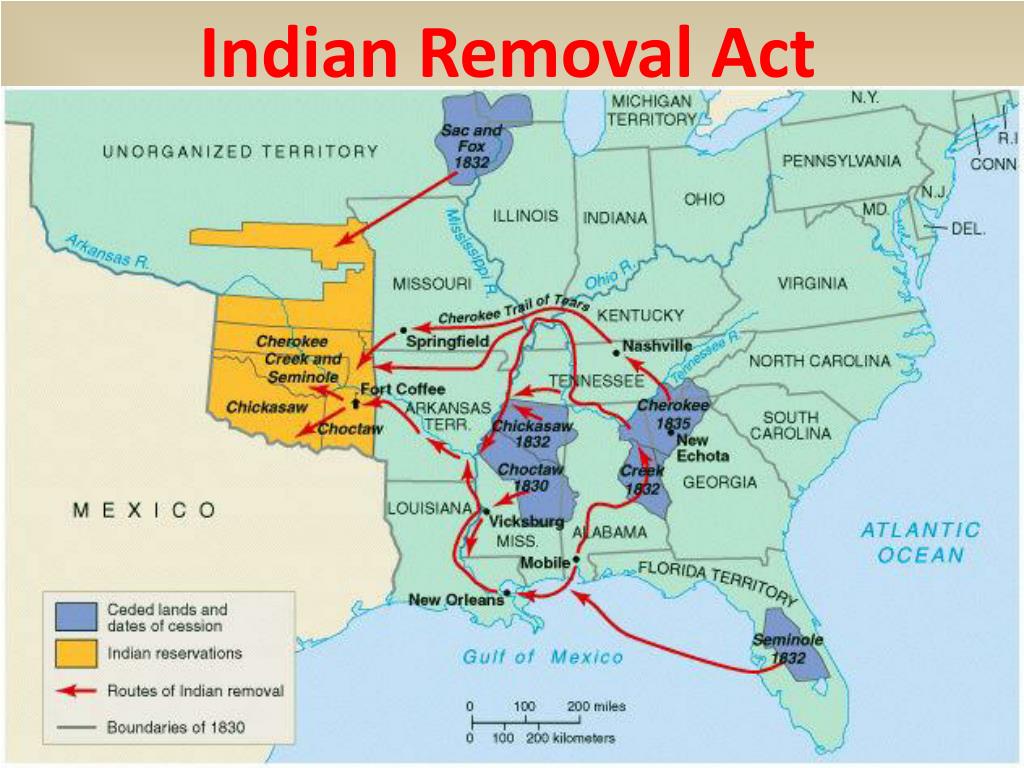
Ayers spends the last half of the lecture on the Indian Removal Act, overseen by President Andrew Jackson despite being overturned twice by the Supreme Court twice. At the time of the forced removals (to “Indian Territory,” ie Oklahoma). By 1830, many Native Americans in the Southeast had converted to Christianity and owned property and slaves.

The Choctaw of northern Georgia were the first to be forcibly moved (after speculators discovered gold on their land) after selling, at a loss, their land and all goods they couldn’t carry with them. Nearly one third died of starvation, exposure or disease during the 500-mile journey.

The Cherokee removal occurred between 1836-39. The US forcibly removed 16,000 members of the Cherokee Nation and 1,000-2,000 from Georgia, South Carolina, North Carolina, Tennessee, and Alabama. Roughly one quarter died.

The Creeks of Alabama were forcibly removed between 1830-36, with roughly 38% dying.

The Seminole of Florida were never evacuated. Jackson launched the second Seminole War started in 1836. Costing more than $20 million, it dragged on for six years. More than 5,000 (out of 36,000) US troops were killed with many more experiencing debilitating injuries.

The film can be viewed free with a library card on Kanopy.


*Where slavery ended with the 1791 Haitian Revolution.

https://pukeariki.kanopy.com/video/rebellion-renewal-tightening-slavery

South Africa says people who test positive for COVID-19 but have no symptoms no longer need to isolate

South africa omicron testing

A woman is tested for COVID-19 in Johannesburg, South Africa, on November 28, 2021. Phill Magakoe/AFP via Getty Images

Marianne Guenot

Business Insider
  • Asymptomatic people with COVID-19 no longer have to self-isolate, South Africa said Monday.
  • COVID-19 cases have been dropping there after a huge surge of the Omicron variant in December.
  • Officials noted that many South Africans are already immune, despite low vaccination rates.

People who test positive for COVID-19 in South Africa but have no symptoms will no longer have to self-isolate,  the government announced Monday.

The change came after daily COVID-19 cases dropped in the country, one of the first to see a surge in cases driven by the Omicron variant late last year.

Isolation periods were also cut for people who do have symptoms after testing positives, from 10 days to seven, per the office of President Cyril Ramaphosa.

The new rules also end compulsory isolation for contacts of those who test positive.

Many governments have shortened isolation periods for COVID-19 in light of higher vaccination rates and the predominance of the milder Omicron variant.

But South Africa is an outlier in allowing people to not isolate at all even while carrying the virus.

Officials in South Africa cited higher levels. The president’s office said 60% to 80% of people had anti-coronavirus antibodies when tested, a level it said had “risen substantially.”

The immunity appears mainly driven by people getting sick. Only 27% of the population received two doses of a vaccine, compared to 63% in the US and 73% in the UK, per Our World in Data.

Fewer than 1% of the population have received a booster dose.

[…]

Via https://www.businessinsider.com.au/south-africa-isolation-positive-test-no-symptoms-omicron-asymptomatic-2022-2

Freedom Convoy’ Vows to Stay in Ottawa Until COVID Vaccine Mandates Lifted

Hundreds of truckers and thousands of citizens protesting Canada’s vaccine mandates for truckers remain in Ottawa, vowing to stay until the mandates are lifted.

Thousands of truckers and others protesting Canada’s COVID vaccine mandates remained in Ottawa today, vowing to stay put until the mandates for truckers are lifted.

Ottawa’s police chief, Peter Sloly, said Monday, “all options are on the table, from negotiation through enforcement” to bring the protest, now entering its fifth day in the nation’s capital, to an end.

The “Convoy for Freedom” set out from British Columbia on Jan. 23 and arrived in Ottawa on Jan. 29.

According to RT News, the organizers of the protest initially estimated 1,600 trucks, a number that grew to 36,000 trucks, and later closer to 50,000. However, national media outlets and law enforcement reported anywhere from “hundreds” of trucks to figures in the low thousands over the past week.

Prime Minister Justin Trudeau on Monday said he would not meet with the protesters because he does not believe in their goals.

He said:

“I have also chosen not to go anywhere near protests that have expressed hateful rhetoric, violence toward fellow citizens, and a disrespect not just for science but the frontline health workers and 90% of truckers who have been doing the right thing to keep Canadians safe and put food on our table.”

Trudeau on Monday also announced he tested positive for COVID, despite being fully vaccinated and boosted, and remains in an undisclosed location due to security concerns.

[…]

Via https://childrenshealthdefense.org/defender/freedom-convoy-ottawa-until-covid-vaccine-mandates-lifted/

Keep on Truckin’, Working Class Rebels, by Kurt Schlichter

Understand that “Democracy” means, to our garbage ruling class, rule by the ruling class with no annoying input from the people who actually make America work. The Democrat Party, once the party of the workin’ man, is now the party of tech zillionaires, college professors, welfare cheats, and sexually unsatisfied liberal wine women. The workin’ class was not merely abandoned by the Dems. It was thrown out of the party.

Robert Gore's avatarSTRAIGHT LINE LOGIC

To the arrogant “elite”, democracy means rule by the arrogant elite. They don’t like it when the help gets uppity. From Kurt Schlichter at theburningplatform.com:

Keep on Truckin', Working Class Rebels

The line of polite big-rig drivers crossing Canada in protest over the maple leaf mandate Marxism imposed by the ridiculous Justin Trudeau is a welcome sign of the workin’ class revolt to come. The courteous Canadians outside of its noxious elite, a caste that rivals our own useless elite in terms of unearned self-satisfaction, have discovered something. They make their country happen. It’s not diversity enforcers who feed the Great White North. It’s not regime journalists who fuel it. And it’s certainly not genderqueer-affirming professors who defend it.

The working class is getting sick of this Schiff, and it is starting to push back. And this will happened here in America too. How it ends is unclear, but my money is on the guys…

View original post 146 more words

Will Medieval Sleeping Habits End Your Insomnia?

In premodern Europe, and perhaps centuries earlier, people routinely went to sleep around nightfall and woke up around midnight—only to go back to sleep a few hours later, until morning. Then modernity came along and ruined everything by pressuring everybody to sleep in one big chunk.

Julian Assange nominated for Nobel Peace Prize for his fight for democracy

Steve Sweeney

Morning Star

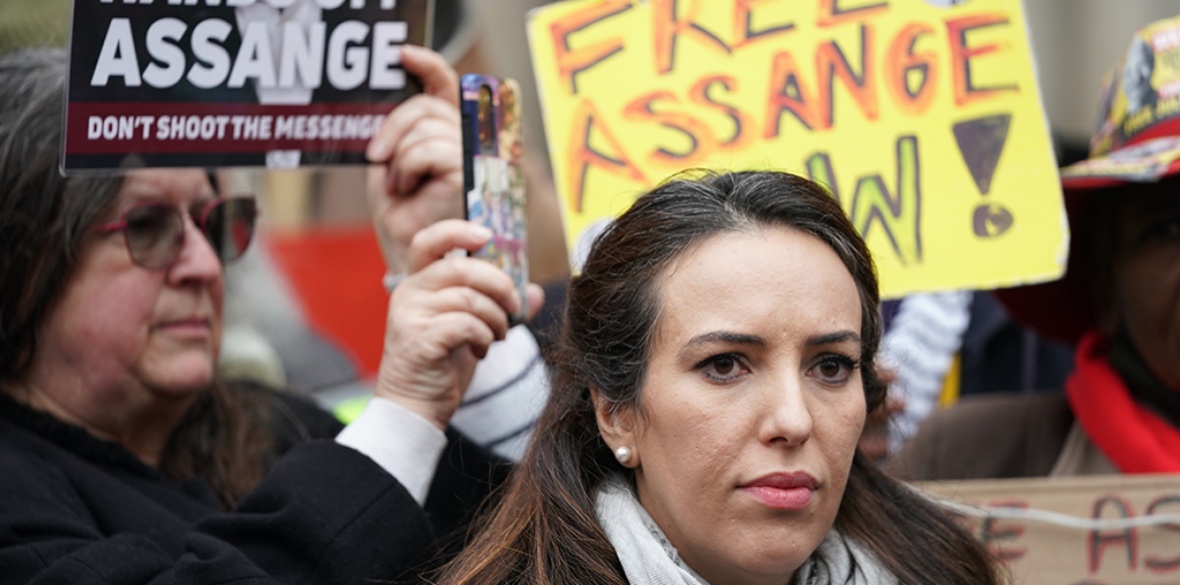
WIKILEAKS founder Julian Assange has been nominated for the Nobel Peace Prize for his fight for human rights, democracy and press freedom, it was confirmed today.

German MEP Martin Sonnenborn responded to an appeal by Mr Assange’s partner Stella Moris ahead of today’s deadline for nominations.

“Julian Assange has made unique and undeniable contributions to peace by lifting the fog of war,” Ms Moris said urging support for the journalist who remains locked up in Belmarsh high-security prison.

Mr Sonnenborn said that he nominated Mr Assange “for his fight for human rights, democracy and press freedom.”

In his submission, the German MEP said that he was returning the 2012 Nobel Peace Prize “mistakenly” awarded to the European Union for its contribution “to the advancement of peace and reconciliation, democracy and human rights in Europe.”

The Norwegian Nobel Institute which issues the global award confirmed the nomination of Mr Assange had been successfully submitted.

Last year the Nobel committee came under fire for “a sin of omission” after it failed to include Mr Assange as a joint recipient of the Peace Prize which was given to journalists Maria Resa and Dmitry Muratov.

They were award the prize because of “efforts to safeguard freedom of expression,” which the committee said is “a precondition for democracy and lasting peace.”

But former Nobel Peace Prize committee chair and former Norwegian prime minister Thorberg Jagland said the award “must raise pressure on the demand to free Assange and pardon [Edward] Snowden.”

Mr Assange could face 175 years behind bars in the United States under the draconian Espionage Act after he revealed crimes and atrocities committed in Iraq, Afghanistan and elsewhere.

Press freedom groups say that he is subjected to a “politically driven prosecution” for publishing details exposing the world’s rich and powerful elites.

Last year it was revealed that US and British spooks colluded in a alleged plot cooked up in the White House to kill Mr Assange on the streets of London.

Despite this, a British court ruled that the US could extradite him to stand trial there, overturning a previous decision blocking such a move on grounds he was a suicide risk.

Last week the High Court gave him permission to appeal against extradition to the Supreme Court, which must agree to accept the case before it can proceed.

[…]

Via https://morningstaronline.co.uk/article/julian-assange-nominated-nobel-peace-prize-his-fight-democracy