Americans Keep Putting Up Roadblocks Against Russian Troops on Key Syrian Highway

Quote

By Marko Marjanović | Anti-Empire | January 29, 2020

This is now the fourth time this has happened that we know of. US troops in northeastern Syria keep blockading the M4 highway to prevent Russian troops from moving on it.

In fall of 2019, to prevent a Turkish invasion of the Kurdish-held northeastern Syria, the Pentagon hammered out a deal with the Turks for joint US-Turkish patrols on the Syrian side of the Syrian-Turkish border.

As soon as that happened however Trump, after a talk with Erdogan, declared and ordered a US military withdrawal from Syria. At this moment Russia jumped in and took over the US role in the formerly US-Turkish agreement. To minimally appease Erdogan and limit his invasion it would now be Russians who patrolled together with the Turks, which was welcomed by the Kurdish leadership.

In separate negotiations with the Kurds the Russians also gained a number of bases in the northeast to make the patrols possible, and thousands of Syrian army troops also poured in to reinforce the Kurds against the Turkish invasion in the limited sector it was taking place in.

At this point Trump reversed himself, saying US forces would stay in Syria, but only in the oil-rich parts. But the withdrawal from the Syrian-Turkish border, where US presence had hampered US-Turkish relations, would be permanent.

Blue is the obvious path, but the Americans insist the Russians must hug the border along the red path

What is happening now is that when the Russians coming from the west want to take the direct and obvious route to their facilities in the city of Qamishli they periodically encounter US troops near the town of Tell Tamr standing in their way.

The Americans block the road with their vehicles and demand the Russians take the longer, indirect way to Qamishli along inferior roads hugging the Syrian-Turkish border.

via Americans Keep Putting Up Roadblocks Against Russian Troops on Key Syrian Highway

Toward a Circular Economy: Trash Picking

Plastics for Change connects trash pickers — of which there are about 1.5 million world-wide — and global markets, ensuring that supply will always meet demand, and provides over 6,000 tons (!) of plastic everyday for recycling.

Pam Lazos's avatarGreen Life Blue Water

Toward a Circular Economy:  Trash Picking

Over half of the world’s population doesn’t have a formal waste disposal scheme in place.  One hundred years ago, when the ubiquitous material known as plastic had not yet been invented this may have been okay.  People composted; containers were made of paper, cardboard, cloth, glass, and other materials that broke down readily.  Today, everything seems to be made of plastic which is sturdy and shatter-resistant and lasts for a thousand years — literally.

And that’s the problem.  Plastic’s long shelf life is an anathema on the planet because no one wants to take the time to sort it all out.  On our current trajectory, by 2050, there will be more plastic in the ocean than fish, certainly not a sustainable course, right, but what to do when the product that has become so entrenched?

Luckily, when there’s a need…

View original post 386 more words

Then & Now: Portugal’s Drug Decriminalization

Quote

By Tyler Durden – Zero Hedge – 01/29/2020

During the 1990s, Portugal was devastated by a drug crisis where one in every 100 people became addicted to heroin and the rate of HIV infection soared to become the highest in the European Union.

But, as Statista’s Niall McCarthy notes, Portugal’s radical move to put an end to the carnage should prove an example to other countries dealing with similar problems, especially the United States where opioids have killed more people than the totality of American military casualties in Vietnam, both Iraq wars and Afghanistan combined.

That move was decriminalizing the consumption of all drugs and Portugal became the first country to do it.

The policy saw the status of using or possessing drugs for personal use remain illegal. However, offenses were changed from being criminal in nature which involved prison as a possible punishment to being administrative if the amount possessed was no more than a ten-day supply. Needle exchange programs have also been in place since 1993 and today, all drug users can exchange syringes at pharmacy counters across Portugal. Drug treatment was also expanded and improved with successful results.

Finding historical data highlighting the severity of the addiction problem during the late 1990s is difficult but some important numbers do exist which help to show just how remarkable Portugal’s recovery has been. The following infographic pulls data together from several sources to illustrate some key developments.

You will find more infographics at Statista


via Then & Now: Portugal’s Drug Decriminalization

US At Risk of Ecological Disaster Due to Improperly Stored Nuclear Waste, New Study Finds

Quote

Sputnik – January 29, 2020

The United States does not currently have a landfill for nuclear waste from the defense industry, which is normally stored inside metal canisters buried underground near the nuclear plants where it was produced.

The United States could face the risk of nuclear contamination due to inadequate nuclear waste storage methods, a new publication in the journal Nature Materials revealed.

According to the lead scientist behind the research, Xiaolei Guo, the existing techniques are insufficient to keep waste stored safely, as the material used in the current storage methods quickly becomes corroded, raising the risk of nuclear waste leaking into the soil, water and air.

The research team carried out an experiment in simulated conditions under Yucca Mountain where the US waste repository is expected to be built. They found that the corrosion level of stainless steel, used in storage canisters, was ‘severe’ due to chemical reactions being accelerated by nuclear waste […]

via US At Risk of Ecological Disaster Due to Improperly Stored Nuclear Waste, New Study Finds

Mexico: Activist Protector of Monarch Butterflies Found Dead

It's still unclear how environmental activist Homero Gomez died though his disappearance sparked an outcry in Mexico.

It’s still unclear how environmental activist Homero Gomez died though his disappearance sparked an outcry in Mexico. | Photo: @Homerogomez_g

Telesur

The remains of Homero Gomez were located inside a well in the community called El Soldado, but due to the conditions of the corpse, DNA tests were requested for identification.

Environmental activist Homero Gomez, who fought to protect the famed monarch butterfly, has been found dead in the western Mexican state of Michoacan, a local authority said Wednesday, two weeks after he disappeared.

The activist’s body was located inside a well in a vacant lot 800 meters from the place where he was last seen in the community called El Soldado but due to the conditions of the corpse, DNA tests were requested for identification.

It’s still unclear how Gomez died though his disappearance sparked an outcry in an increasingly violent country where activists are routinely threatened, harmed or even killed as a result of their work […]

Via https://www.telesurenglish.net/news/mexico-found-dead-activist-protector-of-monarch-butterfly–20200129-0025.html

More Ancient History They Don’t Teach in School

History of the World Part 2

BBC (2018)

Film Review

Part 2 of the BBC “History of the World” series covers the rise of the first western empires. This is commonly referred to as “ancient history,” a subject no longer taught in US schools (recently, however, it seems to be a popular topic for Hollywood features films). Although the reenactments in Part 2 are shorter and more plausible, Part 2’s failure to cover non-Western empires is a serious weakness.

The empires described include

  • The Assyrian Empire (2,500 – 609 BC) – focusing on the rule of Sennacherib (705-681 BC), who initiated the use of “total warfare” (killing non-combatant elderly women and children) and “shock and awe” terror tactics to subjugate neighboring nations. Sennacherib created the blueprint for every subsequent tyrant who has sought to rule by terror.
  • The Persian Empire – founded by Cyrus the Great with the conquest of the Median, Lydian, and Babylonian empires in 550 BC. Unlike Sennacherib, Cyrus ruled via by diplomacy and sought to integrate the various cultures under his rule.
  • The brief empire ruled by Alexander the Great (334-323 BC) – which included Turkey, Egypt, North Africa, and Asia Minor to the Indian border. Like Cyrus, Alexander also attempted to integrate the different cultures under his rule.

Part 2 goes on covers the rise of democracy in the city-state of Athens in the 6th century BC and their successful rebuff of a much larger Persian army that tried to conquer them.

This episode also explores the life and teachings of Gautama Buddha (5th-6th century BC) in India, Confucius (551-479 BC) in China and Socrates (470-399 BC) in Athens. All three promoted philosophies that were at odds with the violent and hierarchical empire building of the times.


Biolab for “Most Dangerous Pathogens on Earth” Opened in Wuhan Before Outbreak

Quote

biolab-tmu-700x379

/

Source – naturalblaze.com

“…In May of 2019, less than a year before the outbreak began, the U.S. Centers for Disease Control and Prevention (CDC) issued a press release that gave an overview of the projects that the new lab was currently working on. The projects included SARS, Ebola, Hemorrhagic fever, Lassa fever, avian influenza A(H5N1), Rift Valley fever, and others”

Biolab for “Most Dangerous Pathogens on Earth” Opened in Wuhan Before Outbreak – By John Vibes

As of Thursday afternoon, 23 million people in seven Chinese cities have been placed on quarantine due to the sudden outbreak of a deadly SARS-like virus called 2019-nCoV.

The illness is said to have originated in a seafood market in Wuhan and quickly spread to other areas of China, then Japan, Thailand, South Korea, and the United States. Suspected cases have been reported in Australia and Scotland. However, it is possible that there is more to the story as Chinese authorities have been running a censorship campaign to prevent the spread of information about the virus that deviates from official statements.

[…]

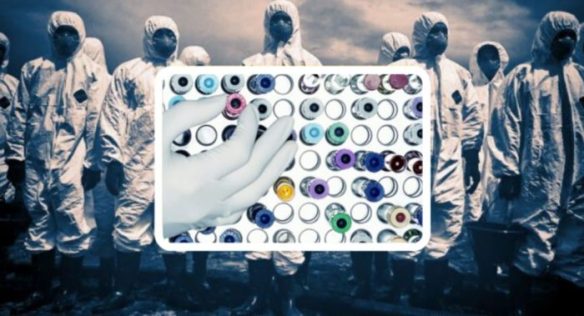
One very strange coincidence in the development of this outbreak is the fact that a new biolab, tasked with studying the most dangerous pathogens on earth, recently began operating in Wuhan, where the illness is said to have originated.

Back in 2017, just before experiments at the lab began, the prestigious science journal Nature published an article expressing concerns about pathogens escaping from the new Wuhan lab. The laboratory is a biosafety level-4 (BSL-4) facility, which is the highest level of biocontainment. BSL-4 facilities must meet rigid standards for decontaminating the area as well as workers after every experiment. However, BSL-4 labs remain extremely controversial because critics argue that these measures may not be enough to prevent a virus from escaping.

According to Richard Ebright, a molecular biologist at Rutgers University in Piscataway, New Jersey, the SARS virus has escaped from high-level containment facilities in Beijing multiple times.

In May of 2019, less than a year before the outbreak began, the U.S. Centers for Disease Control and Prevention (CDC) issued a press release that gave an overview of the projects that the new lab was currently working on. The projects included SARS, Ebola, Hemorrhagic fever, Lassa fever, avian influenza A(H5N1), Rift Valley fever, and others.

Scientists have examined the genetic code of the new virus and have found that it is more closely related to SARS than any other human coronavirus. In BSL-4 labs, researchers can tweak or combine deadly viruses to create mutated strains of the original illness. A 2013 report in Nature indicated that scientists in China were creating hybrid viruses in labs.

“A team of scientists in China has created hybrid viruses by mixing genes from H5N1 and the H1N1 strain behind the 2009 swine flu pandemic, and showed that some of the hybrids can spread through the air between guinea pigs,” the article revealed.

The results of the hybrid virus experiment were published in the journal Science […]

via COVER-UP: Biolab for “Most Dangerous Pathogens on Earth” Opened in Wuhan Before Outbreak – By John Vibes

French Yellow Vests Protest for Assange Outside Belmarsh Prison in London

By Alex Lantier
25 January 2020

WSWS

Today, hundreds of “yellow vests” from France and protesters from other countries across Europe, including Belgium and Britain, are protesting outside Belmarsh maximum security prison in London to demand the freeing of WikiLeaks founder and journalist Julian Assange.

A principled and courageous journalist whose revelations exposed imperialist crimes against humanity and encouraged working class protests around the world, Assange is the target of a relentless state campaign to destroy him. He is locked up in Belmarsh, subjected to torture according to testimony from doctors and UN experts, and faces extradition to America. There, he faces a life sentence in prison under the US Espionage Act, for publishing material such as the “Collateral Murder” video of US troops illegally gunning down civilians in US-occupied Iraq.

The decision of the “yellow vests” to protest in London points to deeply rooted international opposition to the relentless persecution of Assange among workers and more serious artists and intellectuals. As part of their initiative, they have also issued a petition, signed by over 15,000 people, including leading figures of French and European artistic life, titled “Freedom for Julian Assange.”

Corinne and Yannick, two “yellow vests” involved in organizing the Belmarsh protest, spoke to the WSWS after a recent “yellow vest” protest in Paris. “Assange represents the struggle against the persecution of journalists who defend the truth. We are defending journalism against an abuse of democracy,” Corrine noted. “As yellow vests, or otherwise, we cannot be indifferent to his fate.” […]

Via https://www.wsws.org/en/articles/2020/01/25/yell-j25.html

Houthis Bomb Aramco Oil Field in New Attach on Saudi Arabia

Workers are seen at the damaged site of Saudi Aramco oil facility in Abqaiq, Saudi Arabia, September 20, 2019.

Workers are seen at the damaged site of Saudi Aramco oil facility in Abqaiq, Saudi Arabia, September 20, 2019. | Photo: Reuters

Telesur

The Houthis said they will resume their attacks against Saudi Arabia in response to their continued aggression against the Yemeni people.

The Houthis Movement announced Wednesday that their forces bombed multiple sites belonging to the Saudi government, including the Aramco oil fields in the Kingdom’s Jizan province.

According to a statement released by the Houthis-affiliated Masirah TV, the group bombed the Aramco oil fields in Jizan, along with the municipal airports in Jizan and Abha. They also mentioned bombing the Khamis Mushait Base, which is located north of the Yemeni border.

This attack by the Houthis on Wednesday was reportedly carried out by their large arsenal of drones and missiles, which they have used against both Saudi Arabia and the United Arab Emirates on several occasions in the past.

The Saudi Ministry of Defense has yet to comment on this latest attack by the Houthis; however, if the Yemeni group did strike these sites, it will raise questions about the effectiveness of the Kingdom’s air defenses.

Last year, the Houthis carried out a much larger attack on the Saudi Aramco oil fields, causing significant damage to the site and prompting the Kingdom, along with the U.S. and GCC states, to accuse Iran of being behind the strikes.

The Houthis have been involved in a nearly four-year-long civil war in Yemen to oust President Abd Rubbah Mansour Hadi from office. The Houthis have captured almost all of the northwestern part of the country, along with several areas in western Yemen.

The Yemeni government forces have attempted to retake these lost areas, but they have been unable to break into the Houthis strongholds […]

Via https://www.telesurenglish.net/news/Houthis-Bombs-Aramco-Oil-Field-in-New-Attack-on-Saudi-Arabia-20200129-0005.html