Energy Dominance or Flatulence? Shale Drillers Bleed Cash

Quote

The shale drillers are the Elon Musks of natural resources: they produce products at a loss, but intend to make it up on volume. From Tom Luongo at tomluongo.me:

All of President Trump’s foreign policy can be summed up by two themes, making the world safe for Israel and controlling the price of energy.

He calls the latter “Energy Dominance.” And to those who still believe Trump has a plan, these two things are the only ones consistently in evidence.

His reactions to things contrary to his plan, however, are purely limbic.

These two themes converge completely with Iran. Trump wants Iran neutered to force Jared Kushner’s now-delayed again, “Deal of the Century” onto the Palestinians while also taking Iran’s oil off the market to support surging U.S. domestic production in the hopes of taking market share permanently.

Everything Trump does is in support of these two themes while throwing some red meat at his base over China, Mexico and the border.

It was never his intention to leave Syria back in December, really. Look how easy was it for John Bolton and the Joint Chiefs to convince him to stay because how else would we cut Iran’s exports to zero if we didn’t stop the land route through Iraq?

This is why we’re still harboring ISIS cells in the desert crossing around Al-Tanf at the Jordan/Iraq/Syria border, to stop Iranian oil from coming into the country.

This feeds right into hurting all of Syria’s allies to strengthen Israel’s position.

To paraphrase the song from Aladdin, “It’s stupid, but hey, it’s home.”

If the average Trump voter truly understood the lengths we are going to starve the Syrian army from having enough energy to finish wiping out the Al-Qaeda-linked groups in Idlib and Homs provinces they would burn their MAGA hats and stay home next November.

But they don’t so Trump’s approval rating keeps climbing.

On the other hand, people mostly understand exactly what the “Bay of Fat Pigs” operation in Venezuela was all about, protecting domestic oil production and getting control of Venezuela’s.

The sad truth is that many Americans consider this comeuppance for being stupid enough to elect Nicolas Maduro President.

But this is the guts of Trump’s “Energy Dominance” policy. Use tariffs, sanctions, threats and hybrid warfare to destroy the competition and therefore MAGA.

It would be sad if it wasn’t so pathetic.

And the irony is that the whole plan is predicated on sustainable and nigh-exponential growth of U.S. domestic production.

There’s only one problem with that. It’s completely unsustainable.

The greatness of the U.S. production story is evident if you only look at the number of barrels produced. But that story turns into a nightmare the minute you look one inch deeper to see what the cost of those barrels are and what profit, if any, they produce […]

via Energy Dominance or Flatulence? Shale Drillers Bleed Cash, by Tom Luongo — STRAIGHT LINE LOGIC
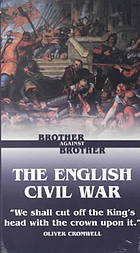
Stuff I Wish I Learned in School: The English Civil Wars

The English Civil Wars

Directed by Graham Holloway (1992)

Film Review

This documentary describes the three English civil wars that occurred during the 17th century. The first, between 1639-40, was the Bishops’ Wars; the second, between 1642-45, when Parliament’s forces seized London and King Charles I ruled from Oxford; and the third, between 1645-46, when Parliament held the King prisoner in London.

The film is very sketchy on the background of the Civil Wars, which Holloway blames on religious differences and the refusal of Charles I to recognize the power of Parliament. Under Charles I, the Church of England resumed many features of Catholic ritual that they had abandoned when Henry VIII split from Rome. This was especially unpopular in London where 50% of the population were Puritans.

When the King attempt to impose a new book of common prayer on Scotland, the Scottish army drove all the Church of England bishops out of Scotland, chasing the English army all the way to Newcastle.

Charles I was forced to recall Parliament (which he dissolved in 1628) to raise taxes to pay the debt he incurred for the Bishops’ Wars. Angered by his refusal to honor their sovereignty, Parliament refused. When the people of London rioted in support of Parliament, the King fled north to Hull to raise an army.

Most of the film focuses on the primitive weapons technology used in 17th century wars and the battlefield tactics employed as the King tried to recapture the south of England and Parliament’s army tried to wall the King’s troops up in the north. The musket, which was only recently introduced, took a minimum of 30 seconds to reload, with gunpowder and a musket ball, before being lighted with a match.

Oliver Cromwell, who would become Britain’s Lord Protector after the King was executed, first came to prominence in 1645 at the Battle of Glaston Moor. It was here his skilled leadership of Parliament’s cavalry won them their first decisive victories.

In the 1645-46 Civil Wars, Welsh and Irish troops supported the King and the Scottish military supported Parliament. During the two years he was a prisoner, Charles I secretly schemed with Scottish forces to invade England on his behalf. Following their defeat by Cromwell, this would lead to the King’s trial and execution for treason.

Although the film can’t be embedded for copyright reasons, it can be viewed free at the Christie Books site:

https://christiebooks.co.uk/anarchist_films/the-english-civil-wars/

*The Puritans were English Reformed Protestants in the 16th and 17th centuries who sought to “purify” the Church of England from its “Catholic” practices, maintaining that the Church of England was only partially reformed.

Exclusive: First VIDEO of Julian Assange in Belmarsh prison

Quote


RT’s video agency Ruptly has obtained footage showing WikiLeaks co-founder Julian Assange inside Belmarsh maximum security prison.

via Exclusive: First VIDEO of Julian Assange in Belmarsh prison — The New Dark Age

How for-profit prisons have become the biggest lobby no one is talking about

Nearly two-thirds of private prison contracts mandate that state and local governments maintain a certain occupancy rate – usually 90 percent – or require taxpayers to pay for empty beds.

Toxic Pesticide Bans: US Lags Behind EU, Brazil and China

Of the 1.2 billion pounds of pesticides used in US agriculture in 2016:

-Approximately 322 million pounds were pesticides banned in the EU

-Approximately 40 million pounds were pesticides banned in China

-Nearly 26 million pounds were pesticides banned in Brazil

-More than ten percent of total pesticide use in the USA was from pesticide ingredients either banned, not approved or of unknown status in all three of the other nations.

Chemical-Free-Life.org's avatarChemical Free Life

According to a recent study many pesticides that have been banned or are being phased out in the EU, Brazil and China, are still widely used in the U.S.

.

Findings overview

Of the 1.2 billion pounds of pesticides used in US agriculture in 2016:

-Approximately 322 million pounds were pesticides banned in the EU

-Approximately 40 million pounds were pesticides banned in China

-Nearly 26 million pounds were pesticides banned in Brazil

-More than ten percent of total pesticide use in the USA was from pesticide ingredients either banned, not approved or of unknown status in all three of the other nations.

.

Why is the U.S. lagging behind other nations in banning toxic pesticides? 

The primary reason is that rather than the government regulating and banning dangerous pesticides, the U.S. depends on Big Chemical corporations to self-regulate.

.

“These findings suggest that the USA utilizes voluntary, industry-initiated cancellation…

View original post 61 more words

Article: WWII & Holocaust COULD NOT HAVE HAPPENED Without Corporate USA Rearming Germany to Destroy the USSR | OpEdNews

There is no way Hitler could have begun a world war and a multi-nation Holocaust when he did without the mega enormous financial and technical help he received from the United States of America

West considers D-Day ‘turning point’ of WW2… as if Eastern Front never existed

“Immortalized by Hollywood films and critically-acclaimed books, the D-Day landings are often viewed in the West as an unprecedented military victory and operation that broke the back of Nazi Germany. However, a simple examination of the facts shows otherwise: an estimated 110,000 Nazi soldiers were killed, captured, or went missing during the battle for Normandy. For some sobering contrast, Nazi losses in Stalingrad totaled 1.5 million.”

Jaime C.'s avatarCounter Information

Handout photo of a Cromwell tank leading a British Army column inland from Gold Beach after landing on D-Day in Ver-sur-Mer © Reuters

June 6 marks the 75th anniversary of D-Day – touted in the West as the “turning point” of World War II. But in terms of casualties inflicted on Nazi Germany, the allied invasion of Normandy is easily overshadowed by Stalingrad.

Immortalized by Hollywood films and critically-acclaimed books, the D-Day landings are often viewed in the West as an unprecedented military victory and operation that broke the back of Nazi Germany. However, a simple examination of the facts shows otherwise: an estimated 110,000 Nazi soldiers were killed, captured, or went missing during the battle for Normandy. For some sobering contrast, Nazi losses in Stalingrad totaled 1.5 million.

ALSO ON RT.COMThe new D-Day? Donald Trump brings a delayed Second Front with UK visitThen-President Franklin Delano Roosevelt described…

View original post 42 more words

How the Protestant Reformation Gave Rise to Women’s Liberation

The Protestant Revolution: Part 2 The Godly Family

BBC (2005)

Film Review

In Part 2 of the Protestant Revolution, historian Richard Jones-Nerzic explores the steady transformation of women’s lives following the Protestant reformation.

Whereas men and women were assigned segregated seating in the medieval Catholic church, they began sitting together in Protestant churches. Likewise sex ceased to be a sin, and clergy began to marry. Luther himself set the example when he married a former nun.

Luther’s idealized family life changed radically when the industrial revolution forced men out of the home into factories. During the Victorian era, well-to-do educated wives assumed an evangelical role as they led charitable crusades among the urban poor – building Sunday schools, orphanages and hospitals. They quickly became frustrated that this charitable work produced little real reform and began campaigning for real political power through anti-slavery and women’s suffrage campaigns.

However, according to Jones-Nerzic, their work in the war industry during the two world wars was definitely the most liberating factor in the lives of 20th century women.

The last third of the film explores the vehement backlash against equality and control over their own reproductive lives with the rise of fundamentalist Christianity.