
Farmers of the future will be tasked with storing carbon as well as producing food.

 By Richard Lindsay
Imagine “carbon emissions”, and what springs to mind? Most people tend to think of power stations belching out clouds of carbon dioxide or queues of vehicles burning up fossil fuels as they crawl, bumper-to-bumper, along congested urban roads. But in Britain and many other countries, carbon emissions have another source, one that is almost completely invisible. In the UK, these overlooked emissions come from our most extensive semi-natural habitat, yet it is a habitat which is almost invisible within the national consciousness.
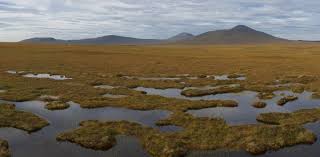
The source of these emissions can be seen in the rich black peat soils of the East Anglian Fens, the Lancashire lowland plain, the Somerset Levels, the Forth Valley and indeed many lowland river flood plains, as well as in the hugely damaged peat soils of the UK’s uplands. The common thread here is “peat”, a soil derived almost entirely from semi-decomposed plant remains which…
View original post 822 more words
 The Most Revolutionary Act