
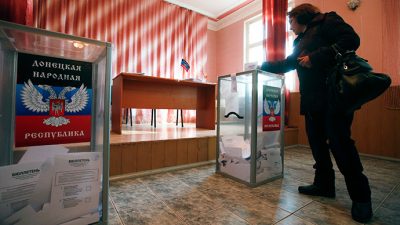
On November 11, 2018, I was in Lugansk People’s Republic (LNR) as an election observer for the national election along with people from twenty-two countries. The elections in Lugansk and Donetsk People’s Republics (DNR) were necessary because of the assassination of DNR’s Head of the Administration Alexandr Zakharchenko and the resignation of LNR’s former Head of the Administration Igor Plotnitsky.
On November 11, 2018, I was in Lugansk People’s Republic (LNR) as an election observer for the national election along with people from twenty-two countries. The elections in Lugansk and Donetsk People’s Republics (DNR) were necessary because of the assassination of DNR’s Head of the Administration Alexandr Zakharchenko and the resignation of LNR’s former Head of the Administration Igor Plotnitsky.
In the run up to the election and in its aftermath, i was able to interview several officials from the Russian Federation and Lugansk People’s Republic. I took statements from the Deputy Foreign Minister in LNR, an OSCE election observer who was on his way to monitor the US mid-terms, and the mayor of Stakhanov which is a city in LNR.
The real questions revolve around what the elections mean to each party in the scope of their work? And how will this affect the Minsk peace negotiations?
The elections themselves had the power to make or break the new republics. If the turnout had been low, it would have meant that people voted no confidence in the young states and would have signaled they were failing.
Instead, the voter turnout was among the highest recorded anywhere in recent memory. Lugansk People’s Republic had a 77% voter turnout and DNR came in with 80%.
Instead of the election outcome being determined by the results, this election is getting parsed by commas and period placement. While no one is actually arguing whether the election was legal or not, Ukraine is arguing its legitimacy, ie, it may be legal but it’s not right to do [ . . .]
 The Most Revolutionary Act