A Reuters analysis of Chinese imports shows that to quickly reach $100 billion worth of goods to tax, Trump may have to target cellphones, computers, toys, clothing, footwear, furniture and other consumer goods, prompting price rises at U.S. retailers.
Monthly Archives: April 2018
North Korea’s Kim Says “Mission Complete”: Will Abandon Nuke Tests, Seek Peace
Kim says no further nuclear tests are needed, and will stop launching test-flights of ICBMs on April 21st.
The Hidden History of Cannabis
Chris Rice (2018)
Film Review
This documentary traces the medical, textile and spiritual use of cannabis from its first discovery in ancient China. It’s use for 100 different medical conditions is listed in the first Chinese “materia medica” in 2,800 BC. Archeological evidence suggests it was in wide use for cloth, paper and rope for centuries before that. It has long been one of the 50 herbal remedies used in traditional Chinese medicine.
Archeologists believe that Caucasus tribes known as Aryans spread cannabis use to India and Persia along primitive trade routes that pre-dated the Silk Road. In India it was used in Hindu sects devoted to Shiva, in Buddhism and Sikhism. According to legend, Siddhartha Gautama (Buddha) subsisted on cannabis alone for six years prior to his enlightenment.
In 500 BC, when the Persian empire (Iran) extended from the Indian border to Egypt, it played an essential role in Zororastianism. There is also good evidence Egyptians used it for medicinal purposes 700 years prior to their conquest by Persia (in 552 BC).
Following the unsuccessful Persian attack on Greece (in 492 BC), Greek physicians began using it to treat a variety of medical conditions. Both Pythagoras and Socrates refer to its mind enhancing properties. Cannabis would make its way to Rome by way of Greece.
Use of Cannabis in Judaism and Christianity
Rice also traces how Kaneh Bosm (which English Biblical scholars have mistranslated “calamus”) was used extensively along with frankincense and other psychoactive herbs to anoint ancient Jewish priests. Christ (which means “the anointed one”) used similar holy oils to anoint his twelve disciples. Some scholars believe Kaneh Bosm may have played a role in his healing miracles – due to its medicinal properties. Early gnostic gospels, which were banned by Emperor Constantine in 325 AD, cover the subject far more extensively than the New Testament.
Cannabis was also widely used by Muslim physicians, Sufi sects and by assassins (derived from the word hashish) of the secret 11th century Islamic sect Nizari Ismailis.
Cannabis Spreads to Europe and the New World
Cannabis cultivation spread from Rome to northern Europe via Germanic tribes who used the seeds as a food source. Prior to the conquest of the Americas, Europeans used it mainly as a source of fiber. When the New World tobacco trade made pipe smoking popular in Europe, a growing middle class also began smoking cannabis and opium.
Queen Elizabeth initiated the legal requirement that the North American colonies grow hemp to help supply the British Navy with rope and sails. Shakespeare, James Madison and James Monroe all smoked it, and Washington used it for toothache.
During the 18th century, it became widely available in various patent medicines – until the American Medical Association began a state-by-state campaign to ban it. Its ready availability and effectiveness for pain relief posed a major threat to the fledgling medical profession.
The advent of alcohol Prohibition in 1919, caused a surge in the use of cannabis, which was still legal surged.
The Corporate Conspiracy to Suppress Hemp Production
In 1936, a corporate conspiracy to suppress hemp production in favor of wood fiber and synthetic fibers (see The Politics of Hemp) would lead to the controversial 1936 Marijuana Tax Act.
Psychodelic guru Timothy O’Leary would initiate the first legal challenge to the Act, leading a federal court to overturn it in 1969. Nixon’s response was to ban cannabis altogether, under the 1970 Controlled Substances Act.
Timeline of CIA Interventions in Syria
This partial timeline provides evidence that the U.S. government and Obama in particular bear a significant responsibility for the Syrian war and the results of that war. Obama approved elements of CIA plans that go back over 65 years.
Brain cancer strongly linked to cell phone radiation in brand-new, large-scale study
Last month, after assessing a $25 million study conducted by the National Institutes of Health’s National Toxicology Program (NTP), an expert peer review panel found that RF radiation’s association with heart and brain tumors provides “clear evidence of carcinogenicity” – at least, in animals.
Boehner’s Marijuana Lobbying Symptomatic of Revolving Door Problem

Source: Brian Saady, Blacklisted News
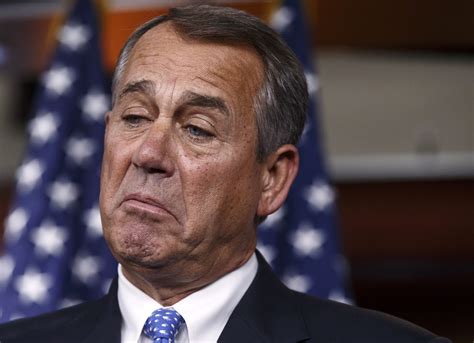
The former Speaker of House, John Boehner, and former Massachusetts Governor, Bill Weld, were added to the Board of Advisors for Acreage Holdings, an investment company heavily involved in the legal cannabis industry.
This pair of former conservative leaders will certainly help to bring bipartisan support for the pro-legalization movement. They’re also part of an emerging trend of conservative revolving door lobbyists working on behalf of the legal marijuana industry.
Last September, the former three-term Republican Senator from New York, Al D’Amato, wrote an op-ed for the Daily News in support of a state medical marijuana bill. It was titled, “My epiphany on medical marijuana: Sen. Al D’Amato explains why he came around on pot policy.” At the end of his piece, there was a disclosure that D’Amato is a “paid senior advisor” for the Marijuana Policy Project of New York.
He wrote a similar op-ed in 2014 in the Long Island Herald not long after signing a $15,000 per month lobbying contract with two cannabis-related companies. The co-founder of one of those companies, Richard Yost, noted that $200,000 was budgeted for the full year. He told Newsday, “It’s a Republican issue in the Senate, and Park Strategies has a strong relationship on that side.”It’s this kind of influence peddling that is ruining our political system.
These men’s views on cannabis may have genuinely shifted over the years, but it’s very convenient (and lucrative) to now be lobbying on behalf of the right side of history. John Boehner recently claimed that his position on marijuana “evolved,” but he had a 0% rating from the pro-marijuana legalization group, NORML, before leaving office. He was also the leading recipient of donations from the tobacco industry, which has aggressively lobbied against marijuana legalization. . .
Source: Boehner’s Marijuana Lobbying is Symptomatic of Special-Interest Problem
Russia Threatens To Halt Critical Rocket Engine Exports To The U.S.
Oops – maybe bombing Damascus wasn’t such a good idea after all.
North and South Korea Reportedly Set to Announce Official End to War
Pyongyang and Seoul have technically been at war since the 1950-1953 Korean conflict ended with a truce — and not a peace treaty.

Ahead of a summit next week between North Korean premier Kim Jong Un and South Korean President Moon Jae-In, lawmakers from the neighboring states were thought to be negotiating the details of a joint statement that could outline an end to the military conflict between the two countries.
Pyongyang and Seoul have technically been at war since the 1950-1953 Korean conflict ended with a truce — and not a peace treaty.
By Sam Meredith
April 17, 2018 “Information Clearing House” – North and South Korea are in talks to announce a permanent end to the officially declared military conflict between the two countries, daily newspaper Munhwa Ilbo reported Tuesday, citing an unnamed South Korean official.
Ahead of a summit next week between North Korean premier Kim Jong Un and South Korean President Moon Jae-in, lawmakers from the neighboring states were thought to be negotiating the details of a…
View original post 164 more words
How Arrogance Blinds the West to Their Historic Decline
Peter Frankopan – The Silk Roads
Directed by Justin Hardy (2017)
Film Review
This documentary, based on historian Peter Frankopan’s best selling book Silk Roads, explores the Western trait of putting their own interests at the center of their world and possessing no interest or capacity to understand other cultures.
Typically both Europeans and Americans believe they have a monopoly on “goodness” – that only they can save the world from darkness and suffering. Their ruling elite uses these beliefs to justify invading and occupying third world countries and are surprised when other cultures regard us as smug and arrogant.
According to Frankopan, Europe and the US presently find themselves at the wrong end of global trade routes. Asian countries, especially China, that used to be poor are rich now. Asia provides the vast majority of Western consumer goods and owns most Western debt. Over the last 40 years, there has been a vast transfer of wealth from the West to Asia. These new centers of wealth (especially China) have become the hub of scientific, technological and intellectual progress. However owing to their self-centered navel gazing, most Westerners are totally unaware this is happening.
Frankopan also maintains Europe has never had much to offer in the way of natural resources or intellectual innovation (Christianity has always suppressed knowledge and progress). In 800 AD, Mesopotamia was the wealthiest region in the world, with Baghdad viewed as the global center of trade and learning. During this period, Europe’s most important resource was slaves, with Dublin, Mainz, Utrecht and Venice serving as major trafficking centers for kidnapped women and children.
All this changed with the conquest of the New World, the enslavement of Native Americans and Africans, and the flow of silver and gold back to Europe. This illicit capture of mineral wealth and human beings enabled Europe to developed highly specialized skills in violence and conquest. They no longer needed to produce their own wealth because they could use their military prowess to steal it from other regions.
Over time, the economic decline of the West has eroded their military capability to the point they can no longer win wars.
As in Rome, obscene income inequality is one of the main indicators of an empire in decline.
How the US is Illegally Occupying 30% of Syria Containing Most of Its Oil, Water and Gas

By Whitney Webb
Global Research, April 17, 2018
MintPress News 16 April 2018
After the U.S. launched “limited” airstrikes on Friday April 14, 2018, against Syria, U.S. Ambassador to the United Nations Nikki Haley announced that the U.S. will maintain its illegal presence in Syria until U.S. goals in the area are fulfilled, opening the door for the U.S. occupation to continue indefinitely.
While the U.S. military presence in Syria has been ongoing since 2015 – justified as a means of countering Daesh (ISIS) — U.S. troops have since turned into an occupying force with their failure to pull out following Daesh’s defeat in northeastern Syria. Currently, the U.S. occupies nearly a third of Syrian territory — around 30 percent — including much of the area east of the Euphrates River, encompassing large swaths of the Deir Ezzor, Al-Hasakah and Raqqa regions.
Though the U.S. currently has between 2,000 to 4,000 troops stationed in Syria, it announced the training of a 30,000-person-strong “border force” composed of U.S.-allied Kurds and Arabs in the area, which would be used to prevent northeastern Syria from coming under the control of Syria’s legitimate government. Though it backtracked somewhat after backlash from Turkey, the U.S. has continued to train “local forces” in the area. Russian military sources have asserted that former members of Daesh — who were allowed to leave cities attacked by the U.S. and their proxies, as was the case in battle for Raqqa — are to be included among the force’s ranks.
This, along with the U.S. government’s insistence on maintaining the occupation until Syrian President Bashar al-Assad is removed from power, shows that the U.S. government has no intention of permitting the reunification of Syria and will continue to occupy the region over the long term.
The illegal U.S. occupation of Syria has been widely noted in independent and corporate media, but little media attention has focused on identifying the wider implications of this occupation and the U.S.’ main objectives in keeping northeastern Syria from coming under the control of the legitimate, democratically elected Syrian government. As is often the case in U.S. occupations, both historical and present, it is an effort born out of two goals: resource acquisition for U.S. corporations and the destabilization of a government targeted for U.S.-backed regime change.
Control of fossil fuel deposits and flow
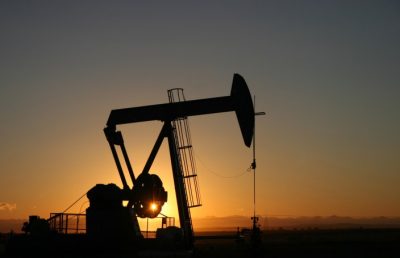
Northeastern Syria is an important region owing to its rich natural resources, particularly fossil fuels in the form of natural gas and oil. Indeed, this area contains 95 percent of all Syrian oil and gas potential — including al-Omar, the country’s largest oil field. Prior to the war, these resources produced some 387,000 barrels of oil per day and 7.8 billion cubic meters of natural gas annually, and were of great economic importance to the Syrian government. However, more significantly, nearly all the existing Syrian oil reserves – estimated at around 2.5 billion barrels – are located in the area currently occupied by the U.S. government.
In addition to Syria’s largest oil field, the U.S. and its proxies in northeast Syria also control the Conoco gas plant, the country’s largest. The plant, which can produce nearly 50 million cubic feet of gas per day, was originally built by U.S. oil and gas giant ConocoPhillips, which operated the plant until 2005, after which Bush-era sanctions made it difficult to operate in Syria. Other foreign oil companies, like Shell, also left Syria as a result of the sanctions.
With the U.S. now occupying the area, the oil and gas produced in this region are already benefiting U.S. energy corporations to which Trump and his administration have numerous ties. According to Yeni Şafak, the U.S. along with the Saudis, Egypt, and Kurdish officials held meetings where decisions were made to extract, process and market the fossil fuels harvested in the region, with the Kurds being given a handsome share of the profits. As of 2015, the Kurds were said to be earning in excess of $10 million every month.
Syria’s Kurdistan exports its oil to Iraq’s Kurdistan, with which it conveniently shares a border, and it is then refined and sold to Turkey. Though no corporations are publicly involved, the deal between Syrian and Iraqi Kurds was brokered by unnamed “oil experts” and “oil investors.” The Kurds in Syria and Iraq did not even sign the agreement in person. They were subsequently “informed” of the agreement by the United States and instructed to supervise the operation.
A source in Iraq’s Kurdistan Regional Government (KRG) told NOW News that “with regard to southern Kurdistan, it was a company and not the KRG that signed the deal, and it is [the company] that directly hands over the sums in cash every month.” Given that over 80 foreign companies are involved in the KRG’s oil trade, most of them U.S.-based, we can safely assume that many of the same players have also been involved in developing the oil trade of Syria’s Kurdistan.
Major corporate interests
The Trump administration’s numerous connections to the U.S. oil industry make this alliance clear. Former Secretary of State Rex Tillerson, who was fired in March, was previously the top executive at ExxonMobil, an oil company that unilaterally brokered an oil deal with Iraqi Kurds behind the back of the Iraqi government and has expressed interest in developing Syrian oil interests in the portion of the country currently occupied by the U.S. . .
Source: How the US Has Illegally Occupied 30% of Syria Containing Most of Its Oil, Water and Gas