
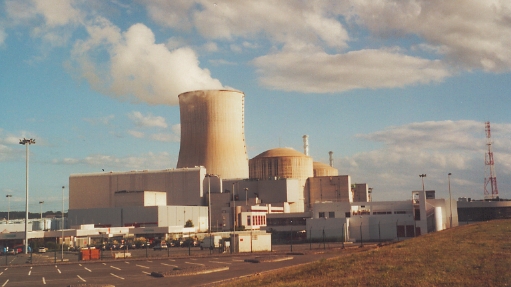
The views expressed by former US Nuclear Regulatory Commission member Peter Bradford in a March 2013 Bulletin article, which described the situation facing the US nuclear power industry as grim, now seem restrained. Bradford predicted that “an abundance of natural gas, lower energy demand induced by the 2008 recession, increased energy-efficiency measures, nuclear’s rising cost estimates, and the accident at the Fukushima Daiichi Nuclear Power Station” would result in trouble for the US nuclear power industry. “Here’s what the US government must do to bring about a gradual phase-out of almost all US nuclear power plants: absolutely nothing,” Bradford wrote.
He predicted that, without massive government assistance, new nuclear power projects would not be built and existing nuclear power plants would only operate until the end of their NRC licenses, meaning that the US nuclear fleet would largely be gone by the late 2050s. Since 2013, the factors listed in Bradford’s article have driven electricity market prices to low levels, resulting in the early retirement of operating units and stopping development of new nuclear power plants.
Read more (source): “Market failure” and nuclear power
Photo credit: CC BY-SA 3.0, https://commons.wikimedia.org/w/index.php?curid=108280
 The Most Revolutionary Act
No nuclear power plant has ever been financed by Wall Street, or any other private financial center. The up front costs are enormous. These are compounded by maintenance, storage of waste, and floodgate liability issues. This is a perfect example, environmental catastrophes that would have been avoided if the free market made the choice.
LikeLike
Excellent point. There is no free market under our current political system – all corporations receive heavy government subsidies of one form or another. David Graeber (in Debt: the First 5000 years) wrote that the only true free market occurred under Islamic society (totally independent of any government influence or control) prior to 1500s. He says it only worked because Islam outlaws usury. As long as you permit usury, you get immense debt inequality that causes your society to collapse.
He also says that Adam Smith in Wealth of Nations stole all his ideas about the free market from Islamic philsophers.
LikeLike
Islamic society also invented signing for credit, i.e., the check that is central to modern banking systems. The Catholic Church, up until the middle ages, did not permit paying interest on loans. That view changed when they eventually realized that there are costs involved in lending. Islamic law still does not allow for interest lending, and, elaborate systems are required for short term investments to avoid interest.
The West has dominated the world through banking, both commercial and investment banking. Not even larger economies like Russia and China are close. 25 percent of the S$P 500 are banking and financial stocks. The situation with sanctions on Russia is an excellent example of the mal-development of finance outside of Western financial centers. The new BRICS bank, as well as pricing oil and gas transactions outside the hegemony of the U.S. dollar is a good start to end this neo-colonial financial stranglehold by a handful of Western financial centers weaponized against the rest of the world.
LikeLike
https://en.wikipedia.org/wiki/Nuclear_power_in_China Looks like China is taken a different path. IF it wasn’t for the production of Plutonium there would be no Nuclear Power Systems anywhere.
LikeLike
China is an exception because the Communist Party supports a lot of inefficient and money losing enterprises. A good example is their domestic iron ore production. A lot of this is a Keynesian in nature, putting a lot of people to work and keeping public harmony. Unfortunately, I think this country is headed for both their economic and police state models.
LikeLike
Excellent point, gerry. As I understand it, the Pentagon pressured Eisenhower to promote Atoms for Peace and to subsidize the nuclear power industry. That was the only way the Joint Chiefs could get the plutonium they needed to make nuclear bombs. And PeaceFrog I am also troubled by the way the US is moving in the direction of China.
LikeLike
Pingback: Key US nuclear agency to send 80% of workforce home as shutdown drags on | Worldtruth
Pingback: TRUMP’S MENTAL ACUITY SERIOUSLY IN DOUBT & HIS PROPENSITY FOR LYING IS BECOMING MORE OUTRAGEOUS & STUPID | Worldtruth