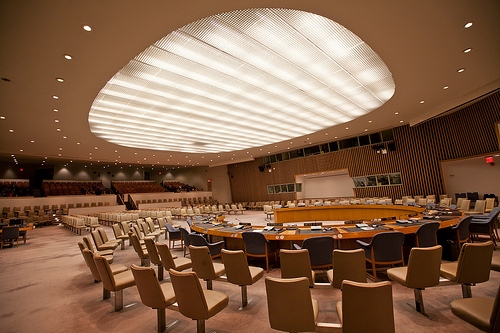
The anticipated UN General Assembly (UNGA) resolution calling for negotiations to begin next year on a treaty to prohibit nuclear weapons has now been submitted by the lead sponsors: Mexico, Austria, Ireland, Brazil, Nigeria and South Africa. It is anticipated that other states will co-sponsor the draft resolution (including New Zealand, we hope) in the weeks ahead, and – unfortunately – that the nuclear-armed states and their supporters will fiercely oppose it.
States will vote on the resolution in the UNGA First Committee some time between 24 October and 2 November 2016. The draft resolution, ‘Taking forward multilateral nuclear disarmament negotiations’, is available on the iCAN Aotearoa New Zealand website
It has nineteen preambular paragraphs which – among other things – outline the urgent need for a world without nuclear weapons, reference the Nuclear Non-Proliferation Treaty (NPT) and various nuclear disarmament initiatives, and welcome the outcome of this year’s Open-Ended Working Group (OEWG) Taking Forward Multilateral Nuclear Disarmament Negotiations.
The draft resolution then has fifteen operative paragraphs which include:
“8. Decides to convene a United Nations conference in 2017, to negotiate a legally-binding instrument to prohibit nuclear weapons, leading towards their total elimination;
9. Encourages all Member States to participate in the conference;
10. Decides that the conference shall convene in New York, under General Assembly rules of procedure unless otherwise agreed, for 20 working days in 2017, two sessions, with the participation and contribution of international organizations and civil society representatives.
11. Decides also that the conference will hold a one-day organizational session in New York as soon as possible;
12. Calls upon States participating in the conference to make their best endeavours to conclude as soon as possible a legally-binding instrument to prohibit nuclear weapons, leading towards their total elimination” …
60,000 African Refugees and 70,000 Bedouin Affected
Israel‘s obsession with Jewish ethnic purity has led to the enactment of open ethnic cleansing by the current Netanyahu government.
Aside from Israel’s genocidal policies towards Palestinians in the West Bank and Gaza, new legislation affects 60,000 African refugees and 70,000 Bedouin living within Israel proper. The latter are, by law, Israeli citizens and many have served in the Israeli Defense Force.
Officials in the Netanyahu government justify their racial purity laws as essential to prevent “demographic” problems.
Ensuring that Israel remains both a Jewish state and a democracy requires that non-Jewish populations must be strictly controlled. Allowing non-Jewish Israelites, either singly or jointly, to acquire a sizable voting block would pose a major threat to maintaining Judaism as the official state religion.
In 1948, this resulted in nearly a million Palestinians being driven from their homes and farms by force, to take up residence in refugee camps in Egypt, Jordan and Lebanon. Following the 1967 war, Israel seized the areas of Gaza (in Egypt) and the West Bank (in Jordan) that housed the Palestinian refugee camps.
Since then, they have made no secret of their intention to drive the Palestinians from these areas, as well, and repopulate them with Jewish settlers.
Africans Called Cancer on Jewish State
Receiving less attention are Netanyahu’s brutal policies towards 60,000 African refugees, who fled ethnic cleansing in Eritrea and Sudan to resettle in Israel. As journalist David Sheen describes in Journalists Blistering Indictment, leaders in Netanyahu’s government describe them as a “cancer” on the Jewish state.
It has become official government policy to deny them work permits and health care, and a state sponsored rabbi group has called on landlords not to rent to Africans. In 2012, the Netanyahu government amended the 1954 Prevention of Infiltration Law. The original law was intended to bar Palestinians from returning to family property Israel confiscated in 1948. The new amendment allowed the Israeli government to criminalize and detain African refugees for up to three years prior to deporting them.
Knesset Circumvents Israeli Supreme Court
Last year, Israel’s supreme court unanimously struck down the amendment. Under international law, it’s illegal for any country’ to deport asylum seekers back to countries where they will experience persecution. The Knesset responded by passing a new law ordering the indefinite imprisonment and the detainment of any foreign person caught trying to cross into Israel.
Under the new legislation, hundreds of African refugees are required to live in the “open” Holot detention center in the Negev Desert. Refugees are permitted to leave the detention center briefly during daytime hours. However they must return three times a day for roll call and must sleep there at night. Human rights groups have also appealed the new law to the Supreme Court.
Meanwhile, as shown in the video below, the government is organizing state sponsored protests in which Israel’s Jewish citizens are encouraged to trash African refugees’ homes and assault them. If Israel can’t legally deport them, they hope they will leave voluntarily if the government makes their lives as miserable as possible.
Ethnically Cleansing 70,000 Bedouin
Israel’s ethnic purity policies aren’t limited to Palestinians and Africans. Israel is also determined to displace 70,000 Bedouins through the Begin-Prawer law enacted in 2013.
If fully implemented, the Prawer-Begin Plan will result in the destruction of 35 “unrecognized” Arab Bedouin villages, the forced displacement of up to 70,000 Arab Bedouin citizens of Israel, and the dispossession of their historical lands in the Naqab.
Palestine Applies to join International Criminal Court
Genocide and ethnic cleansing are crimes against humanity under international law. Serbian and African leaders suspected of ethnic cleansing have faced prosecution by the International Criminal Court (ICC) in The Hague, Netherlands.
At the beginning of April, the Palestinian ambassador to the UN announced that the Palestinian Authority had sought membership in the ICC and 12 other UN conventions, due to continuing Israeli obstruction in current peace talks. When the UN General Assembly recognized a state of Palestine in October 2012, Palestinians gained the right to seek membership in UN institutions and treaty bodies and possibly take their complaints over Israeli settlement-building on occupied land (also illegal under international law) to the ICC.
On April 12, the UN announced that the state of Palestine had been admitted to the 13 conventions as of July 2, including membership in the ICC and the convention against genocide.
The psychedelic drug ibogaine is used to treat drug addiction and alcoholism in more than 190 countries, including Mexico, Canada, Costa Rica, New Zealand, Russia, China and Ukraine. Sixty years of research has demonstrated ibogaine’s effectiveness in opiate, cocaine, amphetamine, nicotine and alcohol dependency, as well as treatment resistant post traumatic stress disorder (PTSD). Yet owing to the ludicrous and ineffectual “War on Drugs,” ibogaine remains illegal in the US.
It’s an issue of special relevance to veterans, who suffer a high rate of combat-related post traumatic stress disorder (PTSD) and addiction disorders. Twenty percent of Iraq and Afghanistan veterans develop PTSD or depression, with 22 a day, on average, committing suicide. Veterans wounded in Middle East conflicts have a 25-35% chance of becoming addicted to prescription opiates.
Conventional treatment for these disorders is associated with a high failure rate, translating into long term disability and suffering for many vets. International peer reviewed research shows that addicts treated with ibogaine have lower relapse rates than those receiving conventional treatment. Yet thanks to the federal government’s absolute ban on so-called “hallucinogenic” drugs, veterans wanting help for treatment resistant addiction disorders and PTSD must seek out private igobaine clinics in Mexico, Canada and Costa Rica.
Ibogaine Discovered in 1962
Researcher Thomas Kingsley Brown summarizes ibogaine’s history in “Ibogaine in the Treatment of Substance Dependence” in 2013, 6, 2-16 Current Drug Abuse Reviews, 2013, 6, 2-16
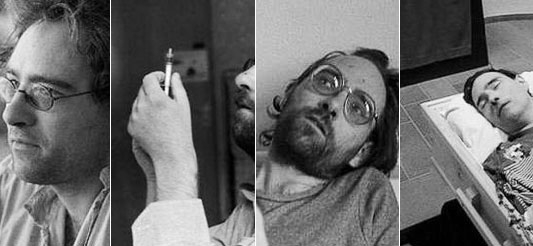
Extracted for the West African iboga plant, ibogaine’s benefit in opiate addiction was first discovered in 1962 by a heroin addict named Howard Lotsof. Lotsoft was amazed that it totally blocked any symptoms of heroin withdrawal. Like other addicts who have taken it, he experienced no hallucinations. He has described the effect, which lasted approximately 36 hours, as a “waking dream.”
As Brown elaborates in his paper, it’s common for addicts who take ibogaine to experience a mind expanding panoramic review of their life. They describe being flooded with past memories of traumatic or highly emotional experiences, important personal relationships and bad decisions and choices. In Lotsoff’s case, he gained the understanding that his addiction was fear and anxiety-driven and that he could free himself of these feelings.
Lotsof’s Campaign to Legalize Ibogaine
Ibogaine and other psychedelic drugs were still legal in the US in 1962. In the late sixties, it became illegal, along with LSD, mescaline, psilocybin and other hallucinogens. Determined to share his discovery with other addicts, Lotsoff spent years lobbying researchers, public officials, and pharmaceutical companies to study ibogaine’s potential as an addiction interrupter. He got nowhere. Big Pharma has more or less total control over new drug research, and a “natural” substance administered as a single dose has limited profit potential.
In 1986, Lotsof himself patented ibogaine himself for heroin, cocaine, amphetamine, alcohol, nicotine, and polysubstance abuse. After forming the private company NDA International, he began working with scientists overseas in setting up both animal and human studies. In the early nineties the US National Institute on Drug Abuse (NIDA) developed Phase I and II clinical trial protocols for ibogaine. They cancelled the project in 1995 because the Clinton administration felt it was too controversial.
How Ibogaine Works
Studies in rodents reveal that repeated drug and alcohol administration causes changes in gene expression in the ventral tegmental area of the brain. Ibogaine reverses this by increasing Glial Cell Line-Derived Neurotrophic Factor (GDNF) activity.
As Brown and other researchers point out, the drug isn’t a “cure” for addiction. However by eliminating or substantially decreasing withdrawal symptoms, it creates a clear “window of opportunity,” allowing the addict to cognitively choose to take back control of their life.
Ibogaine doesn’t address the behavioral component of addiction. As in mainstream recovery programs, an addict is less likely to relapse if they’re prepared to substitute new positive behaviors for the addictive behaviors. Most need support from aftercare programs, family and friends to achieve this.
Medical Supervision Required
Thomas’s review stresses that ibogaine should only be used under close medical supervision, owing to potentially serious (in some cases lethal) side effects. He also reminds us that these health risks must be weighed against the very real health consequences of chronic addiction (e.g. liver disease, cardiovascular disease, traumatic injury, overdose, malnutrition). The death rate associated with methadone and buprenorphine, the current treatments of choice for heroin addiction, is even higher. In 2005/2006, the annual death rate from methadone poisoning was double that from heroin-related poisoning. In New Zealand, the growing fatality rate from methadone poisoning was part of the rationale for legalizing ibogaine in 2009.
Avoiding Medical Complications with Ibogaine
After decades of international use, the potential medical complications of taking ibogaine are well known, as are the contraindications against taking it. The most common exclusion criteria are pre-existing heart disease, pre-existing bleeding problems or chronic blood clots. No patient should take ibogaine without an electrocardiogram (EKG) to rule out heart problems. Moreover a doctor or nurse (preferably specialized in emergency medicine or cardiology) needs to be present to monitor the patient during the session.
All patients entering an ibogaine treatment center need to undergo a complete medical and psychological screening. If they’re taking drugs that interact adversely with ibogaine, staff at the treatment center need to assist them in safely tapering and discontinuing. Likewise alcoholics need to undergo medical detox prior to taking igobaine.
Our Public Obligation to Veterans
Despite the abundance of excellent US referral sites (www.iceers.org and http://www.myeboga.org/providers.html are the best), it seems terribly wrong to expect veterans with combat related PTSD and addiction disorders to go to Canada or Mexico for help. Even with the 25% discount Ibogalife in Costa Rica offers vets with PTSD, all these conditions have dire financial consequences. Private treatment simple isn’t an option for the vast majority of vets and non-vets struggling with them.
Surely the American public has both a moral and legal obligation to offer effective treatment to veterans with combat related conditions. Yet according to the Department of Veterans Affairs website, not a single VA program or hospital is undertaking ibogaine research. The only free ibogaine studies I could find were in New Zealand (for addiction disorders) and the Bahamas (for US vets with diagnosed PTSD).
Besides being immoral and illegal, it also makes no sense to make taxpayers fund ineffective methadone and buprenorphine maintenance programs – involving years of daily administration of an equally addictive drug – when other countries are having proven success with a safer, less expensive and more effective treatment option. At the very minimum, the VA should be funding ibogaine research through VA hospitals.
This is an absolute disgrace. Obama and Congress need to hear from vets and their families and veterans advocacy groups, as well as taxpayers. In other words, all of us.
The following 2006 video describes the experience of a lieutenant general and Green Beret who underwent treatment with ibogaine. He had become addicted to prescription opiates following a combat-related injury.
US Veto History Shows Flagrant Disregard for International Law
The western media is roundly condemning Russia for vetoing a Security Council resolution condemning tomorrow’s referendum on Crimean self-determination as illegal under international law. The US, as usual, is being extremely selective in their support for international law. Their own veto history reveals that they have vetoed 41 resolutions demanding that Israel respect international law in occupied Palestine.
According Samantha Power, US ambassador to the UN, “Russia has used its veto as an accomplice to unlawful military incursion.”
How ironic. Substitute “US” for “Russia,” and you could be describing US behavior as regards the Israeli occupation of Palestine.
The 41 US vetoes include numerous resolutions condemning the construction of Israeli settlements in occupied Palestine, which are illegal under the Fourth Geneva Convention. The Obama administration last blocked Security Council efforts to force Israel to end settlement construction in February 18, 2011. You have to question the President’s sincerity in the current Middle East peace process. For peace negotiations to be fair, surely they must start with an absolute requirement that Israel abide by international law.
Other resolutions condemn Israeli for massive human rights violations against Palestinian civilians, their illegal war of aggression against Lebanon and Gaza, and their illegal expropriation of land in the West Bank, the Golan Heights and East Jerusalem. The US also vetoed a call for the UN to investigate Israel’s role in the murder of UN Food Program workers and countless Palestinian civilians
Any of the five permanent members of the Security Council (US, UK, Britain, France, Russia, China) have the power to veto a Security Council resolution. There have been 264 vetoes of Security Council resolutions. Approximately half were exercised by the Soviets prior to 1965, in most cases to oppose the admission of new pro-Western states to the UN.
Since 1972, the US has vetoed more Security Council resolutions than any other permanent member. In addition to vetoing resolutions on Palestine, it has vetoed fourteen resolutions condemning South Africa’s apartheid regime, one each condemning illegal US military aggression against Nicaragua and Panama and one condemning the illegal British war in the Falklands.
(With apologies to Marie Antoinette. This post is dedicated to readers who have lost their pensions or unemployment benefits or who are looking at having their hours, wages or Social Security benefits reduced. Some simple cricket recipes below. Please note in preparing cricket flour, you must first remove the legs and antennae. Next week: garden snails recipe from Gordon Ramsay.)
By 2050 the population of the Earth will be 9 billion, and food production will have to double to feed them all. This will be a major challenge, given that oceans are already overfished and a growing shortage of fresh water, which will drastically worsen as the planet warms. The Food and Agriculture Organization of the United Nations believe that edible insects, both as food and animal feed, may be the answer to growing food shortages.
They point out that over 1900 insect species of insects edible and two billion people around the world already consume them as a regular part of their diet. Insects are a highly nutritious and healthy food source with high fat, protein, vitamin, fiber, omega-3 fatty acids and essential minerals. The most common insect species used food are bees, wasps, ants, grasshoppers, locusts, crickets, cicadas, leaf and planthoppers, scale insects and true bugs, termites, dragonflies and flies.
Farming insects for food or animal feed is relatively new but has enormous potential, especially in third world countries. Insect rearing is not necessarily a land-based activity and does not require land clearing to expand production. Moreover because they are cold-blooded, insects are very efficient at converting feed into protein (crickets, for example, need 12 times less feed than cattle, four times less feed than sheep, and half as much feed as pigs and broiler chickens to produce the same amount of protein). Like pigs, they can be fed on organic waste streams.
As a business, insect harvesting and rearing is a low-tech, low-capital investment option that offers entry to the very poorest sections of society, including the landless. Protein and other nutritional deficiencies are typically more widespread in disadvantaged segments of society and during times of social conflict and natural disaster. Because of their nutritional composition, accessibility, simple rearing techniques and quick growth rates, insects can offer a cheap and efficient opportunity to counter nutritional insecurity by providing emergency food and by improving livelihoods and the quality of traditional diets among vulnerable people.
It is important to note that crickets should only be purchased from reliable sources. Crickets should be treated much in the same manner as any other raw food, in particular seafood. In other words it is best to keep crickets fresh as possible. Prior to preparing your crickets for a meal place them inside a plastic container or storage bag and keep them in the refrigerator at least for an hour or until you are ready to use them. This will not kill the crickets, but rather slow down their metabolism, inducing a state of hypothermia, in other words, prohibiting their movement when removed from container. If you prefer however, as many people do, feel free to place them inside the freezer for an hour or two as this will definitely kill them, guaranteeing their immobility.
After removing from refrigerator or freezer, place them in a pot of boiling water sized to hold the specific amount of crickets you’re using. Add a few pinches of salt. Boil for about two minutes. This ensures cleanliness. Once boiled, remove from water and let cool. Crickets at this time can be placed in storage bags and kept in the freezer or used right away for any number of recipes. All crickets should be prepared in this manner prior to eating.
Dry Roasted Crickets
Served as a snack for any number of persons
Ingredients:
25 – 50 live crickets – or however many you wish to cook/serve
Directions:
Salt, or any preferred seasoning that can be shaken or sprinkled onto crickets after roasting.
Next, preheat oven to 200 degrees. Arrange the crickets on a cookie sheet, making sure none of them overlap. Proceed to bake at low temperature for about 60 minutes or until the crickets are completely dry or dry enough for personal taste.
Open up oven at the 45-minute mark and test a cricket to see if it’s dry enough by crushing with a spoon against a hard surface or if you prefer, between your fingers. The crickets should crush somewhat easily. If not place them back inside oven until crisp.
Once roasted and cooled down, place a few crickets between your palms and carefully roll them breaking off legs and antennae in the process. This ensures clean and crisp crickets without legs or antennae getting in the way of.
Season them with salt, Kosher salt, sea salt, smoked salt or whatever sort of seasoning you wish. They are very good and healthy to eat as a roasted snack. Eat them on the spot or place them back into the freezer for future use.
Cricket Flour
Ingredients:
4 cups of flour
1 cup of roasted crickets (¼ – ½ cup of crickets to every cup of flour works well.)
Directions:
Break off the antennae and legs by gently rolling the cricket between your hands.
Once you collect enough crickets in a bowl proceed to crush either using a mortar and pestle or rolling pin on a hard surface.
Gather the crushed crickets – they should look like small specks (usually of dark brown color) and blend them well into the flour of your choosing.
Once you’ve blended the crickets with the flour you’re set to use it in any way you wish.
Hoppin’ Good™ Cricket Fried Rice
Serves 4 – 6
Ingredients:
4 cups cold cooked brown rice
1 ½ cups of roasted crickets (about 3 – 4 dozen)
1 cup chopped scallions
½ cup cooked corn kernels
2 large eggs
1 teaspoon Kosher salt
Powdered ginger to taste
Powdered coriander to taste
Garlic powder to taste
1 teaspoon fresh ground black pepper, or to taste
4 tablespoons oil for stir-frying, or as needed
1 ½ tablespoons light soy sauce or oyster sauce, as desired
Directions:
Wash and finely chop scallions. Lightly beat the eggs with salt, ginger, garlic powder, coriander and pepper.
Heat a wok or frying pan and add 2 tablespoons oil. When the oil is hot, add the eggs. Cook, stirring, until they are lightly scrambled but not too dry. Remove the eggs and wipe clean the wok or frying pan.
Add 2 tablespoons of oil. Add rice. Stir-fry for a few minutes, using wooden spoon to break it apart. Add crickets. Add scallions. Stir in soy sauce or oyster sauce as desired. Continue stirring for a few more minutes.
When the rice is heated through, add the scrambled egg back into the pan. Mix thoroughly. Stir in corn kernels. Serve hot.
This dish goes great with any other dish or appetizer, i.e., cooked greens, egg rolls, dumplings, etc.




 The Most Revolutionary Act
