World War I through Arab Eyes

Essential history I should have learned in high school but didn’t. I must have been absent that day. This documentary gives me a new understanding of how European colonial powers totally wrecked the Arab world – a process that continues to the current day.

World War I through Arab Eyes

Al Jazeera (2014)

Film Review

This is a three part documentary in which Tunisian journalist Malke Triki interviews European, Turkish and Arab journalists and surviving families about the role of Arab forces – on both sides – in World War I.

Part 1 concerns the forcible conscription of Muslim troops by both the Ottoman Empire and the Allies. Two-thirds of the soldiers who defeated England, Australian and New Zealand troops at Gallipoli weren’t Turkish, but Syrian, Lebanese, Jordanian, Iraqi and Palestinian. As these countries were still part of the Ottoman Empire, they were subject to a mandatory draft.

I was unaware that England and France, who had occupied large swathes of North Africa since the end of the 19th century, also forcibly conscripted Muslim troops. England forced more than 1.2 million Egyptians to fight for the Allied cause, while France forcibly drafted 100,000 Algerians, 80,000 Tunisians and 45,000 Moroccans.

The French were widely accused of using these colonial forces as cannon fodder to protect French soldiers.

Many colonial troops rebelled against being compelled to kill fellow Muslims. This, as well as their abominable treatment by Europeans, was the spark that inflamed the North African independence movements that arose after World War I.

Part 2 tells the story of the decline of the Ottoman Empire during the 19th century and the Ottoman-German relationship which led to their Treaty of Alliance in August 1914.

In 1830 the Ottoman Empire stretched from Mesopotamia (modern day Iraq) to the Red Sea and encompassed most of North Africa and the Balkans. It was under continual attack by European colonial powers. In the late 1800s, the British military seized Egypt and the French military Algeria, Tunisia and Morocco. In 1912, Italy seized Libya. In the 1912-13 Balkan Wars, the Empire lost its European territories.

This episode also describes the Ottoman leadership’s brutal suppression of Arab nationalism in the Middle East, particularly in Syria/Lebanon. In 1915, one third of the Lebanese population died of starvation and another third were permanently displaced when their villages were decimated.

It also provides important background on the Armenian genocide carried out by the Ottoman leadership in 1915-17.

Part 3 covers the secret Sykes-Picot agreement between Britain and France and the way the two imperial powers carved up the former Ottoman Empire between them, regardless of promises made to nationalist movements across the Arab world.

Despite the Egyptian Revolution and the Iraq Uprising, Arab subservience to Ottoman rule was replaced by a series of mandates across the region in which Britain and France seized control of the areas they prized most – to satisfy their own ambitions, interests and ultimately to gain access to region’s valuable oil resources.

World War I gave birth to the Turkish nationalist movement, which led to the founding of the modern Turkish state; and to Zionism, aided greatly by the Balfour Declaration of 1917.

Close-Up With Syrian Refugees on Lesbos (22.36)

The Island of All Together

Directed by Philip Brink and Marieke van der Velden (2015)

Film Review

I was strangely moved by this documentary of European tourists and Syrian refugees interviewing each other on the Greek island of Lesbos. The latter is a common destination for refugees who cross the Mediterranean from Turkey.

I was genuinely surprised by the high educational level of the refugees. All were professionals (lawyers, teachers, mechanical engineers) or skilled trades people (carpenter, cosmeticians) in Syria. It’s no wonder Germany is so eager to accept them.

The postscript to the film indicates that most of the pairs reunited once the refugees reached their destination, with most of the Europeans actively assisting their refugee with adapting to their new life.


The Global Refugee Scandal

Europe or Die

VICE News (2015)

Film Review

According to UNHCR (the UN High Commission for Human Rights), more than 50 million people have been permanently displaced through wars in the Middle East, political persecution, climate change and grinding poverty. Of these, hundreds of thousands face such life threatening conditions at home that they risk death by crossing the Mediterranean in rusty, leaky, overcrowded boats.

Refugees typically take one of four routes in their desperation to reach Europe: illegal entry into one of the two Spanish enclaves in Morocco, a short choppy boat trip from Turkey to the Greek island of Lesbos or across the Avros River into mainland Greece, jumping a wire fence from Greece into Bulgaria or crossing the Mediterranean from Libya to the Italian island of Lampedusa.

Europe or Die is a four part documentary follows some of these migrants on their dangerous voyage and closely examines their treatment by EU countries on their arrival.

This documentary was a real eye opener for me. Given the majority of these refugees are the helpless victims of proxy wars started and funded by the US and wealthy EU countries, their refusal of to adopt consistent and humane immigration policies is clearly a crime against humanity under international law.

Part I: For most sub-Saharan refugees seeking illegal entry to Ceuta and Melilla, the two Spanish enclaves on the Moroccan coast, the best option is to jump three high razor wire topped fences. Under EU law, the first fence demarcates the Spanish border. Refugees who make it past the first fence (it’s really a kind of game) are home free and must be given the option of moving to mainland Spain. They’re also entitled to legal assistance and an interpreter to help them apply for asylum.

The most common is for thousands to storm the fence simultaneously and overwhelming the border guards. Typically two out of 1,000 will get through. It’s illegal, under EU law, for Spanish police to forcibly return them. However “pushbacks,” as they are called are common. As is shooting their hands and feet to make it harder to climb the fence. This is also against the rules.

Part 2: A second common route for migrants is to take the “death boat” from Turkey to the Greek island of Lesbos or across the Avros River to mainland Greece. Refugees can pay smugglers several thousand dollars to cram them into shabby, overcrowded boats that frequently capsize.

Greece is experiencing a five-fold increase in illegal migration as a direct result of the civil war in Syria. Recently they have experienced a big influx of Iraqi refugees (mainly Yazidis*) with the rise of ISIS. As part of the game, the EU has another law, called the Dublin rule, that political refugees become the responsibility of the country where they are first picked up, irregardless of the country’s ability to provide jobs or social services.

Part 3: A third route is to cross the razor wife fence separating Turkey from Bulgaria, the poorest country in the EU. Bulgaria keeps political refugees in unheated tents without access to clean water. Once they are granted asylum they are forced to leave the camp and end up homeless on the streets.

Part 4: The final, most common method of reaching Europe is to cross from Libya to the Italian Island of Lampedusa. Up until a few months ago, the Italian Navy operated the only search and rescue mission in the Mediterranean. Called Mare Nostrum, it was made up of 900 personnel and 26 naval vessels – at a cost of $9 million euros a month.

In 2013, Mare Nostrum saved 150,000 migrants from boats that had capsized. Owing to the refusal of the EU to support this fantastically expensive program, it had to be cancelled in 2014.

It’s been replaced by Triton, an air surveillance program that requests nearby merchant vessels (if there are any) to rescue migrants in leaky votes.

In 2014, 170,000 migrants made it safely to Italy and 3,000 drowned.


*Yazidis are a Kurdish ethnic group ISIS attempted to exterminate in August 2014.

A Turkish Experiment in Direct Democracy

Taksim Commune: Gezi Park and the Uprising in Turkey

Global Uprisings 2013

Film Review

This short documentary tells the story of the occupation of Gezi Park and Taksim Square between May and July 2013. The occupation began as a protest against replacement of a popular park with high rise buildings.

Prime Minister Erdogan responded to the peaceful protest with unrestrained violence and brutality. This, in turn, awakened a broad cross section of Turkey to their underlying anger with Erdogan’s authoritarian regime. Young Turks are especially unhappy with massive youth unemployment related to the 2008 downturn and subsequent austerity cuts.

The occupation would eventually draw in unions, sports stars and fans, Muslims, Christians, atheists, ethnic minorities (e.g. Kurds) and even gay activists.

Like many of the Occupy encampments, the Taksim Commune came to provide food, medical care, market stalls and books for people involved in the protests. The film emphasizes the peoples’ assemblies that ran the Taksim Commune via consensus decision making.

This political unrest quickly spread across Turkey. In the intervening year, the grassroots movement against Erdogan’s authoritarian rule has continued to grow and exert its influence over Turkish society.

The US and Israel Quietly Break Up Iraq


oil tanker

US Court Orders Kurdish Oil Seized

While the world is distracted with Israeli atrocities in Gaza, the US and Israel are quietly breaking up Iraq. According to Reuters UK, a federal court in Texas has ordered US Marshals to seize a $100 million cargo of Kurdish oil on a tanker off the coast of Galveston, Texas – but only if the tanker enters US territorial waters.

Attorneys for the government of Iraq laid claim to the oil in a lawsuit they filed on July 28. Since May, the Kurdistan Regional Government (KRG) has shipped five million-barrel tankers of oil from the Turkish port of Ceyhan in defiance of Iraqi law, which mandates that Baghdad has sole authority over Iraq’s natural resources. One cargo of Kurdish crude was delivered to the United States in May to an unidentified buyer.

Four other tanker loads of Kurdish oil have been delivered to Israel.

The recent inability of the Iraqi government to defend its northern territories from the Islamic State (aka ISIS aka ISIL) has emboldened the KRG to assert control over the oil-rich city of Kirkuk. With the complicity of the Turkish government, they have been marketing the oil on their own behalf. Because Kurdistan is land-locked the oil must be shipped via pipeline to Turkey.

Obama’s Contradictory Position on Kurdish Autonomy

This is one rare instance in which the US and Israel appear to be on opposite sides (or do they?). According to the Wall Street Journal, the Obama administration publicly opposes direct oil sales by Kurdistan, fearing this could contribute to the break-up of Iraq.

Yet, repeating a common pattern, the official position contradicts growing evidence that the CIA is training and arming ISIS militants.

Israel, meanwhile, is eager to expand trade with Kurdistan. According to unnamed Israeli officials, they see it as an opportunity to expand Israel’s limited diplomatic network in the Middle East, while simultaneously shoring up the country’s energy security.

photo credit: judy_and_ed via photopin cc

Letter from a Modern Day Mandela

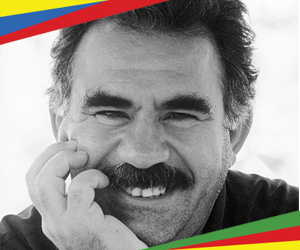
ocalan

photo credit: http://www.freeocalan.org/

Open Letter to the Guardian

Guest post by Abdullah Ocalan

On Thursday 5 December 2013, the Guardian published an editorial article on the occasion of Nelson Mandela’s death. The article included a significant(!) comparison between Mandela and some other names like Jawaharlal Nehru, Aung Sang Suu Kyi, and me.  As long as they approach the issue with a hegemon’s mindset, the potentates will certainly continue to make such comparisons among those figures wining the affection of their peoples. However, any comparison has its own inner problems.

The time of the struggles, varying geographic and political conditions and even the characteristic differences between the figures will render such comparisons problematic. First of all, for me, being remembered together with a leader for whom all the world shed tears shows the extent to which our struggle line has taken universal dimensions. It also demonstrates the fact that our case couldn’t be explained as a struggle only against an unjust treatment.

Writing on the capabilities of a leader with exemplary methods of struggle and negotiation just after his death needs some more pondering on the history and politics of risk-takers, in order to get a better understanding of the conditions of those who haven’t been afraid of struggling in the front line throughout history.

There are clear-cut differences between the front-line strugglers and deskbound analysts. The greatest difference is to witness the death of your comrades and your people, live the experience moment to moment, and do right and wrong.  Restricting the esteem and dignity of such an important leader with ‘the prison’ is a beleaguered approach which holds in contempt the self-realized political struggle of a people with over 40 million population voluntarily approving this leader as the representation of their own will.  How objective and just would it be to turn a blind eye on the national identity the Kurdish people have achieved after a 40-year-long freedom struggle, and on our peace efforts for a democratic solution to the Kurdish question.

Comparing me with Nelson Mandela in your article, you had referred to me as “feared and worshiped”. Here, not only can I see more easily the writer’s desire to be the state chronicle of a history which tramples on the world’s oppressed, but also I discern the codes of the purposive enmity harbored against both of the compared figures, whose only resource for facing the enslaving, massacre and denial policies is their own self-belief.

It is too evident to need proof that a person who has spent the last 14 years of his life in a prison-island alone and under solitary confinement can be a “source of fear” only for those who have put him into chains. The chains speak for themselves ….

In reply to those who, instead of analyzing the fear spread by the hegemons, are busy giving advice and teaching lessons to those struggling against these hegemons, I should say, in all modesty, that Dear Madiba and me have more parallels than contrasts.

Everybody knows that the ordeal succeeded in facing the Apartheid regime was an accomplishment of not only the South African people, but at the same time of the leader in whom they had unsuspectedly confided their fate.  No matter their numbers, the many ludicrous comments made on Mandela’s credibility come from the quarters which  adopt a remote and trivial approach to the ‘struggle of the oppressed’ rather than making a close and reasonable analysis.

The self-organization processes of the communities subjected to suppression and discrimination would differ from the common practices, especially when they begin to make a true analysis of the notion of capitalist modernity. Traditionally, the organizational options of ‘the book’ are already known. But time proceeds forward and circumstances change, in company with historical determinism. Changing conditions will bring about changes in the behavior and attitude of individuals and organizations, either captive or free. When it comes to the PKK, instead of bringing about pragmatic progress, these changes have led to the political and ethical progress for a movement which has transformed itself on the basis of the struggle for democratic modernity and the developing direct democracy examples in the world.

The 12 September 1980 fascist coup followed by many organized coups against our community as well as the international conspiracy act against me and our movement share one thing in common with other interferences in other struggles of the oppressed; and that is the silence of the international community in the face of these interventions.  Despite the progress in the international democratic standards in the 21st century, due to the state propaganda characteristic of the international conspiracy, the dehumanization of the struggling leaders held captive still continues, based on poor intellectual standards.

How odd it is that a credible newspaper in Britain has not noticed the recent democratization progresses that we have made in Mesopotamia. As far as the approach is concerned, I hope it to be only ‘odd’, not more. Looking at the general approach of the article, what I see is not only the “oddness”; rather, every line is a dead giveaway to a hierarchic and ‘from above’ viewpoint.

Here, those opposing peace are accusing us of starting negotiations, are dehumanizing me in the eyes of the new generations and defaming our movement which has adopted peace and settlement as its main principle.  They are running and organized activity to blacken the reputation of our efforts for democratic modernity.  How odd it is that racist notions and old propaganda rhetoric which have even lost their reputation in Turkey are still being repeatedly covered in the international press.

The only topic to be discussed after Mandel’s demise should be Apartheid, a regime which history would remember only with shame. Nobody would keep a memoir of Apartheid and its leaders; nobody would shed tears for them; whereas Mandela has become a shining star for the peoples of Africa.  Our historical mission is to ensure the ever brilliance of this star for the peoples of the Middle East. The friendship developed on the basis of principled and political integrity between the peoples’ movements and particularly our movement, relies on the changing dynamics and the horizontal nature of their policies.  To believe that these laws of goodwill and friendship have been developed on the basis of fear can only be explained by having no knowledge about the metamorphosis eras the Kurdish political movement has undergone and failing to observe its democratic inner reflections of the peaceful and negotiating perspective of this movement.

Likewise, negotiation and struggle are both important processes in determining the future of peoples’ movements and those leading these processes are figures winning the confidence of the peoples, not ‘feared’ ones. If not so, it wouldn’t be possible for these movements to be represented both in the parliamentary system and the local politics , as it wouldn’t have been possible to succeed in the years-long armed struggle.

My recommendation to the editorial board of the Guardian is to do more research and analysis on the role of the women in our political movement and the resulting transformative effects. Then, they would certainly encounter such an infinite experience so as to take off their colonialist hat, though ashamedly.

Abdullah Ocalan
The Prison Island of Imrali

Abdullah Öcalan Apo, is one of the founding members (1978) of the Kurdistan Workers’ Party (PKK) in Turkey. Like the early ANC, the PKK is labeled as a “terrorist” organization by the US and its allies. Link to “Free Ocalan” website: http://www.freeocalan.org/