Obama Loses Senate Vote on TPP(A)

tppa protest

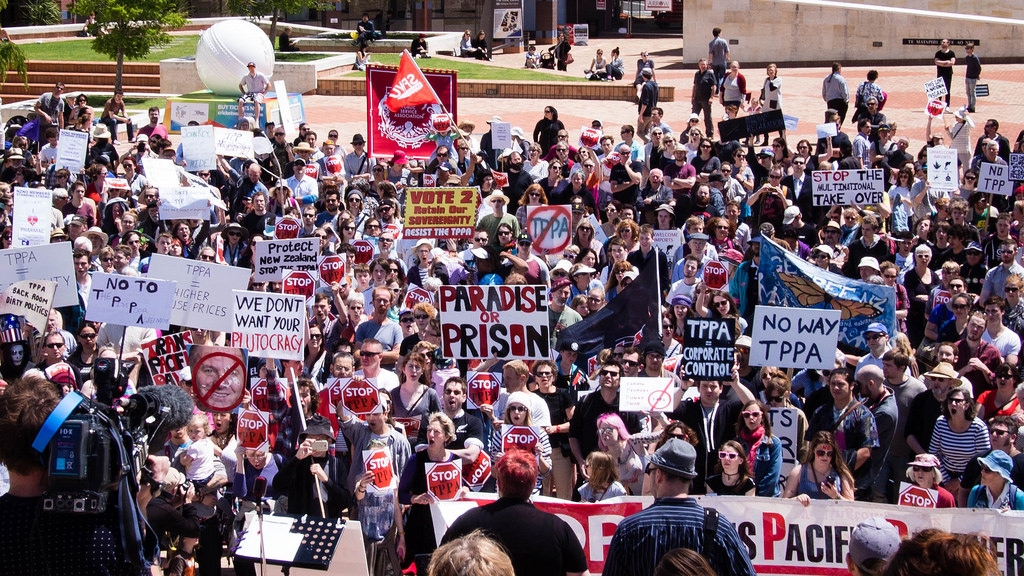
Wellington anti-TPPA protest Nov 2014

Yet another victory for our side. The tide seems to be turning against corporate America.

Today the Guardian reported that Tuesday’s 52-45 senate vote shut down further discussion of the Transpacific Partnership Agreement. Owing to the threat of filibuster, this procedural vote required at least 60 “ayes” in order to let the Senate host discussions on whether or not to give the president “fast track” authority.* Failure to reach that threshold puts the future of the TPP(A) in jeopardy.

The proposal was defeated by Democrats wanting to add measures to protect US workers and prevent currency manipulation.

Most analysts agree that the eleven other countries negotiating TPP(A) are unlikely to agree to the treaty unless they know the US Senate will approve it without modification.

Many also believe the setback spells an end to any chance the US will sign up to the TPP(A) before the next US presidential election in late-2016.

According to the Guardian, TPPA opponents have been emboldened by the growing influence of liberal senators Elizabeth Warren and Bernie Sanders and were joined by all but one Senate Democrat in voting against moving forward with TPP.

Only one Democrat, Senator Tom Carper of Delaware, backed the measure. Pro-trade Oregon Senator Ron Wyden, who championed the fast track measure in committee, changed his vote to “no.” He’s insisting that fast track be bundled together with three other trade bills, including one that would impose import duties on countries that manipulate their currencies for unfair trade advantage.

TPP is a secret treaty being negotiated behind closed doors without input from the public or elected representatives. Documents released by Wikileaks in March revealed the TPP(A) has a clause known as Investor State Dispute Settlement (ISDS). It means if local or national governments enact legislation for greater environmental protections, health regulations or rules to assist local businesses – anything that interferes with foreign corporations’ profits – the corporations can sue them in secret tribunals run by corporate lawyers.

Here in New Zealand, we are especially concerned about a clause in the leaked text that would allow pharmaceutical companies to sue us for using generic drugs (in preference to brand named drugs) in our National Health Service. We’re also concerned the TPP(A) would enable Monsanto to sue us over laws that prohibit farmers from planting GMO crops.

Besides the US and New Zealand, the other 10 countries involved in TPP(A) negotiations are Australia, Brunei, Canada, Chile, Japan, Malaysia, Mexico Peru, Singapore, the and Vietnam.

Read more here


*With “fast track” authority, the Senate would be forced to vote a bill approving TPP(A) up or down without amending it.

Obama’s Setback in Beijing

itsourfuture


Did China Just Scupper the TPPA?

The Transpacific Partnership Agreement (TPPA) is a secret free trade treaty Obama is negotiating with eleven other Asian Pacific countries (US, New Zealand, Australia, Malaysia, Japan, Chile, Peru, Canada, Mexico, Vietnam, Singapore and Brunei). The President had hoped to seal the deal at the recent Asian Pacific Economic Cooperation (APEC) summit in Beijing. Instead all 21 Pacific Rim countries have agreed to develop a roadmap for a Free Trade Area of the Asia-Pacific (FTAAP) treaty. The FTAAP would include China and Russia, whereas the TPPA excludes them.

China Deliberately Excluded

The TPPA is viewed as a centerpiece of Obama’s “strategic rebalancing” towards Asia. Also known as the “Asian pivot,” Obama’s intention is to counter China’s growing economic strength by isolating them economically and militarily.

The US has required the twelve countries participating in TPPA negotiations to sign a secrecy clause. Only corporations (i.e. the 600 corporations that helped write it) are allowed to see the text of the treaty. Not even Congress is permitted access. If Wikileaks hadn’t leaked large sections of the draft agreement, we wouldn’t even know it existed.

Is TPPA Really a Trade Treaty?

Scheduled to coincide with the APEC summit, November 8 was an International Day of Action against the TPPA, with major protests in New Zealand, Australia, Malaysia and the US. From the sections which have been leaked, it seems the TPPA isn’t a trade treaty at all. It’s really an investor protection treaty, granting corporations the right to sue countries for laws that potentially hurt their ability to make a profit. These lawsuits, involving hundreds of millions of dollars, would be heard by secret tribunals run by corporate lawyers. There would be no right of appeal.

In other words, the intent of the TPPA is to allow corporations to overturn the environmental, labor and healthy and safety laws and regulations of member countries. There’s even a special “transparency” clause inserted by the pharmaceutical industry that would allow them to challenge formularies (in the US this would include Medicaid and the VA) that promote cheaper generic medications.

If finalized, the TPPA would also allow oil and gas companies to overturn fracking bans, Monsanto to overturn GMO labeling laws, investment banks to overturn banking regulations and the telecommunications industry to overturn Net Neutrality laws.

Why the Secrecy?

It’s pretty obvious why Obama is trying to negotiate the TPPA in secret. Prior investor protection treaties (e.g. the Free Trade of the Americas Agreement) have gone down in flames thanks to massive public lashback, both in the US and in treaty partner countries.

Congress isn’t too happy, either, about being denied access to the draft TPPA treaty. In November 2013 Congress voted down Obama’s request for “fast track” authority on the TPPA. Fast track, otherwise known as Trade Promotion Authority, would require Congress to accept the final TPPA deal or reject it. No debate would be allowed on specific provisions.

There are rumors Obama plans to reintroduce TPPA fast track authority before Christmas, hoping for a better outcome with a new, pro-business Republican congress.

The POTUS also had hopes of ramming through an agreement on the TPPA treaty in Beijing, at a side meeting in the US embassy. It appears he did try and failed, as Pepe Escobar describes in a recent RT article Lame Duck Out of the Silk Trade Caravan.

The Effect on Australia and New Zealand

A trade deal that excludes China, their major trading partner, makes absolutely no sense for Australia and New Zealand. Kiwi and Aussie environmental and labor activists are also deeply concerned about signing an international agreement that allows multinational corporations to sue their governments in a secret corporate tribunal. They’ve worked damned hard to win laws and regulations guaranteeing minimal environmental, labor and health safety standards. If the TPPA goes through, these could all be wiped out with the stroke of a pen.

China Aims to Suppress US Influence in Asia

In an interview with Chinese media, Obama denies he was trying to isolate China by pressuring Asian Pacific countries to sign a secret trade deal that excludes them. Yet it’s pretty obvious to all concerned that’s exactly what he’s trying to do.

It’s also pretty clear that Chinese president Xi Jinping outmaneuvered him. In addition to getting all 21 APEC nations to sign onto an FTAAP feasibility study, China signed other trade deals geared towards reducing US dominance in the region.

On Monday the Chinese and Malaysian central banks signed a deal to establish a yuan clearing bank (to facilitate energy and other trade deals in local currencies rather than US dollars).

Russia and China signed a  similar deal to conduct oil trades in rubles and yuan, rather than US dollars. According to Russian president Vladimir Putin, the new agreement will significantly reduce US influence over world energy markets.
Back in October,

Back in October, China launched the Asian Infrastructure Investment Bank a rival to the US-dominated World Bank and Asian Development Bank.


photo credit: rawEarth via photopin cc

Also published in Veterans Today

New Zealand Kicks Off Global Protest Against TPPA

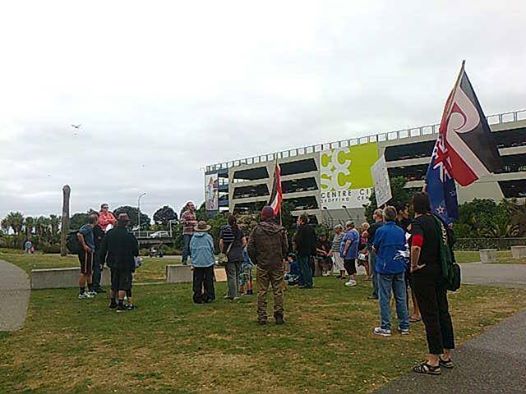
Thousands marched in 17 New Zealand cities yesterday, with nearly 200 taking over the streets in New Plymouth (pop 55,000). The Transpacific Partnership Agreement is another “free” trade agreement like NAFTA and GATT (the treaty that formed the World Trade Organization).

Only this trade deal is being negotiated in total secret. Obama has forced the leaders of 11 other countries to keep the TPPA negotiations secret until it’s signed. Neither Congress nor any members of parliament have seen the text.

What we do know about the TPPA is that it gives immense power to global corporations. If the text is released before the treaty is signed, it will face the same massive public opposition that scuppered the Free Trade of the America Agreement (FTAA). It’s only because Wikileaks has leaked portions of the TPPA that we know anything about it.

Here in New Zealand, we are mainly concerned about provisions in the TPPA allowing private corporations to sue governments if their environmental, labor or health and safety laws interfere with their ability to make a profit. Kiwi activists have worked hard to win regulations guaranteeing minimal environmental, labor and health safety standards. If our prime minister signs the TPPA, some secret corporate tribunal in Geneva could dismantle all these laws.

The 12 countries negotiating the TPPA are the US, New Zealand, Australia, Malaysia, Japan, Chile, Peru, Canada, Mexico, Vietnam, Singapore and Brunei.

You can read about our New Plymouth protest (and watch a video clip) at the Taranaki Daily News site.

Activists in North America will be demonstrating against the TPPA (or TPP as they call it) the entire week.

Protests will be happening in California, Florida, Oregon, Washington DC, Colorado, Massachusetts and Pennsylvania. To join in – and learn what else you can do (especially if you live in other states) – go to Stop Fast Track Week of Action


New Plymouth Hits the Street

NP TPPAphoto by Moana Williams

Thousands marched in New Zealand’s nationwide mobilization against the Transpacific Partnership Agreement (TPPA) on March 29, with more than a thousand in Auckland, 400 in Wellington, 200 in Hamilton and Nelson, 125 in Whangarei, 100 each in Tauranga, Napier, Christchurch and Dunedin, 80 in Palmerston North and New Plymouth, and 30 in Invercargill. For a small town like New Plymouth, protests this size are rare, and it got good coverage in the Taranaki Daily Newsl

The TPPA is a free trade agreement which is currently 12 countries, including the US and New Zealand, are currently negotiating behind closed doors. Up to this point, the other 11 countries have caved in to US demands that the text of the TPPA be kept secret until it’s signed. About a month ago the Malaysian government  government announced they would release the text before signing it.
.
According to draft text released by Wikileaks, the new treaty would allow corporations to sue countries in a private tribunal for any laws that interfere with their ability to do business. In New Zealand, this would undermine our access to cheap generic medication, environmental and labor regulations and reduce Internet freedom.

Like NAFTA and the WTO (World Trade Organization), the TPPA only helps corporations – it’s a pretty shitty deal for ordinary Americans.

C’mon Americans we need your support in stopping Obama from turning the global economy over to Monsanto. Go to http://www.exposethetpp.org/ to find out how you can help.