The Care and Feeding of Gut Bacteria

diet myth

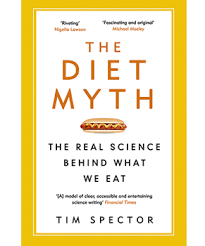
The Diet Myth: The Real Science Behind What We Eat

by Tim Spector

Weidenfeld and Nicholson (2015)

Book Review

The Diet Myth is all about looking after our intestinal bacteria – which are ultimately responsible for the proper functioning of our digestive, immune, endocrine and nervous system. As Professor Tim Spector explains, all mammals co-evolved over millions of years with the bacteria that inhabit their intestines. Because these bacteria produce a number of vital biochemicals that our bodies are genetically incapable of producing, without them the species homo sapiens would not exist. This relatively recent discovery has led many scientists to classify the microbiome (the collective name given to gut bacteria) as a vital organ like the brain, liver or kidneys.

Civilization hasn’t been kind to our intestinal bacteria. For various reasons (overuse of antibiotics, processed foods and pesticides like Roundup), urban life has caused us to lose half of the septillions of gut bacteria we started out with. Nearly all the chronic illnesses that plague modern society (obesity, heart disease, stroke, diabetes, cancer, autoimmune disease, depression, autism, schizophrenia and possibly drug addiction and alcoholism) can be traced to loss or malfunction of intestinal bacteria.

For this book, Spector has chosen to focus on dietary research into foods that improve the health and diversity of our remaining gut bacteria. He blames the myriad of contradictory diet fads on the reality that each human being has their own distinct collection of bacteria. This means the foods that keep them healthy depend on the preferences of their particular bacteria.

Fortunately he’s able to make a few general recommendations that seem to apply to most people.

According to Spector, people with the most diverse profile of gut bacteria are the healthiest. The best way to promote this diversity is through a diverse fiber-rich diet that includes:

  • At least 20 different food types per week
  • A daily serving of 5 vegetables and 2 fruits
  • Daily servings of probiotic foods (fermented foods, such as yogurt, sauerkraut and miso, raw milk and unpasteurized cheeses) that contain beneficial bacteria.*
  • Daily servings of prebiotic foods rich in polyphenols that gut bacteria love**
  • A strict limitation on red meat,*** sugar, refined carbohydrates, transfats (hydrogenated fats found in vegetable oils, margarine and Crisco) and processed foods

Research also indicates that lifestyle factors such as exercise (athletes have the most diverse microbiomes) also promote bacterial diversity (and good health). As does episodic fasting.****


*These mainly provide different strains of lactobacillus and bifidobacteria that crowd out harmful inflammatory gut bacteria.

**Foods rich in polyphenols include dark chocolate, coffee, green tea, turmeric, red wine, onions, garlic, (uncooked) extra-virgin olive oil, roasted nuts, Jerusalem artichokes, chicory root, leeks, asparagus, broccoli, bananas, wheat bran and fermented fruits and vegetables.

***Citing numerous studies, Spector totally debunks the claim that red meat is harmful due to its fat content. He maintains the risk associated with red meat is the conversion (by gut microbes) of L-carnitine to trimethylamine oxide, which causes plaque build-up in arteries (in Europeans – this effect appears to be absent in other ethnic groups). He recommends that Europeans limit their intake of red meat to ½ serving or less per day. Those who eat more than this have a 10% increase in mortality. Those who eat one daily serving or more of processed meat (sausages, ham, salami, etc) have a 40% increase in mortality.

****When people fast, a gut organism caused Akkermansia cleans up gut inflammation by feeding off the intestinal lining. Research reveals specific benefit from the 5/2 diet in which people fast two days a week and eat normally the other five.

How Our Food and Health Systems Are Killing Us

Mask of Deception

Directed by Phillip Rainford and Gail Blundell (2013)

Film Review

Mask of Deception, whose title is somewhat misleading, is best described as an Australian public service documentary about ways our food and health system are killing us. Overall I think viewers will find it useful to have all the major health risks covered in one place.

Unfortunately the film finishes a bit raggedly, with a diffuse attack on the Australian health care system and its long waiting lists, shortage of nurses, and efforts to suppress natural food supplements. The call for civil disobedience at the end seems to come out of nowhere.

Sadly western medicine has grown into an industry dedicated to marketing pharmaceuticals. In a a health system geared towards health promotion and disease prevention, our doctors would be warning us about these health risks instead of handing us prescriptions.

Some of the specific risks (gluten, fluoride, mercury-laden dental amalgam, white sugar, artificial sweeteners, transfats, liquid vegetable oils, vaccinations, mammograms, statins and chemical food additives) mentioned are fairly well covered by Natural News, Dr Mercola and similar natural health sites.

Others are less well known. For example, I was totally unaware of the link between high soy diets (especially for infants on soy formula) and hypothyroidism and type I diabetes.*


*The soy common in Asian diets has been heavily fermented, in some cases 5-7 years, to make it more digestible.

The Sugar Conspiracy

The Secrets of Sugar

By Fifth Estate (2014)

Film Review

The Secrets of Sugar is a Canadian documentary about the conspiracy by the sugar industry and processed food companies to conceal the damaging effects of sugar on human health. For decades, the medical establishment has led us to believe that our intake of animal fat is responsible for soaring rates of obesity, diabetes and heart disease. It turns out the real culprit all along is sugar (see The Big Fat Surprise).

Investigators have uncovered industry documents going back to the 1950s linking excess sugar intake with health problems. In 1972, researcher John Yudkin published the book Pure, White and Deadly about research linking sugar to heart disease. The response by the food industry was a vicious campaign to portray Yudkin as an incompetent quack. This, in turn, led to a thirty-year shutdown of institutional funding for research into sugar’s health effects.

For me, the film’s most shocking revelation was the immense amount of sugar hidden in so- called “healthy” processed foods, such as yoghurt, oatmeal, soup and Healthy Choice frozen dinners. In one segment, a former industry scientist nicknamed “Dr Bliss” explains the importance of the “bliss point,” the quantity of added sugar that makes you crave a particular product.

A close look at product labels suggests they are designed to confuse consumers about the actual sugar content of foods. Meanwhile like the tobacco industry, Food Inc spends billions of dollars lobbying against government (and UN) recommendations for a maximum daily sugar intake and clearer food labeling laws.

For years, doctors and dieticians have been telling us that sugar is bad because of all the “empty” calories. New research indicates sugar acts as a poison, inflicting direct damage on the liver and brain via its impact on insulin production. In addition to studies implicating high sugar intake in obesity, diabetes, heart disease and cancer, others point to its role in the development of Alzheimer’s Disease and polycystic ovarian disease.

Industry scientists interviewed in the film manifest the same “blame the victim” mentality as the tobacco industry. They maintain the responsibility lies with the consumer to choose whether to eat sugar – or to smoke. The filmmakers counter that healthy choices are impossible without good information.

The film follows an obese couple over three weeks, who achieve significant weight loss, as well as reductions in cholesterol and triglycerides, simply by eliminating all processed foods from their diet.

Also posted in Veterans Today