The 1% at Their Finest

The Super Rich and US

BBC (2015)

Film Review

The Super Rich and Us features casual cameos of British billionaires openly displaying their narcissistic indulgence in trophy assets. There is also a brief appearance by economist and author Thomas Piketty (Capital in the Twenty-First Century). The goal of the documentary is twofold: to debunk trickle down theory and to critique government policies that have made Britain one of the most unequal nations on the planet.

The filmmakers maintain that Britain’s top 1% generates and consumes all the so-called growth the UK has experienced over the last five years. None of it derives from increased investment, job growth, wages or productivity.

The British 1% has doubled their income between 1980 and 2015, while income for everyone else has stagnated or declined. Likewise the Conservative government’s 80 billion pounds in austerity cuts is roughly equal to the bonuses banks paid out to CEOs.

Why Britain Has the Most Billionaires

The UK has more billionaires per head (104) than any other country. This stems largely from a policy decision to compensate for factories moving overseas by making the country a tax haven for rich colonials seeking to avoid taxes in their own country – under the delusional belief it would make everyone else richer.

In the 1980s, Margaret Thatcher significantly reduced taxes on Britain’s native millionaires and billionaires. She argued, as Reagan did in the US, that taxing the rich made society poorer. These policies, which have changed little over thirty years, have made Britain the world’s favorite tax haven, as international pressure forces other traditional tax havens (Switzerland, Luxemburg, Cayman Islands, etc) to shut up shop.

Trickle Up vs Trickle Down

Thanks to the wholesale repeal of banking and corporate regulations, none of this surplus wealth trickled down to the rest of the population the way Thatcher claimed it would. Instead the super rich have been sucking up shrinking lower and middle classes resources into their vast reservoir of private wealth. The main reason trickle down doesn’t work is that the 1% spends their surplus wealth on diamond jewelry, yachts, sports cars and other luxury goods that generate income for only a handful (if any – most of these goods are imported) of working people.

The film contrasts British tax policies with those of Sweden and Denmark, which the rich pay a fair share of taxes. Not only do both have GDPs equal to or higher than the UK’s, with numbers that reflect genuine improvement in productivity and job and wage growth. When polled, eighty-eight percent of Danish people are perfectly happy with their tax rate because they see it reflected in generous government services.
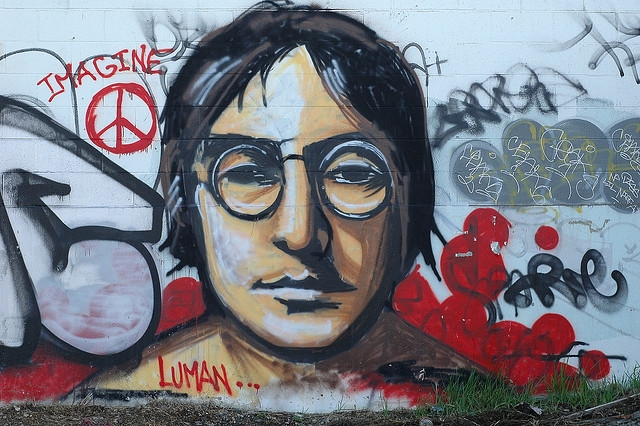

Mae Brussell and the John Lennon Assassination

john lennon

The second of two posts about the late political researcher Mae Brussell

Operation Chaos

In addition to her other research, Mae Brussell also played a vital role in bringing the CIA’s Operation CHAOS to public attention. According to Brussell CHAOS, which was launched in 1967, played a significant role in “neutralizing” popular rock musicians who were contributing to the rise of the New Left. According to Brussell, most of these murders were disguised to look like accidental drug overdoses or plane crashes. However, as with the JFK assassination, there was always a typical pattern of lost or destroyed evidence and an official report that was full of contradictions and discrepancies.

The list of prematurely dead rock musicians, entertainers and managers Brussell investigated includes John Lennon, Elvis Presley, Buddy Holly, Otis Redding, Brian Jones, Jimi Hendris, Janis Joplin, Jim Morrison, Duane Allman, Mama Cass Elliot, Phil Oakes, Keith Moon Jim Reaves, Jim Croce, Lenny Bruce, Bon Scott (AC/DC), Bob Marley, Sal Mineo, Rod McKernan (Grateful Dead), Brian Epstein (Beatles manager), Michael Jeffery (Jimi Hendrix’s manager and Donald Rex Jackson (grateful Dead manager).

John Lennon’s Assassin Mark Chapman

Brussell had a special interest in John Lennon’s alleged assassin Mark Chapman and all the unanswered questions posed by the “official” police account. In a 1981 interview with Tom Davis, Brussell talks at length about Chapman’s unusual background, which clearly suggests prior intelligence involvement.

She also raises a number of troubling questions the New York police should have investigated (and which likely would have come out at trial if Chapman hadn’t been pressured to plead guilty):

• Why did a security guard Chapman met in DeKalb Georgia arrange for him to spend six months in war torn Lebanon (Brussell believed it was to attend a CIA-run military training camp)?
• Why did Chapman return from Lebanon to Fort Chaffee Arkansas to work at a World Vision camp for Vietnam refugees (World Vision, run by Bush senior’s friend John Hinckley Sr, was closely linked with the CIA, which frequently used their refugee camps to recruit operatives)?
• Who paid for Chapman, who was chronically unemployed, to take a long round the world trip shortly before he shot Lennon?
• Where did Chapman get the money to purchase $7,500 worth of Norman Rockwell lithographs and to stay in expensive hotels?
• How could someone who was hospitalized for mental illness in Hawaii manage to buy a weapon there – and transport it to the mainland? And why did the Federal Bureau of Alcohol, Tobacco and Firearms have no interest in investigating this?

Forced Off the Air by Death Threats

After 17 years on the radio, Brussell left the air in March 1988 as a result of a death threat related to her investigation of followers of satanic cults in the military. She continued to record weekly audiotapes, which she sent to her followers, until June 1988. She died, from breast cancer, in October 1988.

In the following 1971 broadcast, she discusses the 28,000 page cross filing system she used to analyze the Warren Commission report and establish clear links between Oswald, his probable CIA handler George DeMohrenschildt and 28 white Russian CIA assets in Dallas/Fort Worth.

photo credit: Flickred! via photopin cc

Also posted at Veterans Today

Human Beings as Machines

Trapped: What Happened to Our Dream of Freedom

Adam Curtis

BBC (2007)

Film Review

Part 2 The Lonely Robot

Part 2 takes a close look at the role American economist James Buchanan played in extending free market economic theory to human biology, politics and governments. The Impossibility Theorem is fundamental to Buchanan’s concept of “market democracy.” According to the Impossibility Theorem, collective will is impossible in a democracy because the desires of millions of individuals are too varied and complex. Buchanan maintained the only way to respond democratically to people’s wishes was to allow them to fully pursue their selfish self-interest in the marketplace.

Clinton Dismantles New Deal Welfare Programs

A direct result of Buchanan’s influence over Margaret Thatcher, John Major, Tony Blair, Ronald Reagan and Bill Clinton was massive cuts in taxes and social services, coupled with a repeal of corporate regulation. The most immediate result was a massive increase in inequality. Corporate elites became much, much richer – while nearly everyone else became much poorer. Ironically the gap between rich and poor would increase far more rapidly under liberal-leaning Blair and Clinton than under Thatcher and Reagan. Clinton will go down in history as the president who dismantled the welfare programs Roosevelt enacted under the New Deal.

Meanwhile overconfidence in computers and so called “behavioral economics” (free market theory) would result in government departments run by targets and incentive schemes. Sociopaths and economists quickly learned how to game the system by cheating on their targets.*

The Selfish Gene Hypothesis

Likewise biological scientists used free market and game theory to promote the Selfish Gene hypothesis. This theory conceptualized a simplistic view of human beings as machines that were controlled entirely by their genes. It held that genes, which were likened to on-board computers, compelled people to act selfishly to guarantee their genes’ survival.

This mechanistic view of human biology would lead to a profound change, led by psychiatrists and drug companies, in the way Brits and Americans viewed themselves. The new checklist diagnostic system the American Psychiatric Association (APA) launched in 1979 (see Part 1), coupled with the aggressive marketing of selective serotonin reuptake inhibitors (SSRIs) would lead people to view themselves as machines – machines that needed to be fixed if they experienced unpleasant emotional states, such as worrying, conflict, insecurity or anxiety.

People Pop Pills to Cope with Deteriorating Social Conditions

Because these checklists deliberately ignored life circumstances that might cause unpleasant feelings, common reactions to life stresses became medicalized. This, in turn, led to an expectation that people would take pills to adjust to steadily worsening social conditions.**

The theoretical basis of behavioral economics began to unravel in the 1990s. The Selfish Gene hypothesis was abandoned when new genetic research revealed that cell’s ability to choose, based on environmental conditions, which parts of the DNA molecule become operational.


*More recent research shows that only two sectors of society are driven purely by self-interest: sociopaths and economists.

** For example, loss of good paying and secure jobs, loss of representation in a rigid and corrupt government and overall loss of control over our lives.

Free link to film: The Trap 2 The Lonely Robot [BBC]

The Myth of Individual Freedom

Another great series of Adam Curtis documentaries about the myth of individual freedom

Trapped: What Happened to Our Dream of Freedom

Adam Curtis

BBC (2007)

Film Review

Part 1 Fuck You Buddy

Trapped is an exploration of the major thinkers behind the ideologies of extreme individualism and consumerism championed by Reagan and Thatcher in the 1980s.

“Part 1 Fuck You Buddy” traces the major influence Game Theory and so-called Public Choice Theory played in the pro-freedom ideologies that propelled both leaders to power. It begins begins by introducing Rand Corporation and their use of Game Theory to fashion America’s cold war strategy. Game Theory is used in poker to predict all possible best moves for each player. Because it allows you to predict mathematically how your opponent will respond, Rand scientists used it to calculate how far the Soviets could be pushed without resorting to nuclear war.

Rand mathematician John Nash (played by Russell Crowe in A Beautiful Mind) figured very prominently in this work. A number of cold war strategies are attributed to Nash, including the Nash Equilibrium, the Prisoner’s Dilemma, Fuck You Buddy and the Sucker Payoff.

John Nash Proves that Altruism Destroys Social Harmony

Like radical individualist Ayn Rand and conservative economist Friedrich von Hayek, Nash argued that altruism was irrational and destructive to social harmony. In fact, he proved mathematically that the only rational choice in any encounter is to act selfishly and betray the other person. He and his fellow Rand scientists also proved nuclear disarmament was impossible – their equations showed the Russians would cheat.

What’s Wrong with this Picture?*

Ironically every time Nash tested the secretaries at Rand, women always behaved “irrationally” and trusted each other. In 1959, Nash was committed for paranoid schizophrenia.** Yet none of the technocrats at Rand never thought to question the validity of his so-called “proofs.”

Enter R.D. Laing

Over the next decade, Nash’s ideas spread beyond Rand and the Pentagon to the broader public, thanks mainly to the work of radical psychiatrist R.D. Laing. Laing’s contribution was to apply Game Theory to family life. Based on questionnaires he administered to hundreds of families, he produced mathematical equations showing that all so-called normal families continuously use complex strategies to selfishly manipulate one another.

Laing, who dismissed psychiatry as a fake science, became the hero of America’s counter culture anti-psychiatry movement. His ideas also led to the widespread mistrust of authority (i.e. anyone over 30) and institutions that characterized the sixties.

James Buchanan and Public Choice Theory

Conservative economist James Buchanan took Laing’s ideas one step further with Public Choice Theory. Buchanan maintained that politicians and bureaucrats who claimed to be working for the public interest were really self-deluding hypocrites acting in their own self-interest. He also argued that the only way to trust public officials was to reward them for behaving appropriately with mathematical targets, incentives and rewards.

Thatcher would became prime minister in 1979 by promising to free the British public from power mad, unsympathetic bureaucrats.

The Chinese Menu System of Psychiatric Diagnosis

Laing would also have a profound influence on both psychiatric and medical practice. In 1979, the growing influence of the anti-psychiatry movement would lead to a new psychiatric diagnostic system. Unlike physical illnesses, which are diagnosed based on history and physical findings, mental illness would now be diagnosed based on symptom checklists resembling Chinese menus. The adoption of this checklist approach also made it possible for people to “diagnose” themselves and to demand drugs and other treatment interventions to make them “normal.”


*The failure of the Fuck You Buddy model to work with women should have rung all kinds of alarm bells. Not that all women are necessarily more inclined to interpersonal trust and cooperation. However at the very minimum, someone should have taken a hard look at the geeky, Aspergerish types who relied entirely on cold mathematical models to explain social behavior.
**Based on everything I’ve read by and about Nash, I’m highly skeptical he suffered from schizophrenia. It seems much more likely he suffered from Asperger’s disorder complicated by bipolar disorder (which often presents with hallucinations and paranoid delusions). Prior to the 1970s, bipolar disorder was commonly misdiagnosed as paranoid schizophrenia. Asperger’s wasn’t formally recognized until 1981.

Free link to Part 1: The Trap 1 Fuck You Buddy [BBC]

The Chile of the Pacific

Milton FriedmanMilton Friedman from Wikimedia Commons

(The 6th of 8 posts about my new life in New Zealand.)

An Early Laboratory for Neoliberal Reforms

Overall I have enjoyed numerous lifestyle advantages living in New Zealand. There are a few notable exceptions, of course, beyond the emotional isolation of being separated from my family and American friends. Most relate, either directly or indirectly, to New Zealand’s historic role as “the Chile of the South Pacific.” During the 1980s, New Zealand was used as a laboratory for the neoliberal reforms subsequently implemented by Ronald Reagan and Margaret Thatcher.

In theory, neoliberalism is a “market-driven” approach to economic and social policy that stresses the efficiency of free enterprise and opposes government regulation of corporate recklessness and any government role in public services other than law enforcement. In practice, neoliberal policies have been universally pro-corporate and anti-free market, promoting vast amounts of legislation (tax law, government contracts and direct corporate bail-outs) that favor large corporations at the expense of both small business and ordinary citizens.

The University of Chicago is usually credited as the birthplace (in the 1960s) for neoliberalism and Milton Friedman as its father. A frequently overlooked aspect of the CIA’s 1973 coup in Chile was the direct role University of Chicago economists played in assisting Chilean dictator Augusto Pinochet in setting out the neoliberal economic reforms enforced by his brutal regime. New Zealand played a similar role in the early eighties, by trying out neoliberal policies that were later adopted by Britain and the US.

New Zealand: a Second World Country

At present New Zealand is a relatively poor, second world country. It ranks 20th in GDP for OECD countries. Americans are always struck by the high cost of living here relative to wages and salaries. Although average income is much lower than in other developed countries, the cost of basic necessities is just as high. At times it’s much higher, particularly in the case of gasoline, home energy costs and fresh meat and fish.

Central heating is virtually non-existent – in part because so few people can afford it and in part because the (colder) South Island has no access to piped natural gas. Just so no one has any illusions about our climate, the New Zealand winter is relatively short. However except for the far north, it gets just as cold here as in northern California and the Pacific Northwest.

Here We Call It Rogernomics

In 1975 New Zealand was 10th in the OECD in per capita GDP. Prior to the eighties, the UK was always the primary importer of New Zealand lamb and dairy products. In the early 1980s, these policies changed, and Britain began to favor European Union trading partners over commonwealth countries.

Increasingly, however, many economists blame the draconian reforms Minister of Finance Roger Douglas enacted in 1984 for the decline in Kiwi living standards. So-called “Rogernomics” was responsible for the institutionalization of a large and steady wealth transfer (as profits and dividends) to overseas corporations. This in turn has led to a large, chronic accounts deficit (negative balance of trade), which has led to many other economic problems.

It’s only with the 2008 economic collapse and the non-existent US recovery that American analysts are starting to appreciate the devastating impact that “Reaganomics” – the main culprit in the virtual collapse of American manufacturing – had on the US economy.

In a country 1/60th the size of the US, the damage was much more immediate and obvious.


The Common Misfortunes of Capitalism

cow in streamNote cow in stream

(The 5th of 8 posts about my new life in New Zealand)

Obviously there is both an upside and a downside to living in New Zealand. All developed and developing countries are forced to operate under the same corporate-dominated capitalist system.

New Zealand is no exception and has many of the major economic and social problems other developed countries are experiencing. In a few areas, New Zealand has adopted some of the worst aspects of global capitalism, which results in uniquely negative consequences for the New Zealand public. For the most part, Kiwis retain their commitment to a “democratic socialism” as practiced in most of Europe. The result, in my view, is a society and culture that tends to be far more humane than is found in the US.

That being said, New Zealand shares a number of pernicious social problems found in all modern capitalist countries:

  • Worsening income inequality – only 10% of Kiwis have incomes above $72,000 ($58,216) in US dollars), whereas half the population earns less than $24,000 ($US 19,405).
  • Irrational and blind adherence to a continuous economic growth paradigm. In a small country like New Zealand, this has a devastating impact, in terms of water contamination, habitat destruction and environmental toxins in the food chain. Over the past two decades, dairy intensification has made the most of New Zealand’s picturesque waterways unsuitable for swimming (due to cow shit and fertilizer run-off.
  • Slow uptake of renewable energy production (owing nonexistent finance capital or government subsidies)
  • Slow uptake of sprawl prevention strategies essential to the development of cost-effective public transportation.
  • Heavy corporate media emphasis on stereotypical female roles, resulting in massive pressure on New Zealand women to look young, thin and sexually attractive. Fortunately cosmetic surgery is much less common here than in the US – there aren’t enough Kiwis who can afford it.
  • Factory shut-downs and movement of well-paid union and manufacturing jobs to overseas sweat shops.
  • Massive household debt (146% of disposable income largely owing to chronic low wages).
  • Diets which are excessively dependent on foreign food imports, as opposed to more sustainable reliance on locally and regionally produced food.
  • Factory farming of pigs and chickens. Thanks to the high prevalence of battery hen operations (and constant exposure of chickens to feces), New Zealand enjoys the highest per capita incidence of campylobacter infection in the world.


photo credit: Mollivan Jon via photopin cc

American Ambivalence Towards Empire

soldiers

(The 3rd of 8 posts about my decision to emigrate to New Zealand)

I had to move overseas before it sank in that Americans owe their high standard of living to US military domination of third world resources. The concept of economic imperialism isn’t new to me. I have known for years that the US maintains a monopoly on cheap third world labor and resources via military support of puppet dictators, CIA destabilization campaigns, currency manipulation and Wall Street and IMF/World Bank debt slavery schemes.

Yet for some reason, I placed the entire blame on the bloated US military-industrial complex and the immense power defense contractors wield via their campaign contributions and ownership of US media outlets. I conveniently overlooked the financial advantages ordinary Americans enjoy as a result of world military domination – namely low priced consumer goods. It took the physical reality of living in a smaller, poorer, non military nation and paying higher prices for for gasoline, books, meat, fish and other products – on a much lower income.

Americans Love Cheap Gasoline, Coffee, Sugar and Chocolate

I think most Americans are profoundly ambivalent about the concept of empire. In public opinion polls, Americans consistently oppose foreign wars, except where “US interests” are at stake. And policy makers and the mainstream media are deliberately vague in defining “US interests.” Prior to 1980, a threat to American interests meant a clear threat to America’s democratic system of government or the lives of individual Americans. When Ronald Reagan invaded Grenada in 1984, the official pretext was to evacuate American students at the medical school at St George University (the real reason was to oust pro-Cuban prime minister Bernard Coard).

With the current wars in Afghanistan, Iraq, Pakistan, Syria, Libya, Yemen, Somalia and elsewhere, “US interests” have expanded to include the millions of barrels of cheap foreign oil required for the health of the US economy. Americans love their cheap gasoline, coffee, sugar and chocolate. Few are consciously aware that they owe these cheap luxuries to covert and overt military operations. If they did know, I believe the percentages supporting war would rise significantly.

What Americans Sacrifice for a Bloated Military

I like to think I would be willing to make the sacrifice. In essence I have, by moving to a much smaller, poorer country where tax dollars are used to fund universal health care, subsidized child care and housing and long term unemployment benefits. Because New Zealand feels no compulsion to invade and occupy other countries, they still provide a fairly generous safety net for unemployed, disabled and elderly Kiwis.

Social services were never quite so robust in the US. However prior to Reagan’ election in 1980 and the ballooning of US military expenditures, I could rely on federally funded jobs, vocational rehabilitation and subsidized housing to assist my clients into employment. By 1990 this was no longer possible. The great majority were desperate to get jobs, which would have been far more cost effective for taxpayers. However in the absence of any state or federal support, prospective employers refused to take a chance on hiring them. Thus most remained trapped on Social Security disability.

The systematic dismantling of the American safety net began under Reagan and Bush, as they cut taxes on the rich and redirected tax revenues  toward military priorities – a phenomenally expensive missile defense system (aka the Strategic Defense Initiative or Star Wars) and military interventions in El Salvador, Nicaragua, Guatemala, Grenada, Panama, the Philippines, Somalia and Iraq.

Instead of restoring the social safety net programs his Republican predecessors abolished, Clinton continued to shred the safety net by ending the welfare entitlement for single mothers Franklyn Roosevelt introduced in 1935. Meanwhile he cut taxes even further, continued the SDI and declared war against Serbia – presumably to assist US oil companies to access oil and gas in the Caspian Sea basin.

(To be continued)

photo credit: DVIDSHUB via photopin cc