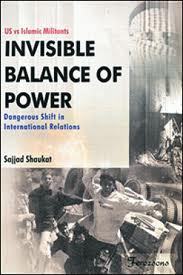
My friend Sajjad Shaukat has given me permission to re-publish an excerpt of his recent article in Veterans Today about predictions he made in his 2005 book US vs Islamic Militants: Invisible Balance of Power. The book, which I reviewed last year, lays out Sajjad’s theory that the rise of stateless terrorist groups has created an “invisible balance of power.” The latter performs the same function in curbing US state terrorism as the Soviet Union did prior to its collapse.
The Veterans Today article calls attention to numerous predictions his book made which have come true. Among other predictions, Sajjad forecast the Sunni-Shia civil war in Iraq, increasing sectarian violence in other Muslim countries, US/NATO attacks on new Muslim countries, increasing state terrorism by western countries and increasing global economic instability.
He raises a good point in his first paragraph. The US clearly isn’t winning the war on terror. All the evidence would suggest the “terrorists” are winning.
Global War on Terror: Pakistani Author’s Future Assessments Proved True
By Sajjad Shaukat
Given the prolonged US-led global war on terror, some media analysts are forecasting the defeat of the United States and its allies, pointing to the acceleration of terror-attacks in volatile countries, financial crises and the heavy cost of endless American war. But no one talks about the future assessments Pakistani author Sajjad Shaukat made in his book, US vs Islamic, Invisible Balance of Power: Dangerous Shift in International Relations, which was published in 2005.
In his research-based book, while taking this new style conflict as an interaction between the “group terrorism” led by Al-Qaeda or Islamic militants and state terrorism by the US, Shaukat points out that Muslim militants have been checking the hegemony of the sole super power.
Sajjad Shaukat is a journalist/author from Lahore Pakistan with a master’s degree from Punjab University in journalism, English and international relations.
Lifting the Veil: Barack Obama and the Failure of Capitalist Democracy
Scott Noble (2013)
Film Review
Lifting the Veil is a well-crafted expose of the myth of so-called capitalist democracy Based on interviews and archival footage of Senator Bernie Sanders, Noam Chomsky, Chris Hedges, George Carlin, Glen Ford, Harold Pinkley, John Pilger, Richard Wolfe, William I. Robinson, Bill Moyers and other prominent dissidents, it makes an ironclad case that democracy is impossible under a capitalist economic system.
Using Obama’s extensive list of broken campaign promises as a starting point, Noble convincingly demonstrates how Wall Street corporations have seized absolute control over all America’s so-called democratic institutions. In addition to highlighting the essential role team Obama played in crippling a large, highly vocal antiwar movement, he presents historical examples to reveal how this has been the traditional role of the Democratic Party in the US – to co-opt social movements that threaten the status quo.
The first half of the film focuses on Obama’s 2008 campaign and his long list of promises to reverse specific abuses of George W Bush’s government. In a series of archival clips, we see Obama promising to
• Restore habeas corpus
• Close Guantanamo
• End government secrecy
• End wireless surveillance
• Stop foreclosures instead of enriching bank CEOS
• Expose corporate backers of tax and corporate welfare legislation
• End torture
• End extraordinary rendition*
• Withdraw from Iraq in 2009 and Afghanistan in 2011
• Pass banking regulation to prevent a new Wall Street collapse
Besides breaking every single one of these promises, Obama enacted new policies that were even more oppressive and pro-corporate than Bush’s. Among them were an indefinite detention provision in the NDAA, an executive order giving himself power to assassinate American citizens, the new war in Pakistan and Libya and $7 billion in loans guarantees for the moribund nuclear industry.
The film makes the point that the 2008 election was merely a PR exercise in marketing Brand Obama and had absolutely nothing to do with the candidate’s political agenda.
My favorite segments were those in which comedian George Carlin explains to audiences how powerful corporations sucker them into believing they live in a democracy.
The film ends on an optimistic note with a sampling of opinion polls indicating that more than 60% of Americans oppose the pro-corporate agenda Obama has foisted on them: 63% of Americans would pay higher taxes to guarantee health care for everyone, 70% oppose nuclear power, 81% want to reduce the deficit by taxing the rich and cutting the military budget and only 3% support cutting Social Security.
The only criticism I would have of Lifting the Veil is that it fails to offer specific solutions for Americans seeking to get their democracy back. The dissidents featured are pretty much unanimous that Americans need to stop looking to electoral politics as a way to reform either government or the economic system. However they are a little vague on what activists should do other than protesting and engaging in civil disobedience. Neither is likely to accomplish significant change without serious organizing and movement building to develop alternatives to the current system of government.
Given a lot of this movement building is already occurring in Spain, Greece, Italy, Ireland, Iceland, Mexico and South America and it would have been great to see examples of what this looks like.
*Extraordinary rendition is the kidnapping and transfer of a detainee to the custody of a foreign government for purposes of detention, interrogation and torture.
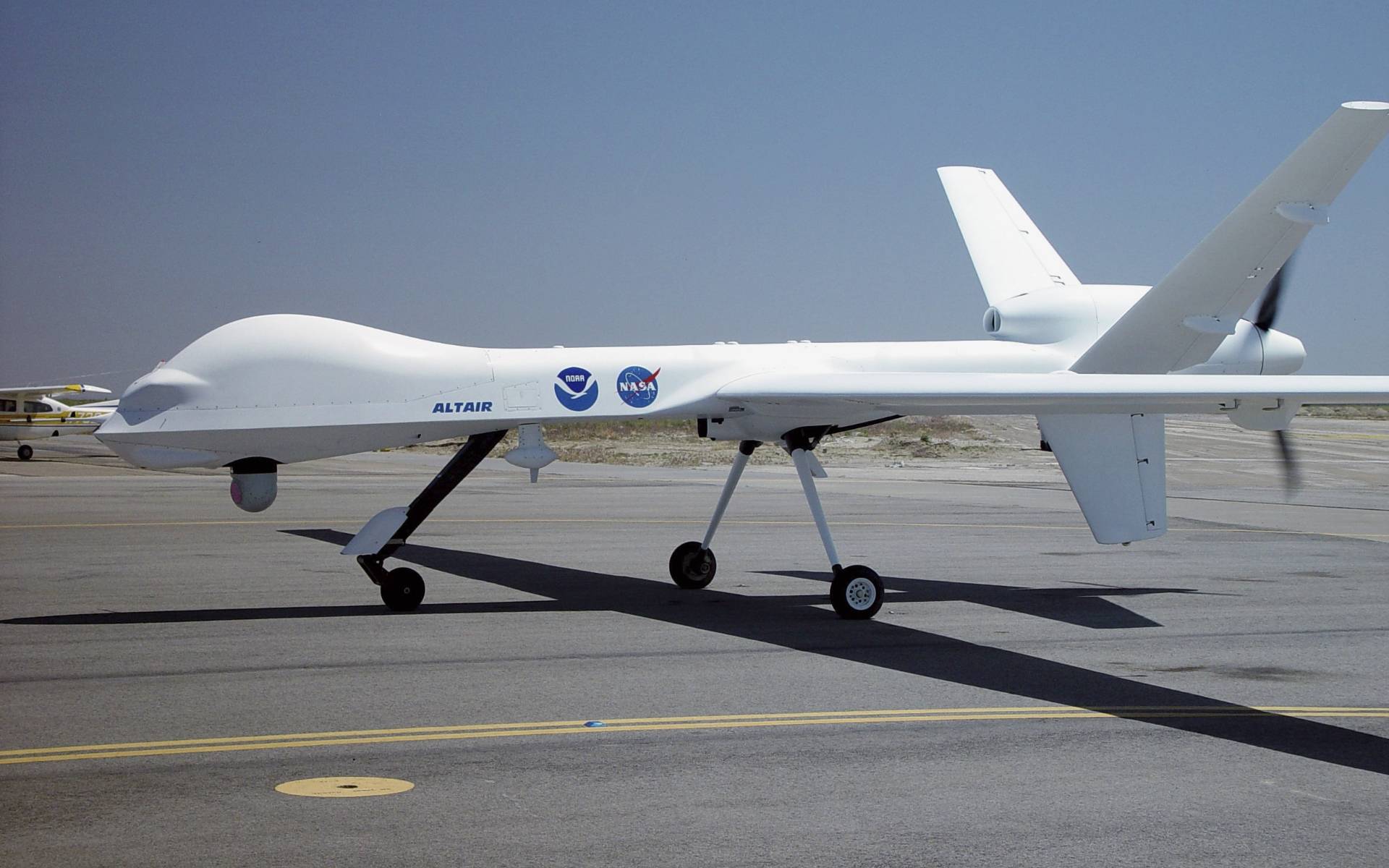
According to the Guardian, Pakistan’s high court justice Shaukat Asiz Siddi has ruled that murder charges be brought against Jonathan Banks, the former CIA station chief in Islamabad. The charges relate to CIA drone strikes against innocent civilians in North Waziristan. It’s an extremely explosive story, which the US media has largely ignored.
Siddiqui also ordered criminal charges brought against John A Rizzo, the former CIA lawyer who signed off on the legality of drone strikes against Pakistan.
Banks’s undercover CIA role first became public in 2009 when tribesman Karin Khan filed a civil lawsuit against him over a drone attack that killed his father and son.
With his cover was blown, Banks was forced to resign his post and leave Pakistan.
The incident sparked major speculation how Khan and his lawyer Shahzad Akbar could possibly have known the identity of the CIA station chief. Many suspected Pakistani intelligence of leaking the name out of frustration with the illegal undeclared US war on their country.
It’s considered highly unlikely the Obama administration will extradite either Banks or Rizzo to stand trial in Pakistan.
“We didn’t even really know who we were firing at.”
The traumatic nature of their work is leading drone operators to quit the Air Force by the hundreds.
In the following video, former senior drone operator Brandon Bryant expresses deep regret for the six years he spent with the US drone program between 2005 and 2011. It especially bothered him that he was expected to fire on targets without being clear of their identities: “We didn’t even really know who we were firing at.”
Last November the human rights group Reprieve published a study indicating attempts to kill 41 alleged terrorists in Pakistan and Yemen resulted in more than 1100 civilian deaths.
(The 4th of 8 posts regarding my 2002 decision to emigrate from the US to New Zealand)
It only became clear once I left the US the immense sacrifices Americans make for their cheap gasoline and consumer goods (see previous post). The most obvious is a range of domestic programs that other developed countries take for granted. These include publicly financed universal health care (in all industrialized countries except the US) and a range of education, jobs and social programs enacted under Roosevelt, Kennedy, Johnson and Nixon, which Reagan, Bush and Clinton repealed.
With a so-called war on terror on multiple fronts (I can count at least ten countries the US is at war with), federal block grants to states and cities have all been diverted to Pentagon spending. In city after city, there is no money to repair badly decrepit roads and bridges or provide adequate street lighting and policing. While dozens of clinics, libraries and homeless shelters shut their doors and teachers, cops and other state and local employees get laid off.
Sacrificing Democratic Rights and Civil Liberties
As citizens of the world’s greatest military power, Americans also make major sacrifices in terms of democratic governance and civil liberties. This, too, only became clear once I became an expatriate.
Genuine democracy is totally incompatible with military empire. If allowed some say whether to spend most of their tax dollars on weapons and war, the vast majority of Americans would respond with a resounding “no.” Civilian populations are universally repelled by the carnage of war. Women, who comprise more than fifty percent of the population, consistently oppose any military tactics that kill large numbers of civilians. Likewise taxpayers of both sexes expect to see their hard earned tax dollars spent on public programs that benefit them. Not to enrich Wall Street banksters and corporate war profiteers.
Ordinary Romans felt the same way. Which was the main reason their leaders abandoned democracy when they undertook to expand the Roman republic into an empire.
Creating a Constitution Conducive to Empire
There’s also a clear link between the growing wealth an power of banks and multinational corporations and the recent attack on democratic rights and civil liberties (the repeal of habeas corpus and legalized government spying authorized under the Patriot Act and NDAA).
This relates, in my view, to structural flaws in the US system of government that make it less democratic than other industrialized countries. These mostly relate to what the Constitutional framers referred to as “separation of powers.”
In social studies we were taught these “checks and balances” were intended to make the US government more democratic. However it’s clear from the writings of Hamilton, Madison and other constitutional framers that their real intent was to minimize the risk of a direct popular vote harming the interests of wealthy landowners and merchants.
In their writings, the founding fathers make no secret of their imperialistic ambitions (their plans to declare war on the Native Americans and Mexicans who possessed the lands west of the 13 original colonies). This military expansionsim was extremely unpopular with a mainly rural, farming population that experienced immense personal and economic hardship during the Revolutionary War.
And military expansion didn’t end when the US seized the Southwest and California from Mexico. In 1895, the US declared war on Spain to expand the empire to include Cuba, Puerto Rico, Hawaii, the Philippines and other Pacific islands.
Parliamentary Democracy=One Man One Vote
Unlike the majority of industrialized countries, the US doesn’t employ a “one-man-one-vote” system of representational democracy. The only hope our Constitutional framers had of enacting their pro-business, pro-military agenda was to establish two branches of government (the Senate and Presidency) that wouldn’t be determined by direct popular vote. The idea was to block populist legislation enacted by the democratically elected House of Representatives
After 11 1/2 years experience with New Zealand’s, parliamentary democracy, I have absolutely no doubt that it’s more democratic than the US system. Under a parliamentary system, the head of the party controlling the majority of legislative seats automatically becomes chief of state. The moment the prime minister loses the majority he/she needs to pass legislation, the government collapses and a new election is called. This is in marked contrast to the US Congress. The latter has been virtually paralyzed for 30 years – while American schools and the US health care system continue to disintegrate in front of our eyes.
Another important advantage of a parliamentary democracy is the establishment of an official opposition party, which is expected to attack and embarrass the party in power. The result is vigorous and often raucous parliamentary debate, characterized by booing, cheering and outright heckling by members of the opposition parties.
Open “bipartisan consensus,” which is so heavily promoted by the US mainstream media, would be extremely unpopular in New Zealand. The majority of Kiwi voters retain a strong working class consciousness and are extremely dismissive of politicians with open ties to the corporate and business lobby.
(The 3rd of 8 posts about my decision to emigrate to New Zealand)
I had to move overseas before it sank in that Americans owe their high standard of living to US military domination of third world resources. The concept of economic imperialism isn’t new to me. I have known for years that the US maintains a monopoly on cheap third world labor and resources via military support of puppet dictators, CIA destabilization campaigns, currency manipulation and Wall Street and IMF/World Bank debt slavery schemes.
Yet for some reason, I placed the entire blame on the bloated US military-industrial complex and the immense power defense contractors wield via their campaign contributions and ownership of US media outlets. I conveniently overlooked the financial advantages ordinary Americans enjoy as a result of world military domination – namely low priced consumer goods. It took the physical reality of living in a smaller, poorer, non military nation and paying higher prices for for gasoline, books, meat, fish and other products – on a much lower income.
Americans Love Cheap Gasoline, Coffee, Sugar and Chocolate
I think most Americans are profoundly ambivalent about the concept of empire. In public opinion polls, Americans consistently oppose foreign wars, except where “US interests” are at stake. And policy makers and the mainstream media are deliberately vague in defining “US interests.” Prior to 1980, a threat to American interests meant a clear threat to America’s democratic system of government or the lives of individual Americans. When Ronald Reagan invaded Grenada in 1984, the official pretext was to evacuate American students at the medical school at St George University (the real reason was to oust pro-Cuban prime minister Bernard Coard).
With the current wars in Afghanistan, Iraq, Pakistan, Syria, Libya, Yemen, Somalia and elsewhere, “US interests” have expanded to include the millions of barrels of cheap foreign oil required for the health of the US economy. Americans love their cheap gasoline, coffee, sugar and chocolate. Few are consciously aware that they owe these cheap luxuries to covert and overt military operations. If they did know, I believe the percentages supporting war would rise significantly.
What Americans Sacrifice for a Bloated Military
I like to think I would be willing to make the sacrifice. In essence I have, by moving to a much smaller, poorer country where tax dollars are used to fund universal health care, subsidized child care and housing and long term unemployment benefits. Because New Zealand feels no compulsion to invade and occupy other countries, they still provide a fairly generous safety net for unemployed, disabled and elderly Kiwis.
Social services were never quite so robust in the US. However prior to Reagan’ election in 1980 and the ballooning of US military expenditures, I could rely on federally funded jobs, vocational rehabilitation and subsidized housing to assist my clients into employment. By 1990 this was no longer possible. The great majority were desperate to get jobs, which would have been far more cost effective for taxpayers. However in the absence of any state or federal support, prospective employers refused to take a chance on hiring them. Thus most remained trapped on Social Security disability.
The systematic dismantling of the American safety net began under Reagan and Bush, as they cut taxes on the rich and redirected tax revenues toward military priorities – a phenomenally expensive missile defense system (aka the Strategic Defense Initiative or Star Wars) and military interventions in El Salvador, Nicaragua, Guatemala, Grenada, Panama, the Philippines, Somalia and Iraq.
Instead of restoring the social safety net programs his Republican predecessors abolished, Clinton continued to shred the safety net by ending the welfare entitlement for single mothers Franklyn Roosevelt introduced in 1935. Meanwhile he cut taxes even further, continued the SDI and declared war against Serbia – presumably to assist US oil companies to access oil and gas in the Caspian Sea basin.


 The Most Revolutionary Act