The Hidden History of Big Oil

How Big Oil Conquered the World

Corbett Report (2016)

Film Review

This is an extremely gripping documentary about the hidden history of John D Rockefeller and the global oil cartel. Much of this history, including Rockefeller’s early background, the role of the “oilagarchy” in instigating World War I, Prohibition and their total domination of education, medicine, agriculture and finance has been systematically erased from US history books.

I found the beginning of the film, in which James Corbett talks about JD’s father William Avery Rockefeller, most revealing. Rockefeller senior was a notorious snake oil salesman (and cunning sociopath) who changed his name to Dr Bill Livingston to escape the clutches of the law for fraud, bigamy, rape and various other crimes.

The film traces Rockefeller junior’s entry into the oil drilling business in the 1850s with the formation of the Pennsylvania Rock Oil Company. From the very beginning of his career, JD demonstrated the same knack for treachery, deceit and fraud as his father – in dealings with both business partners and competitors.*

The invention of the internal combustion engine in the 1870s put Rockefeller in direct competition with the electric vehicle industry. Even the first electric cars (built in 1884) had a number of advantages over gas-powered cars. In 1900, they made up 28% of the US market. Thanks to the discovery of plentiful oil in Texas, Rockefeller easily flooded the market with cheap gasoline and put electric car makers out of business.

After World War I, he faced similar competition from ethanol-fueled cars (Henry Ford designed the Model T to run on either gasoline or alcohol produced from agricultural waste). Here Rockefeller and his corporate allies demolished their competition by conspiring to instigate a national anti-alcohol movement. The latter resulted in the enactment of Prohibition in 1919 and a total ban on alcohol. In a similar vein, after World War II the “oilagarchy” conspired with General Motors to acquire and shut down electrified public transport systems in at least a dozen cities.

Rockefeller’s transformation of medicine (by funding and acquiring control of medical schools) into a field dominated by synthetic petroleum-based pharmaceuticals is fairly well known. There is less public awareness that he played a similar role in shaping public education (especially the teaching of history) and the replacement of organic-based farming with industrial agriculture reliant on petrochemicals. Rockefeller played a similar role in secret meetings that resulted in the creation of the Federal Reserve, as did Rockefeller’s Chase Manhattan Bank in the creation of the World Bank and IMF.

Corbett also traces the creation of parallel oil monopolies in Europe by the Rothchilds, the Nobel family and the British and Dutch royal families. Germany posed a major threat to this global oil cartel with a treaty they signed with the Ottoman Empire to acquire a controlling interest in Iraqi oil development. The threatened competition with established European oil interests set wheels in motion for a British-led war against Germany (ie World War I).


* JD’s favorite motto: “Competition is a sin.”
 

Falling Oil Prices: a Saudi Viewpoint

Inside Story – What’s Behind the Falling Oil Prices

Al Jazeera (2015)

Film Review

A most revealing documentary. Unlike western pundits who speculate about conspiracies to wipe out shale oil producers (ie fracking) and the oil  economies of Russia and Venezuela, these Middle East analysts stick to economic fundamentals.

The three analysts identify three main factors behind the present oil glut: shale gas production, a big increase in renewable energy production and dropping demand by emerging economies such as China.

They maintain Saudi Arabia’s primary motivation for current output levels is fear of losing “market share” if they unilaterally cut oil production.

There’s also an interesting discussion about the Saudi plan to introduce taxation to help reduce their $98 billion deficit.

Inside the Brutal Reality of Saudi Arabia

Inside the Dark Kingdom: Butchery, Slavery and History of Revolt

Abby Martin (2015)

Film Review

Inside the Dark Kingdom is a documentary celebrating the irony of Saudi Arabia’s selection to head the UN Panel of Human Rights. The blatant hypocrisy of the (successful) US campaign for this tyrannical kingdom to champion global human rights is obvious from the simple statement of facts. As is the duplicity of trying to depose the so-called “bloody dictator” of Syria while openly supporting the Saudi reign of terror.

The film investigates Saudi Arabia’s brutal and arbitrary criminal justice system, their brutal oppression of women, their virtual enslavement of migrant workers, their recent invasion of Yemen, their role in 9-11 and their reliance on US military assistance to suppress human rights organizing.

Saudi trials take place in secret, often without legal representation for the accused. Saudi subjects can be beheaded, stoned or crucified for crimes such as adultery, blasphemy, homosexuality and drug use and imprisoned and lashed for human rights advocacy or being victimized by sexual assault (typically rape victims receive more lashes than the men who rape them). Forty-five percent of Saudi executions are for non-violent drug crimes.

Saudi Uprisings

You rarely hear about Saudi Arabia’s long history of popular uprisings (and their brutal suppression) in the corporate media. The US first began collaborating with the Saudi royal family to suppress human rights in 1953, when Aramco (Arabian Oil Company workers) went on strike demanding a union. The US responded by establishing the US Training Mission in Saudi Arabia, which assisted the Saudi government in torturing and assassinating union leaders.

Saudi Arabia had their first failed revolution in 1962, when a Shia-led uprising demanded that oil profits be used to address poverty rather than to increase the wealth of American oil companies and the Saudi royal family.

Inspired by the 1979 revolution in Iran, rebels in the eastern Shia region of Saudi people launched massive street protests. These were crushed when the government tortured and assassinated key leaders and destroyed (via bombing) of dissident civilian enclaves.

The Saudi Arab Spring

Following the Arab Spring rebellions that blossomed in Tunisia and Egypt in 2011, there were Arab Spring rebellions in three major Saudi cities. The royal family responded by declaring martial law and banning any mainstream or social media favorable to the Arab Spring or unfavorable to the royal family. After arresting, torturing and/or assassinating of key organizers (and their families), the government immediately quadrupled their arms imports from the US.

The primary purpose of all this military hardware is to suppress dissent, not only in Saudi Arabia, but in Bahrain (the Saudi Army invaded Bahrain to suppress their Arab Spring uprising) and Yemen. Since April, 150,000 Saudi troops have invaded Yemen and killed 4,000 Yemenis – more than half of them civilians.

The 1945 Oil Protection Agreement

Martin also traces the history of the unique US-Saudi relationship, which started in 1945 with the signing of an official Oil Protection Agreement and the installation of a US naval base.

Dating back to 1988 the last four US presidents have had close business and personal relationships with the Saudi royal family. At present the Saudi princes are major donors to the Clinton Foundation.

The War Crimes of Bill Clinton

The Weight of Chains

Boris Malagurski (2010)

Film Review

The deliberate demonization of the Serbian people by the Clinton administration has been a special interest ever since I cared for Serbian PTSD victims in the mid-nineties. At the time there were rumors the US was after oil in the Caspian basin. Until I saw this documentary, I was unaware of the bloodthirsty ruthlessness of US policy in Yugoslavia. Nor that Clinton, like his successors George W Bush and Barack Obama, was guilty of war crimes. The film also sheds important light on current US policy in Ukraine.

The Weight of Chains is about the deliberate break-up of Yugoslavia in the 80s and 90s to enable its transformation into a US colony, like Iraq and Afghanistan. The cover story blaming Serbian barbarism for the conflagration in Bosnia and Kosovo was pure fabrication by the Clinton administration and US media.

Under Marshall Tito (1943-1980), Yugoslavia enjoyed an ethnically diverse society in which Muslim Turks, Croatians, Serbians, Hungarians, Albanians and other ethnic minorities lived side by side and intermarried. It was a very prosperous nation, thanks to a mixed economy that combined central economic planning with private enterprise, worker cooperatives and a generous welfare state. Tito, who stubbornly resisted Russian pressure to join the Soviet bloc, was one of the founders of the non-aligned movement.*

Enter the NED

Shortly after Tito’s death in 1980, President Reagan signed a secret memorandum declaring his intention to transform Yugoslavia into a “market economy” (translation: US colony for Wall Street investors). The first salvo in this campaign was to send in the CIA-funded National Endowment for Democracy (NED), to finance pro-US opposition groups, journalists, trade unionists and the G17. The latter was a group of World Bank economists who seized control of the Yugoslavian economy by inducing corrupt officials to enter into unpayable loans. By the late 1980s, the G17 had imposed deep cuts on all social services and forced 1,100 industries into bankruptcy. Those that weren’t totally wiped out were sold to foreign investors at rock bottom prices.

Thanks to these austerity cuts, by 1990 Yugoslavia’s unemployment rate had soared to 20%. When the government appealed to the US for debt relief, Bush senior cut off all aid to Yugoslavia. Under US pressure, the IMF only agreed to fund right wing ultranationalist groups in six autonomous regions (Croatia, Serbia, Slovenia, Montenegro, Kosovo, Bosnia) – provided they declared independence from Yugoslavia. The Bush senior administration also illegally supplied arms to Croatian fascists who would seize control of Croatia and the Muslim Bosniaks who controlled Bosnia.

Accordingly Slovenia and Croatia declared independence in 1992 and Bosnia in 1992.

US-Inspired Ethnic Cleansing

Despite constant denunciation of the Serbian people (as fascist thugs) by the Clinton administration and Senator Joe Biden, the real culprits were fascist American thugs. In 1995, the Clinton administration financed and armed the Croatian government to carry out the largest act of ethnic cleansing in history in the Serbian enclave of Krajinia. Thanks to the American-inspired Operation Storm, 2,000 Serbs were killed and 250,000 were driven from their homes over a period of 84 hours. One of my patients, whose sister was massacred during Operation Storm, only survived because his Muslim neighbors hid him and his children from the Croatian army.

The Weight of Chains also deconstructs the alleged Serb atrocities committed at Srebrenica (where equal numbers of Serbs and Muslims died), which the US would use to justify NATO intervention.

Enter Osama bin Laden

Following Serbian independence, Clinton armed and trained the terrorist Kosovo Liberation Army,** with the assistance of Osama bin Laden and heroin-trafficking Mujahideen from Afghanistan. The President’s chief motivation was to further destabilize Serbia to open it up to US investment.

When Slobodan Milosevic refused to sign a peace agreement accepting US occupation of Serbia, Clinton committed further violations of international law by using NATO aircraft to bomb Serbian civilians and deliberately target civilian infrastructure that included power grids, schools, hospitals and water filtration plants.

Enter George Soros

Following Milosevic’s surrender in June 1999, the World Bank immediately sent in an army of World Bank lawyers to privatize Serbia’s most valuable state-owned assets. Soros and his cronies were particularly keen on getting the Trercha mining interest into western hands, with its rich coal, copper, zinc, cadmium, gold and silver resources.

The film concludes by examining the dire economic consequences (ie massive debt, industry closure and joblessness) for Eastern European countries whose business elites opt to join the EU and NATO. For example, the EU forced the Czech Republic to close their sugar industry because it was more profitable to import Cuban sugar. While the French destroyed the Hungarian vineyards by dumping cheap wine into their market, forcing Hungarian wine growers to sell their vineyards to English investors at bargain basement prices. After Slovenia joined the EU in 2004, they experienced massive layoffs after most of their factories were privatized and moved overseas. In 2009, Croatia (like Greece) was forced to start selling their islands to pay off their debt.

*The Non-Aligned Movement is a group of states which aren’t formally aligned with or against any specific power bloc.
**Kosovo is a disputed territory within Serbia in which ethnic Albanians make up 80-90% of the population.

American Ambivalence Towards Empire

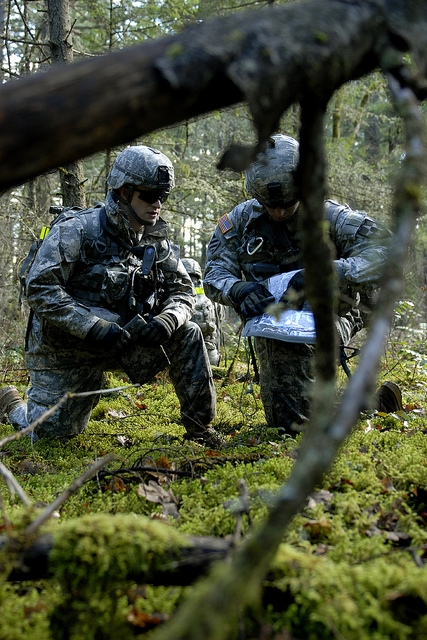
soldiers

(The 3rd of 8 posts about my decision to emigrate to New Zealand)

I had to move overseas before it sank in that Americans owe their high standard of living to US military domination of third world resources. The concept of economic imperialism isn’t new to me. I have known for years that the US maintains a monopoly on cheap third world labor and resources via military support of puppet dictators, CIA destabilization campaigns, currency manipulation and Wall Street and IMF/World Bank debt slavery schemes.

Yet for some reason, I placed the entire blame on the bloated US military-industrial complex and the immense power defense contractors wield via their campaign contributions and ownership of US media outlets. I conveniently overlooked the financial advantages ordinary Americans enjoy as a result of world military domination – namely low priced consumer goods. It took the physical reality of living in a smaller, poorer, non military nation and paying higher prices for for gasoline, books, meat, fish and other products – on a much lower income.

Americans Love Cheap Gasoline, Coffee, Sugar and Chocolate

I think most Americans are profoundly ambivalent about the concept of empire. In public opinion polls, Americans consistently oppose foreign wars, except where “US interests” are at stake. And policy makers and the mainstream media are deliberately vague in defining “US interests.” Prior to 1980, a threat to American interests meant a clear threat to America’s democratic system of government or the lives of individual Americans. When Ronald Reagan invaded Grenada in 1984, the official pretext was to evacuate American students at the medical school at St George University (the real reason was to oust pro-Cuban prime minister Bernard Coard).

With the current wars in Afghanistan, Iraq, Pakistan, Syria, Libya, Yemen, Somalia and elsewhere, “US interests” have expanded to include the millions of barrels of cheap foreign oil required for the health of the US economy. Americans love their cheap gasoline, coffee, sugar and chocolate. Few are consciously aware that they owe these cheap luxuries to covert and overt military operations. If they did know, I believe the percentages supporting war would rise significantly.

What Americans Sacrifice for a Bloated Military

I like to think I would be willing to make the sacrifice. In essence I have, by moving to a much smaller, poorer country where tax dollars are used to fund universal health care, subsidized child care and housing and long term unemployment benefits. Because New Zealand feels no compulsion to invade and occupy other countries, they still provide a fairly generous safety net for unemployed, disabled and elderly Kiwis.

Social services were never quite so robust in the US. However prior to Reagan’ election in 1980 and the ballooning of US military expenditures, I could rely on federally funded jobs, vocational rehabilitation and subsidized housing to assist my clients into employment. By 1990 this was no longer possible. The great majority were desperate to get jobs, which would have been far more cost effective for taxpayers. However in the absence of any state or federal support, prospective employers refused to take a chance on hiring them. Thus most remained trapped on Social Security disability.

The systematic dismantling of the American safety net began under Reagan and Bush, as they cut taxes on the rich and redirected tax revenues  toward military priorities – a phenomenally expensive missile defense system (aka the Strategic Defense Initiative or Star Wars) and military interventions in El Salvador, Nicaragua, Guatemala, Grenada, Panama, the Philippines, Somalia and Iraq.

Instead of restoring the social safety net programs his Republican predecessors abolished, Clinton continued to shred the safety net by ending the welfare entitlement for single mothers Franklyn Roosevelt introduced in 1935. Meanwhile he cut taxes even further, continued the SDI and declared war against Serbia – presumably to assist US oil companies to access oil and gas in the Caspian Sea basin.

(To be continued)

photo credit: DVIDSHUB via photopin cc