Untold History of the US – Johnson, Nixon and Vietnam

Part 7 of Oliver Stone’s Untold History of the United States concerns the Johnson and Nixon presidencies.

The Johnson Presidency

Johnson continued Kennedy’s glorious tradition of overthrowing foreign democratic governments. He openly admitted the military aggression he authorized wasn’t about fighting communism – but about fighting third world peoples for their resources. He saw no other way 6% of the world’s population could control 50% of its wealth.

  • In 1963 Johnson reversed Kennedy’s order to draw down US “military advisors” and introduced ground troops to Vietnam.
  • In 1964 he ordered US troops to overthrow the democratically elected government of Brazil.
  • In 1965 he invaded the Dominican Republic to crush a popular insurrection against a CIA-inspired right wing coup.
  • In 1966-67 he authorized a bloody CIA coup to oust President Sukarno in Indonesia and replace him with the right wing dictator Suharto.
  • In 1967, he ordered the CIA to (illegally) spy on anti-Vietnam War protestors through Operation Chaos.
  • In 1967, he fired Secretary of Defense Robert McNamara when he opposed escalating the bombing in Vietnam.

When a bipartisan group of elder statesman called for US troop withdrawal from Vietnam, Johnson decided to focus on Vietnam peace negotiations instead of running for a second term in 1968.

The Nixon Presidency

Robert Kennedy was the clear front runner in the 1968 election prior to his assassination in July 1968.

Despite basing his campaign on a “secret plan” to end the war in Vietnam, Nixon and Kissinger (who secretly undermined the Paris peace negotiations to help Nixon win the elections) vastly expanded the war, which would last seven more years. More than half the GI deaths in Vietnam occurred under Nixon.

As president, Nixon made 13 separate threats to use nuclear weapons in Vietnam. Stone believes it was only the massive anti-war protests (which deeply unnerved Nixon) that prevented their use.

Nixon and Kissinger were also responsible for secretly and illegally bombing Cambodia and Laos, the 1973 coup that overthrew Chile’s democratically elected government, and Operation Condor, a secret dirty war against pro-democracy movements in Brazil, Chile, Argentina, Uruguay, Paraguay and Bolivia.

Part 7:  Johnson, Nixon and Vietnam: Reversal of Fortune – Cataclysm in Vietnam
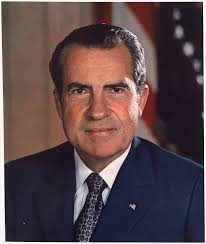
Nixon’s Guaranteed Basic Income Proposal

nixon

Imagine my recent surprise on learning Republican president Richard Nixon, in 1968, was on the verge of enacting an unconditional income for all poor families. It would have guaranteed a family of four $1,600 a year, equivalent to roughly $10,000 in 2016. Here we have yet another historical event that’s been conveniently erased from US history books.

Nixon began by commissioning a study involving a little over 8,500 Americans in cities around the country. Researchers attempted to answer three questions: (1) Would people work significantly less with a guaranteed income? (2) Would the program cost too much? (3) Would it prove politically unfeasible?

Outcomes were surprisingly favorable. Hours of work decreased only slightly and allowed for an increase in other useful activities, such as searching for better jobs or working in the home. Among youth, almost all the reduced work hours were used for education. In New Jersey, the rate of high school graduation for participants rose thirty percent.

Polls showed that 90 percent of US newspapers were enthusiastic about unconditional income for poor families. The Chicago Sun Times called it “A Giant Leap Forward,” the Los Angeles Times “a bold new blueprint.” The National Council of Churches, the labor unions, and even the corporate sector were also all in favor.

In 1970 it seemed that the time for a basic income had well and truly arrived.

With 243 votes for and 155 against, the House of Representative approved President Nixon’s Family Assistance Plan (FAP) on April 16, 1970. Most expected the plan to pass the Senate, too, which was even more progressive than the House. Sadly the Senate killed it.

Writing in Jacobin,Rutger Bregman describes how Nixon adviser Martin Anderson cunningly scuttled Nixon’s guaranteed basic income proposal. A great admirer of libertarian philosopher Ayn Rand, Anderson widely circulated excerpts from sociologist Karl Polanyi’s 1944 book The Great Transformation. The latter describes a historical system similar to Nixon’s proposed basic income: the Speenhamland system enacted in 1795 to alleviate rural poverty in Britain.

In addition to summarizing a Royal Commission Report highlighting Speenhamland’s adverse effects  on both the poor and the community, Polyani cites prominent 19th century economists, such as Thomas Malthus, David Ricardo and Karl Marx, who all roundly condemned the Speenhamland experiment.

It now turns out the Royal Commission Report was based on flawed methodology and essentially fabricated.

Read more about Nixon’s guaranteed income plan, the Royal Commission Report and the devastating impact of dismantling Speenhamland and replacing it with the heinous 1834 Poor Law.


The Ugly History of the War on Drugs

Exile Nation: An Oral History of the War on Drugs

Directed by Charles Shaw (2011)

Film Review

In laying out the sordid history of the US prison industrial complex, Exile Nation helps us understand how the US came to have the largest prison population in the world, far exceeding that of China, which has over four times as many people.

A significant proportion of US inmates are African Americans and Hispanics locked up for “victimless” drug offenses. At present 500,000 of American’s 2.3 million prison population is inside for using heroin, cocaine or methamphetamine. Thirty thousand are there for cannabis possession.

The documentary intersperses commentary by “experts” (cops, judges, sociologists, psychiatrists, defense attorneys, jail monitors, medical marijuana activists and prison rights advocates) with those of ex-offenders.

The US Invents Mass Incarceration

Crime rates in the US first reached a high point in 1830, largely due to high levels of alcohol abuse. The US would be the first country in the modern era to introduce mass incarceration as punishment for law breaking. The Pennsylvania Quakers believed that locking people up would force them to “repent” – the origin of the word penitentiary. The experiment failed. Studies consistently show that imprisoning convicts neither rehabilitates them nor discourages them from re-offending.

Nixon’s War on Drugs

Nineteenth century crime rates slowly declined, plateauing during the Civil War era. From then on, they remained constant until the 1970s, when Nixon declared the first war on drugs. His primary target was the immense social movements of the late sixties and early seventies. Nixon couldn’t constitutionally punish hippies for opposing the Vietnam War nor African Americans for demanding the right to vote. Instead he targeted their behavior, ie the widespread use of marijuana, LSD and cocaine that accompanied these movements.

In doing so, Nixon deliberately ignored the recommendation of a 1972 bipartisan commission that recommended that marijuana use be criminalized.

Reagan’s War on Drugs

The prison industrial complex received a second major boost in 1984, when Reagan declared a second war on drugs. Unlike Nixon, who envisioned drug arrests as a form of social control, Reagan used the drug war (particularly against crack, a new bargain basement form of cocaine) to demonize African Americans and win votes from white blue collar workers.

The Mainstream Media Revolts

The media turned against the drug war and prison industrial complex in the 1990s, with Ted Koppel producing several excellent documentaries highlighting the drawbacks of mass incarceration. The resulting shift in public opinion would lead the federal government and many states to begin downsizing their prison populations. Sadly 9-11 and the War on Terror interrupted this process.

A high point for me were the interviews with medical marijuana activists describing the history of their movement (leading to the legalization of marijuana for medical purposes in 23 states sates).

I also really liked the sections on the medical use of MDMA (ecstasy) in treating post traumatic disorder and the psychedelic ibogaine in treating heroin addiction.

The Bush Crime Family

family of secrets

Family of Secrets

by Russ Baker

Bloomsbury Press (2009)

Book Review

Family of Secrets is about the Bush family and the Shadow Government responsible for all major domestic and foreign policy decisions over the last sixty years. For evidence, Baker relies partly on declassified documents and partly on face-to-face interviews of corporate executives, low level politicians and retired intelligence officers who have worked closely with the Bush family.

Two-thirds of the book is about George Herbert Walker Bush and CIA ties that date back to 1948 when he left Yale and went to work for Dresser Industries. Baker lays out strong evidence that Dresser and Zapata Petroleum, the oil services company Bush senior started in 1953, served the primary purpose of front companies for global industrial espionage and CIA intelligence gathering.

In this way Bush senior replicated the role his father Prescott Bush played in the World War II spy service Office of Strategic Services (OSS). Prescott was a friend and colleague of founding CIA Director Allen Dulles at the Wall Street law firm Brown Brothers Harriman. Brown Brothers Harriman bought Dresser in 1928.

According to Baker, Bush senior played a pivotal role in helping Dulles create “off- the-shelf” CIA operations – disguised as front companies – to circumvent federal legislation that prohibited the CIA from spying domestically.

For me, the high points of this book include the background Baker provides on Lee Harvey Oswald’s career as a covert CIA operative, the on-off relationship between Bush senior and Oswald’s Dallas control George de Mohrenschildt and the crucial role Bush senior played in setting up Nixon as the fall guy in the Watergate break-in and cover-up.

Baker, in essence, corroborates earlier research by Mae Brussell that the Watergate scandal was a CIA coup to remove Nixon from office.

A third of the book covers the hidden history of George W Bush, including his early alcohol and cocaine abuse, the abortion he organized for one his girlfriends, his purported Christian conversion and his AWOL from the Texas Air National Guard unit – a notorious scandal that would cost CBS anchor Dan Rather his job.

George W’s brothers Neil, Marvin and Jeb receive only brief mention related to their illegal diversion of savings and loan funds, leaving taxpayers on the hook for hundreds of millions of dollars when the savings and loan associations went bust in the late eighties and had to be bailed out.

Baker maintains a nonprofit investigative news service at http://whowhatwhy.org/

Below is a 2009 Ron Reagan radio interview with Russ Baker about Family of Secrets that someone tweeted me:

Russ Baker interview

His Weirdness Donald Rumsfeld

The Unknown Known

Errol Morris (2013)

Film Review

The Unknown Known is the weirdest documentary I’ve ever seen. The subject is former Secretary of Defense Donald Rumsfeld and his reflections on the disastrous War in Iraq. A third of the footage is archival and the other two-thirds consists of face-to-face interviews via a device director Errol Morris refers to as the Interrotron.

The film appears to have two goals: 1) to capture the essence of the major architect of America’s illegal wars of aggression in Afghanistan and Iraq and 2) to allow him to reflect, in hindsight, exactly where things went wrong. As he expresses in the post-film discussion below, he fails on both scores. Morris totally fails to penetrate what Forbes describes as Rumsfeld’s “linguistic obfuscation.”

Unlike Robert McNamara (Secretary of Defense under Kennedy and Johnson), who expressed genuine regret over Vietnam in Morris’s 2003 documentary The Fog of War, Rumsfeld maintains his management of the US war in Iraq was flawless.

The documentary is framed around the tens of thousands of memos Rumsfeld issued over the course of his career. There were so many of them that his subordinates referred to them as “snowflakes.” This approach works well because all Rumsfeld’s decisions around the War on Terror are reflected in specific memos.

The most consistent criticisms around Rumsfeld’s role in the Iraqi occupation were his failure to involve other members of the Bush administration in decision making and his failure to make specific plans for a post-invasion government. When Morris asks about these critiques of his job performance, Rumsfeld bats them away, as he did in many press briefings, with clever word play or by quibbling over definitions.

For example when asked about the non-existent weapons of mass destruction the Bush administration used as a pretext for invading Iraq, he repeats the infamous line he gave reporters: “Absence of evidence doesn’t prove something doesn’t exist.”

Morris uses early memos to reconstruct Rumsfeld’s term in Congress (1962-1970) and his service in the Nixon, Ford and Reagan administration. My favorite part of the film is an excerpt from the infamous Nixon White House tapes in which Nixon, Haldeman and Kissinger agree to fire Rumsfeld for being manipulative and untrustworthy.

As Ford’s Secretary of Defense, he strongly opposed détente, a policy started under Nixon to improve understand and ease tensions with the Soviet Union. As he expresses in one of his memos, the prospect of peace with the Soviets was making Congress and the American public reluctant to invest in defense infrastructure.

As the quagmire in Iraq caused George W Bush’s popularity to plummet, the President would sack Rumsfeld in December 2006 and replace him with Robert Gates, an official from Bush senior’s administration.

The title of the documentary is taken from an infamous example of Rumsfeld verbal gymnastics during a press briefing:

Reports that say that something hasn’t happened are always interesting to me, because as we know, there are known knowns; there are things we know we know. We also know there are known unknowns; that is to say we know there are some things we do not know. But there are also unknown unknowns — the ones we don’t know we don’t know. And if one looks throughout the history of our country and other free countries, it is the latter category that tend to be the difficult ones.”

http://www.dailymotion.com/video/x1uhheq_the-unknown-known_shortfilms


In the clip below, Morris frankly discusses his own feelings about the documentary