The US and Israel Quietly Break Up Iraq


oil tanker

US Court Orders Kurdish Oil Seized

While the world is distracted with Israeli atrocities in Gaza, the US and Israel are quietly breaking up Iraq. According to Reuters UK, a federal court in Texas has ordered US Marshals to seize a $100 million cargo of Kurdish oil on a tanker off the coast of Galveston, Texas – but only if the tanker enters US territorial waters.

Attorneys for the government of Iraq laid claim to the oil in a lawsuit they filed on July 28. Since May, the Kurdistan Regional Government (KRG) has shipped five million-barrel tankers of oil from the Turkish port of Ceyhan in defiance of Iraqi law, which mandates that Baghdad has sole authority over Iraq’s natural resources. One cargo of Kurdish crude was delivered to the United States in May to an unidentified buyer.

Four other tanker loads of Kurdish oil have been delivered to Israel.

The recent inability of the Iraqi government to defend its northern territories from the Islamic State (aka ISIS aka ISIL) has emboldened the KRG to assert control over the oil-rich city of Kirkuk. With the complicity of the Turkish government, they have been marketing the oil on their own behalf. Because Kurdistan is land-locked the oil must be shipped via pipeline to Turkey.

Obama’s Contradictory Position on Kurdish Autonomy

This is one rare instance in which the US and Israel appear to be on opposite sides (or do they?). According to the Wall Street Journal, the Obama administration publicly opposes direct oil sales by Kurdistan, fearing this could contribute to the break-up of Iraq.

Yet, repeating a common pattern, the official position contradicts growing evidence that the CIA is training and arming ISIS militants.

Israel, meanwhile, is eager to expand trade with Kurdistan. According to unnamed Israeli officials, they see it as an opportunity to expand Israel’s limited diplomatic network in the Middle East, while simultaneously shoring up the country’s energy security.

photo credit: judy_and_ed via photopin cc

Banned in the USA: the Film You Didn’t See

Film Review

The War You Don’t See

Produced and directed by John Pilger

Americans now have the opportunity of seeing Australian John Pilger’s critically acclaimed The War You Don’t See on YouTube. The groundbreaking documentary was effectively banned in the US when Patrick Lannan, who funds the “liberal” Lannon Foundation, canceled the American premier (and all Pilger’s public appearances) in June 2010. Pilger provides the full background of this blatant act of censorship at his website. After watching the film, I believe its strong support of Julian Assange (who the US Department of Justice is attempting to prosecute) is the most likely reason it wasn’t shown in American theaters.

Pilger’s documentary centers around the clear propaganda role both the British and US press played in cheerleading the US/British invasion of Afghanistan and Iraq. It includes a series of interviews in which Pilger confronts British and American journalists (including Dan Rather) and news executives regarding their failure to give air time to weapons inspectors and military/intelligence analysts who were publicly challenging the justification for these invasions. The Australian filmmaker focuses heavily on the fabricated evidence (Saddam Hussein’s non-existent weapons of mass destruction and links to 9-11) that was used to convince American and British lawmakers to go along with an illegal attack on a defenceless nation (Iraq).

Making News Executives Squirm

Pilger also confronts the British news executives (from the BBC and ITV) for reporting — unchallenged — Israeli propagandist Mark Regev regarding the May 2010 Israeli attack (in international waters) of the international peace flotilla and murder of nine Turkish peace activists (including six who were executed in the back of the head at point blank range).

Although none of the news makers offer a satisfactory explanation for their actions, British news executives show obvious embarrassment when Pilger forces them to admit they knew about opposing views and failed to offer them equal air time. In my view, the main value of the film is reminding us how essential it is to hold journalists to account for their lack of objectivity. Too many activists (myself included) have allowed ourselves to become too cynical about the mainstream media to hold individual reporters and their editors and managers accountable when they function as government propagandists instead of journalists.

The War You Don’t See was released in Britain in December 2010, in the context of a Parliamentary investigation into the Blair government’s use of manufactured intelligence to ensnare the UK into a disastrous ten year foreign war. Government/corporate censorship is far more efficient in the US, and the odds of a similar Congressional investigation occurring in the US seem extremely low.

Edward Bernays: the Public is the Enemy

The film begins with a thumbnail history of modern war propaganda, which Pilger traces back to Edward Bernays, the father of public relations. Bernays, who began his career by helping Woodrow Wilson to “sell” World War I to the American people, talks in his famous book Propaganda about the public being the “enemy” which must be “countered.”

Independent Journalism is Hazardous to Your Health

The most powerful segment features the Wikileaks gunship video released in April 2010, followed by Pilger’s interview with a Pentagon spokesperson regarding this sadistic 2007 attack on unarmed Iraqi civilians. This is followed by excerpts of a public presentation by a GI on the ground at the time of assault, who was denied permission to medically evacuate two children injured in the attack.

The documentary also focuses heavily on the Pentagon’s deliberate use of “embedded” journalists to report the wars in Afghanistan and Iraq, as well as the extreme threat (often from American forces) faced by independent, non-embedded journalists. According to Pilger, a record 240 independent journalists were killed in Iraq and Afghanistan. In Palestine, the Israel Defense Force (IDF) has killed ten independent journalists since 1992. The War You Don’t See includes footage of a recent IDF attack on a Palestinian cameraman, who miraculously survived, despite losing both legs.

Pilger goes on to talk about the deliberate bombing of Al Jazeera headquarters in Kabul and Baghdad, mainly because the Arab network was the only outlet reporting on civilian atrocities. This section features excellent Al Jazeera footage of home invasions of two civilian families — in one case by British and the other by American troops — who were brutally terrorized and subjected to torture tactics.

The Interview that Got the Film Banned

The film concludes with a brief interview with Wikileaks founder Julian Assange, who discusses the increasing secrecy and failure of democratic control over the military industrial intelligence complex. Assange presents his view that this complex consists of a network of thousands of players (government employees and contractors and defense lobbyists) who make major policy decisions in their own self-interest with virtually no government oversight.

Pilger and Assange also discuss the aggressive prosecution of whistleblowers by Obama, who has the worst record of First Amendment violations of any president. They also discuss the positive implications of the willingness of military and intelligence insiders to leak hundreds of thousands of classified documents. It shows clear dissent in the ranks about the blatant criminality that motivates US foreign policy decisions.

Untold Truths About War on Iran

Below is a mind boggling half hour Press TV documentary about former White House adviser Gwynneth Todd. In it she briefly describes the battle she, and others in the Pentagon establishment, waged to fight efforts by AIPAC (The American Israel Public Affairs Committee) to provoke a US attack on Iran.

Todd strongly implicates AIPAC in the US decision to invade Iraq. As she tells it, the disastrous ten year occupation of Iraq was less about securing its oil for US oil companies – than about securing a NATO foothold in the Middle East to invade Iran.

It’s clear AIPAC has their own powerful allies in the Pentagon, who have gone a lot further than manufacturing phony propaganda about Iran’s alleged nuclear weapons industry (which, according to the CIA, is non-existent). These people play really dirty, and their efforts to shut Todd up included the murder of one of her Turkish clients.

Todd escaped to Australia in 2007 to afford prosecution on trumped up charges – or worse.

Crossposted at Daily Censored

The Back Story on Hamas

hamas

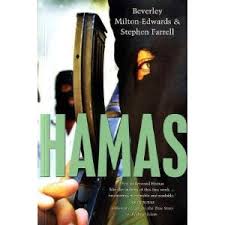
Hamas

by Beverley Milton-Edwards and Stephen Farrell

(2010 Polity Press)

Note: the corporate media is omitting important historical context in their current reporting on the recent creation of a “Unity” government uniting the West Bank and Gaza. Two of the most important omissions include the role of the Israeli government in fostering the rise of Hamas and the Hamas victory in the 2006 elections – over all of Palestine, not just Gaza. The Israel and the US refused to recognize the democratically elected Hamas government, installed a puppet government run by Mahmoud Abbas (as they have done recently in Ukraine) and launched a CIA-led 18 month military coup to install Abbas’s illegitimate Fatah government in Gaza. Hamas successfully repelled the coup.

Hamas is about the militant Palestinian group which was democratically elected to run the Palestinian Authority in 2006. The book clearly documents the role Israel played in promoting the rise of Muslim fundamentalism in Palestine.

According to Milton-Edwards and Farrell, Israel’s motives in backing the rise of the Muslim Brotherhood in Palestine were identical to those of the US in Afghanistan and Anwar Sadat in Egypt. In all cases, the goal of supporting the Islamic fundamentalism was to counter the secular Arab leftists and nationalists who controlled most Middle Eastern states prior to 1967. The US and its allies had enormous concerns that that the leaders in power would form a single Arab economic or political block that would thwart US corporate and strategic interests.

Milton-Edwards and Farrell trace the origins of Hamas to the decision by the Muslim Brotherhood to open offices in Palestine in the 1940s, when it was still under the British Mandate. As a condition of their World War I defeat, the old Ottoman (Turkish) empire was divided up among European powers. In 1947 Britain surrendered control of Palestine, and the UN partitioned it into Jewish and Palestinian Arab states.

Outraged that Palestinian Jews, who represented on 32% of the population were awarded 56% of Palestine, in 1949 Syria, Egypt and Jordan joined with Palestine’s Muslim Brotherhood, in declaring war on Israel.

In the resulting settlement, Palestinian Arabs lost even more territory, forcing 726,000 refugees to flee to neighboring states. Gaza, to the west of Israel, came under Egyptian control. Jordan, to Israel’s east, assumed control of the West Bank. The king of Jordan, an autocratic totalitarian ruler, immediately closed the West Bank offices of the Muslim Brotherhood and placed their members under close police surveillance.

In the 1967 six day war, Egypt, Jordan and Syria attacked Israel and were once again defeated. The West Bank and Gaza came under Israeli military occupation, while Israel banned the Palestinian Liberation Organization (PLO) and forced Yasar Arafat and other PLO leaders to flee into exile.

Israel Turns a Blind Eye to Mijamma Violence

Prior to 1973, the Palestinian Muslim Brotherhood saw their primary role as performing charitable works and speaking out against the liberal Westernized culture Palestinian youth brought back when they went to university in Egypt. In 1973 they formed a new organization Al-Mijamma ‘al-Islami (The Islamic Center), under the leadership of a charismatic wheelchair bound cleric named Sheikh Ahmed Yassin. Mijamma’s ultimate goal was to reclaim Palestinian land and homes Israel had seized in 1947 and 1967. However they felt the first step in building a militant resistance organization was to re-establish Palestine as an Islamic society. Thus their main focus was on islamization, which they approached by teaching, preaching and setting up community institutions to provide food and other social services to impoverished Palestinian families.

Assuming control of the Islamic University of Gaza in 1973, they began harassing and expelling female students who refused to wear Islamic dress, as well as beating up men who spoke out against these activities.

Israel, which governed both the West Bank and Gaza after 1967, turned a blind eye to this lawless violence, as well as providing direct financial to the Islamic Academy in Hebron, where many of Hamas’s military leaders would receive their training. In 1978 Israel went so far as to grant official recognition to Mijamma, allowing it to meet openly and publicly, at a time when all other Palestinian parties were banned as illegal terrorist organizations.

The Birth of Hamas

During the 1987 insurrection or Intifada, Mujamma renamed itself Hamas. Despite their full participation alongside the PLO in the Intifada, Israel continued to allow foreign money to flow freely to Hamas, while they continued to freeze PLO assets. Likewise Israel allowed Hamas to keep their schools open in Gaza, while they force West Bank Palestinian schools to close.

It wasn’t until 1990 that Israel finally cracked down on Hamas, following the murder of two Israeli soldiers. Their leader Sheikh Hassan was arrested, tried and imprisoned. Three years later, Israel illegally (under international law) deported 400 Hamas members, following the kidnapping of an Israeli border guard.

The PLO Endorses Sadam Hussein

Meanwhile the PLO, Hamas’s rival, made the tragic mistake of endorsing Sadam Hussein’s invasion of Kuwait in 1991. This resulted in the suspension of all aid the PLO previously received from wealthy Gulf oil states. Because they were nearly bankrupt with the loss of their Gulf donors, in 1993 the PLO abandoned their pledge to liberate Palestine through armed struggle. This decision to negotiate a peace with Israel made them enormously unpopular with one million Gazan refugees. Still intent on returning to the lands they had lost in Israel, they had no interest whatsoever in creating a Palestinian state.

The response from Hamas was to issue a fatwa (death sentence issued by Islamic religious leaders) against the Fatah-led PLO. Determined to derail the negotiations, they also launched a massive campaign of violence, incorporating or the first time a new tactic known as “martyrdom” (i.e. suicide) bombings. Each martyrdom bombing resulted in a payment of approximately $25,000 to the suicide bomber’s family, financed mainly by Saddam Hussein and Saudi Arabia.

The Creation of the Palestinian Authority

The 1993 negotiated settlement, known as the Oslo Accords, granted the West Bank and Gaza limited autonomy under Israeli military control. It also created the Palestinian Authority (PA), a shrewd move the US and Israel employed to split and crush the Palestinian resistance. By making the Palestinian leadership the civil authority, they shifted much popular anger away from Israel and towards the PLO.

Arafat and the PLO leadership returned from exile to run the Palestinian Authority (PA). Owing to a continuing embargo by Gulf donors, Arafat had to lay off hundreds of public sector workers and slash social services to prevent a total meltdown of the Palestinian economy. Israel, meanwhile, made Arafat responsible for controlling Hamas militants. His solution was to put thousands of them in prison and torture them. There were numerous reports of prisoners being beaten, forced to shave their beards and sodomized with coke bottles.

Meanwhile PA security services routinely blackmailed families, with offers to release prisoners in return for bribes of $10,000 or more. All this occurred as Israel was continuing to destroy Palestinian homes and olive trees to build more Jewish settlements in the occupied territories.

The Second Intifada

In 2000, Palestinian anger at their extreme poverty and repression boiled over in armed insurrection, the second Intifada. In 2002, the Saudis put forward a peace proposal which would have normalized Israel’s relations with the Arab world in return for their withdrawal from the occupied territories. As before Hamas, which still demanded the right of return (to their Israeli homelands) for all exiled Palestinians, tried to derail peace negotiations with a wave of sniper attacks and car and suicide bombings. These were directed against the PLO security services, Jewish settlers in Palestine and civilians inside Israel. Instead of retaliating against Hamas, Israel punished Arafat by sending tanks into the West Bank to bombard his headquarters, commencing a military siege that kept him prisoner until he died in 2004.

Hamas Enters Electoral Politics

Hamas boycotted the January 2005 presidential elections, giving the Fatah candidate Mahmoud Abbas an easy victory. In May 2005, the Hamas leadership made a controversial decision to pursue direct political power by standing candidates in Gaza and West Bank local body elections. They did so in parallel with militant attacks on Israel. Following Ariel Sharon’s unilateral withdrawal of Israeli settlers and soldiers from Gaza in August 2005, this included Qassam rocket attacks on Israeli border towns.

Hamas never expected to win the parliamentary elections in January 2006, a success Milton-Edwards and Farrell attribute to widespread disgust, both in the West Bank and Gaza, with Fatah/PLO corruption and inefficiency. Refusing to recognize the Hamas victory, Mahmood Abbas installed his own non-elected parliament in the West Bank. He also refused to relinquish Fatah-controlled security posts to the new Hamas government. Israel, meanwhile, froze funds needed to pay PA officials in Gaza. When Europe and the US also froze Palestinian developmental assistance, Hamas had no choice but to turn to Iran for training, weapons and financial aid.

The Failed CIA Coup

After a brief experiment with a “unity” government, in which Fatah and Hamas ruled jointly, the CIA and Abbas launched an 18 month military coup, determined to dislodge Hamas from power in Gaza. In June 2006, Hamas came out the victor, employing 16,000 fighters to force 70,000 CIA-backed members of Abbas’ Preventive Security Organization to flee Gaza.

Hamas Drops in the Opinion Polls

By June 2008, their popularity waning owning to brutal sanctions and shortages of food, medicine and other necessities, Hamas was in the exact same situation as Fatah in 1993. In desperation they agreed to a temporary ceasefire (ending suicide bombings and Qassam rocket attacks), on condition Israel end their embargo. Hamas honored the ceasefire for six months, despite Israel’s failure to end their economic blockade. In December 2008, Hamas broke the ceasefire by firing rockets into Israel. The book ends with a description of Operation Castlead, which Israel launched against Gaza in retaliation. Castlead destroyed or damaged nearly every Palestinian security installation, killed 1,300 Palestinians (including 900 civilians) and destroyed hundreds of homes and business institutions.

***

Beverly Milton-Edwards is Professor in the School of Politics, International Studies and Philosophy at Queen’s University Belfast. Steven Farrell, who has dual British-Irish citizenship, is Middle East Correspondent for The New York Times.

Typical US Hypocrisy Over Russian Veto

security council

US Veto History Shows Flagrant Disregard for International Law

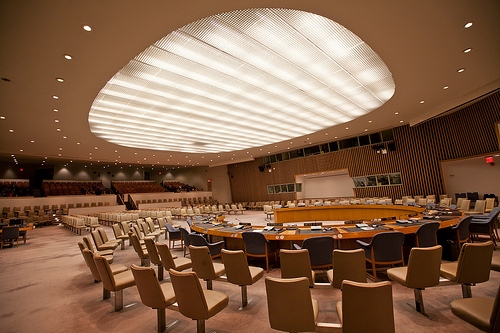
The western media is roundly condemning Russia for vetoing a Security Council resolution condemning tomorrow’s referendum on Crimean self-determination as illegal under international law. The US, as usual, is being extremely selective in their support for international law. Their own veto history reveals that they have vetoed 41 resolutions demanding that Israel respect international law in occupied Palestine.

According Samantha Power, US ambassador to the UN, “Russia has used its veto as an accomplice to unlawful military incursion.”

How ironic. Substitute “US” for “Russia,” and you could be describing US behavior as regards the Israeli occupation of Palestine.

The 41 US vetoes include numerous resolutions condemning the construction of Israeli settlements in occupied Palestine, which are illegal under the Fourth Geneva Convention. The Obama administration last blocked Security Council efforts to force Israel to end settlement construction in February 18, 2011. You have to question the President’s sincerity in the current Middle East peace process. For peace negotiations to be fair, surely they must start with an absolute requirement that Israel abide by international law.

Other resolutions condemn Israeli for massive human rights violations against Palestinian civilians, their illegal war of aggression against Lebanon and Gaza, and their illegal expropriation of land in the West Bank, the Golan Heights and East Jerusalem. The US also vetoed a call for the UN to investigate Israel’s role in the murder of UN Food Program workers and countless Palestinian civilians

Any of the five permanent members of the Security Council (US, UK, Britain, France, Russia, China) have the power to veto a Security Council resolution. There have been 264 vetoes of Security Council resolutions. Approximately half were exercised by the Soviets prior to 1965, in most cases to oppose the admission of new pro-Western states to the UN.

Since 1972, the US has vetoed more Security Council resolutions than any other permanent member. In addition to vetoing resolutions on Palestine, it has vetoed fourteen resolutions condemning South Africa’s apartheid regime, one each condemning illegal US military aggression against Nicaragua and Panama and one condemning the illegal British war in the Falklands.

photo credit: jdlasica via photopin cc

Originally published in  Veterans Today