Collapse: Revisiting the Adam and Eve Myth

short history of progress

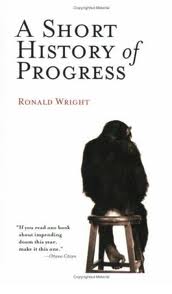
A Short History of Progress

by Ronald Wright (2004 Caroll and Graf)

Book Review

The theme of A Short History of Progress is social collapse. In it, Canadian historical archeologist Ronald Wright summarizes humankind’s biological and cultural evolution, as well as tracing the role of ecological destruction in the collapse of the some of the most significant civilizations (Sumer, Mesopotamia, Greece, Rome, Easter Island and the Mayan civilization). Exhaustively researched, the book advances the theory that many of colossal blunders made by modern leaders are very old mistakes made by earlier civilizations. Wright starts with the mystery of the agricultural revolution that occurred around 10,000 BC, when Homo sapiens ceased to rely on hunting and berry-picking and began growing their own food. Twelve thousand years ago, the global population was still small enough that there was more than ample wild food to feed them. Yet for some reason, a half dozen human settlements in widely separated regions simultaneously domesticated plants and animals. Why?

The Importance of Stable Climate

Citing extensive geological and archeological evidence, Wright suggests plant and animal domestication may have been triggered by unprecedented climate stability. Prior to 10,000 BC, the earth’s climate was wildly unstable, with ice ages developing and abating over periods as short as a decade or so. These sudden periodic changes in climate forced our hunter gatherer ancestors to continually migrate in search of food. The climate stabilization that occurred following the last ice age (around 10,000 BC) enabled them to settle in larger groups, save seeds to cultivate crops that took months to harvest, and engage in trade for other basic necessities.

Wright goes on to describe a number of diverse civilizations that arose and collapsed between 4,000 and 1,000 BC – and their unfortunate tendency towards mindless habitat destruction and runaway population growth, consumption, and technological development. In each case, an identical social transformation takes place as resources become increasingly scarce. As prehistoric peoples find it harder and harder to feed themselves, inevitably a privileged elite emerges to confiscate communal lands and enslave their inhabitants. They then install a despotic tyrant who hastens ecological collapse by wasting scare resources on a spree of militarization and temple or pyramid building. This process is almost always accompanied by wholesale murder, torture, and unproductive wars.

Wright relates this typical pattern of ecological destruction and collapse to a series of “progress traps,” in which specific human inventions turn out to have extremely negative unintended consequences. Instead of fixing the underlying problem they’re meant to solve, the inventions create an even worse environmental mess. It’s a pattern so common in prehistory that it’s become enshrined in the Adam and Eve and similar creation myths. All describe how the quest for knowledge ended humankind’s access to freely available and abundant food and forced them to produce their own.

Our Ancestors Wipe Out the Neanderthals and Mammoths

According to Wright, the first of these “progress traps” was the invention of weapons (for hunting) by early Homo sapiens. Wright blames this early invention of weapons for the first (archeologically) recorded instance of genocide – namely the wiping out of Homo Neanderthalis (Neanderthal man) by Cro-Magnon man between 40,000 and 30,000 BC. This was followed by other important mass extinctions as Homo sapiens spread out across the globe between 30,000 and 15,000 BC. The most recent archeological evidence suggests the mammoth, camel and horse became extinct in North America during this period because of perfected hunting techniques that allowed human beings to carry out mass slaughters (involving as many as 1,000 mammoths or 100,000 horses simultaneously).

Some archeologists attribute the end of hunting as a predominate food source (in numerous regions simultaneously) and the rise of plant-based diets to the decline in game animals stemming from this indiscriminate slaughter. The birth of agriculture, in turn leads to widespread deforestation and soil erosion in all the ancient civilizations, accompanied by soil salinization from over-irrigation. According to Wright, the entire cycle takes around a thousand years, which happens to be the average lifespan of most historic civilizations.

Turning Iraq Into a Desert

The first civilization to collapse in this way was Sumer (in southern Iraq), which flourished between 3,000 and 2,000 BC. The Sumerians invented irrigation, the city, the corporation (in the form of priestly bureaucracies), writing (for trade purposes), hereditary kings and slavery. By 2,500 BC, soil salinization (from irrigation) had caused a massive drop-off in crop yields. Instead of implementing environmental reforms, the ruling elite tried to intensify production by confiscating communal lands, introducing slavery and human sacrifice and engaging in chronic warfare.

From Sumer the cradle of civilization moved north to Mesopotamia (Babylon), in the region of northern Iraq and Syria, and humankind created one of the first man made deserts out of a region lush in date palms and other native vegetation.

Around 1,000 BC, similar civilizations also appeared in India, China, Mexico, Peru and parts of Europe. The Greeks (around 600 BC) were the first with any conscious awareness that they were destroying their own habitat. Plato writes a vivid description of the dangers of erosion and runoff from deforestation. The Athenian leader Solon tried to halt increasing ecological devastation by outlawing debt serfdom, food exports, and farming on steep slopes. Pisistratus offered grants to farmers to plant olive trees for soil reclamation.

Wright makes a good case for similar environmental destruction, rather than barbarian invasion, causing Rome to collapse. By the time of Augustus, Italian land had become so degraded that Rome was forced to import most of their food from North Africa, Gaul, and other colonies.

The Role of the New World

The most interesting section of the book concerns the role the New World played in rescuing the environmentally decimated European civilization. According to Wright, it was mainly New World gold and silver that capitalized the industrial revolution. However he also stresses the importance of the New World foods that were added to the European diet at a point where the population had outstripped their food supply. Maize (sweet corn) and potatoes are twice as productive (in terms of calories per acre) as wheat and barley, the traditional European staples. He also makes the point – ominously – that, despite all our apparent technological progress, humankind hasn’t introduced one new food since the Stone Age. In fact, Homo sapiens hasn’t evolved culturally or intellectually since our ancestors failed to confront resource scarcity in a way conducive to their survival.

If anything, given mass extinctions, potentially catastrophic climate change, and a growing scarcity of energy, water and fertile soil, we seem to be repeating the old maladaptive pattern. As examples, Wright cites the idiotic war on terrorism, which has ironic parallels with the chronic warfare the Sumerians launched 4,000 years ago. He also cites the rise of the New Right and the folly of trying to address resource scarcity by consolidating wealth and power in the hands of a tiny elite.
The Sacrifices of Empire

(The 4th of 8 posts regarding my 2002 decision to emigrate from the US to New Zealand)

It only became clear once I left the US the immense sacrifices Americans make for their cheap gasoline and consumer goods (see previous post). The most obvious is a range of domestic programs that other developed countries take for granted. These include publicly financed universal health care (in all industrialized countries except the US) and a range of education, jobs and social programs enacted under Roosevelt, Kennedy, Johnson and Nixon, which Reagan, Bush and Clinton repealed.

With a so-called war on terror on multiple fronts (I can count at least ten countries the US is at war with), federal block grants to states and cities have all been diverted to Pentagon spending. In city after city, there is no money to repair badly decrepit roads and bridges or provide adequate street lighting and policing. While dozens of clinics, libraries and homeless shelters shut their doors and teachers, cops and other state and local employees get laid off.

Sacrificing Democratic Rights and Civil Liberties

As citizens of the world’s greatest military power, Americans also make major sacrifices in terms of democratic governance and civil liberties. This, too, only became clear once I became an expatriate.

Genuine democracy is totally incompatible with military empire. If allowed some say whether to spend most of their tax dollars on weapons and war, the vast majority of Americans would respond with a resounding “no.” Civilian populations are universally repelled by the carnage of war. Women, who comprise more than fifty percent of the population, consistently oppose any military tactics that kill large numbers of civilians. Likewise taxpayers of both sexes expect to see their hard earned tax dollars spent on public programs that benefit them. Not to enrich Wall Street banksters and corporate war profiteers.

Ordinary Romans felt the same way. Which was the main reason their leaders abandoned democracy when they undertook to expand the Roman republic into an empire.

Creating a Constitution Conducive to Empire

There’s also a clear link between the growing wealth an power of banks and multinational corporations and the recent attack on democratic rights and civil liberties (the repeal of habeas corpus and legalized government spying authorized under the Patriot Act and NDAA).

This relates, in my view, to structural flaws in the US system of government that make it less democratic than other industrialized countries. These mostly relate to what the Constitutional framers referred to as “separation of powers.”

In social studies we were taught these “checks and balances” were intended to make the US government more democratic. However it’s clear from the writings of Hamilton, Madison and other constitutional framers that their real intent was to minimize the risk of a direct popular vote harming the interests of wealthy landowners and merchants.

In their writings, the founding fathers make no secret of their imperialistic ambitions (their plans to declare war on the Native Americans and Mexicans who possessed the lands west of the 13 original colonies). This military expansionsim was extremely unpopular with a mainly rural, farming population that experienced immense personal and economic hardship during the Revolutionary War.

And military expansion didn’t end when the US seized the Southwest and California from Mexico. In 1895, the US declared war on Spain to expand the empire to include Cuba, Puerto Rico, Hawaii, the Philippines and other Pacific islands.

Parliamentary Democracy=One Man One Vote

Unlike the majority of industrialized countries, the US doesn’t employ a “one-man-one-vote” system of representational democracy. The only hope our Constitutional framers had of enacting their pro-business, pro-military agenda was to establish two branches of government (the Senate and Presidency) that wouldn’t be determined by direct popular vote. The idea was to block populist legislation enacted by the democratically elected House of Representatives

After 11 1/2 years experience with New Zealand’s, parliamentary democracy, I have absolutely no doubt that it’s more democratic than the US system. Under a parliamentary system, the head of the party controlling the majority of legislative seats automatically becomes chief of state. The moment the prime minister loses the majority he/she needs to pass legislation, the government collapses and a new election is called. This is in marked contrast to the US Congress. The latter has been virtually paralyzed for 30 years – while American schools and the US health care system continue to disintegrate in front of our eyes.

Another important advantage of a parliamentary democracy is the establishment of an official opposition party, which is expected to attack and embarrass the party in power. The result is vigorous and often raucous parliamentary debate, characterized by booing, cheering and outright heckling by members of the opposition parties.

Open “bipartisan consensus,” which is so heavily promoted by the US mainstream media, would be extremely unpopular in New Zealand. The majority of Kiwi voters retain a strong working class consciousness and are extremely dismissive of politicians with open ties to the corporate and business lobby.

Video of Question Time in NZ Parliament:

My New Expatriate Identity

exceptionalism

(the 2nd of 8 posts about my new life in New Zealand)

For people over fifty, starting over in a new country is like dropping a lab rat in a gigantic maze. Like the rat, you suddenly find yourself in an alien environment that constantly confronts you with new decision points and obstacles.

For example, learning to use a new phone system. It took me months to figure out the Christchurch phone book, owing to the unique alphabetization protocol New Zealand uses. I also had to learn to dial 111 for emergencies, 1 for an outside line and 0 for a cellphone or long distance number. And not to waste hours redialing a number when I got a “fast busy” signal. It sounds exactly like the “slow busy” signal but means the number has been disconnected.

It helped a lot to meet other American expatriates struggling with the same problems. It was also extremely gratifying to realize I wasn’t alone in my total repudiation of Bush’s wars crimes in Afghanistan and Iraq.

As I would later learn, tens of thousands of American progressives and liberals left the US during the Bush years. In November 2003, expatriate Americans led the antiwar demonstrations protesting Bush’s visit to London. American expatriates also formed major voting blocks voting blocs for Kerry in 2004 and for Obama in 2008 (I myself didn’t vote for him – I voted for Nader).

My Struggle With American Exceptionalism

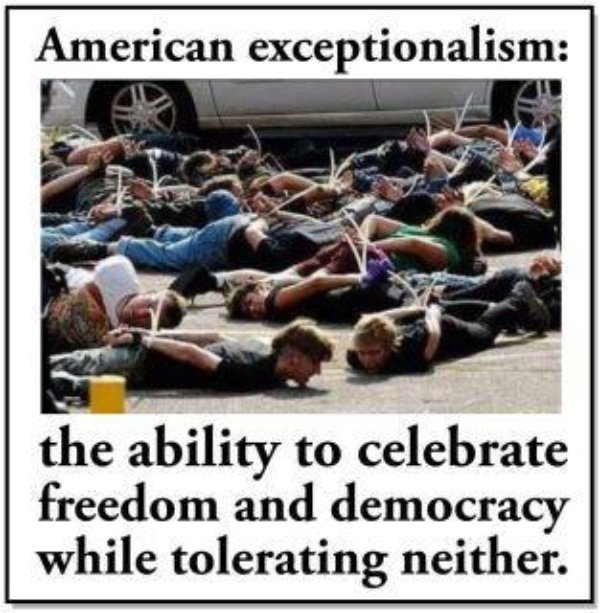
Ironically the biggest hurdle I had to overcome was my own lack of objectivity regarding my country of origin. Given that my decision to emigrate was politically motivated, this really surprised me. Somehow it seems no matter how strongly Americans consciously reject America’s immoral and corrupt political system, we all unconsciously buy into the American exceptionalism that the education system and corporate media pound into us. The belief that the US is not only the foremost military and economic power, but also the most productive, efficient, cleanest, healthiest, transparent, just and scientifically advanced.

This is an extremely rude awakening for many Americans. It certainly was for me. In my case, Kiwi colleagues confronted me for my attitude that the US was more advanced in medical research. Looking back, I am both mystified and embarrassed that I took this position. I have known for at least two decades that US medical research is mainly funded by Big Pharma, which has a well-earned reputation for buying and publishing research that promotes profits at the expense of scientific objectivity.

Two of the most common examples are 1) research that promotes fictitious illnesses (such as estrogen “deficiency” disorder in menopausal women) to market marginally effective and frankly harmful drugs and 2) research that grossly minimizes the role preventive medicine and non-pharmaceutical interventions have in promoting and maintaining human health.

The Link Between Exceptionalism and Empire

Over time I came to understand that citizens in all great military empires are under enormous pressure to hold and express patriotic and exceptionalist beliefs. In Nazi Germany, you could be shot on the street for unpatriotic statements. When Britain was the world’s great empire, they gave you a trial first, but you could be imprisoned or even executed for treasonous utterances.

This is the second major awakening for many American expatriates: until we leave, we never fully appreciate that US militarism overshadows all aspects of American life. Again I have known for decades that the US government spends more than half their budget on the Pentagon. I also know that the purpose of the US military isn’t to defend ordinary Americans. The US invades and occupies other countries to guarantee US corporations access to cheap natural resources, sweat shop labor and markets for agricultural exports.

Yet it wasn’t until I left that I fully recognized the enormous personal price Americans pay – in terms of personal liberty, freedom of speech and thought and quality of life – as subjects of a great military empire.

photo credit: mpeake via photopin cc

10/14/02: The Day I Became an Expatriate

bramhallmemoircover-682x1024.jpg

(The 1st of 8 posts describing my 2002 decision to emigrate from the US to New Zealand)

When I finally left the US in October 2002, I had been thinking of emigrating for many years. In June 1973, I shipped all my belongings to England, intending to start a new life there. Many Americans of my generation left the US in the early seventies, for Canada, Europe and more remote parts of the world. Most were draft-age men afraid of being sent to Vietnam. A few were women involved in clandestine abortion clinics that sprang up before the 1973 Roe v Wade Supreme Court decision that legalized abortion. Many were artists and intellectuals like me, disillusioned by lies about Vietnam in the Pentagon Papers,  Watergate, CIA domestic spying and Nixon’s use of US intelligence for his own political purposes.

In 1973, I myself was totally apolitical. My own decision to leave the US had very little to do with Vietnam or Watergate. My disillusionment stemmed more from watching rampant consumerism overtake the humanist values I had grown up with – the strong family ties, deep friendships and involvement in neighborhood and community life that were so important to my parents’ and grandparents’ generation.

During my eighteen month stay in England, it was deeply gratifying to meet people in London and Birmingham who had little interest in owning “stuff” they saw advertised on TV. People who still placed much higher value on extended family, close friendships and the sense of belonging they derived from their local pub, their church or union, or neighborhood sports clubs, hobby groups, and community halls. All these civic and community institutions had disappeared in the US. I missed them.

A downturn in the British economy in late 1974 forced me to return to the US to complete my psychiatric training.  I never abandoned my dream of returning overseas and religiously scanned the back pages of medical journals for foreign psychiatric vacancies. Meanwhile I  joined grassroots community organizations seeking to improve political and social conditions in the US. While and

For many years I believed Nixon was an aberration. This made me naively optimistic about the ability of community organizing to thwart the corrupting influence of powerful corporations over federal, state and local government. It never occurred to me the institutions of power themselves were deeply corrupt and had been for many years.

The Murder that Turned My Life Upside Down

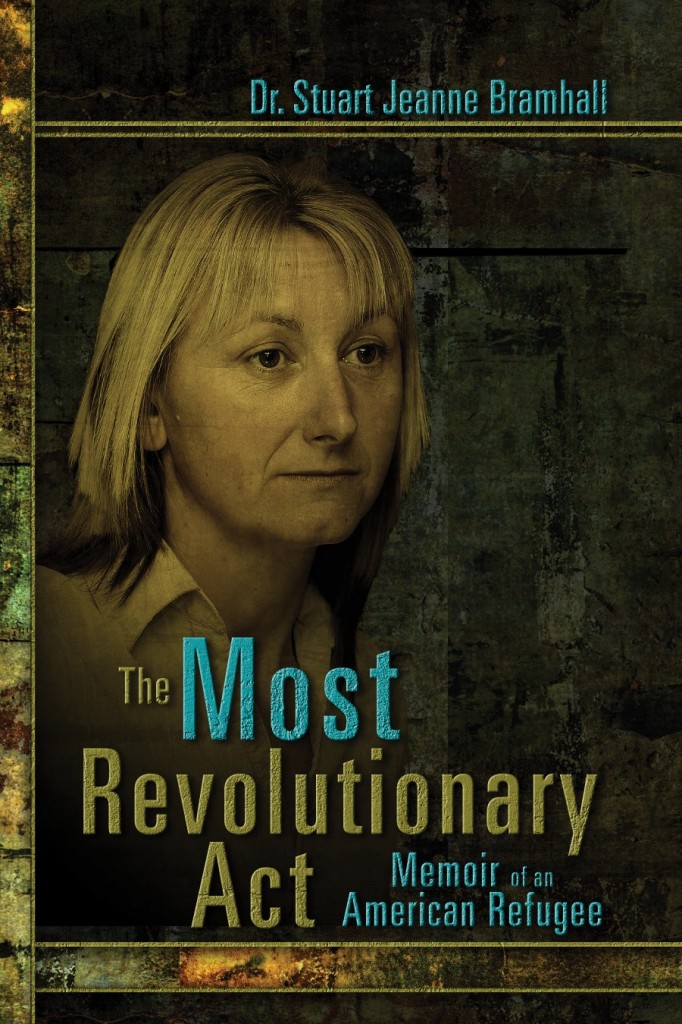
As I write in The Most Revolutionary Act: Memoir of an American Refugee, the 1989 intelligence-linked murder of a patient was a rude awakening. It demonstrated, in the most horrific way possible that ultimate power lay outside America’s democratic institutions. It forced me to accept that political control lay in the hands of a wealthy elite who employed an invisible intelligence-security network to terrorize – and sometimes kill – whistleblowers and activists who threatened their interests. This painful discovery lent new urgency to my political work. It simultaneously caused an increasing sense of alienation and isolation from who hadn’t shared these experiences.

There was also the slight problem that I was experiencing the same phone harassment, stalking, break-ins and hit-and-run attempts as my patient.

Most of my liberal and progressive friends were far more knowledgeable than I was about the power multinationals corporations held over elections, lawmakers and the mainstream media. Yet they reacted very differently than I did to this knowledge. My response was to devote every leisure moment to building a grassroots movement to end corporate rule. Their response, in contrast, was to become cynical and withdraw from political activity to focus on their personal lives.

The Patriot Act: Repealing the Bill of Rights

In September 2001, I expected that the Patriot Act, which legalized domestic spying on American citizens, as well as revoking habeas corpus and other important constitutional liberties, would be the turning point that would send progressives into the streets, as the 1999 anti-WTO protests had, to halt rampant corporate fascism.

It never happened. In Seattle, a small 9-11 coalition formed in October 2001 to protest Bush’s invasion of Afghanistan. Over the following year, as Bush prepared to invade Iraq, former weapons inspector Scott Ritter and others spoke to sell-out crowds about the lie the Bush administration was hawking about Saddam Hussein’s non-existent weapons of mass destruction.

Then in February 2002, evidence began to emerge that officials close to the Bush administration had played some role in engineering the 9-11 attacks. By October 2002, like most American intellectuals with access to the international and/or alternative press, were well aware that neither Afghanistan nor Iraq had played any role whatsoever in the 9-11 attacks. There was no longer any question that Bush a war criminal under international law for launching two unprovoked wars of aggression.

So long as I, as a US taxpayer, continued to work and pay taxes in the US, I shared some responsibility for these crimes. It was this knowledge that ultimately forced my hand. I had a psychiatrist friend who had spent a year working in New Zealand. He told me who to contact in the Ministry of Health about psychiatric vacancies. By September 1, 2002, I had signed a job contract to work for the New Zealand National Health Service in Christchurch. I had six weeks to close my Seattle practice, sell my house and ship everything I owned to New Zealand.

To be continued.

***

bramhallmemoircover-682x1024.jpg
Winner 2011 Allbooks Review Editor’s Choice Award
Fifteen years of intense government harassment leads a psychiatrist, single mother and political activist to close her 25-year Seattle practice to begin a new life in New Zealand. What starts as phone harassment, stalking and illegal break-ins quickly progresses to six attempts on her life and an affair with an undercover agent who railroads her into a psychiatric hospital.
  • Available as ebook (all formats) for $0.99 from: Smashwords
  • New and used print copies from $13 from Amazon