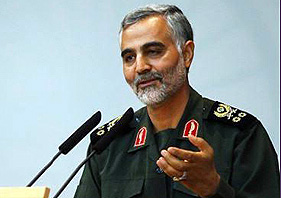
According to Reuters, Iraqi security forces and Shi’ite militia fighters (with the support of Canadian special forces and US weapons, trainers and air strikes) are presently engaged in a major assault to retake the Iraqi city of Tikrit from ISIS. Until recently, the western media rarely mentioned the figure commanding these forces.
His name is Major General Qasem Soleimani, and he’s the head of Iran’s Revolutionary Guards’ elite Quds Force. This creates an embarrassing situation for Obama because the US still officially designates Soleimani as a terrorist for his alleged role in a 2011 plot to assassinate the Saudi ambassador to the US
Given all the saber rattling against Iran by congressional Republicans (cheered on by Israeli president Benjamin Netanyahu), the US media has been loathe to acknowledge that Iran has been spearheading the offensive against ISIS in both Iraq and Syria. In Syria, Soleimani is widely credited with helping President Bashar al-Assad turn the tide against rebel forces and recapture key cities and towns.
The US political elite prefers to spoon feed Americans the cartoon version of US foreign policy, in which Americans only go to war against evil doers. For this reason, they have greatly downplayed the role of Soleimani and other Iranian military “advisers” in the battle against ISIS. A recent explosion of interest in General Soleimani on Twitter and Facebook has forced them to come clean.
According to the BBC, this isn’t the first time Soleimani has aided US military efforts in the Middle East. In 2001, he provided military intelligence to the US to support its invasion to overthrow the Taliban in Afghanistan, and in 2007 in participated in US-led talks in Baghdad over the deteriorating situation in Iraq.
As best I can ascertain, Soleimani has been a prominent figure in containing Iraqi sectarian violence since 2011
He has commanded Iranian forces active in the Syrian civil war since the latter half of 2012.
The Role of CACI, Titan, Blackwater and Halliburton
Iraq for Sale: the War Profiteers (Robert Greenwald 2006) is about the privatization of the war in Iraq and four of the Wall Street corporations that endangered enlisted troops, committed war crimes and cheated taxpayers out of billions of dollars. The film has just become available for free viewing on YouTube.
The film’s most shocking revelation is that torture at Abu Ghraib was primarily the responsibility of two private corporations, CACI International and Titan. CACI was originally contracted to perform database services in Iraq. The contract was expanded to include army intelligence work and eventually the interrogation and torture of prisoners.
Titan was originally contracted to provide translation services. According to GIs interviewed for the film, Titan never assessed their translators for their language skills and provided no training nor supervision of their ongoing work.
The GIs who tortured prisoners at Abu Ghraib were ordered to do so by these civilian contractors. When the scandal broke, the GIs were court martialed and faced average sentences of eighteen years. The civilian contractors who ordered the torture were merely sent home. Many went to work for new contractors and returned to Iraq within weeks.
Gouging the Taxpayer
The role of Halliburton (the company Dick Cheney ran before becoming vice-president) and Blackwater in Iraq has been well publicized thanks to a series of high profile scandals.
Even before the war started, the Halliburton subsidiary Kellogg Brown and Root (KBR) was awarded a no-bid contract to provide meals, water and construction, laundry, repair and transport services. Because it was a no limit cost-plus contract, there was a strong incentive for Halliburton/KBR to add on and inflate billable services.
Specific examples include charging the Pentagon $45 for a can of Coke, $99 for a bag of laundry and $250,000 on a three year lease for a $25,000 SUV. Instead of repairing trucks and SUVs that broke down, KBR would order GIs to burn or blow them up so they could charge the taxpayer for new ones. Hundreds of millions of dollars simply disappeared.
n 2005, Pentagon auditors ascertained that Halliburton had overcharged them by more than $1 billion. Despite a high profile Congressional investigation, the Pentagon paid the $1 billion over charge. Not only was there no effort to prosecute Halliburton, but their contract in Iraq was expanded.
Placing GIs at Risk
In addition to gouging the taxpayer, Halliburton/KBR placed GIs at significant risk in the slipshod way they provided water and food service. Out of the sixty-seven water treatment plants they operated in Iraq, sixty-three were unsafe due to contamination with giardia, cryptosporidium and other infectious organisms.
The mess halls Halliburton/KBR provided ran also placed GIs at substantial risk because the company refused to provide a twenty-four hour food service. Iraqi insurgents were quick to learn the meal schedules and frequently attacked as GIs waited an hour in line to be fed.
According to Bloomberg’s, on Feb 10 the UN Security Council adopted a binding Russian resolution threatening economic and diplomatic sanctions against countries and individuals that help ISIS and other terrorist groups profit from trading oil, antiquities or hostages. As the US vetoes most Russian Security Council resolutions, this was an historic event.The resolution requires governments to ensure that they aren’t engaged in direct or indirect trade with ISIS and al-Qaeda-affiliated groups such as the al-Nusra Front in Syria. According to Bloomberg’s, the resolution will significantly impact Turkey and Syria, which allow the purchase of oil from the militant group.Facts the article omits are probably more significant than the omissions.
First Bloomberg’s neglects to mention that the US initially opposed the resolution and spent three days frantically trying to counter and/or change the draft language. Presumably this relates to inconvenient truth that Israel is one of the main destinations of the smuggled oil
Second it fails to comment on an extremely odd scenario in which the Assad government is purchasing smuggled oil from ISIS:
Thirdly it (deliberately?) leaves Israel and unnamed EU nations off the list of countries buying oil from ISIS.
The text of the resolution, which stops short of threatening the use of force, urges governments to share information on ISIS financing networks, bans exports of all antiquities from Syria and reiterates the call on countries to prevent ISIS from benefiting from political concessions or ransom payments made to secure the release of hostages.
It also requires countries to block aircraft, auto and truck traffic, including oil tankers, traveling to or from areas in Syria and Iraq where the extremist groups operate.
ISIS earns about $1 million a day from oil sales.
In addition, according to a recent BBC investigation, ISIS also receives substantial income from looting and smuggling of antiquities from historical and archaeological sites in both Iraq and Syria. The primary market for the stolen objects is Europe and the Gulf states. Ten thousand year old artifacts can bring in as much as $1 million each. An Iraqi intelligence official told the Daily Mail that ISIS earned £23 million in early 2014 alone by selling 800 items stolen from the ancient city of Al-Nabk near Damascus.
In 2014, ISIS also brought in approximately $45 million in 2014 from kidnapping for ransom.
The resolution doesn’t spell out specific penalties for countries found guilty of helping ISIS. It would require the Security Council to debate whether any violations have occurred and what punitive measures it would order. The resolution requires all 193 members of the UN to report within 120 days on measures they’ve taken to comply with it. The UN’s existing al-Qaeda sanctions committee will monitor and report on any progress.
All in all, it looks like a pretty shrewd move by Russia. Obama now has 120 days to report back how he plans to sanction US allies Turkey and Israel – or face a UN Security Council resolution calling for sanctions on the US. While the US would surely veto such a resolution, it provides an excellent opportunity for Russia to embarrass Obama and Israel by exposing their financial and military ties to ISIS.
Part 3 concerns the mythology the neoconservatives created around international terrorism to justify the US wars against Afghanistan and Iraq.
The US Invents al Qaeda
The final video starts with the car bombing of American embassies in Kenya and Tanzania in August 1998. These were the first attacks Bin Laden and Zawahiri organized against US interests as part of their new international jihad (see How the CIA Funds Jihad). They recruited four bombers from training camps Abdullah Azzam started during the Soviet occupation.
Contrary to the myth promoted by the neocons, these camps were exclusively dedicated to training Muslims to conduct jihad in their own countries (e.g. Uzbekistan and Chechnya). Their leaders wanted absolutely nothing to do with international terrorism or Bin Laden’s jihad against the US. They allowed Zawahiri and Bin Laden to recruit from these camps because he was financing them. Nevertheless, even members of Islamic Jihad opposed what they were doing.
In Jan 2001 the US government brought the embassy bombers to trial in the US. They also tried Bin Laden in absentia. To charge him under existing US law, federal prosecutors had to prove an organized group he commanded carried out the bombings. Because no such group existed, they invented one. The name al Qaeda came from a paid FBI informant.
9-11
Immediately following his election George W Bush, like his father, totally rejected the neoconservative’s insistence that the US should invade other nations and “dictate how to run their countries.”
9-11 would change all this, propelling Richard Perle, Wolfowitz, Cheney and Rumsfeld to international power with four terrifying myths:
That Bin Laden was responsible for the 9-11 attacks (according to official FBI accounts, Khalid Sheik Mohammed was responsible for the “plane operations).”*
That “al Qaeda,” a phantom organization the neocons latched onto for propaganda purposes, was a genuine international entity running sleeper cells in 50-60 countries.
That “al Qaeda’s” ultimate goal was to force the US to live under Islamic fundamentalism.
That the invasion of Afghanistan was essential to destroy the heart of “al Qaeda.”
During the invasion and occupation of Afghanistan, the US and NATO allied themselves with the Afghan Northern Alliance. The latter hated the foreign Muslims who came to came to Afghanistan for training and received a generous bounty for handing them over to US troops. Nearly all of them ended up in Guantanomo, despite having no connection with bin Laden or international terrorism.
The Role of Hollywood
Following the US invasion, the neocons invested two new myths. The first was that bin Laden was hiding out in a sophisticated bunker built into the Torah Borah caves on the Afghanistan-Pakistan border. The second was that the US was harboring a vast network of terrorist sleeper cells preparing a new attack on US soil. Although both were totally discredited by mid-2003, these myths would be solidified in the public mind by dozens of TV dramas about hidden terrorist sleeper cells in major US cities.
A popular theme of these dramas was the dirty bomb*, which according to actual DD tests was unlikely to kill anyone because the radiation produced by a dirty bomb was so dispersed.
So-called “dirty bombs** featured prominently in most of these productions, despite numerous Pentagon tests demonstrating dirty bomb radiation is too widely dispersed to kill anyone.
World Leaders Rush to Sign On
Inspired by the immense power this ideology of fear gave political leaders, other western leaders quickly signed on to the terror agenda. When the neocons began circulating the new mythology in mid-2002 that Saddam Hussein was linked to al Qaeda and 9-11, British Prime Minister Tony Blair became one of its most vocal proponents. Despite knowing from the outside that the war on Iraq was based on fabricated evidence.
*This video was produced in 2003, when it was still widely believed that 19 Muslim hijackers were responsible for the attack on the Twin Towers. This version of events is now totally discredited.
**A dirty bomb is an explosive device made from nuclear waste combined with conventional explosives – with the intent of spreading radioactive material over a widely populated area
***This revelation is all the more remarkable given that Curtis made this documentary prior to Dr David Kelly’s so-called “suicide” in 2003. Kelly worked for the British Ministry of Defense and was a former UN weapons inspector in Iraq. He came to public attention in July 2003, when a BBC journalist published an-off-the record discussion about the British role in fabricating evidence about Iraq’s weapons of mass destruction. He died under extremely suspicious circumstances in later that month. A group of British doctors is demanding a fresh investigation into Kelly’s death: Doctors Claim Cover Upl
Part 2 focuses on the Soviet occupation of Afghanistan between 1979 and 1989 – and how the CIA funded and trained the Islamist Mujahideen to combat the occupation.
Both Carter’s National Security Adviser Zbigniew Brzezinski and the neoconservatives claim credit for the hare-brained and incredibly short sighted scheme to recruit, fund and train a jihadist army in Afghanistan. In addition to providing sophisticated weaponry, the CIA trained the Mujahideen in terror techniques, such as assassination, car bombs and improvised explosive devices (IDEs).
Abdullah Azzam, the Palestinian who led the Mujahideen, put out a call for all Muslims to join Afghanistan’s holy war. He believed that victory in Afghanistan would inspire foreign fighters to return to their homelands and overthrow corrupt secular dictators the US was propping up.
One Saudi who answered this call was a phenomenally wealthy construction contractor named Osama bin Laden. He, too, provided funding for the Mujahideen.
Arab governments, recognizing a unique opportunity to expel their own jihadist troublemakers, opened their jails and exiled their Islamic extremists to Afhanistan. Egypt released Islamic Jihad founder Dr Zawahiri and his followers.
Gorbachov Orders Soviet Withdrawal
In 1987 when Gorbachov came to power, the Soviet Union was on the brink of economic collapse. Believing he could still save it through political reform, Gorby quickly commenced Soviet troop withdrawal from Afghanistan. He also reached out to the Bush senior administration to help install a stable government in Kabul. He warned that failure to do so would allow the Mujahideen to install an Islamic dictatorship. The neoconservatives who ran the Pentagon and State Department refused. With Pakistani support, the Mujahideen (renamed the Taliban) took control of Afghanistan and installed a brutal fundamentalist regime.
Both the neoconservatives and the Taliban/Mujahideen would claim sole credit for victory over the Soviets in Afghanistan. Both groups (and Zbigniew Brzezinski) would also credit US intervention in Afghanistan for the demise of the Soviet Union. In reality the USSR collapsed due to gross economic mismanagement and internal decay.
The Split Between Azzam and Zawahiri
Following the Soviet withdrawal, a major rift occurred between Zawahiri and Azzam. As it turned out, torture also radicalized Zawahiri. Who now proclaimed that politicians who were in bed with the Americans – and their civilian supporters – were legitimate targets for assassination.
Azzam, in contrast, compelled Islamic freedom fighters to swear an oath not to kill innocent civilians. Osama Bin Laden, former deputy to Azzam, joined forces with Zawahiri shortly before the latter’s assassination in 1989.
By the early nineties, powerful movements the Islamic Jihad (and related groups) had built in Egypt and Algeria were on track to win national elections. Aided by the US and France, the Algerian military launched a coup and cancelled the Algerian elections. Egypt, in turn, banned the Muslim Brotherhood and arrested and tortured their leadership.
Islamic Jihad responded by attempting to launch violent jihad in both countries. Owing to their failure to attract a mass following, in May 1998 Zawahuri and Bin Laden would announce a new strategy: taking jihad to their real enemies: the US and Israel.
Meanwhile Back in Washington
Following the fall of the Soviet Union, the neoconservatives were more committed than ever to promoting the myth that the US was the sole force for good in a world of evil regimes. Fingering Saddam Hussein as the next satan to be overthrown, in 1990 they put immense pressure on Bush senior to overthrow the Iraqi government during the first Gulf War. Bush wisely took the sage advice of Pentagon advisers who warned that a full scale invasion of Iraq would result in a hopeless quagmire.
Mainstream Republicans Back Clinton
In 1992, mainstream Republicans, frightened by the religious fundamentalism that had overtaken the Republican Party, voted for Clinton in droves. The neocons, in turn, latched onto Clinton as the new evil. They began a vicious propaganda campaign against him, spearheaded by the conservative American Spectator. The campaign widely disseminated spurious allegations that the Clintons had committed financial fraud in Whitewater*, murdered their friend Vince Foster and participated in drug smuggling at the Mena Airport in Arkansas.**
Under immense pressure, Clinton agreed to appoint Kenneth Starr as special prosecutor to investigate these allegations. Starr couldn’t find any evidence of Clinton wrongdoing until he stumbled onto the President’s affair with Monica Lewinsky.
Following their failure to impeach Clinton, the neocons became as marginalized in the US as Bin Laden, Zawahiri and their ragtag followers in the Arab world.
All this would change with 9-11, which would propel both the Islamists and the neocons.
*The Whitewater controversy involved a questionable real estate deal Clinton engaged in while he was attorney general of Arkansas. The Whitewater investigations would result in criminal convictions for several of Clinton’s associates. Although there was insufficient evidence to file criminal charges against the President, his conduct was clearly unethical: see Whitewater Scandal
**While there’s no evidence Governor Clinton was directly involved in cocaine smuggling, he was unresponsive to strong grassroots demand that he investigate the CIA’a drug-gun smuggling operation at the Mena Airport – and to Ross Perot’s (presidential candidate in 1992 and 1996) request that Clinton back the Internal Revenue’s investigation of Menta.
While the world is distracted with Israeli atrocities in Gaza, the US and Israel are quietly breaking up Iraq. According to Reuters UK, a federal court in Texas has ordered US Marshals to seize a $100 million cargo of Kurdish oil on a tanker off the coast of Galveston, Texas – but only if the tanker enters US territorial waters.
Attorneys for the government of Iraq laid claim to the oil in a lawsuit they filed on July 28. Since May, the Kurdistan Regional Government (KRG) has shipped five million-barrel tankers of oil from the Turkish port of Ceyhan in defiance of Iraqi law, which mandates that Baghdad has sole authority over Iraq’s natural resources. One cargo of Kurdish crude was delivered to the United States in May to an unidentified buyer.
Four other tanker loads of Kurdish oil have been delivered to Israel.
The recent inability of the Iraqi government to defend its northern territories from the Islamic State (aka ISIS aka ISIL) has emboldened the KRG to assert control over the oil-rich city of Kirkuk. With the complicity of the Turkish government, they have been marketing the oil on their own behalf. Because Kurdistan is land-locked the oil must be shipped via pipeline to Turkey.
Obama’s Contradictory Position on Kurdish Autonomy
This is one rare instance in which the US and Israel appear to be on opposite sides (or do they?). According to the Wall Street Journal, the Obama administration publicly opposes direct oil sales by Kurdistan, fearing this could contribute to the break-up of Iraq.
Yet, repeating a common pattern, the official position contradicts growing evidence that the CIA is training and arming ISIS militants.
Israel, meanwhile, is eager to expand trade with Kurdistan. According to unnamed Israeli officials, they see it as an opportunity to expand Israel’s limited diplomatic network in the Middle East, while simultaneously shoring up the country’s energy security.
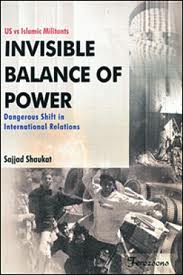
US vs Islamic Militants: Invisible Balance of Power
by Sajjad Shaukat – Ferozsons (Pvt) Ltd 2005
Book Review
Invisible Balance of Power begins with a review of western military history as it relates to Balance of Power theory. The latter is based on the premise that in the absence of an international body capable of enforcing international law, “balance of power” between dominant nations is the only force capable of containing wanton military aggressors with “excessive” economic and political power. Shaukat lays out the novel theory that the rise of stateless terrorist groups has created an “invisible balance of power,” which performs the same function in curbing US state terrorism as the Soviet Union did prior to its collapse.
Shaukat begins by tracing historical balance of power relationships starting with the Peloponnesian War in ancient Greece, through the rise of European nation states and their complex alliances finally the Cold War balance of power between the US and the Soviet Union. During the 1945-90 Cold War period, the threat of Mutually Assured (nuclear) Destruction was responsible for a lengthy war-free period in the developed world.
Wanton State Terrorism By the US
According to Shaukat, ever since the demise of the Soviet Union, the US has felt free to blatantly and repeatedly violate international law. Among other examples, he cites
The 1998 air strikes against Sudan and Afghanistan, condemned by Iran and China and their allies as a violation of international law.
The 1999 air strikes against Serbia, condemned by Russia and China and their allies as “terrorism” and a violation of international law.
The 2003 invasion of Iraq, condemned by UN Secretary General Kofi Anan as a violation of international law.
US Military Failures in Iraq and Afghanistan
Shaukat also argues that since 2003, the threat of “group terrorism” has replaced the USSR in providing a clear check on US military ambitions. As examples, he points to the US failure to achieve their objective of turning Iraq and Afghanistan into economic colonies to improve strategic access to Middle East and Central Asian oil and gas resources.
Suicide Bombings as a Rational Response to Genuine Grievance
Shaukat also disputes propaganda efforts by Western leaders to portray suicide bombers as psychologically deranged and/or jealous of western democracy and culture. In the absence of an international body strong enough to prevent the US from victimizing weak nations, he feels they are a totally rational Third World response to US state terrorism.
Suicide bombings are always a direct response to genuine grievances, usually state terrorism in the form of massive civilian casualties, shelling, random checkpoint shootings or unlawful detention and torture of innocent civilians.
Shaukat coins the term “coercive diplomacy” to describe the role this orchestrated violence plays in imposing free markets, privatization and denationalization on Third World countries).
The Concept of Moral Force
He goes on to to point out the wide support Islamic militants in Iraq, Afghanistan, Pakistan, Palestine and Kashmir receive from Muslim intellectuals in the Middle East with direct experience of US “state terrorism” and “coercive diplomacy. Many of these supporters view the jihad launched by Islamic militants as a “just war,” aimed at correcting a massive injustice.
Future Dangers and Potential Solutions
Shaukat devotes a full chapter to the potential dangers the world faces from a continuation of the “invisible balance of power.” Chief among them is the real risk Islamic terrorists will access and deploy nuclear, biological or chemical weapons.
I found his final chapter “Lessons for the US” the most valuable, as it proposes specific solutions for ending the highly dangerous “invisible balance of power”:
Foreign policy needs to be based on the collective interest of humanity. There will never be economic justice in a world run by Wall Street bankers.
The UN needs to be reformed to give it real power to enforce international law. The weak nations represented by the General Assembly must be given equal power as the Security Council, which is dominated by the countries with the greatest economic and military power.
Secret diplomacy must end. Diplomacy must be transparent and open to public scrutiny.
The US needs to end its current policy of “encircling” (economically and militarily) the emerging superpower China. US support of India in this exercise greatly increases the probability of nuclear conflict between India and Pakistan.
The US needs to return to incremental diplomacy and political solutions, instead of supporting state terrorism in Palestine and Kashmir – both major breeding grounds for the Islamic militants.
The US needs to respect the traditions and values of Arab states and allow their democracies to develop from below.
The US needs to reduce the debt burden of Third World nations, as poverty and hunger breed terrorism and remain the central obstacle to global security.
The US must recognize that less developed nations need economic democracy prior to political democracy. Using economic aid (as well as sanctions and freezing of assets) to dictate political reform is counterproductive. It hurts ordinary people more than their leaders and only further enables terrorist recruitment.
The US needs to give up their anti-Muslim policies, which are a major recruiting tool for terrorists.
The US must stop using economic aid (as well as sanctions and the freezing of assets) to control political reform – this type of “coercive diplomacy” always hurts ordinary people more than their leaders – and thus further enables terrorist recruitment.
The US needs to lead a genuine global arms reduction effort to reduce the likelihood of war.
Sajjad Shaukat is a Pakistani writer with a master’s degree from Punjab University in journalism, English and international relations. His book can be purchased for $9.09 at emarkaz.com
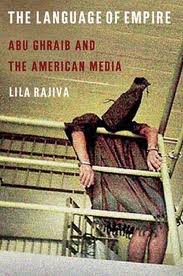
The Language of Empire: Abu Ghraib and the American Media
by Lila Rajiva (2005 Monthly Review Press
Book Review
The Language of Empire is an examination of the Abu Ghraib scandal, from the perspective that the US military’s use of torture was primarily an instrument of terror (i.e. a military tactic intended to cause intimidation). In addition to outlining what actually happened at Abu Ghraib, Rajiva also chronicles the Senate Armed Services Committee investigation triggered when the scandal first broke in April 2004. However the book mainly focuses on the media coverage of Abu Ghraib and what it tells us about the highly sophisticated psychological strategies employed by Pentagon and Wall Street propagandists.
The Language of Empire begins with a detailed catalog of the different forms of torture employed against prisoners (who were for the most part civilian non-combatants) at Abu Ghraib, with particular emphasis on the rape of female prisoners (only reported by the Christian Science Monitor) and the sodomizing of Iraqi teenagers, both largely ignored by the mainstream media.
The third chapter is devoted to the Senate investigation. The investigation, in Rajiva’s view, was a whitewash allowing the Republican majority to scapegoat a few “bad apples.” There should have been a thorough investigation of Secretary of Defense Donald Rumsfeld, who had clearly mandated the use of torture in interrogations. Rajiva is also critical of Senate Democrats, who focused entirely on the legal paper trail and the Pentagon’s failure to keep Congress informed, rather than a diseased Pentagon culture that enabled the US to adopt torture as official policy.
Rumsfeld’s Corporatization of the Pentagon
Rajiva is extremely critical of Rumsfeld’s wholesale “corporatization” of defense and his consolidation of all Middle East intelligence and propaganda functions under the Pentagon. Of most significance, obviously, was contracting with private companies to provide military and intelligence functions. In addition to introducing the secrecy (and deniability) of the corporate boardroom into military operations, it simultaneously transferred major policy decisions from military professionals to civilians.
Torture as Psyops*
Although she deals briefly with the cultural use of forced nakedness, sexuality and homosexual role play, compounded by the global distribution of photos of Muslim men humiliated in this way, most of the book deals with the intended psyops function of Abu Ghraib coverage on the American public.
Rajiva explores two broad themes here. The first relates to deliberately orchestrating fear and confusion in the American public to increase their susceptibility to ideological propaganda. The second relates to the deliberate use of fragmented, highly emotive images and scenarios in the absence of historical or logical context.
According to Rajiva, in most Americans normal social interaction has been replaced with incoherent economic and biological drives reinforced by continual advertising messages to consume. Layered on top of this (in white males) are Invented “culture wars,” consisting of imagined threats from liberals, women, minorities and Islam.
All this is very effective in distracting the public from the real conflict, which is between corporate interests and the real needs of people and their communities. In addition to making them exquisitely vulnerable to manipulation by the Pentagon and corporate media, it deliberately encourages Americans to project their inner anxieties on frightening outsiders (i.e. Muslims).
Rajiva gives numerous examples in which the US media deliberately misrepresents Arab society as inherently violent, tribal and uncivilized. At the same time Islamic insurgents are made to appear as monstrous as possible by 1) exaggerating their alleged religious fundamentalism and negating their rational motivation (poverty and US occupation and atrocities) for their terrorist activities and 2) defining them as evil by nature, with subhuman descriptors (animals, insects, slime, etc).
She also describes a trick of logic played by government/media propagandists, whereby the US killing of thousands of civilians is “rational” because it’s (supposedly) accidental. In contrast acts of violence by militants are portrayed as “irrational” because they occur in response to genuine grievances.
*Psyops are tactics intended to manipulate one’s opponents or enemies, such as the dissemination of propaganda or the use of psychological warfare.
Lila Rajiva is a journalist and author residing in Baltimore. She has degrees in economics and English from India, as well as a Master’s degree from JohnsHopkinsUniversity, where she did doctoral work in international relations and political philosophy. She has taught at the University of Maryland, BaltimoreCounty. She blogs at http://mindbodypolitic.com/
Americans now have the opportunity of seeing Australian John Pilger’s critically acclaimed The War You Don’t See on YouTube. The groundbreaking documentary was effectively banned in the US when Patrick Lannan, who funds the “liberal” Lannon Foundation, canceled the American premier (and all Pilger’s public appearances) in June 2010. Pilger provides the full background of this blatant act of censorship at his website. After watching the film, I believe its strong support of Julian Assange (who the US Department of Justice is attempting to prosecute) is the most likely reason it wasn’t shown in American theaters.
Pilger’s documentary centers around the clear propaganda role both the British and US press played in cheerleading the US/British invasion of Afghanistan and Iraq. It includes a series of interviews in which Pilger confronts British and American journalists (including Dan Rather) and news executives regarding their failure to give air time to weapons inspectors and military/intelligence analysts who were publicly challenging the justification for these invasions. The Australian filmmaker focuses heavily on the fabricated evidence (Saddam Hussein’s non-existent weapons of mass destruction and links to 9-11) that was used to convince American and British lawmakers to go along with an illegal attack on a defenceless nation (Iraq).
Making News Executives Squirm
Pilger also confronts the British news executives (from the BBC and ITV) for reporting — unchallenged — Israeli propagandist Mark Regev regarding the May 2010 Israeli attack (in international waters) of the international peace flotilla and murder of nine Turkish peace activists (including six who were executed in the back of the head at point blank range).
Although none of the news makers offer a satisfactory explanation for their actions, British news executives show obvious embarrassment when Pilger forces them to admit they knew about opposing views and failed to offer them equal air time. In my view, the main value of the film is reminding us how essential it is to hold journalists to account for their lack of objectivity. Too many activists (myself included) have allowed ourselves to become too cynical about the mainstream media to hold individual reporters and their editors and managers accountable when they function as government propagandists instead of journalists.
The War You Don’t See was released in Britain in December 2010, in the context of a Parliamentary investigation into the Blair government’s use of manufactured intelligence to ensnare the UK into a disastrous ten year foreign war. Government/corporate censorship is far more efficient in the US, and the odds of a similar Congressional investigation occurring in the US seem extremely low.
Edward Bernays: the Public is the Enemy
The film begins with a thumbnail history of modern war propaganda, which Pilger traces back to Edward Bernays, the father of public relations. Bernays, who began his career by helping Woodrow Wilson to “sell” World War I to the American people, talks in his famous book Propaganda about the public being the “enemy” which must be “countered.”
Independent Journalism is Hazardous to Your Health
The most powerful segment features the Wikileaks gunship video released in April 2010, followed by Pilger’s interview with a Pentagon spokesperson regarding this sadistic 2007 attack on unarmed Iraqi civilians. This is followed by excerpts of a public presentation by a GI on the ground at the time of assault, who was denied permission to medically evacuate two children injured in the attack.
The documentary also focuses heavily on the Pentagon’s deliberate use of “embedded” journalists to report the wars in Afghanistan and Iraq, as well as the extreme threat (often from American forces) faced by independent, non-embedded journalists. According to Pilger, a record 240 independent journalists were killed in Iraq and Afghanistan. In Palestine, the Israel Defense Force (IDF) has killed ten independent journalists since 1992. The War You Don’t See includes footage of a recent IDF attack on a Palestinian cameraman, who miraculously survived, despite losing both legs.
Pilger goes on to talk about the deliberate bombing of Al Jazeera headquarters in Kabul and Baghdad, mainly because the Arab network was the only outlet reporting on civilian atrocities. This section features excellent Al Jazeera footage of home invasions of two civilian families — in one case by British and the other by American troops — who were brutally terrorized and subjected to torture tactics.
The Interview that Got the Film Banned
The film concludes with a brief interview with Wikileaks founder Julian Assange, who discusses the increasing secrecy and failure of democratic control over the military industrial intelligence complex. Assange presents his view that this complex consists of a network of thousands of players (government employees and contractors and defense lobbyists) who make major policy decisions in their own self-interest with virtually no government oversight.
Pilger and Assange also discuss the aggressive prosecution of whistleblowers by Obama, who has the worst record of First Amendment violations of any president. They also discuss the positive implications of the willingness of military and intelligence insiders to leak hundreds of thousands of classified documents. It shows clear dissent in the ranks about the blatant criminality that motivates US foreign policy decisions.
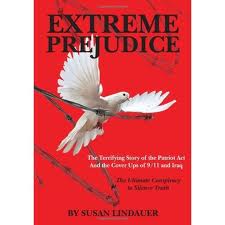
Former CIA asset Susan Lindauer describes how the Department of Homeland Security locked her up on a military base for 12 months and tried to detain her indefinitely without a hearing and drug her with Haldol and other psychotropic medication. Why? Because she possesses extensive documentary evidence that the CIA had foreknowledge of the 9-11 attacks as early as February 2001. This, along with other important documents related to the Lockerbie bombing and the US wars on Iraq and Libya, are published as an appendix in her 2010 book Extreme Prejudice.
Prior to her arrest, Lindauer was the chief CIA asset in charge of Iraqi and Libyan back-channel communications. She was under indictment for five years. Eventually her late partner’s exhaustive efforts to publicize her case paid off and she was granted a hearing – and released.
Towards the end of her talk, she describes her late partner’s conversation with Amy Goodman, host of Democracy Now! Amy’s flimsy excuses for refusing to cover the story, during a period when Lindauer was being held incommunicado at Caswell Air Force Base, aren’t at all surprising. Especially when you have a look at the CIA-funded foundations that finance Democracy Now! See Does the CIA Fund Both the Right and the Left?



 The Most Revolutionary Act