Hidden History: The 1973 Arab-Israeli War

The War in October

Al Jazeera (2013)

Film Review

The War in October is a three-part documentary series about the October 1973 Arab-Israeli War – aka the Yom Kippur War. What struck me most about the series is how markedly it differs from what we read in the Western media (which was embedded with Israeli troops) and what Americans are taught in school.

Part I provides the background of the war – an agreement by Syrian ruler Hafez al-Assad’s (Bashar’s father) agreement with Egyptian ruler Anwar Sadat to simultaneously attack Israel to reclaim territory each had lost to Israel (the Syrian Golan Heights and Egypt’s Sinai Peninsula) in the 1967 war.

Part 1 reveals that both Syria and Egypt came close to reconquering their lost territory within the first 24 hours of their attack. They both failed, mainly owing to Assad’s and Sadat’s refusals to follow their generals’ advice.

Part 2 covers the major reversals Syria and Egypt experienced following the full mobilization of Israeli reserves. Israeli troops seized territory within Egypt to within 100 km of Cairo. Their tanks also penetrated deeply into Syria, until they were beaten back by reinforcements from Iraq and Jordan.

Part 3 is the most interesting, as it covers the role Henry Kissinger played, not only in providing Israel with critical military hardware, but in encouraging them to disregard two ceasefires ordered by the UN Security Council.

After the Soviet Union threatened to enforce the second ceasefire militarily, Kissinger (and Israel) eventually capitulated.

However the most effective tool in the 1973 war was the oil embargo launched by all Arab oil producing nations. International pressure forced Israel to withdraw from Egyptian and Syrian territory and accep deployment of UN peacekeeping troops in buffer zones east of the Suez Canal and the Golan Heights.

In a side agreement, Sadat agreed to release 230 Israeli prisoners of war in return for Kissinger’s pledge to negotiate a treaty leading to Israel’s withdrawal from Sinai. Signed in 1979, the treaty resulted in full withdrawal of Israeli troops in 1982 – a year after Sadat’s assassination.
David Rockefeller: Billionaire Architect of Corporate Globalization, CIA Coups and US Resource Wars

The Unauthorized Biography of David Rockefeller

by James Corbett (2017)

Film Review

This is a documentary about the late David Rockefeller, billionaire architect of corporate globalization, international free trade treaties (eg TPPA) and most CIA coups and US resource wars of the late 20th century (eg the US war on Iraq). Activists have known for decades that the US is run by billionaire oligarchs – and not Congress and the President. However it’s only with the advent of the Internet and Information Age that we could start to identify who these oligarchs are and how they control our democratic institutions. As in other documentaries, James Corbett does an excellent job exposing these secret levers of power.

According to Corbett, David, the last grandson of oil tycoon J.D. Rockefeller to die (in 2017), principally exerted his influence through foreign leaders he befriended in his role as CEO of Chase Manhattan Bank and World War II military intelligence officer; through his membership in secret round table groups (eg the Council on Foreign Relations, the Trilateral Commission and the Bilderberg Group) that craft foreign policy for all so-called western democracies; the insertion of his high level errand boys (eg Henry Kissinger and Zbigniew Brzezinski) into every presidential administration from Lyndon Johnson on; and the the vigorous role played by Rockefeller-funded foundations, universities, think tanks and media outlets in shaping public opinion.

In 1973, Kissinger (under David’s interest) was instrumental in launching the 1973 CIA coup in Chile to protect Rockefeller mining interests. Via David’s leadership role in the Bilderberg Group, he played a principle role in instigating the 1973 oil embargo (which jacked up oil prices and Rockefeller oil profits, the formation of the Eurozone and the euro and the 2003 invasion Iraq.

The Trilateral Commission, which David and Brzezinski co-founded in 1973, has been largely credited for Carter’s selection as the 1976 Democratic candidate – and (thanks to fawning coverage in the corporate media) his ultimate election as president.

With his five billionaire brothers, David also played a key role in founding the United Nations in 1945 (on donated Rockefeller land). The latter was openly designated the “world capitol” in historical newsreels.

A Closer Look at Trump Supporters

Trumpland

Fusion (2016)

Film Review

This documentary, filmed a month before the 2016 election, explores the life circumstances of a cross section of Trump supporters, referred to by Hillary Clinton as “deplorables.”

Commonalities shared by this demographic are

  • recent personal or family experience with job loss, bankruptcy or foreclosure.
  • strong feelings about Wall Street outsourcing manufacturing jobs to third world countries.
  • strong feelings about US politics being a “crooked” system set up to destroy the middle class.
  • strong opposition to their perceived corporate control of the two major political parties.
  • a perception that Trump, unlike other politicians, “can’t be bought.”

When answering filmmakers’ questions about Trump’s perceived racism and xenophobia, their replies vary. Some (especially women) feel that Black Lives Matter activists have a point about the abysmal way Black people are treated in the US. Others claim that Black people (and women) are demanding special privileges not enjoyed by white men.

Most deny that Trump is racist, claiming he only wants to prevent terrorist attacks by banning immigrants from Syria, Afghanistan and Iraq. They agree with his proposed wall because they believe his claims that most illegal Mexican immigrants are drug dealers and rapists. This flies in the face of research indicating undocumented immigrants (who are loathe to draw attention to themselves) commit far fewer crimes than either legal immigrants or native born Americans.

World War I: How the West Fomented Ethnic Conflict to Destroy the Ottoman Empire

The Ottoman Empire: Demise of a Major Power

DW (2017)

Film Review

This documentary demonstrates how people of multiple religions and ethnicities were able to coexist peaceably for over four centuries in the Ottoman empire. This flies in the face of western propaganda about the inevitably of genocidal violence when various religions and ethnicities share the same geographic space.

According to the filmmakers, the long peaceful coexistence of multiple religious and ethnic groups (the main ones being Roman Catholic, Protestant and Orthodox Christians, Jews, and Sunni, Shia and Sufi Muslims) relates mainly to the Ottoman creation of semi-autonomous regional “millets.” These were under the administrative control of local religious leaders.

The democratic ideals that arose from the 1789 French Revolution would pose the first major challenge to this stability, in triggering a whole series of rebellions. In 1821, Greek rebels would launch a full scale war of independence. Russia, France and Britain, keen on expanding their empires into the Balkans and Middle East, supported the rebellion. Greece would ultimately win independence in 1829.

Over the coming decades, the Russian and Austro-Hungarian empire fomented similar rebellions by ethnic Serbs, Romanians and Bulgarians. In 1877, Russia declared war on the Ottoman Empire – under the pretext of protecting its Christian subjects – which ended with the 1878 Congress of Berlin. The latter divided up the Balkans and placed the minority Armenians in the Anatolia peninsula under the protection of the European powers. Russia was granted control of Bulgaria, Serbia and Montenegro and the Austro-Hungarian empire control of Bosnia-Herzegovina. This peace agreement, which led to the displacement of hundreds of thousands of Balkan Muslims, signaled the dawn of the modern age of refugees.

For me the most intriguing part of the film concerned the intelligence role of archeologist Thomas Lawrence (aka Lawrence of Arabia), who was actually a British secret agent sent to mobilize the Arabs in the Arabian peninsula to revolt against their Ottoman rulers. Lawrence, on behalf of Britain, promised Arab fighters their own Arabian kingdom in return for their military support – a promise Britain conveniently broke in 1920.*

This documentary leaves absolutely no question that the real agenda in World War I was 1) disrupting the growing German-Ottoman alliance and 2) for the European powers who initiated the war to divide up the Ottoman empire. Following the 1918 armistice and 1920 Treaty of Sevres, Britain would win colonial control of Egypt, Mesopotamia (Iraq and Kuwait) and Palestine and the French control of Syria and the newly created Christian enclave of Lebanon.

After Britain gained colonial control over Palestine in 1920, they immediately revved up ethnic tensions by requiring Jerusalem residents to reside in distinct religious zones an


*The Ottoman Empire’s possessions in the Arabian Peninsula became the Kingdom of Hejaz, which was annexed by the Sultanate of Nejd (today Saudi Arabia), and the Mutawakkilite Kingdom of Yemen. The Empire’s possessions on the western shores of the Persian Gulf were variously annexed by Saudi Arabia (Alahsa and Qatif), or remained British protectorates (Kuwait, Bahrain, and Qatar) and became the Arab States of the Persian Gulf. requiring passports for travel between zones.


Who Killed Senator Paul Wellstone?

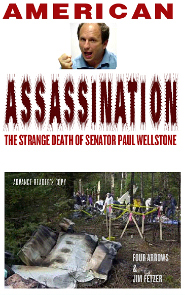
American Assassination: The Strange Death of Senator Paul Wellstone

by Four Arrows and Jim Fetzer

Vox Pop (2004)

Book Review

American Assassination summarizes the authors’ investigation into the freak airplane crash that killed Minnesota senator Paul Wellstone on October 25, 2002. Wellstone, an outspoken populist, was killed exactly 10 days before a midterm election in which the Bush/Cheney administration invested hundreds of thousands of dollars to defeat him.

Wellstone was the sole senator to oppose the Use of Force Resolution authorizing George W Bush’s invasion of Iraq. In addition to advocating for an independent investigation into 9-11, many believed he was the only Democratic who could beat Bush in the 2004 election.

Numerous anomalies associated with the crash investigation point to an official cover-up:

  • The FBI, which had no legal jurisdiction, departed for the crash scene before the accident occurred – and subsequently lied about the time they arrived.
  • The National Transport Safety Board (NTSB) failed to hold a public hearing (which is routine in high profile cases). Their reported also omitted important eyewitness testimony regarding roaring/humming cellphone interference at the precise moment the plane lost control and a flash of fire, followed by an abrupt cessation of engine noise, just prior to the crash.
  • Wellstone’s and other crash victims’ lungs showed evidence of smoke inhalation (which means they were still in the air – and alive – when the plane caught fire). In other words, the crash didn’t cause the fire, as claimed by the NTSB.
  • The smoke from the burning fuselage was blue, suggesting a pre-crash electrical fire. If the crash had caused the fuel tanks to explode (as claimed by the NTSB), the smoke would have been black. Neither of the wings, where the fuel tanks were located, caught fire.

The book also includes an excellent summary by late assassination researcher Michael Ruppert of 47 instances of US politicians dying in plane crashes – with six fatal crashes occurring during election campaigns.

There is also an excellent scientific overview of the microwave – aka electromagnetic pulse (EMP) weapons – developed by the Pentagon for use in Iraq. Pulses from these weapons can destroy all electronics within a 1,000 foot range by short circuiting electrical connections. Electronic aircraft navigational equipment is exquisitely sensitive to electromagnetic interference – which is why air passengers are strictly forbidden to use cellphones or laptops during takeoff or landing. Numerous military crashes have been caused by aircraft getting too close to radio transmitters.

Unlike the NTSB, Fetzer and Four Arrows try to come up with an explanation for the crash that explains the simultaneous loss of aircraft control and loss of communication with the tower. Only two possible scenarios are consistent with this evidence – a small incendiary bomb or an EMP weapon that took out the plane’s electronics as it was landing. They find the latter more likely – anyone can purchase a basic EMP weapon on the Internet.

Deportees in Mexico: Unwanted by Either Side

US and The Wall: Deportees in Mexico Unwanted by Either Side

RT (2017)

This documentary explores the plight of newly deported immigrants  – many of whom have lived in the US more than 20 years and speak no Spanish. Most end up in Tijuana which, run by drug cartels, is one of the most dangerous cities in the world. Because they’re not local, it’s fairly common for Mexican police to detain deportees and steal their money.

The film profiles three main groups, volunteers who leave gallon jugs of water in the desert to prevent migrants from dying of thirst; armed vigilantes, drawn from former military and police personnel, who patrol the Arizona desert hunting down illegal immigrants; and US veterans who have started a shelter in Tijuana for veterans deported after serving in Iraq and Afghanistan. Most were enticed to enlist with a promise of citizenship – only to be deported for minor crimes such as DUIs, drug possession, bad checks or firearms offenses. One veteran talks of pleading guilty based on a broken promise he wouldn’t be deported.

During the filming, the shelter is visited by seven Congress people concerned about the plight of deported veterans.

US Military Burnpits: The New Agent Orange?

In their August 1 episode of The Stream, Al Jazeera English explores the plight of US veterans and Iraqi and American civilians exposed to toxic burn pits in Iraq, Afghanistan and the US. Although Obama outlawed the use of war zone burn pits, they continue to operate on 200 military bases across the US.*

Historically burn pits have been used to dispose of munitions, metals, plastics, chemicals and corpses, releasing a host of toxic chemicals to the atmosphere.

The US Department of Veterans Affairs (VA) listed 110,989 veterans and service members in its latest burn pits registry. However, as with Agent Orange exposure, the VA has been slow to investigate burn pit related illnesses and routinely denies medical benefits to veterans who become chronically ill from burn pit exposure. They most commonly suffer from acute and debilitating respiratory illnesses and throat, lung and brain cancers and leukemia.

In addition to highlighting a recent study of the birth defects and medical problems of Iraqi women and children exposed to burn pit fumes, the program questions why the Pentagon continues to operate nearly 200 open burn pits around the United States. According to a recent ProPublica investigation, these sites are getting rid of extremely toxic materials with little or no oversight and regulation, and often violate existing environment regulations.

At the Colfax plant in Louisiana, millions of pounds of munitions are burned  just a few hundred yards from a small, mostly black community. High levels of toxic vapors like acrolein and benzene have been found in the air, which according to the World Health Organization have “no safe level of exposure.”

The program host interviews the widow of a US vet killed by burn pit exposure, as well as Iraqi and American scientists.


*Although President Obama outlawed the use of war-zone burned pits by executive order, a 2016 article in Stars and Stripes  suggests US military bases continue to use them in Iraq.


Psychedelics: A Miracle Cure for PTSD?

Soldiers of the Vine

Directed by Charles Shaw (2016)

Film Review

This documentary traces the experience of six US veterans with post traumatic stress disorder (PTSD) who undergo treatment with the psychedelic ayahuasca, owing to their failure to respond to conventional treatment.*

Ex-GIs who have served in Iraq and Afghanistan suffer extremely high rates of PTSD, traumatic brain injury and suicidal depression. They commit suicide at twice the rate of the general population and US prisons, mental hospitals and homeless shelters are full of disabled veterans.

Studies show that psychedelic drugs, such as ayahuasca and ibogaine** are often helpful in treating heroin addiction and alcoholism. Their use in PTSD is still experimental.

In the film the six veterans travel to the Amazon jungle, where ayahasca is viewed as a sacred plant, to undergo a nine day healing ceremony with an indigenous shaman.


*Western medicine has no recognized treatment for PTSD.

**Ibogaine is legal for treating drug addiction in over 190 countries, including Mexico, Canada, Costa Rica, New Zealand, Russia, China and Ukraine. See Why Are We Sending Vets to Costa Rico (and Canada and Mexico).

The End of Oil

end-of-oil

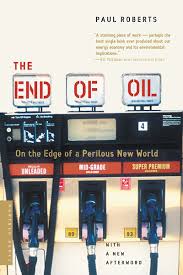
The End of Oil

by Paul Roberts

Houghton Mifflin Harcourt (20014)

Book Review

Although fourteen years old, The End of Oil offers an invaluable historical analysis about the absolute link between cheap fossil fuels and the development of industrial capitalism. Roberts starts his analysis with the first century Persians who first distilled surface petroleum for use as lamp fuel. According to Roberts, widespread use of oil as a fuel was impossible until drill technology became available in the 19th century to drill for it at deep levels.

Roberts identifies coal mining as the first really capital intensive industry requiring extensive external funding. Building the infrastructure to mine and process all three fossil fuels is always extremely capital intensive. The fact that a coal or gas-fired power plant takes three or four decades to pay off is one of the main reasons fossil fuel companies, and the banks and governments that subsidize them, are so reluctant to replace them with renewable energy infrastructure. The End of Oil also emphasizes the absolute importance of cheap fossil fuel to the economic health of industrialized countries, Between1945 and 2004 (when the book was published), there were six big spikes in the price of oil – each was accompanies by a major economic recession.

Roberts maintains the cheap, easily accessible oil is all used up, explaining its steady price increase since the late 70s. Russian oil, which is fairly costly to mine, only became economically viable when the price of oil hit $35 a barrel in 1980.

Prior to the final chapters, which review the economics of various forms of renewal energy, the book also discusses the geopolitics of oil. Roberts leaves absolutely no doubt that the US invasion of Iraq in 2003 was an effort by neoconservatives Dick Cheney, Donald Rumsfeld, Paul Wolfowitz et al to control the volatile price of oil and the devastating effects of this lability on the US economy. Although the US wars in Libya, Syria, Pakistan and Yemen occurred after the book’s publication, Roberts’s analysis left me with no doubt whatsoever they were driven by similar geopolitical objectives.

Roberts also discusses the geopolitical threats posed by China, India and Southeast Asian countries as their growing middle classes put pressure on a finite supply of oil. He also explores the threat the growing political/military alliance between Russian and Iran creates. Between them, the two countries control half the world supply of natural gas. He leaves no doubt, in other words, that the current US military threats against China, Russia and Iran are also about fossil fuel security, just like the war on Iraq.

How Corporations Used Podesta to Corrupt the Clintons and Obama

The Empire Files: Abby Martin Exposes John Podesta

(2016)

This segment of The Empire Files focuses on the Wikileaks reveal about the obscenely corrupt relationship between John Podesta, the Clintons and Barack Obama. My immediate reaction on watching it was relief and gratitude that Hillary lost the presidency.

Hillary’s campaign manager John Podesta is, first and foremost, is a corporate lobbyist who highest loyalty is to his clients. The Podesta Group, which he owns with his brother, Tony, lobbies for the most powerful corporations in the world, as well as the brutal governments of Saudi Arabia, Qatar, Kuwait and al-Maliki (Iraqi prime minister 2006-2014). The Wikileaks emails reveal unequivocally that John Podesta systematically (and illegally) used high ranking positions in both the Clinton and Obama administration to advance the profit interests of his private clients.

Under Bill Clinton, it was also John Podesta’s role to covered up numerous instances in which Bill and Hillary Clinton used his position as Arkansas governor for personal financial gain.

When Obama became president, Podesta (who would become Obama’s senior White House advisor), allowed his client Citibank to dictate nearly all of Obama’s cabinet appointments. Podesta would go on to form the Center for American Progress, a supposedly non-profit group that illegal lobbied for private clients of the Podesta Group to receive federal subsidies and lax regulatory treatment.