Is Your Boss Pocketing Your State Income Tax?

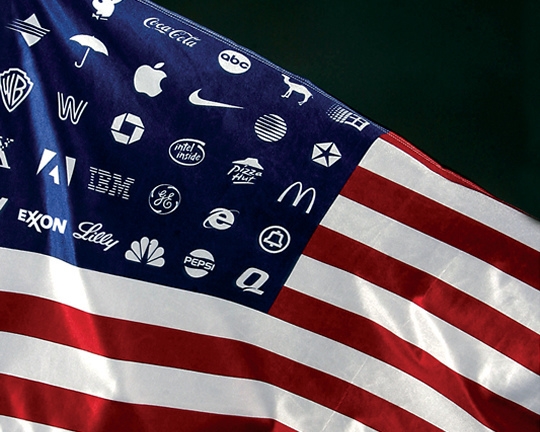
corporate flag

Corporate Welfare for Goldman Sachs, Walmart and 2,700 Other Companies

According to investigative journalist David Cay Johnston, more than 2,700 companies have secret agreements to keep the state income tax they withhold from your paycheck.

Goldman Sachs, Walmart, Chrysler, Ford, General Motors, Nissan, Mitsubishi, Motorola, Proctor and Gamble, AMC Theaters, Toyota and Electrolux are but a few of the big name companies involved.

As Johnston writes in a 2011 Reuters column:

“Instead of paying for police, teachers, roads and other state and local services that grease the wheels of commerce, Illinois workers at these companies will subsidize their employers with the state income taxes they pay. The deal to let employers keep half or all of their workers’ state income taxes represents a dramatic expansion of a little-known trend in the law: diverting taxes from public purposes to private gain.”

As of April 2012, the states which have signed these secret agreements included Colorado, Connecticut, Georgia, Illinois, Indiana, Kansas, Kentucky, Maine, Mississippi, Missouri, New Jersey, New Mexico, North Carolina, Ohio, South Carolina, Utah.

Read more at Taxed by the Boss


photo credit: watchingfrogsboil via photopin cc


Speculating with our Food

In 2011, “food derivative” speculation replaced financial derivatives as the hot new investment promoted by major investment banks like Goldman Sachs and JP Morgan. According to numerous studies, food speculation rather than shortages, are the main reason for skyrocketing food costs.

The really scary news is that in addition to speculating heavily on food commodities, these same private equity funds are also buying up huge tracts of land in the third world.

The Great Land Grab

A 2009 research project by the Oakland Institute (The Great Land Grab) reveals startling facts about the corporate land grab in the third world – another major factor in skyrocketing food prices.

According to the International Food Policy Research Institute (IFPRI), foreign investors have secured more than 50 million acres of African farmland to develop factory farms for export crops. In addition to investment banks and private equity funds, multilateral agencies, such as the International Financial Corporation (the private sector branch of the World Bank), are also major players in the “corporatization” of global agriculture.

The IFC plays a dual role in increasing private investment in the third world – via direct investment and by pressuring developing countries to create “business enabling environments.” Another World Bank agency, The Foreign Investment Advisory Service (FIAS ), also plays a role by pressuring third world governments to improve their “investment climate,” by relaxing environmental, tenant rights and food security laws and abolishing tax and duties on foreign investments.

Africa is the major target, both for western investment banks and booming Asian economies, driving tens of thousands of subsistence farmers off land they have farmed for generations.

Corporatizing the Global Food Supply

A UK company started in 1997, called  Emergent Asset Management, claims to be the largest speculative fund investing in African industrial agriculture. It uses private equity to take control of large tracts of African farm land. Their prospectus attracts investors by predicting a armed conflict between the West and China will trigger mass food shortages – accompanied by price spikes that guarantee a handsome return to investors. Emergent’s founders, Susan Payne and David Murrin are former high level traders for Goldman Sachs and JP Morgan – well-known as the architects of food derivative speculation.

Emergent’s direct control of large amounts of agricultural land – combined with its ability to attract investors through its equity fund – puts unprecedented control of the global food supply in private hands. It does so by creating a new type of vertical integration, in which a single company controls vast amounts of land, food production and processing — while simultaneously inflating global food prices due to the speculative nature of the fund. As you can see in the video Emergent uses in their pitch to investors:

The Perp Walk – the 1% Have Names

In 2011, the Oakland Institute fingered other millionaires and billionaires grabbing African land via unscrupulous deals with corrupt village leaders (who sign away communal land rights without community consultation) – and by helping to orchestrate armed attacks on families who refuse to leave their land. At the top of the list are

Bruce Rastetter — CEO of Pharos Ag, which has bought more than 300,000 hectares in Tanzania for large-scale food crop, beef, poultry, and biofuel production. This project will displace tens of thousands of civil war refugees awaiting Tanzanian citizenship.

Leonard Henry Thatcher and David Neiman — runs Nile Trading and Development (NTD), which has bought 600,000 hectares in South Sudan through a secret agreement with influential locals who went behind the backs of other community members.

Kevin Godlington — (close associate of former prime minister Tony Blair) CEO of Crad-l and Director of Sierra Leone Agriculture (SLA) and its parent company, the UK-based CAPARO Renewable Agriculture Developments. SLA has bought 43,000 hectares in Sierra Leone to plant palm oil plantations.

Enter the Bill and Melinda Gates Foundation

The March 31 Guardian reports that the Bill and Melinda Gates Foundation (along with USAID and the Dutch and Danish governments) are backing a new World Bank scheme to further industrial agriculture at the expense of the smallholder farmers who produce 80% of the food consumed in the developing world. The new program is a ranking system called the Benchmarking the Business of Agriculture (BBA).

Here’s what the Our Land is Our Business campaign, organized by the Oakland Institute and like-minded food rights groups, has to say about the BBA:

“Despite a language that claims concerns for small farmers, the goal of this new agriculture-focused ranking system is far too clear: [to] further open up countries’ agriculture sectors to foreign corporations. The doing business [rankings] give points to countries when they act in favor of ‘ease of doing business’. This consists of smoothing the way for corporations’ activity in the country by, for instance, cutting administrative procedures, lowering corporate taxes, removing environmental and social regulations or suppressing trade barriers.”

People can sign on at Our Land is Our Business to send a message to the World Bank about looking after people rather than corporations.


The Real Cause of Greece’s Economic Crisis

Debtocracy

(2011) Katerina Kitidi and Aris Hatzistefanou

Film Review

The 2011 Greek documentary Debtocracy effectively dispels the media myths about lazy Greek workers and and scofflaw Greek taxpayers being responsible for Greece’s present economic crisis.

The film begins with an overview of what its filmmakers (and I) feel has been a basic goal of both globalization and the creation of a single European currency – namely “labor discipline” and the suppression of wages in heavily unionized countries.

They show how sweeping deregulation in the industrialized world in the 1980s allowed manufacturers to eliminate unions by shutting plants down and reopening them as sweatshops in the third world. The subsequent creation of the Euro as a single currency allowed the central European countries (Germany and France) to use the mechanism of debt to weaken strong unions in peripheral Eurozone countries like Greece, Spain and Italy.

Thanks to relatively weak unions following reunification, Germany imposed a virtual ten year wage freeze. While workers suffered, German companies and banks racked up immense profits and stacks of cash, which they loaned to “peripheral” countries to finance big corporate tax cuts.

The bulk of the film focuses on the concept of “odious” debt and whether the Greek people should be forced to repay fraudulent loans from which they received no direct benefit. As Debtocracy poignantly depicts, Athens and other Greek cities are experiencing a third world humanitarian crisis, with massive homelessness, hunger and untreated illness.

Odious Debt: An American Invention

Odious debt was a principle invented by the US in the early 20th century to avoid repaying Spain’s war debt after the US took possession of Cuba following the Spanish-American War. George Bush invoked it following the US occupation of Iraq. His goal was to avoid repayment of Sadam Hussein’s debts to China, France, Germany and Russia. Since then approximately a dozen countries – most notably Argentina, Ecuador and Iceland – have repudiated so-called “illegitimate” debt incurred by deposed leaders.

The film focuses mainly Argentina’s and Ecuador’s default on their foreign debt. In 2001 the structural adjustments the IMF forced on Argentina bankrupted the country. A popular uprising forced the Argentine president to flee (in a helicopter), and the new government declared the IMF debt illegal and unconstitutional.

When Ecuador experienced a similar economic crisis and uprising in 2007, they, too, sent their president packing in a helicopter. In 2008, their new president Rafael Correa appointed a Debt Audit Commission to study the strong arm tactics (some of which John Perkins describes in Confessions of an Economic Hit Man) that caused Ecuador to borrow billions of dollars to pay for US-built infrastructure that only benefited Ecuador’s wealthy elite. Correa’s Debt Audit Commission ascertained that only 30% of their external debt was legitimately incurred.

CADTM’s Call for a Greek Debt Audit Commission

Iric Toussaint, a French economist who participated in the Ecuadorian Debt Audit Commission, believes a major proportion of Greek debt may have been fraudulently incurred. The following evidence supports this view:

  • Nearly one billion euros of debt resulted from a risky swap (of yen and dollars for euros) Goldman Sachs persuaded Greece to make in 2001. The transaction netted Goldman Sachs $600 million in profit (see Secret Greek loan).
  • Major German and French loans were issued on condition that the Greek government incur further indebtedness to purchase hundreds of millions of euros of German and French armaments.
  • Billions of dollars of Greek debt resulted from major cost overruns on the 2004 Greek Olympics (which cost twice as much as the Sydney Olympics in 2000). These have never been explained nor investigated.
  • In 2010 a former Goldman Sachs official was hired to manage the Greek public debt authority, with the result that the entire 2010 rescue package (103 million euros) was used to bail out Greek banks.

The film also discusses the March 2011 call by the Committee for the Abolition of Third World Debt (CADTM) to create an audit commission to examine Greek public debt. It ends with the ominous sound of a helicopter, eerily foreshadowing the forced resignation of Greek prime minister George Papandreou last November, when CNN advised him to get a helicopter to save himself from angry protestors (see Fall of Papandreou).

Those Fracking Lies

snake oil

Snake Oil: How Fracking’s False Promise of Plenty Imperils Our Future 

Richard Heinberg (Post Carbon Institute, 2013)

Book Review

Snake Oil is all about the economics of fracking. Also known as hydraulic fracturing, fracking refers to using pressurized water and chemicals to release oil or natural gas trapped in underground rock formations. Heinberg’s new book describes the behind-the-scenes role of Goldman Sachs and other investment banks in driving the present fracking boom.

Technology to extract oil and gas deposits trapped in rock formations was first developed in 1866. Because the process is extremely capital intensive, fracking for oil only became economically sustainable in when the price of oil tripled a decade ago. In the case of natural gas, it took the elimination of price controls and federal tax credits to make fracking financially feasible.

How Fracking Loses Money
According to Heinberg, fossil fuel companies are losing money on fracking. The recent boom has led to a surplus of natural gas. This, in turn, has driven the price down, forcing the oil/gas industry to sell it for less than they spend to get it out of the ground. Because only a small fraction of shale gas can be extracted cost effectively, production declines by an average of 80-90% over the first 36 months. Industry data indicates it costs between $10-20 million to operate a fracking rig that will produce $6-15 million worth of natural gas in the well’s lifetime.

Obviously you can’t tell investors that fracking for natural gas is a money-losing proposition. Investors only want to hear that fracking is the miracle solution to America’s dependence on dirty coal and foreign oil. Thus oil/gas companies, the banks that finance them, the federal agencies that regulate them and Obama himself all parrot the hype that fracking will supply cheap natural gas to fuel US power plants for the next 100 years. According to Heinberg, this wildly optimistic prediction was calculated by extrapolating the best production rates of the best fracking sites over the 20,000 or so existing rigs. The problem with this methodology is that it fails to allow for rapid depletion rates or the fact that the best wells are already tapped out.

This pressure to meet financial targets forces the companies to sink more and more wells. Thirty-five to fifty percent of existing wells (7,200 wells) must be replaced every year “just to pay off the bankers.”

Fracking Based Derivatives
The only way companies can stay in business is by selling assets and financial products. This includes unused oil and gas leases* they acquired cheaply in the 1990s, company shares, derivatives and credit default swaps. The investment banks themselves have created their own fracking-based derivative called volumetric production payments (VPPS). The banks bundle them and sell them to gullible pension fund managers, just like they did toxic mortgages before the 2008 crash.

The billions they’re losing explains why the industry is so keen to start exporting fracked gas as Liquified Natural Gas (LNG) to China, Japan and India. These countries are happy to pay $15 per million BTUs, nearly four times the domestic price of $4. A growing export market will quickly drive up US prices.

Environmental Consequences of Fracking
Meanwhile the explosion of fracking rigs across the landscape is causing massive environmental damage and eating up scarce dollars we should be investing in renewable energy. Owing to strong public opposition, fracking is banned or strictly regulated in most of Europe. As a result, Europeans are far more likely to invest energy dollars in renewables. In 2012, Germany obtained 23% of their electricity from renewable sources, Denmark 41% and Portugal 45%

Snake Oil debunks the widely promoted myth is that that burning natural gas to produce electricity creates less greenhouse gasses than burning coal. If you count all the methane (a greenhouse gas 20-100 times more potent than CO2) released during fracking, using fracked natural gas to fuel power plants produces 20-100% more greenhouse gas emissions than coal.

The massive amount of freshwater consumed by tens of thousands of fracking wells is also a major concern, especially in drought-stricken regions. The water take for a single well pad cluster can exceed 60 million gallons. The Halliburton Loophole, championed by Dick Cheney, amended the Clean Water Act in 2005 to remove the requirement that oil and gas companies disclose the toxic chemicals they use in fracking. This is especially concerning given recent studies documenting serious health problems in people and livestock adjacent to fracking sites.**

In 2011, the EPA made the determination that fracking waste is too radioactive (from exposure to underground cesium and uranium) to be processed in municipal waste facilities. Thus most of it held in large evaporation pools or re-injected into old wells. A recent US Geological Service study has linked deep well re-injection to a rash of earthquakes in regions that rarely experience them. In 2011 central Oklahoma experienced a fracking-related 5.7 earthquake that destroyed 14 homes and a highway and injured two people.

Other Unconventional Production Methods
Snake Oil also debunks the flimsy economic hype used to promote other methods of unconventional oil and gas production (e.g. oil fracking, deep sea oil drilling, tar sands, etc), as well as examining what the inevitable transition to renewable energy will look like. Because renewable energy will never be as cheap as fossil fuels, some modification will be necessary in our current energy intensive lifestyle.

 *An oil or gas lease is a contract by which a landowner authorizes exploration for and production of oil and on his land, usually in return for royalties from the sale of the oil or gas.
**According to Al Jazeera, a jury has just awarded a Texas family $3 million for fracking related health problems.


Originally published in Dissident Voice

The Real Vampires: An Insider’s View of Banks

tragedy and hope

Tragedy and Hope: A History of the World in Our Time

Carroll Quigley* (1966 MacMillan)

Tragedy and Hope is a free download from http://sandiego.indymedia.org/media/2006/10/119975.pdf

(This is a third of a series of posts about stripping private banks of their power to create and control our money supply.)

Book Review

Tragedy and Hope is an exacting account of how the Bank of England, the Federal Reserve, the European central banks, and the investment banks that dominate them (e.g. Goldman Sachs and JP Morgan) came to control all western governments.

According to Quigley, banks have controlled western society – by manipulating the money supply – since the creation of the Bank of England and the fractional reserve lending system in 1694. Moreover, owing to the secrecy under which they operate, Quigley asserts that most elected officials are totally unaware of the immense control central and investment banks exert over the so-called democratic process.

He describes in exhaustive detail how all historical inflationary and deflationary crises, panics, wars, recessions and depressions were orchestrated behind the scenes by the banking establishment, for the purpose of increasing their private wealth. In his epic portrayal of three centuries of western civilization, he also describes how the banking aristocracy financed the rise of Communism in Russia, China and Eastern Europe, as well as bringing Hitler, Mussolini, Stalin and Roosevelt to power and guiding their governments from behind the scenes.

How Banks Create Money “Out of Nothing”

The single act, according to Quigley, that guaranteed Britain’s two century preeminence over the rest of the world was the development (in 1694), by British investment banks, of the fractional reserve lending system. This system allowed English investment banks to be the first in the world to lend money (to industry and the British government) that they created out of thin air. He goes on to list the banking dynasties that have held near absolute control of the global money supply since 1694, starting with banking cartel formed by Frankfurt banker Meyer Rothschild. At the time of his death, Rothschild’s five sons each controlled a major investment bank in Vienna, London, Naples, Paris and Frankfurt. Quigley lists the investment bank formed by the J.P. Morgan family as second to the Rothschild banks in power and influence, followed by the Baring Brothers, Morgan Grenfell, the Lazard Brothers, Erlanger, Warbur, Shroder, Seligman, the Speyers, Mirabaud, Mallet and Fould.

The Council on Foreign Relations

Quigley also writes about the network of secret round tables of international corporate and banking elites started by Cecil Rhodes and expanded by his followers with his sizable estate. At their founding, they had the stated purpose of spreading British the virtues of “ruling class” tradition throughout the English speaking world and solidifying the political power and influence of the British Empire. The US Council on Foreign Relations, one of the secret round tables started by Rhodes’ followers, was started in 1919, with the explicit goal of influencing the foreign and domestic policies of a former colony over which Britain no longer had direct control.

How English Banks Controlled the US Government

According to Quigley, the US was consistently a debtor nation prior to World War I. Following the 1776 revolution, US government and businesses continued to borrow funding for industrial and colonial expansion from English and European investment banks. The American banker, JP Morgan, collaborated with European investment banks to dictate US foreign and domestic policy. They did so by threatening to destroy the US economy by 1) refusing to renew treasury bonds (i.e. money the government borrowed from banks to fund public spending 2) causing a panic by throwing large numbers of shares on the stock market or 3) destroying the value of railroads and other companies the banks owned by loading them up with worthless assets.

As Quigley relates, they engaged in all three tactics at various times throughout the 19th century, resulting in a series of booms, panics, recessions and depressions that wreaked havoc on American economic development.

How Bankers Engineered, World War I, Bolshevism, Nazism and the Great Depression

The most disturbing section of Tragedy and Hope describes how international bankers engineered (he describes their secret meetings) World War I and what Quigley calls the Banker-Engendered Deflationary Crisis of 1927-40 (aka the Great Depression). Following the 1870 unification under Bismarck, Germany experienced a rapid burst of industrialization, generating sufficient profit that they ceased to rely on investment banks to finance either business or government. They also threatened global bankers by competing with England and other European countries for export markets.

While engineering the first world war to put Germany in her place, the world banking cabal simultaneously hatched a scheme to destabilize Russia (which was making claims on Balkan members of the former Ottoman Empire) by secretly funding the Bolsheviks and other Russian revolutionaries.

Financing Hitler and the Nazis

When the the first world war ended in 1918, public debt in Western Europe and the US had increased by 1000%. In 1929, the austerity measures global banks forced on the US, England, France and other European countries led to widespread bankruptcies and unemployment and the virtual collapse of foreign trade.

Except in Germany. The global banking elite used the wealth generated from debt repayment to finance rapid German re-industrialization and militarization and the Nazi movement started by Hitler. The main German corporations funding Hitler were IG Farben, Siemens, Bayer, Daimler Benz, Porsche/Volksvagen and Krupp. In addition to Henry Ford and William Randolph Hearst, the important US banks and corporations who financed Hitler’s rise to power included Kodak, Coca-Cola, DuPont, Standard Oil, IBM, Random House and Chase Bank.

* Late mentor to former president Bill Clinton, Princeton, Harvard and Georgetown professor Carroll Quigley also served as an adviser to the Pentagon and Foreign Service.