This is What Democracy Looks Like

2014 marks the fifteenth anniversary of the Battle of Seattle, the week of protests in November-December 1999 that shut down the World Trade Organization (WTO) Third Ministerial Round. Also known as the Doha Round, the intention of these negotiations was to significantly expand the power of multinational corporations to challenge democratically enacted labor, environmental and health and safety laws.

Opening ceremonies had to be canceled on November 30, when seventy to one hundred thousand global protestors stormed downtown Seattle and hundreds of activists chained themselves to cement pipes to block delegates’ access to the Paramount Theater. The police riot which ensued was our first encounter with the police militarization that would characterize the new millennium. Rather than simply arresting them, Seattle police beat, tear gassed and shot rubber bullets at peaceful protestors, journalists and passersby alike.*

Organizing Began in January 1999

I still lived in Seattle in 1999 and participated in the local organizing. We began in January 1999 when Mike Dolan, Public Citizen’s national field organizer, called the first planning meeting at the Seattle Labor Temple. Dolan continued to visit Seattle for monthly meetings, as well as coordinating organizing efforts in Los Angeles, San Francisco, New York, Washington DC and other major US cities.

The biggest challenge in organizing the anti-WTO protest was that hardly any Americans had heard of the WTO in 1999, much less recognized the immense power Clinton was handing to private corporations with the North American Free Trade Act (NAFTA) and the Global Agreement on Tariffs and Trade, the treaty that created the WTO in 1994.

With 100,000 activists descending on Seattle, it became necessary to set up a home stay network to provide them with accommodation. I hosted seven activists in my home, two each from Los Angeles and Alaska, and three from the Mendocino County Rainforest Action Network.

The IFG Teach-In

The week started Friday night November 26, when 3,000+ of us packed into Seattle’s Symphony Hall for a two day teach-in organized by the International Forum on Globalization. World famous anti-globalization activists (including Indian anti-GMO activist Vendana Shiva, Malaysian economist and journalist Martin Khor, Canadian water activist Maude Barlow, Canadian environmentalist David Suzuki, French farmer activist Jose Bove, Ghanaian farmer activist Tete Hormeku, anti-sweatshop organizer Kevin Danaher and Owens Wiwa, brother of executed Nigerian environmental activist Ken Saro-Wiwa) each gave twenty minute presentations, followed by questions and small group discussion at the Seattle Art Museum across the street.

Maria Galaradin recorded all the presentations and has many of them archived at TUC Radio

On November 27-29, there were a series of small non-confrontational protest actions organized by specific interest groups. On November 28, I participated in a protest march to the Cargill grain elevator at the port to protest the corporate takeover of global food production by large companies such as Cargill and Monsanto. It was led by representatives of the Zapatistas, Via Campesino and the US National Family Farm Coalition.

Protest organizers had scheduled the main protest, involving fifty thousands global trade unionists and tens of thousands of farm and environmental activists for November 30, the day WTO negotiations were meant to start. We had planned three days of workshops and small localized protests for December 1-3.

Mayor Paul Schell Declares Martial Law

All this changed when Mayor Paul Schell declared martial law and made it illegal to carry anti-WTO signs, wear anti-WTO buttons, chant anti-WTO slogans or carry anti-WTO leaflets into downtown Seattle. Angered by the unprovoked police violence and suspension of our first amendment rights, organizers cancelled all previously scheduled events. Instead we held daily spontaneously organized marches into downtown Seattle – in direct defiance of Schell’s suspension of the Constitution.

Both of the videos below were produced in 2000. The first, Trade Off, by documentary filmmaker Shaya Mercer, focuses mainly on Dolan, his organizing strategy and the wide range of international organizers and groups who helped make the protest possible.

The second video This is What Democracy Looks like was produced by Seattle Independent Media Center, which would spawn the birth of the global IndyMedia network. This film focuses more on the militarized police violence against peaceful protestors and the role of the week long protests in convincing third world WTO delegates to reject the draconian demands of the US and its first world allies.

Obama Resorts to Secret Treaties

Despite numerous attempts by the Bush and Obama administrations, the Doha Round of negotiations was never revived – thanks to the staunch stance of third world delegates.

Obama’s solution has been to try to introduce the same draconian corporate protections through two secret treaties, the Transpacific Partnership Agreement (TPPA) and the Transatlantic Trade and Investment Partnership (TTIP). Negotiations for both treaties are being held in total secret. Although 600 corporations have been allowed to see (and write) the both of them, members of Congress and national parliaments are forbidden to see either treaty until they’re signed. Several sections of the TPPA draft have been leaked by Wikileaks. See New Zealand Kicks Off Global Protest Against TPPA

Obama is lobbying for fast track authority on TPPA. Under fast track, the Senate would be forced to vote the treaty up or down without debating its provisions. Congressional Democrats defeated Obama’s efforts to win fast track on TPPA earlier this year. Recently, however, the President expressed confidence a new pro-business Republican Congress will grant him this authority in 2015.


*Seattle Chief of Police Norm Stamper resigned one week after the WTO protests. He subsequently apologized, in 2009, for excessive and inappropriate use of force by Seattle police. In 2007, a federal jury ruled the city of Seattle was liable for arresting protesters without probable cause, a violation of their constitutional rights. As a result the city awarded a $1 million settlement to the 600+ activists arrested during the 1999 protests.
**The Zapatistas are a Mexican international liberation army founded in 1994 in reaction to the North American Free Trade Act (1994). They control several autonomous areas in rural Chiapas.
***Via Campesina is an international movement which coordinates peasant organizations of small and middle-scale producers, agricultural workers, rural women, and indigenous communities.
How to Tell Where Your Food Comes from

barcode

Consumers in North America and Europe are consciously opting for nationally – or better still locally – grown foods as a way of reducing fossil fuel use and carbon dioxide emissions. Increasing concern over “food miles” (i.e. the distance their food travels before reaching their table) has led the US Congress to enact country of origin labeling (COOL) on fresh beef, pork, lamb, fresh fruits, nuts and vegetables. The right of the US government to require COOL was recently upheld by the World Trade Organization, in response to a complaint by Canada and Mexico. The WTO ruling is confusing, as the secret tribunal that decides such matters also ruled the COOL labeling requirements the US was requiring were excessively burdensome. See WTO Dispute Settlement.

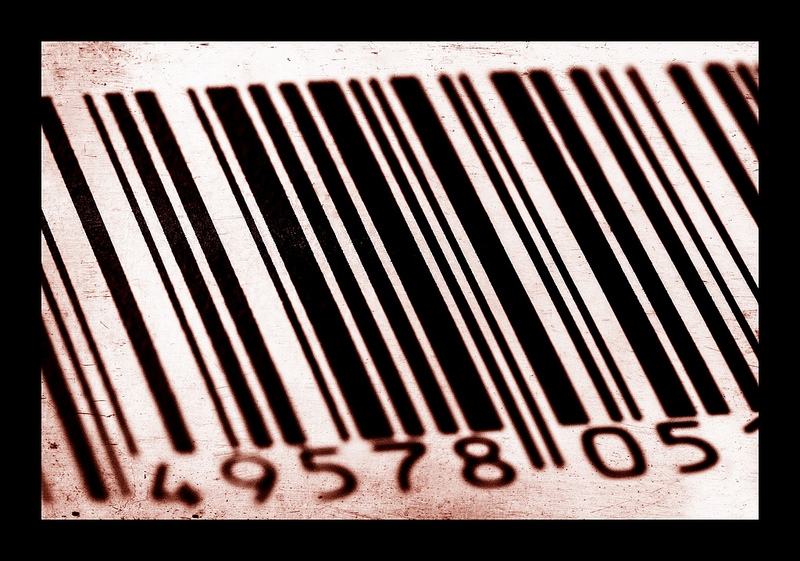
Although COOL labeling is not required on frozen, canned or processed foods, the country responsible for manufacturing an item is indicated by the first three digits of the bar code. The latter is used universally in automated checkout systems.

Deciphering the bar code:

  • 00-13 USA & Canada
  • 30-37 France
  • 40-44 Germany
  • 49 Japan
  • 50 UK
  • 57 Denmark
  • 64-Finland
  • 76 Switzerland and Liechtenstein
  • 93 Australia
  • 94 New Zealand
  • 480–489 Philippines
  • 628 Saudi-Arabia
  • 629 United Arab Emirates
  • 690-695 China (including Hong Kong)
  • 740-745 Central America
  • 750 Mexico
  • 885 Thailand
  • 893 Vietnam

Consumers need to be aware that China, Hong Kong, Thailand and Vietnam have no food inspection regulations. Thus there is no guarantee food manufactured in these countries is safe.

For more country codes go to EAN codes

photo credit: jDevaun via photopin cc

The Real Cause of Greece’s Economic Crisis

Debtocracy

(2011) Katerina Kitidi and Aris Hatzistefanou

Film Review

The 2011 Greek documentary Debtocracy effectively dispels the media myths about lazy Greek workers and and scofflaw Greek taxpayers being responsible for Greece’s present economic crisis.

The film begins with an overview of what its filmmakers (and I) feel has been a basic goal of both globalization and the creation of a single European currency – namely “labor discipline” and the suppression of wages in heavily unionized countries.

They show how sweeping deregulation in the industrialized world in the 1980s allowed manufacturers to eliminate unions by shutting plants down and reopening them as sweatshops in the third world. The subsequent creation of the Euro as a single currency allowed the central European countries (Germany and France) to use the mechanism of debt to weaken strong unions in peripheral Eurozone countries like Greece, Spain and Italy.

Thanks to relatively weak unions following reunification, Germany imposed a virtual ten year wage freeze. While workers suffered, German companies and banks racked up immense profits and stacks of cash, which they loaned to “peripheral” countries to finance big corporate tax cuts.

The bulk of the film focuses on the concept of “odious” debt and whether the Greek people should be forced to repay fraudulent loans from which they received no direct benefit. As Debtocracy poignantly depicts, Athens and other Greek cities are experiencing a third world humanitarian crisis, with massive homelessness, hunger and untreated illness.

Odious Debt: An American Invention

Odious debt was a principle invented by the US in the early 20th century to avoid repaying Spain’s war debt after the US took possession of Cuba following the Spanish-American War. George Bush invoked it following the US occupation of Iraq. His goal was to avoid repayment of Sadam Hussein’s debts to China, France, Germany and Russia. Since then approximately a dozen countries – most notably Argentina, Ecuador and Iceland – have repudiated so-called “illegitimate” debt incurred by deposed leaders.

The film focuses mainly Argentina’s and Ecuador’s default on their foreign debt. In 2001 the structural adjustments the IMF forced on Argentina bankrupted the country. A popular uprising forced the Argentine president to flee (in a helicopter), and the new government declared the IMF debt illegal and unconstitutional.

When Ecuador experienced a similar economic crisis and uprising in 2007, they, too, sent their president packing in a helicopter. In 2008, their new president Rafael Correa appointed a Debt Audit Commission to study the strong arm tactics (some of which John Perkins describes in Confessions of an Economic Hit Man) that caused Ecuador to borrow billions of dollars to pay for US-built infrastructure that only benefited Ecuador’s wealthy elite. Correa’s Debt Audit Commission ascertained that only 30% of their external debt was legitimately incurred.

CADTM’s Call for a Greek Debt Audit Commission

Iric Toussaint, a French economist who participated in the Ecuadorian Debt Audit Commission, believes a major proportion of Greek debt may have been fraudulently incurred. The following evidence supports this view:

  • Nearly one billion euros of debt resulted from a risky swap (of yen and dollars for euros) Goldman Sachs persuaded Greece to make in 2001. The transaction netted Goldman Sachs $600 million in profit (see Secret Greek loan).
  • Major German and French loans were issued on condition that the Greek government incur further indebtedness to purchase hundreds of millions of euros of German and French armaments.
  • Billions of dollars of Greek debt resulted from major cost overruns on the 2004 Greek Olympics (which cost twice as much as the Sydney Olympics in 2000). These have never been explained nor investigated.
  • In 2010 a former Goldman Sachs official was hired to manage the Greek public debt authority, with the result that the entire 2010 rescue package (103 million euros) was used to bail out Greek banks.

The film also discusses the March 2011 call by the Committee for the Abolition of Third World Debt (CADTM) to create an audit commission to examine Greek public debt. It ends with the ominous sound of a helicopter, eerily foreshadowing the forced resignation of Greek prime minister George Papandreou last November, when CNN advised him to get a helicopter to save himself from angry protestors (see Fall of Papandreou).

A Film About Economic Relocalization

economics of happiness

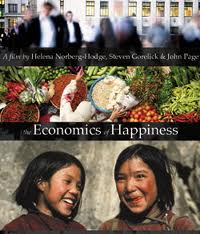
The Economics of Happiness

Helena Norberg-Hodge (2012)

Film Review

The term “economic relocalization” describes a global movement of loosely knit grassroots networks working to strengthen local and regional economies and systems of food and energy production. Most of the last eight years of my life have been focused on grassroots relocalization activities.

What I like best about Economics of Happiness is learning I am part of a global movement. I hate the title, which suggests the film concerns some kind of airy-fairy New Age spirituality. It doesn’t.

The 2011 film, narrated by Helena Norberg Hodge, is based on her 1991 book Ancient Futures: Learning from Ladakh and her 1993 film by the same name. The book and both films draw their inspiration from the nearly forty years Norberg-Hodge spent living and working in Ladakh, a small Himalayan region in the India-controlled (and disputed) state of Jammu and Kashmir. Economics of Happiness includes local footage from the 1993 film, as well as substantial documentary footage relating to the world’s current economic crisis and impending ecological crisis (stemming from catastrophic climate change and mass extinctions).

The Psychological Devastation of Globalization

The film opens with the same narrative Norberg-Hodge recounts in her earlier Ancient Futures film. We are shown the “before” image of Ladakh, a rich thriving culture in which residents live in large spacious homes, enjoy generous leisure time and have no concept of unemployment. Then we have the “after” image where, thanks to globalization, cheap (government subsidized) food, fuel and consumer goods have flooded the region and destroyed residents’ traditional livelihoods. Previously pristine communities face rising levels of air and water pollution, while Ladakhi teenagers face continual bombardment with pro-consumption messages.

It’s heartbreaking to see the psychological effect of all this. Most young Ladakhi have come to regard themselves as backwards and poor, while the communities they live in face rising racial tensions, juvenile delinquency and epidemic levels of major depression.

The Destructive Nature of Urbanization

The film goes on to sketch the mechanics of globalization, stressing the deregulation that forces small self-contained regions like Ladakh to open their markets to foreign goods, which quickly supplant local products. Norberg-Hodge paints an even uglier picture of urbanization, an inevitable result of forcing millions of small formers off their land. She stresses that city living is vastly more resource intensive than rural lifestyles. All city residents rely on food, energy and water transported from some distant source. They burn up additional fossil fuels transferring their waste as far away as possible. She stresses that most city residents go along with the massive ecological and social devastation they produce because it occurs on the other side of the world. Thus they don’t see it.

Rebuilding Local Communities and Economies

The solutions Norberg-Hodge offers for all these problems are similar to those proposed by an increasing number of dissident (non Wall Street) economists. First and foremost we must acknowledge that humankind has exceeded the earth’s carrying capacity – that the corporate drive for continual economic growth must end. Secondly people of conscience need to opt out of the corporate economy to facilitate the creation of more efficient and environmentally accountable regional and local economies.

Norberg-Hodge also sees the process of rebuilding local communities as a remedy for what she describes as the “crisis of the human spirit.” She blames this pervasive spiritual crisis on the demise of community engagement that has accompanied globalization and urbanization.  Although the process is most striking in remote regions like Ladakh, where it occurred suddenly, nowhere in the developed or developing world has escaped it.

The film ends on an extremely optimistic note, with numerous examples of international and community organizations supporting people in reclaiming their lives from multinational corporations.

Economics of Happiness can be rented (and watched online) from the filmmakers for $5

In New Zealand We Call It Rogernomics

roger douglasRoger Douglas, from Wikimedia

(The 7th of 8 posts about my new life in New Zealand)

In brief, the policies introduced by Minister of Finance Sir Roger Douglas in the 1980s included the rapid elimination of import tariffs that protected New Zealand farmers and manufacturers; rapid privatization of state owned industries (most ended up under foreign ownership);  stringent anti-union legislation; and substantial cuts in social welfare benefits. With the abolition of import controls, New Zealand companies struggled to compete against cheap imported goods from Asia. This resulted in multiple plant closures, massive layoffs and more than a decade of unrelenting hardship for communities that relied on these industries.

The 1984 reforms also resulted in seven years of continuous economic stagnation, during which the New Zealand economy shrank by 1% in contrast with an average 20% growth in other OECD countries.

The Mass Exodus of Generations X and Y

The most enduring harm stemming from the 1984 reforms is the staggering loss of human capital that continues to this day. At present approximately one million Kiwis – representing one quarter New Zealand’s current population of four million – live overseas.

As I wrote previously, the massive sell-off of both state-owned and private companies to foreign owners has translated into a chronic accounts deficit (negative balance of trade), as profits and dividends disappear overseas. To compensate for this steady loss of wealth, New Zealand, under pressure to increase exports, entered into “free trade” treaties that forced them to reduce tariffs and quotas even more. This led to the shut down of even more factories, which had no hope of competing with overseas companies that paid sweat shop wages to third world workers.

The Student Loan Debacle

In my view, the most damaging neoliberal reform of the 1980s was the decision to replace government subsidized tertiary education (which until recently was standard in most European countries) with a student loan scheme. While lumbering young people with student loan debt can prove problematic for large, broad-based economies like US and Britain, the policy has proved absolutely disastrous for New Zealand. Repaying a student loan is extremely difficult on the low salaries Kiwi professionals earn. Thus a third or more of new college graduates to emigrate. In my view, this continual hemorrhage of human capital is a major reason New Zealand remains near the bottom of OECD countries for economic growth, productivity and salaries.

At present approximately one-third of medical students leave New Zealand following graduation. Many really have no choice, strapped with giant student loan repayments while simultaneously looking to buy a home and start a family. Their only hope of managing this massive financial stress is to seek work in Australia or the UK, where they can command a 20-30% higher salary than here in New Zealand. And once they buy a home and their kids start school, they very rarely return.

A recent study estimated 37% of new NZ teachers leave New Zealand schools within the first three years. In addition to doctors and teachers, New Zealand also loses a large proportion of the nurses, physiotherapists, social workers, audiologists and other health professionals they train – as well as engineers, urban planners and veterinarians, who are also on New Zealand Immigration’s critical skills shortage list.

New Zealand’s Neoliberal Transportation Policy

Other really destructive neoliberal policies New Zealand enacted in the eighties and nineties relate to public transportation: 1) the privatization of New Zealand railways (leading to the immediate shutdown of all but four routes) and 2) the dismantling of local public transportation systems. Both have resulted in extreme reliance on private automobiles and foreign oil, the second biggest culprit in our accounts deficit.

New Zealand, which still has a predominantly rural population (only 1/3 of Kiwis live in major cities), has also been extremely slow in implementing rational growth management strategies. For all these reasons, it holds the embarrassing honor of the highest rate of car ownership in the world.


1968

1968

(More from my research for A Rebel Comes of Age)

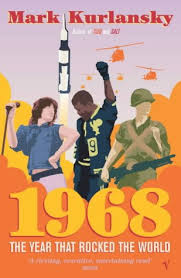
1968: The Year that Rocked the World

by Mark Kurlansky (Vintage 2005)

Book Review

1968 was a year for citizen uprisings around the world. Kurlansky comprehensively reviews 19 of them.* Student activists and workers on both sides of the Iron Curtain learned from and copied one another and supported each other’s liberation struggles.

The most eye-opening section discusses the importance of violence in attracting media attention. No one understand the importance of the media in movement building better than Mohandas Gandhi, who went to great lengths to obtain Indian, British, and American coverage of every protest he organized. He also spoke and wrote about the value of British violence in enticing the media to cover the Quit India movement.

According to Kurlansky, Martin Luther King also understood the role of police violence in drawing national media attention – which would be essential in pressuring Attorney General Bobby Kennedy to enforce federal civil rights laws. Kurlansky talks about a police chief in Albany, Georgia who thwarted King’s organizing efforts by studying his nonviolent tactics and countering them with nonviolent law enforcement. Because there was no police violence in Albany, it received no national media attention. .

After Albany, King and other civil rights leaders deliberately targeted towns with hothead police chiefs and angry, volatile mayors. In a 1965 incident, a King protester named Annie Lee Cooper punched the sheriff. and then dared him to hit her. The photo of Sheriff Clark clubbing a defenseless woman made the front page of every mainstream newspaper.

The 1968 Democratic Convention

At August 1968 Democratic Convention, yet again it was police violence by Mayor Daley’s goons that drew national media attention to what was essentially a harmless prank by Abbie Hoffman, Jerry Rubin, Phil Ochs and other Yippies (Youth International Party). Featured events at the Yippies’ Festival of Light included snaking dancing, poetry, mantras, the Yippie Olympics, a Miss Yippie Contest and Pin the Rubber on the Pope.

The police riot magically transformed the Yippies non-violent prank into front page news. Ironically, however, they had to share the limelight with the Soviet invasion of Czechoslovakia. Violent Soviet repression of Dubcek’s freedom movement also made the front page..

Prague Spring

It’s quite common for the ruling elite and corporate media to attribute the collapse of the Soviet Union to the Soviet invasion and occupation of Afghanistan, which ultimately bankrupted their economy. Obama’s mentor Zbigniew Brzezinski still talks about ingeniously “luring” them into an unwinnable war by training and arming the Mujahideen freedom fighters.

Kurlansky believes the 1968 Soviet’s invasion of Czechoslovakia marks the beginning of the end of the Soviet empire. The student/intellectual protest movement that brought Alexander Dubcek to power in January 1968 became less public but didn’t disappear in the government crackdown that followed the August invasion .It also served to strengthen reform movements in other Soviet Bloc countries – especially Romania and Poland – where government leaders were under pressure to condemn the invasion. In Kurlansky’s view the appearance of Soviet tanks on Czech streets killed the dream of eastern block reformers that socialism could be made more democratic.

His description of the background and personality of Alexander Dubceck, the father of “Prague Spring” is especially illuminating. Dubcek was no wild-eyed radical seeking to overthrow communism. In every respect he was the ultimate communist bureaucrat:  blindly loyal, dutiful, and deeply pro-Soviet. Dubcek and his subordinates, who considered the Soviets their friends and protectors, never dreamed they would invade.

In this respect, Czechoslovakia was unique among eastern bloc countries in voting in a communist government at the end of World War II (rather than having it forced on them).

Parallels Between Dubcek and Nixon

Dubcek, who was far more moderate than the students and intellectuals in the street, was actually somewhat dismayed at his sudden rise to power in January 1968. The student protest and Slovak nationalist movement had erupted simultaneously in late 1967, and Dubcek’s predecessor had been unable to quell the civil unrest.

Unlike many Communist Party officials, Dubcek who was deeply principled, viewed violent suppression of the protests as unthinkable. Aside from his refusal to invoke military force against the students, his situation parallels that of Richard Nixon’s in some ways. Nixon was also forced to enact a number of progressive initiatives  (e.g. the Clean Air Act, and legislation creating of the Environmental Protection Agency, the Occupational Health and Safety Administration, the National Endowment for the Humanities, and Social Security Supplemental Income for the disabled) in response to a large and militant protest movement.

Dubcek had no real platform until April 1968, when he issued an Action Program with three planks: 1) commitment to Czechoslovakia’s socialist political/economic system, 2) ending secret police repression of personal and political beliefs, and 3) ending the monopoly of power by the Communist Party.

The immediate result was liberalization of foreign travel, increased access to foreign periodicals, and media exposes about Czech and Soviet corruption and Stalin’s notorious purges. Freedom of artistic expression also increased, as Czech students and everywhere wore blue jeans and long hair, listened to rock and jazz, displayed psychedelic posters and even held an international film festival.

Soviets Forced to Keep Dubcek in Power

Brezhnev, one of Stalin’s henchmen in several purges, put extreme pressure on Dubcek to crack down on these “excesses.”  However even as Russian tanks rolled into Czechoslovakia Dubcek, who was profoundly antiwar, explicitly ordered a robust, well-trained and armed Czech military not to fire on them. As in Tienanmen Square in China, the only opposition to the tanks was tens of thousands of unarmed civilians.

Kurlansky writes at length about an unsung hero named General Ludvik Svoboda, who the Soviets attempted to install in a puppet government after imprisoning Dubcek and three members of his cabinet. Though forced to agree to Soviet demands to gradually reinstate censorship and foreign travel restrictions, Ludvik released Dubcek and allowed him to remain in power until April 1969.

*Countries experiencing mass uprisings in 1968:

  • France
  • Czechoslovakia
  • Poland
  • Yugoslavia
  • Romania
  • Italy
  • West Germany
  • East Germany
  • Spain
  • UK
  • Russia
  • Nigeria
  • Palestine
  • Mexico
  • Brazil
  • Ecuador
  • Chile
  • Uruguay
  • US

***

Rebel cover

In A Rebel Comes of Age, seventeen-year-old Angela Jones and four other homeless teenagers occupy a vacant commercial building owned by Bank of America. The adventure turns deadly serious when the bank obtains a court order evicting them. Ange faces the most serious crisis of her life when the other residents decide to use firearms against the police SWAT team.

$3.99 ebook available (in all formats) from Smashwords:

https://www.smashwords.com/books/view/361351