How Citizens United* Kept the Koch Brothers Out of Jail

The video below is an interview with Investigative reporter Greg Palast regarding his 2012 book Billionaires and Ballot Bandits: How to Steal an Election in 9 Easy Steps. Palast is best known for exposing the fake “ex-felon” scrub list that illegally disqualified tens of thousands of law abiding Florida African Americans from voting in the 2000 presidential election.

According to Palast, the real agenda behind the Citizens United decision was to keep the notorious Koch brothers** out of jail for illegal corporate donations they had made to Republican campaigns. In other words, the ruling decriminalized extensive lawbreaking by the Republican Party’s favorite billionaires. Apparently it’s was no accident that Ted Olsen, the Citizens United attorney, also happens to be legal counsel for Koch Industries.

The Koch Brothers’ Long History of Flouting the Law

As Palast reveals at the beginning of the interview, he was an FBI investigator prior to becoming an investigative journalist. During the late eighties, he was directly involved in investigating Charles Koch for illegally siphoning oil (beyond what Koch Industries had paid for) from Indian reservations. According to Palast, the FBI had videos of the whole operation, as well as numerous witness statements, including one from David and Charles’ younger brother Bill. The US attorney in Oklahoma went so far as to file an indictment against subject 67C (their code name for Charles Koch), when Koch leaned heavily on Oklahoma Senator Don Nickles (Rep 1988-2005) to have the federal prosecutor replaced and the indictment quashed.

With the possibility of criminal prosecution off the table, brother Bill Koch filed a civil lawsuit over the oil theft under the False Claims Act. The latter private plaintiffs to sue, on behalf of the government, companies and individuals which have defrauded it.

In December 1999, the jury found that Koch Industries had stolen oil it didn’t pay for from federal land, and the company paid a $25 million settlement to the federal government.

The FBI next turned its attention to 350 criminal violations of environmental law, mainly due to faulty pipelines dumping oil sludge into rivers. After George W. Bush became president in 2000, the US Justice Department dropped 88 of the charges. Two days before the trial, Attorney General John Ashcroft agreed to a plea bargain. The company pled guilty to falsifying documents. All major charges were dropped, and Koch and Ashcroft settled a civil lawsuit for a fraction of the criminal penalty.

The FBI – and Congress – Investigate Illegal Corporate Donations

Next on the FBI list of crimes was the smear campaign Koch Industries secretly funded, through the Campaign for Our Children’s Futures. This was in 1994 when corporate campaign donations were still illegal. The campaign, caused 25 incumbent Democrats to lose their seats, which meant Clinton lost Congress in the 1994 midterm election and again in 1996.

The illegal campaign donations were funded through an entity called Triad Management Services. Senator Fred Thompson, Chair of the Senate Finance Committee attempted to undertake an investigation into Triad. According to Palast, it was shut down the same day (ethically challenged) Senate Majority Leader Trent Lott made a deal with President Bill Clinton not to investigate his illegal campaign donations from the Indonesian billionaire James Riady.

*In Citizens United, the Supreme Court ruled that setting limits on campaign expenditures on corporations and labor unions violates their first amendment right to free speech.

**The Koch brothers are major funders of several conservative think tanks and lobbies, such as the Heritage Foundation, ALEC, the CATO Institute, and right wing Astroturf groups, such as the Campaign for America’s Future, the Campaign for a Fair Economy and the Tea Party). They’re also the major beneficiaries of the Keystone Pipeline
Why the FBI Shut Down the US June 4th Movement

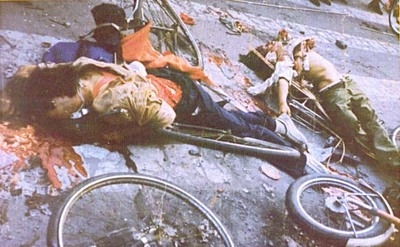
june 4Bodies from Tienanmen Square

There has been massive corporate media coverage in the last few days of the 25th anniversary of the June 4, 1989 massacre in Tienanmen Square. The US has always had a very schizophrenic reaction to Chinese human rights violations. Much has been written about the underground June 4th movement that arose in China following the massacre. However you never read anything about the parallel June 4th movement that emerged in the US in the months after Tienanmen Square. It was led by Chinese university and graduate students on campuses all over the US – with the support of American pro-civil liberties advocates across the political spectrum.

For two to three months, it got extensive mainstream media coverage. I recall seeing an article in the Seattle Times about an upcoming meeting at the University of Washington. I planned to attend but came down with the flu.

By September 1989, the US June 4th movement had vanished without a trace. I found this extremely odd until six months later, we learned from a retired FBI investigator exactly how the federal agency had shut it down.

It was quite simple really. The FBI went to all the Chinese students attending the June 4th meetings and told them their student visas would be revoked unless they agreed to inform on the other activists. This is a very old strategy – still in use today (see  FBI allegedly using no-fly list to recruit Muslim snitches). Unsurprisingly the students chose to keep their visas and disband the movement.

Why Bush Senior Shut Down June 4th

So why did Bush senior want the US June 4th movement shut down? In 1989 the President was engaged in major trade negotiations with China. Their big fear was that an American movement would translate into major political and financial support for China’s underground democracy movement. To consummate the trade agreements, Bush senior had to guarantee this wouldn’t happen.

The FBI has a long history of spying on peace and social justice activists. The operation that shut down down the June 4th movement in the US is but one of many examples I discuss in my 2010 memoir The Most Revolutionary Act: Memoir of An American Refugee

photo credit: undersound via photopin cc

New Evidence in JFK Assassination

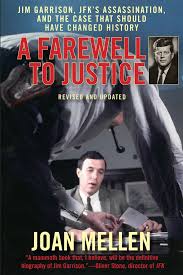
farewell to justice

A Farewell to Justice: Jim Garrison, JFK’s Assassination, and the Case that Should Have Changed History

by Joan Mellen (2013 Skyhorse Publishing)

Book Review

 A Farewell to Justice is an exhaustive review of the only arrest and trial stemming from the 1963 murder of President John F Kennedy. The late New Orleans district attorney Jim Garrison describes the 1967 grand jury investigation and prosecution of long time CIA officer Clay Shaw in his 1988 bestseller On the Trail of the Assassins. In 1992, the public outcry prompted by JFK, Oliver Stone’s screen version, led Congress to pass the JFK Records Collection Act. A Farewell to Justice uses classified documents released under this Act to update Garrison’s original case against Shaw and other CIA co-conspirators.

A revised version of the 2005 edition, the new 647 page A Farewell to Justice is a virtual encyclopedia of the JFK assassination. The book leaves no doubt that high level CIA officials authorized the murder and provides a complete list of the cast of characters who played roles in the assassination and/or cover up.

The new edition makes use of documents Mellen obtainedvia a 2011 Freedom of Information (FOIA) request and personal  interviews with surviving assassination witnesses. The most startling new evidence relates to Robert Kennedy’s systematic efforts to obstruct both the Warren Commission investigation and Jim Garrison’s efforts to identify the real culprits behind his brother’s murder.

Oswald’s FBI Pay Slips

According to Mellen, it was Warren Commission member Hale Boggs who first encouraged Garrison to investigate the assassination. Boggs himself first became concerned about government involvement in the conspiracy when the Warren Commission examined Oswald’s FBI pay slips in January 1964.

As well as providing a detailed outline of the entire grand jury investigation, Mellen also explores the role the FBI, CIA and Robert Kennedy played in sabotaging it. In addition to murdering and threatening assassination witnesses, the FBI/CIA wiretapped Garrison’s office, infiltrated his investigation team, stole files, fabricated witness statements, blocked subpoenas and the extradition of witnesses from other states and used CIA moles at the TV networks and major newspapers and magazines to portray Garrison as a self-centered, publicity mad lunatic.

Garrison initially intended to try Dave Ferrie, who he believed recruited Oswald to US intelligence as a high school student when he belonged to Ferrie’s Civil Air Patrol squadron. Garrison had witness testimony linking Ferrie, a known CIA pilot, to both Oswald and anti-Castro Cubans the CIA was training at a secret camp north of Lake Pontchartrain. Many of the same Cubans, training for roles in a CIA plot to assassinate Fidel Castro, would play parallel roles in Kennedy’s murder. When Ferrie suddenly turned up dead, Garrison moved to arrest Clay Shaw, based on witness statements linking Shaw to Oswald, Ferrie and the secret training facility.

Jurors Believe Government Played Some Role

Although Shaw was ultimately acquitted, Garrison succeeded in convincing the jury that the government played some role in the assassination. As they later told assassination researcher Mark Lane, without proof Shaw worked for the CIA, they felt there was reasonable doubt that he participated. His CIA personnel records wouldn’t be released until the mid-seventies.

Garrison would continue investigating the JFK assassination until his death. He made his findings available to the Church Committee (which concluded in 1976 that Oswald was a CIA operative engaged in counterintelligence) and the 1978 House Select Committee on Assassinations (which concluded there was more than one shooter and that Shaw was one of the high level planners).

According to Mellen, the CIA decided in the early 1970s to sacrifice Shaw (who would die in 1974 of lung cancer) as a limited hangout* by releasing his CIA employment records to HSCA. They reveal that Shaw worked for both the Domestic Operations Division and Clandestine Services between 1949 and 1972 and had strong links to PERMINDEX a shadowy CIA front that financed assassination attempts against French president Charles De Gaulle, as well as Kennedy.

Why Robert Kennedy Obstructed the Investigation

The classified documents released in Mellen’s FOIA suit establish that Attorney General Robert Kennedy was personally running the CIA operation to assassinate Castro and well aware of Oswald’s links to the operation. In 1961 Kennedy was directly responsible for the demotion, harassment and persecution of a State Department security officer named Otto Otepka for investigating Oswald’s potential security risk as a former Soviet defector. Kennedy also ordered Oswald’s release following his arrest for firing shots at General Edwin Walker in April 1963.

In the summer of 1963 several Cuban exiles, who were deeply devoted to Bobby, informed him of Oswald’s involvement in a plot to assassinate his brother. According to Mellen, who interviewed one of them, Kennedy claimed that Oswald wasn’t a threat because he was on the payroll of the New Orleans FBI field office and they were monitoring him.

According to Mellen, the younger Kennedy played a direct role, through his investigator Walter Sheridan, in sabotaging Kennedy’s autopsy, the Warren Commission investigation and Garrison’s investigation. Following Bobby’s assassination in 1968, Sheridan continued to protect his  interests by obstructing the release of documents for the 1978 HSCA investigation.

Mellen’s hypothesizes that Bobby’s interest and intervention on behalf of Oswald indirectly implicated him in the assassination conspiracy. It would have destroyed his political career for any of his prior links to Oswald to become public.

*Limited hangout is intelligence jargon for a form of propaganda in which a selected portion of a criminal conspiracy is revealed to protect the main perpetrators.

The Mayor Who Said No to the Feds

Uhlman

from Seattle City Archives

The Armed ATF Raid That Didn’t Happen

Few Americans have heard of Wes Uhlman, Seattle’s mayor between 1969 and 1977. According to his official biography, his main claim to fame was being the youngest Washington State legislator (at 23) and youngest Seattle major (at 34) ever elected.

Ward Churchill mentions Uhlman in his 1990 Cointelpro Papers. At the time, Uhlman declined to identify the federal agency he crossed swords with. Churchill misidentifies it as the FBI. In 2005 Uhlman disclosed, in an interview with the Seattle Civil Rights and Labor History Project, that the federal agency he confronted to was the Agency for Tobacco and Firearms. The ATF was the main agency responsible for the 1993 Waco massacre. In February 1970, they tried to strong arm Uhlman to agree to an armed raid on the headquarters of the Seattle Black Panther Party.

This was approximately three months after the December 1969 FBI/police raids on the apartments of Chicago Black Panther leader Fred Hampton and Los Angeles Black Panther leader Geronimo Pratt. In Chicago a fourteen man team armed with submachine guns raided Hampton’s apartment at four a.m. on December 3rd. They murdered Hampton and Peoria Black Panther leader Mark Clark in their sleep.

Three days later a forty member Los Angeles SWAT team with 100 back-up officers staged a similar five a.m. raid on Pratt’s apartment. Pratt, who by chance was sleeping on the floor, miraculously survived. None of the LA Panthers, who defended themselves for four hours until the press and public arrived, were killed. Six were injured. All the surviving Panthers, in both Chicago and Los Angeles, were arrested for “attacking the police.”

Two weeks later Pratt was framed for a December 1968 murder he didn’t commit. The FBI knew he was innocent from wiretapping logs (which they concealed from the defense) placing him 350 miles from the murder scene. Pratt’s conviction was overturned in 1997. Following his release, he emigrated to Tanzania, where he died on June 3, 2011.

Uhlman Threatens to Arrest the ATF

In his interview with the Civil Rights and Labor History Project, Uhlman reveals that an ATF agent contacted him in late 1969, only months after he took office. The supposed justification for raiding Seattle’s Black Panther headquarters was that they were stockpiling illegal weapons. Uhlman opposed the ATF plan. As he states in the interview, he feared for the safety of a police undercover agent who had infiltrated the Seattle Panthers. The informant had assured him the Panther’s weapons were legal.

The ATF agent, infuriated when Uhlman refused to go along with the raid, threatened to carry it out without the city’s consent. In response, Uhlman threatened to encircle the Panther headquarters with cops and arrest any ATF agents who broke through police lines.

No Gestapo-type Raids in Seattle

The ATF leaked the outcome of their meeting outcome to the press, hoping to embarrass Uhlman as a “sympathizer of militants.” In a Seattle Post Intelligencer interview, Uhlman made reference to the FBI raid on Fred Hampton’s apartment. He stated he wanted no part of the “trend of attacks” on the Black Panthers.

“We are not going to have any 1932 Gestapo-type raids against anyone.” Adding that the Seattle Black Panthers only had a handful of members, he pointed out that numerous young blacks were “enthralled” by the group’s message. “If you give them a cause, they can make political hay out of it, and the kids will look on them like Robin Hoods.  Then you wind up with 900 Panthers.”

In the aftermath of Uhlman’s controversial stand, he received letters from all over the US. Many attacked the mayor for his decision. Bloggers who are visited by intelligence trolls will recognize the distinctive turn of phrase, especially in the third:

  • “When idiot public officials cast their lot with proven communist agitators and anti-american (sic) bastards as the BLACK PANTHERS then it is time to IMPEACH such public sons of bitches.”
  • “I don’t see why the federal agency had to ask a jerk like you whether they could stage a raid on the black panthers. (sic). This organization is downright rotten, but it takes a rotten jerk to know a rotten organization.  I hope one nite (sic) one of your soul brothers slits your throat.”
  • “Uhlman, you stupid ass, you are just as bad as the people, who are making such an issue of the two panthers who were killed in Chicago.”

An equal number of letters applauded Uhlman’s decision for upholding the Bill of Rights protections against warrantless search and seizure:

  • “You have GUTS—and even more…it would appear you do support the TRUE American spirit and the Constitution of this country.  Let’s keep the principle…MEN ARE CREATED EQUAL!”
  • “As a fifty year old veteran of WWII [with] twenty-one years active military service allow me to extend heartfelt gratitude and congratulations in your brave decision to put the Bill of Rights, for which I have served so long, into effect.”
  • “We need more like you.  I don’t necessarily agree with the Panthers, but the tactics of the Police, et al, frightens me more.”

Despite the controversy, Uhlman won his campaign for re-election in 1973. He retired from politics in 1978 to focus on his legal practice.

A great pity, as Seattle and Washington State lost a true statesman. No current mayors have the testicularity to protect their constituents against flagrant Bill of Rights violations by the Obama administration and US intelligence. At least they didn’t in November 2011, when they colluded with the FBI and Office of Homeland Security in orchestrating a brutal crackdown on Occupy protests.

Where Have All the Unions Gone?

union

Loss of union protection is catastrophic for millions of American workers with no way to protect themselves against layoffs and wage, benefit and pension cuts. In 2013, only 11.3% of US workers belonged to unions. Many Americans are unaware of the deliberate 95-year campaign by Wall Street to destroy the trade union movement. It all started in 1919 when the National Association of Manufacturers engaged Edward Bernays, the father of public relations, to destroy public support for a steel workers strike. Following a brief rise in union activism during the Great Depression, it continued with the punitive 1948 Taft Hartley Act, the expulsion of militant unionists during the McCarthy Era, and the cozy cold war collaboration between the CIA and AFL-CIO bureaucrats. The most decisive blow would be the trade liberalization of the 80s and 90s and the wholesale export of skilled union jobs to third world sweatshops.

Edward Bernays’ Campaign to Demonize Unions

In his 1995 Taking the Risk Out of Democracy, the late Australian psychologist Alex Carey describes how the National Association of Manufacturers engaged Edward Bernays to launch a massive media campaign to reverse public support for steel workers striking for the right to bargain collectively. Bernays first got his start helping President Woodrow Wilson sell World War I to a strongly isolationist and antiwar American public. Following the war, Bernays was immediately engaged by major corporate clients that included Proctor & Gamble, CBS, the American Tobacco Company, Standard Oil, General Electric and the United Fruit Company.

Bernays is also regarded as the father of “consumerism,” the transformation of Americans from engaged citizens into passive consumers by bombarding them with thousands of pro-consumption messages. He was also instrumental  in convincing doctors and dentists (without a shred of scientific evidence) that disposing the industrial toxin fluoride in municipal water supplies would be good for peoples’ teeth.

His media campaign to convince the American public that striking workers were dangerous radicals, Bolsheviks and anarchists was an instant success. The anti-Red hysteria it created ushered in a decade of severe repression, enabling Bureau of Investigation J Edgar Hoover to launch a Red Scare and illegally arrest, detail and deport several hundred suspected radicals.

The 1948 Taft Harley Act

During the Great Depression of the 1930s, unions became popular again. Then, as now, corporations took advantage of high unemployment rates to cut wages, increase hours and force employees to work under unsafe sweatshop conditions. Led largely by the CIO (Congress of Industrial Organizations), organized labor fought back with scores of sit down and wildcat strikes.

Immediately following World War II, the National Association of Manufacturers sought to reverse union gains by ramming the Taft Hartley Act through a Congress dominated by Republicans and conservative southern Democrats. Among other provisions restricting worksite unionization drives, Taft Hartley prohibits mass picketing, as well as wildcat and sit down strikes.

The McCarthy Era

The effect of the 1947 Taft Hartley Act on union membership was almost immediate. In 1946 the Congress of Industrial Organizations (CIO) had 6.3 million members. By 1954, when it merged with the AFL, this number was down to 4.6 million or 34.7% of the American workforce. This percentage steadily declined as union officials used the anticommunist hysteria of the McCarthy Era (1950-56) to expel militant trade unionists from their ranks. The original Taft Hartley Act included a provision preventing members or former Communist Party members from holding office in a labor union – which the Supreme Court struck down in 1965 as unconstitutional. .

Thanks to the Taft Hartley Act and the purging of militant grassroots unionists, a trade union bureaucracy arose that felt closer to management than the workers they supposedly represented. This stemmed, in part, from perks they received for delivering “labor discipline” (i.e. preventing disruptive industrial action). Thus instead of lobbying to repeal Taft Hartley and relying on well-organized rank and file and industrial action, union officials became more focused on “sweetheart deals” they made with managers.

Enter the CIA

According to former CIA officer Tom Braden, many AFL-CIO officers were also on the CIA payroll for their work with USAID in suppressing foreign unions with anti-US leanings. In 1967 Braden bragged about this in the Saturday Evening Post. Founded by prominent Wall Street lawyer Allen Dulles, the CIA has always played a major role in protecting Wall Street interests. They have a long history of overthrowing democratically elected governments that threaten US corporations with overseas investments (e.g. major oil companies and United Fruit Company and Coca Cola in Latin America).

Killing Off American Manufacturing

With Reagan’s election in 1980, numerous trade laws protecting US industries and workers were repealed through the Caribbean Basin Initiative and the General Agreement on Tariffs and Trades. Clinton continued this process by fast tracking both NAFTA and the World Trade Organization treaty through Congress. Once protective quotas and tariffs were repealed, there was nothing to stop Wall Street corporations from shutting down thousands of US factories and reopening them as sweatshops in the third world. In the process millions of US workers lost union manufacturing jobs to take minimum wage jobs at MacDonald’s and Wal-Mart.

The loss of the US manufacturing sector has clearly played a major role in the failed recovery and declining US global influence. This seems an enormous price to pay for the sake of destroying trade unions. Our children and grandchildren, who will reap the consequences, will not look kindly on the neoliberal presidents (Reagan, Clinton, both Bushes, and Obama) who enacted these disastrous policies.

photo credit: DonkeyHotey via photopin cc

Lee Harvey Oswald: Career CIA Operative

oswaldJFK: The Second Plot

Matthew Smith (1992)

Book Review

Lee Harvey Oswald worked for the CIA (and FBI and Army and most likely Naval Intelligence) from the late fifties when the CIA recruited him from the Marine Corps until his murder on November 24, 1963 by Dallas nightclub owner Jack Ruby. A clear appreciation of Lee Harvey Oswald’s role as an intelligence operative is key to understanding the JFK assassination conspiracy and cover-up. Although more than 20 years old, in my opinion Matthew Smith’s JFK: The Second Plot offers the most comprehensive account of Oswald’s CIA career. The first account of Lee Harvey Oswald’s CIA connections appeared in a 1968 book originally published by French intelligence entitled Farewell America. French president Charles DeGaulle had a keen interest in identifying the conspirators behind Kennedy’s assassination, as the same group had also made three assassination attempts against DeGaulle. Farewell America reveals how the CIA recruited Oswald when he was stationed at Atsugi Marine Air Base in Japan and sent him to the Soviet Union. These historical details were corroborated by testimony a former CIA officer provided the House Committee on Assassinations in 1978.

The Soviets, recognizing Oswald as a likely double agent, never fully trusted him, and in 1961 the CIA returned him to the US. According to government archives, his handlers went on to give him assignments intended to create a kooky leftist alter ego, which would later be used to frame him for Kennedy’s murder. Given that Oswald had foreknowledge of Kennedy’s assassination, the obvious question is why he allowed himself to be set up. The answer Smith offers seems totally plausible: Oswald believed the CIA was returning him to the Soviet Union (via Cuba) to become a double agent. His handlers, in turn, intended to use his flight to Cuba to blame the President’s assassination on Fidel Castro.

Oswald’s Visit to Red Bird Airport

Smith first got the idea for his book after obtaining FBI documents under the Freedom of Information Act revealing that Oswald, together with two other federal agents, paid a visit to the American Aviation Company (AAC) at Red Bird Airport trying to charter an aircraft for November 22, 1963. Smith subsequently interviewed Wayne January, the AAC employee they dealt with, and discovered the FBI had falsified the date. The FBI gives the date of their encounter as July, 1963, while it was actually November 20, only two days before the assassination.

Smith also answers puzzling questions about Officer J.D. Tippitt’s role in the assassination conspiracy. Smith believes that an ex-CIA friend named Roscoe White asked Tippitt to transport Oswald to the Red Bird Airport to catch a charter flight to Cuba. When they rendezvoused, Tippitt became suspicious after hearing Oswald’s description broadcast over the police radio. When he got out to question him, a man matching White’s description rushed out of the bushes and shot Tippitt. Following Tippitt’s murder, the plan to spirit Oswald off to Cuba had to be abandoned.

The Main-Tier Plot

Smith organizes his book into two halves. Book One is called “The Main-Tier Plot,” involving the assemblage of a group of snipers to ambush President Kennedy as his motorcade traveled through Dallas. Book Two is devoted to “The Second Plot,” a scheme to enable the true shooters and co-conspirators to escape prosecution by shifting the blame to a kooky leftist Castro-sympathizer.

Smith’s expose of the main-tier plot begins with official Warren Commission (WC) version of the assassination. He devotes an chapter to irregularities in gathering and recording WC testimony that would never be allowed in a court of law. Many of the witnesses reported seeing more than one gunmen and complained bitterly about their evidence being omitted or misreported. Smith is particularly critical of the WC for failing to investigate Officer Tippit’s background or obtain ballistic evidence linking Oswald’s handgun to his murder.

Smith also summarizes the detailed physical evidence pointing to the presence of three or four shooters in Dealey Plaza. He goes on to discuss the intelligence connections of a handful of suspects arrested in the Dal Tex building and elsewhere in Dealey Plaza. All were released after President Lyndon Johnson ordered the Dallas police to discontinue their investigation. Smith devotes an entire chapter to the photographic evidence, including the amateur film made by businessman Abraham Zapruder, which was altered to make the fatal shot appear to come came from the Book Depository behind the motorcade. Finally he discusses the acoustic recordings which led the House Assassinations Committee to make the determination that more than one shooter was involved in Kennedy’s murder.

The Second Plot

The second half of the book offers an in-depth portrait of Oswald’s early history and personality. It details his posting to the Atsugi Marine Air Base in Japan, where he held a “secret” level security clearance, and assisted in monitoring overflights of the Top Secret U2 Spy plane. Smith goes on to describe Oswald’s activities in the Soviet Union in exhaustive detail, as well as the assignments he was given on his return to the US. In one of his first jobs, he processed photos of a Soviet military facility, which again required a security clearance. Other assignments involved infiltrating leftist and pro-Castro groups as an informant. The fabrication of Oswald’s unstable loner persona was facilitated by an Oswald double, a second agent who created major public disturbances while posing as Oswald.

Smith believes that at the time of his arrest, Oswald had been given a new assignment – to attempt to return to the Soviet Union via Cuba. Strong evidence suggests there were plans to airlift him to Cuba the afternoon of November 22, 1963. The plans were suddenly disrupted when Officer J.D. Tippitt was shot and killed. Tippitt’s murder forced the plan to spirit Oswald away to Cuba to be abandoned. His subsequent arrest necessitated his murder by Jack Ruby, another minor co-conspirator. Allowing Oswald’s intelligence connections to come out at trial would have seriously endangered high level officials in the Kennedy administration who participated in the conspiracy.

The Conspirators Had Names

The book’s final chapter “The Conspirators Had Names” is disappointing because it offers no firm conclusions about the real culprits in the JFK assassination. Although Smith refers to New Orleans District Attorney’s Jim Garrison’s unsuccessful prosecution of one of the co-conspirators, he makes no mention whatsoever of the Swiss corporation Pemindex that financed the assassination. It was Clay Shaw’s membership in Permindex that formed the basis of Garrison’s case against him. Nor does it mention the shadowy Defense Industrial Security Command and the 50 or so intelligence and defense contractors with clearly established links to both the DISC and the assassination. The evidence linking Permindex and DISC to the JFK assassination is outlined most clearly in a 1970 book by William Torbitt called Nomenclature of an Assassination Cabal or Torbitt Document

Posted in honor of the 50th anniversary of the assassination of John F Kennedy.

photo credit: Lone Primate via photopin cc

Originally published in Veterans Today

The NSA is the Tip of the Iceberg

barcode

Guest post by Steven Miller and Satish Musunuru

(Part 5 of a five-part post on the corporatization of Internet surveillance.)

The capitalist class deliberately distorts the class nature of the state. This is a scientific question, not an ideological one. Government is the administration of public money and resources in the name of society. The state is different. It is made up of the police, the courts and jails, the army, et al, and of course, the NSA. The capitalist class loves to present the state as a body that somehow stands above society, neutral to class interests, reigning with wisdom. One thing we have learned from Occupy, however, is that the police always seem to defend the corporations. They are hardly neutral. For both government and the state, law is simply the will of the ruling class, written down.

The purpose of the state is to defend the relations of production that are organized and imposed by the ruling class. Thus the state is a function of the relations of production, not the other way around. However, once established, it plays a formative role in organizing the relations of production for the class that rules the state.

In capitalism’s Industrial Era, J Edgar Hoover’s FBI collected dossiers on every politician, movement and individual that might pose a threat to state control. Today digital technology leads inexorably to the Surveillance State, actually only a small part of the entire state apparatus.

The US state has many manifestations: the military industrial complex, the media industrial complex that organizes the world’s most sophisticated propaganda war 24/7, the prison industrial complex, the corporate state, the surveillance state, the Migra, the militarized police we all saw at Occupies, open violations of the Constitution, the Department of Homeland Security, private prisons, secret ops, drones, extraordinary rendition, torture at every level, and so much more. Then of course we have the army, equipped with the world’s largest military budget, armed with some serious hardware, including the world’s largest supply of nuclear weapons. Corporations are inseparable from this. As they merge with the state, corporations today are rapidly developing police powers.

Social movements can sometimes reform the government, but state power does not permit you to reform the state. The idea that somehow the state will sit by passively while workers organize socialism is simply a fantasy. The state is programmed to intervene whenever the relations of production are threatened. Here and there, in relatively small-scale cases – Mondragon workers, for example, Kerala in India, Cuba, Nicaragua at one phase, etc – the nuisance is such that the state chooses not to intervene – but these are few and far between. The job of the state is to identify threats to capitalist control and move on them.

In the US today, the NSA works at one level; at another level, Homeland Security outsources police functions to corporations through contracts for profit. It’s budget for doing this has averaged over $30 billion a year since 2001. During Occupy, across the country, DHS has established “fusion centers”, often in corporations or banks, where police gathered surveillance and advised corporate leaders. Domain Centers (Oakland is the second, after New York City) are required for every port in the country.

The state’s response to the NSA scandal has been to go on a marketing campaign: “Resistance is Futile! We’ve got things coming at you that you can’t even imagine, way beyond Darth Vader!” This is a point worth considering. How can the American people possibly fight this?

The most basic step is to understand that things don’t have to be this way. Code can be changed and architectures can be re-designed. This is really an aspect of the tremendous battle of ideas that is breaking out in society. Every living system on Earth is in decline, except corporations. Corporations can be abolished by popular will if people are on the same accord, just as private property in slavery was abolished 150 years ago. These are historic times.

The American people have a long revolutionary history, but little recent experience with the process. Thus we don’t recognize the critical importance of these essential first steps of the battle that are appearing today. The future world will either be all corporate or all public. We can decide.

Here is how one of America’s great revolutionaries – John Adams, an outstanding exponent of capitalism – explained the process:

The American Revolution was not a common event. Its effects and consequences have already been awful over a great part of the globe. And when and where are they to cease?

But what do we mean by the American Revolution? Do we mean the American war? The Revolution was effected before the war commenced (emphasis added). The Revolution was in the minds and hearts of the people; a change in their religious sentiments of their duties and obligations….

The people of America had been educated in an habitual affection for England, as their mother country; and while they thought her a kind and tender parent, (erroneously enough, however, for she never was such a mother,) no affection could be more sincere. But when they found her a cruel bedlam, willing like Lady Macbeth, to “dash their brains out,” it is no wonder if their filial affections ceased, and were changed into indignation and horror.

This radical change in the principles, opinions, sentiments, and affections of the people, was the real American Revolution.”   (13)

Background and Notes

13)  John Adams to H. Niles, February 13, 1818

photo credit: paul.klintworth via photopin cc

Reposted from Daily Censored

Steven Miller has taught science for 25 years in Oakland’s Flatland high schools. He has been actively engaged in public school reform since the early 1990s. When the state seized control of Oakland public schools in 2003, they immediately implemented policies of corporatization and privatization that are advocated by the Broad Institute. Since that time Steve has written extensively against the privatization of public education, water and other public resources. You can email him at nanodog2@hotmail.com

***

Satish Musunuru draws upon his training as an engineer and his experience as a professional in Silicon Valley to understand the relationship between technology and corporate capitalism and how it has brought us to the ecological and societal crisis we find ourselves in. You can email him at guruji323@hotmail.com