Panther is a highly engrossing docudrama about the formation of the Black Panther Party in Oakland California in 1966. It differs from most other documentaries on the Panthers in its emphasis on efforts by the Oakland police and the FBI to infiltrate and smash the group almost from their inception.
Panther traces the initial decision to form the Panthers to brutal beatings neighborhood residents received from the police when they held a candlelight protest demanding a stoplight at a dangerous intersection.
Under the leadership of Huey Newton, they formed Panther Patrols to intercede and stop the Oakland police from randomly beating and shooting black men on the street. It wasn’t necessary to use the rifles they carried – which were legal until Governor Ronald Reagan change the law in 1968. It was enough to show white racist cops that their knew their rights under the Constitution and California law and were prepared to shoot if necessary. The film’s re-enactments of Newton’s verbal confrontations with redneck Oakland police are priceless.
Under Newton, the Oakland Panthers exercised very strict discipline. Alcohol, drugs, womanizing and illegal weapons were strictly forbidden at meetings and protests. As men, women and children flocked to join the Panthers, they organized classes in literacy, Black history, revolutionary theory and firearms training – in addition to their famous children’s breakfasts and other food distribution programs.
The film’s dramatic tension revolves principally around the FBI’s escalating efforts to crush the organization as dozens of chapters sprang up and membership swelled into the thousands.
The film ends in 1970 following Huey Newton’s acquittal on trumped up charges of shooting Oakland cop John Frey. Panther portrays this as occurring simultaneously with an FBI decision to collaborate with the Mob to flood America’s inner cities with massive amounts of heroin.
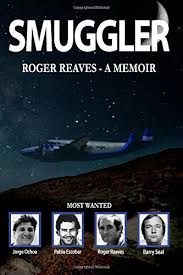
Smuggler is an extremely unusual memoir by a 73 year old American who is currently serving a life sentence in Australia for drug smuggling. Written over fifteen years, it’s a highly detailed, journal-like memoir painting the author’s journey from excruciating rural poverty to high rolling international drug smuggler.
The reader comes away with the clear sense that despite government efforts to portray Reaves as a dangerous blood thirsty king pin, he was actually a lowly middleman who was regularly cheated and manipulated by the real king pins who engaged his services. While Reeves was highly successful (bringing in millions a month) during the first decade and a half of his career, a pattern emerged in which his clients routinely weasled out of paying him, shortchanged him on the quanity and/or quality of drugs they asked him to traffic, and/or provided him with mechanically faulty and dangerous aircraft and boats. Towards the end of his career, some were actively colluding with the DEA and FBI to entrap him.
Owing to the illegal nature of marijuana and cocaine trafficking a person has no comeback – except murder or serious physical injury – if a colleague cheats them. As the highly personal memoir makes clear, it wasn’t in Reaves’s nature to engage in lethal retaliation. This, perhaps, explains his failure to rise to the ranks of vicious psychopaths like Pablo Escobar.
For me the most interesting part of the book is the section where Reaves talks about his relationship with Barry Seal and the guaranteed “no-interception” cocaine delivery operation he had going at the Mena Airport – with the active approval and support of Arkansas governor Bill Clinton and Vice President George Herbert Walker Bush.
According to Reaves, there were only two delivery points in the US where traffickers could unload a shipment with absolute guarantee that neither Customs nor the DEA would bust them. Mena was one of them.
Reaves believes strongly that the War on Drugs is a racket perpetuated mainly for the benefit of Wall Street and illegal CIA military interventions. He advocates for the US and its allies to follow the example of Portugal, which has decriminalized all drugs. In Portugal, where possession of three grams of any drug is treated as a spot fine, crime rates have plummeted since the policy was implement in 2001 (see The Cato Institute and the Drug War).
BREAKING NEWS Ole Dammegard: Probable cause evidence shows Jesse Jackson was key police/CIA operative responsible for April 4, 1968 Martin Luther King assassination.
According to NewsInsideOut, author and researcher Ole Dammegard, recipient of the 2016 Prague Peace Prize, has documented probable-cause evidence showing that Jesse Jackson (AKA Jesse Louis Burns) acted as a key police-CIA operative in the covert operation which resulted in the assassination of Dr. Martin Luther King, Jr. in Memphis, TN on April 4, 1968.
Jesse Jackson was one of an integrated covert assassination team that also included US Army sharpshooters, CIA, FBI, and Memphis police that assassinated Dr. King on the balcony of the Lorraine Motel.
Dammegard maintains that Jesse Jackson acted as a messenger between the head of the Dixie Mafia (the FBI-CIA’s contractor for the King assassination), and the Lorraine Motel in changing Dr. King’s Ground floor room 206 to 2nd floor balcony room #306 so that US Army sharpshooters and other cabal shooters would have a clear shot to Dr. King. Jackson took the covert phone call from the Dixie Mafia chief’s wife, who directed him to ask the Lorraine Motel to change Dr. King’s Room to Room 306.
Waco is a long but well-made documentary about what was essentially an FBI coverup of an unlawful military assault on innocent civilians. What immediately struck me about the film are the obvious parallels between the military assault at Waco, the 1975 incident at Pine Ridge in which Leonard Peltier and other AIM activists were arrested for resisting an armed FBI assault and the FBI/Philadelphia police decision to bomb the MOVE compound in 1985 (see The Day Philadelphia Police Dropped a Bomb on 61 Families).
The documentary is anchored around a 1995 Congressional investigation which, unlike the whitewash of the JFK assassination, the Oklahoma City bombing and 9-11, successfully unearthed most of the sordid facts about the government’s illegal (and unconstitutional) military assault in Waco. Predictably the corporate media buried the investigation and its findings. Thus the systematic disinformation the Clinton administration disseminated about David, Koresh and the Branch Davidians is what remains uppermost in the public mind.
What surprised me most about the film was learning that the Branch Davidians weren’t a cult, that the Mount Carmel church where they lived wasn’t a bunker and that David Koresh himself wasn’t a deranged psychopath who buffaloed his followers into a virtual suicide pact.
The Branch Davidians were actually an old offshoot of the Seventh Day Adventist Church which relocated from Los Angeles to the Mount Carmel center at Waco in the 1930s. Koresh (born Vernon Howell) was raised there and eventually selected as the group’s spiritual leader.
Testimony given during the Congressional hearings establishes quite clearly that the initial ATF assault (in which the Branch Davidians defended themselves and killed four ATF agents) was a public relations stunt aimed at influencing upcoming ATF appropriations hearings.
The supposed justification for the assault was the presence of illegal weapons on the premises. As good Texans, the Branch Davidians visited a lot of gun shows and bought and sold weapons as a source of revenue. The search warrant accused them of illegally modifying automatic weapons – which Koresh denied. He invited the ATF to come and inspect their guns in mid-1992. The ATF declined to do so.
Most of the media attention (and the search warrant itself) focused on the fact that Koresh had multiple wives, included several who were underage teenagers. While both polygamy and child rape are illegal under Texas law, they in no way justify a full scale military assault that kills innocent civilians, including the rape victims themselves.
The FBI would follow up the failed ATF operation with a full scale military siege (with tanks) that lasted 51 days.
The evidence presented during the hearings includes intriguing clips from a video camera FBI negotiators gave the Branch Davidians to talk about themselves and their beliefs and infrared footage showing the FBI, Janet Reno and Bill Clinton lied through their teeth about not firing on the Branch Davidians and David Koresh deliberately starting the fire that destroyed the compound.
It also comes out that the FBI deliberately destroyed the crime scene (as Bush would later do at Ground Zero), as well as systematically obstructing efforts by the local medical examiner and the Texas Rangers to conduct independent investigations.
This documentary approaches the Oklahoma City bombing from a somewhat different angle, focusing on the citizens group that empaneled a grand jury to investigate Tim McVeigh’s accomplices, as well as his links to US intelligence. Oklahoma is one of the few states that allows citizens to convene their own grand jury.
The Oklahoma Bombing Investigation Committee was made up of Oklahoma City police and sheriff’s officers, bombing victims and their families, eyewitnesses and a supportive state legislator. Their findings showed clearly that at the time of the bombing McVeigh was still in the US Army (as indicated on his death certificate) and assigned to working with the FBI and ATF (Bureau of Alcohol, Tobacco, Firearms and Explosives) group PatCon to infiltrate militant right wing groups. The committee’s goal was to force Congress to investigate the FBI cover-up of the Oklahoma City bombing. When this failed, the published their findings two weeks prior to 9-11 in a book called The Final Report on the Bombing of the Alfred P Murrah Building.
A Noble Lie also zeroes in on the two eyewitnesses who were murdered as part of the FBI cover-up, the files the FBI and ATF removed from the Murrah federal building before they permitted search and rescue teams from entering the bomb site, and FBI memos obtained under the Freedom of Information Act about the involvement of McVeigh and various accomplices in PatCon. The latter was an undercover FBI operation to infiltrate right wing extremist groups.
This film also goes to great lengths to debunk the FBI claim that a truck bomb caused the Murrah Federal Building to collapse. Not only was the pattern of structural damage inconsistent with an external air blast, but a truck bomb (of the size claimed by the FBI) would have produced too much ammonia gas for rescuers to enter the building.
Independent forensic tests at an Air Force lab ascertained that the bombing had to result from explosive charges attached to one or more columns inside the building – exactly like the two bombs defused immediately after the blast. The activities of the Air Force bomb disposal squad were reported by numerous media outlets on the day.
*An Oklahoma sheriff got a tip off from Little Rock the day of the bombing that these records likely concerned the federal investigation into CIA drug running at the Mena Airport in Arkansas. Federal records related to the Whitewater investigation, another Clinton scandal, were also stored in the Murrah building and vanished the day of the bombing.
This documentary examines growing evidence that the “official” government version of the 1995 Oklahoma City bombing is a fiction, just like the official version of 9-11. Corbett bases the film on the premise that McVeigh was involved in some questionably legal covert operation – based on the federal government’s refusal to unseal his defense records. Somehow McVeigh’s defense team managed to access classified documents they were prevented from releasing to the prosecution.
Prior to his execution, McVeigh informed his sister (in a letter published by the New York Times), fellow defendant Terry Nichols and death row cellmate Paul Hammer that he worked for a secret army operation that assisted the CIA in transporting drugs and carrying out covert assassinations. There have been numerous efforts to depose Nichols (currently serving 161 consecutive life sentences), but federal prison authorities are denying him access to his attorney.
Numerous journalists and former military and intelligence personnel believe that McVeigh was working for PatCon, a secret FBI team assigned to infiltrate the militia movement and radical right during the 1990s. Members of this team were tasked with infiltrating right wing groups and inciting them to commit violent acts that would justify their arrest. There is strong evidence that both the 1992 Ruby Ridge siege and the 1993 Waco siege were PatCon operations.
Many investigators also believe Andreas Strassmeyer, a German-born radical who tried to persuade various patriot groups to blow up federal buildings, was a PatCon operative. Although at least one eyewitness reported seeing him in the Murrah federal building, the FBI conveniently allowed him to escape to Germany before he could be interviewed.
The film also highlights other serious anomalies in the case against McVeigh, including
The FBI’s sudden decision, after two months, to call off the manhunt for John Doe #2 (McVeigh’s accomplice, identified by 24 witnesses and caught on surveillance footage).
The failure of the prosecution to show surveillance footage at trial that depicts the Ryder truck (alleged to contain a fertilizer bomb), McVeigh and John Doe #2 seconds before the explosion.
The FBI claim that they have lost the surveillance video.
A structural analysis showing an external truck bomb couldn’t possibly have caused the pattern of damage that occurred.
Multiple news reports that a bomb disposal squad deactivated a second and third bomb located inside the Murrah Federal Building.
A report by numerous ATF agents that they were tipped off not to come to work the day of the bombing.
McVeigh was found guilty in 1997 and executed in 2001.
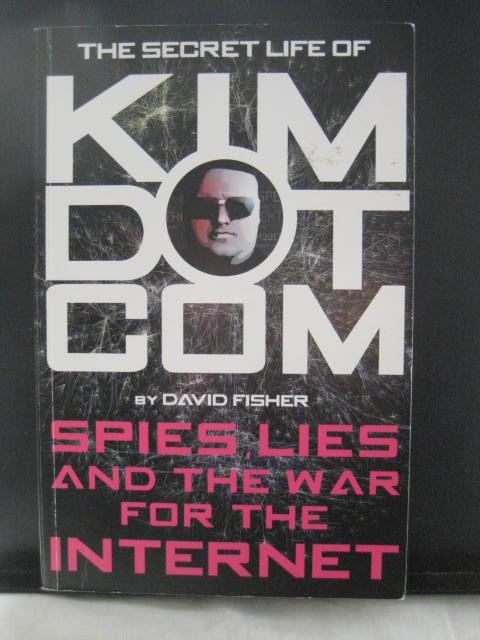
The Secret Life of Kim Dotcom: Spies, Lies and the War for the Internet
By David Fisher
Paul Little Books (2013)
Book Review
Kim Dotcom, a recent German billionaire immigrant to New Zealand, continues to fight a US extradition order for alleged Internet piracy, money laundering and racketeering. Dotcom, who legally changed his name from Kim Schmitz in 2001, was first arrested January 20, 2012 – during a military-style assault by an elite anti-terrorist team on his Auckland home. It would be nearly four years, in late 2015, before the New Zealand government convened an extradition hearing. The court granted the request for extradition, which is currently under appeal.
The case has caused great embarrassment for New Zealand prime minister John Key. Not only did the Government Security Communications Bureau (GSCB) illegally spy on Dotcom primary to his arrest, but New Zealand courts ruled the arrest warrant and the government order to seize his assets were illegal.
Fisher provides an excellent summary of Dotcom’s financial empire and the legal and technological intricacies of the case against him. The book paints an ugly picture of a servile National government that seems to view New Zealand as a US colony and happily suspends the New Zealand Bill of Rights at the behest of the FBI and US corporate interests – in this case the Motion Picture Association of America (MPAA).
The case revolves around Megaupload, a service Dotcom created in 2004 (preceding Dropbox by three years) enabling Internet users to store and share large files. The MPAA cried foul when Megaupload users began sharing downloaded new release films.
Fisher (and the lawyers Dotcom consulted prior to starting Megaupload) maintain he is in total compliance with the US Digital Millennium Copywrite Act (DMCA). This law holds sharing websites (like YouTube) harmless for copyrighted materials posted by third parties, provided the sites remove them after being notified by copyright owners. Dotcom’s lawyers also contend that copyright violation isn’t an extraditable offense. This is why the US government has added additional charges of money laundering and racketeering.
Despite Dotcom’s status as a New Zealand resident, the US Department of Justice is claiming jurisdiction because all global email traffic passes through eastern Virginia. Dotcom (and Fisher) believe the FBI targeted the billionaire after he made a $50,000 donation to Wikileaks. Additionally, Fisher believes Dotcom may have influenced Edward Snowden’s decision to flee to Hong Kong. Dotcom started Megupload in Hong Kong prior to moving to New Zealand and still has major business ties there.
Dotcom’s appeal against the extradition order will likely extend into late 2017.
Flash Boys is a true story about front running, the unethical practice of a stockbroker executing orders on a stock while taking advantage of advance knowledge of pending orders from elsewhere in the market.* From the bleak picture Lewis paints, it appears that investors – whether institutional or private – have virtually no way of protecting themselves against front running.
Like Lewis’s 2010 book The Big Short, Flash Boys reads just like a thriller, complete with exquisitely drawn heroes and villains. In this case, the heroes are crusading Canadian banker Brad Katsuyama and the assorted geeks and nerds who helped him start his own stock exchange. Katsuyama started IEX in 2013, after the Royal Bank of Canada and the Securities and Exchange Commission (SEC) refused to support his efforts to expose and end the practice of front running. By purposely slowing their transmission rates, IEX makes it impossible for high frequency traders to “front run” the trades occurring on the exchange. This has enabled Katsuyama to protect investors who use his exchange, while simultaneously collecting data on suspicious trades.
Flash Boys, a bestseller, originally came out in 2014. The 2015 edition includes an afterward in which Lewis describes being viciously attacked by the big Wall Street banks and brokers. He also enumerates a number of prosecutions of high frequency traders and brokerage firms (by the FBI, SEC and Financial Regulatory Authority) resulting from from the publicity Katsuyama’s work received from Flash Boys’ publication.
*The way this works in practice is you order 10,000 shares of a stock at a given price and a high frequency trader somewhere buys 10,000 shares at that price and resells them to you at a slightly higher price. Complex computer algorithms enable high frequency traders to exploit minute differences in transmission frequency to execute these secret trades – which usually take place in “dark pools” – private stock exchanges which keep no public record of their trades. All the major investment banks (Goldman Sachs, JP Morgan, Bank of America etc) have dark pools and high frequency traders pay for the privilege of trading in their dark pools.
Trudell is a documentary about the life and work of American Indian Movement (AIM) activist, poet and philosopher John Trudell. The film is made up of archival and performance footage, interviews with Trudell, family members and film and rock celebrities who have worked with him, and samples of his poetry.
Stop Thief: the Commons Enclosures and Resistance (see Forgotten History: the Theft of the Commons) has helped me understand the Indian Wars and the continuing oppression of Native Americans in a whole new light. As author Peter Linebaugh describes it, the Indian Wars boil down to a determination by Jefferson and other early US leaders to enclose (ie steal) Indian lands to fence them off as private property. And as Trudell emphasizes in this film, repeated treaty violations all revolve around US efforts to steal yet more Indian land and resources for profit.
Trudell’s Role in AIM
Trudell first became an activist in his early twenties, with the Native American occupation of Alcatraz in 1970-71. The federal government declared Alcatraz Island surplus property after closing the prison in 1973. Trudell and his fellow activists claimed it under provisions in the 1868 Fort Laramie Treaty, which promises Native Americans access to unused federal land.
He eventually became secretary of AIM in Minnesota and helped organize the Trail of Broken Treaties occupation of the DC Bureau of Indian Affairs office in 1972. He also helped organize the AIM defense against the FBI siege on the Pine Ridge Reservation in 1973. The standoff at Wounded Knee related to yet another treaty violation, in which the federal government allowed mining companies to mine for uranium on tribal land. In one interview, Trudell reminds us that 50-70% of all US energy resources are on native lands. Their extraction nearly always violates US treaty commitments. Worse still, radioactive contamination from uranium mining is a major factor in the high mortality rate at Pine Ridge and other reservations.
When the residents of Pine Ridge tried to block the mining companies, the FBI sent in paramilitary units equipped with helicopters and tanks in addition to covert death squads. Between 1973-76, Pine Ridge had the highest murder rate in the country.
In 1975, following a fire fight that killed two FBI agents, AIMS members Bob Robideau, Darelle Butler and Leonard Pelletier were charged with murder. Robideau and Butler were tried in Cedar Rapids, where AIM enjoyed strong public support. They were acquitted on self-defense grounds. Pelletier, who was tried in Fargo, was prohibited from using their acquittal in his defense. He remains in prison to this day.
A Suspicious House Fire
In 1979, Trudell’s wife and two children were killed in a house fire he believes was started by the FBI. Between 1969-70, the FBI compiled a 17,000 page dossier on him. They also made a direct threat to go after his family.
He began writing poetry as a way of coping with the emotional turmoil of losing his family. His first albums were spoke word against a background of indigenous chants. He later worked with prominent rock artists who set his poems to music.
The Deep Web is about the January 2015 trial of the alleged founder of the Silk Road website Ross Ulbricht. In addition to exploring Ulbricht’s background and the history of the Silk Road, the documentary also lays out some pretty revealing evidence US District Judge Katherine Forrest disallowed at trial. Ulbricht was sentenced to life imprisonment for drug sales, money laundering, hacking and engagement in a continuing criminal enterprise (kingpin charge). The filmmaker clearly believes Ulbricht was denied a fair trial.
The film begins by explaining what the Dark Web is, ie the unindexed records on the Internet. The Dark Web, which is thousands of times larger than the visible Internet, includes millions of bank records, as well as private and government administrative records. It also includes illicit sites like Silk Road.
Silk Road was created in 2011 by combining two cryptographic technologies: TOR (an open source technology originally developed by the US military), a browser that allows a user to access the Internet anonymously, and bitcoins, a cryptographically generated currency which, unlike bank-generated currency, is virtually untraceable.
Silk Road Founded as Political Statement
Silk Road didn’t actually buy or sell drugs. It simply provided a secure eBay-type marketplace where buyers and sellers could link up anonymously. Over time Silk Road developed an extremely tight knit user community that participated in the site’s political forums. One of the lead administrators, who took the screen name Dread Pirate Roberts (DPR)*, always maintained that Silk Road was less about selling drugs than making a political statement. DPR presented himself as a free market libertarian and talked a lot about resisting state efforts to control every aspect of our lives. All the Silk Road administrators were unified in their desire to end the war on drugs** and the extreme violence associated with it.
This fundamental nonviolent stance was reflected in their refusal to accept sellers offering products or services that caused people harm, such as prostitution or child pornography.
The Cryptoanarchist Movement
The Deep Web also provides interesting background on the radical cryptoanarchist movement that would eventually lead to the emergence of Wikileaks, Anonymous and Silk Road. A primary goal of this movement has been to create a world where the government can’t spy on everything we do. Members feel they have an implicit duty to develop encryption tools that non-tech savvy Internet users can employ to protect their privacy and anonymity.
Before the FBI shut it down in 2013, Silk Road had over one million registered users. According to cops, judges and FBI and DEA agents filmmakers interviewed, the site accomplished its goal in reducing violence associated with the drug trade.
Judge Disallows Evidence of FBI Crimes
The defense Ulbricht attempted to present was that he founded Silk Road but wasn’t Dread Pirate Roberts, as the prosecution claimed – that the individual using this screen name had taken over the website and framed him.
In March 2015, two federal agents were indicted (after a nine month investigation) for infiltrating Silk Road and stealing and extorting millions in bitcoins from Silk Road clients. These agents had high-level access to administrative functions of Silk Road, thanks to an administrator they arrested who turned informant. These federal agents had the power to change access to administrator platforms and passwords and to change PIN numbers and commandeer accounts, including that of DPR. They also had the means to manipulate logs, chats, private messages, keys, posts, account information and bank accounts. And they had the motive to alter data in order to cover up their own actions and point guilt elsewhere.
Judge Forrest barred Ulbricht’s attorney from presenting any of this evidence at trial.
She also disallowed evidence the FBI had illegally hacked into Silk Road’s servers in Iceland without a warrant – a violation of Fourth Amendment protections against illegal search and seizure. If her ruling is allowed to stand on appeal, it sets a dangerous precedent for allowing evidence resulting from illegal government hacking to be used at trial.
*Dread Pirate Roberts was a fictional character in the novel and movie The Princess Bride. In both, when the original Dread Pirate Roberts dies, his successor takes up the alias.
**The libertarian think tank Cato Institute has taken the position that the US should legalize all addictive drugs as Portugal has done. See The Cato Institute and the Drug War
For an update on Ulbricht’s appeal and to donate to his legal defense fund (like I did) go to http://freeross.org/

 The Most Revolutionary Act