Washington Activists Seek Carbon Tax

CarbonWA-tax-swap

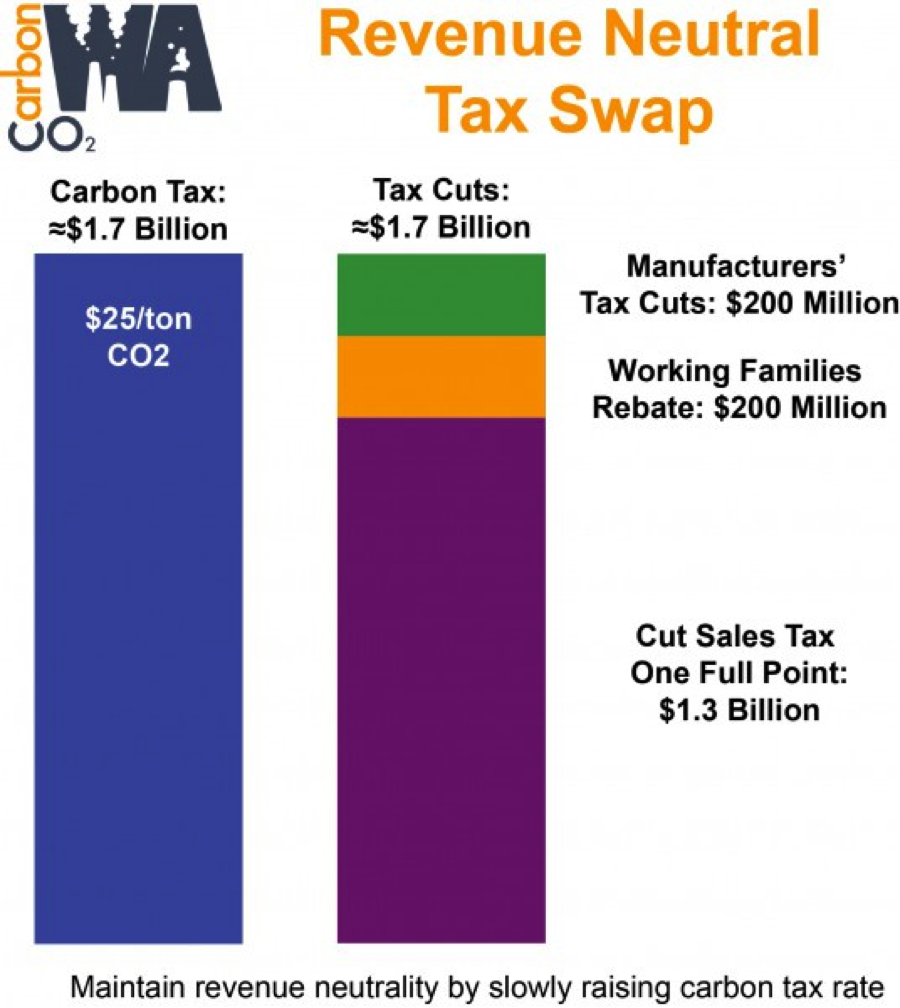
Carbon Washington (CarbonWA) is a citizens’ coalition seeking to enact a statewide carbon tax through a citizens’ initiative.* I-732 would incrementally institute a tax of on all fossil fuels consumed in Washington State. The revenue raised would be used to cut the state sales tax by 1%, to eliminate the Business and Occupations (B&O) tax on manufacturing and to fund the Working Families Rebate (a program the state legislature created in 2008 but never funded).

British Columbia’s Carbon Tax

I-732 is modeled after a carbon tax British Columbia (BC) introduced in 2008, which has received lavish praise from the (pro-corporate) Economist. Prior to its enactment, business warned the carbon tax would increase costs and slow the economy, while the left-leaning New Democratic Party (NDP) warned it would hurt the poor. Both were wrong.

Because the funds raised by BC’s carbon tax are used to cut income taxes (for individuals and businesses), it has been as beneficial for the British Columbia economy as for the environment. In a way, this makes a lot of sense. Taxing people for working and adding wealth to the economy is one of the biggest drags on economic growth there is. It makes a lot more sense to tax activities you want to discourage, such as polluting the atmosphere.

BC also implemented their carbon tax incrementally. The new tax was initially set at C$10 ($10) per tonne of carbon-dioxide emissions, rising by increments of C$5 per year to C$30 in 2012. At present this translate into a 7 cent per litre tax (approximately 25 cents per gallon) on gasoline.

As predicted, the carbon tax has proved as beneficial  for the economy as the environment. Since 2008, per capita fuel consumption in British Columbia has dropped by 16%, which contrasts with an increase of 3% in the rest of Canada. The province now has the lowest income tax rate in Canada and one of the lowest corporate tax rates in North America. Meanwhile per capita GDP continues to outperform other provinces. BC also enjoys lower jobless rates. Thus it’s no wonder it remains extremely popular, supported by 64% of BC residents.

How I-732 Will Work

Under I-732, the state will collect a tax on all fossil fuels sold or used within Washington State. This will include fossil fuels sold or used for air travel, motor vehicles boats, and electrical generation. (19% of Washington’s electricity is renewable, generated by hydropower). The tax rate will start at 15 dollars per metric ton of carbon dioxide as of July 1, 2017, increasing to 25 dollars per metric ton as of July 1, 2018, with automatic increases thereafter by 3 ½ percent plus inflation.

This tax swap will take place over two years. B&O tax on manufacturers will be eliminated in full the first year. The state sales tax will be reduced by ½ percentage point per year over two years. The Working Families Rebate will phase in from 15% of the federal EITC (Earned Income Tax Credit) in the first year to 25% of the federal EITC in the second year and beyond.

Halving US Carbon Emissions

Carbon Washington executive committee member Yoram Bauman hopes Washington will serve as a model for other states. According to Bauman, CO2 emissions could be halved if all fifty states adopted similar a similar carbon tax.

More information at www.carbonwa.org


*I-732 is an initiative to legislature. If Carbon Washington collects enough signatures to qualify, the 2016 legislature has a choice of enacting it into law, enacting substitute legislation or placing it on the 2016 ballot.
Plows, Plagues and Petroleum

plows plagues and petroleum

Plows, Plagues and Petroleum: How Humans Took Control of Climate

By W F Ruddiman

Princeton University Press (2010)

Book Review

In Plows, Plagues and Petroleum, paleoclimatologist W F Ruddiman makes the argument that the human species began interfering with climate – by increasing CO2 emissions – long before they began burning fossil fuels during the industrial revolution. After studying millions of years of ice core records, Ruddiman concludes that agricultural activities that began roughly 10,000 years ago increased atmospheric CO2 sufficiently to reduce planetary cooling and reduce a long overdue ice age.

Ruddiman’s book carefully traces the domestication of local plants and animals that occurred simultaneously in Mesopotamia, China, Africa and the Americas between 8,500 and 4,000 BC. Plant and animal domestication was accompanied by large scale clearing of forest land for fields and pasture. This massive loss of trees was accompanied by a big increase in atmospheric CO2.

Ruddiman has always been curious about periodic drops in CO2 concentrations that began around 540 AD. Theorizing that these dips correlated with temporary declines in global population, he examined historical records for evidence of wars, famines and pandemics that might have wiped out large numbers of people. What he discovered was a close link between infectious epidemics and declines in CO2 concentrations, as forests reclaimed large swaths of agricultural land.

The first epidemic in the recorded history was an outbreak of bubonic plague in the Roman Empire in 540 AD. By 590 AD, it had wiped out 40% of Mediterranean Europe. European plague outbreaks continued to occur every ten to fifteen years until 749, when a long plague-free period was accompanied by a rebound in population growth, deforestation and atmospheric CO2. By 1089, virtually all of Europe was deforested.

An even more severe plague pandemic occurred in the mid-1300s, wiping out a third of Europe (25 million people). In some cities, mortality rates were as high as 70%. The resulting labor shortage gave serfs who survived immense bargaining power. As they moved from estate to estate seeking good working conditions, they began to be treated as tenant farmers rather than slaves.

There were new plague outbreaks, accompanied by reduced atmospheric CO2, in the mid-1500s and mid-1600s.

The large pre-industrial drop in CO2 emissions occurred with what Ruddiman refers to as the North American pandemic (1500-1750. This was caused by the arrival of Europeans – who Ruddiman describes as flea infested, lice ridden peoples who shunned bathing – with a host of illnesses (smallpox, influenza, hepatitis, diphtheria, measles, mumps, whopping cough, scarlet fever, cholera and plague) to which native populations had no immunity. This was in addition to untold numbers of natives slaughtered by Europeans.

Prior to the arrival of Europeans, the population of North America was estimated between 50-60 million. Ninety percent (50 million) would die over the next 250 years. This amounted to 10% of the global population. Nearly all their agricultural settlements were reclaimed by forest, resulting in the third and largest pre-industrial drop in atmospheric CO2.

Download a free PDF of this book at Plows, Plagues and Petroleum

Why We ALL Resist the Truth About Climate Change

requiem for a species

Requiem for a Species: Why We Resist the Truth About Climate Change

By Clive Hamilton

Allen and Unwin (2010)

Book Review

Most of Requiem for a Species is a detailed analysis of the sociological and psychological factors that lead all of us (including climate activists) to deny the grim reality of the massive climate disruption that faces us. Australian author Clive Hamilton begins by confronting readers with the most likely climate scenario over coming decades. I have always had difficulty getting my head around climate science and found these the most valuable chapters.

Predicting the Behavior of Politicians

For the last two decades politicians have been giving lip service to limiting global warming to a “safe” increase of 2 degrees centigrade. According to Hamilton, most climate scientists recognized this was no longer possible when the 2009 Copenhagen Climate Change Conference failed to agree on a treaty to replace the Kyoto Accord. Most climate models agree that the only way to limit global warming to 2 degrees Centigrade would require for global emissions to peak in 2015 (this year) and decrease by 20-40% by 2020. This translates into a 6-7% per year reduction in rich countries – it assumes that developing countries (including China, India and Brazil) will continue business as usual until 2030, before reducing their emission by 3% a year. Hamilton believes there’s no way developing countries will agree to sacrifice economic growth (and bringing their populations out of poverty) before then.

Already in 2010, Hamilton was predicting that rich countries wouldn’t start cutting their emissions by 6-7% annually in 2015. He reckons 3% per annum is the highest emissions reduction compatible with continued economic growth. Cuts above 5% would likely translate into unspeakable human misery, witness the immense human cost in Russia when the Soviet economy collapsed in 1989 (which caused a 5.6% reduction in carbon emissions).

He feels politicians are very unlikely to agree to start cutting in emissions in 2020, either. At present most OECD countries have committed to reducing carbon emissions by 60-80% by 2050. Such a distant target is worse than useless. If politicians fail to act before 2030-2040, most of the earth’s ice cover will have melted and will remain that way for thousands of years. If politicians continue business as usual (and do nothing), global temperatures will increase by 3.1 degrees C by 2100 and 5-6 degrees C by 2200.

Hamilton believes the best we can hope for is that both rich and developing countries will begin cutting emissions by 3% per year in 2030.* In the absolute best case scenario, this translates into an increased average global temperature of 2.6 degrees C by 2100 and 3.5 degrees C by 2200.

What 4 Degrees Warming Looks Like

Because Hamilton considers a 4 degree C increase a likely scenario, he provides a detailed description of what that looks like. With 4 degrees C of average global warming, there will be no Arctic sea ice in summer, and Greenland, the west continental shelf of Antarctica and the Himalayan glaciers will melt. If all the earth’s ice cover melts sea levels will rise by 70 meters.

More than a billion of Earth’s inhabitants will have no access to water, especially in the India, Pakistan and China which rely on the Himalayan glaciers for drinking water. Fifteen percent of current arable land will be unsuitable for cultivation due to drought (in India, Pakistan, China, Australia, southern Europe, the central and southern US, North Africa and the Amazon). In northern climates like Canada and Siberia, there will be a 20% increase in arable land.

It’s impossible for climate scientists to predict exactly how many people will die from starvation, dehydration and extreme weather events. Some predict a reduction in the global population to one billion or less. All we know for sure is the die-off will be most severe in poor developing countries.

The Climate Denial Industry.

There’s also an excellent chapter on the climate denial movement, which profiles climate scientists (most were also strong advocates of Reagan’s Strategic Defense initiative and nuclear power) who colluded with fossil fuel industry, right wing think tanks and the public relations firm APCO (which master minded the campaign to deny the health risks of tobacco) to create an extremely slick climate denial campaign. I found it especially intriguing to learn of the role of the Revolutionary Communist Party (who produced the 2007 documentary The Great Global Warming Swindle) and other far left groups in the climate denial movement.

There’s also an excellent chapter on the gungho technofixers who believe catastrophic climate change can be prevented through pie-in-the-sky technofixes, such as carbon capture, geoengineering and wide scale adoption of nuclear power. Hamilton explores each of these technologies in considerable detail. Each of them costs far more than improving energy efficiency and switching to renewable energy. All of these approaches would take at least ten to twenty years to implement. And as Hamilton points out, waiting another 20 years to begin cutting emissions will have catastrophic consequences.

Hamilton also makes the prediction that the global recession might temporarily reduce emissions before the economy rebounds again. He was correct:

• In 2009, global emissions fell by 1.2% after increasing by an average of 2.5% a year between 1990 and 2009.
• In 2010 global emissions increased by 5.9%
• In 2011 global emissions increased by 3.2%
• In 2012 global emissions increased by 1.4%
• In 2013 global emissions increased by 2.1%


*Hamilton was overly pessimistic here. In November, Obama and Xi Jinping made a bilateral agreement in which Obama committed the US to cutting its carbon emissions by 26-28% from 2005 levels by 2025. China committed to start cutting emissions in 2030 and make “best efforts” to peak emissions before 2030.

**The Revolutionary Communist Party was always regarded skeptically (as heavily infiltrated) by other progressive groups when I lived in Seattle. For a grassroots leftist group, they seemed to have virtually unlimited funds and repeatedly tried to instigate violence during peaceful protests. An RCP member was linked to the suspicious death of a one of my African American patients who exposed the DEA’s role in laundering cocaine profits in the professional race car circuit.

Climate Change-Lite for Kiddies.

saving my tormorrowSaving My Tomorrow – Part 1 and 2

HBO (2014)

Film Review

I watched this two part film with some trepidation, assuming that an HBO documentary would be full of spin. Sadly it fulfilled my worst expectations. Aimed at age 5-12, the video offers a fairly accurate presentation of the theory of greenhouse warming. Children will also enjoy some great shots of insect life and the devastation Hurricane Sandy caused on Long Island.

That being said, I think a lot of adults will react as I did and feel manipulated. Developmentally, children up to age 18-19 adopt strong political views under parental (and occasionally teacher) influence. Rather than portraying this honestly, Saving My Tomorrow makes it appear as if a bunch of American child prodigies suddenly woke up one morning and decided to protest against oil trains and fossil fuel dependence. Despite being a strong climate activist, I resent being propagandized as much as the next person.

In my case, this sense of manipulation was compounded by the slick packaging, consisting of cute wise-child soundbites, interspersed with celebrity readings and musical numbers written by the kids themselves. In my view, the filmmakers needed to be more transparent by exploring the parents’ behind-the-scenes role in promoting their children’s activism.

The other glaring dishonesty was HBO’s failure to mention the role of genetically modified organisms (GMOs) in the near demise of the American monarch population (we don’t allow GMO crops in New Zealand and have plenty of monarch butterflies).

While adults will be annoyed by the slick packaging, the documentary is probably a good introduction to climate change for young children. I myself really enjoyed the scene of Long Island children reading their essays on Hurricane Sandy and the energy saving tips kids give during the credits.

***

Since I first posted this review, I note that HBO has had both videos taken down by YouTube. Don’t worry you’re not missing much.

Our What the Frack Tour – June 21, 2014

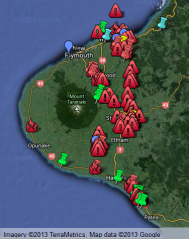
 taranaki frackings siteslegend: red triangle: fracking well sites

red flame: gas/oil production stations

red pin: deep well injection sites

green pin: “land farms” and land treatment sites.

 source: Climate Justice Taranaki

We Have Been Invaded

As you can see from the above map, pristine Taranaki dairyland has been totally invaded and colonized by foreign oil and gas companies. New Zealand’s lax regulatory environment has produced a feeding frenzy. Eager to offshore as much profit as possible, they have transformed our clean green countryside into an industrial site.

A recent report by the New Zealand Commissioner for the Environment is highly critical of both Taranaki Regional Council (TRC) and New Plymouth District Council for their failure to regulate foreign energy companies in accordance with existing New Zealand law.

The PCE, bless her, makes the link between fracking and climate change front and center in her report. In her introduction, she questions the common assertion that natural gas is a so-called transition fuel, given its substantial contribution to atmospheric CO2. She also calls on the New Zealand government to specify exactly how they will fulfill their commitment to reduce New Zealand’s greenhouse gas emissions to 5% below our 1990 emissions by 2020.

Improper Disposal of Fracking Waste

Her report goes on to chastise TRC for the failure to regulate discharge of fracking waste. Despite vociferous complaints from local farmers and residents, TRC continues to permit discharge of untreated fracking waste into streams that provide water for livestock and, and in several cases, human beings.

She’s especially critical of TRC’s use of “visual inspection,” rather than chemical testing, to assess the water quality of these streams. One particularly silly monitoring report refers to inspectors signing off on water quality because they heard frogs singing.

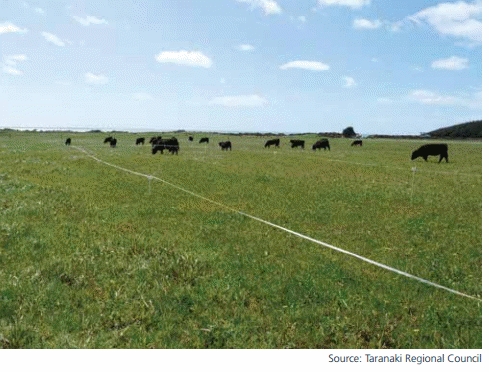
Cows on landfarm“Land farmed” site with grazing cattle

Another common disposal method is to spread wastes on pasture and grow grass and graze cows on it – without testing the cows, grass or milk for heavy metals, barium, benzene, hydrocarbons or other chemicals commonly found in fracking waste.

The experience with toxic sludge in the US is that heavy metals and other toxic chemicals bio-accumulate in plants grown in contaminated soil

Given given that dairy products are New Zealand’s number one export, this so-called land farming could do major damage to our country’s economy. Especially as China, our major export market, is already exquisitely sensitive to the milk contamination issue.

Emergency Evacuation Plans

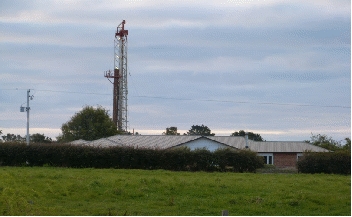
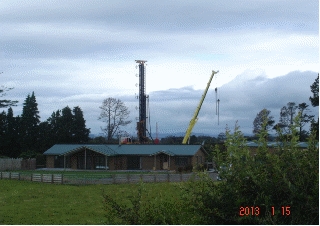
Another major concern in the PCE’s report relates to the Emergency Evacuation Plans fracking companies are required to file for each drill and production site. Many fracking sites are located less than 500 meters from private homes.

As here

home and well

here

2nd home

here

4th home

and here

third homeSarah Roberts and Robert Moore – Green Party candidates for New Plymouth and Taranaki-King Country

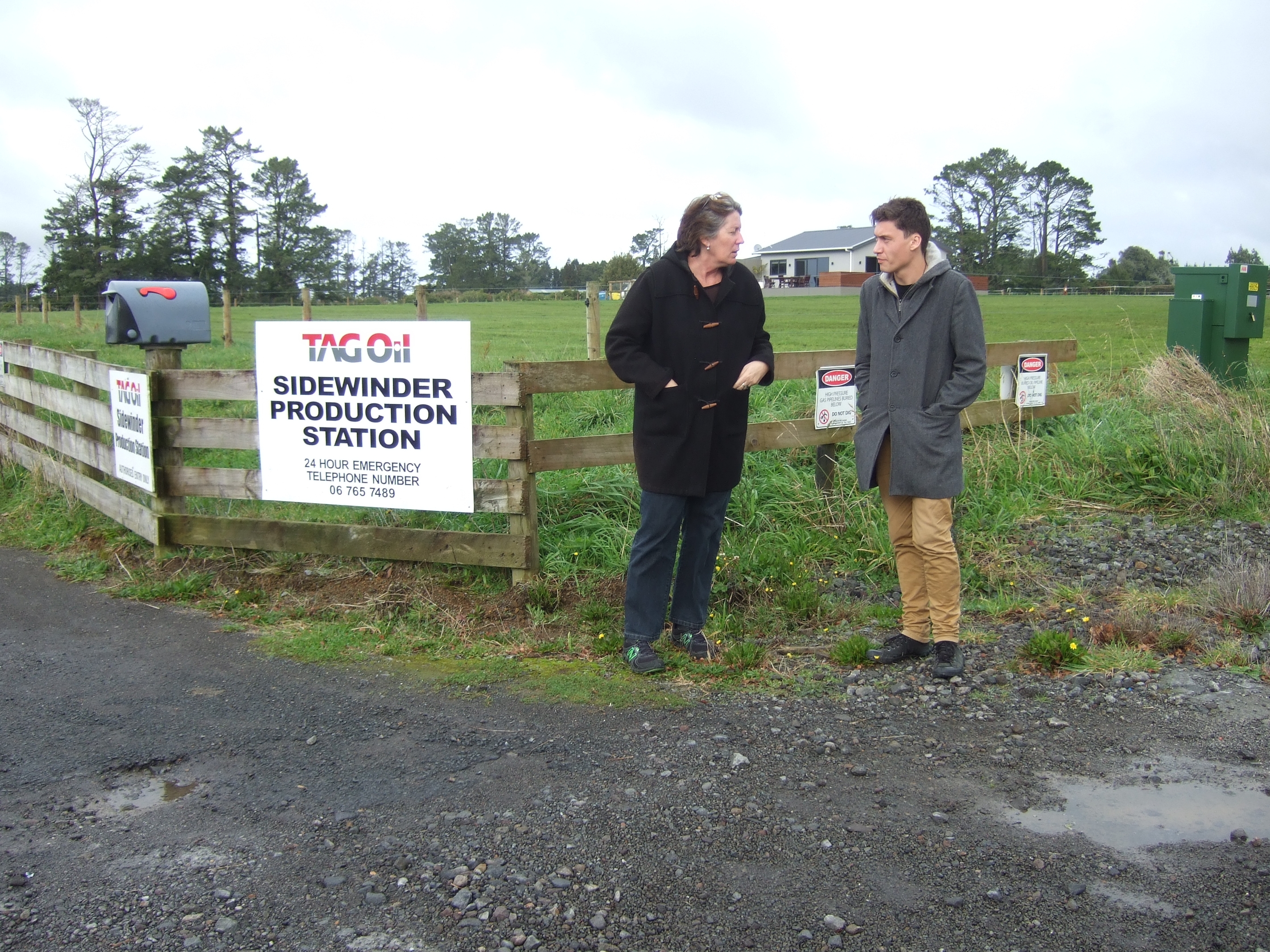
For some reason, none of these residents have been notified that they are slated for evacuation in the case of an accidental gas release or explosion. As an example there are 36 owners and occupiers identified on the TAG Oil emergency management plan (gas release/spill contingency plan covering 500m) at Sidewinder A wellsite. These owners and occupiers will not be aware of this.

Drop in Property Values


for sale

The owners of the last property pictured above are desperate to sell it. The value of properties located adjacent to fracking wells have plummeted.

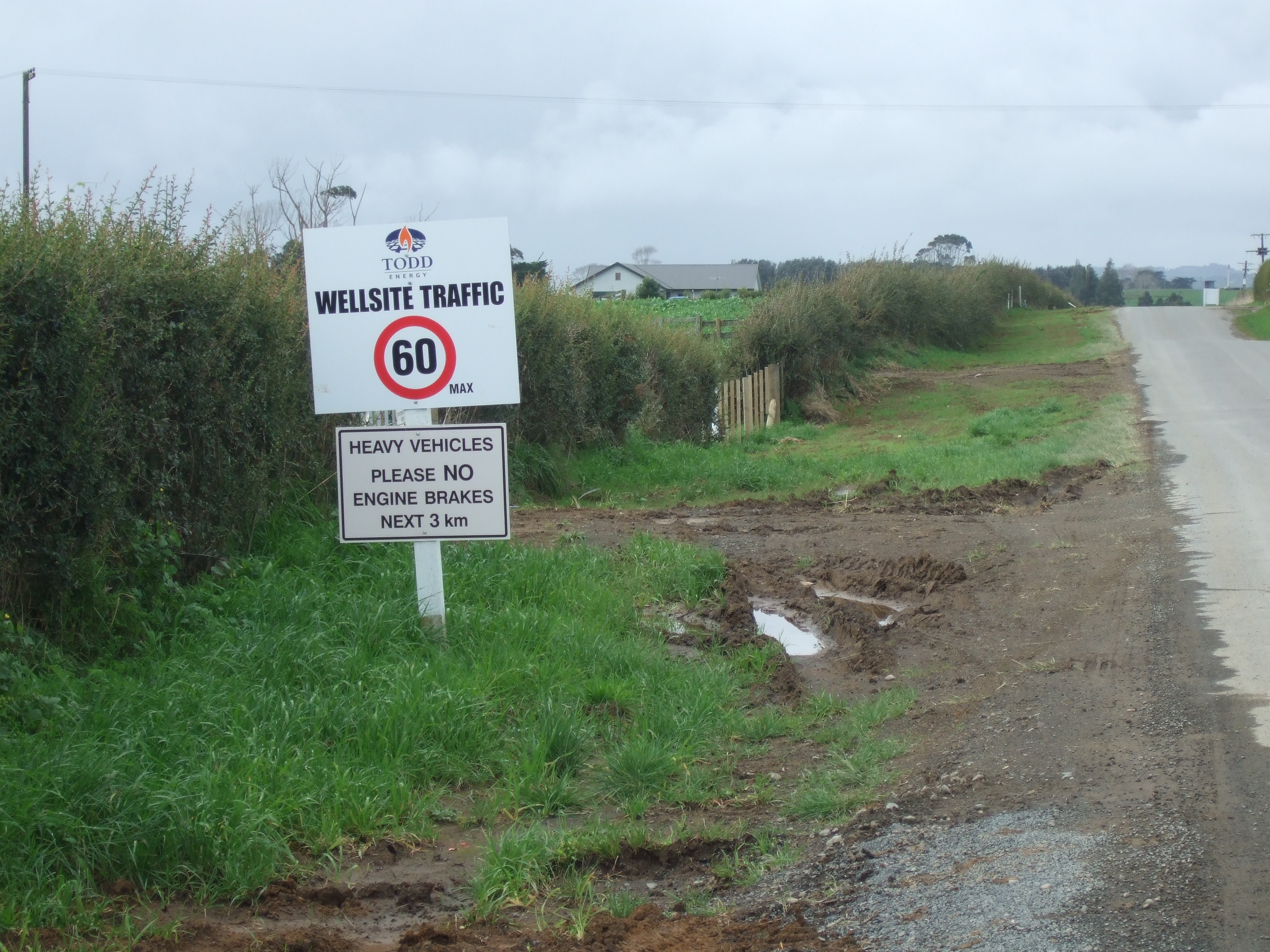
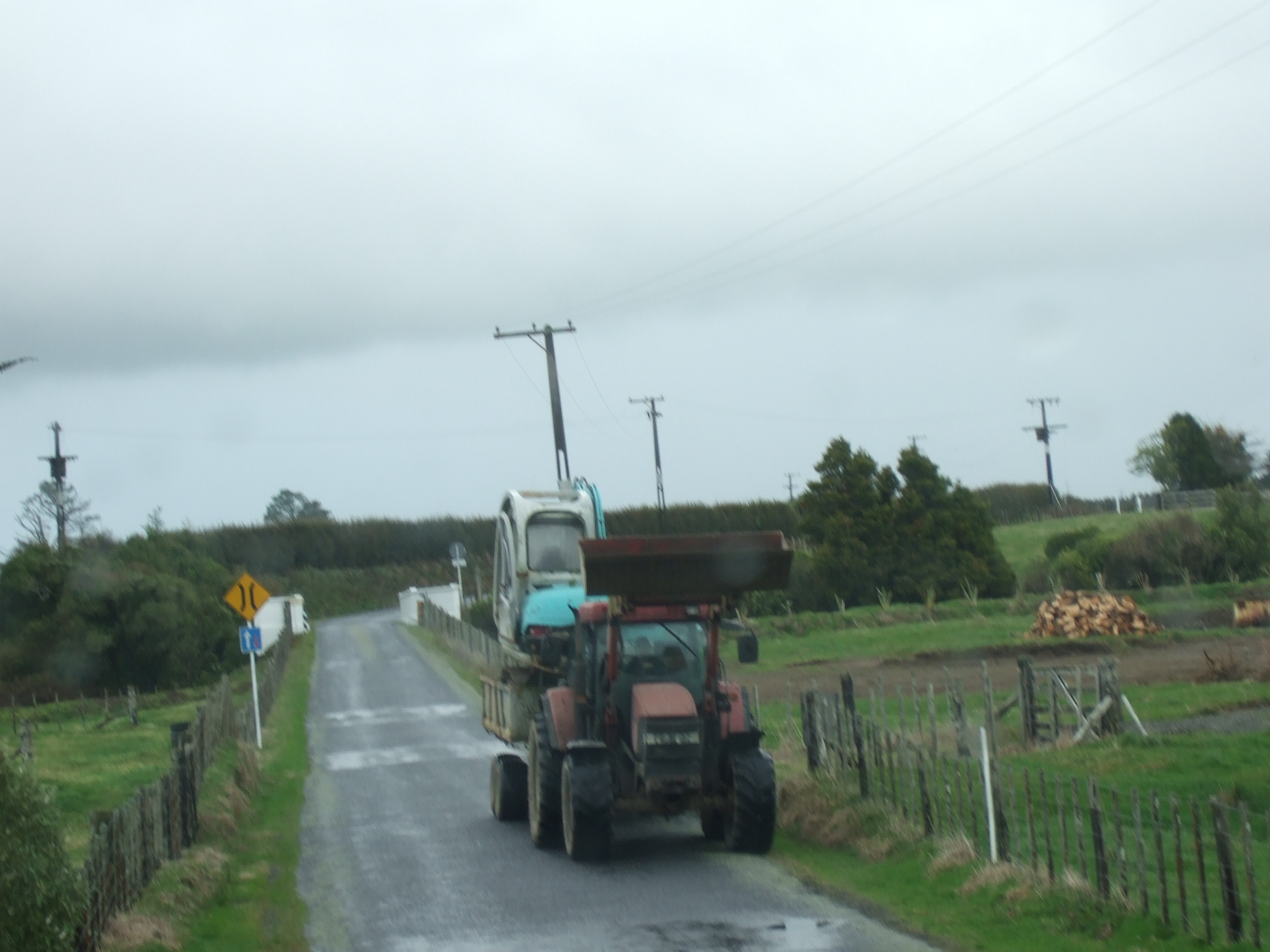
This is due to the constant noise, exposure to air and water pollutants, heavy industrial traffic

industrial traffic

and flaring

flaring

What’s more the property adjacent to fracking wells can’t be insured, owing to the risk of leaking wells, inadvertent gas releases and explosions. Under New Zealand law, the property owner assumes liability for an abandoned well site that leaks.

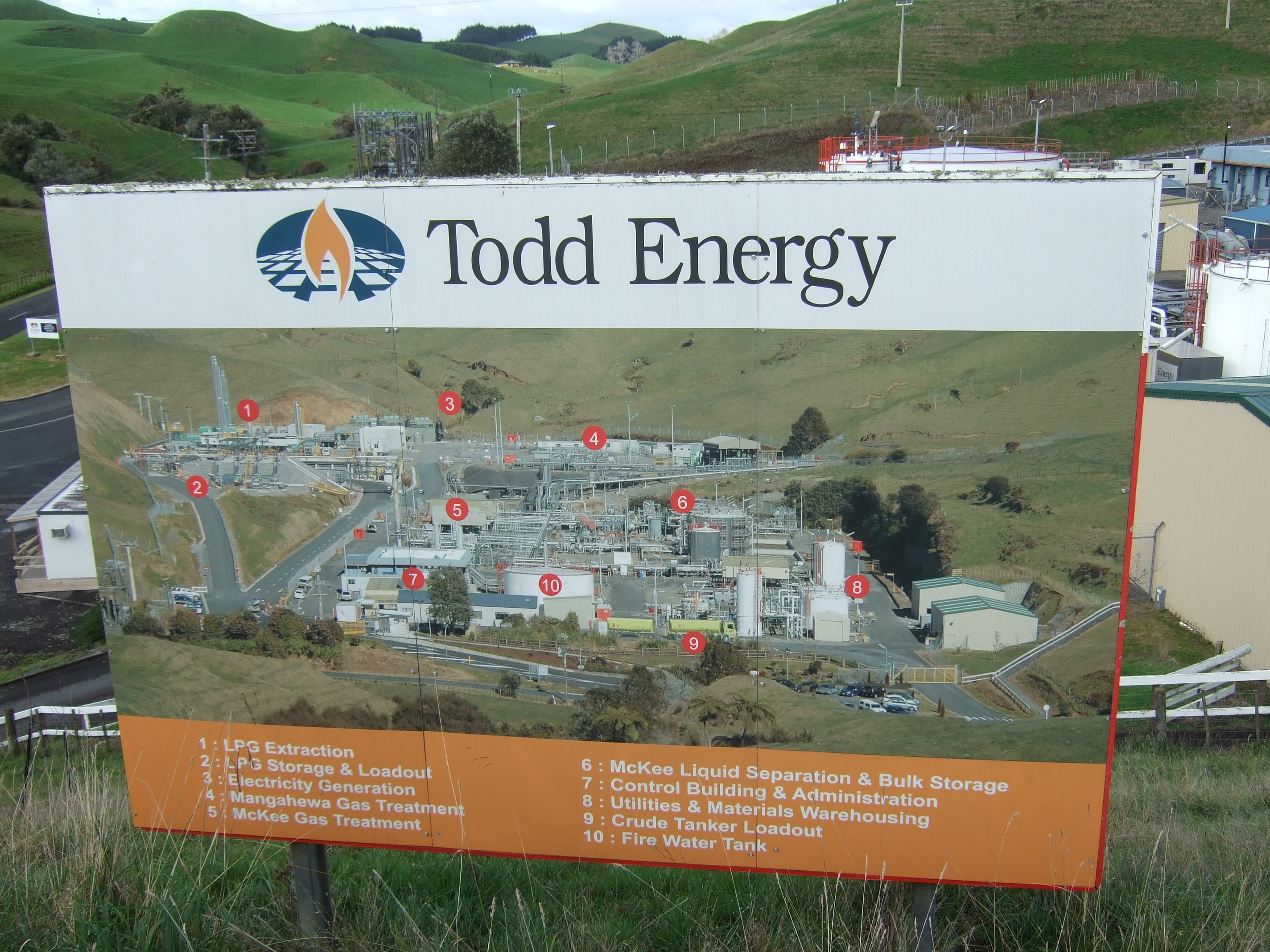
Todd Oil (affiliated with Shell) has recently agreed to top up sales proceeds of land owners forced to sell their property at a loss. But if you live adjacent to a Tag Oil or Greymouth Petroleum fracking site, you’re out of luck.

Health Consequences of Fracking

Because the PCE is only charged with addressing environmental issues, her report doesn’t address the nosebleeds, rashes, cancer clusters and other health issues associated with living near a fracking site.

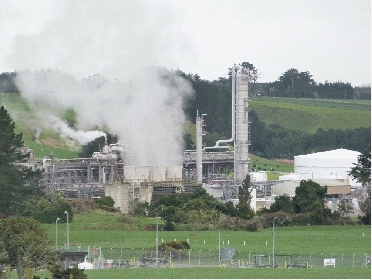
Waitara valley plant

Nor the disastrous effect of being surrounded by fracking rigs on overall well beings and quality of life. People shouldn’t have to live this way. Why should Taranaki residents sacrifice their livelihoods and the health and well being of their children for the benefit of foreign oil companies?

Todd sign

Community Meeting Regarding Norfolk School

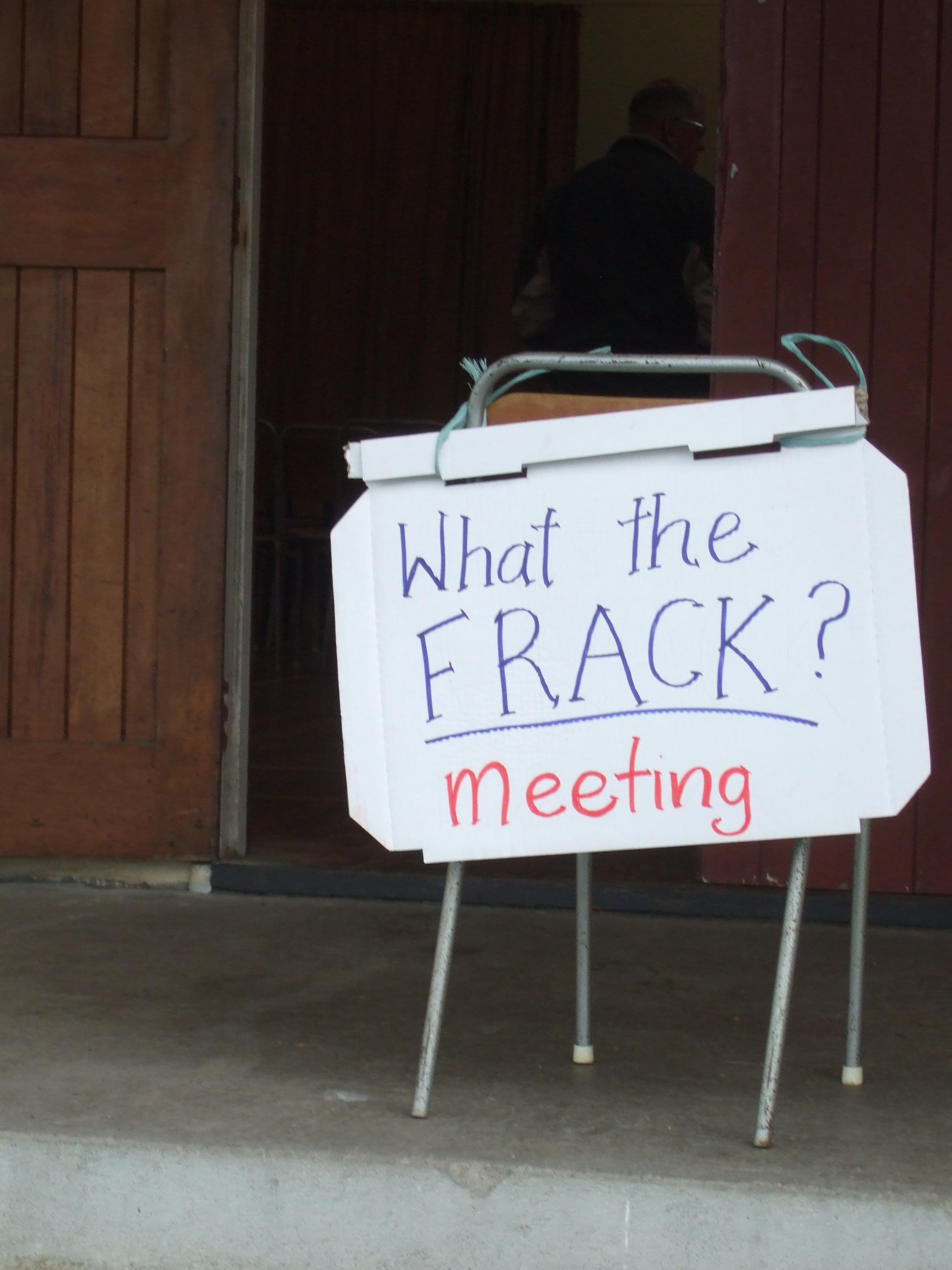
Our What the Frack Tour finished up with a community meeting at Norfolk Hall, a Taranaki country hall between Inglewood and Stratford. TAG Oil is applying to drill their Sidewinder B well site 600 meters from Norfolk Primary School. This isn’t about a couple of exploratory wells. This is about the the potential drilling an on-going extraction of eight wells.

As came out at the meeting, prevailing south westerly winds would make emergency evacuation of the students impossible in the case of an accidental gas release. These can and do occur at Taranaki fracking sites.

what the frack

Read follow up letter from to Taranaki Daily News from one attendee: Not the Good Oil


How to Tell Where Your Food Comes from

barcode

Consumers in North America and Europe are consciously opting for nationally – or better still locally – grown foods as a way of reducing fossil fuel use and carbon dioxide emissions. Increasing concern over “food miles” (i.e. the distance their food travels before reaching their table) has led the US Congress to enact country of origin labeling (COOL) on fresh beef, pork, lamb, fresh fruits, nuts and vegetables. The right of the US government to require COOL was recently upheld by the World Trade Organization, in response to a complaint by Canada and Mexico. The WTO ruling is confusing, as the secret tribunal that decides such matters also ruled the COOL labeling requirements the US was requiring were excessively burdensome. See WTO Dispute Settlement.

Although COOL labeling is not required on frozen, canned or processed foods, the country responsible for manufacturing an item is indicated by the first three digits of the bar code. The latter is used universally in automated checkout systems.

Deciphering the bar code:

  • 00-13 USA & Canada
  • 30-37 France
  • 40-44 Germany
  • 49 Japan
  • 50 UK
  • 57 Denmark
  • 64-Finland
  • 76 Switzerland and Liechtenstein
  • 93 Australia
  • 94 New Zealand
  • 480–489 Philippines
  • 628 Saudi-Arabia
  • 629 United Arab Emirates
  • 690-695 China (including Hong Kong)
  • 740-745 Central America
  • 750 Mexico
  • 885 Thailand
  • 893 Vietnam

Consumers need to be aware that China, Hong Kong, Thailand and Vietnam have no food inspection regulations. Thus there is no guarantee food manufactured in these countries is safe.

For more country codes go to EAN codes

photo credit: jDevaun via photopin cc

Those Fracking Lies

snake oil

Snake Oil: How Fracking’s False Promise of Plenty Imperils Our Future 

Richard Heinberg (Post Carbon Institute, 2013)

Book Review

Snake Oil is all about the economics of fracking. Also known as hydraulic fracturing, fracking refers to using pressurized water and chemicals to release oil or natural gas trapped in underground rock formations. Heinberg’s new book describes the behind-the-scenes role of Goldman Sachs and other investment banks in driving the present fracking boom.

Technology to extract oil and gas deposits trapped in rock formations was first developed in 1866. Because the process is extremely capital intensive, fracking for oil only became economically sustainable in when the price of oil tripled a decade ago. In the case of natural gas, it took the elimination of price controls and federal tax credits to make fracking financially feasible.

How Fracking Loses Money
According to Heinberg, fossil fuel companies are losing money on fracking. The recent boom has led to a surplus of natural gas. This, in turn, has driven the price down, forcing the oil/gas industry to sell it for less than they spend to get it out of the ground. Because only a small fraction of shale gas can be extracted cost effectively, production declines by an average of 80-90% over the first 36 months. Industry data indicates it costs between $10-20 million to operate a fracking rig that will produce $6-15 million worth of natural gas in the well’s lifetime.

Obviously you can’t tell investors that fracking for natural gas is a money-losing proposition. Investors only want to hear that fracking is the miracle solution to America’s dependence on dirty coal and foreign oil. Thus oil/gas companies, the banks that finance them, the federal agencies that regulate them and Obama himself all parrot the hype that fracking will supply cheap natural gas to fuel US power plants for the next 100 years. According to Heinberg, this wildly optimistic prediction was calculated by extrapolating the best production rates of the best fracking sites over the 20,000 or so existing rigs. The problem with this methodology is that it fails to allow for rapid depletion rates or the fact that the best wells are already tapped out.

This pressure to meet financial targets forces the companies to sink more and more wells. Thirty-five to fifty percent of existing wells (7,200 wells) must be replaced every year “just to pay off the bankers.”

Fracking Based Derivatives
The only way companies can stay in business is by selling assets and financial products. This includes unused oil and gas leases* they acquired cheaply in the 1990s, company shares, derivatives and credit default swaps. The investment banks themselves have created their own fracking-based derivative called volumetric production payments (VPPS). The banks bundle them and sell them to gullible pension fund managers, just like they did toxic mortgages before the 2008 crash.

The billions they’re losing explains why the industry is so keen to start exporting fracked gas as Liquified Natural Gas (LNG) to China, Japan and India. These countries are happy to pay $15 per million BTUs, nearly four times the domestic price of $4. A growing export market will quickly drive up US prices.

Environmental Consequences of Fracking
Meanwhile the explosion of fracking rigs across the landscape is causing massive environmental damage and eating up scarce dollars we should be investing in renewable energy. Owing to strong public opposition, fracking is banned or strictly regulated in most of Europe. As a result, Europeans are far more likely to invest energy dollars in renewables. In 2012, Germany obtained 23% of their electricity from renewable sources, Denmark 41% and Portugal 45%

Snake Oil debunks the widely promoted myth is that that burning natural gas to produce electricity creates less greenhouse gasses than burning coal. If you count all the methane (a greenhouse gas 20-100 times more potent than CO2) released during fracking, using fracked natural gas to fuel power plants produces 20-100% more greenhouse gas emissions than coal.

The massive amount of freshwater consumed by tens of thousands of fracking wells is also a major concern, especially in drought-stricken regions. The water take for a single well pad cluster can exceed 60 million gallons. The Halliburton Loophole, championed by Dick Cheney, amended the Clean Water Act in 2005 to remove the requirement that oil and gas companies disclose the toxic chemicals they use in fracking. This is especially concerning given recent studies documenting serious health problems in people and livestock adjacent to fracking sites.**

In 2011, the EPA made the determination that fracking waste is too radioactive (from exposure to underground cesium and uranium) to be processed in municipal waste facilities. Thus most of it held in large evaporation pools or re-injected into old wells. A recent US Geological Service study has linked deep well re-injection to a rash of earthquakes in regions that rarely experience them. In 2011 central Oklahoma experienced a fracking-related 5.7 earthquake that destroyed 14 homes and a highway and injured two people.

Other Unconventional Production Methods
Snake Oil also debunks the flimsy economic hype used to promote other methods of unconventional oil and gas production (e.g. oil fracking, deep sea oil drilling, tar sands, etc), as well as examining what the inevitable transition to renewable energy will look like. Because renewable energy will never be as cheap as fossil fuels, some modification will be necessary in our current energy intensive lifestyle.

 *An oil or gas lease is a contract by which a landowner authorizes exploration for and production of oil and on his land, usually in return for royalties from the sale of the oil or gas.
**According to Al Jazeera, a jury has just awarded a Texas family $3 million for fracking related health problems.


Originally published in Dissident Voice

China’s Ecological Tragedy

when a billion

When a Billion Chinese Jump: How China Will Save Mankind – Or Destroy it

 By Jonathan Watts (2010 Faber and Faber)

 Book Review

 (Yesterday the Wall Street Journal reported that nearly 1/5 of China’s farmland is contaminated with heavy metals, such as arsenic and cadmium, that are absorbed by rice and very damaging to human health.) 

The major premise of When a Billion Chinese Jump is the enormous threat China’s burgeoning middle class poses to climate stability with their insatiable demand for gas-guzzling cars and energy-intensive homes and consumer goods.

The reader comes away with an overall impression of an environmental war zone: severely contaminated rivers, aquifer depletion, clear cut forests, smog, landslides, toxic waste-related cancer villages, and mass species extinction

Watts makes no secret of his belief that catastrophic climate change can’t be prevented – no matter what the rest of the world does – unless China drastically curbs its reliance on coal for energy production.

China: the West’s Industrial Cesspool

Watts traces a variety of political, economic, and philosophical influences that have led to China’s current ecological disaster. Ironically the key factor behind the country’s rapid development – the outsourcing of western industry – is number one on the list. For the past thirty years, western companies have been exporting their industrial base to China and other Asian countries to exploit low labor costs. They have simultaneously exported the major ecological damage associated with heavy industry – along with mountains of defunct electronic devices for end-of-life disposal.

The second major cause of China’s ecological nightmare is the reality that most of provincial China operates outside the law. Despite China’s “totalitarian” central government real power, according to Watts, rests in a middle band of local party chiefs, factory owners, and foreign investors and outsourcers.

He believes centralized control of China began its decline with Mao’s death. In his view, each successive government is more politically “timid” than the previous. The Ministry of Environmental Protection has developed many far-sighted environmental regulations that the Politburo is afraid of enforcing at a regional and local level. They are terrified of imposing any measures that might impair development. Without elections, the central government has no popular mandate. This means that surging development and nationalism are the only source of their legitimacy.

An interesting side effect of this endemic corruption is that illegal protests and riots – usually over crop and health damage caused by pollutions – are extremely common. In most cases, rioting is the only way to ensure environmental protections are enforced.

The Chinese Environmental Movement

The book’s most interesting chapter concerns the Chinese environmental movement. When Beijing shut down the pro-democracy movement after the 1989 Tienanmen Square massacre, many pro-democracy advocates found it was safer to transplant their activism to the environmental movement. Especially after President Hu Jintao explicitly called for greater public, NGO (non-governmental organization) and journalistic oversight to expose companies that breach environmental regulations.

Despite nominal central support for greater openness and transparency, Chinese environmentalists still play a cat and mouse game with government authorities. National environmental networks have been forbidden since 2008, owing to deep Politburo suspicion of the role the CIA played in instigating the 2004-2005 color revolutions in Eastern Europe.

Watts talks about an invisible line circumscribing acceptable activism – activists, journalists and lawyers don’t know where the line is till they cross it and local security officials beat them up and throw them in jail.

GrowthBusters: Hooked on Growth

growthbusters

(This is the seventh of a series of posts about ending our debt based monetary system and reckless emphasis on perpetual economic growth. Dave Gardner makes the ecological case for ending our addiction to continuous economic growth.)

Growthbusters: Hooked on Growth

2011, Directed and produced by Dave Gardner

http://www.growthbusters.org/

Film Review

Growthbusters is the inspiring story of Dave Gardner’s efforts to challenge conservative Colorado Springs’ failed growth promotion policies. The film also takes a broader theoretical look at the overall failure of economic growth to solve the global economic crisis.

While Gardner is clearly an environmental crusader concerned about the link between unlimited growth on carbon emissions, resource scarcity and species extinction, he inserts a heavy dose of economic reality into the discussion. All of us involved with local government have heard the same insipid assertions about the urgent need to cut corporate tax and regulations to attract new industry and jobs, as well as the need to spend to spend billions of dollars on new infrastructure to accommodate the hoards of people we want to attract to our cities and towns.

In reality, the people and institutions who promote growth most heavily are the only ones who benefit from it – at the expense of everyone else. This includes real estate developers who derive profits from building more homes, office blocks and shopping center; the mining and fossil fuel companies that fuel this economic activity, as well as heating all the new homes and powering the new cars; and the banks who finance all this. In other words the super rich.

The Population Bomb

In addition to tackling the pro-growth agenda head on, Gardner also makes the important link between exploding population growth and environmental degradation. Paul Ehrlich, who appears briefly in the film, warned in his 1970 book The Population Bomb that mankind was rapidly outstripping the Earth’s natural resources. Dennis Meadows, who directed the 1973 Club of Rome project resulting in the book Limits to Growth, also appears. Based on advanced computer modeling, this controversial report warned forty years ago that population growth and resource scarcity would cause the global economy to falter at the beginning of the 21st century. Apparently, as Meadows reminds us, the 2008 global economic crisis was right on schedule.

As Gardner, Ehrlich, Meadows and other experts point out, humankind is living beyond our means, “liquidating” resources we should be should be saving for our children and grandchildren. If we were still growing all our food locally, as we were at the beginning of the 20th century, it would be obvious there is no longer enough land in cultivation to feed 7 billion people. However because of globalization, most of the industrialized world has no idea where their food comes from. While the one billion people who die of starvation or gradual malnutrition are virtually invisible.

Family Planning: the Best Way to Reduce Carbon Emissions

Gardner doesn’t advocate for mandatory population control like they have in China. However he argues strongly for major environmental groups like the Sierra Club to use their public profile to begin educating governments and communities about making informed decisions around family size.

There’s no way we can possibly change enough light bulbs or plant enough trees to compensate for all the babies born to our children and our children’s children. Population control is a critical ecological issue. The “official” environmental movement is letting us all down by refusing to take it up.

New Paths Forward

Gardner himself does his part. When he’s not running for city council or making movies, he’s out in the street distributing free Endangered Species Condoms on the street. The condoms come in choice of packaging featuring endangered panthers, polar bears and cute critters.

He also encourages people to join the Transition movement to help in strengthening their communities, re-localizing economic life and rebuilding skills that don’t depend on corporations and fossil fuels.


The End of Growth

End of Growth

The End of Growth: Adapting to Our New Economic Reality

by Richard Heinberg

(New Society Publishers Aug 2011)

(This is the sixth of a series of posts about stripping private banks of the right to issue money. It stresses the link between our debt-based monetary system and the drive for perpetual economic growth.)

The basic premise of The End of Growth is that the world economy has flat-lined. Not only is it contracting, rather than expanding as most politicians claim, but there are important reasons why it will never return to pre-2007 growth levels. The reason? The last two centuries of continuous economic expansion were only possible due to the ready availability of cheap fossil fuels. Growing fossil fuel scarcity has caused energy costs to skyrocket. And this, according to Heinberg, is the main reason for declining economic growth.

As well as making an strong case that economic expansion has ended, Heinberg also writes about far-sighted governments (Japan, Sweden, Denmark, Norway and Finland) that are enacting policies to ensure the welfare of their citizenry as they confront new economic realities.

Heinberg and others in the Peak Oil/climate change movement have always argued that infinite economic expansion is mathematically impossible on a finite planet with finite natural resources. The End of Growth highlights the massive ecological devastation caused by this reckless obsession with economic growth, while warning that we are depriving our children and grandchildren of natural resources (fossil fuels, water, industrial fertilizers, fish stocks, top soil) that may be needed for basic survival.

In Heinberg’s previous work, he predicts it will take a decade or more before fossil fuel scarcity causes the capitalist economic system to hit the wall. In The End of Growth, he argues it already has: in October 2008. While a few countries can claim an occasional quarter of increased GDP, aggregate global economic growth is either stagnant or slowly contracting. Even China’s so-called economic “miracle” hasn’t been sufficient to generate a genuine increase in total global wealth.

The Ultimate Ponzi Scheme

Heinberg goes on to explain how private banks use the fractional reserve system to invent money out of thin air. In a global economic system where money can only be created by issuing bank loans, there’s never enough money in the system to repay all the debt. This means the global economy can only function via continual creation of new loans. And continuous economic growth is essential to make this happen.

Heinberg’s analysis of the 2008 meltdown starts with an introduction to classical economic theory, and a discussion of of the “financialization” of the US economy that occurred in the 1980s. There’s a detailed discussion of the risky financial derivatives that led to a decade of speculation and “debt” bubbles. The largest was the subprime/derivative boom, in which massive amount of borrowed money was speculated on derivatives and subprime mortgages that couldn’t be repaid. The debt bubble created was so large it plunged the entire world economy into depression when it burst.

The End of Growth in China

Heinberg also presents a painstaking analysis of why the China’s current phenomenal growth rate (7-8% per year) and somewhat slower growth rates in India, Thailand, Malaysia and Vietnam also represent “bubbles” that will eventually pop and trigger recession. China is pursuing the identical economy strategies that caused the Japanese economic miracle to collapse in the 1990s – resulting in a two decade long recession.

Life in a Steady State Economy

Obviously the end of economic growth, and continuing job, wage and benefit cuts mean that people in most industrialized countries will be forced to massively downsize their lifestyles. Outside the US, some far sighted governments are intervening in ways to make this transition less painful. Heinberg gives examples of countries (Japan, Sweden, Denmark, Japan, Norway) who openly acknowledge the reality of their steady state economies and pursue policies that make it easier for their citizens to adjust.

Sweden, for example, has transformed depressed industrial towns into “ecomunicpalities,” by “dematerializing” their economies. They have made them into fossil fuel-free towns with organic farming, public transportation and alternative energy projects – while simultaneously fostering social equity.