Currency Wars: Zimbabwe Adopts the Chinese Yuan

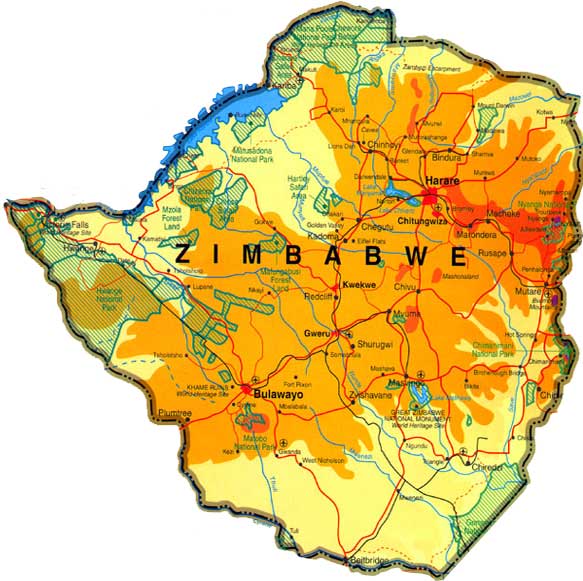
Zim_map

According to the Guardian (and Al Jazeera, the Canadian Broadcasting Corporation, the Globe and Mail, the Australian Broadcasting Corporation and the New Zealand Herald), the US dollar took another major hit this week after Zimbabwe has made the Chinese yuan legal tender. According to minister of finance Patrick Chinamasa, the move comes after President Xi Jinping cancelled $40 million of Zimbabwean debt that comes due in 2015.

Zimbabwe abandoned its own dollar in 2009 after hyperinflation, which peaked at around 500 billion percent, made it unusable.

Following the demise of the Zimbabwean dollar, the country did business in various foreign currencies, including the US dollar, the South African rand and eventually the yuan. However up until now, most business was conducted in US dollars, and the yuan wasn’t approved for public transactions.

China is Zimbabwe’s biggest trading partner following Zimbabwe’s isolation by its former western trading partners over the country’s poor human rights record.

Deliberate Censorship

This story has been widely reported outside the US, but seems to have been blacked out in the US media. Reporting bad news at this time of year is too likely to disrupt the mindless consumption and debt accumulation expected of Americans over the holiday season.

In the corridors of power, there are deep concerns about the continued stability of the US dollar in the face of America’s decrepit manufacturing base and soaring deficits. Over the past decade, the Obama administration has been particularly concerned about growing Chinese investment in Africa. According to the Financial Times, China is the largest investor in African infrastructure, representing an estimated $13.4 billion in 2013.

Analysts across the political spectrum increasingly view Obama’s misguided foreign policy (his threats against Russian and China, his deranged Middle East military policy and his desperate attempt to ram the Transpacific Partnership* through Congress) as a desperate attempt to shore up the dollar against massive Chinese economic gains.

True to form, the Obama administration has addressed these concerns with military force, involving US troops in a series of African wars that they’re trying to conceal from the American public. See The War in Africa the US Military Won’t Admit It’s Fighting


*The Transpacific Partnership (TPP) is a so-called “trade agreement” seeking to isolate China from its Asian-Pacific trading partners – by deliberately excluding China from the treaty.

Photo credit: Wikimedia Commons

 

What They Won’t Tell Us About China’s Economy

China Rises: Getting Rich

New York Times Documentary (2013)

Film Review

“How China Backs Its Enormous Economic Success”

China Rises purports to uncover the secret of China’s phenomenal economic success. It traces the massive migration of rural peasants into scores of newly fabricated cities and industrial centers. Of the thousands of new factories springing up over the last thirty years, half are privately owned and half are state owned enterprises. Most manufacture consumer goods (clothes, electronic gadgets, shoes, textiles, heavy appliances, household goods, toys, watches) for export.

The filmmakers attribute China’s economic miracle to their newfound openness to private enterprise and their ridiculously low wages. At the time the documentary was made, the average Chinese wage was 60 cents an hour for a 12 hour day. By the end of last year, this had increased to $1.69 an hour Rising Chinese Wages

Most of the film focuses on the lavish lifestyles of China’s most famous self-made millionaires. There are also several interviews with rural peasants who have migrated to China’s designer cities to work. Most are extremely grateful for the opportunity to earn money to lift their families out of extreme poverty. Women, however, tend to be sad about being separated from their children – their earnings aren’t sufficient to bring them to the city, so they are cared for by grandparents in the rural villages.

The film also features segments about China’s emerging middle class learning to pamper themselves and China’s rampant knock-off industry, specializing in counterfeit luxury items, fake birth control pills, fake antibiotics and even fake milk powder. The latter caused 54,000 Chinese babies to be hospitalized (six died) in 2008.

Ignoring the Real Reason for China’s Stellar Growth

What I find most significant about this video is what it leaves out. In fact, it totally ignores the main impetus for China’s phenomenal growth – namely a monetary policy that doesn’t rely on borrowing money from private banks.

As of February 2014, China had only borrowed a total of $US 823 billion from foreign banks – about  9% of GDP. In contrast, the debt the US owes to private banks is 101.5% of GDP.

Unlike most western economies, 90% of the loans used to finance businesses and government services originate from China’s government-run central bank.* Bloomberg’s refers to it as “Chinese-style” quantitative easing, ie the Chinese government is creating the money out of thin air, rather than borrowing it from private banks (and paying them interest to create it out of thin air).

This differs from US-style quantitative easing in that the Chinese government spends the money they create directly into the economy instead of handing it over to private banks.

Despite Obama’s recent attacks on China for “weakening their currency,” neither the President nor the corporate effort make any effort to explain exactly how the Chinese are doing this. The explanation is actually fairly simple: pumping more yuan/renminbi into the Chinese economy causes inflation and weakens the currency’s value in relation to other global currencies.

The corporate media glosses over these details because they don’t really want Americans to understand where US dollars come from – that 97% of the dollars in circulation are created by banks out of thin air and loaned to us at interest. Or that depending on private banks to create and control our money supply is a big reason for our current economic crisis. See Stripping Banks of Their Power to Issue Money

They especially don’t want us to realize there’s an alternative – government-issued currency by a government owned central bank – nor that it’s working miracles for the Chinese economy.


*Contrary to popular belief, the US central bank, aka the Federal Reserve, is a consortium of private banks overseen by a government appointed director (Janet Yellen).

The Growing Coal Train Movement

Momenta

Directed by Andy Miller and Robin Moore (2014)

Film Review

Momenta is about the growing grassroots movement to stop the coal trains that are creating environmental havoc in the Pacific Northwest. The movement owes its diversity to the devastation the trains create in nearly all the communities they pass through.

Hurt by the rapid shutdown of coal-fired power plants (for environmental and economic reasons), the US coal industry is seeking to cut their losses by selling as much coal as possible to China. Coal exported to China via Pacific deep water ports comes from Montana’s Powder River Basin. The coal trains carrying it it follow a circuitous route through Montana, Idaho, Oregon and Washington. They endanger the health and livelihoods of hundreds of communities along the way. Including Montana ranchers facing catastrophic water shortages as the mining companies deplete the Powder River Basin aquifer.

The number of coal trains varies between 18 and 120 a day depending on the community. The trains are uncovered and each sheds 31 tons of coal dust daily. The coal dust contains high levels of mercury and arsenic. This is in addition to the heavy metals contained in diesel particulates given off by the train engines produced by train engines. The latter substantially increases residents’ risk of asthma, heart attack and stroke.

In urban areas, such as Billings, Spokane, Portland, Longview, Seattle and Bellingham, the trains always travel through the poorest neighborhoods. In more sparsely populated areas, they contaminate pristine waterways essential to recreational fishing, water sports and tourism.

The documentary also emphasizes the need to reduce global reliance on coal to reduce overall carbon emissions. The coal industry is indifferent to these so-called “externalities.”

They refuse to cover their trains to reduce the spread of coal dust and are only willing to pay 5% of the $500 million infrastructure necessary to accommodate the increased train traffic. According to one activist, “all they care about is squeezing the last bit of profit out of a dying industry.”

The documentary concludes with a discussion – and a tour of a Marysville solar panel factory – of the beneficial effects of the renewable energy industry on the US economy. The latter creates far more jobs than exporting coal to China and is less dependent on fluctuations in the Chinese economy.

For more information on the anti-coal train movement go to http://www.powerpastcoal.org/

China’s Air Pollution Crisis

Under the Dome: Investigating China’s Smog
Chai Jing (2015)

Mandarin with English subtitles

Film Review

This intriguing documentary concerns a Chinese journalist’s investigation into China’s longstanding problem with particulate air pollution. In addition to examining underlying causes and resulting health problems, Chai Jing reports on the total powerlessness of the Ministry of Environmental Protection (EMP) to force private or state-owned industries to comply with Chinese environmental laws.

Some two dozen major Chinese cities experience dangerous levels of particulate air pollution most days of the year. According to researchers, this air pollution causes 500,000 premature deaths a year. Pollution-related cancer deaths have increased more than 400% in 30 years.

China’s Over-reliance on Fossil Fuels

All agree that China’s air pollution crisis stems from over-reliance on fossil fuels. China’s rate of fossil fuel consumption is three to four times greater (per capita) than either the US or Europe. They burn more coal per year than all other countries combined.

According to Chai Jing, coal burning power plants and steel mills and over-reliance on improperly refined diesel and gasoline are the main source of China’s particulate air pollution.

Failure to Enforce Environmental Laws

China has strict laws requiring factories and coal merchants to wash brown coal (lignite), as well as regulations requiring coal burning plants to install chimney scrubbers. Neither are rigorously enforced. Chai Jing interviews Ministry of Environmental Protection officers who have no authority to shut down or penalize or recalcitrant factories. This authority rests with municipal officials who are too fearful of backlash from factory owners and their employees to take action. They claim manufacturers can’t afford pollution controls and that shutting factories down will hurt the economy and cause workers to be laid off.

Chai Jing challenges this attitude, owing to two years of overproduction of steel, houses, commercial buildings and highways. Heavy steel manufactures who are stockpiling steel they can’t sell still receive government subsidies. The head of the Chinese Central Bank refers to them as zombie companies. Worse still, they continue to expand and drive Chinese peasants out of their homes.

The Chinese construction boom is also a major factor in fossil fuel consumption and air pollution. Owing to corruption and lack of oversight, Chinese authorities have allowed 3.4 billion new homes to be built for a population of 1.3 billion.

Vehicular Pollution

Vehicular pollution is a major problem in China, owing to the government’s failure to develop adequate public transport and widespread use of high sulfur oil from Iran. Unlike Iran, Chinese refineries don’t have the technology necessary to reduce the sulfur content of the oil they use to manufacture diesel and gasoline. According to one government official, they can’t force Sinotec (China’s state-owned oil refinery) to upgrade because it “might interrupt the fuel supply and cause instability.” Likewise there is no effort to force vehicle manufacturers to comply with laws requiring them to install emission control devices.

China Needs to Cut Emissions by Half

Chai Jing estimates China needs to cut emissions by half to reduce air pollution to levels that don’t endanger human health. Yet for some odd reason the solutions she proposes make no mention of President Xi Jinping’s recent commitment to increase China’s reliance on solar and wind technology. Instead she calls for expanded natural gas exploration and the replacement of China’s single natural gas company with multiple private companies. This, she argues, will bring about reform through “free market competition.”

Background on Chai Jing’s documentary identifies it as “self-financed.” Given the recent assault of US fracking companies on New Zealand, I wouldn’t be terribly surprised if one or more of them provided financial backing for this documentary.

Other recommendations she gives – for better monitoring and public disclosure of environmental crimes and increased public involvement in local environmental legislation and increased citizen monitoring – are clearly a step forward.

Why the FBI Shut Down the US June 4th Movement

june 4Bodies from Tienanmen Square

There has been massive corporate media coverage in the last few days of the 25th anniversary of the June 4, 1989 massacre in Tienanmen Square. The US has always had a very schizophrenic reaction to Chinese human rights violations. Much has been written about the underground June 4th movement that arose in China following the massacre. However you never read anything about the parallel June 4th movement that emerged in the US in the months after Tienanmen Square. It was led by Chinese university and graduate students on campuses all over the US – with the support of American pro-civil liberties advocates across the political spectrum.

For two to three months, it got extensive mainstream media coverage. I recall seeing an article in the Seattle Times about an upcoming meeting at the University of Washington. I planned to attend but came down with the flu.

By September 1989, the US June 4th movement had vanished without a trace. I found this extremely odd until six months later, we learned from a retired FBI investigator exactly how the federal agency had shut it down.

It was quite simple really. The FBI went to all the Chinese students attending the June 4th meetings and told them their student visas would be revoked unless they agreed to inform on the other activists. This is a very old strategy – still in use today (see  FBI allegedly using no-fly list to recruit Muslim snitches). Unsurprisingly the students chose to keep their visas and disband the movement.

Why Bush Senior Shut Down June 4th

So why did Bush senior want the US June 4th movement shut down? In 1989 the President was engaged in major trade negotiations with China. Their big fear was that an American movement would translate into major political and financial support for China’s underground democracy movement. To consummate the trade agreements, Bush senior had to guarantee this wouldn’t happen.

The FBI has a long history of spying on peace and social justice activists. The operation that shut down down the June 4th movement in the US is but one of many examples I discuss in my 2010 memoir The Most Revolutionary Act: Memoir of An American Refugee

photo credit: undersound via photopin cc

China’s Ecological Tragedy

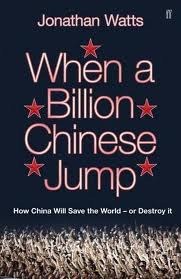
when a billion

When a Billion Chinese Jump: How China Will Save Mankind – Or Destroy it

 By Jonathan Watts (2010 Faber and Faber)

 Book Review

 (Yesterday the Wall Street Journal reported that nearly 1/5 of China’s farmland is contaminated with heavy metals, such as arsenic and cadmium, that are absorbed by rice and very damaging to human health.) 

The major premise of When a Billion Chinese Jump is the enormous threat China’s burgeoning middle class poses to climate stability with their insatiable demand for gas-guzzling cars and energy-intensive homes and consumer goods.

The reader comes away with an overall impression of an environmental war zone: severely contaminated rivers, aquifer depletion, clear cut forests, smog, landslides, toxic waste-related cancer villages, and mass species extinction

Watts makes no secret of his belief that catastrophic climate change can’t be prevented – no matter what the rest of the world does – unless China drastically curbs its reliance on coal for energy production.

China: the West’s Industrial Cesspool

Watts traces a variety of political, economic, and philosophical influences that have led to China’s current ecological disaster. Ironically the key factor behind the country’s rapid development – the outsourcing of western industry – is number one on the list. For the past thirty years, western companies have been exporting their industrial base to China and other Asian countries to exploit low labor costs. They have simultaneously exported the major ecological damage associated with heavy industry – along with mountains of defunct electronic devices for end-of-life disposal.

The second major cause of China’s ecological nightmare is the reality that most of provincial China operates outside the law. Despite China’s “totalitarian” central government real power, according to Watts, rests in a middle band of local party chiefs, factory owners, and foreign investors and outsourcers.

He believes centralized control of China began its decline with Mao’s death. In his view, each successive government is more politically “timid” than the previous. The Ministry of Environmental Protection has developed many far-sighted environmental regulations that the Politburo is afraid of enforcing at a regional and local level. They are terrified of imposing any measures that might impair development. Without elections, the central government has no popular mandate. This means that surging development and nationalism are the only source of their legitimacy.

An interesting side effect of this endemic corruption is that illegal protests and riots – usually over crop and health damage caused by pollutions – are extremely common. In most cases, rioting is the only way to ensure environmental protections are enforced.

The Chinese Environmental Movement

The book’s most interesting chapter concerns the Chinese environmental movement. When Beijing shut down the pro-democracy movement after the 1989 Tienanmen Square massacre, many pro-democracy advocates found it was safer to transplant their activism to the environmental movement. Especially after President Hu Jintao explicitly called for greater public, NGO (non-governmental organization) and journalistic oversight to expose companies that breach environmental regulations.

Despite nominal central support for greater openness and transparency, Chinese environmentalists still play a cat and mouse game with government authorities. National environmental networks have been forbidden since 2008, owing to deep Politburo suspicion of the role the CIA played in instigating the 2004-2005 color revolutions in Eastern Europe.

Watts talks about an invisible line circumscribing acceptable activism – activists, journalists and lawyers don’t know where the line is till they cross it and local security officials beat them up and throw them in jail.

Confessions of a Carnivore

red meat

As a strong sustainability activist, I feel quite embarrassed admitting that I derive nearly all my dietary protein from animal sources (eggs and fish). Explaining why I do so is even more embarrassing, a 20-year chronic intestinal infection that makes it virtually impossible to digest plant protein, in the form of nuts and legumes (peas, dried beans, lentils, etc.).

Will Global Population Drop Without Fossil Fuels?

In The End of Growth, post-carbon activist Richard Heinberg predicts that without fossil fuels, the Earth could feed at most two billion people. Organic farmers in the biointensive movement (an amalgamation of the eighty-year-old Biodynamic and the French intensive movements) dispute this figure, pointing to studies showing that Biointensive methods actually increase crop yields by 150-200%. Given current data (see Population and Sustainability: the Elephant in the Room) that our current system of industrial agriculture feeds only 84% of the world, we could guesstimate that a switch from industrial to biointensive agriculture could potentially feed a global population of 7.8 billion.

Now here’s the rub: nearly all biointensive research focuses concerns yields of grains and vegetable crops. Preliminary research applying biointensive methods to livestock production suggests we could only provide a meat-based diet for 2-3 billion people without fossil fuels.

The average fossil fuel input required to produce meat protein is eleven times greater than for equivalent grain protein production. A meat-based diet also requires ten times more land and 100 times more water. In the US alone, the amount of energy, land and water we invest in livestock is sufficient to feed an additional 840 million vegetarians.

The Privilege of Eating Meat

At the moment approximately 1/3 of the planet (those in the privileged industrialized world) consume meat. The high cost of land, fresh water and energy compels the other 2/3 (4.7 billion) to survive on a plant-based diet. With rapid industrial development, in Brazil, Russia, India, China and South Africa, these ratios are changing rapidly. In all five countries, a growing middle class seems to be developing an insatiable demand for meat, dairy and other animal-based products. In New Zealand this is a daily news item, as China purchases the bulk of Australian and Kiwi meat and dairy exports.

Hard Choices for Activists

It seems to me that sustainability and social justice activists face some hard choices. It we are genuine in our commitment to replace capitalism with a more egalitarian society, we need to acknowledge that no society is truly egalitarian if only rich people eat meat. In other words, a truly equal distribution of land and water resources will either require a commitment to reduce global population to 2-3 billion – or a commitment by 1/3 of the planet to give up their meat-based diet.

If we fail to make this choice – and do nothing – we will be left with a scenario in which Malthusian forces (war, famine and disease) drastically reduce global population for us.

photo credit: kevindean via photopin cc

***

read an ebook week

In celebration of read an ebook week, there are special offers on all my ebooks (in all formats) this week: they are free.

This includes my new novel A Rebel Comes of Age and my memoir The Most Revolutionary Act: Memoir of an American Refugee

Offer ends Sat. Mar 8.

A Warning on the Bitcoin Bubble

A Bitcoin is a type of alternative, computer-based currency known as a cryptocurrency because it uses cryptography (i.e. specialized digital security technology) to make it difficult to counterfeit. Up until a few months ago, interest in Bitcoins was limited to computer nerds seeking to opt out of the bankster-controlled monetary system. In the last few months, Bitcoins have become a hot investment as the value of a Bitcoin has shot up from $43 (when I first blogged on Bitcoins back in March) to over a thousand dollars. The value of a Bitcoin peaked at $1,200 on Dec 4. It has since dropped to $917.10

Below are three short videos presenting differing perspectives on Bitcoins.

The first is by Bill Still, the filmmaker who produced Money Masters and The Secrets of Oz. According to Still, the main reason the value of Bitcoins has gone through the roof is because China is investing its trade surplus in Bitcoins and other cryptocurrencies rather than dollars. Back in November China announced  it would cap future purchases of US dollars and treasury notes. At present, China owns $1.3 trillion of US debt.

Prior to April 2013, China was using a substantial proportion of their trade surplus to purchase gold. However after Chinese State TV aired a documentary on Bitcoins in April, the Chinese have been really bullish on Bitcoins. The video is in Chinese. To view English subtitles click on the YouTube icon to view in YouTube. The subtitle icon is fourth to the right at the bottom of the screen.

Still is obviously really bullish on cryptocurrencies, particularly the quark. In contrast the following video by Storm Clouds Gathering warns that the Bitcoins is in the throes of a speculative bubble. It also has a basic design flaw that will eventually squeeze small Bitcoin traders out of the market.

The design flaw? To enter into any transaction involving Bitcoins, a client is required to download a block chain consisting of every single Bitcoin transaction ever made. With the surge of interest in Bitcoins in the past two months, the size of the block chain reached 11 gigabytes in November. It’s expected to reach 250 gigabytes in two years. Eventually it will reach a terabyte, and small users will be totally shut out unless the system is totally restructured. At some point, it will most likely be centralized in super nodes requiring massive industrial sized servers. These super nodes will essentially function as banks, totally defeating the purpose of starting a decentralized currency.