Poverty in Australia

Growing Up Poor

Four Corners (2013)

Review

In contrast to Decadence: The Meaninglessness of Modern Life, which highlights life in the Australian middle class, Growing Up Poor is a heartbreaking TV documentary about the children of a government subsidized housing project in Claymore, a suburb southwest of Sydney Australia.

The children talk quite poignantly about what it’s like to be bullied at school, to have parents who constantly argue and/or hit one another, to constantly confront the random violence associated with alcohol and drug abuse and to frequently hear and see police helicopters hovering overhead.

Claymore has the largest proportion of children in Australia. It also has a teen pregnancy rate that’s double the national average.

What I found most striking about the film is that Claymore children under 12 are still optimistic about having a future life different from their parents. By 12, they have given up hope and are resigned to a future life of poverty and chaos.

The former Labour government recognized the mistake of concentrating extreme poverty in a single suburb and launched a project to gradual board up Claymore homes and relocate the families. Tony Abbott’s government halted the process, claiming there was no money to continue it.

Instead they have built a multimillion dollar performance center at the local high school. By inspiring Claymore teenagers that “anyone can be a rock star,” they conveniently repudiate any responsibility for addressing the root cause of their poverty.

Decadence: The Meaninglessness of Modern Life

Decadence: The Meaninglessness of Modern Life

Pria Viswalingam

Review

Decadence is a 2006 Australian TV series examining the plummeting quality of Australian life, which director and narrator Pria Viswalingam blames on a global economic system based on frenetic consumption, fueled by debt and ridiculously long hours of work. The cinematography choreographs to perfection the self-indulgent moral degradation of a culture that has been subsumed by US political and cultural norms that reward narcissism and the vacuous idolization of celebrity.

The only critique I would have is the absence class perspective. I have a problem with Viswalingam’s blanket assertion that all Australians are working ridiculously long hours because they value the accumulation of luxuries more than family time or friendships. I think this criticism applies chiefly to the shrinking Australian middle class – which I estimate at around 20-30% of the population. From my experience, the majority of Aussies – like their Kiwi and American counterparts – work ridiculously long hours because this is the only way they can put food on the table.

The series consists of six episodes:

Episode 1 Money – describes the MacDonaldization of Australian society, where workers work longer hours than Germany, Japan or even the US and are plagued by debt, depression, drugs and high suicide rates. Viswalingam makes the assertion that greed and ignorance are a far bigger threat to civilization than terrorism. I agree.

Episode 2 Sex – describes how the commodification of sex has led to a situation where more “sex” occurs in the street than in bedroom. Viswalingam especially deplores the sexualization of children for commercial reasons, the alarming increase in culturally driven misogyny and the epidemic of pedophilia in the church.

Episode 3 Democracy – explores America’s zeal in exporting “democracy” to the rest of the world and the undermining of Australia’s parliamentary democracy by wealthy business interests.

Episode 4 Education – explores the decline of Australia’s educational system, which focuses more on fast tracking students into lucrative jobs than on teaching ideas and critical thinking.

Episode 5 Family – explores statistics showing Aussies are marrying less, breaking up more and increasingly opting to remain childless. Viswalingam blames this partly on the absence of good paying jobs (forcing mothers into the work place) and the failure of the feminist movement to win support for women in their struggle to balance  work and family responsibilities.

Episode 6 Religion – describes how organized religion sowed the seeds of its own destruction through centuries of justifying wealth accumulation and genocidal western expansion. Here Viswalingam makes some fuzzy, poorly supported assertions about the fundamental importance of spirituality in facilitating human connection.


The Anti-Fracking Movement Goes International

The anti-fracking movement has gone international, drawing in hundreds of thousands of people who never dreamed of being environmentalists or activists.

Below is a heart-rending video by the Lock the Gate coalition in Australia.

The similarities between the industrialization of prime Australian farmlands and the experience of dairy and organic farmers here in Taranaki are uncanny: the 24/7 glaring lights, noise and fumes and the unexplained health problems, particularly in children.

Most of all the helplessness experienced by families affected by fracking. Once the government allows the oil and gas industry to set up fracking rigs, it becomes the law, and ordinary people have no rights. Livelihoods are destroyed, property values plummet and your land becomes uninsurable.

Confessions of a Carnivore

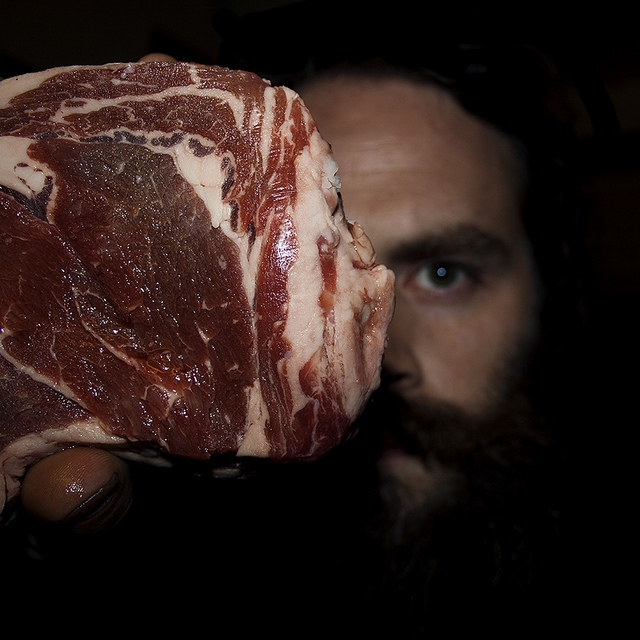
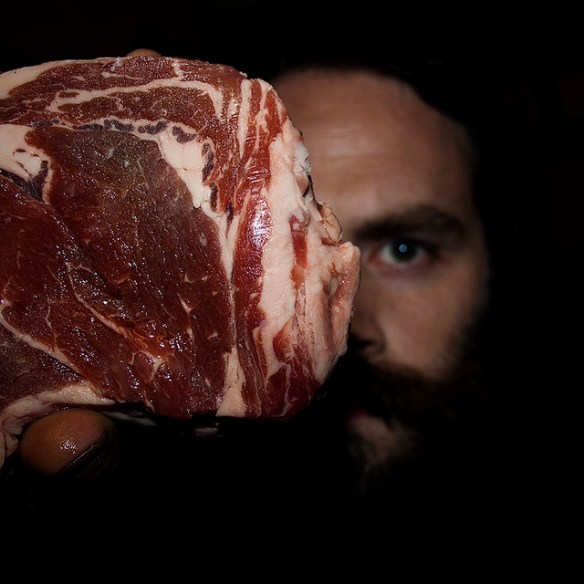
red meat

As a strong sustainability activist, I feel quite embarrassed admitting that I derive nearly all my dietary protein from animal sources (eggs and fish). Explaining why I do so is even more embarrassing, a 20-year chronic intestinal infection that makes it virtually impossible to digest plant protein, in the form of nuts and legumes (peas, dried beans, lentils, etc.).

Will Global Population Drop Without Fossil Fuels?

In The End of Growth, post-carbon activist Richard Heinberg predicts that without fossil fuels, the Earth could feed at most two billion people. Organic farmers in the biointensive movement (an amalgamation of the eighty-year-old Biodynamic and the French intensive movements) dispute this figure, pointing to studies showing that Biointensive methods actually increase crop yields by 150-200%. Given current data (see Population and Sustainability: the Elephant in the Room) that our current system of industrial agriculture feeds only 84% of the world, we could guesstimate that a switch from industrial to biointensive agriculture could potentially feed a global population of 7.8 billion.

Now here’s the rub: nearly all biointensive research focuses concerns yields of grains and vegetable crops. Preliminary research applying biointensive methods to livestock production suggests we could only provide a meat-based diet for 2-3 billion people without fossil fuels.

The average fossil fuel input required to produce meat protein is eleven times greater than for equivalent grain protein production. A meat-based diet also requires ten times more land and 100 times more water. In the US alone, the amount of energy, land and water we invest in livestock is sufficient to feed an additional 840 million vegetarians.

The Privilege of Eating Meat

At the moment approximately 1/3 of the planet (those in the privileged industrialized world) consume meat. The high cost of land, fresh water and energy compels the other 2/3 (4.7 billion) to survive on a plant-based diet. With rapid industrial development, in Brazil, Russia, India, China and South Africa, these ratios are changing rapidly. In all five countries, a growing middle class seems to be developing an insatiable demand for meat, dairy and other animal-based products. In New Zealand this is a daily news item, as China purchases the bulk of Australian and Kiwi meat and dairy exports.

Hard Choices for Activists

It seems to me that sustainability and social justice activists face some hard choices. It we are genuine in our commitment to replace capitalism with a more egalitarian society, we need to acknowledge that no society is truly egalitarian if only rich people eat meat. In other words, a truly equal distribution of land and water resources will either require a commitment to reduce global population to 2-3 billion – or a commitment by 1/3 of the planet to give up their meat-based diet.

If we fail to make this choice – and do nothing – we will be left with a scenario in which Malthusian forces (war, famine and disease) drastically reduce global population for us.

photo credit: kevindean via photopin cc

***

read an ebook week

In celebration of read an ebook week, there are special offers on all my ebooks (in all formats) this week: they are free.

This includes my new novel A Rebel Comes of Age and my memoir The Most Revolutionary Act: Memoir of an American Refugee

Offer ends Sat. Mar 8.