The Mayor Who Said No to the Feds

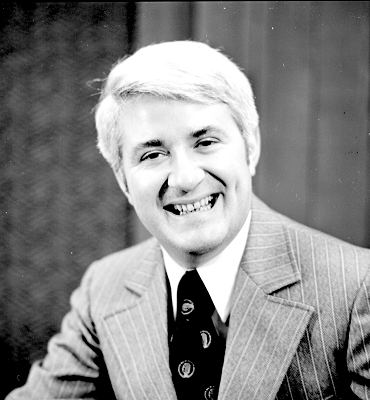
Uhlman

from Seattle City Archives

The Armed ATF Raid That Didn’t Happen

Few Americans have heard of Wes Uhlman, Seattle’s mayor between 1969 and 1977. According to his official biography, his main claim to fame was being the youngest Washington State legislator (at 23) and youngest Seattle major (at 34) ever elected.

Ward Churchill mentions Uhlman in his 1990 Cointelpro Papers. At the time, Uhlman declined to identify the federal agency he crossed swords with. Churchill misidentifies it as the FBI. In 2005 Uhlman disclosed, in an interview with the Seattle Civil Rights and Labor History Project, that the federal agency he confronted to was the Agency for Tobacco and Firearms. The ATF was the main agency responsible for the 1993 Waco massacre. In February 1970, they tried to strong arm Uhlman to agree to an armed raid on the headquarters of the Seattle Black Panther Party.

This was approximately three months after the December 1969 FBI/police raids on the apartments of Chicago Black Panther leader Fred Hampton and Los Angeles Black Panther leader Geronimo Pratt. In Chicago a fourteen man team armed with submachine guns raided Hampton’s apartment at four a.m. on December 3rd. They murdered Hampton and Peoria Black Panther leader Mark Clark in their sleep.

Three days later a forty member Los Angeles SWAT team with 100 back-up officers staged a similar five a.m. raid on Pratt’s apartment. Pratt, who by chance was sleeping on the floor, miraculously survived. None of the LA Panthers, who defended themselves for four hours until the press and public arrived, were killed. Six were injured. All the surviving Panthers, in both Chicago and Los Angeles, were arrested for “attacking the police.”

Two weeks later Pratt was framed for a December 1968 murder he didn’t commit. The FBI knew he was innocent from wiretapping logs (which they concealed from the defense) placing him 350 miles from the murder scene. Pratt’s conviction was overturned in 1997. Following his release, he emigrated to Tanzania, where he died on June 3, 2011.

Uhlman Threatens to Arrest the ATF

In his interview with the Civil Rights and Labor History Project, Uhlman reveals that an ATF agent contacted him in late 1969, only months after he took office. The supposed justification for raiding Seattle’s Black Panther headquarters was that they were stockpiling illegal weapons. Uhlman opposed the ATF plan. As he states in the interview, he feared for the safety of a police undercover agent who had infiltrated the Seattle Panthers. The informant had assured him the Panther’s weapons were legal.

The ATF agent, infuriated when Uhlman refused to go along with the raid, threatened to carry it out without the city’s consent. In response, Uhlman threatened to encircle the Panther headquarters with cops and arrest any ATF agents who broke through police lines.

No Gestapo-type Raids in Seattle

The ATF leaked the outcome of their meeting outcome to the press, hoping to embarrass Uhlman as a “sympathizer of militants.” In a Seattle Post Intelligencer interview, Uhlman made reference to the FBI raid on Fred Hampton’s apartment. He stated he wanted no part of the “trend of attacks” on the Black Panthers.

“We are not going to have any 1932 Gestapo-type raids against anyone.” Adding that the Seattle Black Panthers only had a handful of members, he pointed out that numerous young blacks were “enthralled” by the group’s message. “If you give them a cause, they can make political hay out of it, and the kids will look on them like Robin Hoods.  Then you wind up with 900 Panthers.”

In the aftermath of Uhlman’s controversial stand, he received letters from all over the US. Many attacked the mayor for his decision. Bloggers who are visited by intelligence trolls will recognize the distinctive turn of phrase, especially in the third:

  • “When idiot public officials cast their lot with proven communist agitators and anti-american (sic) bastards as the BLACK PANTHERS then it is time to IMPEACH such public sons of bitches.”
  • “I don’t see why the federal agency had to ask a jerk like you whether they could stage a raid on the black panthers. (sic). This organization is downright rotten, but it takes a rotten jerk to know a rotten organization.  I hope one nite (sic) one of your soul brothers slits your throat.”
  • “Uhlman, you stupid ass, you are just as bad as the people, who are making such an issue of the two panthers who were killed in Chicago.”

An equal number of letters applauded Uhlman’s decision for upholding the Bill of Rights protections against warrantless search and seizure:

  • “You have GUTS—and even more…it would appear you do support the TRUE American spirit and the Constitution of this country.  Let’s keep the principle…MEN ARE CREATED EQUAL!”
  • “As a fifty year old veteran of WWII [with] twenty-one years active military service allow me to extend heartfelt gratitude and congratulations in your brave decision to put the Bill of Rights, for which I have served so long, into effect.”
  • “We need more like you.  I don’t necessarily agree with the Panthers, but the tactics of the Police, et al, frightens me more.”

Despite the controversy, Uhlman won his campaign for re-election in 1973. He retired from politics in 1978 to focus on his legal practice.

A great pity, as Seattle and Washington State lost a true statesman. No current mayors have the testicularity to protect their constituents against flagrant Bill of Rights violations by the Obama administration and US intelligence. At least they didn’t in November 2011, when they colluded with the FBI and Office of Homeland Security in orchestrating a brutal crackdown on Occupy protests.
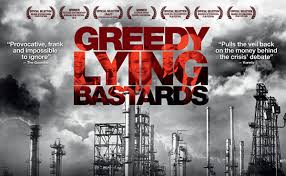

Greedy Lying Bastards

greedy lying bastards

Greedy Lying Bastards

 Craig Rosebraugh 2013

 Film Review

The subject of the new documentary Greedy Lying Bastards is the multimillion dollar climate denial industry, which filmmaker Craig Rosenbraugh blames for the world’s failure to agree an international climate treaty. The title roles are played by Rex Tillerson, CEO of Exxon Mobil, David and Charles Koch, who run Koch Energy, APCO, the same public relations company responsible for the phoney research and spin portraying smoking as perfectly safe, and Bonner and Associates, the astroturf* specialists who started phoney climate denial groups and forged letters to Congress from fictitious senior citizens.

As APCO themselves admit, they’re in the business of selling doubt. It only takes three seconds for a paid lobbyist to make an assertion denying any link between burning fossil fuels and extreme weather events. It takes fifteen minutes for a climate scientist to lay out the evidence disputing the assertion, especially when the corporate media neglects to disclose their so-called expert is a paid lobbyist. The great majority of climate deniers paraded by the media aren’t even scientists, much less climate scientists.

Merchants of Doubt: How a Handful of Scientists Obscured the Truth on Issues from Tobacco Smoke to Global Warming (2011) by Naomi Oreskes and Erik Conway expands further on the science of marketing doubt.

Greedy Lying Bastards details how the release of so-called Climategate emails (which were doctored to suggest climate scientists had fabricated research) was deliberately timed to sabotage the 2009 Copenhagen climate conference. The principal aim of the conference was to draw up a new international climate treaty to replace the Kyoto Accord when it expired in 2012.

Thanks to Climategate, Kyoto expired without being replaced by a new treaty. The corporate media chooses not to report on the ten independent investigations that cleared the so-called Climategate scientists of any wrongdoing.

The film also highlights the 2010 Citizens United decision (which effectively decriminalized illegal corporate donations the Koch brothers had made to Republican candidates) and likely judicial misconduct on the part of Clarence Thomas. Thomas should have recused himself from the Citizens United decision. He had a conflict of interest, as the Koch brothers paid for him to attend a four day retreat of the (Koch brother funded)  Federalist Society in 2008.

The film has some profoundly moving scenes of the personal misery caused by climate related catastrophes – specifically wild fires, super storms and rising sea levels that are swamping Pacific islands. And a priceless cameo of David Koch discussing his views on climate change.

*The late senator Lloyd Bentson is credited with coining the term “astroturf lobbying” to describe the synthetic grassroots movements manufactured by public relations firms.

The New Plymouth Green Party will be hosting the New Zealand premier of Greedy Lying Bastards some time in June. A digital version can be rented for $3.99 from Amazon

An NSA-approved Guide to Revolution

Activists who advocate for violent revolution don’t advertise their views on the Internet for obvious reasons. That being said, Storm Clouds Gathering treads a really fine line with their recent. Revolution: An Instruction Manual. They don’t exactly advocate using violence to dismantle corporate fascism. But they don’t really condemn it, either. Instead they argue from perspective that revolutions are mainly won by psychological means and it makes most sense to attack the state where they are weakest.

The filmmakers are totally non-ideological in their approach to dismantling capitalism. In fact, they begin with the assertion that any revolution with a an inflexible pre-ordained view of the desired outcome is doomed to failure.

They then share a general overview of their own vision – a loose confederation of self-governing communities similar to the Iroquois Federation. This was the model for the Articles of Confederation, which was the founding document of the United States of America before the bankers and mercantalists used the Constitution to strip the 13 original states of their power.

Audience Participation Required

The film is interactive and requires audience participation. In fact, it stops at 1:47 minutes until the viewer answers “yes” or “no” whether they believe the system can be reformed. If they click “yes” the video ends. I clicked “no.”

The strategy the filmmakers lay out for dismantling the corporate state involves removing, one by one, what they identify as the three “pillars of power”:

  1. Control of the “public mind,” as it concerns patriotism and nationalistic beliefs, such as freedom, democracy and terrorism.
  2. Control of money and finance through money creation, taxation and inflation.
  3. A state monopoly on violence to compel obedience through fear.

How They Got Past the NSA Censors

The film finishes quite abruptly by recommending people read three books on revolution, including Gene Sharp’s From Dictatorship to Democracy. This was an extremely wise choice, as this is the training manual the State Department and CIA-linked foundations widely distributed to activists engaged in the “color” revolutions in Eastern Europe and the Arab Spring.

I have written at length about the CIA role in financing the nonviolent movement, as well as nonviolent guru Gene Sharp’s historic links with the Pentagon, State Department, and US intelligence.

Thierry Meysson, editor of Voltaire Net, was the first to go public (in 2005) with Sharp’s longstanding links to the military-intelligence complex.* The only weakness of Meysson’s original article is his failure to cite his references. I researched the sources and confirmed each of his original assertions for a 2012 Daily Censored article entitled The CIA and Nonviolent Resistance.

Also see How the CIA Promotes Nonviolence, The CIA Role in the Arab Spring and How Nonviolence Protects the State

*In 2002, Meysson’s The Big Lie was also the first to expose US intelligence involvement in 9-11.

Was Occupy Wall Street Coopted?

OccupyNewPlymouthphotoOccupy New Plymouth (NZ) Oct 15, 2011

Deeply curious where the Occupy movement had disappeared to, I recently ran across an article about a new project called Rolling Jubilee. It seems a coalition of Occupy groups has joined up to pay off individuals’ personal debt. Rolling Jubilee is a project of Strike Debt, a group formed in November 2012 by a coalition of Occupy groups. It seeks to oppose all forms of debt imposed on society by banks.

The aim of Rolling Jubilee is to abolish millions of dollars of personal debt by purchasing it (at random) on the secondary debt market, as collection agencies do. The latter commonly purchase debt for as little as 1% of its value and then reap enormous profits by demanding debtors pay the full amount. Instead of seeking repayment from debtors, Rolling Jubilee simply erases the debt.

In its first six months of operation Rolling Jubilee raised sufficient funds to buy and abolish more than $8.5 million worth of debt. They list debt they have purchased and eliminated on the Rolling Jubilee website. Most appears to be medical debt, i.e debt incurred for treatments that aren’t covered by health insurance.

A Far Cry from Ending Corporate Rule

At first glance Rolling Jubilee strikes me as a typical feel-good kind of project – like walking 20 miles for a cancer cure – that allows liberals to believe they are making positive change without threatening corporate interests in any way. The project is a far cry from Occupy Wall Street’s original goal of ending corporate rule. I honestly can’t see any way that paying off patients’ medical debt is going to help dismantle the corporate oligarchy that currently rules the industrialized world.

Banks and corporations seem to have the same reaction I do. They love Rolling Jubilee. Business Insider describes the project as brilliant. A Forbes column on the Rolling Jubilee featured the headline “Finally an Occupy Wall Street Idea We Can All Get Behind.”

According to Forbes, banks, credit card companies and student loan agencies can’t forgive debt because the IRS considers this kind of debt relief a “gift” and charges the debtor tax on it. This is utter nonsense, of course. It makes you wonder if the people who write for Forbes have ever met or talked to any unemployed or homeless people. There is no way the IRS is going to tax anyone without income or assets.

Making a Cottage Industry Out of Revolution

Twenty years ago this example of Occupy morphing into a less politically threatening pro-corporate entity would have been condemned as cooptation. However in an era in which CIA-funded left gatekeeping and democracy manipulating foundations head up the nonviolent movement, cooptation doesn’t seem like the correct term any more. Maybe we need to invent a new term – pre-optation, perhaps?

Collapse: Revisiting the Adam and Eve Myth

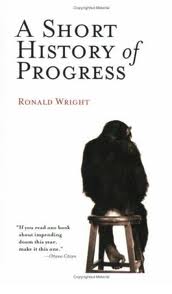
short history of progress

A Short History of Progress

by Ronald Wright (2004 Caroll and Graf)

Book Review

The theme of A Short History of Progress is social collapse. In it, Canadian historical archeologist Ronald Wright summarizes humankind’s biological and cultural evolution, as well as tracing the role of ecological destruction in the collapse of the some of the most significant civilizations (Sumer, Mesopotamia, Greece, Rome, Easter Island and the Mayan civilization). Exhaustively researched, the book advances the theory that many of colossal blunders made by modern leaders are very old mistakes made by earlier civilizations. Wright starts with the mystery of the agricultural revolution that occurred around 10,000 BC, when Homo sapiens ceased to rely on hunting and berry-picking and began growing their own food. Twelve thousand years ago, the global population was still small enough that there was more than ample wild food to feed them. Yet for some reason, a half dozen human settlements in widely separated regions simultaneously domesticated plants and animals. Why?

The Importance of Stable Climate

Citing extensive geological and archeological evidence, Wright suggests plant and animal domestication may have been triggered by unprecedented climate stability. Prior to 10,000 BC, the earth’s climate was wildly unstable, with ice ages developing and abating over periods as short as a decade or so. These sudden periodic changes in climate forced our hunter gatherer ancestors to continually migrate in search of food. The climate stabilization that occurred following the last ice age (around 10,000 BC) enabled them to settle in larger groups, save seeds to cultivate crops that took months to harvest, and engage in trade for other basic necessities.

Wright goes on to describe a number of diverse civilizations that arose and collapsed between 4,000 and 1,000 BC – and their unfortunate tendency towards mindless habitat destruction and runaway population growth, consumption, and technological development. In each case, an identical social transformation takes place as resources become increasingly scarce. As prehistoric peoples find it harder and harder to feed themselves, inevitably a privileged elite emerges to confiscate communal lands and enslave their inhabitants. They then install a despotic tyrant who hastens ecological collapse by wasting scare resources on a spree of militarization and temple or pyramid building. This process is almost always accompanied by wholesale murder, torture, and unproductive wars.

Wright relates this typical pattern of ecological destruction and collapse to a series of “progress traps,” in which specific human inventions turn out to have extremely negative unintended consequences. Instead of fixing the underlying problem they’re meant to solve, the inventions create an even worse environmental mess. It’s a pattern so common in prehistory that it’s become enshrined in the Adam and Eve and similar creation myths. All describe how the quest for knowledge ended humankind’s access to freely available and abundant food and forced them to produce their own.

Our Ancestors Wipe Out the Neanderthals and Mammoths

According to Wright, the first of these “progress traps” was the invention of weapons (for hunting) by early Homo sapiens. Wright blames this early invention of weapons for the first (archeologically) recorded instance of genocide – namely the wiping out of Homo Neanderthalis (Neanderthal man) by Cro-Magnon man between 40,000 and 30,000 BC. This was followed by other important mass extinctions as Homo sapiens spread out across the globe between 30,000 and 15,000 BC. The most recent archeological evidence suggests the mammoth, camel and horse became extinct in North America during this period because of perfected hunting techniques that allowed human beings to carry out mass slaughters (involving as many as 1,000 mammoths or 100,000 horses simultaneously).

Some archeologists attribute the end of hunting as a predominate food source (in numerous regions simultaneously) and the rise of plant-based diets to the decline in game animals stemming from this indiscriminate slaughter. The birth of agriculture, in turn leads to widespread deforestation and soil erosion in all the ancient civilizations, accompanied by soil salinization from over-irrigation. According to Wright, the entire cycle takes around a thousand years, which happens to be the average lifespan of most historic civilizations.

Turning Iraq Into a Desert

The first civilization to collapse in this way was Sumer (in southern Iraq), which flourished between 3,000 and 2,000 BC. The Sumerians invented irrigation, the city, the corporation (in the form of priestly bureaucracies), writing (for trade purposes), hereditary kings and slavery. By 2,500 BC, soil salinization (from irrigation) had caused a massive drop-off in crop yields. Instead of implementing environmental reforms, the ruling elite tried to intensify production by confiscating communal lands, introducing slavery and human sacrifice and engaging in chronic warfare.

From Sumer the cradle of civilization moved north to Mesopotamia (Babylon), in the region of northern Iraq and Syria, and humankind created one of the first man made deserts out of a region lush in date palms and other native vegetation.

Around 1,000 BC, similar civilizations also appeared in India, China, Mexico, Peru and parts of Europe. The Greeks (around 600 BC) were the first with any conscious awareness that they were destroying their own habitat. Plato writes a vivid description of the dangers of erosion and runoff from deforestation. The Athenian leader Solon tried to halt increasing ecological devastation by outlawing debt serfdom, food exports, and farming on steep slopes. Pisistratus offered grants to farmers to plant olive trees for soil reclamation.

Wright makes a good case for similar environmental destruction, rather than barbarian invasion, causing Rome to collapse. By the time of Augustus, Italian land had become so degraded that Rome was forced to import most of their food from North Africa, Gaul, and other colonies.

The Role of the New World

The most interesting section of the book concerns the role the New World played in rescuing the environmentally decimated European civilization. According to Wright, it was mainly New World gold and silver that capitalized the industrial revolution. However he also stresses the importance of the New World foods that were added to the European diet at a point where the population had outstripped their food supply. Maize (sweet corn) and potatoes are twice as productive (in terms of calories per acre) as wheat and barley, the traditional European staples. He also makes the point – ominously – that, despite all our apparent technological progress, humankind hasn’t introduced one new food since the Stone Age. In fact, Homo sapiens hasn’t evolved culturally or intellectually since our ancestors failed to confront resource scarcity in a way conducive to their survival.

If anything, given mass extinctions, potentially catastrophic climate change, and a growing scarcity of energy, water and fertile soil, we seem to be repeating the old maladaptive pattern. As examples, Wright cites the idiotic war on terrorism, which has ironic parallels with the chronic warfare the Sumerians launched 4,000 years ago. He also cites the rise of the New Right and the folly of trying to address resource scarcity by consolidating wealth and power in the hands of a tiny elite.

Is a College Degree Worth the Cost?

janitor

The Best Educated Janitors in the World

Given the $962 billion Americans owe in student loan debt, it seems reasonable to ask what a college degree buys them in employability and future income.

Not much according to a recent Online Degree feature revealing that 33,655 PhDs and 239,029 master’s degree recipients are on food stamps. American janitors are the most educated in the world, with 5,000 of them holding doctorates. According to the Bureau of Labor Statistics, approximately 1/3 of US college graduates work in jobs not requiring a bachelor’s degree.

Peter Schiff’s recent encounter with college grads in New Orleans is also extremely revealing:

photo credit: an untrained eye via photopin cc

Crossposted at Daily Censored and Veterans Today


American Ambivalence Towards Empire

soldiers

(The 3rd of 8 posts about my decision to emigrate to New Zealand)

I had to move overseas before it sank in that Americans owe their high standard of living to US military domination of third world resources. The concept of economic imperialism isn’t new to me. I have known for years that the US maintains a monopoly on cheap third world labor and resources via military support of puppet dictators, CIA destabilization campaigns, currency manipulation and Wall Street and IMF/World Bank debt slavery schemes.

Yet for some reason, I placed the entire blame on the bloated US military-industrial complex and the immense power defense contractors wield via their campaign contributions and ownership of US media outlets. I conveniently overlooked the financial advantages ordinary Americans enjoy as a result of world military domination – namely low priced consumer goods. It took the physical reality of living in a smaller, poorer, non military nation and paying higher prices for for gasoline, books, meat, fish and other products – on a much lower income.

Americans Love Cheap Gasoline, Coffee, Sugar and Chocolate

I think most Americans are profoundly ambivalent about the concept of empire. In public opinion polls, Americans consistently oppose foreign wars, except where “US interests” are at stake. And policy makers and the mainstream media are deliberately vague in defining “US interests.” Prior to 1980, a threat to American interests meant a clear threat to America’s democratic system of government or the lives of individual Americans. When Ronald Reagan invaded Grenada in 1984, the official pretext was to evacuate American students at the medical school at St George University (the real reason was to oust pro-Cuban prime minister Bernard Coard).

With the current wars in Afghanistan, Iraq, Pakistan, Syria, Libya, Yemen, Somalia and elsewhere, “US interests” have expanded to include the millions of barrels of cheap foreign oil required for the health of the US economy. Americans love their cheap gasoline, coffee, sugar and chocolate. Few are consciously aware that they owe these cheap luxuries to covert and overt military operations. If they did know, I believe the percentages supporting war would rise significantly.

What Americans Sacrifice for a Bloated Military

I like to think I would be willing to make the sacrifice. In essence I have, by moving to a much smaller, poorer country where tax dollars are used to fund universal health care, subsidized child care and housing and long term unemployment benefits. Because New Zealand feels no compulsion to invade and occupy other countries, they still provide a fairly generous safety net for unemployed, disabled and elderly Kiwis.

Social services were never quite so robust in the US. However prior to Reagan’ election in 1980 and the ballooning of US military expenditures, I could rely on federally funded jobs, vocational rehabilitation and subsidized housing to assist my clients into employment. By 1990 this was no longer possible. The great majority were desperate to get jobs, which would have been far more cost effective for taxpayers. However in the absence of any state or federal support, prospective employers refused to take a chance on hiring them. Thus most remained trapped on Social Security disability.

The systematic dismantling of the American safety net began under Reagan and Bush, as they cut taxes on the rich and redirected tax revenues  toward military priorities – a phenomenally expensive missile defense system (aka the Strategic Defense Initiative or Star Wars) and military interventions in El Salvador, Nicaragua, Guatemala, Grenada, Panama, the Philippines, Somalia and Iraq.

Instead of restoring the social safety net programs his Republican predecessors abolished, Clinton continued to shred the safety net by ending the welfare entitlement for single mothers Franklyn Roosevelt introduced in 1935. Meanwhile he cut taxes even further, continued the SDI and declared war against Serbia – presumably to assist US oil companies to access oil and gas in the Caspian Sea basin.

(To be continued)

photo credit: DVIDSHUB via photopin cc

Progressives Who Oppose Gun Control

2nd amendment

I’ve always been curious how American progressives got on the anti-civil liberties side of gun control. It strikes me as a grave strategic error. I have written elsewhere about the extreme difficulty liberals and progressives face in engaging the working class. I have also been highly critical of their tendency to get sucked into “lifestyle” campaigns (anti-smoking, anti-obesity, vegeterianism, etc.), owing to the strong class antagonism this engenders in blue collar voters.

Contrary to the stereotypes portrayed in the corporate media, class differences – and class hatred – are alive and well in the US. From the perspective of a blue collar worker, the progressive movement is the middle class. They’re the teachers, social workers, psychologists, doctors, lawyers and religious leaders who make the rules for the rest of this. Thus when they tell us not to smoke, eat big Macs, or buy guns, we don’t see this as political reform. We see it as an extension of their (privileged) class role.

Here in New Zealand, young upwardly mobile professionals manifest the same zeal as their American counterparts for anti-smoking and healthy eating campaigns. However there’s no gun control lobby here. It would be unthinkable in a country where one third of the population lives in cities. Gun ownership and proficiency are fundamental to the Kiwi way of life, especially in rural provincial areas.

The History of Progressive Opposition to Gun Control

For a progressive to take a stand against gun control is a pretty lonely place. However I’m not utterly alone. There’s a 1979 book edited by Don Kates entitled Restricting Handguns: The Liberal Skeptics Speak Out. There’s also an organization called the Liberal Gun Club, whose mission is to “provide a voice for gun-owing liberals and moderates in the national conversation on gun rights, gun legalization, firearms safety, and shooting sports.”

Then there’s Sam Smith’s excellent article in the Preogressive Review: “Why Progressives Should Stop Pushing for More Gun Control Laws.” Among Smith’s numerous arguments, three leap out at me: the exacerbation of “cultural conflict” between rural and urban and wealthy and not so well off, the tendency for gun restrictions and prohibition to be intersect with a drive to restrict other civil liberties, and the need for progressives to stop treating average Americans as though they were “alien creatures.” He seems to share my view that progressives lose elections as much because of their condescending attitudes as their issues.

In January  2011 (following Representative Gifford’s shooting and renewed calls for gun control), Dan Baum wrote in the Huffington Post that progressives have wasted a generation of progress on health care, women’s rights, immigration reform, income fairness and climate change because “we keep messing with people’s guns.” He likens gun control as to marijuana prohibition – all it does is turn otherwise law-abiding people into criminals and create divisiveness and resentment.

How Progressives Came to Oppose the 2nd Amendment

None of this explains how progressives got on the wrong side of this issue. US gun manufacturers wrote the first gun control legislation in 1958, in an effort to restrict Americans’ access to cheap imports. However, owing to civil liberties implications, the bill encountered stiff Congressional opposition. Finally in 1968 President Lyndon Johnson played the race card and used the inner city riots to pass a watered down version of the industry’s original gun control bill. It required gun dealers to register guns and ammunition, banned the mail order and interstate sale of guns, and instituted a lifelong ban on felons (even on non-violent convictions) owning guns.

Progressive research into gun control generally makes two equally salient points: 1) the aim of gun control legislation is to control people (mainly disenfranchised minorities and the poor), not guns and 2) in countries with strict gun control laws, the use of deadly force is restricted to the police and army, as ordinary citizens aren’t trusted to play any role (including self-defense) in maintaining law and order.

Using Gun Control to Control African Americans

America’s extreme preoccupation with gun control appears directly related to their 200 year history of slavery and oppressive Jim Crow laws that followed emancipation. As Steve Ekwall writes in the Racist Origins of US Gun Control,and Clayton Cramer in Racist Roots of Gun Control, the targeting of blacks with early gun control laws is extremely blatant.

In the south, pre-civil war “Slave Codes” prohibited slaves from owing guns. Following emancipation, many southern states still prohibited blacks from owning guns under “Black Codes.” This was on the basis that they weren’t citizens and not entitled to Second Amendment rights. After the 1878 adoption of the Fourteenth Amendment, which formally acknowledged blacks as citizens, southern states imposed high taxes or banned inexpensive guns, so as to price blacks and poor whites out of the market.

Ekwall also quotes gun control advocate Robert Sherrill, author of The Saturday Night Special and Other Guns (1972). Sherill states unequivocally that “The Gun Control Act of 1968 was passed, not to control guns, but to control blacks.”

Ekwall goes on to describe the unprecedented 1965-68 race riots in 125 American cities, in which the violence was graphically magnified by extensive TV coverage. The paranoia this engendered in the corporate and political elite was greatly heightened by Stokely Carmichael and other Black Panthers openly advocating violent revolution and the well-publicized protests (and police riot) at the 1968 Democratic Convention in Chicago.

The Last Pro-Gun Democrat

As Joe Bageant writes in Deer Hunting with Jesus, the 1968 pro-war Democratic presidential candidate Hubert Humphrey uttered the last breath of Democratic sanity over the gun control issue. It’s really sad how radical he sounds in 2014:

“The right of citizens to bear arms is just one more guarantee against arbitrary government, one more safeguard against the tyranny which now appears remote in America, but which historically has proved to be always possible.”

photo credit: Whiskeygonebad via photopin cc

Letter from a Modern Day Mandela

ocalan

photo credit: http://www.freeocalan.org/

Open Letter to the Guardian

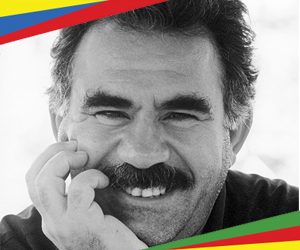
Guest post by Abdullah Ocalan

On Thursday 5 December 2013, the Guardian published an editorial article on the occasion of Nelson Mandela’s death. The article included a significant(!) comparison between Mandela and some other names like Jawaharlal Nehru, Aung Sang Suu Kyi, and me.  As long as they approach the issue with a hegemon’s mindset, the potentates will certainly continue to make such comparisons among those figures wining the affection of their peoples. However, any comparison has its own inner problems.

The time of the struggles, varying geographic and political conditions and even the characteristic differences between the figures will render such comparisons problematic. First of all, for me, being remembered together with a leader for whom all the world shed tears shows the extent to which our struggle line has taken universal dimensions. It also demonstrates the fact that our case couldn’t be explained as a struggle only against an unjust treatment.

Writing on the capabilities of a leader with exemplary methods of struggle and negotiation just after his death needs some more pondering on the history and politics of risk-takers, in order to get a better understanding of the conditions of those who haven’t been afraid of struggling in the front line throughout history.

There are clear-cut differences between the front-line strugglers and deskbound analysts. The greatest difference is to witness the death of your comrades and your people, live the experience moment to moment, and do right and wrong.  Restricting the esteem and dignity of such an important leader with ‘the prison’ is a beleaguered approach which holds in contempt the self-realized political struggle of a people with over 40 million population voluntarily approving this leader as the representation of their own will.  How objective and just would it be to turn a blind eye on the national identity the Kurdish people have achieved after a 40-year-long freedom struggle, and on our peace efforts for a democratic solution to the Kurdish question.

Comparing me with Nelson Mandela in your article, you had referred to me as “feared and worshiped”. Here, not only can I see more easily the writer’s desire to be the state chronicle of a history which tramples on the world’s oppressed, but also I discern the codes of the purposive enmity harbored against both of the compared figures, whose only resource for facing the enslaving, massacre and denial policies is their own self-belief.

It is too evident to need proof that a person who has spent the last 14 years of his life in a prison-island alone and under solitary confinement can be a “source of fear” only for those who have put him into chains. The chains speak for themselves ….

In reply to those who, instead of analyzing the fear spread by the hegemons, are busy giving advice and teaching lessons to those struggling against these hegemons, I should say, in all modesty, that Dear Madiba and me have more parallels than contrasts.

Everybody knows that the ordeal succeeded in facing the Apartheid regime was an accomplishment of not only the South African people, but at the same time of the leader in whom they had unsuspectedly confided their fate.  No matter their numbers, the many ludicrous comments made on Mandela’s credibility come from the quarters which  adopt a remote and trivial approach to the ‘struggle of the oppressed’ rather than making a close and reasonable analysis.

The self-organization processes of the communities subjected to suppression and discrimination would differ from the common practices, especially when they begin to make a true analysis of the notion of capitalist modernity. Traditionally, the organizational options of ‘the book’ are already known. But time proceeds forward and circumstances change, in company with historical determinism. Changing conditions will bring about changes in the behavior and attitude of individuals and organizations, either captive or free. When it comes to the PKK, instead of bringing about pragmatic progress, these changes have led to the political and ethical progress for a movement which has transformed itself on the basis of the struggle for democratic modernity and the developing direct democracy examples in the world.

The 12 September 1980 fascist coup followed by many organized coups against our community as well as the international conspiracy act against me and our movement share one thing in common with other interferences in other struggles of the oppressed; and that is the silence of the international community in the face of these interventions.  Despite the progress in the international democratic standards in the 21st century, due to the state propaganda characteristic of the international conspiracy, the dehumanization of the struggling leaders held captive still continues, based on poor intellectual standards.

How odd it is that a credible newspaper in Britain has not noticed the recent democratization progresses that we have made in Mesopotamia. As far as the approach is concerned, I hope it to be only ‘odd’, not more. Looking at the general approach of the article, what I see is not only the “oddness”; rather, every line is a dead giveaway to a hierarchic and ‘from above’ viewpoint.

Here, those opposing peace are accusing us of starting negotiations, are dehumanizing me in the eyes of the new generations and defaming our movement which has adopted peace and settlement as its main principle.  They are running and organized activity to blacken the reputation of our efforts for democratic modernity.  How odd it is that racist notions and old propaganda rhetoric which have even lost their reputation in Turkey are still being repeatedly covered in the international press.

The only topic to be discussed after Mandel’s demise should be Apartheid, a regime which history would remember only with shame. Nobody would keep a memoir of Apartheid and its leaders; nobody would shed tears for them; whereas Mandela has become a shining star for the peoples of Africa.  Our historical mission is to ensure the ever brilliance of this star for the peoples of the Middle East. The friendship developed on the basis of principled and political integrity between the peoples’ movements and particularly our movement, relies on the changing dynamics and the horizontal nature of their policies.  To believe that these laws of goodwill and friendship have been developed on the basis of fear can only be explained by having no knowledge about the metamorphosis eras the Kurdish political movement has undergone and failing to observe its democratic inner reflections of the peaceful and negotiating perspective of this movement.

Likewise, negotiation and struggle are both important processes in determining the future of peoples’ movements and those leading these processes are figures winning the confidence of the peoples, not ‘feared’ ones. If not so, it wouldn’t be possible for these movements to be represented both in the parliamentary system and the local politics , as it wouldn’t have been possible to succeed in the years-long armed struggle.

My recommendation to the editorial board of the Guardian is to do more research and analysis on the role of the women in our political movement and the resulting transformative effects. Then, they would certainly encounter such an infinite experience so as to take off their colonialist hat, though ashamedly.

Abdullah Ocalan
The Prison Island of Imrali

Abdullah Öcalan Apo, is one of the founding members (1978) of the Kurdistan Workers’ Party (PKK) in Turkey. Like the early ANC, the PKK is labeled as a “terrorist” organization by the US and its allies. Link to “Free Ocalan” website: http://www.freeocalan.org/

The CIA Role in the Arab Spring

arabesque americaine

(more from my research for A Rebel Comes of Age)

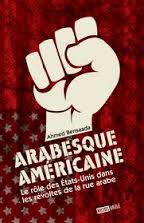
L’Arabesque Americaine (French edition – not available in English yet)

by Ahmed Bensaada (2011 Michel Brule)

Book Review

The current military junta in Egypt supports growing suspicions that the Arab Spring revolutions of 2011 were simply “color revolutions” – like the so-called “color revolutions” George Soros and CIA-linked foundations orchestrated in eastern Europe a decade ago.

Despite a few autocratic dictators being deposed, in each country the rich keep getting richer, the poor keep getting poorer, and US corporate and foreign policy interests continue to take precedence over labor rights and public welfare.

In Arabesque Americaine , Ahmed Bensada assembles a wealth of data  suggesting that the “Arab Spring” was first and foremost a destabilization/regime change operation, funded and orchestrated by the CIA, State Department and historic CIA-funded foundations. His book is unique in that it provides a carefully researched and referenced account of each of the “democracy exporting” foundations, along with the totals it gave each country and group in 2009.

Bensaada, a French Canadian who was born and received his early education in Algeria, devotes special attention to the Egyptian revolution – and the role played by Google’s star employee Gael Ghonem.

A brief outline of the topics covered:

Chapter 1 — the secret American funding and orchestration of the so-called “color revolutions” in Eastern Europe , with particular focus on Serbia (2000), Georgia (2003), Ukraine (2004) and Kyrghizistan (2005). In each case, pro-Soviet governments were overthrown by mobilizing disaffected, pro-Western young people — financed by the CIA, State Department, and Pentagon linked “democracy manipulating” foundations. The latter include National Endowment for Democracy (NED), National Democratic Institute for International Affairs (NDI), the International Republic Institute (IRI),Freedom House (FH), the Albert Einstein Institution, the Center for Non Violent Action and Strategies (CANVAS), the United States Agency for International Development (USAID) — and George Soros’ Open Society Institute (OSI). Several “color revolution” veterans were used to help organize Arab Spring protests. The uncanny similarity in protest symbolism (see video below) was no coincidence.

Chapter 2 — detailed discussion of the above think tanks and foundations, which includes a description of the their government funding, as well as the subversive activities (espionage, election rigging, an popular destablization activities) they have promoted in countries like Venezuela, Bolivia, Cuba and Iran that oppose America’s pro-corporate agenda.

Chapter 3 — the promotion, by the State Department and these think tanks and foundations, of new technologies in Middle East destabilization campaigns. The Tor Project, developed by Google, the US Naval Research Lab and State Department-linked Human Rights Watch, is an example. Tor supposedly permits anonymous navigation of the Internet in countries (with the exception of the US) with heavy Internet censorship. Bensaada also explores the role of Movements.org and the Alliance of Youth Movements in promoting social media to international youth activists. Movements.org is run by Jared Cohen, the director of Google Ideas and a former adviser to both Condolizza Rice and Secretary of State Hillary Clinton, and Jason Libman, another Google employee formerly employed by both the State Department and the Pentagon. AYM executive director David Nassar was formerly employed by NDI, USAID and IRI. In 2008 the State Department brought future Arab Spring activists to the US to teach them to use Facebook and Twitter, with the assistance of Sherif Mansour from Freedom House, Larry Diamond from NED, and national security adviser Shaarik Zafar.

Chapter 4 — focuses on Egypt, with particular attention to the role played by Google employee Gael Ghonem. Ghonem, who was given paid leave from his job to participate in the Tahrir Square uprising, created the Facebook page “We are all Mohamed Bouazizi” after the Tunisian fruit seller set himself on fire. In 2009, Ghonem also set up a Facebook page for Egyptian exile Mohammed El-Baradei. This was in advance of El-Baradei’s February 2010 Cairo visit to explore. The visit, according to Wikileaks cables, was organized through the US embassy. This was a full year before the Tahrir Square protests.

Chapter 5 — the pro-democracy organizations in other Arab countries (Algeria, Bahrain, Egypt, Jordan, Kuwait, Lebanon, Libya, Morocco, Palestine, Tunisia, Yemen, and Syria) financed by the State Department and specific “democracy manipulating” foundations.

Chapter 6 — summation and analysis that explores the ethical dilemma faced by many Egyptian activists on learning the non-violent manuals they were using were the creation of CIA and State Department Funded think tanks and Foundations.

Below a video illustration of the “color revolution” symbols that were incorporated into the Arab Spring revolutions.

***

Rebel cover

In A Rebel Comes of Age, seventeen-year-old Angela Jones and four other homeless teenagers occupy a vacant commercial building owned by Bank of America. The adventure turns deadly serious when the bank obtains a court order evicting them. Ange faces the most serious crisis of her life when the other residents decide to use firearms against the police SWAT team.

$3.99 ebook available (in all formats) from Smashwords:

https://www.smashwords.com/books/view/361351