Was Silk Road Founder Framed?

The Deep Web

Directed by Alex Winter (2015)

Film Review

The Deep Web is about the January 2015 trial of the alleged founder of the Silk Road website Ross Ulbricht. In addition to exploring Ulbricht’s background and the history of the Silk Road, the documentary also lays out some pretty revealing evidence US District Judge Katherine Forrest disallowed at trial. Ulbricht was sentenced to life imprisonment for drug sales, money laundering, hacking and engagement in a continuing criminal enterprise (kingpin charge). The filmmaker clearly believes Ulbricht was denied a fair trial.

The film begins by explaining what the Dark Web is, ie the unindexed records on the Internet. The Dark Web, which is thousands of times larger than the visible Internet, includes millions of bank records, as well as private and government administrative records. It also includes illicit sites like Silk Road.

Silk Road was created in 2011 by combining two cryptographic technologies: TOR (an open source technology originally developed by the US military), a browser that allows a user to access the Internet anonymously, and bitcoins, a cryptographically generated currency which, unlike bank-generated currency, is virtually untraceable.

Silk Road Founded as Political Statement

Silk Road didn’t actually buy or sell drugs. It simply provided a secure eBay-type marketplace where buyers and sellers could link up anonymously. Over time Silk Road developed an extremely tight knit user community that participated in the site’s political forums. One of the lead administrators, who took the screen name Dread Pirate Roberts (DPR)*, always maintained that Silk Road was less about selling drugs than making a political statement. DPR presented himself as a free market libertarian and talked a lot about resisting state efforts to control every aspect of our lives. All the Silk Road administrators were unified in their desire to end the war on drugs** and the extreme violence associated with it.

This fundamental nonviolent stance was reflected in their refusal to accept sellers offering products or services that caused people harm, such as prostitution or child pornography.

The Cryptoanarchist Movement

The Deep Web also provides interesting background on the radical cryptoanarchist movement that would eventually lead to the emergence of Wikileaks, Anonymous and Silk Road. A primary goal of this movement has been to create a world where the government can’t spy on everything we do. Members feel they have an implicit duty to develop encryption tools that non-tech savvy Internet users can employ to protect their privacy and anonymity.

Before the FBI shut it down in 2013, Silk Road had over one million registered users. According to cops, judges and FBI and DEA agents filmmakers interviewed, the site accomplished its goal in reducing violence associated with the drug trade.

Judge Disallows Evidence of FBI Crimes

The defense Ulbricht attempted to present was that he founded Silk Road but wasn’t Dread Pirate Roberts, as the prosecution claimed – that the individual using this screen name had taken over the website and framed him.

In March 2015, two federal agents were indicted (after a nine month investigation) for infiltrating Silk Road and stealing and extorting millions in bitcoins from Silk Road clients. These agents had high-level access to administrative functions of Silk Road, thanks to an administrator they arrested who turned informant. These federal agents had the power to change access to administrator platforms and passwords and to change PIN numbers and commandeer accounts, including that of DPR. They also had the means to manipulate logs, chats, private messages, keys, posts, account information and bank accounts. And they had the motive to alter data in order to cover up their own actions and point guilt elsewhere.

Judge Forrest barred Ulbricht’s attorney from presenting any of this evidence at trial.

She also disallowed evidence the FBI had illegally hacked into Silk Road’s servers in Iceland without a warrant – a violation of Fourth Amendment protections against illegal search and seizure. If her ruling is allowed to stand on appeal, it sets a dangerous precedent for allowing evidence resulting from illegal government hacking to be used at trial.


*Dread Pirate Roberts was a fictional character in the novel and movie The Princess Bride. In both, when the original Dread Pirate Roberts dies, his successor takes up the alias.
**The libertarian think tank Cato Institute has taken the position that the US should legalize all addictive drugs as Portugal has done. See The Cato Institute and the Drug War
For an update on Ulbricht’s appeal and to donate to his legal defense fund (like I did) go to
http://freeross.org/

Exposing the Myth of Capitalist Democracy

Lifting the Veil: Barack Obama and the Failure of Capitalist Democracy

Scott Noble (2013)

Film Review

Lifting the Veil is a well-crafted expose of the myth of so-called capitalist democracy Based on interviews and archival footage of Senator Bernie Sanders, Noam Chomsky, Chris Hedges, George Carlin, Glen Ford, Harold Pinkley, John Pilger, Richard Wolfe, William I. Robinson, Bill Moyers and other prominent dissidents, it makes an ironclad case that democracy is impossible under a capitalist economic system.

Using Obama’s extensive list of broken campaign promises as a starting point, Noble convincingly demonstrates how Wall Street corporations have seized absolute control over all America’s so-called democratic institutions. In addition to highlighting the essential role team Obama played in crippling a large, highly vocal antiwar movement, he presents historical examples to reveal how this has been the traditional role of the Democratic Party in the US – to co-opt social movements that threaten the status quo.

The first half of the film focuses on Obama’s 2008 campaign and his long list of promises to reverse specific abuses of George W Bush’s government. In a series of archival clips, we see Obama promising to

• Restore habeas corpus
• Close Guantanamo
• End government secrecy
• End wireless surveillance
• Stop foreclosures instead of enriching bank CEOS
• Expose corporate backers of tax and corporate welfare legislation
• End torture
• End extraordinary rendition*
• Withdraw from Iraq in 2009 and Afghanistan in 2011
• Pass banking regulation to prevent a new Wall Street collapse

Besides breaking every single one of these promises, Obama enacted new policies that were even more oppressive and pro-corporate than Bush’s. Among them were an indefinite detention provision in the NDAA, an executive order giving himself power to assassinate American citizens, the new war in Pakistan and Libya and $7 billion in loans guarantees for the moribund nuclear industry.

The film makes the point that the 2008 election was merely a PR exercise in marketing Brand Obama and had absolutely nothing to do with the candidate’s political agenda.

My favorite segments were those in which comedian George Carlin explains to audiences how powerful corporations sucker them into believing they live in a democracy.

The film ends on an optimistic note with a sampling of opinion polls indicating that more than 60% of Americans oppose the pro-corporate agenda Obama has foisted on them: 63% of Americans would pay higher taxes to guarantee health care for everyone, 70% oppose nuclear power, 81% want to reduce the deficit by taxing the rich and cutting the military budget and only 3% support cutting Social Security.

The only criticism I would have of Lifting the Veil is that it fails to offer specific solutions for Americans seeking to get their democracy back. The dissidents featured are pretty much unanimous that Americans need to stop looking to electoral politics as a way to reform either government or the economic system. However they are a little vague on what activists should do other than protesting and engaging in civil disobedience. Neither is likely to accomplish significant change without serious organizing and movement building to develop alternatives to the current system of government.

Given a lot of this movement building is already occurring in Spain, Greece, Italy, Ireland, Iceland, Mexico and South America and it would have been great to see examples of what this looks like.


*Extraordinary rendition is the kidnapping and transfer of a detainee to the custody of a foreign government for purposes of detention, interrogation and torture.

White Like Me

White Like Me

Scott Morris (2013)

Film Review

White Like Me is a frank examination of white privilege featuring long time white civil rights activist Tim Wise. Contrary to popular misconception, the political disenfranchisement of people of color didn’t end with the Civil War or the 1960s civil rights movement. The majority of black people attend poorly funded, segregated inner city schools, face massive job discrimination and have much poorer health status. Thanks to these historic structural disadvantages, they also bear the brunt of the 2008 downturn and growing inequality.

Blaming the Victim

Many white conservatives use Obama’s election to the White House to shift the blame to the African American community for their miserable economic and social conditions. If a black man can achieve the highest office in the nation, they argue, it must mean that racism has ended. By extension, it must be their own fault if African Americans remain at the bottom of the heap.

They conveniently overlook the fact that Obama lost the white vote by a 57% to 43% landslide. In some southern states, he only garnered 10% of the vote.

Examples of White Privilege

In examining specific privileges, white people enjoy Wise begins by discussing three important federal programs that blacks were excluded from until the late sixties: Social Security, Federal Housing Authority (FHA) loans and VA loans.

He traces how Roosevelt deliberately excluded domestic servants and agriculture workers (occupations employing 80% of African Americans) to win the support of southern Democrats.

At the same time, the FHA made it virtually impossible for blacks to access loan guarantees with the following language:

Areas surrounding a location are investigated to determine whether incompatible racial and social groups are present, for the purpose of making a prediction regarding the probability of the location being invaded by such groups. If a neighborhood is to retain stability, it is necessary that properties shall continue to be occupied by the same social and racial classes. A change in social or racial occupancy generally contributes to instability and a decline in values.

There were no specific laws excluding black veterans from VA-guaranteed loans – this was down to banks refusing to give them mortgages, even when the federal government guaranteed them.

White Affirmative Action

Other privileges whites have enjoyed include freedom from racial profiling by police and white affirmative action in education. This begins in elementary school when white kids have the option of attending well-funded non-ghetto schools. It continues at the college level, where white beneficiaries of affirmative action are called “legacy” students. On average, colleges admit twice as many white students whose parents or grandparents attended as minority students who qualify for affirmative action.

Whites also have the privilege of indulging in occasional marijuana use without losing their civil and human rights for the rest of their life. The film quotes from Michelle Alexander’s The New Jim Crow  to demonstrate how the War on Drugs deliberately targets people of color for mass incarceration.

The filmmaker also features University of Massachusetts professor John Bracey, who explains how structural racism hurts white people. As one example, Bracey talks about the millions of poor whites who have lost access to welfare benefits, thanks to the deliberate misportrayal of social safety net programs as primarily benefiting minorities.

Coming to Grips with White Privilege

Wise concludes with advice for white people who are genuine in wanting to conquer their unconscious racism:

Among other suggestions he calls on them to

1. make the conscious decision not to be colorblind and close their eyes to racial disparities and inequality. In order to address racial disparities, we must first learn to see them.
2. acknowledge that we all have unconscious racial biases that can affect our behavior in ways that maintain or exacerbate inequality.
3. study and honor the long tradition of white anti-racist activists who are our role models.

Wise also has a book entitled White Like Me: Reflections on Race from a Privileged Son.

The New Jim Crow

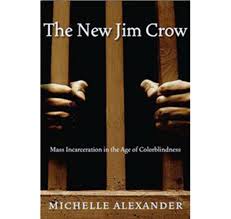
new jim crow

The New Jim Crow: Mass Incarceration in the Age of Colorblindness

by Michelle Alexander (2010)

Book Review

In The New Jim Crow, Michelle Alexander argues that the War on Drugs and mass incarceration of African Americans functions as a racialized caste system similar to Jim Crow segregation laws. She defines caste as “as system in which a stigmatized racial group is locked into inferior position by law and custom.” In addition to the mass imprisonment itself, America’s unusually harsh treatment of ex-felons means extraordinarily high numbers of African Americans face legal discrimination for the rest of their life.

It’s both legal and socially acceptable to discriminate against ex-offenders. Federal agencies are legally required to exclude ex-felons from welfare and food stamp programs, public housing and Pell grants and student loans. Job discrimination against ex-felons is legal in nearly all states, and most states prohibit ex-felons from voting or serving on juries. Unable to find jobs or housing (relatives who take them in risk losing their homes under drug forfeiture* laws), many return to prison when they can’t meet the terms of their probation/parole (which usually includes stable housing and employment).

In addition to tracing the political origins of the War on Drugs, The New Jim Crow also provides a detailed analysis of the complex political and sociological dynamics that underlie white racism and the refusal of a post-racial “colorblind” society to acknowledge the immense damage mass incarceration wreaks on African American families and communities. She also explains the perplexing paradox that leads working class whites to vote against their own economic interests by electing Tea Party conservatives.

The War on Drugs: A Republican Scam

As Alexander elegantly demonstrates, the War on Drugs is part of a deliberate strategy by the Republican Party to play on racial animosity among working class whites to win their votes. The American elite has used this divide and conquer strategy to discourage multiracial coalitions all the way back to Bacon’s Rebellion* in 1676. According to Alexander, the original Jim Crow laws were largely a reaction to a brief multiracial coalition that formed as part of the Populist movement in the late 1800s.

Nixon was the first president to deliberately target the racist vote with the intention of transferring previously Democratic southern states to the Republican column. He pioneered the use of racially coded rhetoric such as “law and order,” “tough on crime” and the “undeserving” vs the “deserving” poor.

Here Alexander emphasizes that the affluent white liberals who championed 1960s civil rights legislation were essentially immune to the economic impact of most civil rights legislation. As professionals and academics, they weren’t competing with African Americans for the same jobs. Moreover, as residents of wealthy suburbs, their kids were excluded from mandatory busing laws.

Targeting the Racist Vote

Thanks to a highly sophisticated public relations campaign by Nixon and Republicans, by 1980 low income whites no longer saw poverty as stemming from a faulty economic system. They now blamed civil rights legislation and an overly generous welfare system. As a result, 22% of registered Democrats voted for Reagan in 1980.

Although Nixon coined the term, it would be Reagan who formerly launched the War on Drugs in 1982. The Reagan administration cut the white collar law enforcement in half to focus on street crime. This was during a period when street crime was rapidly declining and sociologists were predicting a phase-out of US prisons as they didn’t deter crime. Reagan also significantly increased DEA and FBI anti-drug enforcement while drastically decreasing funding for drug treatment. He also instituted financial incentives rewarding local policing units for high numbers of drug arrests. Alexander believes these financial rewards were directly responsible for initiating wholesale street sweeps and stop and frisk laws that have led cops to regularly jack up black motorists and inner city youths in the hope of finding illegal drugs.

Finally in 1985, he launched a major media campaign to sensationalize the crack cocaine epidemic. It worked. In 1980, only 2% of the US population viewed illegal drug use as the most important issue facing the US in 1980. By 1989 this number had reached 64%.

Clinton Escalates the War on Drugs

In 1992 Clinton and the New Democrats tried to recapture the Democratic votes they had lost to Regan and Bush by promising to enact even stricter anti-crime and anti-drug laws. Thus it was under Clinton law enforcement budgets and jail populations exploded. It was also Clinton who ended AFDC (Aid For Dependent Children) started under the New Deal – at precisely the same time inner city communities lost all their manufacturing jobs when factories shut down and moved overseas.

Clinton also initiated the federal programs to militarize local police, providing training to set up SWAT teams and surplus Pentagon tanks, body armor, weapons and helicopters. He also enacted the laws denying former drug felons access to federal programs. Sadly Obama, the first African American president, renewed and increased funding for many of these programs.

Discrimination in the Courts

In addition to discriminatory*** drug policing that focuses nearly exclusively on inner cities, African American defendants fare nearly as badly in court. Alexander cites many instances in which poor defendants receive limited or no access to legal representation. Many innocent clients, totally unaware of the future impact of a felony conviction, are intimidated into pleading guilty in return for a reduced sentence.

Ending the War on Drugs

In addition to outlining the ugly racialized history of the War on Drugs, Alexander also summarizes the conservative Supreme Court decisions that have systematically denied due process to people of color facing drug possessions. She concludes by offering a way forward – to end both the War on Drugs and the mass incarceration of people of color.

In addition to legalizing marijuana (and possibly other drugs), she calls for the total structural reform of the criminal justice system. She believes only a multiracial movement with bottom up advocacy for poor blacks and whites alike can bring this about. This is exactly what Martin Luther king was working for when he was assassinated.

In the following video, Alexander talks about her book


*Drug forfeiture or asset forfeiture laws allow federal and state authorities to confiscate any and all assets (mainly homes, cars and cash) of an individual suspected of a drug-related crime. A subsequent finding of innocence doesn’t guarantee return of the assets, which often requires a lengthy and expensive court process. Some police departments deliberately misuse this law to confiscate cash and belongings of black motorists even where no arrest is made.
**Bacon’s Rebellion was an armed rebellion of white settlers and black and white indentured servants that would lead plantation owners to push for formal slavery laws to discourage further collaboration between whites and blacks.
***Although African Americans constitute only 15% of drug users, they represent 75% of the US prison population. Statistically drug dealers are more likely to be white than black, but local law enforcement authorities make no effort to police white suburbs or university campuses for illegal drug use. In fact, 80% of drug arrests are for possession (in 80% of cases for marijuana). Only 20% of arrests are for sales

Did Global Economic Growth End 15 Years Ago?

life after growth

According to London Broker, Global Economy is Shrinking

The main premise of Life After Growth: How the Global Economy Really Works – and Why 200 Years of Growth are Over  is that global economic growth has ended. Western governments conceal this fact through debt creation, inflation and clever manipulation of statistical economic indicators. According to Tim Morgan, leading analyst at the London financial brokerage Tullett Prebon, economic growth ended in 2000 and the economy has been shrinking ever since.

Morgan attributes the end of global economic growth to the high cost of fossil fuels.* This is because the real economy (which many people confuse with the financial economy) is a direct function of surplus energy. In pre-agricultural times, there was no energy surplus: human beings derived exactly the same amount of energy from their food as they expended acquiring it. With the advent of farming, they managed to produce a small surplus of energy that enabled a small minority to engage in work other than food production.

In the 18th century the invention of the heat engine enabled surplus energy (and the real economy) to grow exponentially over the next 200 years. Now that the cheap fossil fuel has been used up, our energy surplus is declining. This, in turn, is reflected in the gradual shrinkage of the global economy.

Measuring Surplus Energy

Energy surplus is measured as EROEI (Energy Returned Over Energy Invested), the ratio between the energy produced and the energy consumed in the extraction or production process. 1930s oil fields had an EROEI of 100:1. Once the easily accessible oil was used up, the EROEI began to decline. It was 30:1 in 2000 and it declines by about 2% a year. In 2014 it stood at 14:1. Unconventional oil sources have an extremely low EROEI (eg tar sands and fracked shale oil have an EROEI of 3:1).**

Declining EROEI’s are always accompanied by a spike in oil prices. This translates into higher prices for everything, due to the energy required for food production and manufacturing. Owing to higher prices, people consume less and the economy slows.

Globalization Has Been Extremely Damaging

Morgan is highly critical of politicians who fail to distinguish between the real economy of goods and services and the shadow economy of money and finance. He also feels globalization and rampant consumerism have been extremely damaging to the real economy. The mistake western countries made with globalization was reducing their production without reducing consumption. Instead they increased consumption levels by increasing borrowing and debt. Globalization was extremely beneficial for banks, due to the voracious demand for their product (loans). Meanwhile the diversion of large sums from production to the finance sector – aggravated by consumerism and the rise of consumer debt – hastened the decline of the real economy.

This wholesale debt creation and the widening split between the real economy and the financial economy is largely reflected in inflation and the destruction of the value of money. The US dollar lost 87% of its purchasing power between 1962 and 2012, which the government systematically conceals through misreporting of key economic indicators.

All economies function best when the financial economy coincides with the real economy. At present the primary methods of debt destruction are quantitative easing*** and inflation (it’s always easier to repay debts with devalued money). Other methods in the wings are cuts in pensions and Social Security payments and eventually bank failures and government defaults. Morgan feels that resource poor countries like Japan and the UK are at highest risk for default.

How Governments Lie with Statistics

My favorite chapter details the decades of statistical manipulations that have made government indicators of inflation, growth, output, debt and unemployment totally meaningless. John Kennedy was the first to exclude “discouraged” workers (who weren’t actively seeking work) from the unemployment rate. Johnson was the first to conceal the size of the government deficit by including the Social Security surplus in the federal budget. Nixon was the first to exclude energy and food costs (which rise the fastest) from core inflation calculations.

I was most shocked to learn that 16% of GDP consists of “imputations” or dollars that don’t actually exist. The largest single imputation the US government adds is “owner equivalent” rent. This is an amount equivalent to the rent all rent homeowners would have to pay if they didn’t own their own home. In 2011, this added up to $1.2 billion (out of a total GDP of $12.7 trillion).

The second largest imputation involves non-cash benefits employers give their workers (medical insurance, meals, accommodation, etc) and free banking services.

The US Government is Technically Bankrupt

This over-reporting of GDP, combined with under-reporting of inflation, makes it appear that the US economy is growing when it’s not. .

Morgan estimates that as of 2011 true US debt (government, business and personal) was 449% of GDP. Technically this means the US is insolvent as collective liabilities far exceed any realistic prediction of future income.

Politicians Need to Stop Lying

Morgan maintains that industrialized societies urgently need to living with less surplus energy. Rather than continuing to delude themselves (and us), our political leaders must face up to the reality that our claims on future energy surpluses (aka debt) are totally unrealistic.

They need to end globalization and rampant consumerism and enact policies (support for renewable energy, public transport and strong local economies) that will help people adapt to the new economic reality.


*Most analysts predict oil prices will return to $100+ a barrel in June 2015, once the US surplus is used up.
**Some other EROEI’s (for the sake of comparison):
• Coal 8:1
• Solar PVC panels 8:1
• Solar concentrating power: 17:1
• Large hydro generation: 22:1
• Small hydrogenation 32:1
• Landfill/sewage gas cogeneration 40:1
• Onshore wind 20:1
*** Quantitative easing (QE) is an unconventional form of monetary policy where a Central Bank creates new money electronically to buy financial assets, like government bonds. This differs from conventional money creation, in which private banks create money out of thin air as new loans (see An IMF Proposal to Ban Banks from Issuing Money).

Also published in Veterans Today

The Mystery of Aaron Swartz’s Alleged Suicide


The Internet’s Own Boy: The History of Aaron Swartz

Brian Knappenberger (2014)

Film Review

The Internet’s Own Boy is about computer prodigy and ardent free Internet activist Aaron Swartz. Swartz allegedly hanged himself in 2013 two weeks before going to trial on federal charges under the Computer Fraud and Abuse Act (CFAA). This documentary tries to portray that Swartz’s suicide was triggered by his terror of what the federal government was about to do to him. I don’t buy it.

Computer Prodigy, Entrepreneur and Internet Activist

Despite his untimely death at age 26, Swartz already had a string of inventions and accomplishments to his name. At twelve, he invented Infobase, an early on-line precursor to Wikipedia. At thirteen, he was part of the online group that developed the RSS (Rich Site Summary) protocol, a web feed format to syndicated frequently updated information, such as blog entries and headlines. At fifteen he worked with Larry Lessig to create the Creative Commons platform for writers, photographers, researchers and artists who wish to freely share their work for non-commercial purposes. Shortly after dropping out of Stanford at eighteen, he created the immensely popular social media site Reddit.

Swartz is perhaps best known as the lead organizer of the successful campaign to block SOPA (the Stop Online Piracy Act). Congressional enactment of SOPA would have forced web servers to take down a website, without warning or due process, based on a mere accusation of copyright infringement of any user at the site. Swartz and other net neutrality activities saw SOPA as a scheme by large for-profit Internet companies to wipe out the small free content sites that competed with them.

Turning his Back on Corporate America

Swartz made the decision not to use his programming skills for profit, like Bill Gates and Steve Jobs, while working for Conde Nast magazine, which bought Reddit from him for $1 million. Swartz was a passionate believer in free access to the to the Internet and accumulated scientific and cultural knowledge.

He was greatly inspired by Sir Tim Berners-Lee, the inventor of the World Wide Web, who Swartz had met as a child. Berners-Lee could easily have used the Internet to become fabulously wealthy. Instead he gave it away for free, believing everyone was entitled to Internet access regardless of their ability to pay.

Swartz’s First Brush with the FBI

A substantial portion of the film is devoted to the downloading activities that led the Justice Department to charge Swartz with thirteen felonies under the CFAA.

Hi first brush with the FBI occurred in 2008 when he helped Carl Malamud start the PACER (Public Access to Court Electronic Records) project. PACER is the illegal government racket that charges users ten cents a page to download federal court records. Reaping the federal government more than $10 million a year, PACER denies access to public legal information to people without the means to pay for it. Together Malamud and Swartz developed a program to simultaneously download large numbers of PACER files from the seventeen public libraries that made PACER documents available free of charge. They would eventually download 20% of the PACER dataset (20 million pages), which they made available free of charge at their website.

The FBI would ultimately close their investigation, concluding that Swartz had done nothing illegal.

The Guerrilla Open Access Manifesto

Swartz subsequently started the Progressive Change Campaign (which kick started Elizabeth Warren’s campaign for Senate) and Demand Progress, an Internet group dedicated to fighting various forms of Internet censorship. Swartz particularly objected to rich corporations locking up the work (which they obtain for free) of researchers whose salaries are paid, directly or indirectly, by the taxpayer. He felt that scientific and cultural knowledge is part of the Commons and that human knowledge can only be advanced by sharing it.

In the Guerrilla Open Access Manifesto, Swartz refers to this as the private theft of public information and calls for civil disobedience to stop it.

His download of JSTOR files at MIT was exactly this type of civil disobedience. As a Harvard fellow he had free access to JSTOR via the MIT website. As he had done with PACER, he set up a program in an MIT janitor’s closet to download thousands of JSTOR documents to portable hard drives. After catching him on a surveillance camera, the Cambridge police busted him and turned the case over to the Secret Service (they have jurisdiction over computer fraud under the Patriot Act) and the US attorney’s office.

The Department of Justice ultimately charged him with thirteen felonies under CFAA. Although potentially he was looking at thirty-five years in jail and a $1 million fine, a federal prosecutor stated after his death that they planned to ask for a six month jail sentence. Swartz’s own attorney believed he would be acquitted, based on his high profile activism and his clear intent to establish free public access to the JSTOR articles he was downloading. It was impossible to establish that he planned to defraud JSTOR or re-sell the document.

Suicide? Or Murder?

The Internet’s Own Boy tries to convince us that Swartz was so distraught by the Obama administration’s viciousness that he was impelled to take his own life. Yet none of this jives with the Aaron Swartz we see on the screen. A year after his initial arrest, Aaron leads and – against all odds – wins a grassroots campaign to defeat SOPA. Buoyant after his SOPA victory, he asks his girlfriend to marry him and decides to hang himself. Yeah right.

Recent history is filled with the names of activists, journalists, whistleblowers – and now investment bankers – who embarrass the rich and powerful and conveniently up and kill themselves. In my view, Moti Nissani offers a far more plausible explanation of Aaron Swartz’s demise in Who Killed Aaron Swartz

Sticking It to Chomsky

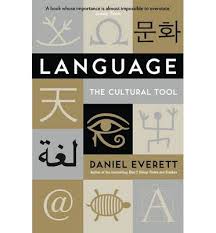
languageLanguage: the Cultural Tool

by Daniel Everett

Profile Books Ltd (2012)

Book Review

The purpose of this book is to outline a dispute in the linguistic community between those who believe that language is acquired – that human beings develop language as a cultural tool – and “nativists” who believe that people develop language because of their genetic programming.

Noam Chomsky, who is better known as an activist and dissident, is also considered the founder of modern linguistics. Nativists like Chomsky argue that language development is genetic mainly because all human beings acquire language, regardless of their intelligence, all languages have a similar core grammar, including Creole languages invented by children (actually they don’t, as Everett demonstrates) and all children follow the same developmental stages in learning language.

By examining linguistic research into the structure and function of language, as well as the biological requirements necessary to create it, Everett essentially demolishes all of Chomsky’s arguments – but in a nice way. As a former Wycliffe bible translator, Everett lived for many years in the Amazon and has researched over a dozen indigenous languages of Brazil. He has special interest in the language and culture of the Piraha tribe.

Everett takes the side of Aristotle, who first proposed that language is a tool 2300 years ago. Soviet psychologist Lev Vygotsky (1896-1934) was the first to articulate this view in the modern area. He believed human language was developed and shaped by the needs of social interaction.

I’ve always been troubled the unquestioning adulation Chomsky receives from the activist community, especially in view of his dismissive attitude towards an extensive body of research pointing to a government role in 9-11 and the John F Kennedy, Bobby Kennedy and Martin Luther King assassinations. Thus I was intrigued to learn of similar concerns in the linguistic community about the unquestioning embrace of his linguistic theories.

Obama Normalizes Relations With Cuba


Obama Raul Castro
After more than a year of secret talks, Obama announced today that he’s ending the fifty-four year Cuban embargo to re-establish diplomatic ties. According to the President, the move was conditional on Cuba’s release of USAID contractor Alan Gross. Gross was arrested in 2009 and sentenced to fifteen years for distributing banned technology and trying to set up an Internet service.In addition to releasing Gross, the Cubans also released an unnamed CIA agent imprisoned in Cuba for nearly twenty years. President Raul Castro also agreed to release fifty-three Cubans the US regards as political prisoners. In return, Obama released three Cubans in US prisons on espionage charges.

Additional Measures

Additional measures, according to the fact sheet put out by the Obama administration, include re-opening the US embassy in Havana and relaxation of trade restrictions to allow American businesses to export telecommunication equipment, agricultural commodities and construction supplies. American travelers to Cuba will be allowed to use American credit and debit cards, and US owned companies will be allowed to provide services and engage in financial transactions. This is in addition to a gradual reduction in travel restrictions Obama first introduced in 2009.

Emphasis on Internet Technology

The fact sheet heavily emphasizes the export of telecommunications and Internet technology by US companies. Prior to June 2013, Home Internet connections were illegal in Cuba. Despite this recent liberalization, Internet services remain limited, slow and expensive. Only 5% of the Cuban population has reliable Internet access.

The prospect of opening Cuba up to American Internet providers and specialized services such as Google, Facebook and Twitter offers limitless opportunities to bombard the Cuban population with American advertising and propaganda, as well as introducing them to the same NSA surveillance Americans enjoy.

Embargo Purely Symbolic

The unilateral US embargo of Cuba has been purely symbolic, as it has limited economic impact. Because the vast majority of the developed world trades with Cuba, US businesses routinely bypass the embargo with help from other countries.

There is strong international pressure for the US to end the Cuban embargo. On October 28, 2014 the UN General Assembly voted for the twenty-third time to condemn the economic boycott. As usual, the only two countries opposing the declaration were the US and Israel.

Pope Francis, another strong advocate for lifting the embargo, has been instrumental in the secret negotiations.

Waning Influence of Cuban-American Lobby

Until recently, Obama and the Democrats have bowed to pressure from a powerful Cuban-American lobby to keep the embargo in place. In the last two presidential elections Florida’s Cuban American voted Democratic, securing the key state of Florida for Obama. However, according to the New York Times, the influence of Florida’s Cuban-Americans over national politics is rapidly diminishing. The Hispanic population of Florida is increasingly Puerto Rican, and younger Cuban-American voters with no direct memory of  Castro’s Cuban takeover are more willing to support Democrats.

Republican Opposition

Obama has enacted all these changes via executive order. Only Congress can fully repeal the Cuban embargo enacted in 1961.  Speaker John Boehner and other Congressional Republicans have vowed to block legislation lifting the embargo.

photo credit: haveeru.com.mv

Do We All Have a Capacity for Evil?

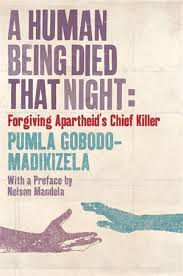
a human being died

A Human Being Died That Night: Forgiving Apartheid’s Chief Killer

by Pumla Gobodo-Madikizela (2003)

Book Review

A Human Being Died That Night explores the political, sociological and psychological influences that lead individuals to engage in torture, assassination and other forms of state terrorism. Psychologist Pumla Gobodo-Madikizela was an adviser to South Africa’s Truth and Reconciliation Commission (TRC).* Her book is based on a series of prison interviews she conducted with the ex-commander of the apartheid regime’s death squad Eugene De Kock.

In my view, it’s of special relevance given recent calls to prosecute CIA officers involved in torturing post-911 detainees. At present, it’s fashionable to dismiss all perpetrators of heinous violence as evil psychopaths. The main value of Gobodo-Madikizela’s book is to remind us that we all have the capacity for evil.

De Kock was already in prison serving two life sentences before he made his first appearance in front of the TRC. His role was to testify in the case of five former security police who were applying for amnesty for murdering (on DeKoch’s orders) three black policeman who threatened to expose their involvement in the death of four black activists. Asking to meet with family members of the dead policemen, De Kock appeared to express genuine remorse for ordering their assassination. This gesture – as well as the clear emotional release he experienced afterwards – greatly surprised Gobodo-Madikizela. The psychologist had dismissed him as a sociopath and incapable of remorse.

The Prison Interviews

The purpose of the author’s 1997-2000 prison interviews with de Kock was to gain better understanding of the ways oppressive political systems can numb someone’s conscience to the point they can commit heinous crimes. She concludes the relationship between personal choice and societal pressure is never straightforward in a totalitarian society.

It’s quite clear from his own words that de Kock’s superiors brainwashed him into perceiving African National Congress (ANC) and Pan African Congress (PAC) activists as Communists – as opposed to freedom fighters – who were threatening to plunge South Africa into the chaotic violence Congo, Angola and Mozambique experienced following independence. The apartheid regime also systematically portrayed the battle against liberation activists as a religious war in which God was on the side of the regime. Opting out of their violent role for religious or ethical reasons was impossible. The regime dealt extremely harshly with officers who attempted to do so.

The Role of the Truth and Reconciliation Commission (TRC)

As Gobodo-Madikizela explains, some restorative process is essential when a civil war ends and victims and perpetrators are forced to live alongside one another. Merely scapegoating and locking up a few “bad apples” does nothing to remediate the psychological trauma victims have incurred, which she blames for the intergenerational cycles of violence that have plagued other African countries.

In her view, the most important benefits of the TRC were forcing perpetrators to see their victims as fully human and allowing victims to experience the rehumanization that occurs when they witness the pain of genuine remorse in the perpetrators who have wronged them. Other positive outcomes include a better understanding of the role the politics of oppression and abuse play in creating monsters who commit crimes against humanity. This recognition forces all participants to confront the not-so-pleasant potential for evil within themselves.

With brutal honesty, Gobodo-Madikizela confesses that her prison interviews forced her to confront her own potential for evil. The book relates an incident in which she stood by while fellow ANC members executed suspected police collaborators with “necklaces” of burning tires and did nothing to stop them.

Moral Exclusion

Gobodo-Madikizela concludes the most important dynamic leading individuals of conscience to commit heinous crimes is “moral exclusion” – a process in which they become convinced the targeted population is less than human. This dynamic is clearly in operation when CIA officers eagerly torture brown-skinned Arabs and when white cops beat the crap out of African Americans.

Scapegoating

The author also describes in details how de Kock was scapegoated in his 1993 trial, conducted by an Afrikaner judge and prosecutor. In several interviews he expresses resentment about being scapegoated – not only by high level officials who gave the orders but by a white middle class who enjoyed a very comfortable lifestyle by repeatedly voting for a political party (the National Party) committed to retaining apartheid.

Gobodo-Madikizela is particularly appalled by the hypocrisy of Nobel Prize winner F.W. de Klerk.** The latter vehemently opposes amnesty for de Koch, despite giving orders for him to “neutralize” the ANC, as well as medals for carrying them out so efficiently.

De Klerk and other high level apartheid leaders have consistently pleaded ignorance to the crimes against humanity committed by their underlings. In this respect, they stand out from three other regimes responsible for mass crimes against humanity: Germany’s Nazi regime, the Pinochet regime in Chile and Milosevic’s regime in the former Yugoslavia. Documentary evidence shows violence (ie torture and assassination) was encouraged and expected by the apartheid regime but never explicitly ordered (not in writing, at least). In the other three cases there was a clear paper trail connecting high level officials with police officers who carried it out.

* The Truth and Reconciliation Commission (TRC) was a court-like restorative justice body assembled in South Africa after the abolition of apartheid. Victims of gross human rights violations had the opportunity to give testimony about their experiences, and some were selected for public hearings. Perpetrators of violence could also give testimony and request amnesty from both civil and criminal prosecution.
**In 1993 de Klerk and Mandela were jointly awarded the Nobel Peace Prize.

Alcohol and the American Dream

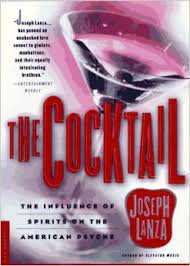
cocktail

The Cocktail: the Influence of Spirits on the American Psyche

by Joseph Lanza (1995)

Book Review

The term “cocktail,” which first appeared during the Revolutionary War, refers to the adulteration of whiskey, rum, gin, vodka or other hard liquor with wine or non-alcoholic beverages to disguise the bitter taste. The cocktail is as fundamental to the American dream as the white picket fence. Joseph Lanza’s short book traces the history of this distinctly American style of inebriation, emphasizing the importance of Prohibition and Hollywood in establishing the cocktail as the ultimate status symbol of the American middle class.

Owing to my family background, this book had special personal importance. Both my parents, caught up in a drinking culture that considered it pathological not to have daily cocktails, were full-fledged alcoholics by the time I was twelve.

Prohibition: a “Progressive” Cause

The rise of the cocktail culture was directly linked to urbanization, while the early prohibition movement, viewed as a progressive cause, was closely linked to the women’s suffrage. Most of the suffragettes who campaign for women’s voting rights simultaneously campaigned for the government to ban alcohol.* Anti-alcohol sentiment was strongly bolstered by the protestant work ethic that characterized early American society, and anti-immigrant sentiments against Italian and Irish newcomers who were slow to adapt to it. By the end of the nineteenth century, numerous individual states had already enacted prohibition legislation.

The Volstead Act and 18th Amendment (which undercut a Constitutional challenge), officially took effect on January 17, 1920. The Act provided that “no person shall manufacture, sell, barter, transport, import, export, deliver, or furnish any intoxicating liquor except as authorized by this act.” Because it was only loosely enforced, supplying bootleg liquor was instrumental in the rise of organized criminal gangs and the career of the Kennedy family patriarch Joseph Kennedy. By the evening of January 18th, the first speakeasy had opened in New York. Prior to 1920, women had been barred from public drinking establishments. With Prohibition, this changed and they became an established fixture in speakeasy jazz clubs.

The Celebrity Drinking Culture

Prohibition also gave rise to the celebrity drinking culture, typified by the early twentieth century writers and composers who openly frequented speakeasies. The most prominent celebrities included George Gershwin, Moss Hart, F Scott Fitzgerald, Ernest Hemingway, Cole Porter, Irving Berlin, Walter Winchel and the Algonquin Roundtable writers (Dorothy Parker, Edna Ferber, Alexander Woolcott, Robert Sherwood, Robert Benchley).

Following the repeal of Prohibition in 1933, speakeasies became cocktail cafes. With the advent of talking movies, Hollywood stars replaced writers and composers as role models in the cocktail cafes (later known as cocktail lounges) where wealthy socialites mingled with Hollywood celebrities.

In the late thirties and early forties, cocktails singers emerged to entertain them. The first cocktail entertainers were male crooners,* like Rudy Valle, Dean Martin, Cliff Edwards (Jiminy Crickett’s voice in Pinochio), Vic Damon, Frank Sinatra and Bing Crosby. They typically drank heavily while performing. Female cocktail singers, such as Peggy Lee, Abbe Lane and Julie London, wouldn’t become popular until after World War II.

The cocktail culture took off big time in the 1940s as movies, especially detective films, glamorized heavy drinking.

Advertising and Media Manipulation

The fifties and sixties saw the coming to age of the advertising industry and media manipulation in redefining the human personality. This period ushered in urban leisure drinking, when alcohol consumption became so prevalent among the American middle class that it was considered pathological not to have a cocktail. A common angle used in alcohol advertising was that drinking was an important coping mechanism in dealing with urbanization and the pressures of the sterile corporate work environment.

In the literary world, Ernest Hemingway, William Faulkner and Eugene O’Neill were all held up as visionaries who relied on liquor to liberate ideas the sobriety suppressed. During the Kennedy administration, this drinking culture would permanently bind American politics to the entertainment industry, Frank Sinatra’s “rat pack.”

Baby Boomers Reject Alcohol

The sixties and seventies would see a significant decline in the cocktail culture. Baby boomers disliked the taste of alcohol and preferred the pain-free high of cannabis.


*Thaddeus Russell explores this link at length in A Renegade History of the United States.
* *Crooning is a method of using the voice to slide up and down the scale. It was facilitated by the advent of microphone technology that allowed performers to sing in a near whisper and still be heard.
**Rat pack member Peter Lawford married JFK’s sister Pat and Sinatra campaigned heavily for Kennedy in 1960. Follow his election, rat pack members (Peter Lawford, Frank Sinatra, Sammy Davis Junior, Sid Loft, Judy Garland, Joey Bishop, Shirley MacLaine and Dean Martin) were frequent White House guests.