Directed by Philip Brink and Marieke van der Velden (2015)
Film Review
I was strangely moved by this documentary of European tourists and Syrian refugees interviewing each other on the Greek island of Lesbos. The latter is a common destination for refugees who cross the Mediterranean from Turkey.
I was genuinely surprised by the high educational level of the refugees. All were professionals (lawyers, teachers, mechanical engineers) or skilled trades people (carpenter, cosmeticians) in Syria. It’s no wonder Germany is so eager to accept them.
The postscript to the film indicates that most of the pairs reunited once the refugees reached their destination, with most of the Europeans actively assisting their refugee with adapting to their new life.
Money as Debt is the classic primer for understanding where money comes from in contemporary society.
Most people erroneously believe that government issues all the money in circulation by printing bills and minting coins.
In reality, less that 5% of all the money circulating in the global economy is issued by government. More than 95% is issued by private banks as loans to businesses, families and governments.
Most people also mistakenly assume that banks lend money their customers have deposited in savings accounts. The truth is that banks lend out vastly more money than they have on deposit. In fact, every time they issue a loan, they simply create the money out of thin error as a bookkeeping entry.
There is a deliberate effort (by banks and government) to conceal these facts. Even front line bank employees don’t understand this is how money is issued.
The belief that the economy would improve if all government and private debt were repaid is also erroneous. Because nearly all the money in circulation is debt-based money issued by banks, if we paid off all the debt, there would be no money left to run the economy.
A severe shortage of debt triggered both the Great Depression of 1929 and the 2008 economic crisis. Both occurred when banks drastically reduced the supply of new bank loans.
Money as Debt also makes an important link between this debt-based monetary system and the drive for perpetual economic growth. Banks only create (out of thin air) the principal for new loans. Money to pay the interest can only be found by creating more debt through new loans. This pressure to create more and more debt requires a continual increase in production and simultaneous depletion of resources.
The film traces how our current debt based money system first started in England in 1694 and how US founding fathers fought to resist private bank control of the US monetary system until 1913. That was the year Woodrow Wilson signed the Federal Reserve Act, handing control of the US monetary system over to a consortium of private banks called the Federal Reserve.
Filmmaker Paul Grignon is particularly concerned about a system in which governments are forced to borrow from private banks to run military and public services. Because it gives banks far more control than voters over government decisions, he calls it an invisible economic dictatorship.
Check out Positive Money to examine some of the alternatives.
According to The Guardian, Hillary Clinton has broken with Obama and come out against the Transpacific Partnership Agreement (TPPA) signed in Atlanta earlier this week.
I believe Clinton’s reversal is a clear reaction to Bernie Sanders’s vigorous populist campaign for the Democratic candidacy. Despite his longstanding support for Israel and US militarism, Sanders is an outspoken opponent of TPPA.
Clinton can’t help but be wary of the legions of young people attracted to his campaign, his impressive polling in key primary states* nor his impressive impressive fundraising prowess. According to CNN as of 9/3015, Clinton had raised only slightly more money than Sanders.
The Guardian article refers to a taped interview with PBS News Hour, in which Clinton states, “As of today (10/7/15), I am not in favor of what I have learned about it”.
She adds, “I don’t have the text, we don’t yet have all the details, I don’t believe it’s going to meet the high bar I have set.”
Clinton specifically criticizes the TPPA’s failure to address currency manipulation. She also feels, under TPPA, that “pharmaceutical companies may have gotten more benefits and patients and consumers got fewer”.
This is a clear reversal for Clinton. Previously a staunch supporter of TPPA, she played a leading role in its negotiation while serving as secretary of state.
According to the Guardian article, Democratic presidential hopeful Martin O’Malley also opposes the TPPA, as do Republican front-runner Donald Trump and Rick Santorum.
For more on Clinton’s reversal on TPPA, here’s the original article.
Clinton’s sudden reversal and Trump’s strong opposition to TPPA suggest the secret so-called trade agreement (it’s really an agreement to suppress sovereign democratic rights in favor of multinational corporations) is in for a rocky ride when it goes to Congress for approval the first week in January.
All members of House and one-third of the Senate are up for re-election in 2016. Democratic candidates will be under pressure to distance themselves from Obama’s unpopular presidency while the Republicans in Congress will be keen to distance themselves from mainstream Republicans Tea Party voters are so angry with.
For more information why TPPA is such a bad deal for the ordinary citizens in all 12 countries that are signing it, see Wikileaks Leaks TPPA Draft
* New Hampshire, one of the first primary states, is the only state in which Sanders out polls Clinton ( 46% to 30%) . Nevertheless polling in Iowa and other key primary states show he’s rapidly eating into her lead.
Directed by Michael Schwarz and Edward Gray (2009)
Film Review
The Botany of Desire is a 2009 PBS documentary based on Michael Pollan’s 2001 book The Botany of Desire: A Plant’s-Eye View of the Word. Both concern the co-evolution of plants and human beings and the vital symbiotic relationships they form. Pollan focuses specifically on the apple, the tulip, the cannabis plant and the potato, detailing how each has evolved to deliberately appeal to human desire. In addition to tracing each plant to its region of origin, he highlights specific biological adaptations it has made to make it appealing to human beings.
The film is full of fascinating factual tidbits, eg that apple trees still grow wild in Kazakhstan and poke up through sidewalk cracks and that potatoes were essential in fueling the development of northern Europe (which is prone to erratic grain harvests) and the industrial revolution.
In addition to providing lavish detail about the art and science of indoor cannabis cultivation, Pollan also examines research into specific cannabis receptors in the human brain. The latter play an important role in helping us forget painful and/or irrelevant memories.
The video concludes by focusing on some of the drawbacks of industrial agriculture, especially our over-reliance on monoculture crops. The loss of diversity in our corporatized foods system makes our food crops far more susceptible to pests. This, in turn, makes us over reliant on toxic pesticides, herbicides and GMOs.
As Pollan stresses at the end of the film, the solution to problems caused by monoculture isn’t more technology. The solution is to end monoculture by diversifying food production.
My only point of disagreement was Pollan’s statement (in 2009) that plants lack consciousness. More recent research suggests that they’re more aware of their environment than we are. See Are Plants Smarter than We Are?
YouTube has taken the film down for copyrights reasons but it can be viewed free at PBS videos
This documentary is about scientists who study plant intelligence. When this documentary was first released in six years ago, the notion that plants were intelligent was still extremely controversial. As you will note from the film, nearly all the research into plant intelligence occurs outside the US.
The impetus to study plant intelligence came from the 2002 discovery that rice has nearly twice as many genes (50,000) as human beings (26,000). Most scientists agree that species with more genes are more evolved. When it comes to adaptation and cooperation, there’s really no question that rice plants are more advanced than people.
The University of Bonn is the foremost center for the investigation of plant intelligence. While there are many different definitions of intelligence, the criteria used by Bonn scientists include the ability to assess and react to the environment, the ability to interact socially and the ability to form and retain memory.
Through their research, they have discovered that many plants respond to touch, hard surfaces, electrical charge, electromagnetic radiation and even music. Plants interact socially with other plants by emitting chemicals, either as gasses or through their roots. Carnivorous plants can remember being approached by a tasty insect for as long as an hour and acacia trees retain the memory of being attacked by grazing animals for even longer.
Much of this research is based on Darwin’s hypothesis that carnivorous and climbing plants have some kind of central nervous system that enabled them to make complex choices to aid in their survival. Bonn scientists have discovered a special zone of transition behind the root tip that continuously screens and adapts to information from the soil. This zone of transition functions in almost the same way as nerve synapses do in animals. Plant rootlets explore and process the space around them and make complex choices about how to survive, such as when to flower and when to become dormant.
When this zone of transition is excised, plants lose this ability.
The second video, which is more recent, explores how trees communicate with one other via the fungi that wrap around their roots, enabling them to transfer carbon and nitrogen to one another, based on which tree has the greater need.
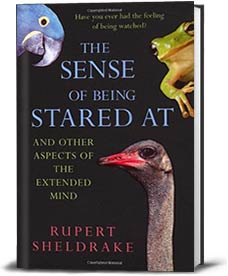
The Sense of Being Stared At and Other Aspects of the Extended Mind
By Rupert Sheldrake
Arrow Books (2004)
Book Review
The aim of The Sense of Being Stared At is to offer a plausible scientific hypothesis for a range of so-called “psychic” and “paranormal” phenomena. In his book, biologist Rupert Sheldrake catalogs an extensive compendium of controlled research into a variety of psychic phenomena.
In all, he examines eight of the most widely entertained theories of “psi,”* the technical term for parapsychological or psychic faculties and phenomena. The one he favors is based on concept of “morphogenic fields, ” a biological process which determines how flowers, fruits and various animal species develop from the embryo stage to take up their specific form.
The Theory of Morphogenic Fields
According to microbiological research, the final form of a tissue or organ can’t be satisfactorily explained on the basis of genetics. Genes act by causing the transcription of specific proteins. Yet no genes have been discovered that cause these proteins to organize themselves into specific shapes.
Scientists who subscribe to morphogenic field theory believe the final shape of biological structures is determined by energy fields similar to gravitational or electromagnetic fields. These fields are believed to contain “attractors,” which draw systems under their influence towards specific goals. The most dramatic examples are found in bees and termites in which some force (ie a morphogenic field) affects the collective behavior of hundreds and thousands of individuals to enable them to construct an architecturally perfect beehive or termite mound. It seems likely that similar morphogenic fields influence the behavior of flocks of birds and schools of fish.
Sheldrake also believes there is good evidence that morphogenic fields also influence human perceptions, thoughts and mental processes. The morphogenic fields created by mental activities are called mental fields. Through mental fields, the extended mind reaches out into the environment through attention and intention and connects with other members of an organism’s social group. He believes these mental fields help explain telepathy, the sense of being stared at from behind, clairvoyance* and psychokinesis.**
The mental fields created by intentions into the future may also play some role in premonitions and precognition.
Vision is a Two Way Process
To understand how the extended mind causes various psychic phenomenon, it’s necessary to entertain the possibility that images we perceive with our eyes don’t merely exist inside our brain, as conventional science dictates. Sheldrake, along with a growing number of biologists, believe that these images occur in front of us in three dimensional space, exactly as we perceive them. In other words, vision involves a two-way process, an inward movement of light and an outward projection of images.
This outward projection functions as a morphogenic field. When a person stares at another person from behind, the projection of the starer’s attention means his field of vision extends out to “touch” the person he’s staring at.
Mind Reading Parrots
Most of Sheldrake’s book is devoted to the wealth of controlled studies which have been conducted into paranormal activity. I found the animal studies the most interesting. My favorite involved a parrot with a 750-word vocabulary. When his owner was in a separate room viewing random images, it was clear from his commentary that he was reading her emotional reaction to them.
Some examples:
When she was looking at flowers: “That’s a pic of flowers.”
When she was looking at a mobile phone: “Whatcha doing on the phone.”
When she was looking at two people in skimpy swimming gear. “Look at my pretty naked body.”
When she was looking at a purple car: “Oh wow, look at the pretty “purple.”
Sheldrake holds the distinction of having his TED talk banned from the TED network, Fortunately his supporters have uploaded the talk to YouTube
*Clairvoyance is the ability to gain present or past information about an object, person, location or physical event through means other than the known senses, as opposed to precognition, which is the ability to see events in the future.
**Psychokinesis is a psychic ability allowing a person to influence a physical system without physical interaction (eg to use “psychic powers” to bend a fork).
A short highly amusing documentary tackling the myth that human beings are superior to other species.
The film starts by making a list of so-called uniquely human skills and finding other animals who demonstrate equal or superior capabilities in the same areas.
Examples I found most impressive were termite architectural skills, an elephant who can paint his own self-portrait, crows who routinely invent and use tools, cats and dogs who can sniff out cancer and dolphins and prairie dogs with complex language skills. Experiments with prairie dogs indicate they communicate complex ideas with complicated grammatical constructs. For example: “The short man in the blue shirt is coming and he’s carrying a gun.”
According to filmmakers, the only truly unique skill possessed by human beings is their capacity to mass exterminate other life forms.
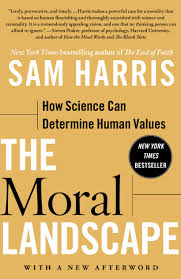
The Moral Landscape: How Science Can Determine Human Values
by Sam Harris (Bantam Press 2010)
Book Review
The historical record indicates religion has been pretty hopeless in guiding human beings in leading moral and ethical lives. The Moral Landscape outlines a proposed morality based on objective scientific principles.
Sam Harris, a PhD neurophysiologist, bases this proposed morality on the principle of maximizing human well being. Because human well being is a function of world events and states of the human brain, there must be some truths about morality that can be scientifically verified. Harris maintains that a more detailed understanding of these truths would greatly improve the quality of human life.
For example, he asks whether corporal punishment of children, female genital mutilation and honor killings* are beneficial to human well being. There must be an answer to these questions (which can be established by research), even if we don’t know, at present, what it is.
The book is highly critical of the “cultural relativism” advocated by secular liberals and many US scientists when they insist there are no objective answers to the moral questions Harris poses. He believes this attitude leaves secular societies at the mercy of fundamentalist religion. Harris (an avowed atheist) also argues that obedience to God creates a morality that is more concerned with a theoretical afterlife than human well being in this lifetime.
The development of a science-based morality would have to weigh the ultimate well being of the individual vs the general well being of the society. It would also be open to controversy and dissenting viewpoints, like all scientific disciplines.
Harris’s chapter on religion describes how Freud, Marx and other prominent nineteenth century intellectuals believed the world religions would disappear with the scientific advances that enabled the industrial revolution. With the exception of the US, their predictions proved correct: most developed societies are predominantly secular.
At present most societies become more secular as they become more prosperous stable and democratic (in New Zealand, only 10% of the population attends church). Moreover the least religious countries (Scandinavia and the Netherlands) have the best societal health. Research shows that loneliness, helplessness and poverty are poorly conducive to happiness and moral behavior.
At present fundamentalism is limited to the US and developing countries. Harris believes that high levels of inequality have caused America to take a different path than other developed countries. Extreme poverty in many areas of the US is linked to low levels of educational achievement, superstitiousness, excessive religiosity and racism.
* Honor killings are acts of vengeance, usually death, committed by male family members against female family members, who are held to have brought dishonor upon the family.
Forget Shorter Showers is a documentary based on an essay by anarchist Derrick Jensen that challenges neoliberal dogma that makes each of us personally responsible for reversing the ongoing environmental destruction caused by industrial capitalism. Consumers who have joined the campaign to fly and use their cars less, change their light bulbs and take shorter showers are the victims of systemic misdirection by a pernicious PR industry. The latter continuously churns out propaganda that we can save the planet through market-based solutions such as shopping.
Al Gore’s movie An Inconvenient Truth is a classic example of this deliberate misdirection. Instead of calling for policy changes that hold corporate polluters to account, his film deliberately disguises the reality that industry is responsible for the vast majority of carbon emissions. In doing so, Gore incorrectly blames powerless individuals for the climate crisis, instead of the elites who hold real the real power.
Lifestyle Only Accounts for 22% of Emissions
If the entire global population adopted a low carbon footprint lifestyle, it would only decrease carbon emissions by 22%. Climate scientists tell us we need to decrease them by 70% to stave off catastrophic climate disruption.
In a similar vein, reducing individual water usage isn’t going to solve the freshwater shortage. Ninety percent of all freshwater is used by agriculture and industry. Five percent is used by municipalities, and 5% by individuals.
Industry is also responsible for the vast majority of energy consumption and waste production.
How We’re Conned into Taking Personal Responsibility
The filmmakers point out that we’re easily conned into taking personal responsibility for all these environmental issues because it’s less scary than acting decisively to stop the industrial capitalism from destroying the planet. Among other fears, people worry the grid might go down, causing us to lose access electricity, clean water and cellphone service – not because we need these perks to survive but because we’ve become addicted to them.
Fear of state violence is also a biggie. The documentary provides numerous historic examples of courageous activists who have overcome such fears.
Directed by Lawrence Le Lam, Rik Klingle-Watt (2014)
Film Review
Not Business as Usual challenges the maxim promoted by neoliberal economist Milton Friedman that corporations have no social obligation beyond providing a short term financial return to their shareholders. It traces the rise of “conscious capitalism” and the “B corporation,” which started from a 1989 Colorado meeting of the founders of various socially responsible corporations, including Patagonia, the Body Shop and Ben and Jerry’s.
The goal of the B corporation is to introduce social responsibility to capitalism. Thus far 20 states have introduced regulations for chartering B corporations, and 18 are working on pending legislation. Criteria for becoming a B corporation include responsible environmental practices, demonstrated commitment to the community and fair treatment of employees. According to the film, a B corporation commits to high environmental and employment standards along the entire supply chain. Thus a B corporation selling eco- apparel commits that the contractor producing the garments isn’t ruthlessly exploiting workers or discharging harmful chemicals into Bangladeshi waterways.
The documentary highlights a number of B corporations whose activism has resulted in groundbreaking changes in their communities and, in some cases, the third world. I was particularly intrigued by a B corporation called Lunapads. Lunapads has introduced low cost, washable menstrual pads to 120,000 women in the third world. In Uganda and other African countries, teenage girls typical skip school during their period when they lack access to affordable menstrual pads. In addition to keeping teenage girls in school (and unmarried), local manufacture of Afropads has created hundreds of local jobs.
Can the “Conscious Capitalism” Movement Save Capitalism?
The filmmakers contend the “conscious capitalism” movement will save the capitalist economic system. They argue that consumer pressure will eventually force all corporations to become more socially responsible – insisting consumers are demanding more socially responsible products and are happy to pay more for them.
I find a number of fallacies in this argument. In the first place, it’s only middle class consumers who are “demanding” ethical products, a middle class that is rapidly vanishing in most of the industrialized world. Minimum wage workers who are a paycheck away from the street have no choice but to opt for the cheapest clothes, foods and household goods they can find.
Secondly the present economic and environmental crisis is driven by powerful monopolies, particularly in the banking and defense industry. The thought of banking monopolies like Goldman Sachs or JP Morgan suddenly transforming themselves into B corporations is ludicrous. At present the main obstacle preventing entrepreneurs from forming B corporations is the unwillingness of Wall Street banks to provide start-up funding.
Thirdly while the social activism of individual B corporations is extremely laudable, I question the criteria used for measuring community responsibility. Surely a B corporation that’s truly committed to their community wouldn’t be seeking out “ethical” apparel contractors in Bangladesh. Surely they would be bringing these jobs back home to their local region.
The irony here is that many of the entrepreneurs who started the “conscious capitalism” movement made their fortunes by selling up to multinationals who clearly don’t share their vision. Ben and Jerry’s sold up to Anglo-Dutch food giant Unilever in 2000, and in 2006 the Body Shop agreed to a takeover by l’Oreal.
We have approached our local Body Shop outlet numerous times about supporting local environmental issues (ie fracking, fecal runoff from dairy farms). Claiming “corporate-wide policy,” they won’t even permit us put a poster in their front window.


 The Most Revolutionary Act