The Chile of the Pacific

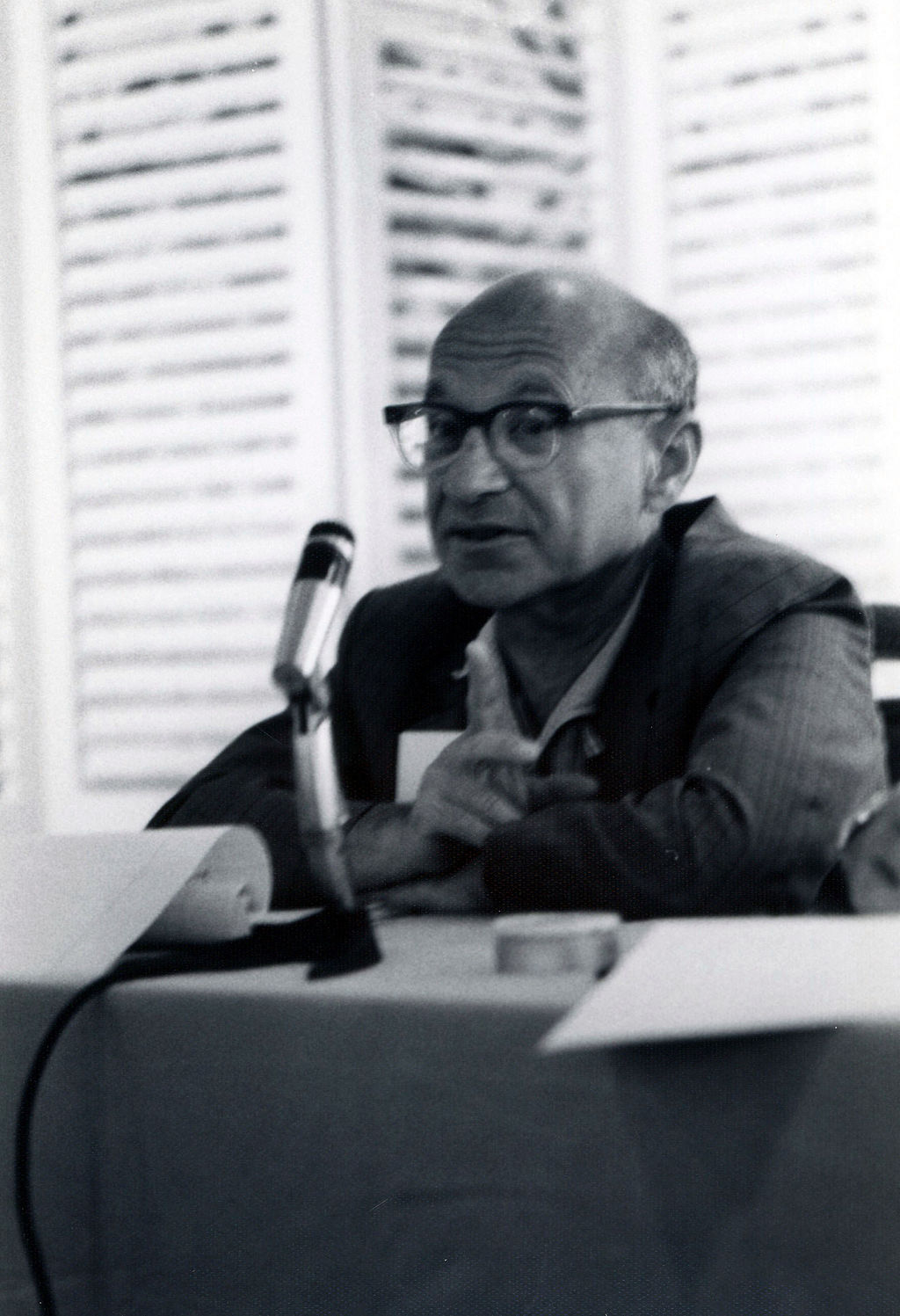
Milton FriedmanMilton Friedman from Wikimedia Commons

(The 6th of 8 posts about my new life in New Zealand.)

An Early Laboratory for Neoliberal Reforms

Overall I have enjoyed numerous lifestyle advantages living in New Zealand. There are a few notable exceptions, of course, beyond the emotional isolation of being separated from my family and American friends. Most relate, either directly or indirectly, to New Zealand’s historic role as “the Chile of the South Pacific.” During the 1980s, New Zealand was used as a laboratory for the neoliberal reforms subsequently implemented by Ronald Reagan and Margaret Thatcher.

In theory, neoliberalism is a “market-driven” approach to economic and social policy that stresses the efficiency of free enterprise and opposes government regulation of corporate recklessness and any government role in public services other than law enforcement. In practice, neoliberal policies have been universally pro-corporate and anti-free market, promoting vast amounts of legislation (tax law, government contracts and direct corporate bail-outs) that favor large corporations at the expense of both small business and ordinary citizens.

The University of Chicago is usually credited as the birthplace (in the 1960s) for neoliberalism and Milton Friedman as its father. A frequently overlooked aspect of the CIA’s 1973 coup in Chile was the direct role University of Chicago economists played in assisting Chilean dictator Augusto Pinochet in setting out the neoliberal economic reforms enforced by his brutal regime. New Zealand played a similar role in the early eighties, by trying out neoliberal policies that were later adopted by Britain and the US.

New Zealand: a Second World Country

At present New Zealand is a relatively poor, second world country. It ranks 20th in GDP for OECD countries. Americans are always struck by the high cost of living here relative to wages and salaries. Although average income is much lower than in other developed countries, the cost of basic necessities is just as high. At times it’s much higher, particularly in the case of gasoline, home energy costs and fresh meat and fish.

Central heating is virtually non-existent – in part because so few people can afford it and in part because the (colder) South Island has no access to piped natural gas. Just so no one has any illusions about our climate, the New Zealand winter is relatively short. However except for the far north, it gets just as cold here as in northern California and the Pacific Northwest.

Here We Call It Rogernomics

In 1975 New Zealand was 10th in the OECD in per capita GDP. Prior to the eighties, the UK was always the primary importer of New Zealand lamb and dairy products. In the early 1980s, these policies changed, and Britain began to favor European Union trading partners over commonwealth countries.

Increasingly, however, many economists blame the draconian reforms Minister of Finance Roger Douglas enacted in 1984 for the decline in Kiwi living standards. So-called “Rogernomics” was responsible for the institutionalization of a large and steady wealth transfer (as profits and dividends) to overseas corporations. This in turn has led to a large, chronic accounts deficit (negative balance of trade), which has led to many other economic problems.

It’s only with the 2008 economic collapse and the non-existent US recovery that American analysts are starting to appreciate the devastating impact that “Reaganomics” – the main culprit in the virtual collapse of American manufacturing – had on the US economy.

In a country 1/60th the size of the US, the damage was much more immediate and obvious.


The Sacrifices of Empire

(The 4th of 8 posts regarding my 2002 decision to emigrate from the US to New Zealand)

It only became clear once I left the US the immense sacrifices Americans make for their cheap gasoline and consumer goods (see previous post). The most obvious is a range of domestic programs that other developed countries take for granted. These include publicly financed universal health care (in all industrialized countries except the US) and a range of education, jobs and social programs enacted under Roosevelt, Kennedy, Johnson and Nixon, which Reagan, Bush and Clinton repealed.

With a so-called war on terror on multiple fronts (I can count at least ten countries the US is at war with), federal block grants to states and cities have all been diverted to Pentagon spending. In city after city, there is no money to repair badly decrepit roads and bridges or provide adequate street lighting and policing. While dozens of clinics, libraries and homeless shelters shut their doors and teachers, cops and other state and local employees get laid off.

Sacrificing Democratic Rights and Civil Liberties

As citizens of the world’s greatest military power, Americans also make major sacrifices in terms of democratic governance and civil liberties. This, too, only became clear once I became an expatriate.

Genuine democracy is totally incompatible with military empire. If allowed some say whether to spend most of their tax dollars on weapons and war, the vast majority of Americans would respond with a resounding “no.” Civilian populations are universally repelled by the carnage of war. Women, who comprise more than fifty percent of the population, consistently oppose any military tactics that kill large numbers of civilians. Likewise taxpayers of both sexes expect to see their hard earned tax dollars spent on public programs that benefit them. Not to enrich Wall Street banksters and corporate war profiteers.

Ordinary Romans felt the same way. Which was the main reason their leaders abandoned democracy when they undertook to expand the Roman republic into an empire.

Creating a Constitution Conducive to Empire

There’s also a clear link between the growing wealth an power of banks and multinational corporations and the recent attack on democratic rights and civil liberties (the repeal of habeas corpus and legalized government spying authorized under the Patriot Act and NDAA).

This relates, in my view, to structural flaws in the US system of government that make it less democratic than other industrialized countries. These mostly relate to what the Constitutional framers referred to as “separation of powers.”

In social studies we were taught these “checks and balances” were intended to make the US government more democratic. However it’s clear from the writings of Hamilton, Madison and other constitutional framers that their real intent was to minimize the risk of a direct popular vote harming the interests of wealthy landowners and merchants.

In their writings, the founding fathers make no secret of their imperialistic ambitions (their plans to declare war on the Native Americans and Mexicans who possessed the lands west of the 13 original colonies). This military expansionsim was extremely unpopular with a mainly rural, farming population that experienced immense personal and economic hardship during the Revolutionary War.

And military expansion didn’t end when the US seized the Southwest and California from Mexico. In 1895, the US declared war on Spain to expand the empire to include Cuba, Puerto Rico, Hawaii, the Philippines and other Pacific islands.

Parliamentary Democracy=One Man One Vote

Unlike the majority of industrialized countries, the US doesn’t employ a “one-man-one-vote” system of representational democracy. The only hope our Constitutional framers had of enacting their pro-business, pro-military agenda was to establish two branches of government (the Senate and Presidency) that wouldn’t be determined by direct popular vote. The idea was to block populist legislation enacted by the democratically elected House of Representatives

After 11 1/2 years experience with New Zealand’s, parliamentary democracy, I have absolutely no doubt that it’s more democratic than the US system. Under a parliamentary system, the head of the party controlling the majority of legislative seats automatically becomes chief of state. The moment the prime minister loses the majority he/she needs to pass legislation, the government collapses and a new election is called. This is in marked contrast to the US Congress. The latter has been virtually paralyzed for 30 years – while American schools and the US health care system continue to disintegrate in front of our eyes.

Another important advantage of a parliamentary democracy is the establishment of an official opposition party, which is expected to attack and embarrass the party in power. The result is vigorous and often raucous parliamentary debate, characterized by booing, cheering and outright heckling by members of the opposition parties.

Open “bipartisan consensus,” which is so heavily promoted by the US mainstream media, would be extremely unpopular in New Zealand. The majority of Kiwi voters retain a strong working class consciousness and are extremely dismissive of politicians with open ties to the corporate and business lobby.

Video of Question Time in NZ Parliament:

The Role of Youth in Making Revolution

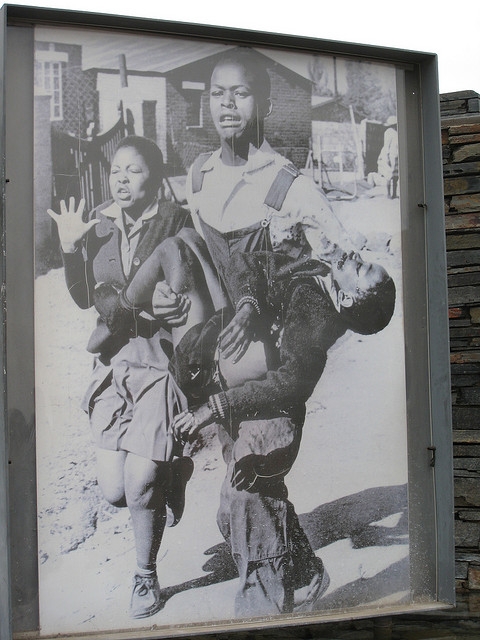
soweto

(Sharing more of my research for my new novel A Rebel Comes of Age)

Much has been made of the role of youth in sparking the “Arab Spring” revolutions in the Middle East and North Africa. The willingness of Arab citizens to rebel against some of the world’s most oppressive regimes is a new and significant phenomenon. It highlights the distinction between political and psychological oppression. Psychological repression is a state of wholesale resignation, when a population believes any resistance will be totally crushed.

The Role of Youth in Sparking Revolution

Youth are nearly always the engine behind any movement to throw off psychological oppression. Older people have an overwhelming drive for “business as usual.” Austrian-born child psychologist Bruno Bettelheim credits this drive for the failure of European Jews to resist the Nazi campaign to enslave and exterminate them. Teenagers, in contrast, possess an illusion an illusion of immortality. They often find it difficult to grasp the finality of death.

Lessons from History: Soweto and the Intifada

Both the 1976 Soweto uprising in South Africa and the first Palestinian Intifada (1987) were initiated by teenagers. Both South Africa and Palestine were riding the crest of a baby boom and faced high youth unemployment. In addition, both the South African townships and occupied Palestine faced a general breakdown in parental authority. In both settings, parents traveled long distances (to Johannesburg or Israel). A whole generation of children, were left on their own to raise themselves. The link between the breakdown of parental authority and youth rebellion is a major theme of my first novel The Battle for Tomorrow.

The Anti-Apartheid Movement

The 1976 Soweto uprising is widely credited as the start of mass popular resistance to apartheid. The students who started it came from a generation that essentially raised themselves. Strict pass laws implemented in the 1950s forced many black residents to give up to their homes in South African cities and move to black-only townships or Bantustans, where there was no work. The only work open to black men was in remote work camps at the gold and diamond mines. While Sowetan women worked as domestics and nannies for white families in Johannesburg and only returned to their own children on weekends.

In 1976 Soweto teenagers had a lot in common with homeless teens, third world street children and “young carers” (children who care for parents with physical or mental disabilities or drug and alcohol problems). Forced to look after themselves from an early age, it’s typical for these teenagers to exhibit  precocious maturity.

Conditions that Politicized the Bantu Schools

The event the triggered the 1976 uprising was a decree requiring that all Bantu schools teach their subjects in Afrikaans (the language of the original Dutch settlers of South Africa), rather than English. Owing to atrocious conditions in the Bantu schools, students were already highly politicized. While education in white schools was free, black parents were charged 51 rand a year (a half month’s salary) The Bantu schools were also incredibly overcrowded, with sixty or more students per class and teachers who often had no education qualifications.

The prelude to the June 16 uprising was a classroom boycott in early June of seventh and eight graders at Orlando West Primary School. Students from seven other Soweto schools immediately joined in. On Sunday June 13th, 400 students met in Orlando (hard to imagine without cellphones Facebook  or Twitter) to call for a mass boycott and demonstration for June 16th. They also made a pact not to inform their parents, who they believed would try to stop them.

On June 16, fifteen to twenty thousand students age 10-20 in school uniform met at Orlando West Secondary school to march to the stadium. When the students refused to disperse, the police opened fire, killing several. The others went wild, throwing rocks and bottles at the police and setting fire to all symbols of apartheid – government buildings, liquor stores, beer halls and trucks, buses and cars belonging to white businesses.

Where Deadly Police Force Fails

The next morning rioting spread to other townships, as well as to Pretoria, Durban and Capetown with “colored” (mixed race) and Indian students also joining the rebellion. The police were totally unable to quell the rioters, even with force, owing to the students’ greater numbers and their total disregard for their own safety. It would take sixteen months for peace to be restored in the townships.

(To be continued, with a discussion of the role of teenagers in the Palestinian  Intifada.)

***

***

Rebel cover

In A Rebel Comes of Age, seventeen-year-old Angela Jones and four other homeless teenagers occupy a vacant commercial building owned by Bank of America. The adventure turns deadly serious when the bank obtains a court order evicting them. Ange faces the most serious crisis of her life when the other residents decide to use firearms against the police SWAT team.

$3.99 ebook available (in all formats) from Smashwords:

https://www.smashwords.com/books/view/361351

Teen Homelessness: An American Disgrace

homeless teen

(Sharing some of my research for my new novel A Rebel Comes of Age.)

In the US, children under 18 represent one-third of the US homeless population. 2.8 million American children have at least one episode of homelessness every year, while 1.35 million are permanently homeless.

Sadly it’s not a new problem. Seattle first became concerned about their homeless teens in the 1990s. In 1999, shortly before moving to New Zealand, I worked in a community clinic with a special outreach program for homeless teenagers.

Prior to the 2008 economic meltdown, approximately ten percent of homeless teens had access to state and city-run shelters. Over the last five years, chronic state and city budget deficits have forced  most of them to close.

US Teen Homelessness Rivals the Third World

In third world countries, homeless children are called “street kids.” The US government prefers to call them “unaccompanied minors.” Giving it a fancy name on it doesn’t hide the fact that rate of homeless American children per capita is worse than some third world countries.

Among countries who keep a count of homeless children under 18, India has the highest rate of street children per capita, with 1 homeless child per 61 residents. Egypt is next with 1 per 110, then Pakistan (1 per 120), Kenya (1 per 133), Russia (1 per 141), and Congo (1 per 148).

The per capita rate of child homelessness in the US is 1 per 245 residents. This is worse than the Philippines (1 per 360), Honduras (1 per 370), Jamaica (1 per 419), Uruguay (1 per 1,000), and Morocco (1 per 1066). Germany, in contrast, has 1 homeless child per 4,100 residents.

Why American Teens Become Homeless

Approximately fifty percent of homeless teenagers wind up on the streets due to conflict with their parents. Another twenty percent are there due to a breakdown of their foster care placement. Others are homeless because their parents are homeless.

Of teenagers made homeless by family conflict, forty percent are lesbian, gay, bisexual or transsexual teens whose parents refuse to accept their sexuality (25% of LGBT teens are rejected by their parents). Another large proportion are victims of physical, sexual and/or emotional abuse. Forty percent of homeless teenagers report being beaten. Twenty-five percent report a history of sexual abuse. Forty percent have parents who are mentally ill or who have substance abuse problems. Ten percent have run away because they’re pregnant. Some leave home because of alcohol and drug problems of their own.

Many homeless teens work at minimum wage jobs that don’t pay enough for an apartment. However faced with a (true) unemployment rate over 20%, most face long term unemployment.

Good links regarding teen homelessness:

http://en.wikipedia.org/wiki/Street_children

http://www.psychologytoday.com/blog/teen-angst/201101/homeless-teens

http://globalgeopolitics.net/wordpress/2011/03/31/u-s-budget-cuts-threaten-handful-of-beds-for-homeless-youth/

http://www.shelterhouse.on.ca/article/youth-homelessness-147.asp

http://www.dosomething.org/actnow/tipsandtools/background-11-causes-teen-homelessness

photo credit: Tanya Dawn via photopin cc

***

Rebel cover

In A Rebel Comes of Age, seventeen-year-old Angela Jones and four other homeless teenagers occupy a vacant commercial building owned by Bank of America. The adventure turns deadly serious when the bank obtains a court order evicting them. Ange faces the most serious crisis of her life when the other residents decide to use firearms against the police SWAT team.

$3.99 ebook available (in all formats) from Smashwords:

https://www.smashwords.com/books/view/361351

The Way Forward

battle

Guest Post by Steven Miller

(In this final of 6 guest posts, Miller discusses the role of reform in drawing people into action against the state.)

Nothing Can Be Done by Fighting for Reforms and Nothing Can Be Done Without Fighting for Them

We can summarize the salient features of the situation. Speculators wield massive political power in the US and the world. This is rooted in their absolute control of all forms of technology as private corporate property. At the same time, corporations are merging with the state. Speculators direct the capitalist class to use state political power against the people. They are engineering an escalating class war from the top against the rest of society. The capitalist class is compelled to implement electronic laborless production only in the narrow and limited ways that guarantee corporate profits.

Speculators crashed the economy in 2008 by bundling toxic mortgages into “investment tools”. Now they are doing the same with rents. Meanwhile, the situation has metastasized. There is no longer just one economic bubble. The Masters of the World are addicted to financial warfare based in bubble wars. In essence, these are just sophisticated video games that are played 24 hours a day using the assets of the public. Like days of yore, armies of mercenaries rampage across the land, despoiling the public. Like video games, they produce thrilling speculative battles with individual winners and losers. Unlike video games, they do this with the necessities of life.

So… can this situation be reformed? In other words, can the power of capital be limited or significantly altered so that the current crisis of destruction can be reversed, so that humanity can develop a sustainable economy that benefits people, rather than debasing them?

The answer is pretty clear: there can be no significant reforms. Capitalism’s feeble efforts to address Global Warming indicate this. As with the economy itself, capitalism is driving things inexorably towards greater instability and crisis. Reforming even one aspect of the situation – simply halting evictions, for example – would take a social movement on a scale never before seen. Even the uprisings of the Arab Spring have not fundamentally altered the situation. Everything today is influenced by the subjective understanding of the enormous class of people who can only survive by working.

The paradox is that nothing can be won by fighting for reforms and nothing can be won without fighting for them. There are no revolutionary reforms by definition. Reforms do not alter political power, yet reform is what draws people into action against the state. People must engage in the revolutionary struggle for reforms by doing the teaching, by elevating the discussion of where these political struggles are headed. This includes presenting a revolutionary vision of what society could be if technology were used to create real economic democracy, with democratic popular control of technology guaranteed at every level.

Capitalism intends to control and sanitize this debate:

Capitalism is a sorry excuse for an economic system. With no present viable alternative, contemporary capitalism continues to produce cruel economic results and a twisted morality. But a debate is underway. Even the Harvard Business School, the birthplace of many of capitalism’s excesses has a large project in ‘Rethinking Capitalism.” (23)

So re-think this. Everyone sees that the private corporate control of technology is not sustainable. It inevitably leads to short-term thinking, based only on the interests of private profit. This produces nightmares in every direction from climate change to corporate agriculture, new diseases, Big Pharma and the despoliation of the environment from the insane overuse of petroleum in all forms. Corporations are behind it all.

But the corporate control of technology is not an Act of God. In fact, in the ‘90s, the US Post Office proposed developing an open and democratic Internet for everyone. Bill Clinton immediately squashed that one, intoning that corporations are the best way to develop this amazing tool. Since corporations inevitably deform the potential uses of technology in order to make a profit, they are not fit to control it. Period.

Youngdahl can see “no present viable alternative” because he cannot imagine the public seizure of private corporate property. Capitalism uses its Media-Industrial State to confuse the issues. We are supposed to believe that democracy is an economic system, which it is not. Then they confuse the concepts of the government and the state. We are supposed to rail against “big Government” when government is a fundamental necessity to guarantee people the things they cannot provide for themselves. Like sewers, for example. What people really don’t like – as we see with the NSA scandal – is the capitalist state, not the government.

Some people believe that we can succeed in replacing the rule of the 1% by ignoring it and building local cooperative efforts. This view is what Chris Hedges argues in “Overthrow the Speculators!”:

We can wrest back control of our economy, and finally our political system, from corporate speculators only by building local movements that decentralize economic power through the creation of hundreds of publicly owned state, county and city banks… Public banks also protect us from the worst forms of predatory capitalism.” (24)

Interesting question. Why bother to get rid of simply the worst forms of predatory capitalism? It’s still predatory; it’s still capitalism.

Today Americans are under an onslaught from ALEC, the corporate lobbyists who write the corporate laws, the NSA and public surveillance in many forms, a governmental refusal to regulate capitalism in any form, plus the legalizing of extraordinary rendition and drones. The state is not going to permit any weeds to grow in the garden of speculation. This strategic question is not something to ignore.

Takeovers can work both ways. America has reached the point twice before where forms of private property were strangling the very life out of society. In the 1770s, when the 13 Colonies were the private property of the King, the American people rose up and abolished this private property. This power was exercised through private corporations, such as the Virginia Corporation, which raised private armies of mercenaries. Corporations today have reclaimed this power, aided and abetted by the Department of Homeland Security. In the 21st Century, there are more private police than public police in America.

In the 1850s, private property in slavery controlled all three branches of government – the Presidency (which includes the army), the Supreme Court, and the Congress. Slave property worked day and night to extend its rights over the rights of regular people, through the Dred Scott decision, the Fugitive Slave Act and a host of other actions. Recognizing that they could no longer continue to live free, the North waged the Civil War to expropriate private property in slaves and break their political power.

Move To Amend – an organization developed to abolish corporate rights as people and money as speech – is one group that addresses the issue of expropriation: “Slavery is the legal fiction that a person is property. Corporate personhood is the legal fiction that property is a person.” (25) After all, if corporations can expropriate the public – as they are actively doing today – the public can expropriate the corporations.

The third time is the charm.

Steven Miller, Oakland, California, January 2014 –  nanodog2@hotmail.com

….And a big Shout-Out to the Zapatistas – 20 years ago today!

References and Resources

23)  Jay Youngdahl. “2013 was a year of Heroes and Hope”. East Bay Express. 12-25, 2013

24)  Chris Hedges. “Overthrow the Speculators!”. 12-29-2013

25)    The Myth of Corporate Personhood. Turning the Tide.
photo credit: ryanophilly via photopin cc

***

Steven Miller has taught science for 25 years in Oakland’s Flatland high schools. He has been actively engaged in public school reform since the early 1990s. When the state seized control of Oakland public schools in 2003, they immediately implemented policies of corporatization and privatization that are advocated by the Broad Institute. Since that time Steve has written extensively against the privatization of public education, water and other public resources. You can email him at nanodog2@hotmail.com

Originally posted at Daily Censored

Corporate Predators Invade San Francisco

san francisco

Guest blog by Steven Miller

 (This is the 5th of 6 guest posts in which Miller discusses the corporate vultures descending on the Bay Area)

San Francisco’s Invasion by Corporate Predators – Part V

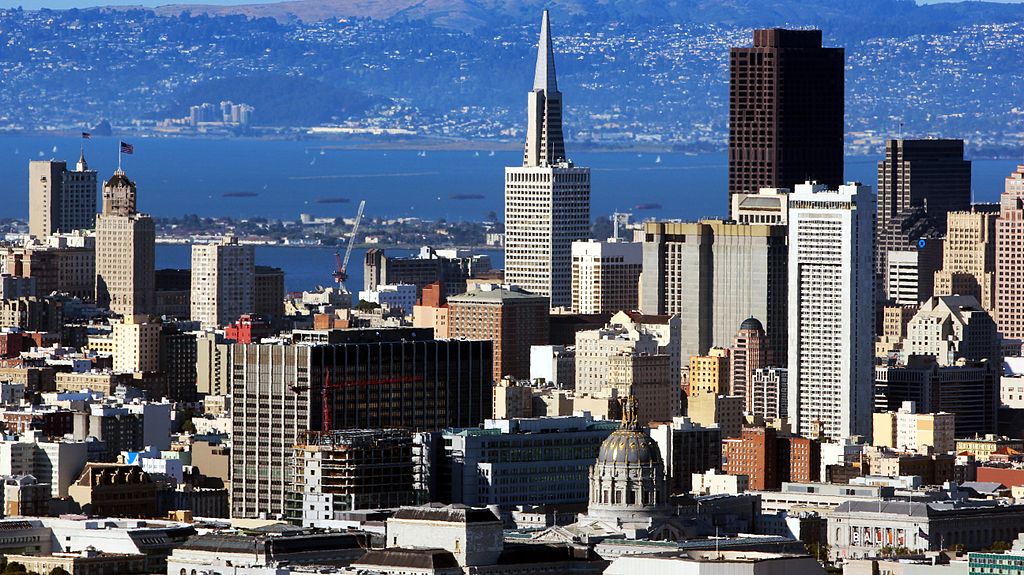
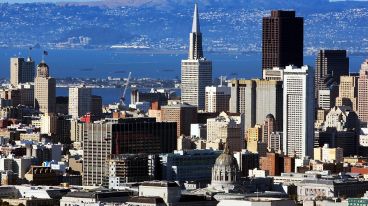
These are the best of times…. or so it appears. San Francisco is succeeding Detroit as the pre-imminent manufacturing city in America… except it does not manufacture tangible products. This development is amazing, since the city is isolated on a peninsula and never developed a large manufacturing base in the Industrial Era. For decades a Western center of finance, San Francisco is becoming the center of the high-tech industry, which produces intangible digital products, an extension of Silicon Valley 50 miles south.

The city’s population is over 800,000, the highest in history, as tech workers flood the city. Carl Guardino, president and CEO of the Silicon Valley Leadership Group notes that well over 100 of his 391 member companies “either have headquarters or a strong physical presence in San Francisco”. (15)

The economy of the Bay Area has reached pre-2008 levels, but with 200,000 fewer jobs. The difference is in the greater use of electronic technology, which inevitably means laborless production.  (16)

In this respect, the economies of San Francisco and Detroit are moving in the same direction. This trend, reflected throughout the US and the world in general, gives the lie to glib pronouncements by politicians that they will create more jobs. The hard reality is that there will be fewer and fewer jobs because technology needs ever fewer production workers.

Electronic technology is now so productive that it no longer requires people work 40 hours a week. Thus corporations are engineering Temp World right before our eyes. Part-time workers, permatemps, precariats, contingent workforce, outside contractors, flexible contract workers, personal entrepreneurs – the names change, but a new model of work is being imposed. (17)

One of the city’s vaunted hi-tech start-ups is Task Rabbit, where someone posts a job on line – anything from moving a couch to creating a website – and a mob of desperate workers, many with advanced degrees, compete to place the lowest bid. This is the hi-tech version of the day laborer shape-up that happens every morning as construction workers, mostly without papers, battle each other to work for contractors. This trend reflects capitalism’s latest production model of outsourcing production through chains of sub-contractors.

At the other end of the pole, well-off techies have suddenly discovered the wonders of capitalism and wax profound about the libertarian virtues of a society where everyone free-lances. Though they believe they are creating the new glamorous world of work, they are simply establishing the visionary model of capitalist work in the electronic era, articulated in the 1994 Fortune Magazine article “The End of the Job”:

As a way of organizing work, the traditional job is becoming a social artefact, created in the 19th century and well suited to the demands of a newly industrial world, but poorly adapted to a fast-moving, information-based economy. Its demise confronts everyone with unfamiliar risks — as well as rich opportunities.”  (18)

Laborless production generates the polarization of wealth, the polarization of the job market and the polarization of society. Techies can afford to pay super-high rents. Immediately after the Melt Down, a massive wave of evictions swept the country. Many of these have been shown to be completely illegal. Now a new wave of evictions is being implemented across the city, leading to the eviction of working class families across the city. Evictions of entire buildings for purposes of sale are up 170% since 2010. (19)

Rebecca Solnit describes the Google buses that roam the San Francisco, picking up tech workers to carry them to Silicon Valley, “Most of them are gleaming white, with dark-tinted windows, and some days I think of them as the spaceships on which our alien overlords have landed to rule over us. (20)

The new evictions really reflect the penetration of speculation through the economy. Wall Street’s new campaign is to turn rental homes into cash cows! The banksters caused the 2008 Meltdown by bundling predatory mortgages together as “a security” that could be bet on, either for or against. Now they are securitizing rents themselves to serve as fodder for the new amped up Casino Economy. When the next crash hits, will Americans again be so gullible to accept the “too big to fail” line once again?

Dave Ransom reports on how this is going down in the San Francisco Bay Area:

Oakland-based Waypoint Homes, for instance, calls itself “a next generation real-estate company.” It holds title to more than a thousand homes. And it is attracting serious capital to buy several thousand more—$2 billion from Silicon Valley venture capitalists and real-estate investors.

 “Waypoint buys foreclosed homes from banks or in auctions on the courthouse steps, generally at a steep discount. After fixing them up, it rents them out for a good deal less than the original mortgage payment.

 “That sounds good until you realize that, if the banks had offered the families living in the homes the same deal they offered Waypoint, those families could probably have avoided foreclosure entirely.

 “This spring, the Obama administration announced a plan to sell foreclosed homes owned by the government’s housing agencies—Fannie Mae, Freddie Mac, and the FHA.

 “But the hedge funds and private-equity firms are pressuring the administration to offer them cheap financing and guarantee they will be bidding on lots of as many as a thousand homes at a time.

 “Who currently holds the mortgages to these homes? We the People do—the 99%. Fannie Mae, Freddy Mac, and the FHA—all government backed and bailed out by the taxpayers—hold half the country’s mortgages, dumped there by the banks when the housing bubble burst.  (21)

Thom Hartman describes the same phenomenon nationally in his book The Crash of 2016:

Among the firms and big banks buying up America’s real estate is the Blackstone Group, the largest private equity firm in the world. The Blackstone Group alone has bought nearly 40,000 houses across America, spending $7.5 billion in the process.

Blackstone, for example, bought 1,400 homes in Atlanta in one day, and owns nearly 2,000 houses in the Charlotte, North Carolina metro area.

So why are Blackstone and other Wall Street firms buying up foreclosed homes all across the country? It’s simple. By renting these homes back to Americans, and securitizing America’s home-rental market, they can bundle up rental payments the same way they used to bundle mortgage payments, and sell them to investors.”

The predators are again up to their old tricks. Nothing has changed.” (22)

This is madness! The speculative section of capitalism is in the driver’s seat, but the only solution they can offer to any problem is… more speculation. They use carbon futures to speculate on the very atmosphere, and intend to make a profit all the way through Global Warming and the end of human society, as we know it.

References and Resources

15)  Patrick May, “Is it now the ‘Silicon Bay Area”? Oakland Tribune. 11-13-2013

16)  Caroline Said. “S.F. Bay Area economy thriving despite challenges”. 3-17-2012

17)  NPR Staff. “A ‘Permatemp’ Economy: The Idea Of The Expendable Employee”. January 28, 2013

18)  William Bridges. “The End of the Job”. Fortune. September 19, 1994

19)  SF Chronicle. City Insider. 12-29-13

20)  Heather Knight. City Insider, SF Chronicle, 12-15-2013

21)  Peoples’ Tribune, October, 2013

22)  Thom Hartman. “Are the Bankers Now Setting Up the Crash of 2016?” 12-3-2013

To be continued.

***

Steven Miller has taught science for 25 years in Oakland’s Flatland high schools. He has been actively engaged in public school reform since the early 1990s. When the state seized control of Oakland public schools in 2003, they immediately implemented policies of corporatization and privatization that are advocated by the Broad Institute. Since that time Steve has written extensively against the privatization of public education, water and other public resources. You can email him at nanodog2@hotmail.com

Originally posted at Daily Censored

photo credit: Wikimedia Commons

What Really Happened in Detroit

detroit

Guest post by Steven Miller

(This is the 4th of 6 posts in which Miller describes how Detroit residents and auto industry pensioners were deliberately swindled by Wall Street, with the help of the state and federal government.)

What Really Happened in Detroit

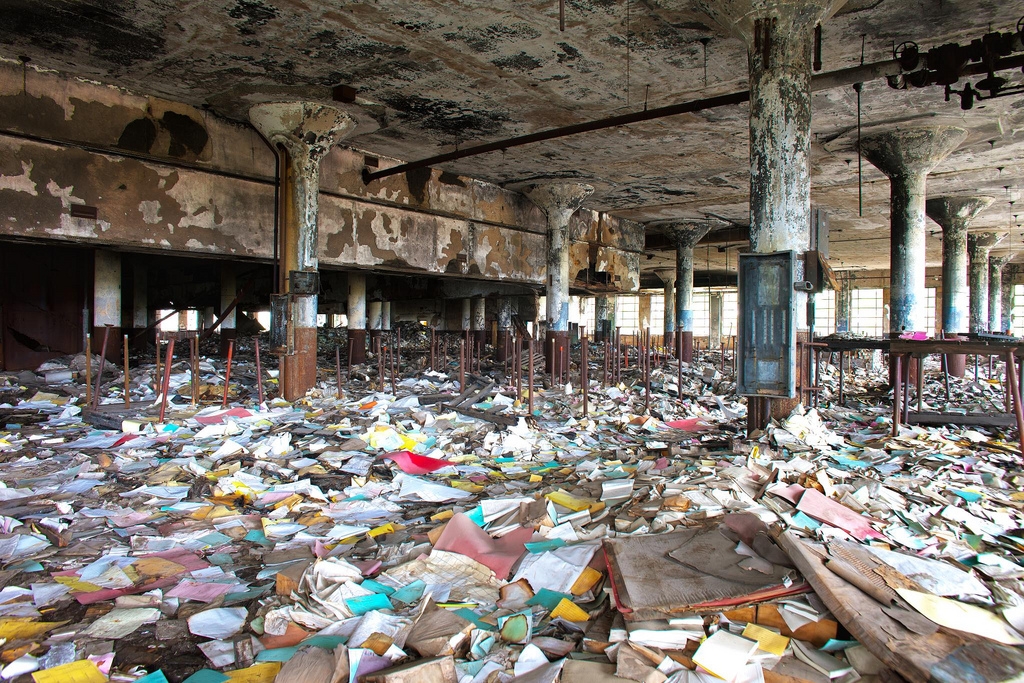
With Detroit’s financial difficulties, the banksters recognized the opportunity to take the next step forward. At its peak in the Industrial Era, the city’s auto plants produced half of the world’s cars with 350,000 workers. Today the few factories that remain produce even more cars with a workforce of only 20,000. Their job is to mind the robots that actually do the manufacturing.

Wall Street and the state apparatus combined to push the city into bankruptcy so they could go after public worker pensions nationally. Across the US there are more than 22 million public workers, about half of them teachers. (10) The financial industry quickly ensnared public worker pensions in predatory debt. Then their political agents loudly proclaimed that local government could no longer function due to these debts. Detroit, like all city governments also owes huge amounts to the banks, the result of various predatory loans. However, there is never a discussion about not paying these contractual obligations, even though there is abundant evidence that they are grounded in criminality. (11)

From 2004 to 2006, 75 percent of mortgages issued in Detroit were subprime. By 2012, banks had foreclosed on 100,000 homes. This trashed the city’s real estate by 30 percent and caused the flight of almost a quarter million people. These two factors drove the tax base severely downward.

Under both Republican and Democratic governors, the Michigan state government cut $700 million in state revenue sharing. Michigan, however, boasts the largest corporate subsidies per capita in the country – a total of $6.2 billion. (12) Detroit also gives more than $20 million a year in subsidies to local corporations for elite downtown projects.

Then the state jumped in to employ coercion against the people. This took the form of an Emergency Manager, imposed by the Michigan governor, with complete powers over the city’s government, including breaking contracts at will and selling off public property. In 2013, the EM closed over 30 schools as “too expensive”, and then he used the money to build a new ice rink for the Detroit Redwings hockey team. The EM is a modern form of fascism; his dictatorial policies are backed up by the police. Detroit residents lost the civil right to vote.

While city operating expenses fell, the financial costs of debt servicing shot up. The public policy organization, Demos, wrote in 2013, “Detroit’s financial expenses have increased significantly, and that is a direct result of the complex financial deals Wall Street banks urged on the city over the last several years, even though its precarious cash flow position meant these deals posed a great threat to the city.” (13)

The Financial Times reports that Detroit will eventually pay nearly double the principal — in other words, Detroit is effectively paying 100 percent interest. (14) So we see that predatory lending against homeowners begets predatory lending against cities. The city’s, debt servicing could rise from 28% to 65% of the city’s annual budget, effectively making it an ATM for the financial industry.

In December, a federal judge ruled the pension rights, guaranteed by Michigan’s state constitution, were simply a “contractual relation”, rather than a right, and held that federal bankruptcy law, as applied to corporations, determines city bankruptcies, even though few US cities have ever gone bankrupt. This means that the interests of hedge funds and banks have priority over the interests of retired city workers, who must already make due with pensions that average only $19,000.

The betting is that city workers’ pensions will be cut by 84%. At the height of the economic Meltdown, alpha financier and speculator, Lawrence Summers, was asked why the banks used public money to pay exorbitant executive salaries. “A contract is a contract”, he bellowed. Obviously this rule of law no longer applies to public worker contracts.

Just as international banks are demanding that Greece sells off its ports, transport systems, tourist attractions, beaches and other assets in the public domain, so Detroit is now planning to sell the bridge and tunnels to Canada, the Joe Louis Boxing Arena, and the tremendous collection of art in the Detroit Institute of Art. This crime is not too different from the Nazi rape of art from across Europe, nor the US organized destruction of the Iraq Museum after they took Baghdad in 2003.

But it’s all so legit! These items will be bought by billionaires and banks with credit, which the city will then send to the banks to pay off the debt. Detroit becomes a simple pass-through account. This is naked expropriation of the wealth of the public. These are the worst of times.

References and Resources

10)  “How Many Government Employees Are There?

http://www.freerepublic.com/focus/news/2466363/posts

 11)  Matt Taibbi. “The Scam Wall Street Learned From the Mafia”. 6-21-12

 12)  http://systemicdisorder.wordpress.com/2013/08/07/wall-street-plunders-detroit/

 13)  Wallace Turbeville. “The Detroit Bankruptcy. 11-20-2013

 14)  Sender and Foley. “Details of Detroit’s Troubles Come to Light”, Financial Times, 7-25-2013

To be continued.

photo credit: Thomas Hawk via photopin cc

***

Steven Miller has taught science for 25 years in Oakland’s Flatland high schools. He has been actively engaged in public school reform since the early 1990s. When the state seized control of Oakland public schools in 2003, they immediately implemented policies of corporatization and privatization that are advocated by the Broad Institute. Since that time Steve has written extensively against the privatization of public education, water and other public resources. You can email him at nanodog2@hotmail.com

Originally posted at Daily Censored

Obama’s Privatization Agenda

obama

Guest post by Steven Miller

(This is the 3rd of 6 guest posts in which Miller describes how Obama is re-engineering society on behalf of the ruling elite.)

Part III – Obama’s Privatization Agenda

From Obama’s State of the Union Address:

So, tonight, I propose a “Fix-It-First” program to put people to work as soon as possible on our most urgent repairs, like the nearly 70,000 structurally deficient bridges across the country. And to make sure taxpayers don’t shoulder the whole burden, I’m also proposing a Partnership to Rebuild America that attracts private capital to upgrade what our businesses need most: modern ports to move our goods; modern pipelines to withstand a storm; modern schools worthy of our children.”  (9)

This statement is a call for privatization that follows the speculative agenda described previously. Supposedly “to save taxpayer’s money”, the President offers corporations ownership of the public infrastructure that was formerly built by and for the public. Infrastructure includes roads and bridges, also schools and universities, the electrical grid, water and sewers, parks and ports, airports and dams. Obama even proposes to sell the Tennessee Valley Authority (TVA –  see Republicans Veer Towards Socialism), Roosevelt’s signature project that electrified the South. His plans open the door to the full seizure and privatization of public resources as corporate private property. What was originally built for free public access will increasingly be available only to those who can afford the fees.

Since the financial Meltdown of 2008, the federal government has been “nationalizing” the levers of control of society in the interests of the capitalist class. The Bailout began with the proclamation that “banks are now agents of the government”. It is moot to discuss whether the banks took over the government or the government took over the banks. They are merging together. Mussolini, the theoretician of fascism, held that fascism was the merger of the corporations and the state.

Obama quickly intervened in Detroit to reorganize the auto industry, though he refuses to intervene today to protect the city government or pensions. The federal government is reorganizing both public education and health care. The NSA revelations show that the federal government has also nationalized everyone’s information.

Since 2001, the Department of Homeland Security, financed at an average of some $30 billion a year, has privatized many government functions and outsourced a huge number of police activities to corporations. As Occupy demonstrated to all, DHS has virtually federalized the police.

It is important to understand the state and its powers. The state – including the army, the courts and the police – is distinct from the government. The government collects taxes and decides how to spend public money. This is essentially the administration of things. The state’s role is guaranteed by the rule of law to use coercion and force to protect the property of the ruling class and to guarantee its rule. Hence the state is principally about the control of people. This distinction is fundamental to understanding the maneuvers and powers of capitalism today.

No longer under public accountability or control, the state apparatus today plays a major role in engineering how society will be transformed for the ruling class. Just as in other periods of US history, the state operates to implement the policies of the dominant block of capitalists. Currently this means the state will use its powers of force to facilitate the privatization of everything tangible.

References and Resources

9)  www.whitehouse.gov/state-of-the-union-2013

To be continued.

photo credit: SS&SS via photopin cc

***

Steven Miller has taught science for 25 years in Oakland’s Flatland high schools. He has been actively engaged in public school reform since the early 1990s. When the state seized control of Oakland public schools in 2003, they immediately implemented policies of corporatization and privatization that are advocated by the Broad Institute. Since that time Steve has written extensively against the privatization of public education, water and other public resources. You can email him at nanodog2@hotmail.com

Originally posted at Daily Censored

Speculators

wall street

Guest blog by Steven Miller

(This is the second of 6 guest posts by Steven Miller describing the financialization of capitalism and the takeover of the global economy by bankster speculators)

Speculators – Part II

Today the financial industry makes far more profit than any other sector of capitalist production. In 1973, they made 16% of total US profits; by 2007, financial profits reached 41% of all profits. (2) Since credit and debt control the levers of the economy, the financial industry has become politically dominant. The planning function of government increasingly devolves to their control. Finance – producing money from money – produces no value; it simply moves money around, but it does centralize even more wealth in the hands of speculators.

Once Wall Street speculators realized, after the 2008 Crash, that their new “financial instruments” were actually weapons of economic mass destruction, they understood that these tools could be employed to attack national and public wealth. Speculators get richer by seizing your wealth.

They do this today with hedge funds, among other things, which are completely private, completely unregulated and completely hidden from the public. But you can make wild speculative bets with their expert staff. Because they are “private”, we are supposed to accept whatever negative effects they have on society. Though the results are highly destructive to society, this is not up for debate.

Today the financial industry in the US is sitting on the largest mountain of cash in human history, over $2 trillion. Why? This is perceived as strange behavior, since they received over $16 trillion in the 2008/9 Bailout. In addition, the US government for at least two years has been dutifully sending them $85 billion a month, over a trillion dollars a year, in free money. (3)

So why don’t they spend it?

Every modern industry, especially finance, is based on extending credit; the debt is then “leveraged” to takeover companies and engage in various forms of speculation. As financial companies began to collapse in 2008, every one that was “solvent” lied and minimized how much of their holdings were based on toxic assets. Since each one knew that the others were also lying, they began to curtail how much credit they would extend. Without credit, modern capitalist commerce was on the verge of collapse. This is why the form of the Bailout was for the government to buy up toxic assets. This situation still prevails today.

Michel Chussodovsky, professor of economics at the University of Ottawa, and organizer of the Center for Global Research describes how this was rigged:

In a bitter irony, while the Wall Street institutions were the recipients of the bailouts, they are also the creditors of the federal government, which has been precipitated into a structure of debt financing controlled by Wall Street. This deficit financing… is controlled by the creditors. It does not create employment. It is not expansionary.” (4)

This reality illuminates the dangerous instability of the times. In essence, the public is financing its own indebtedness and funding its own privatization. The banks collapsed the economy in 2008 because they had been counting their various toxic assets as part of their wealth. Money is now generated, loaned and invested by clicking a computer keyboard. The monthly $85 billion gift, of course, is not put into gold bars and moved into the bank vaults by elves. The financial industry uses public money to offer increasingly shady loans, essentially organized criminal activity against the public.

Every day the value of one-year’s GDP in the US – about $14 trillion  – passes through Wall Street and other financial institutions! This is the Casino Economy. Most of this vast wealth is put into play as speculative bets, driven by computer-driven programs, on anything from water to debt to fracking. Just like mortgages, anything that can be financialized – entire electrical grids, school districts, pensions, and medical credit – almost anything at all – can also be securitized and bundled as fodder for speculation.

It is important to recognize that none of these vast transactions are taxed at all. Real people pay a large sales tax on almost everything in the US; corporate people pay ZERO on their schemes to increase their great wealth. A simple tax of 2 cents on the dollar would generate $28 billion a day, enough revenue to solve every financial issue that America faces.

Numerous people have proposed this idea, since it would end Austerity and usher in an era where governments could provide incredible resources to real people for free. The fact that this “reform” will never be permitted is a telling sign of a system that is approaching its demise.

The immediate result of the Crash was that the banks, hedge funds, insurance companies, private equity firms, real estate interests, etc. simply reprogrammed their computers to speculate on food and petroleum. Hence the mega-jump in food prices in the Fall of 2008. But money that doesn’t circulate produces no profit, so the financial industry has begun to invest in solid, material assets, tangible properties that cannot be wiped out with a click of a keyboard. Meta-money is the cousin of the NSA’s meta-data. Its use by corporations is equally malign.

Thus today we are in the midst of a tsunami of privatization, as the banksters are seizing and privatizing everything they can get their hands on. They are seizing public assets and a rate never before seen. Everything is financialized – given a monetary rating; then it is securitized – turned into speculative assets, which are quickly privatized; then your access to it without money is eliminated and thus criminalized. (5)

This trend has been noted by a number of observers:

Michael Hudson, professor of economics, University of Missouri Kansas City,:

This financial engineering is not your typical bubble. The key to the post-2000 bubble was real estate. It is true that the past year and a half has seen some recovery in property prices for residential and commercial property. But something remarkable has occurred. This new debt-strapped low-interest environment has seen Hedge funds and buyout funds doing something that has not been seen in nearly a century: They are buying up property with cash, starting with the inventory of foreclosed properties that banks are selling off at distress prices.” (6)

Ellen Brown, Web of Debt Blog:

Giant bank holding companies now own airports, toll roads, and ports; control power plants; and store and hoard vast quantities of commodities of all sorts. They are systematically buying up or gaining control of the essential lifelines of the economy.”  (7)

Michel Chussodovsky again:

The privatization of public monuments, museums, national parks, the post office, etc., has been raised in recent media reports as a possible ‘solution’ to the debt crisis. But let us not be misled: the process of acquisition of federal public property including the infrastructure and State institutions is likely to go much further. The public sector is up for grabs. Wall Street will eventually go on a buying spree picking up State owned assets at rock bottom prices.” (8)

References and Resources

 2)  Dave McNally, Global Slump, 2011. P 86

 3)  Harding. “Bernanke takes plunge with QE3.” www.ft.com

4)      Chussodovsky. “The Shutdown of the US Government  and ‘Debt Default’. A dress Rehearsal for the Federal State System?”. Center for Global Research

5)       5)  “Debt As a Class Weapon”. Rally Comrades, October 2011

 6)  Michael Hudson. “The Bubble Economy as a 2 Part Play for Privatisation”. July 4, 2013

 7) Ellen Brown. “The Leveraged Buy-out of America.” Center for Global Research, August 26, 2011

 8)  Chussodovsky. Op sit

photo credit: nromagna via photopin cc

To be continued.

***

Steven Miller has taught science for 25 years in Oakland’s Flatland high schools. He has been actively engaged in public school reform since the early 1990s. When the state seized control of Oakland public schools in 2003, they immediately implemented policies of corporatization and privatization that are advocated by the Broad Institute. Since that time Steve has written extensively against the privatization of public education, water and other public resources. You can email him at nanodog2@hotmail.com

Originally posted at Daily Censored