A Novel Bipartisan Solution to the Economic Crisis

re-solving economic puzzle

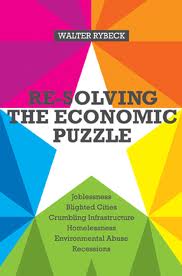
Re-Solving the Economic Puzzle

Walter Rybeck 2011

Book Review

What if there were a single, simple solution to the current credit/debt crisis? What if mere tax reform could end the recession, repay public debt, and reverse growing income inequality? What if this tax could also end real estate bubbles and speculation and reverse urban decay and sprawl? What if it could also make cities and states more financially self-reliant, thus reducing their reliance on federal subsidies and the size of federal government?

It all sounds highly improbable, doesn’t it? But Walter Rybeck, a former urban affairs official in the Johnson, Nixon and Carter administration, claims that widespread adoption of a  Land Value Tax (LVT) would accomplish all these objectives. What’s more, political thinkers across the political spectrum (e.g. Patrick Buchanan, Milton Friedman, Michael Hudson, Martin Luther King, Paul Krugman and Joseph Stigliz) have all spoken in favor of this type of tax reform.The LVT, which taxes unimproved land, dates from pre-revolutionary times. Prior to the enactment of the Federal Income tax in 1913, most public services were financed locally via an LVT. Progressives like it because it shifts the tax burden from small business and low and moderate income families to real estate developers and speculators. Conservatives like it because it shrinks the size and role of federal government, as well as leading to a reduction in company and income tax.

Here is what conservative free market economist Milton Friedman had to say about Land Value Tax (The Times Herald, Norristown, Pennsylvania; Friday, 1 December, 1978): “We need taxes. So the question is, which are the least bad taxes? In my opinion the least bad tax is the property tax on the unimproved value of land, the Henry George argument of many, many years ago.”

Ending the Monopoly on Land Ownership

Like Henry George, author of the 1879 Progress and Poverty, Rybeck proposes to end the ruling elite’s monopoly on land and natural resources through tax reform – by gradually replacing income, company, sales, and property taxes with a tax on unimproved land and resources. As he explains in Re-Solving the Economic Puzzle, land is the ultimate source of all wealth. In the US 3% of the population own 95% of private land. Ted Turner alone owns two million acres, equivalent to nearly two Rhode Islands. In many cities, a few wealthy families own all the prime downtown sites.

Rybeck’s definition of land includes all the natural resources accompanying it – soil, forests, game, grazing rights, water, oil, gas, minerals and the electromagnetic waves (broadcast, cellphone, and wi-fi spectrum) above it. Like Henry George and modern Georgists, he argues that land and resources should be public property. Because no one produced any of this stuff, no one has a right to claim an exclusive monopoly over it.

According to Rybeck, our current system of taxing labor and productivity is grossly unfair to all but the top 1% of Americans. Besides being more equitable, the LVT also ends curbs the real estate speculation that leaves vast areas of American cities vacant. Setting land taxes too low inadvertently rewards landowners for keeping land vacant or turning it into parking lots.

High land vacancy rates were already a major problem during the Nixon administration. In 1970, cities with a population of 100,000 had a 22% vacancy rate, and those over 250,000 a 13% vacancy rate. Thanks to the 2008 economic crisis, an epidemic of vacant foreclosed homes has massively increased this urban blight. Worse still, low land taxes reward middle class families for moving to the suburbs. In doing so, they abandon expensive infrastructure (water, sewage, lighting, schools, etc) that was created to accommodate them. As they spread out into sprawling suburbs, taxpayers must fund new infrastructure.   

Cities and Countries Successfully Adopting an LVT

The final third of Re-Solving the Economic Puzzle relates the success stories of the 25 cities and five countries that have spared themselves economic disaster by adopting an LVT. The communities Rybeck singles out include

  • California Irrigation Districts (1887)
  • Fairhope Alabama (1894)
  • Arden Delaware (1890)
  • Cleveland (1901)
  • Pittsburgh (1913, 1979)
  • New York City (1918)
  • Miami (Ohio) Conservancy (1929)
  • Rosslyn Virginia (1950)
  • Southfield Michigan (1960)\Harrisburg and 15 other Pennsylvania cities (1980-1990)

Sadly many of these communities subsequently caved in to special interests and began taxing capital improvements, rather than land values. Those who did so are confronting a major debt crisis, as well as decaying schools and infrastructure.

Pittsburgh, one of the backsliders, saw the error of their ways in 1979 and instituted a gradual return to what Rybeck refers to as a two-tier land tax. At present, Pittsburgh taxes unimproved land six times as heavily as improvements. The resulting revival of their central city is referred to as Renaissance II. Thanks to their Land Value Tax, Pittsburgh didn’t experience the same real estate bubble as other US cities. Thus their housing market didn’t collapse in 2008. In addition, their current foreclosure rate is the lowest in the country.

Countries which have adopted an LVT include Hong Kong (1843), New Zealand (1878), Denmark (1912), South Africa (1916) and Taiwan (1949).

To learn more about Land Value Tax, check out the LVT Facebook page.

Reprinted from Veterans Today

A Warning on the Bitcoin Bubble

A Bitcoin is a type of alternative, computer-based currency known as a cryptocurrency because it uses cryptography (i.e. specialized digital security technology) to make it difficult to counterfeit. Up until a few months ago, interest in Bitcoins was limited to computer nerds seeking to opt out of the bankster-controlled monetary system. In the last few months, Bitcoins have become a hot investment as the value of a Bitcoin has shot up from $43 (when I first blogged on Bitcoins back in March) to over a thousand dollars. The value of a Bitcoin peaked at $1,200 on Dec 4. It has since dropped to $917.10

Below are three short videos presenting differing perspectives on Bitcoins.

The first is by Bill Still, the filmmaker who produced Money Masters and The Secrets of Oz. According to Still, the main reason the value of Bitcoins has gone through the roof is because China is investing its trade surplus in Bitcoins and other cryptocurrencies rather than dollars. Back in November China announced  it would cap future purchases of US dollars and treasury notes. At present, China owns $1.3 trillion of US debt.

Prior to April 2013, China was using a substantial proportion of their trade surplus to purchase gold. However after Chinese State TV aired a documentary on Bitcoins in April, the Chinese have been really bullish on Bitcoins. The video is in Chinese. To view English subtitles click on the YouTube icon to view in YouTube. The subtitle icon is fourth to the right at the bottom of the screen.

Still is obviously really bullish on cryptocurrencies, particularly the quark. In contrast the following video by Storm Clouds Gathering warns that the Bitcoins is in the throes of a speculative bubble. It also has a basic design flaw that will eventually squeeze small Bitcoin traders out of the market.

The design flaw? To enter into any transaction involving Bitcoins, a client is required to download a block chain consisting of every single Bitcoin transaction ever made. With the surge of interest in Bitcoins in the past two months, the size of the block chain reached 11 gigabytes in November. It’s expected to reach 250 gigabytes in two years. Eventually it will reach a terabyte, and small users will be totally shut out unless the system is totally restructured. At some point, it will most likely be centralized in super nodes requiring massive industrial sized servers. These super nodes will essentially function as banks, totally defeating the purpose of starting a decentralized currency.

Fast Food Restaurants Cost Taxpayers Nearly $8 Billion

mackers

Why Are We Subsidizing Profitable Corporations?

Over the past few days, the corporate media has been trumpeting September’s “low” 7.2% unemployment rate. For the most part, the mainstream media fails to report that joblessness has only decreased 0.1% since August. Or that 20,000 of the 148,000 jobs created were temporary jobs. They also neglect to mention that most new jobs since the 2008 economic crisis don’t pay enough to live on. Which means that US taxpayers subsidize minimum wage workers to the tune of $7.8 billion a year. Given the current $17 trillion government debt, this seems like a major chunk of change.

In 2012, half of US jobs paid under $33,000 annually. Most of these minimum wage jobs are in America’s fast food restaurants, where employees struggle to get by on $7.25 an hour.

According to a recent University of Berkeley/University of Illinois study, 52% of fast food workers rely on federal programs like Medicaid, food stamps, the Earned Income Tax Credit, and Temporary Assistance for Needy Families to provide for their children. This is due partly to poverty-level wages and partly to heavy reliance by fast food outlets on part time workers (under 30 hours per week). MacDonald’s et all are reluctant to take on full time employees owing to the new requirement (under Obamacare) that they provide health insurance for full time workers. .

Something seems terribly wrong here. MacDonald’s, Subway, Burger King, Wendy’s, Domino’s Pizza are all highly profitable corporations. So why is the US taxpayer bailing them out by providing health care, food stamps, and other federal benefits for their employees and their families?

Work Week Shrinking Under Obamacare

Under Obamacare, employers are only required to provide health insurance if workers put in more than 30 hours a week. Investors.com has been tracking employers that are either cutting work hours or only hiring part time workers to reduce their obligation under the new law.

When employers cut back their full time workers, Obamacare shifts responsibility to the federal government (through expanded Medicaid programs and premium subsidies) to provide health coverage for minimum wage workers. Thus in addition to subsidizing MacDonald’s, Subway, Burger King, Wendy’s, Domino’s Pizza, the taxpayer is also subsidizing highly profitable insurance companies like Aetna, United Health Care, and Blue Cross/Blue Shield.

The Government Accountability Office reports that Obamacare will increase the federal deficit by $6.2 trillion. $709 billion of this will fund Medicaid expansion (from 2014-2023). The rest will take the form of direct subsidies to insurance companies.

Sarah Palin Describes Obamacare as Corporatism

In a recent oped on Breitbart, former Alaska governor Sarah Palin describes Obamacare as “a sort of corporatism, which is the collusion of big government with big business.” While she and I disagree on many issues, that we definitely agree on.

She goes on to predict that the exorbitant costs will cause a breakdown in the US health care system. When this happens, she believes, Americans will clamor for the government to enact a single payer system which excludes parasitic health insurance companies from the health care equation.

I sure hope she’s right. Palin makes the unsubstantiated claims that single payer funding will lead to death panels and higher costs. There are no death panels in Medicare, which is a single payer system. Moreover Medicare, which was enacted in 1965, enables senior citizens to access health care far more cheaply and efficiently than private insurance does.

Nor are there death panels in the dozens of other countries that publicly fund health care. Even more importantly, they all pay about half what the US does for medical services. Seems to me it’s high time for the US to catch up with the rest of the civilized world. Except for the US, all other industrialized countries guarantee that all citizens, regardless of income, have the right to see a doctor when they’re sick.

photo credit: caribb via photopin cc

Originally published in Veterans Today

An Australian Looks at the US Economy

dollars

How Private Banks (Not Government) Create Money

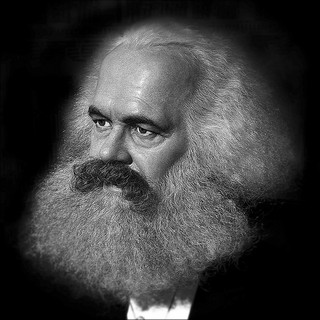
Australian economist Steve Keen (author of Debunking Economics) has an excellent 2009 article on his Debtwatch site explaining how Fractional Reserving Banking (FSB) supposedly works. The major premise of the article is that true FSB only exists in the minds of academic economists. Keen begins with a quote from Karl Marx (and a prominent photo) that was featured in a January 2009 article Investors Shortchanged  in the Sydney Morning Herald:  

karl marx

Talk about centralisation! The credit system, which has its focus in the so-called national banks and the big money-lenders and usurers surrounding them, constitutes enormous centralisation, and gives this class of parasites the fabulous power, not only to periodically despoil industrial capitalists, but also to interfere in actual production in a most dangerous manner— and this gang knows nothing about production and has nothing to do with it.” (Das Kapital, Volume 3, chapter 33).

Although Marx was totally off base in predicting the imminent downfall of capitalism, he sure got it right about banks.

 The Fiction of Fractional Reserve Banking

In the academic model of Fractional Reserve Banking, a retail bank establishes reserves (with depositors’ money and funds borrowed from the Federal Reserve). They then create $90 in new money for every $10 they hold in reserve. Only it never works this way in real life. The Reserve Bank of Australia totally eliminated the reserve requirement in the 1990s.The Federal Reserve has no reserve requirement for business loans and the 10% reserve requirement for personal loans is full of loopholes.

Keen’s article goes on to present M0/M1 and M2 data showing that what academic economists are calling Fractional Reserve Banking is actually a Pure Credit Monetary System. In other words, private banks are totally free to issue as much money, in the form of new loans, as they choose. They also have total control of both the money created by the commercial system and the money created by government.

M0 (sometimes called M1) refers to the Base Money or fiat money created by the Federal Reserve. M2 refers to M0 plus new money created by banks as loans. The ratio of M2/M0 is called the “money multiplier” ratio.

What his graphs show is that credit money (M2) is created first and M0 or fiat money (the reserves to cover it) is created up to a year later. In a true FRB system, M0 or Base Money would increase first, and M2 would follow as banks issue new money based on their reserves. The other major problem is that combined public and private debt greatly exceeds M2. Under a true FRB system, total debt could never exceed the amount of fiat and bank money created.

Why Quantitative Easing Won’t Work

Keen’s paper also includes an interesting prediction that the Federal Reserve’s quantitative easing (increasing M0 by electronically “printing” $85 billion in new fiat money every month) will be vastly insufficient to bring about economic recovery. He gives four reasons for this:

  1. Instead of using the money the Fed loans them to lend to borrowers, private banks are allowing inactive reserves to rise.
  2. Consumers are too far in debt to take out new loans.
  3. Deflation will continue because retailers and wholesalers must deeply discount their products to keep from going bankrupt.
  4. “Deleveraging” (paying off debt) is massively suppressing consumer demand.

Keen predicts that quantitative easing will have little effect unless Federal Reserve Chairman Ben Bernanke pumps enough money into the economy to make a dent in the $42 trillion US debt. Deducting compound interest, he reckons $20 trillion would reduce it by about a quarter.

Ironically such a massive increase in government-issued Base Money (M0 ) would effectively replace our bank-controlled credit money system with a publicly controlled fiat money system. In other words it effectively restores the ability of the federal government to issue money, as Lincoln did (see The Role of Foreign Banks in US History).

Makes you wonder if this is Obama’s and Bernanke’s true agenda with all the electronic money they’re printing – to quietly nationalize America’s monetary system through the backdoor.

For more background on how private banks create the vast majority of US dollars (out of thin air), check out the free video The Secret of Oz:

Photo credits:  youkaine via photopin cc and photo credit: wolfgangfoto via photopin cc

Solutions: Taking Back Our Power

stuff

Nothing like a nice government shutdown to remind us that the federal government is hopelessly dysfunctional. Congress and the White House are so focused on the needs of their corporate donors that most of the laws they pass hurt ordinary Americans rather than helping them. Fortunately a growing number of local groups have discovered that the most meaningful form of political change happens outside of official political channels. Together with family, friends, and neighbors, they’re opting out of the “corporate” lifestyle and inventing more meaningful grassroots models for meeting human needs.

The Story of Solutions

Annie Leonard, who produced the world changing video They Story of Stuff in 2008, has just released a sequel The Story of Solutions. Like her first film, it challenges a society built on ever increasing economic growth and accumulating more stuff. However the focus of The Story of Solutions is more on community organizing to move our economy in a more sustainable and just direction. To quote from the film promo:

“In the current ‘Game of More’, we’re told to cheer a growing economy – more roads, more malls, more Stuff! – even though our health indicators are worsening, income inequality is growing and polar icecaps are melting. But what if we changed the point of the game? What if the goal of our economy wasn’t more, but better – better health, better jobs and a better chance to survive on the planet?”

The nine-minute video includes inspiring real-world examples of ways in which communities are mobilizing for change – through programs as simple as “tool-sharing” libraries. There’s absolutely no reason why every American needs to own their own lawnmower, power drill, and chainsaw.

Here’s the original The Story of Stuff for people who missed it when it first came out.

photo credit: net_efekt via photopin cc

TV3 Tackles Income Inequality

Video

income inequality

The American Pubic Broadcasting Service used to have fabulous, hard hitting documentaries when PBS first got going in the 1970s. Fast forward to 2013, and all the documentaries that seriously challenge the political establishment have all but vanished from free-to-air TV (except, perhaps, for Frontline and Bill Moyers’ specials).

 Although it first aired on commercial TV, the New Zealand documentary Mind the Gap reminds me a lot of the PBS documentaries I used to watch on Friday night in the late seventies. It dissects the alarming rate at which New Zealand’s wealthy elite are sucking up wealth from our working class families.

While New Zealand’s political and economic dynamics are somewhat different from those of the US, there are common factors at play. Moreover the New Zealand economy is somewhat easier to unpack. In addition to being smaller, for the most part it’s uncomplicated by taxpayer funded corporate subsidies.

Zombie Economics

Mind the Gap is highly critical of “neoliberalism” (I don’t think I’ve ever heard that word on American TV), which the program refers to as zombie economics. The presenter also briefly interviews John Quiggins, the author of the 2012 book Zombie Economics.

Neoliberalism is the technical term for Reaganomics and the New Zealand version Rogernomics. Mind the Gap describes, in gory detail, how Roger Douglas’s neoliberal reforms of the 1980s virtually destroyed New Zealand’s economy. It did so mainly by destroying this country’s manufacturing sector and offshoring the majority of our manufacturing jobs.

The documentary offers a number of potential solutions to New Zealand’s current “trickle up” economy. In my mind, all would go a long way towards ending America’s growing income divide.

Suggestions offered include a financial transaction on banks (aka the Robin Hood Tax), a fairer tax policy and a clampdown on tax evasion, an end to aggressive privatization of public resources, and more cooperatives and “social enterprises” (corporations formed for the good of society rather than profit).

Enjoy.

*”Mind the Gap” is an expression borrowed from the British tube (subway) system.

photo credit: Stewf via photopin cc

UK Greens Call to End Debt-Based Money

monies

According to Positive Money, the Green Party of England and Wales has joined the US Green Party in proposing to strip private banks of the power to create money. The September 13 motion calls for the power to be placed with a democratically accountable National Monetary Authority at the Bank of England.

The US Green Party has recently adopted a similar plank in their Economic Justice Platform:

15. Nationalize the 12 Federal Reserve Banks, reconstituting them and the Federal Reserve Systems Washington Board of Governors under a new Monetary Authority Board within the U.S. Treasury. The private creation of money or credit which substitutes for money, will cease and with it the reckless and fraudulent practices that have led to the present financial and economic crisis.

16. The Monetary Authority, with assistance from the FDIC, the SEC, the U.S. Treasury, the Congressional Budget Office, and others will redefine bank lending rules and procedures to end the privilege banks now have to create money when they extend their credit, by ending what’s known as the fractional reserve system in an elegant, non disruptive manner. Banks will be encouraged to continue as profit making companies, extending loans of real money at interest; acting as intermediaries between those clients seeking a return on their savings and those clients ready and able to pay for borrowing the money; but banks will no longer be creators of what we are using for money.

The New Zealand Green Party is still debating whether to include a similar provision in their monetary reform policy.

Link to US Green Party: http://www.gp.org/

Link to British Green Party: http://www.greenparty.org.uk/

How Private Banks Create Money

dollars

Money and Life

Katie Teague (2013)

Film Review

I highly recommend this film for its clear explanation of the mechanism by which private banks (not government) create money out of thin air by initiating loans. Because the bank doesn’t create the compound interest they charge on new money, the borrower must find it elsewhere in the economy – when other new debt is created. The only way to sustain this exponential growth in public and private debt is through a frantic obsession with economic growth – leading to rapid depletion of all the earth’s natural resources, while simultaneously poisoning our air, water, and food with toxic waste.

The film features interviews with world famous antiglobalization and sustainability activists, including Vendana Shiva, David Korten, Ellen Brown, Charles Eisenstein, Bernard Lietaer and Vicki Robin.

For me, a highpoint of the film was the discussion of the role of artificially created consumer demand in this frantic drive to “liquidate” the earth’s resources. I also really enjoyed the section on the psychological factors driving billionaires to constantly acquire more money – and the replacement of “trickle down” with “suction up” economics.

A Cancer on the National Economy

My favorite part, however, was the section describing American’s finance sector as a “cancer” on the nation’s economy. As investment banking has morphed into casino capitalism, only 5% of Wall Street transactions relate to the production of real goods and services. This is in contrast to a healthy economy, where the finance sector functions like a utility and consumes only 10% of a nation’s wealth.

The trillions of dollars investment banks like Goldman Sachs, JP Morgan, and Bank of America speculate on derivatives is little different from betting on horses or roulette. The only difference, according to one economist, is that Las Vegas won’t let you gamble with money you don’t have. With some derivatives purchases, traders commit their banks to positions that are 30-40 times greater than their entire holdings.

Solutions Disappointing

The solutions offered by the filmmakers were a little disappointing. The need to end the role of private banks in money creation, by handing this role over to federal and state banks, is a no-brainer. The film calls for viewers to join grassroots groups (such as the US and UK Green Party) organizing to demand this type of reform.

The suggestion for people to opt out of the corporate money system by joining local groups using barter and local currencies is another extremely practical suggestion.

The third suggestion is to find concrete ways to value relationships more than money. Examples include socially responsible investing and extreme charitable giving (in the example, one family gives away 60% of their income). While the life histories of these individuals is extremely inspiring, I suspect they’re unlikely to resonate with the vast majority of Americans. They’re too busy working three jobs to put food on the table – or borrowing on their credit cards to buy shoes for their kids.

Enjoy

photo credit: TheAlieness GiselaGiardino²³ via photopin cc

The Role of Foreign Banks in US History

moneychangers

Stuff They Forgot to Teach in High School

The Money Masters

Bill Still 1996

Film Review

Produced twelve years before the 2008 economic collapse, The Money Masters provides a comprehensive outline of the role of the international banking cartel in hijacking America’s so-called “democratic” government. Referring to them as “moneychangers” (a New Testament reference), Still explores the key role international banksters have played in deliberately creating depressions and panics, instigating US wars, and assassinating presidents who sought to curtail their power.

Understanding how money is created in the US and other capitalist countries is essential in grasping this historical perspective. Contrary to popular misconception, the federal government doesn’t create or control the money supply – private banks do. Moreover the Federal Reserve isn’t a government agency. It’s actually a private corporation owned by its member banks. What’s more, the fractional reserve banking system allows these banks to loan and charge interest on money they don’t possess – that they essentially create out of thin air.

Most of the film is devoted to the 130 year battle between the world banking cartel and the American presidents who stood up to them: Jefferson, Madison, Andrew Jackson, Lincoln, McKinley, Teddy Roosevelt, and Warren Harding. Jefferson and Madison both warned that allowing private banks to seize control of money creation would be the end of democratic rule in the US.

During the 19th century, the global banking cartel was dominated by key families, like the Rothschilds and Rockefellers. However during the 20th century, this power shifted to a corporate structure with control residing with CEOs and interlocking boards. Still stresses that global economic and political instability can no longer be blamed on specific families (i.e. the Rothschilds) – that the problem lies with the corporate banking system itself.

The solution he proposes is to end fractional reserve banking and the ability of private banks to create money – to follow Lincoln’s example by restoring the responsibility for money creation to federal and state governments.

As the 3 ½ hour film below covers nearly 1000 years of history, I have indexed the key historical events covered:

  • 0-21 min – 1100 AD King Henry I creates the tally stick to counter the influence of private goldsmiths and moneychangers who are wreaking economic havoc by manipulating the supply of gold coins.
  • 22-27 min – 17th century Queen Elizabeth I counters the power of private moneychangers by issuing coins directly from the royal treasury. In 1642, international moneychangers finance Oliver Cromwell, who leads a Civil War to overthrow the monarchy. Later they finance an invasion by the Dutch William of Orange to invade England and overthrow the House of Stuart. In 1694 Bank of England (the world’s first central bank) is formed and granted power to create money out of thin air.
  • 28-36 min 18th century Amschel Moses Bower, Frankfurt moneychanger, changes his name to Rothschild and five of his sons assume control of the central banks of Germany, Austria, London, Italy and Paris. The Rothschild family plays major role in financing the Vanderbilt and Harrison railroad monopolies, Carnegie’s monopoly of the steel industry, and 80% of JP Morgan’s holdings. The Rothschild family proceeds to finance both sides of a continuous cycle of European wars. The British treasury incurs a 140 million pound debt to the Bank of England. George III is forced to raise revenue by taxing the American colonies.
  • 37-38 min 1764 Under pressure from the Bank of England, George III passes currency act forbidding the use of colonial scrip (paper money) in the American colonies. Forced to use scarce gold and silver coins issued by the Bank of England, the colonies are plunged into deep depression with massive unemployment. Benjamin Franklin maintains this, not the tea tax, triggers the American Revolution.
  • 39-44 min 1781 Over strong objections of Jefferson and Madison, charter is granted for the Bank of North America, a privately owned central bank which is allowed to create money out of thin air. Charter allowed to lapse in 1785, and power to issue money reverts to federal government.
  • 45–51 min 1790 Alexander Hamilton pressures Congress to charter a second private bank, the Bank of the United States. The US Treasury, which provides all the funds, is a 20% shareholder. The Bank creates money out of thin air to loan funds to private shareholders to purchase the other 80%.
  • 52-99 min 1811 Congress refuses to renew Bank of US charter, despite a threat by Nathan Mayer Rothschild that “ . . .the United Stateswill find itself involved in a most disastrous war (War of 1812) if the bank’s charter is not renewed.”
  • 1:00-1:01hr 1816 Devastated by war and war debt, Congress grants new charter for the (private) Bank of the United States, again funded mainly by the federal government. The US Treasury winds up with 20% share, with the Bank creating additional money to loan private shareholders (mostly foreign) sufficient funds to buy the other 80%.
  • 1:02-1:10hr 1828 Andrew Jackson elected president on platform to end massive corruption and fraud at the Bank of the United Statesby shutting it down. Nearly assassinated after “powerful Europeans” hire gunman to kill him. The USremains free of central bank control for 77 years, with state chartered banks assuming responsibility for money creation.
  • 1:11-1:18hr Civil War European financial powers pressure Southern states to secede by boycotting their cotton. Ending slavery was not the original cause of US Civil War, as Lincolnoriginally had no intention of abolishing it.
  • 1:19-1:27hr 1862 To finance the Civil War,  Lincoln issues $450 million in paper money (greenbacks) and is attacked by the London Times – which calls for the destruction of the US before it destroys the world’s monarchies. British troops mobilize in Canada and British navy mobilizes on Atlantic coast. The Rothschilds grant Napoleon III $3 million to seize Mexico. Russian czar stations battleships on West Coast and pledges to come to US defense if England and France enter Civil War (on behalf of the South). Lincoln agrees to allow national banks to temporarily issue currency through 1863 National Banking Act, though his government-issued greenbacks continue to circulate until 1994. German chancellor Otto von Bismarck predicts triumph for global banking cartel following Lincoln’s 1865 assassination. In 1934 Vancouver Mayor Gerry McGreer releases Secret Service records revealing John Wilkes Booth was hired by powerful banking interests.
  • 1:28–1:30hr 1873 Banking interests pressure Congress to demonetize silver (which is far more plentiful than gold) and place all US money on gold standard. Deliberate contraction of the money supply leads to severe depression and unemployment (1/3 of US workforce unemployed in 1876). In 1877 riots calling for return of silver currency lead to 1878 Sherman Law, which allows limited number of silver coins to be minted.
  • 1:37-1:38 hr 1881 President Garfield attacks the moneychangers and is assassinated.
  • 1.38–1:47 hr 1891-1907 Determined to manipulate public opinion in favor of a new (private) central bank, the moneychangers deliberately shrink US money supply, causing 20 years of extreme economic instability. .
  • 1:48-1:54 hr 1907 secret meeting of Rockefellers and other major banking families at Jekyll Island to draw up plans for new central bank called the Federal Reserve. President Taft (a Republican) refuses to support it, so moneychangers begin courting Woodrow Wilson (a Democrat)
  • 1:54-1:57 hr 1913 Wilson defeats Taft with support from William Jennings Bryant and other currency reformers by promising he won’t support the new central bank. Wilson betrays his supporters and Federal Reserve Act passed during Christmas recess. The Act requires the federal government to borrow funding for operational expenses from the Federal Reserve. A federal income tax is adopted to ensure the government can make the interest payments.
  • 2:13-2:17 hr 1905-1917 $20 million of Federal Reserve funds channeled to Bolsheviks via Chase Manhattan Bank (controlled by Rockefellers) after czar denies them access to Russian oil fields.
  • 2:18- 2:29 hr 1929 Federal Reserve deliberately contracts money supply and crashes the stock market after all their members transfer their wealth from stocks to gold and cash. According to Milton Friedman, this contraction triggers Great Depression.
  • 2:30-2:31hr 1931 Rep Louis McFadden warns that US banks are subsidizing the rise of Hitler, channeling over $30 billion in Federal Reserve funds via Chase Manhattan Bank.
  • 2:32-2:44 hr 1933 Roosevelt prohibits US citizens from owning gold coins or bullion and forces them to turn all their gold to the federal government. All US Treasury gold becomes property of Federal Reserve and most of it is sold to European speculators.
  • 2:45-2:50 hr 1945 a global central bank is formed through creation of IMF, World Bank, and International Bank of Settlements. All are run by private bankers, with intention of consolidating control of the global money supply.
  • 2:51-2:58 hr 1989-1993 Economy of Japan and Mexico wiped out when Bank of International Settlements contracts the global money supply. Punitive IMF interest charges result in massive transfer of wealth from third world countries to World Bank. Continuing consolidation of central bank control with formation of NAFTA and WTO.

Still produced a sequel to the Money Masters in 2010 called The Secret of Oz in 2010. It focuses mainly on the rise of the Populist movement in the 1890s and the presidential campaigns of Populist Democrat William Jennings Bryant. Bryant ran on a platform of ending the power of private banks to issue money and returning to federally issued greenbacks and silver coinage. L Frank Baum, who wrote The Wonderful Wizard of Oz, was a strong Bryant supporter. The book is loaded with symbols related to monetary reform (for example, the silver slippers, Emerald City, and the yellow brick road).

Enjoy.

photo credit: Cea. via photopin cc

Reposted from Veterans Today