World Change Starts in Your Neighborhood

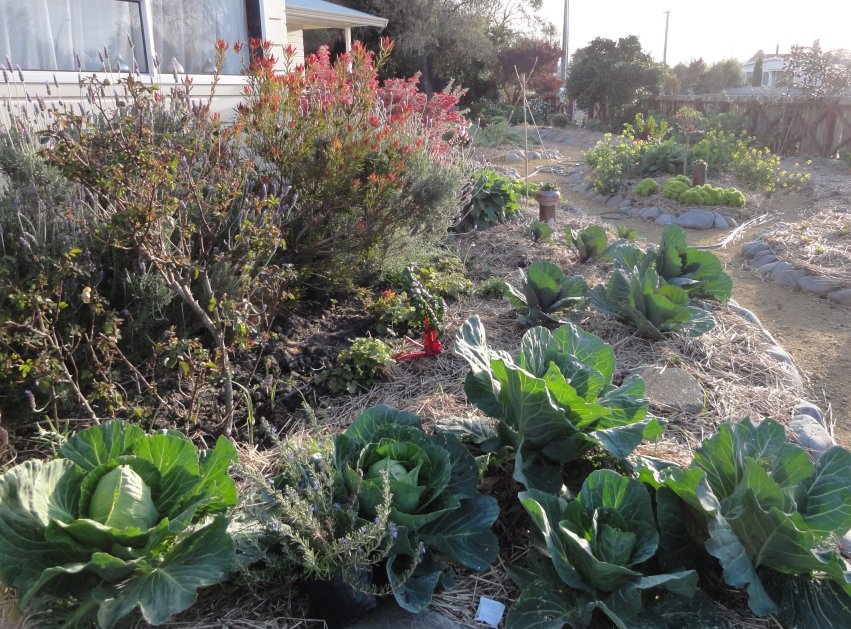
LiberatedLawnA liberated lawn

Unless someone like you cares a whole awful lot, nothing is going to get better. It’s not – Dr Seuss

Through the re-localization movement people are taking back power from corporations and reconnecting with nature and other human beings. An inspiring film from Australia describes how to make your own block a Super Hood.

We’re building our own Super Hoods here in New Plymouth (check us out at our Transition New Plymouth Facebook page). I started one in my street by liberating my front lawn to plant potatoes and silver beet (chard).

If and when summer arrives, we’re going to close the road down for a street party.

Photo credit Manawatu Harvest Festival

Teen Pregnancy: Do Your Part

pregnant teen

Skyrocketing population growth is one of the most serious threats to the fragile biosphere that supports human existence. Fertility rates in most of the industrialized world have slowed dramatically over the last decade. Except for the US. Thanks to high rates of teen pregnancy (the highest in the developed world), US fertility rates remain higher than many other countries.*

 In July, under a US District Court order, the FDA authorized pharmacies to sell Plan B One Step tablets over-the-counter (without prescription) without age restriction.** Plan B One-Step, also known as the “morning after pill,” is designed for women who, for a variety of reasons, engage in unprotected intercourse. Thanks to the new rules, all women of reproductive age should be be able to find the tablets on the shelf of their local drug store, like any other product. Unfortunately many pharmacies still aren’t compliant with FDA regulations and either keep Plan B tablets behind the counter or in locked cabinets. As evidenced in the following video:

As part of a national pressure campaign, The Reproductive Justice Reporting Project of the Media Consortium is asking members of the public to help by completing the “Where’s Your Plan B?” survey.

The next time you visit your local pharmacy, please complete the form provided at Where’s Your Plan B?

If you have a smartphone, you can fill the form out while you are still at the drug store. If not, print the form out, fill it out at the store, and transfer the details to the online form when you get home.***

*Fertility rates by country (World Bank)

  • US – 1.89 children per woman
  • China – 1.58 children per woman
  • Italy – 1.41 children per woman
  • Japan – 1.39 children per woman
  • Germany – 1.36 children per woman
  • Spain – 1.36 children per woman

**Studies show that difficulty accessing birth control (such as Plan B One Step) is the primary reason why American teenagers experience the highest rate of unplanned pregnancies in the industrialized world.

***You don’t have to be a woman of reproductive age to complete the form. Overpopulation isn’t a woman’s issue – it affects all of us.

photo credit: cobalt123 via photopin cc

The Global Hemp Renaissance

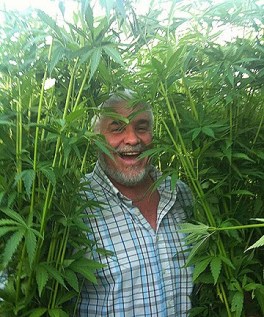
John and Charles

Taranaki hemp farmer John Earney with organic enthusiast HRH Prince Charles

Where the people lead, the leaders will follow – Ghandi

Nothing honors Ghandi’s vision more stunningly than the citizens movement to legalize marijuana and industrial hemp. At the time former Congressman Ron Paul introduced his 2011 Industrial Hemp Farming Act Bill, five states (North Dakota, Hawaii, Kentucky, Maine, Oregon, California, Montana, West Virginia and Vermont) had enacted laws authorizing industrial hemp cultivation. Without Obama’s support, the bill died in committee. Fast forward to November 2012, when Colorado voters passed Amendment 64 to legalize hemp cultivation.Last week the Denver Post reported on the Colorado farmer who made history by harvesting the first commercial hemp crop in the US in 56 years.

Growing industrial hemp is still illegal under the 1970 federal Controlled Substances Act. The law makes no sense whatsoever – scientifically, environmentally, or economically. First the hemp plant contains no psychoactive substances. Although genetically related to marijuana, hemp contains only trace amounts of THC, the compound that gets weed users high. Secondly hemp-based paper, textiles, rope, construction materials and even plastics are the tried and true low tech alternative to modern synthetics based on fossil fuels. Thirdly the US is the world’s largest importer of hemp (from Canada and China), for use in construction, clothing, paper, rope, pressed oil, and cooking.

Given Obama’s response back in August to the 34 states that have decriminalized marijuana use, he’s not expected to go after Colorado hemp farmers. On August 29, 2013, the president notified 94 US attorneys that states with recreational and medical marijuana (and hemp) laws can now let people use it, grow it under license, and purchase it from retail facilities — so long as possession by minors is prohibited and it doesn’t end up on federal property or in the hands of gangs and criminal enterprises.
New Zealand’s Hemp Renaissance 

In New Zealand, hemp cultivation has been legal, under license, since 2006. We have two hemp farms here in Taranaki. I presently serve as secretary of the Douglas farm, run by John Earney, owner of Avonstour Rare Breeds organic farm.

It’s the goal of New Plymouth businessman Greg Flavall to create the word’s first hemp industrial village here in Taranaki. It would center around a $500,000 hemp processing facility that would use a decorticator and process hemp from all over New Zealand. Flavell envisions hemp as a major export industry to meet growing world demand. Once the long fibers are extracted, the rest of the plant can be used for pressed oil, flour, animal bedding, garden mulch, paper making, and food.

Greg Flavell – www.hemptechnologies.co.nz

Flavall, co-founder of Hemp Technologies, is a builder specialized in constructing homes made of hempcrete – a hemp-lime compound that is a carbon-neutral thermal insulator, as well as being non-toxic, waterproof, fireproof and insect and mold resistant.

Hemp’s 12,000 Year History

Hemp, first used in 10,000 BC Taiwan, is one of the most versatile plants known to man. Hemp fiber is used in the production of paper, textiles, rope, sails, clothing, plastics, insulation, dry wall, fiber board, and other construction materials; while hempseed oil is used as a lubricant and base for paints and varnishes, as well as in cooking and beauty products. Hemp is also carbon neutral. Hemp-based paper, textiles, rope, construction materials, and even plastics are the tried and true low tech alternative to modern synthetics based on fossil fuels.

At the time of the industrial revolution, most textiles, clothing, canvas (the Dutch word for cannabis), rope, and paper were made from hemp. It was only with the industrial revolution and the proliferation of machinery run on cheap fossil fuels that more sophisticated alternatives, such as cotton, wood-based paper, and eventually petroleum-based plastics became cheaper alternatives. Before the cotton gin was invented in the 1820s, 80% of the world’s textiles, fabrics, and clothing were made of hemp. By 1883, hemp was still the primary source of 75% of the world’s paper. Up until 1937, when the US government passed a crippling hemp tax, most bank notes and archival papers were made of hemp (owing to its greater durability) and most paints and varnishes were made from hempseed oil.

Hemp has always been such a vital community resource that a long series of laws, dating back to Henry VIII (1535) required farmers to grow hemp or be fined. In 1619 Jamestown Virginia enacted a law requiring residents to plant hemp. Massachusetts and Connecticut passed similar laws in 1631 and 1632. Betsy Ross’s flag was made of hemp. The Declaration and Independence and Emancipation Proclamation are printed on it.

Henry Ford Grew Hemp

Hemp first began losing ground in 1850 to cheaper substitutes made of cotton, jute, sisal, and petroleum. Prior to the 1920s, hemp had to be processed by hand, involving huge labor costs incompatible with mass commercial production. Henry Ford, one of the first modern conservationists, remained a strong hemp advocate and had his own hemp plantation on his estate in Dearborn Michigan. After George W Schlicten automated hemp processing in 1917 with a new machine called the hemp decorticator, Ford set up the first biomass fuel production plant in Iron Mountain, Michigan. Ford ran the first Model T on corn-based ethanol (alcohol), but was quick to recognize hemp as a cheaper and more efficient fuel source. His engineers in Iron Mountain developed processes to extract ethanol from hemp, as well as charcoal and other industrial chemicals, including tar, ethyl acetate and creosote.

The Corporate Conspiracy to End Hemp Cultivation

All this was happening at the precise moment that the munitions company DuPont was patenting synthetic fibers (nylon, rayon, Dacron, etc) and plastics derived from petroleum. Schlicten’s hemp decoricator and automated hemp processing, posed a major threat to DuPont’s ability to market their new synthetic fibers. DuPont also had a commercial interest in promoting wood-based paper production (they held the patent on the sulfates and sulfites used to produce paper pulp and gasoline). As well as the patent on tetraethyl lead, which allowed gasoline to burn more smoothly in the engine Ford intended to run on ethanol.

The main co-conspirators in the plot to kill hemp included DuPont, William Randolph Hearst (who owned a logging company and paper manufacturing plant in addition to his American newspaper empire), and Andrew Mellon, president of Mellon Bank and DuPont’s major financier. In 1930, Mellon, as US Secretary of the Treasury, created the Federal Bureau of Narcotics and appointed his nephew Henry Anslinger to run it. Between 1935 and 1937, Anslinger and a handful of DuPont’s congressional cronies secretly wrote a bill to tax hemp production. Meanwhile Anslinger and Hearst orchestrated a massive media campaign demonizing a dangerous new drug called marihuana that supposedly turned Mexicans and black jazz musicians into crazed killers. Congress was deliberately tricked into believing marihuana was a totally new drug. The Marihuana Tax Act of 1937 was rushed through on a Friday afternoon before lawmakers had a chance to read it. Only a handful realized marihuana was the same as hemp, which was still viewed as an essential crop and vital to the paint and varnish industry.

Overseas Bans on Hemp Cultivation

Strongly influenced by DuPont, Mellon, and Hearst, in 1925 the League of Nations passed the Geneva International Convention on Narcotics Control. The British passed a law outlawing marijuana and hemp cultivation the same year. New Zealand banned it in 1927 under the Dangerous Drugs Act.

Flavell, a dual citizen,  operates an American subsidiary of Hemp Technologies (http://www.hemp-technologies.com/) out of North Carolina. They build permitted hemp homes across the US, as well as holding workshops on the technical processes involved.

Originally published at The Fifth Estate and Veterans Today

Animal Domestication and Capitalism

factory farm

In the past I have tended to dismiss the animal welfare movement as another “feel good” liberal cause that does little to redress human oppression and exploitation. I was wrong. A recent lecture by sociologist David Nibert from Wittenberg University has opened my eyes to the historical role of animal domestication in imperialistic wars, colonialism, genocide, and wealth inequality. Even more scary is the rapid spread of the meat-laden “western” diet, an invention of the public relations industry, to the developing world. There it continues to fuel untold violence and cruelty against the poor and disadvantaged, resource wars, and systematic degradation of the complex ecosystems that support human existence.

The title of Nibert’s talk, carried on Alternative Radio, is “The Animal Industrial Complex.” He isn’t being cute. This powerful institution has even more control over our daily lives than either the military or prison industrial complex.

Replacing Our Ancestors with Sheep

After reminding us of the plant-based, “original affluent” society that characterized most of human existence, Nibert traces the rise of the “western” meat-based diet across 10,000 years of human history. After causing thousands of years of European warfare, exploitation, and slavery in the 15th century animal domestication was foisted on the other continents. In South America it destroyed some of the world’ most advanced societies. Back in Europe, the need to provide sheep pasture was the chief rationale for the 18th century Enclosure Acts that drove most of our ancestors off their communal lands (see my review of Fred Harrison’s The Traumatised Society). According to Nibert, this massive expansion of “animal domesecration” was just as important as fossil fuels in the rise of the capitalist economic system.

The drive to clear new pasture to produce meat for global elites led to genocidal wars against native peoples in North and South America, Australia, and New Zealand.

The Socially Engineered Demand for Meat

In the 20th century Edward Bernays, the father of public relations, assisted the food industry in artificially inflating public demand for meat. After World War II, it culminated in what Nibert refers to as the “hamburger culture.”

In the sixties and seventies, corporate demand for new pasture led to US collaboration with right wing Central and South American dictatorships that systematically drove peasant farmers from their lands. Those who resisted were violently suppressed by US-trained troops and death squads, with US supplied bombers, gunships, and guns.

Animal Domestication and Influenza

Aside from the obesity, heart disease, cancer, and diabetes, animal domesecration poses an enormous public health threat, even for vegans and vegetarians who don’t eat meat. This stems from viral “zoonotic” illnesses that have spread to humans from chickens and pigs. Nibert reminds us that the 2009 H1N1 outbreak that killed nearly 285,000 people originated in factory farms in North Carolina. During the 20th century influenza pandemics (originating mainly from chickens and pigs) killed more than 50 million people.

Meanwhile, despite the major health and environmental problems caused by the western meat-based diet, demand for new pasture continues to force thousands of peasants from their land in Africa and South America. While desertification and water scarcity (caused by overgrazing) make food commodities and and shares in water companies the primo investment for banks and hedge fund managers.

Nibert finishes the interview with a critique of leftists who think they’re being political correct by only consuming local, free-range animal products:

“I applaud my friends for eating local plant-based foods but have to argue to them that the continued consumption of animal products is more harmful than they know. The reduction in ‘food miles’ from consuming local animal products is overshadowed by the energy and resources necessary for their production and refrigeration. And while the more affluent among us can afford the more expensive grass-fed products and thus avoid eating domesecrated animals plied with pesticides, antibiotics and hormones, the vast majority of people will continue to eat the cheapest fare that the Animal Industrial Complex can produce. And even if the world were more equitable, moral and environmental issues aside there simply is not enough land or water to “free range” the tens of billions of domesecrated animals necessary to meet the growing, socially engineered demand.”

The full presentation can be downloaded from Alternative Radio. A transcript is $3, an MP3 file $5.

Until Oct 25, you can listen to the interview free on line at KEXP 90.3 FM. Go to http://www.kexp.org/archive#/2013/10/12/6AM/00 and click on “LAUNCH  PLAYER”

photo credit: Socially Responsible Agricultural Project via photopin cc

The Vanishing Farmer

almanac-gold_1_

The US Farm Crisis

Americans rarely give much thought to where their food comes from. They should. Rapidly expanding cities mean the US loses two acres of fertile farmland every two minutes. The dwindling number of US farmers – now at 1.5 million – is even more concerning. At present the average American farmer is over 60 – only 5% of them are under 45.

The US government has been desperately trying to recruit more formers since 1992, when they first introduced a special loan program for beginning farmers. Owing to poor uptake, the 2008 Farm Bill greatly expanded the loan program, as well as introducing educational assistance and special training programs, commodities payments, conservation payments and crop insurance subsidies to new farmers. These programs were expanded even further in 2010, when US Secretary of Agriculture Tom Vilsack announced his goal of recruiting 100,000 new farmers in five years.

Corporate Welfare for Factory Farms

Although the number of loans to beginning farmers increased from 9,000 in 2008 to more than 15,000 in 2012, there’s growing skepticism about other aspects of the program, which clearly benefit large corporate players –  factory farms and the private insurance companies that sell crop insurance – more than small farmers. Last week, GMO and pesticide manufacturer Monsanto bought into the crop insurance racket when they acquired ClimateCorp, a San Francisco based company that employs complex weather data to set prices for its crop insurance policies. At the same time property development and speculation, which poses the most immediate threat to productive farmland, remains unaddressed.

Young Farmers are Pro-Organic and Anti-GMO

According to Reuters, the organic and healthy food movements have also been instrumental in inspiring urban youth in returning to the land, where they are supported by a number of national and state nonprofit organizations.

Greenhorns, a national membership organization of 6,000+, is one of the largest and most active. Founded in 2007, the group works to promote, recruit and support young US farmers by putting on events and workshops, networking, resource sharing, and the production of traditional and new media: radio, documentary film, blog, a book of essays, guidebooks, web-based tools. Their primary goals are to “retrofit” the corporate food system by building a thriving agricultural economy, based on solid business skills and sustainable farm practices.

Their website offers a phenomenal range of resources, with links to

  • Jobs
  • Agricultural training courses
  • Mentoring opportunities
  • Low cost food processing facilities
  • Core consumer groups wishing to start Community Supported Agriculture schemes*
  • Market managers seeking new producers
  • Marketing advice/assistance
  • Land for sale and lease
  • Legal services
  • Grants
  • Crowdfunding and community based fundraising opportunities
  • Political action groups

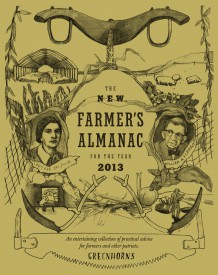
I was especially intrigued by the Greenhorns new documentary and their 2013 New Farmers Almanac. The latter is a new twist on the classic Old Farmers Almanac. Designed to appeal to healthy food advocates as well as farmers of all ages, it presents a collection of essays about adjusting to large scale urbanization and the mega population boom, as well as reclaiming a landscape dominated by monoculture, soil depletion. Available in paperback for $20 from AK Press

Here’s the trailer to the documentary, which can be purchased for $10 from their website:

*In Community Supported Agriculture schemes (CSAs) consumers subsidize a local farm by purchasing a subscription to weekly deliveries of fresh vegetables and/or fruit.

Solutions: Taking Back Our Power

stuff

Nothing like a nice government shutdown to remind us that the federal government is hopelessly dysfunctional. Congress and the White House are so focused on the needs of their corporate donors that most of the laws they pass hurt ordinary Americans rather than helping them. Fortunately a growing number of local groups have discovered that the most meaningful form of political change happens outside of official political channels. Together with family, friends, and neighbors, they’re opting out of the “corporate” lifestyle and inventing more meaningful grassroots models for meeting human needs.

The Story of Solutions

Annie Leonard, who produced the world changing video They Story of Stuff in 2008, has just released a sequel The Story of Solutions. Like her first film, it challenges a society built on ever increasing economic growth and accumulating more stuff. However the focus of The Story of Solutions is more on community organizing to move our economy in a more sustainable and just direction. To quote from the film promo:

“In the current ‘Game of More’, we’re told to cheer a growing economy – more roads, more malls, more Stuff! – even though our health indicators are worsening, income inequality is growing and polar icecaps are melting. But what if we changed the point of the game? What if the goal of our economy wasn’t more, but better – better health, better jobs and a better chance to survive on the planet?”

The nine-minute video includes inspiring real-world examples of ways in which communities are mobilizing for change – through programs as simple as “tool-sharing” libraries. There’s absolutely no reason why every American needs to own their own lawnmower, power drill, and chainsaw.

Here’s the original The Story of Stuff for people who missed it when it first came out.

photo credit: net_efekt via photopin cc

Let Them Go, Mr Putin

putin

When it suits their purposes, Russia seems to have the same propensity as the US to thumb their nose at international law. Two weeks ago, Putin acquired immense international stature and prestige by halting the imminent threat of US missile strikes in Syria. Now he seems to have squandered it all by illegally seizing a Greenpeace vessel in international waters.

On September 18, Russian FSB agents illegally boarded the Arctic Sunrise (by rappelling down from a helicopter) and seized, at gunpoint, the boat and all its occupants. The Greenpeace ship was in Arctic waters to protest hazardous oil drilling by the Russian company Gazprom. Earlier in the week two activists had boarded the Gazprom drill platform rig and were arrested and held without charge. However at the time the Greenpeace vessel was illegally boarded, it was in international waters. Seizing a civilian ship in international waters is piracy.

The Russian government reports the boat and activists (including two New Zealanders) are being towed to Murmansk, the nearest port. Ironically it’s the Russians accusing Greenpeace of piracy instead of the other way around. On Saturday, Russian Presidential Chief of Staff Sergei Ivanov told journalists that Greenpeace had “acted too radically” and compared its protest to “Somalian-style piracy.”

“One of the Most Reckless Oil Companies on Earth.”

According to a Greenpeace Media Briefing, Gazprom, the first oil company to commence Arctic drilling, is “one of the most reckless oil companies on earth.” Greenpeace forced them to halt drilling operations a year ago after taking them to court for having an expired oil spill response (OSR) plan. Their new OSR plan isn’t available to the public. Only a summary is available on their website. The full version of Gazprom’s OSR plan can only be viewed in the company’s offices under strict restrictions. Even so, the summary raises a number of serious concerns:

  • It relies on conventional clean-up measures that don’t work in ice or icy water. For example the booms they refer to can only be used during ice-free periods (only four months of the year in the Prirazlomnaya oil field).
  •   Much of the response equipment and personnel are based 1000 km away in Murmansk, which zmeans it would take Gazprom at least three days to mount an accident response.
  • The summary plans for a worse case scenario of a 10,000 ton (73,000 barrel) spill. The Deepwater Horizon disaster spewed 5 million barrels of oil into the Gulf of Mexico.
  • Gazprom confirmed in 2011 that it doesn’t have the financial resources to mount a satisfactory response to a major well blow-out. BP is currently facing a bill for the Deepwater Horizon disaster of $42 billion – which could be increased to $90 billion if the court awards maximum penalties.
  • Respected mainstream environmental groups (Pew Environment Group and US Geological Survey) are on record that it’s virtually impossible, using existing technology, to clean up spilled oil in sea ice.
  • There are major concerns about Gazprom’s safety record – in December 2011, 53 people died when the Kolskaya jack-up rig capsized during towing.
  • As a country, Russia has an appalling oil spill record. Each year, an estimated 5 million tons of oil leak from cracked wellheads, pipes, and other equipment (six times the amount spilled in the Deepwater Horizon disaster).
  • There are serious concerns about the safety of the Prirazlomnaya platform in harsh Polar conditions:
  1.  According to an industry whistleblower, the Prirazlomnaya platform was “cobbled together” from rusting pieces of old rigs to meet a 2012 deadline, when new environmental legislation took effect banning this type of drilling rig.
  2. Thus far Gazprom has refused to make public any of the platform’s safety documentation or its environmental impact assessment.

The Prirazlomnoye oil field is surrounded by national parks and wildlife sanctuaries like Nenetsky and Vaygach that are home to protected and endangered species such as the Atlantic walrus. Indigenous Peoples who rely on the Pechora Sea for fishing and hunting would also be profoundly affected by a Gazprom oil spill.

Please Sign Petition

Kiwis are asked to write to the Russian embassy in Wellington: Send a letter

Non-Kiwis should sign the petition at Release Greenpeace Activists demanding that Russia immediately release all 27 Greenpeace activists.

photo credit: World Economic Forum via photopin cc

Reprinted from Dissident Voice

How Whales Become Toxic Waste

whale

Trashed: No Place for Waste

Candida Brady 2013

Film Review

Narrated by British actor Jeremy Irons, the main theme of the new documentary Trashed: No Place for Waste  is the major health danger posed by the 7 billion tons of garbage we discard every year. The film focuses primarily on dioxins, PCBs, phthalates, bisphenyl A, and other endocrine disruptors – particularly the role they play in a growing epidemic of cancer, autoimmune disease, infertility, and neurodegenerative disease. Thanks to a 2005 Center for Disease Control study, there’s growing international awareness that all human beings carry an average of 148 of these toxic chemicals circulating in their blood stream. However prior to seeing Trashed, I was unaware that landfills and waste incinerators were a primary source of these chemicals.

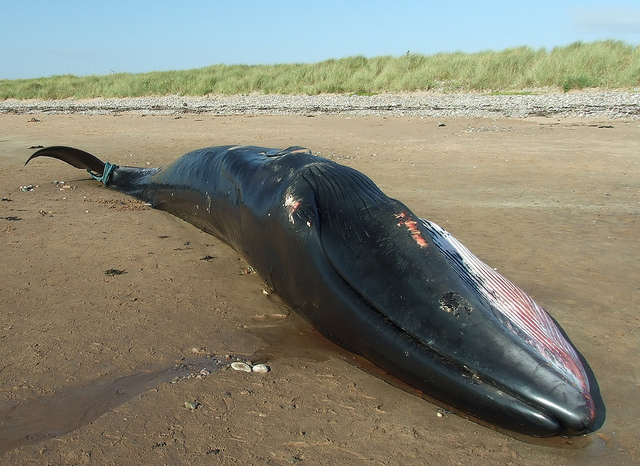
How Whales Become Hazardous Waste

Irons focuses heavily on incinerators, which pose immense problems for the entire global population. The toxic chemicals they release concentrate in large fish (who eat lots of little fish) and sea mammals, particularly in colder regions. It was shocking to hear a marine biologist talk about whales and dolphins being discarded as hazardous waste because of their high toxic chemical load. At present most killer whales are unable to reproduce, owing to their heavy exposure to endocrine disruptors. Human couples are also having more and more difficulty conceiving, as evidenced by the growing demand for in vitro fertilization.

British biochemist Paul Connett, a leading environmental health expert, features prominently in this part of the film. Author of The Case against Fluoride: How Hazardous Waste Ended Up in Our Drinker Water and the Bad Science and Power Politics That Keep It There, Connett’s a local hero here in New Plymouth. In 2011, he helped us persuade New Plymouth District Council to remove fluoride from our water supply.

Plastic Soup

The second half of the film addresses the tons of plastic filling up our oceans. The world produces 260 million tons of plastic every year. Plastic, which is manufactured from petroleum, consumes 8% of global oil production. Yet 30% of it is discarded within a year.

Although it never totally degrades, it eventually breaks up into confetti-sized fragments. Studies reveal the oceans contain six times as much of this plastic soup as microscopic zoo-plankton, the basic food source at the bottom of the food chain.

The Ultimate Solution: Eliminate Packaging

 The documentary ends on an optimistic note, with a tour of communities participating in the Zero Waste movement. According to Irons, the most desirable solution is to pressure corporations to dispense with plastic packaging in the first instance. Consumers also need to lean on supermarkets and other retailers to dispense more foods in bulk, as well as allowing shoppers to bring their own reusable containers to take them home. This will also greatly reduce food costs, given that packaging makes up more than half the sticker price.

 Aggressive Recycling

 In the mean time, a stronger commitment to recycling can go a long way towards keeping toxic chemicals out of our water and food and plastics out of the ocean. Waste analysts estimate that 90% of waste can be recycled at a potential savings of ₤6.4 billion ($US 9.9 billion) a year. Approximately 1.5 million jobs could be created in the process. By reusing these materials instead of replacing them, the reduction in climate pollution would be equivalent to taking half the world’s cars off the road.

New Zealand Premier

The New Plymouth Green Party is sponsoring the first New Zealand showing of Trashed on Thursday 24 October at 7:30 pm at St Mary’s Peace Hall ($10 admission).

photo credit: stuant63 via photopin cc
Reposted from Dissident Voice