Why We ALL Resist the Truth About Climate Change

requiem for a species

Requiem for a Species: Why We Resist the Truth About Climate Change

By Clive Hamilton

Allen and Unwin (2010)

Book Review

Most of Requiem for a Species is a detailed analysis of the sociological and psychological factors that lead all of us (including climate activists) to deny the grim reality of the massive climate disruption that faces us. Australian author Clive Hamilton begins by confronting readers with the most likely climate scenario over coming decades. I have always had difficulty getting my head around climate science and found these the most valuable chapters.

Predicting the Behavior of Politicians

For the last two decades politicians have been giving lip service to limiting global warming to a “safe” increase of 2 degrees centigrade. According to Hamilton, most climate scientists recognized this was no longer possible when the 2009 Copenhagen Climate Change Conference failed to agree on a treaty to replace the Kyoto Accord. Most climate models agree that the only way to limit global warming to 2 degrees Centigrade would require for global emissions to peak in 2015 (this year) and decrease by 20-40% by 2020. This translates into a 6-7% per year reduction in rich countries – it assumes that developing countries (including China, India and Brazil) will continue business as usual until 2030, before reducing their emission by 3% a year. Hamilton believes there’s no way developing countries will agree to sacrifice economic growth (and bringing their populations out of poverty) before then.

Already in 2010, Hamilton was predicting that rich countries wouldn’t start cutting their emissions by 6-7% annually in 2015. He reckons 3% per annum is the highest emissions reduction compatible with continued economic growth. Cuts above 5% would likely translate into unspeakable human misery, witness the immense human cost in Russia when the Soviet economy collapsed in 1989 (which caused a 5.6% reduction in carbon emissions).

He feels politicians are very unlikely to agree to start cutting in emissions in 2020, either. At present most OECD countries have committed to reducing carbon emissions by 60-80% by 2050. Such a distant target is worse than useless. If politicians fail to act before 2030-2040, most of the earth’s ice cover will have melted and will remain that way for thousands of years. If politicians continue business as usual (and do nothing), global temperatures will increase by 3.1 degrees C by 2100 and 5-6 degrees C by 2200.

Hamilton believes the best we can hope for is that both rich and developing countries will begin cutting emissions by 3% per year in 2030.* In the absolute best case scenario, this translates into an increased average global temperature of 2.6 degrees C by 2100 and 3.5 degrees C by 2200.

What 4 Degrees Warming Looks Like

Because Hamilton considers a 4 degree C increase a likely scenario, he provides a detailed description of what that looks like. With 4 degrees C of average global warming, there will be no Arctic sea ice in summer, and Greenland, the west continental shelf of Antarctica and the Himalayan glaciers will melt. If all the earth’s ice cover melts sea levels will rise by 70 meters.

More than a billion of Earth’s inhabitants will have no access to water, especially in the India, Pakistan and China which rely on the Himalayan glaciers for drinking water. Fifteen percent of current arable land will be unsuitable for cultivation due to drought (in India, Pakistan, China, Australia, southern Europe, the central and southern US, North Africa and the Amazon). In northern climates like Canada and Siberia, there will be a 20% increase in arable land.

It’s impossible for climate scientists to predict exactly how many people will die from starvation, dehydration and extreme weather events. Some predict a reduction in the global population to one billion or less. All we know for sure is the die-off will be most severe in poor developing countries.

The Climate Denial Industry.

There’s also an excellent chapter on the climate denial movement, which profiles climate scientists (most were also strong advocates of Reagan’s Strategic Defense initiative and nuclear power) who colluded with fossil fuel industry, right wing think tanks and the public relations firm APCO (which master minded the campaign to deny the health risks of tobacco) to create an extremely slick climate denial campaign. I found it especially intriguing to learn of the role of the Revolutionary Communist Party (who produced the 2007 documentary The Great Global Warming Swindle) and other far left groups in the climate denial movement.

There’s also an excellent chapter on the gungho technofixers who believe catastrophic climate change can be prevented through pie-in-the-sky technofixes, such as carbon capture, geoengineering and wide scale adoption of nuclear power. Hamilton explores each of these technologies in considerable detail. Each of them costs far more than improving energy efficiency and switching to renewable energy. All of these approaches would take at least ten to twenty years to implement. And as Hamilton points out, waiting another 20 years to begin cutting emissions will have catastrophic consequences.

Hamilton also makes the prediction that the global recession might temporarily reduce emissions before the economy rebounds again. He was correct:

• In 2009, global emissions fell by 1.2% after increasing by an average of 2.5% a year between 1990 and 2009.
• In 2010 global emissions increased by 5.9%
• In 2011 global emissions increased by 3.2%
• In 2012 global emissions increased by 1.4%
• In 2013 global emissions increased by 2.1%


*Hamilton was overly pessimistic here. In November, Obama and Xi Jinping made a bilateral agreement in which Obama committed the US to cutting its carbon emissions by 26-28% from 2005 levels by 2025. China committed to start cutting emissions in 2030 and make “best efforts” to peak emissions before 2030.

**The Revolutionary Communist Party was always regarded skeptically (as heavily infiltrated) by other progressive groups when I lived in Seattle. For a grassroots leftist group, they seemed to have virtually unlimited funds and repeatedly tried to instigate violence during peaceful protests. An RCP member was linked to the suspicious death of a one of my African American patients who exposed the DEA’s role in laundering cocaine profits in the professional race car circuit.

Roundup Linked to Autism and Alzheimers

monsanto

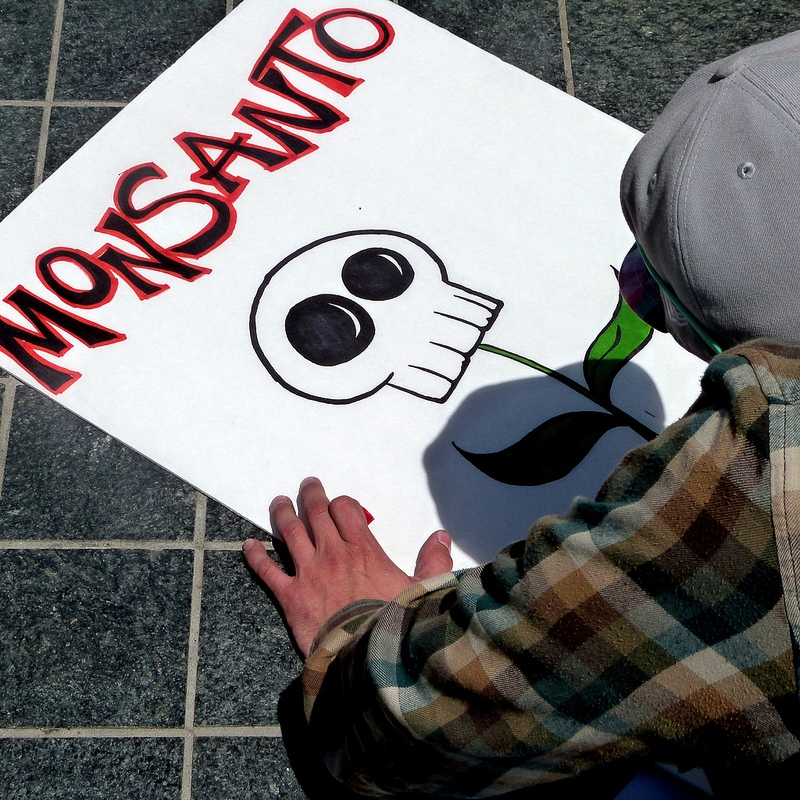
Recent research reveals the main toxic effects of glyphosate, the main ingredient in the Monsanto weedkiller Roundup, are identical to the typical biological markers for autism and Alzheimer’s disease. MIT researcher Dr Stephanie Seneff PhD is also alarmed by the correlation between growing Roundup use and a big increase in the incidence of autism.

Roundup Kills Off Intestinal Bacteria

Seneff is mainly concerned about the negative effect of glyphosate on the microbiome. This is the scientific name for the normal intestinal bacteria responsible for immunity, weight maintenance, healthy neuropsychological function and a host of other biological processes.

Monsanto argues that glyphosate is harmless to people because the shikimate pathway, which glyphosate is designed to inhibit, is absent in human cells. Unfortunately, as Dr Seneff points out, our gut bacteria do have this enzyme pathway. In fact, several studies show that glyphosate kills off beneficial gut bacteria, allowing pathogens to overgrow.

Glyphosate also interferes with the ability to synthesize cytochrome P450 (CYP) enzymes, which are essential for gut bacteria to produce and process aromatic amino acids, methionine and sulfate. All these effects are linked to important diseases and conditions associated with the Western diet, including gastrointestinal disorders, obesity, diabetes, heart disease, depression, infertility and Alzheimer’s disease.

Seneff isn’t the first researcher to link autism with a derangement in gut bacteria. Scientists have been studying this potential link for more than a decade

Autism Rate Skyrocketing

In a Powerpoint presentation she gives all over the US, as well as in Taiwan and France,  she particularly emphasizes the strong correlation (Pearson correlation coefficient=0.99)* between the skyrocketing incidence of autism and increasing use of Roundup starting in the early 1990s.

In 1975, 1 in 5,000 children were diagnosed with autism. The current rate is 1 in 68.

In her presentation, Seneff also discusses research showing that children with autism commonly have biomarkers indicative of excessive glyphosate exposure, including zinc and iron deficiency, low serum sulfate and mitochondrial disorders. Similar markers are also found in Alzheimer’s disease.

Glyphosate in Breast Milk

Most of the GMO crops produced by Monsanto are “Roundup ready” and contain genetic modifications enabling them to withstand spraying with Roundup weed killer. In addition to large numbers of American farmers switching to GMO crops, the use of Roundup on each farm increases over time. This is because Roundup tends to create superweeds that are resistant to normal doses.

The US is unique in the extreme prevalence of foods containing GMOs (genetically modified organisms) that were likely treated with Roundup. Glyphosate can be found in soft drinks and candies sweetened by corn syrup, potato chips, chips, cereals and oil containing soy and cattle and chicken fed soy. According to Seneff, the only way to totally avoid glyphosate is to eat fresh organic food.

Unsurprisingly Americans have ten times as much glyphosate in their blood and European as Europeans. A study by Moms Across America showed that mothers across the US have excessively high levels of glyphosate in their breast milk.

Autism and Vaccines

In an interview with Age of Autism, Seneff was asked her opinion on the link between vaccines and autism. In reply, she talked about three other chemicals she believes are critical to the autism epidemic: aluminum, mercury and glutamate. All are found in specific vaccines. She adds that vaccines and glyphosate are synergistically toxic because the latter disrupts the body’s ability to metabolize glutamate, which is extremely toxic to the brain.

She advises if she were a young mother, she would try to avoid all the vaccines that contain aluminum, mercury and glutamate: DTaP, Hepatitis B, MMR, the measles vaccine, the flu shot, and Gardasil. For parents who feel reluctant to eliminate vaccines altogether, she recommends delaying them as long as possible. Infants have a very weak immune system.

When you look at the risk benefit ratio of the vaccines, it comes out short. You really have to think about whether it’s worth the cost. . . . Do you want your child to be permanently damaged in order to prevent it from getting measles? It doesn’t make sense. I think we really need to question whether the vaccines are an obligatory part of a child’s program. I certainly think they’re not, particularly because they are so dangerous. And in conjunction with the glyphosate, which is making them much worse.


*In statistics, the Pearson correlation coefficient is a measure of the linear correlation between two variables. It gives a value between +1 and −1, where 1 is total positive correlation.

photo credit: msdonnalee via photopin cc

Also posted in Veterans Today

Climate Change-Lite for Kiddies.

saving my tormorrowSaving My Tomorrow – Part 1 and 2

HBO (2014)

Film Review

I watched this two part film with some trepidation, assuming that an HBO documentary would be full of spin. Sadly it fulfilled my worst expectations. Aimed at age 5-12, the video offers a fairly accurate presentation of the theory of greenhouse warming. Children will also enjoy some great shots of insect life and the devastation Hurricane Sandy caused on Long Island.

That being said, I think a lot of adults will react as I did and feel manipulated. Developmentally, children up to age 18-19 adopt strong political views under parental (and occasionally teacher) influence. Rather than portraying this honestly, Saving My Tomorrow makes it appear as if a bunch of American child prodigies suddenly woke up one morning and decided to protest against oil trains and fossil fuel dependence. Despite being a strong climate activist, I resent being propagandized as much as the next person.

In my case, this sense of manipulation was compounded by the slick packaging, consisting of cute wise-child soundbites, interspersed with celebrity readings and musical numbers written by the kids themselves. In my view, the filmmakers needed to be more transparent by exploring the parents’ behind-the-scenes role in promoting their children’s activism.

The other glaring dishonesty was HBO’s failure to mention the role of genetically modified organisms (GMOs) in the near demise of the American monarch population (we don’t allow GMO crops in New Zealand and have plenty of monarch butterflies).

While adults will be annoyed by the slick packaging, the documentary is probably a good introduction to climate change for young children. I myself really enjoyed the scene of Long Island children reading their essays on Hurricane Sandy and the energy saving tips kids give during the credits.

***

Since I first posted this review, I note that HBO has had both videos taken down by YouTube. Don’t worry you’re not missing much.

The Addiction of Compulsive Consumption

overspent american

The Overspent American: Why We Want What We Don’t Need

by Juliet Schor (Harper Perennial 1998)

Book Review

The Overspent American is a study of the psychological and sociological factors that drive Americans’ compulsive consumption. In the mid twentieth century, we all believed that a big boom in mechanization and productivity would translate into a significant increase in leisure time. Instead the 21st century found Americans working harder than ever. Growing income inequality, with a bigger percentage of our work product, going to corporate profit, is a big part of the answer. Another important part is compulsive spending patterns that have trapped Americans into in painful desire-debt-spend-overwork cycle.

In many, compulsive spending is an addictive behavior. Many shopaholics regret their purchases once they get them home and never use them.

According to Schor, around 80% of Americans feel that US society is too materialistic, while simultaneously under-estimating their own compulsive consumption and indebtedness. In 1998 (when Schor published The Overspent American), 80% of Americans had personal debt beyond their home mortgage. Across the entire population, average debt was the same as average annual income.

Schor’s purpose is to examine why the promise of greater leisure time due to greater mechanization and productivity never materialized. In 1998, when she wrote the book, Americans were working twice as hard in the fifties. In her few, this is only partly due to corporate exploitation. Many Americans are forced to work more hours than they would really like owing to the compulsive spending parents, especially if they get hooked into the desire-debt-overwork cycle.

Competitive Consumption

I had always blamed Americans’ obsessive consumerism on their constant bombardment, by the media, with psychologically sophisticated pro-consumption messaging. According to Schor’s and others’ research, the problem is far more complex.

Overspending, according to Schor is based in competitive consumption, i.e. the achievement of social status based on what you spend, rather than what you earn. It’s a very old phenomenon. Adam Smith mentions it in Wealth of Nations.

Schor’s research primarily concerns the middle class. Individuals with a strong working class identity tend to be less susceptible to competitive consumption pressures, in part because they have little or no discretionary income and limited access to credit and reject bourgeois ideals in favor of non-consumerist values (eg solidarity).

She also examines two specific groups that are oblivious to competitive consumption pressures. I found this particularly valuable in understanding my own lack of desire to consume and acquire material goods.

Defensive Spending

According to Schor, middle class Americans spend defensively for fear of losing status. The fear of falling behind and ceasing to be middle class became particularly intense in the 1970s, when US companies first began shutting down and moving overseas. Between 1980 and 1995, the upper 20% of the US population experienced an increase in income. Everyone else got a reduction in income. By 1996, the middle class was noticeably shrinking, despite the entry of women into the workforce.

People who were downsized between 1980 and 2000 incurred massive debts to preserve their middle class status. Unlike the fifties, middle class spending expectations no longer revolved around comfort but around conspicuous consumption of luxuries. If you couldn’t afford a four bedroom house, two cars, cable, a VCR, microwave, blender, coffee maker, computer, printer, expensive vacations, massages, personal trainers, lavish gifts at Christmas and other special occasions (one third of which gift receivers neither want nor use), you borrowed money on your credit cards to pay for it. Once you maxed out your credit cards, you ceased to qualify for middle class membership.

The Effect of TV

I was very surprised by the lack of hard research that TV ads stimulate consumption in adult spenders. In Schor’s studies, she found that consumer desires were mainly generated to by exposure to the lifestyles of a reference group, ie the group closest to us in the social hierarchy (workmates, family, friends). Where TV (and films) most influence spending is by offering an inflated view of how other Americans live and what they buy and own. This occurs because the vast majority of TV characters are upper middle class. With growing social isolation, TV itself serves as a reference group for many people.

Downshifters and Simple Livers

Schor classifies people who are resistant to compulsive consumption pressures as either downshifters or simple livers. I found the distinction she makes to somewhat arbitrary, especially when she refers to Quakers, Shakers, Transcendalists and hippies as downshifters. By her own definition, I would tend to call all these groups simple livers:  they resisted material accumulation out of moral conviction and were supported by a reference group that shared these values.

According to Schor, downshifters are more likely to be individuals who have given up compulsive consumption due to a debt crisis or intense work stress. They would prefer to have more money and time, but are forced to opt for time due to some personal crisis. Between 1990 and 1996, 20% of Americans downshifted voluntarily. Twelve percent did so involuntarily due to job loss or wage cuts.*

Simple livers reject the notion that material goods determine status. They set a low level of sufficiency income (some set it as low as $6,000 – 15,000 a year). Beyond this level, spending is no longer positive because it creates clutter, harms environment and alienates them from their peer group. They reject the notion that material goods determine status.

Voluntary simplicity circles first started in the Pacific Northwest in the 1990s. Thanks to immense popularity of The Simple Life by David Shi and Your Money or Your Life by Vicki Robin and Joe Dominguez, they are now widespread across the country.


*Thanks to ongoing recession, in 2014 the percentage of Americans involuntarily downshifted is nearly 50%.
**According to Schor’s classification system, I’m a simple liver. It’s something that seemed to come naturally because my parents were non-college educated simple livers who rejected conspicuous consumption in favor of non-material values. Most people in my current reference group (the Green Party) are also simple livers.

Grave Danger of Falling Food

Grave Danger of Falling Food

Tony Gailey (1989)

Film Review

This documentary is about Australian Bill Mollison, the father of the international permaculture movement. The title, which is ironic, refers to air drops of food aid (by the industrial north) to compensate the third world for destroying their food production systems. Mollison defines permaculture as a design system for housing, energy, water management, waste recycling and food production that follows nature’s engineering principles. Permaculture purposely mimics natural systems to create a permanent, sustainable culture for human beings.

In addition to exploring Mollison’s personal history and philosophy, Grave Danger of Falling Food offers a good introduction to permaculture design and the concept of permaculture zones.

Lifestyles that Restore the Planet

Despite Mollison’s lifelong concerns about the environmental devastation wreaked by industrial agriculture and multinational extractive industries, he has reservations about the war mentality of the environmental movement. Instead of “fighting” to save rain forests and endangered species, he thinks it makes more sense to get people as many people as possible to adopt lifestyles that naturally restore the planet.

The purpose of industrial agriculture, in his view, is to create profit rather than food. In their single minded search for profits, corporations essentially declared war on soil in 1940. In sixty years they have destroyed 70% of the planet’s topsoil by deluging it with chemical fertilizers, pesticides and herbicides and killed off the wealth of microorganisms that make it fertile.

Applying Forest Principles to Food Production

Beginning his adult life as a lumberjack, he got fed up with destroying pristine forests to build homes for rich people and went to university to study and teach forest management. In 1972, it suddenly came to him that applying forest principles to food production would substantially increase yields, while simultaneously repairing the environmental destruction caused by 150 years of industrial capitalism.

He coined the term permaculture in 1978. From 1981 on, he has devoted his life to helping people to design farms and gardens based on permaculture principles.

Mollison has a special interest in urban permaculture, as it has the highest productive potential. By becoming self-sufficient in food production and water management (ie eliminating stormwater runoff and recycling gray water from showers, laundry etc and where possible, sewage water), cities offer the greatest potential energy and resource savings. By eliminating transport and packaging costs, locally grown food is automatically 95% cheaper.

Lawn Liberation

A strong believer in lawn liberation, Mollison has a special distaste for suburban lawns, which he considers a tremendous waste of water and energy. A food forest in the front yard uses 50% less water, is far less work and provides a continuous supply of healthy, chemical-free food. In the video below, a Denver woman has transformed her front lawn into a mini-food forest using permaculture design. According to Juliet Schor in The Overspent American, by 1995 were spending $7.6 billion annually on residential lawn care.

Dirt: the Movie

Dirt: The Movie

Bill Benenson and Gene Rosow (2009)

Film Review

This documentary focuses on the rapid destruction of the planet’s topsoil, with its dire implications for food production and human survival. Through a combination of industrial farming, deforestation, urbanization and extractive mining, humankind has destroyed one-third of the world’s topsoil in a hundred years.

The film begins with a basic introduction to on the abundant microbial life that characterizes healthy topsoil. Plowing, genetically modified organisms (GMOs) and heavy pesticide and herbicide use render soil infertile by destroying these microorganisms. Deforestation hastens the process by destroying deep root systems that protect against nutrient runoff. The productive farmland that isn’t wrecked by industrial farming and deforestation is paved over as cities expand or destroyed by fracking, mountaintop removal and strip mining. This voracious greed for new fossil fuels benefits a few hundred people and carries immense costs for the rest of us.

The film depicts quite eloquently the western slash and burn mentality that approaches food production like running a factory. Extracting a quick profit is all that matters. There is no planning whatsoever for food security, much less the needs of future generations. You clear cut a forest, plant acres of a single crop (an open invitation to pests) and pour on industrial fertilizers, pesticides and herbicides. In three to four years you have depleted the soil, and you cut down another forest.

Dirt: the Movie also poignantly portrays the link between environmental destruction and human degradation. It’s always the poorest and most disempowered who have their land destroyed by multinational corporations. Rapid desertification in Africa and India is forcing thousands of subsistence farmers to migrate to city slums – and Haitian mothers to make dirt cookies to ward of their children’s hunger pains.

Meanwhile increasing desertification (from a combination of deforestation and industrial farming) in Africa and India and the thousands of farmers forced to migrate to city slums when their land becomes useless. The film also emphasizes the link between environmental destruction and human degradation. It’s always the poorest and most disempowered who have their land destroyed by multinational corporations. The most heart breaking scene depicts Haitian mothers making dirt cookies to ward off their children’s hunger pains.

Water mismanagement also plays a major role in desertification. Because they have paved over their rivers, Los Angeles spends billions of dollars from as far away as Wyoming – and millions more managing rainwater runoff. Liberating their rivers would solve both problems at a fraction of the cost.

Significantly the main voices featured in the film are those of women of color: the late Kenyan environmentalist Wangari Mathai, who won a Nobel Prize for founding the Green Belt tree-planting movement, Indian environmentalist and organic farming advocate Vandana Shiva and Greening the South Bronx founder Majora Carter (see Greening the South Bronx). In addition to championing urban agriculture and green roof projects in the South Bronx, Carter has helped establish a prison greenhouse and organic farm at Rikers Island prison and the Green Team. The latter is a project that allows ex-cons to use the skills they have learned in tree planting, urban agriculture plots and New York’s first green roof* business.

*A green roof is a living roof partly or completely covered with vegetation, to optimize energy conservation and minimize water runoff.

The Water Emergency

blue covenant

Blue Covenant: The Global Water Crisis and the Coming Battle for the Right to Water

by Maude Barlow

The New Press (2007)

Book Review

Although it receives less public attention, fresh water scarcity is far more urgent and deadly than climate change. With no choice but to drink contaminated water, millions of children under five are dying from infectious diarrhea. Growing water scarcity is also the major driver of illegal immigration. In Mexico alone, nearly 600 farmers a day abandon their land when their wells dry up.

According to the World Health Organization (WHO), 80% of global sickness and disease is caused by contaminated water. In the global south, where only the rich can afford clean water, the poor die of hepatitis, cholera, polio, botulism, salmonella, e coli, campylobacter, viral gastroenteritis and other infectious illnesses transmitted by human feces. In the global north we die at unprecedented rates of cancer and autoimmune disease from drinking water contaminated with endocrine disrupting herbicides and pesticides, industrial toxins, heavy metals, drugs and nanoparticles.

The Cause of Freshwater Scarcity

Barlow identifies seven major factors contributing to the rapid depletion of clean drinking water:

1. Total failure to regulate the massive increase in toxic runoff (animal waste, herbicides, pesticides, antibiotics) from factory farms and industrial sites.

2. Unregulated corporate mining of fossil water from aquifers that are too deep to be replenished by rainwater. Corporations siphon off millions of gallons a day at zero or minimal charge to mass irrigate deserts, manufacture cars and computers, mass produce bottled water* and extract oil from tar sands and oil and gas from shale (aka fracking).

3. Reduced rainfall due to destruction of water retaining landscapes from rapid and haphazard urbanization. Rain that falls on pavement runs off (and ends up in the sea), rather than being absorbed and evaporated.

4. Rapid glacial melting (due to climate change) of glaciers in the Himalayas, Alps and Andes. The Himalayan glaciers are the primary source of water for nearly half of humanity (India, Pakistan, China, Vietnam, Laos, Nepal, Bhutan, Burma, Thailand, Bangladesh and Cambodia).

5. Loss of water from the “virtual water” trade, thanks to International Monetary Fund (IMF) and World Bank policies that force poor countries to sacrifice their scarce freshwater by growing and exporting water intensive crops (eg avocados, citrus, wheat, coffee, cut flowers and biofuel).

6. Ill-conceived technological fixes, such as mega-dams, water diversion and desalinization that reduce, rather than increase, access to clean water. Desalinization is the most destructive, owing to the massive of toxic waste (from chemicals used to clean reverse osmosis filters) discharged to the ocean.

7. Water privatization by powerful multinational corporations. Most of the world’s freshwater is controlled by the French Companies Suez and Veola and the British/German company RWE/Thames.

The Global Water Cartel

During the late 19th and early 20th century, Europe (with the exception of France, where municipal water service has been privately run since the late 1800s), North America, Australia, New Zealand and Japan adopted universal public water and sanitation services in all major metropolitan areas. This never happened in the global south, where cities only provided water service to the wealthy elite. This made it easy for neoliberal institutions like the IMF to force water privatization schemes on countries in the global south with debt problems.

Barlow slams the IMF and World Banking for forcing water privatization schmes on South America, Africa and Asia as a condition of development loans. She’s especially critical of former UN Secretary General Kofi Anan for supporting these policies, in return for major donations Suez and Veola made to UNESCO.

Over the last few decades, Suez, Veola, RWE/Thames and a few smaller corporate players have been targeting cash-strapped US cities with their water privatization schemes. Bankrupt cities like Detroit are being forced to sell their public water systems as a source of revenue.

Water Warriors

Barlow devotes the last third of her book to the “water warriors” around the world who are fighting for clean drinking water to be recognized as a basic human right. Among other reforms, there must be pressure on government to end the virtual water trade by promoting local sustainable farming, to ban private water companies from developing countries, to strictly enforce laws against surface and ground water contamination, to charge corporations full value for the water they take for bottling plants, fracking, manufacturing and flood irrigation and to promote urban planning that accommodates the need for rainwater to be captured and returned to the earth.


* The big three global bottling companies are Nestle, Pepsico and Coca Cola, though Starbucks’s water bottling company Ethos Water is sneaking up on them with their phony campaign to “help children get clean water.”

America’s Fukushima?


 diablocanyon

Bye Bye California

Whistleblower Michael Peck, a senior member of the Nuclear Regulatory Commission (NRC), is calling for the Diablo Canyon nuclear reactor to be shut down — pending an assessment of its ability to withstand a major earthquake. Peck, who was Diablo Canyon’s lead inspector for five years, asserts the NRC isn’t applying its own safety rules for the plant’s operation. Unlike other federal whistleblowers, who Obama and the FBI are busy locking up, Peck is participating in an NRC review process that permits employees to appeal a superior’s ruling.

Located on the Pacific Coast halfway between Los Angeles and San Francisco, Diablo Canyon is California’s last nuclear power plant. It’s located adjacent to four seismic faults, the Shoreline, Hosgri, Los Oso and San Luis Bay. The Shoreline fault was only recently discovered; the Hosgri, located three miles from the plant, is the largest and most dangerous. It was discovered in the 1970s, after construction on Diablo Canyon was nearly complete. According to Peck, a 2011 Pacific Gas and Electric (PG& E) seismic study indicates all four faults are capable of producing significantly more “peak ground acceleration” (75% more in the case of San Luis Bay) than previously believed.

Citing these findings, Peck concludes that Diablo Canyon, based on the NRC’s own safety standards, lacks justification to continue operating. He’s asking the NRC to shut it down until PG&E can demonstrate that its piping, cooling and other systems can withstand higher stress levels than called for in its original design.

In 2012 when the NRC ruled Diablo Canyon could continue operating without reassessing its seismic safety, Peck filed a formal objection. In it he called for PG&E to be cited for violating safety standards. When his supervisors overruled him, he filed a second objection, triggering the current review.

Dave Lockbaum, from Union of Concerned Scientists, supports Peck’s position. He has researched four decades of records when the NRC, and its predecessor the Atomic Energy Commission (AEC), faced similar situations. In all prior cases, the NRC/AEC disallowed nuclear facilities to operate with similar unresolved earthquake protection issues. For example, in March 1979—two weeks prior to the Three Mile Island accident—the NRC ordered a handful of nuclear power reactors to shut down and remain shut down until earthquake analysis and protection concerns were corrected.

Diablo Canyon Up for Re-licensing

Diablo Canyon is currently licensed to operate until 2025. In 2009, PG&E applied for a 20 year license extension. The re-licensing process was suspended immediately following the 2011 Fukushima disaster. Japan’s magnitude 8.9 earthquake, which was far larger than believed possible, knocked out Fukushima’s power and cooling systems, causing three core meltdowns. This led the NRC to require US nuclear power plants to re-evaluate seismic risks. These reports are due by March 2015.

Friends of the Earth has petitioned the NRC  to intervene in the Diablo Canyon’s re-licensing proceedings.

According to FOE senior adviser Damon Moglen of Friends of the Earth: “It’s now clear that Diablo Canyon could never get a license to be built at its current Central Coast site. The NRC must consider this seismic data as part of public licensing hearings.”

A Question of Magnitude

Predictably PGE, via their spokesperson Blair Jones, disagrees. Jones maintains the NRC has “exhaustively analyzed” earthquake threats for Diablo Canyon and demonstrated it’s seismically safe. According to Jones, the core issue involving earthquake ground motions was resolved forty years ago with seismic retrofitting (Diablo Canyon was originally designed to withstand a 6.75 earthquake – with the upgrade it can supposedly withstand a 7.5 earthquake). The obvious assumption being that none of the four faults surround Diablo Canyon could cause a 7.6 magnitude or higher earthquake.

PG&E’s position is understandable, as nuclear power plants aren’t cost effective to begin with. They only become profitable with massive taxpayer subsidies. If the NRC requires quire them to retrofit Diablo Canyon to current earthquake standards, a permanent shutdown is highly likely. In 1976, the Humbolt Bay nuclear power plant in northern California, which was within 3,000 yards of three faults, was shut down to reinforce its ability to withstand possible earthquakes. Retrofitting it became more difficult and costly than projected and it never re-opened.

Our Non-regulating Regulatory Agencies

A Fukushima-style earthquake and meltdown at Diablo Canyon could wipe out agriculture in California and parts of the Midwest for centuries. Yet like many federal regulatory agencies, the NRC is more concerned about protecting PG&E’s bottom line than the health, safety and food security of the American public.

Michael Peck, who holds a doctorate in nuclear engineering is presently a senior instructor at NRC’s Technical Training Center in Tennessee.

photo credit: NRCgov via photopin cc

A Natural Solution to Drought

In the video below, Australian permaculture guru Geoff Lawton challenges the energy intensive system of water management employed in the southwestern US and California.

He gives the example of the canal off the Colorado River, which presently transports water 300 miles to Tucson. Increasing evaporation has made the water so saline that it’s useless for irrigation – except for golf courses. A sinking water table means massive energy is required to elevate the water prior to transporting it. In fact, providing water to Tucson is the single biggest consumer of electricity in the state of Arizona.

Lawton contrasts this energy intensive approach to water management with a system of swales* built in the Sonora Desert 80 years ago under the Works Project Administration (Roosevelt’s New Deal job creation program). After 80 years, the swales are full of lush grasslands and trees that have self-planted.

This low-energy design approach, which works with nature rather than against it, can be used to transform any desert region into productive food forests.

The video has been censored from YouTube, but you can see it at http://www.geofflawton.com/fe/73485-an-oasis-in-the-american-desert

In the second video Lawton takes viewers through a food forest he built, by constructing swales, in the Jordanian desert.

*A swale is an artificial ditch on contour used to slow and capture water runoff by spreading it horizontally across the landscape, thus facilitating runoff infiltration into the soil


Greening the South Bronx

Greening the Ghetto
Majora Carter (2006)

Film Review

I make no secret of my belief that real political change must start at the local. To bone up on my organizing skills, I’m presently doing a master class called “How Communities Awaken”. It’s been decades since I took a formal class. For homework they’ve given two books and a flash drive full of videos, podcasts and journal articles.

Naturally I went for the videos first. This one is a 2006 TED talk by an African American environmental justice* activist from the South Bronx.

The most striking part of Carter’s talk is her narrative describing how local politicians and developers deliberately target politically vulnerable communities. I saw the exact same thing happen to Seattle’s central area in the 1980s.

As in Seattle, major Interstate expansion (to shorten the Manhattan commute for wealthy Westchester County residents) displaced thousands (600,000) of South Bronx residents. The family homes many had purchased became virtually worthless.

In addition to the Interstate, South Bronx residents have been saddled with four power plants, a sewage treatment plant and a toxic waste site. Due air pollution, one in four South Bronx kids has asthma, seven times the national average.

Fighting Back Through Community Empowerment

Carter describes how she and her neighbors turned this around by obtaining a $10,000 grant to transform a desolate Hudson River dump site into a park. And how this success led to the formation of a Green Wave movement in South Bronx.

In addition to building community and greatly improving the physical environment, her Green the Ghetto movement has translated into serious economic development. In addition to offering job training for ecological stewardship, her community started New York’s first green roof** installation business.

The end of the film features an intriguing interaction (i.e. putdown) with Al Gore about his patronizing response when she approached him about addressing environmental justice in his climate change slideshows.


*Carter defines environmental justice as the right of a community not to be saddled with an undue burden of environmental problems.
**A green roof is a living roof partly or completely covered with vegetation, to optimize energy conservation and minimize water runoff.