Going Off the Grid

off the grid

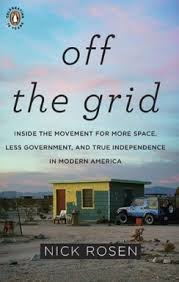
Off the Grid: Inside the Movement for more Space, Less Government, and True Independence in Modern America

by Nick Rosen

Penguin Books (2010)

Book Review

Off the Grid is an exploration of the diverse permutations of the US off-the-grid movement. According to British journalist and documentary filmmaker Nick Rosen, living “off the grid” can have a variety of meanings. For some it means living self-sufficiently without the higher cost and carbon emissions of electric, gas, water and sewage connections. For others, it means living incommunicado without the daily intrusion of cellphones or email. In a few cases, involving political dissidents or those with criminal records, it means escaping the prying eyes of the surveillance society.

The movement includes liberal-leaning environmentalists, who Rosen describes as the “foot soldiers of the eco-revolution,” right wing civil libertarians and survivalists, the homeless and urban homesteaders who capture rainwater and produce their own electricity despite living within city limits.

In 2007, there were 300,000 off the grid households in the US. By 2010, the number had reached 520,000 and was growing by 10-15% annually.

Obama’s Smart Grid

Rosen is clearly a strong supporter – and part time practitioner – of off the grid living. He also strongly opposes Obama’s push to build a multibillion dollar “Smart Grid.”  With the latter, power companies use Smart Meters to continuously monitor users’ electricity consumption. Power companies (and Obama) are bending the truth when they claim a government subsidized smart grid is essential to respond to big growth in future electricity demand. Electricity demand is decreasing, due to the economic downturn and big improvements in efficiency.

The real reason power companies want Obama to build them a Smart Grid is to facilitate long distance trading in wholesale electricity. This is where they make their big money (Anyone remember Enron?).

The History of the Grid

The most interesting section of the book explores the historical development of the electrical grid. According to Rosen, it part of a deliberate scheme by Edison and GE (the company he founded) to increase electricity consumption. Both GE and Westinghouse launched massive propaganda campaigns to get people to sign up for the grid and purchase more electrical appliances to increase their consumption.

Although far less profitable for power companies, there’s no question that smaller, decentralized energy supply networks would have been more efficient* and cheaper for consumers.

Intentional Community

The bulk of the book focuses on groups and individuals who have created off-the-grid communities to recapture the social engagement that has disappeared from modern society. People who join them make an intentional decision to rely on one another, rather than technology, to meet their needs.

One prominent example includes the Earthship community architect Mike Reynolds started in New Mexico.  An Earthship is an ecologically sustainable home built out of used tires filled with earth or sand and other recycled items. Dennis Weaver’s documentary Garbage Warrior, celebrates Reynold’s creation of the Earthship concept. Another highlight is Rosen’s fascinating visit to an Amish old order Mennonite community in Kentucky.

Belittling 911 Truthers

One part of the book that really irritated me was the chapter belittling civil libertarians who decided to live off-the-grid after discovering the 9-11 attacks were an “inside job.” Rosen makes it appear as if people who reject the Bush administration version of the Twin Tower attacks (as I do) are mentally ill and deluded.

Support for the 9-11 truth movement is in no way limited to paranoid right wing libertarians, as Rosen suggests. Globally the movement has millions of adherents and they represent the entire political spectrum.


*Our current electrical power system loses approximately 8-15% of the electricity it creates between the power plant and the consumer.
Climate Denial: Big Oil’s Multimillion Dollar Disinformation Campaign

The Climate Deception Dossiers

On July 9, 2015, the Union of Concerned Scientists released The Climate Deception Dossiers – collections of internal company and trade association documents revealing a three decade campaign by the world’s largest fossil fuel companies about the realities and risks of climate change. Some documents have been leaked to the public by industry whistleblowers. Others have come to light through lawsuits or Freedom of Information (FOIA) requests.

Each dossier provides an illuminating inside look at this coordinated campaign of deception, an effort underwritten by ExxonMobil, Chevron, ConocoPhillips, BP, Shell, Peabody Energy, and other members of the fossil fuel industry.

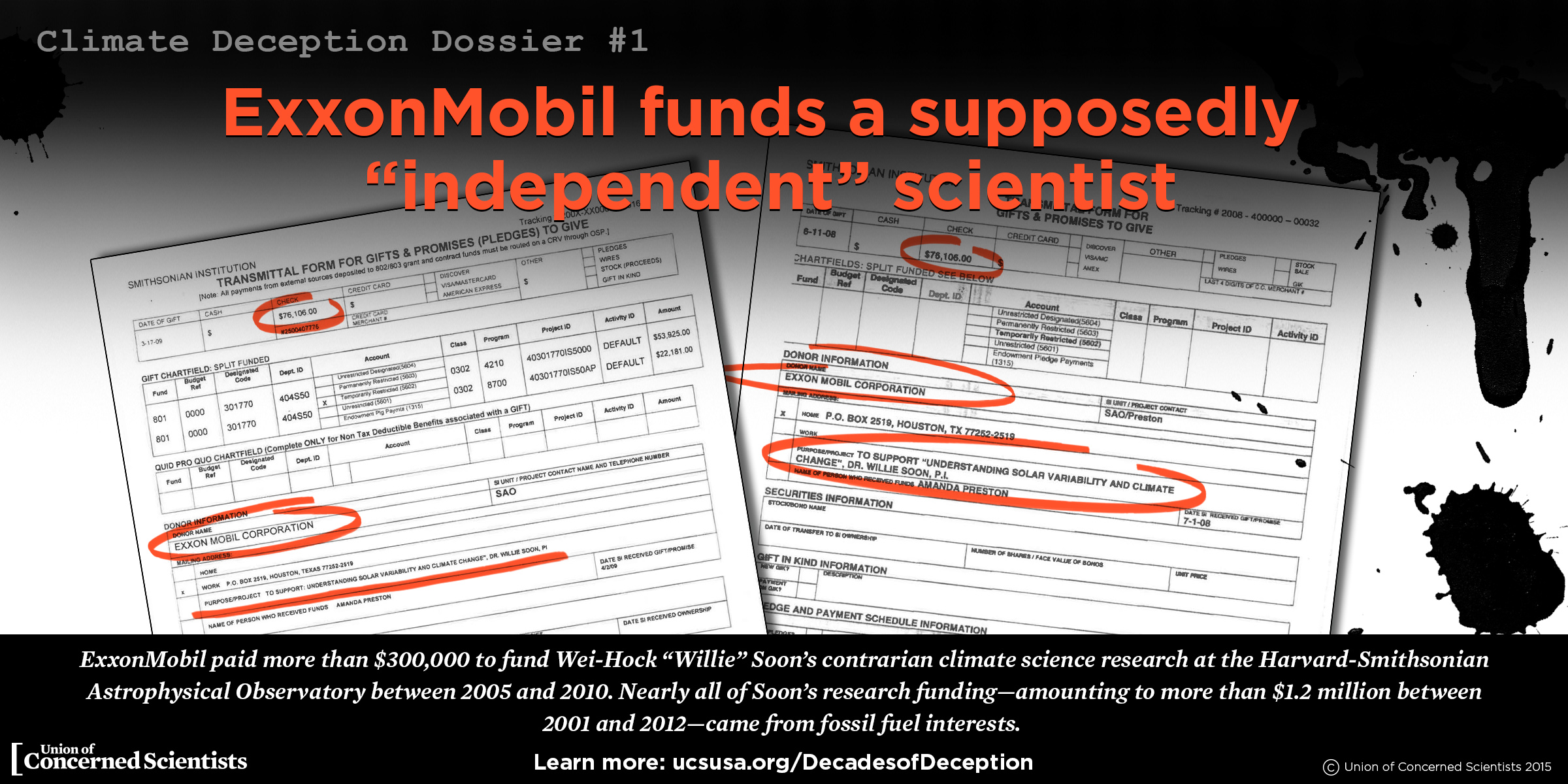
Tactics employed by these companies include a million dollar contract supporting the work of climate contrarian aerospace engineer Wei-Hock “Willie” Soon:

gw-minigraphic-climate-deception-dossier-1-willie-soon-contracts

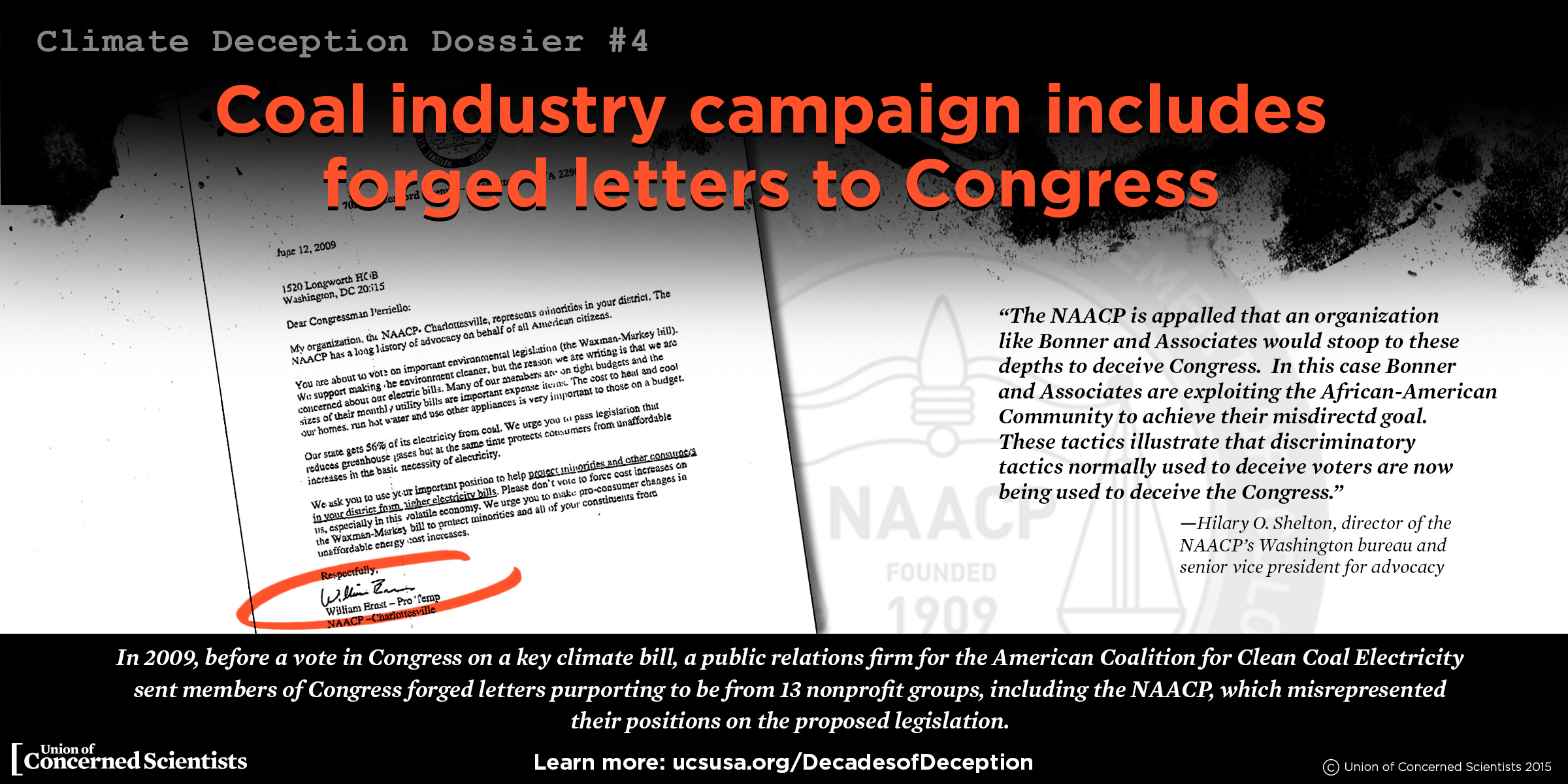
The fossil fuel industry also forged documents and letters and formed fake “astroturf” groups that purported to act on behalf of taxpayers rather than oil companies:

gw-minigraphic-climate-deception-dossier-4-ACCCE-forged-letters

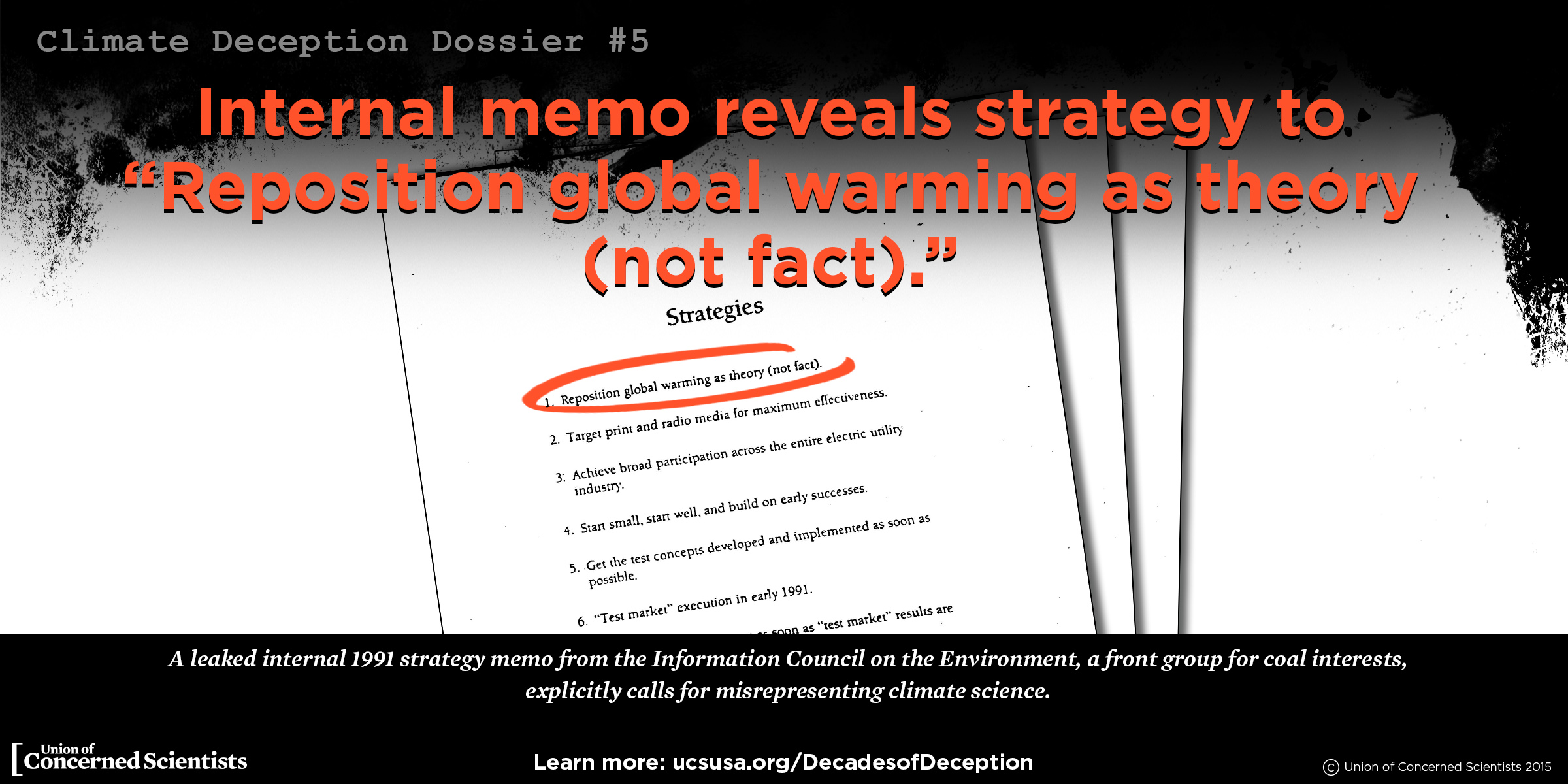
As well as launching a sophisticated, multimillion dollar public relations campaign:

gw-minigraphic-climate-deception-dossier-5-ICE-memo

An Exxon whistleblower reveals his company first got interested in the greenhouse effect and global warming when it was seeking to develop the Natuna gas field off Indonesia. An Exxon memo raises concern about it becoming the “largest point source of CO2 in the world.”

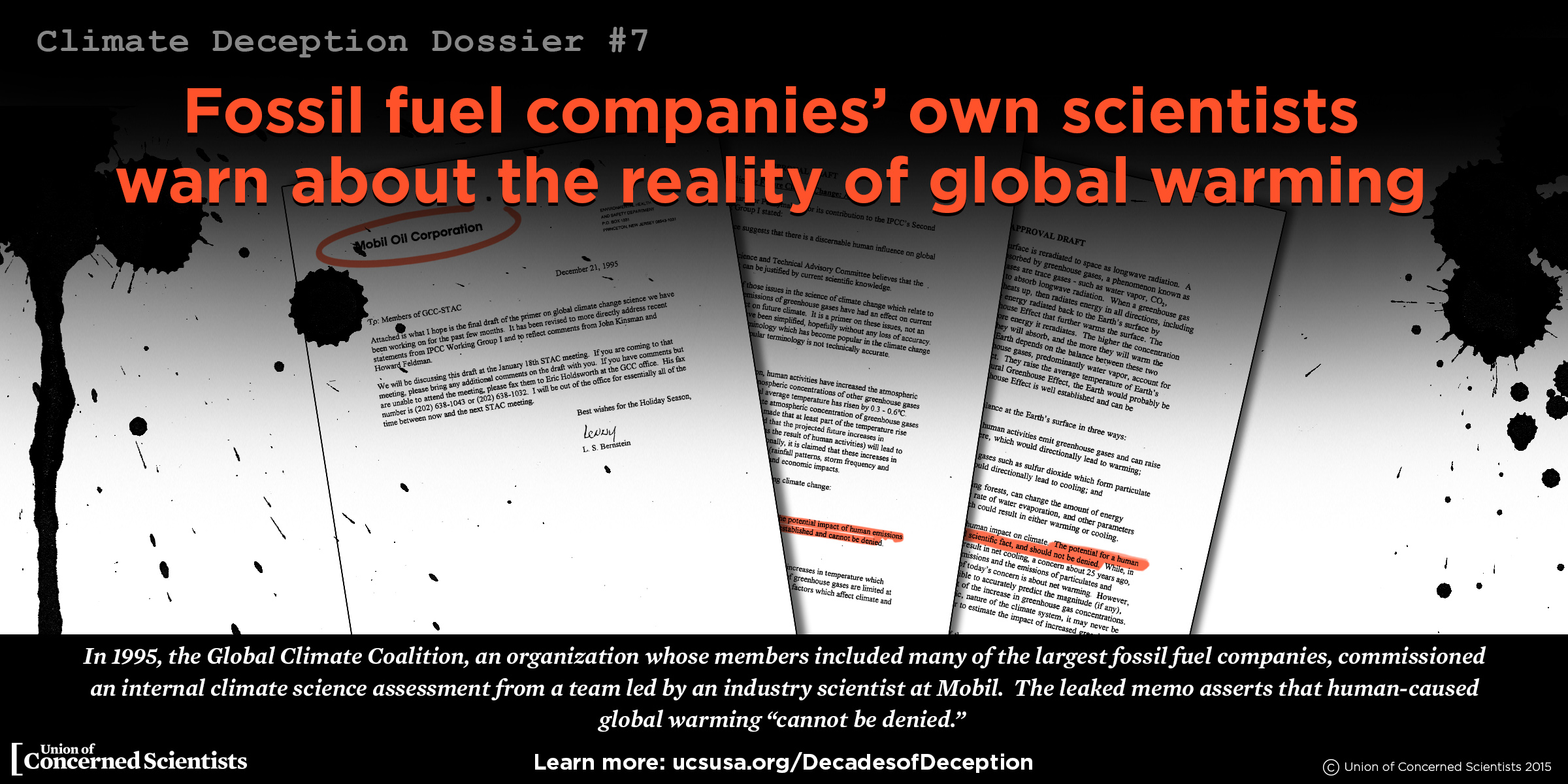
In 1995, the same whistleblower (working for Mobil) co-authored a memo to to the Global Climate Coalition (GCC), a fossil fuel lobbying group. The memo, was distributed to other member companies and warned unequivocally that burning fossil fuels was causing global warming – that the relevant science “is well established and cannot be denied.”

gw-minigraphic-climate-deception-dossier-7-fossil-fuel-climate-science-primer

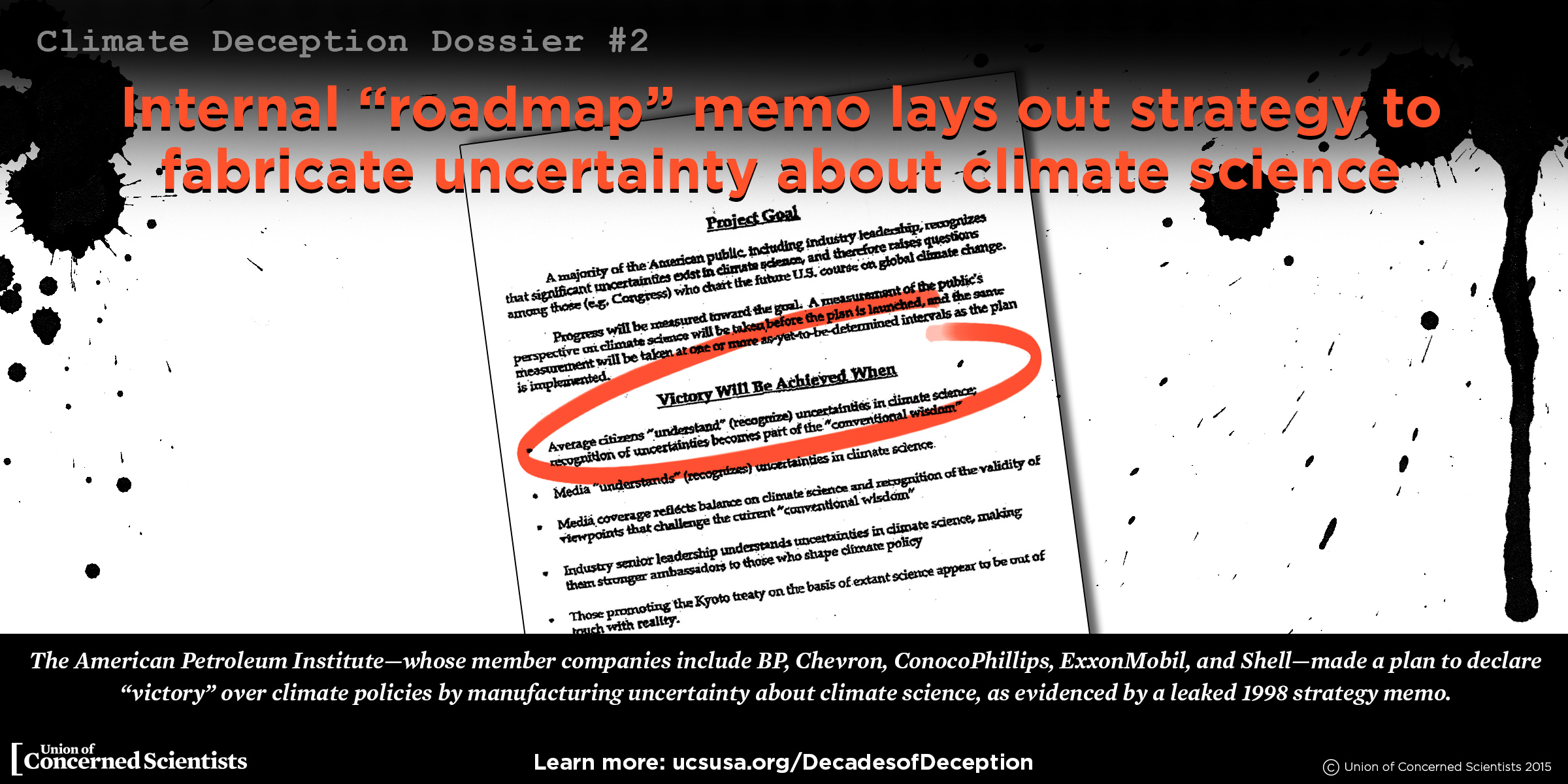
Many of the same companies – including BP, Chevron, Conoco, Exxon, Mobil, Phillips, and Shell – were members of the American Petroleum Institute (API) in 1998 when the trade group drafted a plan to secretly support “independent” researchers to publicly dispute established climate science:

gw-minigraphic-climate-deception-dossier-2-API-roadmap-memo

Link to full report: Climate Deception Dossiers

A Novel About the Transition Movement

2nd life of Sally Mottram

By the bestselling author of the Fall and Rise of Reginald Perrin.

The Second Life of Sally Motram

By David Nobbs (2014)

Book Review

Comedy writer David Nobbs, known for the British satiric news program That Was the Week, That Was and the hit TV series The Fall and Rise of Reginald Perrin, died on August 8 at age 80. The latter was a bestselling book before it became a TV show.

The back cover makes no mention that The Second Life of Sally Motram concerns the Transition Town movement. In fact, this is only revealed on page 117, when the heroine goes to Totnes (the birthplace of the Transition movement) and comes home with The Transition Handbook by Rob Hopkins.

The Fall and Rise of Reginald Perrin has always been one of my favorite TV series, thanks to Nobbs’s brilliant portrayal of human quirks, foibles and idiosyncrasies. The same humor pervades his final novel, his parting gift to the sustainability movement.

The plot concerns a penniless widow of a colorless lawyer who has hanged himself rather than face bankruptcy over his gambling debts. Through the efforts of heroine Sally Mottram, the dying former mill town of Potherthwait resurrects itself by joining the international Transition movement. Like Transition Towns all over the world, residents breathe new life into their community by reviving local food production, installing solar energy projects, rejuvenating local businesses and general community building.

Although our own efforts to launch Transition Town New Plymouth haven’t been quite as spectacular as Potherthwaite’s, I found it reassuring that Mottram struggled with many of the same quirks and foibles trying to organize her friends and neighbors.

Nobbs acknowledges his stepdaughter and her husband for inspiring him to write the book. Both are heavily involved with the French Transition movement.

I can’t wait for it to become a TV series. Imagine a sit-com about political activism and social change.


Link to Transition New Plymouth Facebook page: Transition New Plymouth

The Growing Coal Train Movement

Momenta

Directed by Andy Miller and Robin Moore (2014)

Film Review

Momenta is about the growing grassroots movement to stop the coal trains that are creating environmental havoc in the Pacific Northwest. The movement owes its diversity to the devastation the trains create in nearly all the communities they pass through.

Hurt by the rapid shutdown of coal-fired power plants (for environmental and economic reasons), the US coal industry is seeking to cut their losses by selling as much coal as possible to China. Coal exported to China via Pacific deep water ports comes from Montana’s Powder River Basin. The coal trains carrying it it follow a circuitous route through Montana, Idaho, Oregon and Washington. They endanger the health and livelihoods of hundreds of communities along the way. Including Montana ranchers facing catastrophic water shortages as the mining companies deplete the Powder River Basin aquifer.

The number of coal trains varies between 18 and 120 a day depending on the community. The trains are uncovered and each sheds 31 tons of coal dust daily. The coal dust contains high levels of mercury and arsenic. This is in addition to the heavy metals contained in diesel particulates given off by the train engines produced by train engines. The latter substantially increases residents’ risk of asthma, heart attack and stroke.

In urban areas, such as Billings, Spokane, Portland, Longview, Seattle and Bellingham, the trains always travel through the poorest neighborhoods. In more sparsely populated areas, they contaminate pristine waterways essential to recreational fishing, water sports and tourism.

The documentary also emphasizes the need to reduce global reliance on coal to reduce overall carbon emissions. The coal industry is indifferent to these so-called “externalities.”

They refuse to cover their trains to reduce the spread of coal dust and are only willing to pay 5% of the $500 million infrastructure necessary to accommodate the increased train traffic. According to one activist, “all they care about is squeezing the last bit of profit out of a dying industry.”

The documentary concludes with a discussion – and a tour of a Marysville solar panel factory – of the beneficial effects of the renewable energy industry on the US economy. The latter creates far more jobs than exporting coal to China and is less dependent on fluctuations in the Chinese economy.

For more information on the anti-coal train movement go to http://www.powerpastcoal.org/

China’s Air Pollution Crisis

Under the Dome: Investigating China’s Smog
Chai Jing (2015)

Mandarin with English subtitles

Film Review

This intriguing documentary concerns a Chinese journalist’s investigation into China’s longstanding problem with particulate air pollution. In addition to examining underlying causes and resulting health problems, Chai Jing reports on the total powerlessness of the Ministry of Environmental Protection (EMP) to force private or state-owned industries to comply with Chinese environmental laws.

Some two dozen major Chinese cities experience dangerous levels of particulate air pollution most days of the year. According to researchers, this air pollution causes 500,000 premature deaths a year. Pollution-related cancer deaths have increased more than 400% in 30 years.

China’s Over-reliance on Fossil Fuels

All agree that China’s air pollution crisis stems from over-reliance on fossil fuels. China’s rate of fossil fuel consumption is three to four times greater (per capita) than either the US or Europe. They burn more coal per year than all other countries combined.

According to Chai Jing, coal burning power plants and steel mills and over-reliance on improperly refined diesel and gasoline are the main source of China’s particulate air pollution.

Failure to Enforce Environmental Laws

China has strict laws requiring factories and coal merchants to wash brown coal (lignite), as well as regulations requiring coal burning plants to install chimney scrubbers. Neither are rigorously enforced. Chai Jing interviews Ministry of Environmental Protection officers who have no authority to shut down or penalize or recalcitrant factories. This authority rests with municipal officials who are too fearful of backlash from factory owners and their employees to take action. They claim manufacturers can’t afford pollution controls and that shutting factories down will hurt the economy and cause workers to be laid off.

Chai Jing challenges this attitude, owing to two years of overproduction of steel, houses, commercial buildings and highways. Heavy steel manufactures who are stockpiling steel they can’t sell still receive government subsidies. The head of the Chinese Central Bank refers to them as zombie companies. Worse still, they continue to expand and drive Chinese peasants out of their homes.

The Chinese construction boom is also a major factor in fossil fuel consumption and air pollution. Owing to corruption and lack of oversight, Chinese authorities have allowed 3.4 billion new homes to be built for a population of 1.3 billion.

Vehicular Pollution

Vehicular pollution is a major problem in China, owing to the government’s failure to develop adequate public transport and widespread use of high sulfur oil from Iran. Unlike Iran, Chinese refineries don’t have the technology necessary to reduce the sulfur content of the oil they use to manufacture diesel and gasoline. According to one government official, they can’t force Sinotec (China’s state-owned oil refinery) to upgrade because it “might interrupt the fuel supply and cause instability.” Likewise there is no effort to force vehicle manufacturers to comply with laws requiring them to install emission control devices.

China Needs to Cut Emissions by Half

Chai Jing estimates China needs to cut emissions by half to reduce air pollution to levels that don’t endanger human health. Yet for some odd reason the solutions she proposes make no mention of President Xi Jinping’s recent commitment to increase China’s reliance on solar and wind technology. Instead she calls for expanded natural gas exploration and the replacement of China’s single natural gas company with multiple private companies. This, she argues, will bring about reform through “free market competition.”

Background on Chai Jing’s documentary identifies it as “self-financed.” Given the recent assault of US fracking companies on New Zealand, I wouldn’t be terribly surprised if one or more of them provided financial backing for this documentary.

Other recommendations she gives – for better monitoring and public disclosure of environmental crimes and increased public involvement in local environmental legislation and increased citizen monitoring – are clearly a step forward.

The Renewable Energy Revolution

The Future of Energy: Lateral Power to the People

By Maximilian Dearman and Missy Lahren (2015)

Film Review

This film takes its title from Jeremy Rifkin’s 2011 book The Third Industrial Revolution: How Lateral Power is Transforming Energy, the Economy and the World. The students who crowdfunded this documentary are clearly influenced by Rifkin’s relative blindness to the realities of class society. That being said, the film presents much valuable information about key players in the renewable energy revolution.

The video sets out to prove Rifkin’s thesis that “revolution” inevitably occurs when there are major simultaneous breakthroughs in energy production and communication. According to Rifkin, the first industrial revolution occurred in 1820, with the simultaneous development of coal-based steam power and letter-press printing; the second in 1900 with the simultaneous development of the combustion engine and electronic communication (telephone, radio and TV). He asserts the third industrial revolution has already started, owing to the simultaneous rise of renewable energy and the Internet. He’s convinced that the combined efforts of the business community and the nonprofit sector have already put the US on track to achieve 100% renewable energy by 2050 – regardless of government inactivity on climate change.

The filmmakers are clear converts to Rifkin’s views on market-based solar energy conversion. They argue the above trajectory is inevitable now that solar energy has become cheaper than fossil fuels. They erroneously attribute the price drop for solar photo voltaic cells (PVCs) to an “economy of scale” effect (ie high demand for an item allows you to mass produce it and the price drops). They also argue the cost of renewable energy will continue to fall, while fossil fuel costs will increase as finite resources diminish.

A more realistic analysis would attribute the current low cost of PVCs to low production costs – in Chinese sweatshops using super cheap electricity from coal-fired power plants. These costs will increase exponentially as Chinese wages continue to improve and as China’s government reduces their reliance on dirty coal.

On the other hand, the film is chock full of useful information about US cities that have already switched to 100% renewable energy, as well as numerous groups and programs that have helped make this possible:

Grid Alternatives – a national nonprofit organization that installs free solar panels in low income communities, while simultaneously low income volunteers to become solar technicians.
Community Choice Aggregation – a system adopted into law in the states of Massachusetts, New York, Ohio, California, New Jersey, Rhode Island, and Illinois which allows cities and counties to aggregate the buying power of individual customers within a defined jurisdiction in order to secure alternative energy supply contracts on a community-wide basis. Energy will always be cheaper, more efficient and more planet-friendly when it stays in the communities where it’s produced and is controlled by those communities.
• Green for All – a national organization founded to ensure that low income communities and communities of color have access to renewable energy technology and jobs.
B-Corporations – a framework and certification for corporations wishing to benefit their communities, as well as their shareholders.
Mosaic – a conduit for small renewable energy entrepreneurs to obtain financing when banks refuse to loan them money.
• Power Shift, Cool the Earth, Alliance for Climate Education – national groups working to get rood information about renewable energy alternatives into schools.
• Longevity – a 20 year solar lease program for families who can’t afford to pay $7,000 upfront for their solar energy panels.


The Psychosis Called Consumerism

Consumed: Inside the Belly of the Beast

Richard Heap (2011)

Film Review

Consumed is a British documentary about the psychological basis of what the filmmakers call the “weird mental illness called consumerism” and “a kind of collective psychosis in which people value acquiring objects more than their children, partners or friends.” The film maintains that there are unique evolutionary features in the human species that make us uniquely susceptible to pro-consumption messaging.

The documentary begins by emphasizing the grave implications of “unfettered” consumerism on humankind’s ability to survive on this planet – both from the perspective of ecosystem destruction and growing resource scarcity.

They go on to analyze the primary biological drives that underlie most human behavior: the drive to survive and the drive to reproduce. Most marketing is deliberately aimed towards the latter. People who lack confidence in their ability to attract a mate are bombarded with messaging that they can increase their prestige and status by acquiring specific products.

As people get older, they realize this thinking is delusional: a new Porsche doesn’t make someone fall in love with you as a person. People who hook up with you for your car eventually get bored and leave.

Young people, however, are incredibly susceptible to the pro-consumption delusion. This is why billions are spent on marketing to kids from the moment of birth. Getting pre-teens and teens to think about mating early is also incredibly effective in capturing more of their money (as well as their parents’).

Consumed also examines our psychological disconnection from nature and why this has allowed us to become so indifferent to the environmental devastation caused by our consumption patterns.

The behavioral scientists Heap interviews differ on whether the sustainability movement can save the human species. They all agree it’s pointless to look to politicians – the very epitome of pathological narcissism – for a solution. Several are pessimistic that Transition Towns and similar sustainability-related groups can save us without addressing the root cause of the crisis: our psychology.

Others are more optimistic. Pointing to the 200+ million years humans survived without a multitude of consumer goods, they argue that learning to understand our psychological make-up can help us be less vulnerable to constant pro-consumption messaging.

Chasing the Super-Y Chromosome

adam's curseAdam’s Curse: A Future Without Men

by Bryan Sykes

Book Review

Adam’s Curse is a book about the Y chromosome, which carries the genes determining the sex of mammals. The title is misleading. There’s only a brief discussion in the final chapter regarding the instability of the Y chromosome (due to mutations), which Sykes predicts will lead to its eventual distinction in 5,000 generations (125,000 years). Most of the book concerns the history and evolutionary function of sex differentiation, the use of the Y chromosome and maternal DNA (carried on the mitochondria*) to trace historic migrations, the phenomenon of “group selection” (whereby individuals are genetically programmed to sacrifice themselves for their species) and the genetic basis of patriarchy and homosexuality.

Because neither maternal DNA nor the Y chromosome undergo recombination** at the time of cell division, both remain highly stable over thousands of generations. This feature been invaluable in tracing the prehistoric migration of Neanderthals, Polynesians, Vikings, Native Americans, Australian aborigines and other population groups. Sykes subscribes to the “selfish gene” theory, which asserts that most of human behavior is directed towards the survival of our unique genetic material, ie our genes drive behavior that favors their survival.

The study of thousands of Y chromosomes reveals that “super-Y” chromosomes occur much more frequently than others. In most cases they’re derived from testosterone-driven warriors (eg Vikings and Mongol warriors like Genghis Khan) who used their aptitude for violence, ruthlessness and wealth acquisition to spread their Y chromosome to a disproportionate number of women.

According to Sykes this “crazed ambition of the Y chromosome” to “multiply without limit” leads to endless wars, land annexation and enslavement of women. As he points out in his introduction, it’s quite rare for women to commitment violent crimes, become tyrants or start wars. He also has grave concerns that this unholy alliance between “super Y chromosomes” and an unchecked drive for wealth and power is leading to imminent planetary destruction.

A British financial analyst recently made the observation that the global economy would still be intact if Lehman Brothers had been Lehman Sisters. Recent studies show women make better financial traders because they’re more risk adverse.

The chapter I found most interesting concerns the genetic origin of sexual reproduction, ie the exchange of genetic material during reproduction, and male and female sexual identity. I was particularly fascinated to learn that organelles like chloroplasts (plants only) and mitochondria were originally bacteria, with their own DNA, that were captured by larger cells. This modification enabled the larger cells to produce much more energy, which allowed them to specialize and become multi-celled organisms.

My second favorite chapter concerns research into the genetic basis of homosexuality. Geneticists have identified an SRY gene on the Y chromosome that switches on testosterone production when the embryo is six weeks of age. Embryos exposed to testosterone develop male sexual organs. Those that aren’t are automatically programmed to become female.

There’s also a brain structure called the bed nucleus of the stria terminalis (BST) which determines a child’s gender identity and sexual orientation. Testosterone exposure during embryonic development causes it to be larger. It’s much smaller in women, homosexuals and transsexuals. Especially after the birth of one or more sons, women develop antibodies to the H-Y antigen on the Y chromosome. These antibodies, in turn, act to lower fetal testosterone levels, resulting in a smaller BST.


*A mitochondria is an organelle found in large numbers in each cell responsible for respiration and energy production.
**DNA recombination involves the exchange of genetic material between different chromosomes or between different regions on the same chromosomes.

The Coming Collapse

Surviving Progress

Harold Crooks and Mathieu Roy (2011)

Film Review

Surviving Progress is based on Canadian Ronald Wright’s 2004 book A Short History of Progress and takes up where the book leaves off. The book’s main focus is the collapse of historic civilizations due to dangerous technological innovation. It introduces the term (originally coined by German economist Walter Kramer) “progress trap,” to designate technological innovations that have dangerous and unforeseen unintended consequences. An example used in both the book and the film is the case of the wooly mammoth – how new Stone Age techniques that vastly improved efficiency caused the species to become extinct.

The film, in contrast, focuses on our present “progress trap,” and the biological determinants that cause civilizations to produce progress traps. It features a broad range of experts in addition to Wright, including psychologists, geneticists, primatologist Jane Goodell, environmentalist David Suzuki, economist Michael Hudson and astrophysicist Stephen Hawking.

The filmmakers start from the premise that humanity has entered a final progress trap. In the past when civilizations collapsed, homo sapiens simply moved on and started new ones somewhere else. Our present civilization covers the entire planet, and this is no longer possible. The technologies we’ve devised over 200 years have become so ecologically destructive the coming collapse could easily spell the extinction of our species.

The case the Stephen Hawking, the psychologists, geneticists put forward is that our Stone Age brains are incapable of dealing appropriately with advanced technology – that the only conceivable way to prevent collapse is through some kind of human genetic engineering. I have a major problem with any hypothesis that blames the failure of capitalist civilization on human nature. In my experience, it’s not human nature that makes people into greedy, individualistic sociopaths, but an economic system that rewards people for being greedy and competitive and punishes them for being compassionate.

I also had a problem with the way the filmmakers left out half of humanity by designating male competitive behaviors as typical of the entire human species. As geneticist Bryan Sykes argue in Adam’s Curse, the Stone Age reptilian traits described in the documentary are extremely rare in human females (and most males for that matter). In fact, it’s extremely rare for women to commit violent crimes, become tyrants or start wars. (I will post a review of Adam’s Curse later in the week).

I found economist Michael Hudson’s contributions far more valuable. He talks about the role oligarchy, extreme inequality and ecological destruction in causing past civilizations to collapse. He gives the example of Rome, in which confiscation of public land by aristocrats led to rapid overgrazing and topsoil depletion. Two hundred years later Rome collapsed, owing to their inability to feed their empire.

Washington Activists Seek Carbon Tax

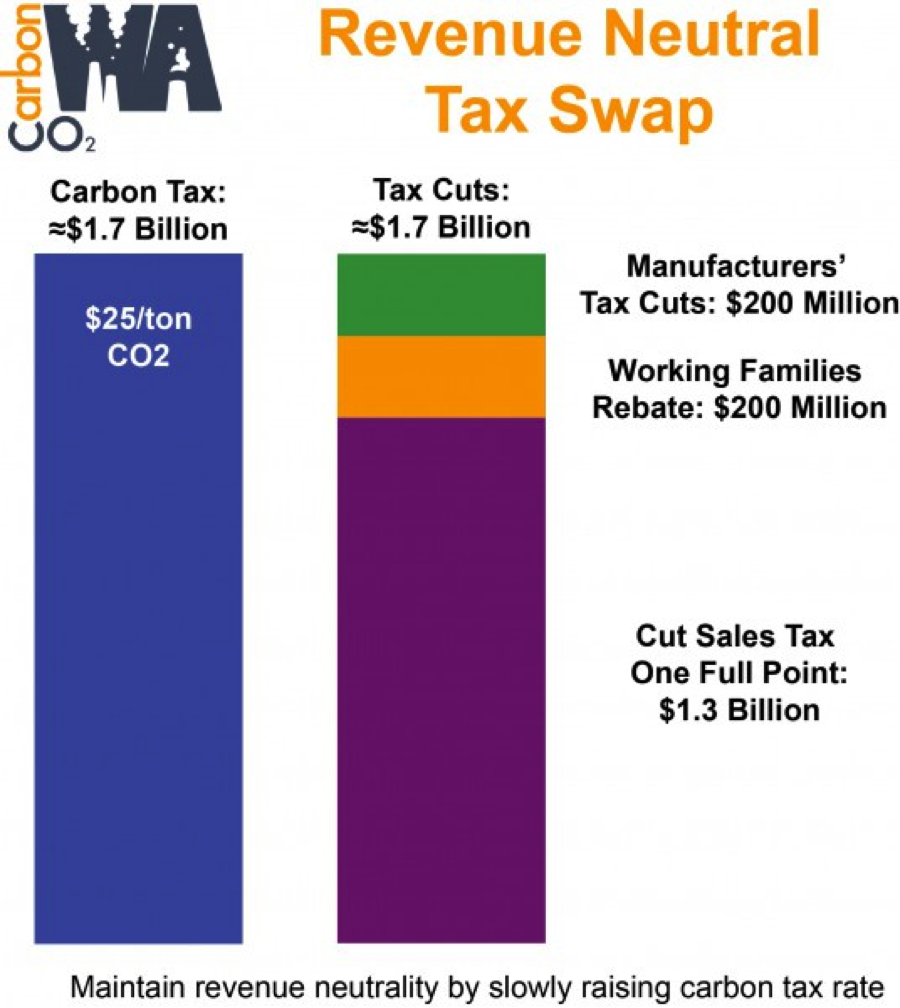
CarbonWA-tax-swap

Carbon Washington (CarbonWA) is a citizens’ coalition seeking to enact a statewide carbon tax through a citizens’ initiative.* I-732 would incrementally institute a tax of on all fossil fuels consumed in Washington State. The revenue raised would be used to cut the state sales tax by 1%, to eliminate the Business and Occupations (B&O) tax on manufacturing and to fund the Working Families Rebate (a program the state legislature created in 2008 but never funded).

British Columbia’s Carbon Tax

I-732 is modeled after a carbon tax British Columbia (BC) introduced in 2008, which has received lavish praise from the (pro-corporate) Economist. Prior to its enactment, business warned the carbon tax would increase costs and slow the economy, while the left-leaning New Democratic Party (NDP) warned it would hurt the poor. Both were wrong.

Because the funds raised by BC’s carbon tax are used to cut income taxes (for individuals and businesses), it has been as beneficial for the British Columbia economy as for the environment. In a way, this makes a lot of sense. Taxing people for working and adding wealth to the economy is one of the biggest drags on economic growth there is. It makes a lot more sense to tax activities you want to discourage, such as polluting the atmosphere.

BC also implemented their carbon tax incrementally. The new tax was initially set at C$10 ($10) per tonne of carbon-dioxide emissions, rising by increments of C$5 per year to C$30 in 2012. At present this translate into a 7 cent per litre tax (approximately 25 cents per gallon) on gasoline.

As predicted, the carbon tax has proved as beneficial  for the economy as the environment. Since 2008, per capita fuel consumption in British Columbia has dropped by 16%, which contrasts with an increase of 3% in the rest of Canada. The province now has the lowest income tax rate in Canada and one of the lowest corporate tax rates in North America. Meanwhile per capita GDP continues to outperform other provinces. BC also enjoys lower jobless rates. Thus it’s no wonder it remains extremely popular, supported by 64% of BC residents.

How I-732 Will Work

Under I-732, the state will collect a tax on all fossil fuels sold or used within Washington State. This will include fossil fuels sold or used for air travel, motor vehicles boats, and electrical generation. (19% of Washington’s electricity is renewable, generated by hydropower). The tax rate will start at 15 dollars per metric ton of carbon dioxide as of July 1, 2017, increasing to 25 dollars per metric ton as of July 1, 2018, with automatic increases thereafter by 3 ½ percent plus inflation.

This tax swap will take place over two years. B&O tax on manufacturers will be eliminated in full the first year. The state sales tax will be reduced by ½ percentage point per year over two years. The Working Families Rebate will phase in from 15% of the federal EITC (Earned Income Tax Credit) in the first year to 25% of the federal EITC in the second year and beyond.

Halving US Carbon Emissions

Carbon Washington executive committee member Yoram Bauman hopes Washington will serve as a model for other states. According to Bauman, CO2 emissions could be halved if all fifty states adopted similar a similar carbon tax.

More information at www.carbonwa.org


*I-732 is an initiative to legislature. If Carbon Washington collects enough signatures to qualify, the 2016 legislature has a choice of enacting it into law, enacting substitute legislation or placing it on the 2016 ballot.