Buyer Beware: Faulty Medical Devices Can Be Fatal

Out of Control: The Dangerous Health Business

DW (2019)

Film Review

In this documentary, DW investigates the EU’s medical device industry. The filmmakers maintain that medical complications caused by defective devices have increased by 300% in the EU and 1500% in the US, where regulation is even more lax.

The principal devices DW looks at are pacemakers, replacement hips, breast implants, insulin pumps, transvaginal mesh stabilizers and plastic spinal disk replacements. Reported complications include the failure of pacemakers to prevent fatal arrythmias, insulin pumps that accidentally overdose patients on insulin, and breast and orthopedic implants that rupture, leading to cancer, severe chronic pain and other serious complications.

The EU fails to rigorously enforce companies’ reporting requirements when patients and doctors discover defects in their products. Worse still, the EU allows some companies to bring medical devices to market without any clinical trials at all.

A German Member of the European Parliament (MEP) has recently introduced a bill that would create a government certification program for all new medical devices. At present the EU allows manufacturers to hire private certifying companies to approve the safety of their products.

Monsanto Papers

The Monsanto Papers: The Secret Tactics Monsanto Used to Protect Roundup – Its Star Product

Four Corners (ABC) 2018

Film Review

This is an Australian documentary about a long history of deceptive tactics by Monsanto to conceal the link between the herbicide Roundup and non-Hodgkins lymphoma – known in Australian medical circles as farmer’s lymphoma.

The film centers around Dwayne Johnson’s $289 million award in a California lawsuit against Monsanto. Johnson was a groundskeeper who developed aggressive (and fatal) non-Hodgkins lymphoma after two years of routine spraying with Roundup. Legal analysts believe his victory stemmed mainly from secret documents the court ordered Monsanto to release. They reveal that Monsanto knew that Roundup was potentially carcinogenic and did everything possible to cover it up.

In her book Whitewash, investigative journalist Carey Gillam documents two instances in the 80’s and 90’s in which labs Monsanto used were caught falsifying data about Roundup’s alleged safety. When the EPA followed up with studies showing Roundup to be “possibly” carcinogenic, Monsanto lobbyists forced them to Alter their findings to “not likely” carcinogenic.

Then in 2003, Monsanto’s own chief toxicologist sent an email to his superiors maintaining the company couldn’t rightly assert that Roundup was non-carcinogenic because they had failed to undertake the appropriate studies. At the same time Monsanto lobbyists effectively blocked EPA efforts to conduct an independent review of Roundup’s potential link to cancer.

The saddest part of the film is the various Australian and US farmers interviewed who believe all the PR hype Monsanto (now Bayer-Monsanto) has been spouting and continue to risk their own lives and those of their families and consumers who eat the crops they produce. Bayer-Monsanto’s slick PR team (featured in the film) have totally convinced them the lawsuit they lost in California was merely a fluke, thanks to the state’s “treehugging” juries.

At present Bayer-Monsanto faces more than 9,000 lawsuits for cancer and other serious health problems related to Roundup.


Vaccines: What Medical Research Really Shows

In the following two videos, board certified nephrologist and vaccine researcher Dr Suzanne Humphries summarizes the peer reviewed evidence on infant immunity and the impact of vaccines on this process.

In the first, she explains the concept of epigenetics and exposures during pregnancy that have a lifelong impact on an offpsring’s health. In the second, she discusses the more specific effect of vaccination and aluminum adjuvant exposure during pregnancy and infancy.

Humphries begins her first lecture by challenging Western medicine’s overemphasis on the genetic basic of chronic illnesses. Recent research suggests that an individual’s genes are only 10 percent responsible for their overall health. Epigenetics – the environmental influences that impact gene expression (ie translation of genes into proteins) – plays a far bigger role.

Her particular concern is pro-inflammatory processes in the fetus and infant that produce epigenetic interference with the development of the immune system. Specific examples include poor nutrition, dysbiosis (disordered gut bacteria), alcohol, smoking, mood disorders, stress, antibiotics, antacids, pain killers, vaccinations and formula feeding.

There is strong evidence that the current epidemic of autism stems from epigenetic influences rather than genetic factors. Genetically based illnesses follow a statistically stable pattern. When there is a skyrocketing incidence of a disease (such as autism), the cause is environmental rather than genetic.

She ends her first lecture with a discussion of all the pro-inflammatory animal DNA and RNA introduced into the fetal/infant blood stream from vaccines given during pregnancy, and the 36 vaccines children receive prior to age 5.*

In the second film, Humphries explains how vaccines work, how the aluminum adjuvant in all vacines “overexcites” the immune system to elicit an immune response to the vaccine’s disease-causing agent.

Adverse vaccine reactions usually relate to an over-excited pro-inflmmatory response that can’t be shut off. This can result in chronically high levels of cytokines** in the fetus or infant that can permanently impair gene expression, immunity and grain development.**

The long term effect of repeated overstimulation of an infant’s immune system (via vaccines) has never been systematically studied.

There has also been no study of the long term effect on infant development of vaccinating pregnant women.***

However animal studies show the developing immune system is far more sensitive to developing a cascading inflammatory reaction that doesn’t shut off.


*Includes tumorigenic cocker spaniel cells (flu vaccine), monkey, chick and cow cells, and pig stomach cells.

**High levels of circulating cytokines are extremely common in autistic disorder.

***Humphries questions all the pressure on pregnant women and infants to accept the flue vaccine when CDC monitoring data reveals overall effectiveness as low as 25% in some years. Also several studies show repeated flu jabs make patients more susceptible to other respiratory viruses.

Is Your Arthritis Related to Water Fluoridation?

A Case of Skeletal Fluorosis?   

How many of us are at risk? How much arthritis in New Zealand is really skeletal fluorosis? Dr Mike Godfrey from Tauranga has had this case study published in the New Zealand Medical Journal. Doctors all over the country should be measuring the fluoride levels of all their arthritic patients.

Case Study Published in NZ Medical Journal 4th May 2018
Dr Michael Godfrey, Tauranga

79-year-old lady presented with a history of diffuse sero-negative arthritis dating from early adulthood. Numerous investigations and therapies had failed to provide any significant benefit and both knees and a hip had been replaced when initially seen a year ago. On questioning at that time, she admitted to daily drinking at least six cups of black tea since childhood. She lives in a retirement village where there has not been water fluoridation since 1994. However, her fasting fluoride results (Med-lab) were elevated:

  • Serum fluoride 2.5µmol/L (Ref. range 0–3-2.2)
  • Urine fluoride 58µmol (Ref. range 0–31)
  • Fluoride: creatinine ratio 13.5µmol (Ref. range 0–3.1)

She used a standard fluoridated toothpaste but was otherwise not on any fluoridated medications. However, given the fact that her preferred tea exceeded 3mg fluoride/L(1) it is possible that she has been unwittingly overdosing for many years. Skeletal fluorosis from tea has been identified (2). Furthermore, excessive use of fluoridated toothpaste caused severe arthritis initially diagnosed as ankylosing spondylitis with full recovery after stopping exposure(3). A year after stopping black tea drinking and changing to a herbal non-fluoridated tooth-paste, this elderly woman’s joint pain levels had markedly decreased with considerably improved mobility enabling her to have a long-awaited trip overseas.

Discussion
Fluoride exposures are pervasive. Traditionally, this country has been a major tea consumer and the consequences of fluoride in tea have recently been extensively covered with one cup of the most widely consumed tea brands supplying over 1mg of fluoride per teabag even without any added water fluoridation(1). Absorption of fluoride from toothpaste at 1,000ppm are considerable and equivalent to, or more than from a cup of tea.(1,4) Fluoride is present in beverages, and in over 200 pharmaceuticals with some being given on a long-term daily basis, e.g. atorvastatin, fluvastatin, fluticasone, celecoxib and fluoxetine.

Long-term accumulative exposures to fluoride even at low levels carries a risk of sub-clinical or stage-1 musculo-skeletal fluorosis presenting as joint pain or arthritis.(5) Notably, arthritis is a leading cause of disability with 647,000 now affected in this country and annual costs exceeding $3 billion.(6) Chronic pain was also reported in a New Zealand community study with the most common pain locations being lower back (59%), pelvis/abdomen (49%), joints (39%), neck (34%), muscle (31%) and headache (31%).(7) It would thus be logical to include possible fluorosis in the differential diagnosis of these patients with at least urine fluoride assessments. Notably, this woman’s serum fluoride level was considerably higher than that of women in her age group living in a low fluoride area, with a mean serum level of 0.56µmol/l and 0.948µmol/l being the highest recorded with impaired renal function.(8)

Prescriptions for arthritis are among the highest on Pharmac lists with similar health problems being recorded in the Republic of Ireland, the heaviest tea-drinking nation and with long-term nationwide fluoridation. Notably, excessive tea consumption can cause skeletal fluorosis(2) as can toothpaste.(3) The accumulating evidence could suggest that the population is potentially being over-dosed with fluoride and certainly exposed to far more than the initial well-intentioned dental hypothesis of 1mg/day for caries prevention proposed in the US 70 years ago.

The findings in this case would indicate that further primary health investigations are warranted and for those interested, Dr Susheela, a leading fluoride researcher, gives a useful diagnostic protocol.(9) Notably, the evidence presented here is but a fraction of the available peer-reviewed literature, demonstrating the potential for harm from this element as reviewed by Peckham and Awofeso.(10)

URL
https://www.nzma.org.nz/journal/read-the-journal/all-issues/2010-2019/2018/vol-131-no- 1474-4-may-2018/7561

REFERENCES:
1. Waugh DT, Godfrey M, Limeback H, Potter W. Black Tea Source, Production, and Consumption: Assessment of Health Risks of Fluoride Intake in New Zealand. J Environ Public Health (2017) 5120504. doi: 10.1155/2017/5120504. http://www.ncbi.nlm.nih. gov/pubmed/28713433
2. Kakumanu N, Sudhaker D, Rao SD. Skeletal Fluorosis Due to Excessive Tea Drinking. N Engl J Med 2013; 368:1140 DOI: 10.1056/NEJMicm1200995.
3. Kurland ES, Schulman RC, Zerwekhm JE, Reinus WR, et al. Recovery from skeletal fluorosis (an enigmatic, American case). J Bone Miner Res. 2007 Jan; 22(1):163–70.
4. Ekstrand J, Koch G, Petersson LG. Plasma fluoride concentrations in pre-school children after ingestion of fluoride tablets and toothpaste. Caries Research. 1983; 17(4):379– 384. doi: 10.1159/0002606 91. [PubMed] [Cross Ref
5. Fluoride in Drinking Water: A Scientific Review of EPA’s Standards Chapter 5 Musculoskeletal Effects. ISBN 978-0-309-10128-8 | DOI 10.17226/11571
6. http://www.arthritis.org.nz (accessed January 2018).
7. Swain N, Johnson M. Chronic pain in New Zealand: a community sample. The New Zealand Medical Journal. 2014; 127(1388):21–30. [PubMed]
8. Itai K, Onoda T, Nohara M, Ohsawa M, et al. Serum ionic fluoride concentrations are related to renal function and menopause status but not to age in a Japanese general population. Clinica Chimica Acta 411 2010; 263–266.
9. Susheela AK. Fluorosis and Associated Health Issues Indian Journal of Practical Pediatrics 2015; 17(2):138. 10. Peckham S, Awafeso N. Water fluoridation: A critical review of the phys- iological effects of ingested fluoride as a public health intervention. The Scien- tific World Journal (2014) Volume 2014, Article ID 293019, 10 pp. http://dx.doi. org/10.1155/2014/293019

Source: Is Your Arthritis Really Skeletal Fluorosis?


Raw Milk and Civil Disobedience.

Milk?

Real Stories (2017)

Film Review

An over-the-top campaign by the FDA to arrest and intimidate US producers and distributors of raw milk has led the sale and consumption of raw milk to be the third most common form of civil disobedience, after marijuana possession and tax evasion. See The Federal Campaign Against Local Health Food

This is the first time I’ve seen the issue of raw milk portrayed as a form of civil disobedience, which it clearly is. Otherwise I had a problem with the way this documentary was divided into pro-milk and anti-milk camps. People who wish to consume milk need clear and accurate information about some of the health risks. Unfortunately this film leaves viewers  with the sense that milk-related health risks are far too complex for consumers to reach any clear conclusion.

The Powerful Dairy Lobby

Owing to billions the dairy lobby has spent on marketing (and a fair amount of bribery and corruption at the US Department of Agriculture) the supposed health benefits of milk, milk and dairy product are the most consumed food on earth. Milk and dairy products account for 46% of the average American’s diet.

The filmmakers interview a host of independent researchers, government scientists, dairy farmers and industry lobbyists. Some of the research presented is highly concerning, such as the 27-year China study linking casein (milk protein) to liver cancer and studies linking Monsanto’s genetically engineered growth hormone (given to US cows and excreted in their milk) to prostate cancer. This dangerous Monsanto product is banned in everywhere but the US.

Among other significant facts filmmakers omitted is that many from specific ethnic groups (especially those of African or East Asian origin) become ill when they drink milk. This is either because they lack the enzyme necessary to digest lactose (milk sugar) or the enzymes needed to digest casein (milk protein).

The Raw Milk/Pasteurization Debate

I was also irritated by the portrayal of the pasteurization/raw milk issue as a matter of conflicting opinion. Numerous studies have documented that pasteurization doesn’t destroy micobacterium avium paratuberculosis (MAP), the organism linked with Crohn’s Disease, a chronic, severely debilitating and sometimes fatal intestinal condition (see Mycobacterium Avium Tuberculosis).

What pasteurization does accomplish very effectively is the destruction of all the beneficial enzymes and bacteria in raw milk. Raw milk is used therapeutically in Europe for a number of health conditions related to dysfunctional gut bacteria (irritable bowel syndrome, inflammatory bowel disease, arthritis, diabetes, autism, mental illness, depression, anxiety, immune deficiency, Parkinson’s Disease, eczema and psoriasis).


How Manufacturers Conceal Cellphone Risks

The Secret Inside Your Cellphone

CBC Marketplace (2017)

Film Review

This is a Canadian documentary about deliberate efforts by cellphone manufacturers to conceal the health risks of cellphones. By law, every cellphone carries a warning somewhere in its menu to keep your cellphone more than 5-15 mm away from your body. The warning is so hard to find that 81% of Canadians have never seen it. In fact, 70% of Canadians carry their cellphones in their pants pockets or bra.

The Berkeley City Council is the only governmental authority in North America to pass legislation requiring this warning to be made public – they require it to be prominently posted in every electronics store that sells cellphones. Using the same lawyer who defended the tobacco lobby against smoking-related health claims, the telecommunications lobby has sued Berkeley to have the law repealed. The case is expected to go all the way to the Supreme Court.

The documentary also reviews ongoing research into the health hazards of cellphones. Epidemiologists remain deeply concerned about the dearth of studies in children. The Canadian brain tumor registry shows a clear increase across the board in brain tumors in young people. Anecdotal evidence, as well as animal studies, strongly suggest the trend relates to growing cellphone use. In addition, young women who carry cellphones in their bras are presenting with (highly unusual) multiple separate breast cancers.

The most well established correlation is low sperm counts and poor quality sperm in men who carry cellphones in their pants pocket.


WiFi Refugees

WiFi Refugees

RT (2017)

Film Review

This documentary explores the condition known as electrosensitivity syndrome, as well as the lives of three Americans struggling to adjust to the condition. Electrosensitivy syndrome, which has no known treatment, has emerged in the last decade with the massive increase in microwaves from cellphones, cellphone towers and WiFi routers that bombard all of us daily.

The various symptoms described by victims include dizziness, nausea, mental fogginess, fatigue, light sensitivity, headaches and pins and needles and/or burning sensations of the skin. Most sufferers spend two to three years going from doctor to doctor before accidentally discovering that they vanish when patients isolate themselves from synthetic microwave radiation.

Two moved into rooms lined with special metallic foil or graphite-rich Wi-Shield paint. A third moved to Green Bank West Virginia, a nationally designated Radio Quiet Zone. In Green Bank, microwave transmissions are strictly limited to facilitate scientific research and military intelligence.

The documentary concludes by examining scientific evidence linking heavy microwave to an increased incidence of cancer, autism, Alzheimer’s, heart problems and DNA damage. The World Health Organization has classified synthetic microwave radiation as posing the same level of cancer risk as lead and asbestos.

Children seem to be especially susceptible. For this reason, France bans all WiFi use in kindergartens and primary schools and strictly limits its use in secondary schools.

Scientists are also concerned about weak regulations limiting microwave exposure. At present the US limit – of 500 microwatts per square centimeter per device – is more than 50 times that of all other countries for total microwave exposure.

Owing to heavy lobbying by the telecommuncations industry, the US government has discontinued all research funding into the health effects of microwave radiation. The advent of 5G technology – which would place a cellphone transmitter at street level on every third lamppost – is of special concern to researchers and activists.

When Lawsuits Aren’t Enough: Big Pharma and the Opioid Epidemic

Guest Post by Morgan Statt

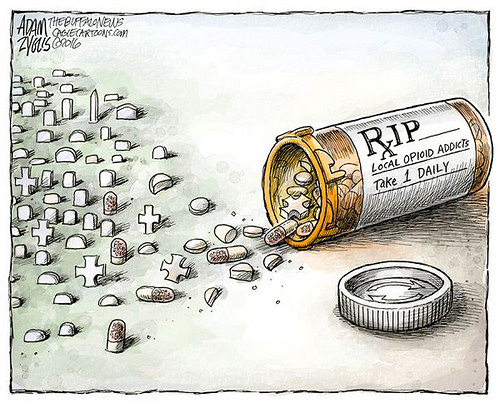
Hardly a day goes by without hearing news of America’s opioid epidemic. 2016 was the worst year for opioid deaths, with overdoses claiming over 63,000 lives. With jarring statistics like this one, government officials have started to assign blame for opioid use reaching crisis levels.

Their target? Drug companies

Almost every single state in the U.S. has filed lawsuits against drug manufacturers and distributors for their involvement and essential creation of the opioid epidemic. Sadly the cost penalties, which are minuscule in the face of humongous profits, are unlikely to trigger genuine reform.

Big Pharma is Big Business.

We can assign blame to the drug companies for their involvement in the crisis, and lawsuits are an effective way to do that. However if we are genuine about stemming the current opioid crisis, we must commit to making fundamental changes in the US health care system.

Two areas in vital need of reform are clinical trial funding and massive Big Pharma lobbying.

  1. Drug companies are allowed to fund clinical trials

Each year, the National Institute of Health sets aside a portion of its budget to fund clinical trials that are needed before a drug can hit the market. In recent years, however, a Johns Hopkins study revealed that this funding has drastically fallen and is now largely supported by pharmaceutical companies. With financial interest in the outcomes of certain clinical trials, industry funding presents the opportunity for drug companies to favor positive results over negative outcomes that may affect patient safety.

Look no further than the blood thinner Pradaxa’s clinical trial RE-LY to serve as an example. Critics of this industry-funded trial pointed out that it generalized the medication’s population and failed to be a double-blind study, presenting a prime possibility for bias and misreporting.

Hasty FDA approval followed these skewed trial results, and Pradaxa was put on the market in 2010 without an antidote to reduce its blood thinning effects. For five years, an antidote failed to be introduced, and severe bleeding incidents and over 1,000 deaths occurred as a result of taking the medication. Since then, a wave of lawsuits have been filed against manufacturer Boehringer Ingelheim for its hand in the bleeding incidents. Finally in 2014, over 4,000 claims were satisfied with a $650 million settlement.

  1. The #1 Lobbying Industry is Pharmaceutical/Health

Lobbying is a legal activity that is meant to help those who don’t have direct access to members of Congress get their voices heard. Although this practice is theoretically good-hearted, the reality is that money has the power to influence decisions that negatively impact the American public. In the first quarter of 2017 alone, the pharmaceutical industry spent $78 million in its lobbying efforts, an increase of $10 million since 2016.

This phenomenal dollar spend has enabled Big Pharma to sway policy decisions in favor of big business rather than public safety. In regards to the opioid crisis, The Pain Care Forum, funded by the pharmaceutical industry, spent over $740 million to stop legislation that would have put limits on opioid prescribing habits.


Morgan Statt is a Safety Investigator at ConsumerSafety.org


photo credit: DES Daughter Opioid Epidemic via photopin (license)

Pill Pushers in Suits: The Addition Potential of Psychotropic Medication


Overpill: The Darker Side of America’s Mental Health

RT (2017)

Film Review

Overpill is a documentary based on the investigation of a Russian-born accountant into the massive overprescription of psychotropic drugs (medications for depression, schizophrenia, bipolar disorder and ADHD) in the US. He became aware of the issue while working for Health Care Communications, a company that markets prescription drugs to Americans for ordinary problems of living. He undertook this investigation after becoming romantically involved with a woman who was addicted to antidepressants and antispsychotics while, despite experiencing horrendous side effects.

The film features extended interviews with former patients who got their lives back after the excruciating ordeal of weaning themselves off medication, with others still struggling with side effects while weaning themselves off, with a malpractice attorney who represents patients experiencing permanent and painful psychotropic complications and Dr Peter Breggin, a controversial American psychiatrist and outspoken critic of the overuse of psychotropic medication.

Both men are alarmed by the deliberate effort by pharmaceutical companies to conceal the addictive potential of antidepressants and antipsychotics, as well as studies showing these drugs can permanently alter the submicroscopic architecture of the brain. This is of special concern with the growing number of psychotropics prescribed in children with developing brains. There are virtually no studies of the long term effect of these drugs in either adults or children.

While the film acknowledges that psychotropic medication can be literally life-saving in some patients with severe mental illness, it rightly points out there are far too many cases in which they’re being inappropriately prescribed.

As a class psychotropic drugs (which are heavily marketed to consumers), are the third most profitable for the pharmaceutical industry.


Dangerous to Kids and the Environment: The Movement to Ban Glitter

A recent article in Ecowatch calls for government ban on cosmetic glitter. Unbeknownst to consumers, it turns out to be quite dangerous, both to the marine environment and to children. Most cosmetic glitter is made by bonding aluminum with  polyethylene terephthalate (PET). All phthalates leach out endocrine-disrupting chemicals as they degrade. When ingested by marine life – or children – endocrine disruptors can cause adverse developmental, reproductive, neurological and immune effects.

Thanks to all the other microplastics sea life consume, people who eat large amounts of fish and shellfish are exposing themselves to large amounts of PET.  One study from the University of Ghent found that Europeans who eat shellfish can consume as much as 11,000 microplastic particles per year. The PETs in these particles attract and absorb other persistent organic pollutants and pathogens, adding additional toxic exposure.

The resulting health effects is prompting many marine experts and environmentalists to advocate for the same ban on glitter as there is on microbeads. In 2015, the Obama administration signed the Microbead-Free Waters Act, banning plastic microbeads in cosmetics and personal care products. The U.K. and New Zealand announced their own prohibitions on microbeads earlier this year.

Due to their tiny size, glitter particles that become airborne are easily swallowed, especially by children.

Instead of waiting for the government to introduce a ban, a group of British daycare centers are taking the initiative in instituting their glitter ban. According to the Guardian, Top Day Nurseries has introduced a glitter ban, effective immediately, in 19 day care centers.

The issue is too urgent to wait for government bureaucracy to issue a glitter ban. Parents themselves need to take action by demanding their own daycare providers cease exposing their children to it.

photo credit: Inkwina