Excellent analysis of current US efforts to destabilize Europe – and the steady erosion of the Washington consensus – by one of Putin’s advisers. Quite frankly he makes Obama’s foreign policy advisers look like knuckle-dragging Neanderthals.
When it comes to Ukraine, you can listen (sub-titled) right here:
One would presume Putin’s close advisers have access to Russian intelligence, and Sergei’s assessment lines up very well with this sites open source analysis:
In following video, Peter Phillips from Project Censored lays out exactly how the richest one-thousandth of 1% maintain iron control over all world governments.
He cites a study Project Censored published in their Top 25 Censored Stories of 2012-2013 edition of the world’s most “integrated”* corporations and those with the largest financial asset concentration.
Unsurprisingly, there’s considerable overlap between the two groups.
The 161 board members of the top 13 companies control $28 trillion of wealth. They also help the 1% hide another $30 trillion offshore so it can’t be taxed.
They’re 88% white (and nearly all male) and 63% come from the US or Europe.
They work with secret (and not so secret) groups, such as the Council on Foreign Relations, the Trilateral Commission, the Bilderberg Group, the Bohemian Grove, the World Economic Forum, the G7, the G20, the International Monetary Fund and the World Bank to ensure that the domestic and foreign policy of all western governments benefits themselves and the capitalist investors they represent.
They also ensure that the national security state, busy killing people in 130 countries, acts in the exclusive interest of transnational capital. The fascist coup they engineered in Ukraine is only the most recent example.
They regularly engage in illegal conspiracies but are always too big and powerful to jail.
Here are the top 13 companies identified in the study:
1 BlackRock US $3.560 trillion
2 UBS Switzerland $2.280 trillion
3 Allianz Germany $2.213 trillion
4 Vanguard Group US $2.080 trillion
5 State Street Global Advisors (SSgA) US $1.908
6 PIMCO (Pacific Investment Management Company) US $1.820 trillion
7 Fidelity Investments US $1.576 trillion
8 AXA Group France $1.393 trillion
9 JPMorgan Asset Management US $1.347 trillion
10 Credit Suisse Switzerland $1.279 trillion
11 BNY Mellon Asset Management US $1.299 trillion
12 HSBC UK $1.230 trillion
13 Deutsche Bank Germany $1.227 trillion
*The researchers use the term “integrated” to describe financial corporations with major holdings in key non-financial sectors (i.e. energy, defense and mass media).
The video below by Slavko Martinov is a sterling example of New Zealand satire. This is utterly classic Kiwi humor, deliberately biting, edgy and over-the-top. In fact, they may have pushed the envelope a bit too far in this one.
The premise of the satire is that the film is a “leaked” propaganda film by The Democratic Republic of Korea (North Korea).
Reminiscent of the Yes Men and their impersonation of corporate criminals, this satiric depiction of pro-corporate propaganda in western society is so uncanny that New Zealand’s South Korean community still believe the filmmakers are North Korean spies.
Here Slavko Martinov discusses his motivation for producing this mockumentary and the unexpected reaction it has received:
Unlike The Century of the Self, The Persuaders focuses more on contemporary public relations techniques. This PBS documentary begins by examining growing industry concerns that consumers are becoming “immune” to the unconscious messaging Edward Bernays perfected.
Pseudo-spiritual and Cult Branding
Pseudo-spiritual and cult branding are two of the latest mass marketing techniques. Pseudo-spiritual marketing is designed to convince consumers that brand loyalty will provide identity and meaning in their lives. The stellar success of Starbucks and Nike are given as examples. Starbucks (allegedly) creates meaning in peoples’ lives by offering them a “third place” (not home or work). While Nike offers consumers “transcendence”* through sport.
Inspired by Starbucks’ and Nike’s phenomenal “branding” success, marketing analysts went out and interviewed cult leaders to understand how they won the loyalty of their followers.
Volkswagen, Mac, Harley Davidson, Linux and Saturn are the leading examples of cult brands. By offering a sense of belonging and community, they successfully pitch their brands to consumers longing for the community values which have been lost in contemporary society.
I find this incredibly ironic. First the corporate public relations industry connives to systematically dismantle labor unions and other community groups and institutions. Then they cynically package and market luxury consumer goods to satisfy our unmet needs for civic engagement.
Aiming for “Visceral Appeal”
One of the marketing gurus the film profiles is Frank Luntz, a political consultant renowned for his expertise in using language to promote the “visceral appeal” of political campaigns. His goal is to hit voters at an emotional level that motivates them to act.
Luntz’s credits include helping Newt Gingrich devise the Contract with America to help the Republicans win control of Congress in 1994. Luntz is also responsible for helping Republicans win points on specific issues by reframing them, e.g. by changing “tax cuts” to “tax relief,” “estate tax” to “death tax” and “global warming” to “climate change.”
The Technique of Narrow Casing
The Persuaders concludes by examining “narrow casing,” a campaign technique first developed by John Kerry’s 2004 presidential campaign. Narrow casing is largely credited for Obama’s victory in 2008. It involves data mining the vast amount of information corporations collect on our purchases (mainly via loyalty and credit card records). This data is used to categorize people into demographic groups based on specific issues (health, education, immigration, gun control) that are most likely to appeal to them. This allows campaign teams to beam issue-related advertising to specific groups (via email, direct mail and doorbelling), rather than relying on the more general messaging of mass marketing.
Republican political consultant Karl Rove has been highly successful in using narrow casing around issues such as gun control, immigration and the confederate flag to persuade blue collar white males to vote Republican.
*Transcendence is defined as existence or experience beyond the normal or physical level, as in spiritual transcendence.
The Century of the Self is a four part BBC documentary that delves deeply into the work of Edward Bernays, commonly known as the father of public relations. Parts 3 and 4 explore the glorification of selfish consumption after World War II and how Reagan, Thatcher, Clinton and Blair perfected the “politics of self” to win and hold power.
The Century of the Self
BBC Documentary (2005)
Film Review
Part 3 (There’s a Policeman Inside All Our Heads) and Part 4 (Eight People Sipping Wine in Kettering)
Following World War II, the CIA hired Sigmund Freud’s nephew Edward Bernays to advise them on controlling the “irrational aggression” of the masses. They were concerned that 49% of US soldiers evacuated from combat had to leave the battlefield for “emotional problems.” Today their condition would be diagnosed as post traumatic stress disorder (PTSD). In the mid-forties, the psychoanalysts who interviewed them diagnosed that they had unresolved conflicts related to their unconscious aggressive and sexual drives.
Convinced these problems were widespread among the greater population, in 1946 the Truman administration championed the passage of the Mental Health Act. The Act funded new guidance centers throughout the US to assist Americans to control and suppress their dangerous unconscious drives.
Meanwhile the public relations industry hired psychoanalysts to set up focus groups to use advertising more effectively to improve consumer demand for corporate products. These early focus groups employed psychoanalytic techniques to help advertisers improve sales by secretly appealing to unconscious needs and insecurities.
Students Opt for Self-Liberation
The anti-Vietnam War movement of the late sixties quickly morphed into a broader anti-capitalist movement that attacked corporations for corrupting government and brainwashing the public. This movement was strongly influenced by Wilhelm Reich and Herbert Marcuse, who had split with Sigmund and Anna Freud over their belief that unconscious aggressive and sexual drives had to be suppressed and controlled. Reich and Marcuse taught that it was repression itself that distorted unconscious aggressive and sexual drives and made them dangerous.
In 1970 the National Guard massacre of unarmed Kent State students in 1970 split in this anti-capitalist movement. For the most part middle class student supporters shifted their focus to “liberating” themselves rather than organizing for political change.
In addition to widespread experimentation with illicit drugs, this shift led to a surge of self-improvement initiatives and therapies, collectively called the Human Potential Movement.
Values and Lifestyle Marketing
Employing computer technology and psychologists trained in self-improvement techniques, the public relations industry adapted to this new individualism and preoccupation with self-expression with “values and lifestyle marketing.”
One of their main strategies was to blur the line between advertising and journalism by incorporating three key messages into news reporting: selfishness is good, the needs of individuals are more important than the needs of society and that only business can properly satisfy individual needs.
The Politics of Self
This deliberate promotion of selfishness and individualism cut across social classes and was a key factor in persuading blue collar voters to vote for Ronald Reagan and Margaret Thatcher – and programs that significantly hurt their own economic interests.
Ultimately it was Bill Clinton and Tony Blair who perfected this new “politics of self” by incorporating focus groups and lifestyle marketing into their political campaigns. Their advisers convinced them that voters had to be regarded as consumers and that the secret to getting elected was by catering (i.e. pandering) to voters’ unconscious primitive selfish desires. It was a hell of a way to run government and would cause the Democrats to get the boot in 2000 and the Labour Party in 2010.
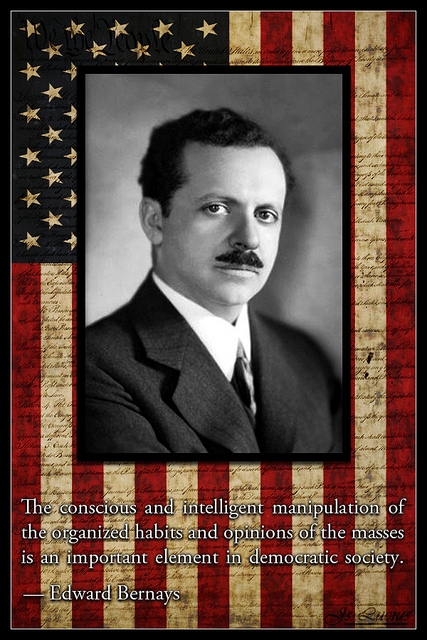
The Century of the Self is a four-part BBC documentary that delves deeply into the life and work of Sigmund Freud’s nephew Edward Bernays. Bernays was the first to perfect the science of thought control. In the political sphere, he referred to mass psychological manipulation as “engineering consent.” When he used propaganda and psychological manipulation to sell corporate products, he called it “public relations.” Parts 1 and 2 focus on the Freudian theories underpinning the early public relations movement.
The Century of the Self
BBC Documentary (2005)
Film Review
Part 1 (Happiness Machines) and Part 2 (Engineering of Consent)
The Transformation from Citizen to Consumer
The twentieth century is frequently referred to as the selfish century. This documentary lays the blame for this at the feet of Sigmund Freud and his nephew Edward Bernays.
Prior to World War I politicians and businesses used facts and information to win votes or to persuade people to buy their products. When Woodrow Wilson hired him to run his Committee for Public Information to produce pro-World War I propaganda, Bernays incorporated Sigmund Freud’s theory that human behavior was based on unconscious instinctual drives. By appealing to these unconscious and irrational feelings, he succeeded in selling World War I to a profoundly isolationist American public
As well as his pivotal role in engineering corporate and government propaganda, Bernays was also responsible for popularizing Sigmund Freud’s work by emphasizing its sexual content.
The Shift from a Needs to a Desire Based Culture
Curious whether similar techniques would also work in peace time, Bernays hired himself out to corporations to help them improve their sale of consumer products. His goal was to shift US society from a needs culture, where people only bought what they needed, to a desire culture, where they purchased products to make them feel better. Aware that the word propaganda had an extremely negative connotation, Bernays coined the term “public relations.”
Bernay’s stunning success gave birth to 1920s “consumptionism” and was largely responsible for the economic bubble that resulted in the 1929 crash. Already by 1927, social critics were concerned that Americans were no longer citizens but consumers. Confident of their ability to engineer consumer demand, banks funded national expansion of department store chains and hired Bernays to persuade ordinary people to borrow money to buy shares in the stock market.
Driven to record levels by borrowed money, the stock market collapsed.
During the Great Depression, Bernays shifted gears to focus more on influencing public political views. Neither Freud nor Bernays believed in the equality of man. Frightened by the rise of fascism in Europe, both believed that democracy was a fundamentally unsafe form of government (due to human beings’ dangerous unconscious drives).
Both believed that people must be controlled – that mass democracy could only work if popular consent was engineered. Bernays was also convinced that the best way to control people in a mass democracy was to render them passive consumers – by triggering a continuous irrational desire to consume and satisfying it with consumer goods.
Roosevelt Tries to Rein in Business
Unlike Freud and Bernays, Franklin Roosevelt believed that people were capable of knowing what they wanted and relied on the new science of public opinion polling (pioneered by George Gallup) to ascertain what people were thinking. His response to the Great Depression was to grant himself extensive executive power and subject business to central economic planning, which they hated.
In 1936, the National Association of Manufacturers hired Bernays to initiate an ideological campaign against the New Deal (and the rise of unionism as Alex Carey mentions in Taking the Risk Out of Democracy.
When World War II ended, the CIA hired Bernays to advise them on how to control the “irrational aggression” of the masses. In his CIA role, Bernays devised a campaign for the Eisenhower administration to convince the American public they were under imminent threat from Soviet Communism.
As part of this campaign, Bernays mobilized public and congressional support for the 1954 coup against Guatemala’s democratically elected president Jacobo Arbenz. Bernays also worked for the United Fruit Company, which was concerned about Arbenz’s plans for land reform, i.e. breaking up their extensive Guatemalan banana plantations.
The First Focus Groups
Meanwhile the public relations industry hired psychoanalysts to set up focus groups to use advertising more effectively to improve consumer demand for corporate products. These early focus groups employed psychoanalytic techniques to help advertisers improve sales by secretly appealing to unconscious needs and insecurities.
This is the first in a series of posts about “engineering consent,” a form of brainwashing and thought control perfected in the 20th century. Its purpose is to allow the elites who control western democracies to maintain political power without resorting to brute force.
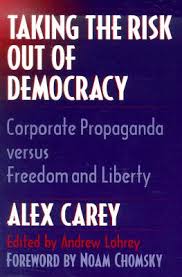
Taking the Risk Out of Democracy: Corporate Propaganda versus Freedom and Liberty
By Alex Carey (1995 University of New South Wales Press)
Book Review
Taking the Risk Out of Democracy: Corporate Propaganda versus Freedom and Liberty is a collection of essays written by Australian psychologist Alex Carey prior to his death in 1988. The essays were posthumously edited and assembled into a book by Andrew Lohey. Carey’s book details the 100 year history of the deliberate manipulation of popular consciousness by the corporate elite.
According to Carey, the main purpose of corporate social engineering is to persuade the voting public to serve the interests of the privileged class, rather than their own working class needs. This type of propaganda relies heavily on emotionally-laden symbols and a black and white view of society in which people and issues are either good or evil. Owing to virtually unlimited corporate financing, it’s spectacularly effective. Conservative regimes that enacted reactionary social policy (in the US) between 1919-1929, 1946-1956, and 1976-2014 didn’t just happen – they were deliberately engineered by the business lobby and corporate propagandists.
Women and Blacks Win Vote
In the view of the US business elite, a dedicated program of social engineering became essential at the beginning of the 20th century when women and northern blacks acquired the right to vote. In 1880, only 10-15% of the US population was eligible to vote. By 1920, this percentage had increased to 40-50%. The corporate elite couldn’t take the risk that this large crop of new voters would elect candidates keen on regulating corporate activities that posed a threat to public health and welfare.
Edward Bernays, known as the father of public relations, played an instrumental role in advancing the art and science of corporate propaganda. During World War I, he assisted Woodrow Wilson, who ran as an antiwar president, in convincing a fiercely antiwar and isolationist American public to support US intervention in the war between Britain and Germany.
Peacetime Propaganda
After World War I, Bernays worked for the National Association of Manufacturers and other corporate groups with a primary agenda of turning public opinion against unions, immigrants and the corporate regulation enacted by President Teddy Roosevelt between 1901 and 1912.
By combining a vast media campaign with concerted employee indoctrination, Bernays created a wave of anti-union and anti-immigrant hysteria. By convincing Americans that corporate regulation was akin to Bolshevism. In this way, he successfully ushered in the first (1919-1921) of three periods of corporate rule. While post-war Europe enjoyed a wave of radical liberalism resulting in the rise of democratic socialism, the US was caught in the grips of a reactionary agenda that would set the stage for the repressive Red Scare and Palmer Raids (in which politically active immigrants were rounded up and deported).
Labor Paralysis, Korea and Vietnam
The other two periods in which a corporate agenda dominated US domestic and foreign policy occurred between 1946-1950 and 1976-80. Between 1929 and 1946, the Great Depression and World War II dramatically curtailed the effectiveness of corporate propaganda. In the late forties, corporate interest groups roared back with a vengeance. The ideological agenda they broadcast on radio and in print media equated free enterprise with freedom and democracy, patriotism with social harmony and the New Deal with creeping socialism. Liberals who supported corporate regulation were portrayed as communist sympathizers. During this period, the Chamber of Commerce launched the first major publicity campaign warning that communists had infiltrated government, universities and other major institutions.
Thanks to these propaganda efforts, in Republicans took control of Congress for the first time since 1928. In 1947 they enacted the Taft Hartley Act (1947), virtually paralyzing American unions. By blanketing the media with their reactionary agenda, pro-corporate ideologues also laid the ground work for the second Red Scare, aka the McCarthy Era from 1950-1956.
Senator Joseph McCarthy’s House Committee on Unamerican Activities had an even more destructive effect on foreign policy than it did on civil liberties. In addition to pressuring Truman to pursue an unwinnable war in Korea, McCarthy also forced Eisenhower to reverse US policy on Vietnam and China. Under Truman, the US State Department had opposed the French return to Vietnam (i.e. they supported Vietnamese independence). They had also sought to mediate (in 1945) between Mao Tsai Tung and Chiang Kai Shek in the Chinese civil war.
After McCarthy succeeded in stripping the State Department of more than 500 personnel with Asian expertise, the ultraconservative, CIA-linked John Foster Dulles succeeded in throwing US support behind the incompetent and corrupt Chiang Kai Shek and transforming French opposition to Vietnamese independence into a battle to prevent world Communist domination.
The Rise of Pro-Corporate Neocons
The anti-Vietnam War, Nixon’s resignation and public anger over against CIA domestic spying led to a strong anti-business backlash during the late sixties and early seventies. Corporate ideologues fought back with the launch of “treetop” propaganda efforts. As opposed to grassroots media-based propaganda, treetop propaganda focuses on recruiting rich conservatives to fund conservative think tanks to promote conservative “economic education” and lobby Congress to defeat consumer protection and labor rights legislation.
The American Institute for Public Policy Research (AEI) (neoconservative think tank founded in 1970), the Heritage Foundation (founded in 1973) and would be instrumental in promoting “economic” ideological beliefs that full employment and clean air and water initiatives are detrimental to the economy because they hurt business. These think tanks also hammered Congress and universities with the notion that the US would collapse under a socialist dictatorship unless corporate regulations were rolled back.
Their success in bombarding all sectors of society with these reactionary ideas would pave the way for Ronald Reagan’s election and the rollback of corporate regulation and social safety net programs that occurred during his administration.
During the early 1970s, these conservative think tanks began exporting these reactionary belief systems to British and Australian corporate interest groups. In Britain, American-inspired treetop and grassroots pro-corporate propaganda would lead to Margaret Thatcher’s election in 1979.
***
Below the 1993 documentary based on Noam Chomsky’s book Manufacturing Consent. The title is based on a term coined by Bernays: “engineering consent.” Carey had studied with Chomsky at MIT.
(The first of two posts about the damaging effect of the western diet on intestinal bacteria and human health.)
As a traditionally trained physician, I watch with horror and dismay as for-profit corporations intrude ever deeper into so-called evidence based medicine. I have written at length about the role of Big Pharma in corrupting good medical practice to promote the sale of prescription pharmaceuticals – and their bottom line (see Menopause: Made in the USA and Drug Companies: Killing Kids for Profit). The role of Food Inc in the dietary recommendations doctors (and government) make to patients and the public at large are even more insidious and damaging.
The current taboo against saturated animal fats is a case in point. For the past thirty years, doctors and government agencies have been lecturing us that diets high in saturated animal fats (found in red meat, whole milk, eggs, butter and lard) cause high cholesterol levels, heart disease and stroke. They have persisted in this three decade campaign against animal fat – despite the total absence of scientific research supporting a link between fat intake and high cholesterol levels – or heart disease and and stroke. In fact, growing evidence suggests just the opposite: diets low in saturated fats and high in sugar and refined carbohydrate promote obesity, type 2 diabetes, high cholesterol levels, high blood pressure, heart disease and stroke.
In other words, government and the medical fraternity have it backwards. Worse still, it appears that their purely theoretical (based on no evidence) phobia against animal fat may be the single most important factor in the current epidemic of obesity and type 2 diabetes.
An Unproven Hypothesis
The current taboo against animal fats is based on a hypothesis first promoted forty years ago when I was in medical school. The theory works like this: consumption of foods high in cholesterol and saturated fats promotes high levels of blood cholesterol, which lead to calcified plaque formation in arteries, which restrict blood flow to the heart and brain, as well as increasing blood pressure by making blood vessels less elastic.
There’s a credible body of research linking high cholesterol levels to plaque formation and the latter to high blood pressure, heart attack and stroke. However there’s no research whatsoever linking diets high in animal fats and cholesterol to high blood cholesterol levels.
In March, Annals of Internal Medicine published a metanalysis of 72 scientific studies on the effect of different fats on heart disease. The authors conclude there is insufficient research evidence to support guidelines discouraging consumption of saturated animal fats.
A growing body of evidence suggests that diets low in saturated fats are, in fact, harmful to human health. Many of these studies were inspired by the work of dentist Weston A. Price in the 1930s. Puzzled that Maori, Australian aboriginals and other indigenous groups experienced no tooth decay prior to adopting a western diet, Price studied their dietary habits. To his surprise, he discovered it wasn’t the direct effect of sugar on tooth enamel that caused cavities. His patients developed tooth decay because diets high in sugar and refined carbohydrates were deficient in basic nutrients essential for human health. When he helped them alter their diets, his patients not only avoided further tooth decay but healed existing cavities.
One of Price’s discoveries was that animal fats* provide essential fat-soluble vitamins (A, D, E and K) that play a vital role in the absorption of other nutrients essential for hormonal and neurological function and protection against chronic diseases, such as cancer and heart disease.
The Role of Intestinal Bacteria
More recent studies have elucidated the mechanism by which diets high in sugar and refined carbohydrate predispose to both high cholesterol levels and obesity. Some of this research is summarized in an April 2013 article in Mother JonesAre Happy But Bacteria Key to Weight Loss?
The article explains how high sugar and refined carbohydrate diets, coupled with massive antibiotic overuse in medicine and factory farming**, promote the growth of gram negative, endotoxin-producing intestinal bacteria. When endotoxin is absorbed into the bloodstream, it sets up a wide ranging inflammatory response that can manifest a variety of effects, including arthritis, eczema, psoriasis and neuropsychological syndromes such as autism, Asperger’s disorder, schizophrenia and ADHD. A number of studies suggest that high cholesterol levels are also an inflammatory response to this endotoxin. Others link endotoxin to inflammatory damage in the brain’s appetite center. An impaired appetite center will cause people and animals to eat indefinitely without ever feeling full.
The Mother Jones article also describes several studies in which obese patients lost weight by simply suppressing endotoxin-producing bacteria – by taking probiotics and eating fermented foods containing beneficial bacteria.
*The contamination of animal fats and dairy products, even when produced organically, with fat-soluble pesticides and other industrial toxins makes choosing “safe” saturated fats somewhat problematic. Classified as endocrine disruptors, many of these toxins mimic estrogen, which promotes the development and growth of breast cancer. For this reason, I prefer coconut oil as my saturated fat of choice.
**Factory farmed animals are routinely fed antibiotics to hasten and maximize growth.
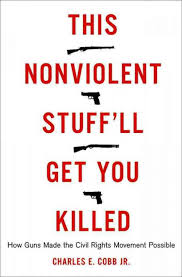
Charles E Cobb is a long time African American journalist who participated in the southern freedom movement etween 1962 and 1966. His purpose in writing This Nonviolent Stuff Will Get You Killed is to correct the revisionist “white” view of the 1960s civil rights movement.
The version of the civil rights movement taught in schools and universities is written by white historians who, for the most part, lay out historical events and omit the thinking that led to them. Or even worse, instead of asking movement veterans what they were thinking, offer a retrospective analysis of what they must have been thinking.
It was a problem Frederick Douglass frequently faced in his dealings with white abolitionists. Afraid he would appear “too learned” to be convincing, they told him, “Just give us the facts – we’ll take care of the philosophy.”
One important fact often “whitewashed” out of history is the use of guns in the southern civil rights movement. Guns have always been fundamental to rural life, in both black and white communities. In the 1960s, they were essential for the survival of black farming families – for hunting food, killing varmints in the garden and protecting themselves against terrorist raids by Night Riders and the Ku Klux Klan.
White southerners made it pretty obvious that they were prepared to kill African Americans – and their families – if they registered to vote. Despite his highly publicized use of nonviolence as a tactic, Martin Luther King had bodyguards who carried pistols to protect him. and Fanny Lou Hamer used a shotgun to protect her house against white “crackers.” Armed African American World War II and Korean War veterans – in some areas formally organized as The Deacons for Defense and Justice – carried weapons to protect workers from CORE (Congress of Racial Equality) and SCLC (Southern Christian Leadership Council).
No white people were ever killed by these guards: it was sufficient to convey the message that blacks were willing to defend themselves.
As Cobb points us, no white person is willing to die for white supremacy.
Cobb is a great story teller and sheds important insights about the curious relationship between outside organizers and rural African American farmers as they set about building their trust.
It was my intention to embed Cobb’s 90 minute C-SPAN presentation about his book, but YouTube has censored the video by taking it down. So you have to click on the following link:
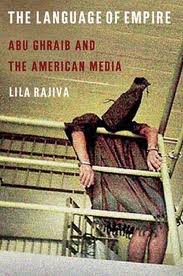
The Language of Empire: Abu Ghraib and the American Media
by Lila Rajiva (2005 Monthly Review Press
Book Review
The Language of Empire is an examination of the Abu Ghraib scandal, from the perspective that the US military’s use of torture was primarily an instrument of terror (i.e. a military tactic intended to cause intimidation). In addition to outlining what actually happened at Abu Ghraib, Rajiva also chronicles the Senate Armed Services Committee investigation triggered when the scandal first broke in April 2004. However the book mainly focuses on the media coverage of Abu Ghraib and what it tells us about the highly sophisticated psychological strategies employed by Pentagon and Wall Street propagandists.
The Language of Empire begins with a detailed catalog of the different forms of torture employed against prisoners (who were for the most part civilian non-combatants) at Abu Ghraib, with particular emphasis on the rape of female prisoners (only reported by the Christian Science Monitor) and the sodomizing of Iraqi teenagers, both largely ignored by the mainstream media.
The third chapter is devoted to the Senate investigation. The investigation, in Rajiva’s view, was a whitewash allowing the Republican majority to scapegoat a few “bad apples.” There should have been a thorough investigation of Secretary of Defense Donald Rumsfeld, who had clearly mandated the use of torture in interrogations. Rajiva is also critical of Senate Democrats, who focused entirely on the legal paper trail and the Pentagon’s failure to keep Congress informed, rather than a diseased Pentagon culture that enabled the US to adopt torture as official policy.
Rumsfeld’s Corporatization of the Pentagon
Rajiva is extremely critical of Rumsfeld’s wholesale “corporatization” of defense and his consolidation of all Middle East intelligence and propaganda functions under the Pentagon. Of most significance, obviously, was contracting with private companies to provide military and intelligence functions. In addition to introducing the secrecy (and deniability) of the corporate boardroom into military operations, it simultaneously transferred major policy decisions from military professionals to civilians.
Torture as Psyops*
Although she deals briefly with the cultural use of forced nakedness, sexuality and homosexual role play, compounded by the global distribution of photos of Muslim men humiliated in this way, most of the book deals with the intended psyops function of Abu Ghraib coverage on the American public.
Rajiva explores two broad themes here. The first relates to deliberately orchestrating fear and confusion in the American public to increase their susceptibility to ideological propaganda. The second relates to the deliberate use of fragmented, highly emotive images and scenarios in the absence of historical or logical context.
According to Rajiva, in most Americans normal social interaction has been replaced with incoherent economic and biological drives reinforced by continual advertising messages to consume. Layered on top of this (in white males) are Invented “culture wars,” consisting of imagined threats from liberals, women, minorities and Islam.
All this is very effective in distracting the public from the real conflict, which is between corporate interests and the real needs of people and their communities. In addition to making them exquisitely vulnerable to manipulation by the Pentagon and corporate media, it deliberately encourages Americans to project their inner anxieties on frightening outsiders (i.e. Muslims).
Rajiva gives numerous examples in which the US media deliberately misrepresents Arab society as inherently violent, tribal and uncivilized. At the same time Islamic insurgents are made to appear as monstrous as possible by 1) exaggerating their alleged religious fundamentalism and negating their rational motivation (poverty and US occupation and atrocities) for their terrorist activities and 2) defining them as evil by nature, with subhuman descriptors (animals, insects, slime, etc).
She also describes a trick of logic played by government/media propagandists, whereby the US killing of thousands of civilians is “rational” because it’s (supposedly) accidental. In contrast acts of violence by militants are portrayed as “irrational” because they occur in response to genuine grievances.
*Psyops are tactics intended to manipulate one’s opponents or enemies, such as the dissemination of propaganda or the use of psychological warfare.
Lila Rajiva is a journalist and author residing in Baltimore. She has degrees in economics and English from India, as well as a Master’s degree from JohnsHopkinsUniversity, where she did doctoral work in international relations and political philosophy. She has taught at the University of Maryland, BaltimoreCounty. She blogs at http://mindbodypolitic.com/




 The Most Revolutionary Act