
Culture Jamming: The Grassroots War Against Mind Control

Culture Jam: Hijacking Commercial Culture

Directed by Jill Sharpe (2001)

Film Review

Culture Jam is one of my favorite documentaries of all time. It describes a guerilla movement which started in the 1970s and was popularized by the Billboard Liberation Front. The goal of culture jamming is to counter pervasive the consumerist messaging in contemporary society.

The movement came to wide public attention with the publication of Canadian anarchist Kalle Lasn’s 1999 book Culture Jam: The Uncooling of America and the launch of  Adbusters magazine

The main focus of the Billboard Liberation Front was to covertly “improve” on billboard advertising to help it more accurately reflect post industrial capitalism. Some examples below:


Other culture jammers featured in the film include a woman who operates solo pasting anti-consumerist stickers on cash machines and other high traffic targets and Reverend Billy from the Church of Stop Shopping. Filmmakers capture Reverend Billy and his flock praying with Disney Store customers in Times Square to help them resist their compulsion to purchase new Disney products.

The film, which can’t be embedded for copyright reasons, can be viewed free at Culture Jam
Fighting Globalization by Rebuilding Local Economies

White Widows

Directed by David Straub (2019)

Film Review

This documentary concerns work by the Indian-German Peace Foundation to assist rural Indian villages in diversifying their economies. The goal is to make them less vulnerable to exploitation by the global commodities market. The village featured in the film is Dahnoli, which produces cotton. The Foundation is assisting local farmers in constructing a textile facility based on hand looms.

Most of Dahnoli’s current economic problems stem from the introduction, in the 1990s, of Monsanto’s BT resistant cotton seed. Although this genetically engineered seed initially increased yields, over time the cotton plants lost their resistance to BT and other pests and required increasingly heavy application of pesticides. As yields plummeted, farmers sought to return to traditional cotton seed, but it was no longer available.

Owing to the higher costs of patented seed and pesticides, many farmers became indebted to money lenders. Nationwide more than 300,000 farmers committed. Thousands of others have died from pesticide related health problems.

At present 65% of India’s population works in agriculture. When crops fail, many move to the big cities – where a total of 8 million live in slavery.

https://vimeo.com/339081725


Rebel Geeks Spy on the Spies

Rebel Geeks – The Critical Engineers

Al Jazeera (2015)

Film Review

This documentary is about three engineers (Russian-born Danja Vasiliev, New Zealander Julian Oliver and Stockholm based Bengt Sjolen) responsible  for launching the first civilian Earth to stratosphere scan to monitor government surveillance activities.

The purpose of their experiment was to monitor surveillance drones various governments use to spy on their populations. Their methodology was to attach radiofrequency detectors to a helium balloon. The balloon burst once it reached the upper stratosphere, and the monitoring equipment returned to Earth.  Hackers in Belarus retrieved the payload and uploaded it to an encrypted network. See Deep Sweep data

Naming their project the Deep Sweep, the engineers are presently working on a low cost Open Source template that people in other countries can use to investigate government surveillance activities.

Vasiliev and Oliver are also responsible for the Newstweek project.  If a device called Newstweek is plugged in at a wireless hotspot, then people connected to that Wi-Fi can have all media content modified, changed or otherwise edited by a hacker who is operating from a remote location.

Reverse Mergers: Americans Caught in Chinese Investment Scams

The China Hustle

Directed by Ted Rodstein (2018)

Film Review

This documentary exposes a recent scam which some 400 small Chinese companies used so-called “reverse mergers” to list their companies on the New York Stock Exchange (NYSE) – a move enabling them to attract American investors.

At preset, the Chinese government bans direct foreign investment in China’s businesses. However between 2006 and 2012, two enterprising US investment banks (Roth and Rodman and Renshaw) enlisted small Chinese companies to enter into “reverse mergers.” Locating legally registered US companies that had ceased operations, the two banks recruited Chinese companies to legally “merge” with the defunct companies. This, in turn, enabled the Chinese companies to register on Wall Street and sell shares to US investors.

A pattern emerged, in which Roth and Redman and Renshaw obtained high accreditation ratings from their auditor (Deloitte) and aggressively promoted the stocks. Then they sold their holdings just before they collapsed – reaping hundreds of millions in profits.

Becoming suspicious, Dan David, co-founder of the due diligence firm Geoinvesting, became suspicious and went to China to visit some of these companies. In every case, he found they were exponentially overstating the size and volume of their operations, as well as the revenue they generated.

He first took his findings to the investment bankers at Roth and Redman and Renshaw, then to the SEC (which is theoretically responsible for preventing this type of fraud) and finally to Senator Pat Toomey. The latter was part of the Senate committee investigating n the potential risk China posed to the US economy.

When it became obvious there was no other way to end the fraud being perpetrated on US investors, David began collapsing the share price the companies he investigated by short selling* their stocks.

In this way he ended 40 reverse merger scams by shutting down the companies.

Before the massive fraud came to public attention, public pensions funds lost more than $14 billion in reverse merger scams, with private investors losing $20-50 billion. Rodman and Renshaw was eventually forced into bankruptcy.


* Short selling involves the sale of an asset that the seller has borrowed in order to profit from a subsequent fall in that asset’s price. It commonly has the indirect effect of driving the share price down.


Brazilian App Records Police Homicides and Brutality

A Bigger Brother – Rebel Geeks

Al Jazeera (2015)

Film Review

This documentary if about Coletivo Papo Reto, a Brazilian copwatch group that developed an Open Source phone app to make videos of police killings and brutality of sufficient quality to be used in court. Courts in many countries disallow smartphone video evidence because it’s hard to document exactly when and where it’s been recorded and that it hasn’t been altered.

The new app has been programmed to embed specific metadata into the pixels of the video. Most smartphones already capture specific metadata as such as GPS, local time and proximity to specific cellphone towers and WiFi networks.

Thanks to support from the Guardian Project, the new app has also been adopted by copwatch programs in Brooklyn and Ferguson.

According to Amnesty International, Brazilian police kill more than 400 unarmed civilians a year.


*The Guardian Project is a global collective of software developers, designers, advocates, activists and trainers who develop open-source mobile security software and operating system enhancements.


Ending Monopoly Control of the Electronics Industry

Rebel Geeks: Meet Your Maker

Al Jazeera (2016)

Film Review

This documentary concerns the Maker Movement, Massino Banzi and the Arduino. Banzi created the Arduino in 2003. The latter is an Open Source one chip computer control device that allows ordinary people to create their own electronic devices without training in electronics or engineering. People have used them to create their own Open Source 3D printers, drones, smartphones, robots and other electronic devices.

The Arduino has played a pivotal role in the Maker Movement, a campaign to end monopoly control over the electronics industry. If you allow corporations to control all the electronic devices and services you use, you allow them to control your choices.

Safecast, the international Citizen Science movement that installed tiny Geiger counters across Japan in 2011 used Arduinos to build them.

See The Citizen Science Movement


Open Science and the Citizen Science Movement

Solutions: Open Science

Directed by James Corbett (2019)

Film Review

This documentary evaluates potential solutions to the problems with shoddy and fraudulent research Corbett identified in his prior documentary The Crisis of Science (see Why Most Published Research Findings Are False).

Among the reforms Corbett notes are growing pressure by scientific journals for researchers to publish raw data and negative results and the formation of an entity known as Redaction Watch. The latter closely monitors studies that are retracted for fraudulent data or questionable methodology.

However the most important solutions, in Corbett’s view, are the Open Science and Citizen Science movement. The former campaigns for free public access to scientific research, which until a decade ago was locked away behind costly paywalls.*

The most well known Open Science activist was Aaron Swartz, who published the Guerilla Open Access Manifesto in 2008. The FBI arrested Swartz in 2011 for using an MIT server to upload thousands of academic papers to a free Internet site. His legal problems allegedly prompted Swartz to kill himself two weeks before he went to trial. However numerous factors suggest he may have been “suicided” (see The Mystery of Aaron Swartz’s Alleged Suicide).

Like Swartz, Corbett argues that allowing freer public access to scientific research allows the public to monitor what scientists are up to. The Open Science movement has led to a substantial increase in research available for free on the Open Source PLOS (Public Library of Science).

Citizen Science refers to the growing participation of amateur scientists in the collection, storage and, in some case, analysis, of scientific data. Examples include projects in which scientists use citizens to collect migration data on butterflies and songbirds.

In another model, ordinary citizens set up their own projects to solve specific problems. The best example is Safecast, created by anti-nuclear  activists when it became clear the Japanese government was lying about radiation levels resulting from the Fukushima meltdowns. In this project, a network of activists created an automated Geiger counter to collect radiation counts every five seconds and upload them to an online database. They then recruited thousands of Japanese volunteers to attach them to their cars and bikes (see The Citizen Science Movement).


*Revenues resulting from scientific journal subscriptions accrue mainly to for profit publishers (like Elsevier) rather than researchers who write scientific papers.


Freeganism: A Portuguese Experiment

Wasted Waste

Directed by Pedro Sera (2018)

Film Review

This documentary is mainly about Freeganism, a Portuguese movement in which members opt out of the money system by spending their time growing or “recycling” food and other basic necessities, “occupying” homes instead of renting, and foregoing most consumer goods to avoid engaging in paid work.

The movement is a reaction against rampant consumerism, which Freegans reject. They view consumerism as an addition that’s destroying the planet.

The film’s main focus is western society’s incredible wasteful food system, in which one-third of the food produced is wasted. If this discarded food could be distributed somehow to needy families, global hunger could be eliminated.

In Europe 198 hectares of land (an area the size of Mexico) goes to produce food that’s never consumed. Up to 50% of food never leaves the farm because it fails to meet arbitrary supermarket appearance standards. The rest is discarded due to overcautious “sell by” dates ( enabling Freegans to scavenge it from supermarket dumpsters).

“Food travel,” whereby corporate food networks transport food halfway around the world, is also incredibly wasteful. It’s estimated to produce 750 times the carbon emissions as locally produced food.

In addition to examining various Freegan projects that prepare “recycled” food to distribute free on the streets, the documentary looks at other Portuguese cooperatives, social enterprises and charities that reduce food waste in other ways.

One coop collects “ugly” food directly from farmers to sell to its members. As Food and Good After are social enterprises that purchase (at a discount) expired supermarket food and sells them at cost in their own facilities. There’s also a bulk foods store which eliminates plastic packaging by requiring patrons to bring their own containers.

They also interview a Zero Waste advocate who has produced zero trash in four years; the coordinator of Portugal’s Time Bank Network (where members trade services instead of purchasing them); and a Portuguese legislator with a bill (similar to existing laws in France and Italy) requiring all outlets larger than 400m2 to provide for the allocation of food wastes to charities and social enterprises for distribution to the needy.


Gurrumul

Gurrumul

Directed by Paul Damen Williams (2017)

Film Review

This documentary is a tribute to the late Geoffrey Gurrumul Yunupingu, a blind singer with a hauntingly beautiful voice. It’s hard to find words to describe his music, which portrays a purity and longing that literally makes your chest ache.

Gurrumul was from the Yoinju tribe on Eicho Island, one of the most remote islands in Australia.

Despite achieving international prominence and considerable wealth, he remained close to his family and tribe his entire life. At one point, he blew off a US tour because of tribal business.

For religious reasons the Yoinju, like other Torres Strait islanders, prohibit the preservation or display of images of the dead. In Gurrumul’s case, they have made a rare exception.

He died on July 25, 2017 at age 45.

The documentary can be viewed for the next week at the Maori TV website: Gurrumul


If It’s Free, You’re the Product

Digital Dissidents Part 2

Al Jazeera (2016)

Film Review

“If It’s Free You’re the Product”

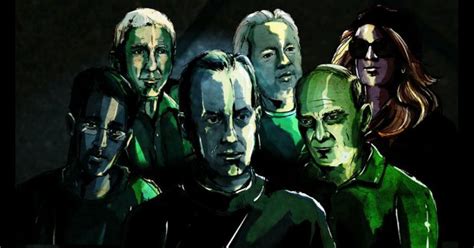
In Part 2, Digital Dissidents reminds us that Google, Amazon, Facebook and Apple daily collect and “monetize” (ie sell) millions of data points about us (including records of financial transactions).

The documentary also features rare commentary by Julian Assange on Sweden’s attempts* to charge him with sexual assault. These charges mysteriously surfaced exactly two weeks after Anonymous hacker Jeremy Hammonds released hacked emails between intelligence contractor Stratfor and the US government about potential charges against Assange under the 2017 Espionage Act. Was this mere coincidence? It seems unlikely.

NSA whistleblowers Thomas Drake and William Binney also talk candidly about the devastating effects of whistleblowing on their personal lives. His career in software systems management ruined, Drake presently clerks in an Apple retail outlet.

Binney, who refers to the NSA as “the Stasi** on super steroids, calls for the total dissolution of NSA. He maintains it has too much power to be reformed.


*Sweden dropped the sexual assault charges against Assange in Sept 2017. As Assange points out in the film, neither woman filed a police complaint and one accuses the police of inventing the crimes she supposedly accused him of.

**As the intelligence/security service for the former East German Republic, the Stasi was one of the most viciously repressive secret police agencies ever.

The video, which can’t be embedded for copyright reasons, can be viewed for free at the Al Jazeera website: Digital Dissidents