1968

1968

(More from my research for A Rebel Comes of Age)

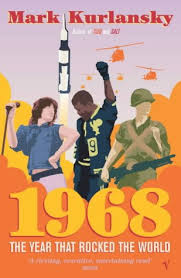
1968: The Year that Rocked the World

by Mark Kurlansky (Vintage 2005)

Book Review

1968 was a year for citizen uprisings around the world. Kurlansky comprehensively reviews 19 of them.* Student activists and workers on both sides of the Iron Curtain learned from and copied one another and supported each other’s liberation struggles.

The most eye-opening section discusses the importance of violence in attracting media attention. No one understand the importance of the media in movement building better than Mohandas Gandhi, who went to great lengths to obtain Indian, British, and American coverage of every protest he organized. He also spoke and wrote about the value of British violence in enticing the media to cover the Quit India movement.

According to Kurlansky, Martin Luther King also understood the role of police violence in drawing national media attention – which would be essential in pressuring Attorney General Bobby Kennedy to enforce federal civil rights laws. Kurlansky talks about a police chief in Albany, Georgia who thwarted King’s organizing efforts by studying his nonviolent tactics and countering them with nonviolent law enforcement. Because there was no police violence in Albany, it received no national media attention. .

After Albany, King and other civil rights leaders deliberately targeted towns with hothead police chiefs and angry, volatile mayors. In a 1965 incident, a King protester named Annie Lee Cooper punched the sheriff. and then dared him to hit her. The photo of Sheriff Clark clubbing a defenseless woman made the front page of every mainstream newspaper.

The 1968 Democratic Convention

At August 1968 Democratic Convention, yet again it was police violence by Mayor Daley’s goons that drew national media attention to what was essentially a harmless prank by Abbie Hoffman, Jerry Rubin, Phil Ochs and other Yippies (Youth International Party). Featured events at the Yippies’ Festival of Light included snaking dancing, poetry, mantras, the Yippie Olympics, a Miss Yippie Contest and Pin the Rubber on the Pope.

The police riot magically transformed the Yippies non-violent prank into front page news. Ironically, however, they had to share the limelight with the Soviet invasion of Czechoslovakia. Violent Soviet repression of Dubcek’s freedom movement also made the front page..

Prague Spring

It’s quite common for the ruling elite and corporate media to attribute the collapse of the Soviet Union to the Soviet invasion and occupation of Afghanistan, which ultimately bankrupted their economy. Obama’s mentor Zbigniew Brzezinski still talks about ingeniously “luring” them into an unwinnable war by training and arming the Mujahideen freedom fighters.

Kurlansky believes the 1968 Soviet’s invasion of Czechoslovakia marks the beginning of the end of the Soviet empire. The student/intellectual protest movement that brought Alexander Dubcek to power in January 1968 became less public but didn’t disappear in the government crackdown that followed the August invasion .It also served to strengthen reform movements in other Soviet Bloc countries – especially Romania and Poland – where government leaders were under pressure to condemn the invasion. In Kurlansky’s view the appearance of Soviet tanks on Czech streets killed the dream of eastern block reformers that socialism could be made more democratic.

His description of the background and personality of Alexander Dubceck, the father of “Prague Spring” is especially illuminating. Dubcek was no wild-eyed radical seeking to overthrow communism. In every respect he was the ultimate communist bureaucrat:  blindly loyal, dutiful, and deeply pro-Soviet. Dubcek and his subordinates, who considered the Soviets their friends and protectors, never dreamed they would invade.

In this respect, Czechoslovakia was unique among eastern bloc countries in voting in a communist government at the end of World War II (rather than having it forced on them).

Parallels Between Dubcek and Nixon

Dubcek, who was far more moderate than the students and intellectuals in the street, was actually somewhat dismayed at his sudden rise to power in January 1968. The student protest and Slovak nationalist movement had erupted simultaneously in late 1967, and Dubcek’s predecessor had been unable to quell the civil unrest.

Unlike many Communist Party officials, Dubcek who was deeply principled, viewed violent suppression of the protests as unthinkable. Aside from his refusal to invoke military force against the students, his situation parallels that of Richard Nixon’s in some ways. Nixon was also forced to enact a number of progressive initiatives  (e.g. the Clean Air Act, and legislation creating of the Environmental Protection Agency, the Occupational Health and Safety Administration, the National Endowment for the Humanities, and Social Security Supplemental Income for the disabled) in response to a large and militant protest movement.

Dubcek had no real platform until April 1968, when he issued an Action Program with three planks: 1) commitment to Czechoslovakia’s socialist political/economic system, 2) ending secret police repression of personal and political beliefs, and 3) ending the monopoly of power by the Communist Party.

The immediate result was liberalization of foreign travel, increased access to foreign periodicals, and media exposes about Czech and Soviet corruption and Stalin’s notorious purges. Freedom of artistic expression also increased, as Czech students and everywhere wore blue jeans and long hair, listened to rock and jazz, displayed psychedelic posters and even held an international film festival.

Soviets Forced to Keep Dubcek in Power

Brezhnev, one of Stalin’s henchmen in several purges, put extreme pressure on Dubcek to crack down on these “excesses.”  However even as Russian tanks rolled into Czechoslovakia Dubcek, who was profoundly antiwar, explicitly ordered a robust, well-trained and armed Czech military not to fire on them. As in Tienanmen Square in China, the only opposition to the tanks was tens of thousands of unarmed civilians.

Kurlansky writes at length about an unsung hero named General Ludvik Svoboda, who the Soviets attempted to install in a puppet government after imprisoning Dubcek and three members of his cabinet. Though forced to agree to Soviet demands to gradually reinstate censorship and foreign travel restrictions, Ludvik released Dubcek and allowed him to remain in power until April 1969.

*Countries experiencing mass uprisings in 1968:

  • France
  • Czechoslovakia
  • Poland
  • Yugoslavia
  • Romania
  • Italy
  • West Germany
  • East Germany
  • Spain
  • UK
  • Russia
  • Nigeria
  • Palestine
  • Mexico
  • Brazil
  • Ecuador
  • Chile
  • Uruguay
  • US

***

Rebel cover

In A Rebel Comes of Age, seventeen-year-old Angela Jones and four other homeless teenagers occupy a vacant commercial building owned by Bank of America. The adventure turns deadly serious when the bank obtains a court order evicting them. Ange faces the most serious crisis of her life when the other residents decide to use firearms against the police SWAT team.

$3.99 ebook available (in all formats) from Smashwords:
https://www.smashwords.com/books/view/361351

Teenagers in the First Intifada

intifada

(More from my research for A Rebel Comes of Age and the role of youth in sparking revolution)

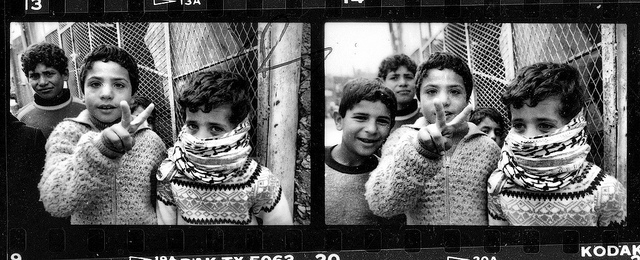
Like the 1976 Soweto uprising, the first Palestinian Intifada in 1987 was instigated by teenagers experiencing a breakdown in family life and parental authority.

From 1967, when Israel first seized the Gaza strip from Egypt, until 1987, Gaza, which has always been much poorer than the West Bank, was little more than a cluster of refugee camps. This meant the only central authority Israel Defense Force (IDF) soldiers, who maintained order. According to a study by EuroMed Youth, this lack of central authority led to the breakdown of parental authority. With a breakdown in civil society, it was only among young people, who freely intermingled in schools, universities and the streets, that intellectual debate could occur. In 1987, Yasar Arafat and the Palestinian Liberation Organization were still in exile.

The Breakdown of Parental Authority

Demographic factors played a major role in the empowerment of Palestinian youth in the late eighties. Approximately 65% of Palestinians were under 25 (with short life expectancy older age groups are underrepresented). In 1987, this group had a 37% unemployment rate.

As in Soweto, the breakdown of parental authority was a major factor. Although some Palestinian adults crossed into Israel to work, their wages were extremely low. Many children and teenagers worked as street vendors to contribute to family income. In some households, they were the sole source of support. Watching Israeli soldiers routinely humiliate their parents also tended to undermine their authority.

Children take on the Israel Defense Force

The first Palestinian Intifada started spontaneously when Palestinian children, teenagers and college students rioted in response to the IDF murder of six Palestinian students. Initially Palestinian youth were armed only with rocks, bottles and slingshots. The insurrection quickly spread to the West Bank and was joined by underground Palestinian resistance organizations, such as Fatah, Hamas and the Islamic Jihad. They taught the youths how to make Molotov cocktails and sophisticated tactics, such as burning tires or constructing barricades to protect themselves from retaliation.

The response by the IDF was massive brutality, with random killings, arbitrary detention and torture of Palestinian children and teenagers. By 1989, 13,000 Palestinian teenagers were in Israeli jails.

The Creation of the Palestinian Authority

The first Intifada ended in 1993. Under the Oslo agreement, Israel agreed to establish the Palestinian Authority, and Yasar Arafat and other PLO leaders returned from exile to run it.

photo credit: Robert Croma via photopin cc

***

Rebel cover

In A Rebel Comes of Age, seventeen-year-old Angela Jones and four other homeless teenagers occupy a vacant commercial building owned by Bank of America. The adventure turns deadly serious when the bank obtains a court order evicting them. Ange faces the most serious crisis of her life when the other residents decide to use firearms against the police SWAT team.

$3.99 ebook available (in all formats) from Smashwords:
https://www.smashwords.com/books/view/361351

The Role of Youth in Making Revolution

soweto

(Sharing more of my research for my new novel A Rebel Comes of Age)

Much has been made of the role of youth in sparking the “Arab Spring” revolutions in the Middle East and North Africa. The willingness of Arab citizens to rebel against some of the world’s most oppressive regimes is a new and significant phenomenon. It highlights the distinction between political and psychological oppression. Psychological repression is a state of wholesale resignation, when a population believes any resistance will be totally crushed.

The Role of Youth in Sparking Revolution

Youth are nearly always the engine behind any movement to throw off psychological oppression. Older people have an overwhelming drive for “business as usual.” Austrian-born child psychologist Bruno Bettelheim credits this drive for the failure of European Jews to resist the Nazi campaign to enslave and exterminate them. Teenagers, in contrast, possess an illusion an illusion of immortality. They often find it difficult to grasp the finality of death.

Lessons from History: Soweto and the Intifada

Both the 1976 Soweto uprising in South Africa and the first Palestinian Intifada (1987) were initiated by teenagers. Both South Africa and Palestine were riding the crest of a baby boom and faced high youth unemployment. In addition, both the South African townships and occupied Palestine faced a general breakdown in parental authority. In both settings, parents traveled long distances (to Johannesburg or Israel). A whole generation of children, were left on their own to raise themselves. The link between the breakdown of parental authority and youth rebellion is a major theme of my first novel The Battle for Tomorrow.

The Anti-Apartheid Movement

The 1976 Soweto uprising is widely credited as the start of mass popular resistance to apartheid. The students who started it came from a generation that essentially raised themselves. Strict pass laws implemented in the 1950s forced many black residents to give up to their homes in South African cities and move to black-only townships or Bantustans, where there was no work. The only work open to black men was in remote work camps at the gold and diamond mines. While Sowetan women worked as domestics and nannies for white families in Johannesburg and only returned to their own children on weekends.

In 1976 Soweto teenagers had a lot in common with homeless teens, third world street children and “young carers” (children who care for parents with physical or mental disabilities or drug and alcohol problems). Forced to look after themselves from an early age, it’s typical for these teenagers to exhibit  precocious maturity.

Conditions that Politicized the Bantu Schools

The event the triggered the 1976 uprising was a decree requiring that all Bantu schools teach their subjects in Afrikaans (the language of the original Dutch settlers of South Africa), rather than English. Owing to atrocious conditions in the Bantu schools, students were already highly politicized. While education in white schools was free, black parents were charged 51 rand a year (a half month’s salary) The Bantu schools were also incredibly overcrowded, with sixty or more students per class and teachers who often had no education qualifications.

The prelude to the June 16 uprising was a classroom boycott in early June of seventh and eight graders at Orlando West Primary School. Students from seven other Soweto schools immediately joined in. On Sunday June 13th, 400 students met in Orlando (hard to imagine without cellphones Facebook  or Twitter) to call for a mass boycott and demonstration for June 16th. They also made a pact not to inform their parents, who they believed would try to stop them.

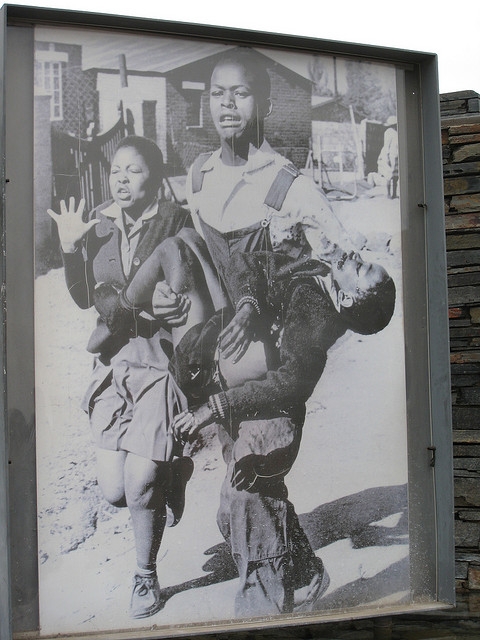
On June 16, fifteen to twenty thousand students age 10-20 in school uniform met at Orlando West Secondary school to march to the stadium. When the students refused to disperse, the police opened fire, killing several. The others went wild, throwing rocks and bottles at the police and setting fire to all symbols of apartheid – government buildings, liquor stores, beer halls and trucks, buses and cars belonging to white businesses.

Where Deadly Police Force Fails

The next morning rioting spread to other townships, as well as to Pretoria, Durban and Capetown with “colored” (mixed race) and Indian students also joining the rebellion. The police were totally unable to quell the rioters, even with force, owing to the students’ greater numbers and their total disregard for their own safety. It would take sixteen months for peace to be restored in the townships.

(To be continued, with a discussion of the role of teenagers in the Palestinian  Intifada.)

***

***

Rebel cover

In A Rebel Comes of Age, seventeen-year-old Angela Jones and four other homeless teenagers occupy a vacant commercial building owned by Bank of America. The adventure turns deadly serious when the bank obtains a court order evicting them. Ange faces the most serious crisis of her life when the other residents decide to use firearms against the police SWAT team.

$3.99 ebook available (in all formats) from Smashwords:
https://www.smashwords.com/books/view/361351

Squatting 101

squatting

(Another post based on my research for A Rebel Comes of Age – with specific advice on how to stop your bank from foreclosing on you. A new ruling in US bankruptcy court means that roughly half the foreclosures which have occurred since 2008 are illegal.)

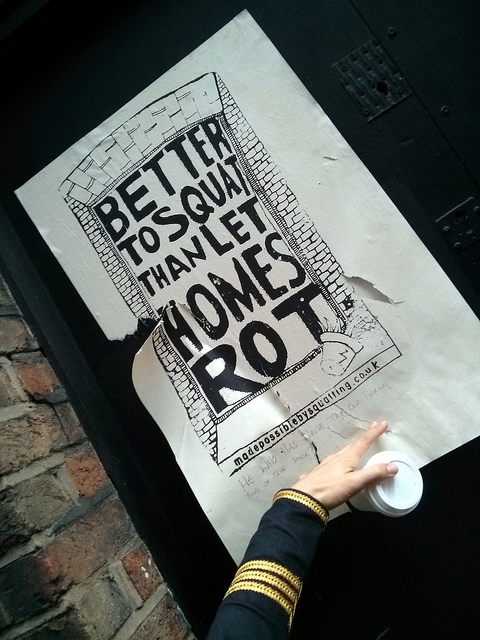
Squatting is becoming increasingly common with the worsening recession and continuing foreclosures and evictions. The foreclosure crisis has many US cities with whole blocks and neighborhoods of abandoned homes (which are quickly stripped of their plumbing and electrical fixtures). The problem turns out to be extremely expensive, both due to plummeting property values and tax take and higher crime rates and demand for (police and fire) services (see). Thus it’s no surprise that the city of San Diego recently sued Bank of America to stop foreclosures in their city. Prior to their recent bankruptcy proceedings, Detroit was paying people to move into abandoned homes.

The simplest form of squatting is remaining in your home when the bank or mortgage company tries to foreclose on your property. Owing to the recent scandal over illegal foreclosures, mortgagees who miss payments now have a range of legal options they can pursue (see * below).

Grassroots Remedies

Take Back the Land is a Miami-based social justice groups formed in 2006 with local action groups in New York, Boston, Chicago, Madison, Toledo, Portland, Rochester, Washington DC, Atlanta and other cities. Where they can use legal means, these local groups often organize “live-ins,” moving dozens of community activists into foreclosed homes to block evictions. In several cities, Take Back the Land activists work to rehouse homeless families in abandoned foreclosed homes. Volunteers break into the houses, clean, paint, make repairs and change the locks. Then they help move homeless families into them. More often than not, getting off the streets enables homeless parents to keep and find jobs, making it possible to pay rent and move into their own place.

Hands-Off Approach by Police and Banks

For the most part neither city police nor the banks that own the homes interfere. In Miami, for example, the city takes the position that it’s the responsibility of the bank to initiate eviction proceedings. The banks who own the homes seem even less keen to eject squatter than the police. In most states, this requires initiation of formal eviction proceedings in court. Moreover banks know full well that perpetually vacant homes eventually become worthless, due to vandalism, and have to be demolished (at additional cost to the owner).

Meanwhile neighbors concerned about their property values are ecstatic to see foreclosed homes occupied and fixed up (even by squatters), as abandoned property is a magnet  for vandalism, prostitution, drug and gang activity and fires (see and)

In addition to the good work of Take Back the Land and affiliate groups, in many places homeless families are occupying foreclosed properties on their own.

The Law of Adverse Position

Things get really interesting when homeless families occupy abandoned property for five years or more (longer in some states) and attempt to claim title (ownership) under Adverse Possession laws claim title (ownership) under Adverse Possession laws. It has also opened up a lucrative market for ambitious entrepreneurs who fix up abandoned properties and rent them out to tenants. In December 2010 Mark Guerette, the owner of Saving Florida Homes, Inc pleaded no contest second degree fraud for renting out 100 foreclosed properties.

It turns out that Gurette notified all the banks who owned the vacant the homes that he was claiming them under adverse possession – and only received a response from two of them. Owing to the banks’ disinterest, the state of Florida couldn’t really charge him with trespassing. They could only charge him with fraud by finding tenants willing to testify that he had misled them. All his rental agreements included an addendum explaining that he was occupying the property via “adverse possession.” So he ended up with a slap on the wrist – two years probation and a court order not to file any “adverse possession” claims for two years.

The 1862 Homestead Act

The legal principle of “adverse possession” – the origin of the expression “possession is nine tenths of the law” – is recognized in most cultures. In the US, its basis in law dates back to the Homestead Act Abraham Lincoln signed into law in May 1862. The Act stipulated that anyone “improving” unoccupied land could fill out an application and file for a deed of title after five years. The law was abolished in 1976, except in Alaska which continued a state version of the Homestead Act until 1986.

Nevertheless common law and most states provide for a person to obtain land through use. For example, your neighbor puts a driveway between your homes to enable him to get to the rear of his property. In doing so he takes a strip of your property six feet wide. If you do nothing, your neighbor could end up owning that part of your property. In failing to challenge your neighbor with a lawsuit, you technically abandon the rights to your property. This is the foundation of adverse possession. One feature that makes squatting on foreclosure home so attractive is that it falls under civil law, rather than criminal, law. Unless you break in or damage the property in some way, the police can’t file criminal charges. Moreover the rightful homeowner has to go through a formal eviction, which can be very expensive, to get rid of squatters.

In Florida, Take Back the Land and individual squatters are utilizing an 1869 statute that says if a person takes a property (and pays property tax) and the owner does not claim the property for seven years, the squatter gets to keep the property. With the damage done to vacant homes by vandals, improving the property usually means fixing the fences, cutting the grass and repairing broken windows and doors. Requirements differ in other states, although all require you to occupy the property openly and make improvements to it. California, Nevada and Iowa are the most favorable states for squatting as they only require you to occupy property (and pay property tax) for five years before applying for a deed of title.

* Legal remedies against foreclosure:

1. MERS foreclosures

A US bankruptcy court and many states have ruled that roughly half of US mortgages are illegal and that tens of thousands of foreclosures have been fraudulently executed by Wells Fargo, J P Morgan Chase, Bank of America (and other banks), Fannie Mae.

Prior to the 2008 meltdown, mortgages were traded and changed hands so frequently that banks simply registered them with the Mortgage Electronic Recording Service (MERS), rather than executing a title transfer. State lending laws specify that only that actual owner of a mortgage can initiate foreclosure action. In many cases banks are filing fraudulent court documents alleging that they own the loans, when they are merely servicing them on behalf of the lender.

Home owners threatened with foreclosure need to immediately do a Securitization Audit to determine who actually owns the mortgage and deed (and is legally entitled to foreclose).

2. Predatory mortgage loans

Mortgagees victimized by predatory mortgage loans (tricked into accepting mortgages they can’t possibly repay) can request Forensic Loan Document Review. There are federal laws that protect against predatory lending, which you can use to force the bank to negotiate.

3. Fraudulent mortgage charges

Also Bank of America was caught in a related scam in which they were adding backdated insurance charges to mortgage payments to push mortgagees who missed payments into foreclosure. This means it’s essential to check your mortgage statement for unexplained charges.

4. Chapter 13 bankruptcy

Families may be able to save their homes from foreclosure by filing for Chapter 13 bankruptcy.

photo credit: gruntzooki via photopin cc

***

Rebel cover

In A Rebel Comes of Age, seventeen-year-old Angela Jones and four other homeless teenagers occupy a vacant commercial building owned by Bank of America. The adventure turns deadly serious when the bank obtains a court order evicting them. Ange faces the most serious crisis of her life when the other residents decide to use firearms against the police SWAT team.

$3.99 ebook available (in all formats) from Smashwords:

https://www.smashwords.com/books/view/361351

How an LVT Might Have Altered the Course of History

traumatizedsociety_DV

The Traumatised Society: How to Outlaw Cheating and Save Our Civilisation

by Fred Harrison (Shepheard-Wallwyn Limited, 2012)

Book Review – Part II

(In this section Harrison discusses the history of countries and communities that have tried to enact a Land Value Tax. See Part I here)

Britain’s Experience with Land Value Tax (LVT)

In Britain there have been several attempts to end predatory rent-seeking through the enactment of LVT. As a result of Henry George’s 1879 international bestseller Progress and Poverty, Winston Churchill (still a liberal in 1909) became one of the most vocal proponents of the People’s Budget. The law, passed by the British parliament in 1909, sought to shift the burden of taxation from wages to land. It was never implemented because the British aristocracy went to court to block the land valuation required to assess the tax. In 1931 Parliament passed a revised version of the People’s Budget, which Chancellor of the Exchequer Neville Chamberlain simply deleted it from the law book in 1934. If the LVT had been fully implemented, Britain would have been spared the worst effects of the Great Depression.

How an LVT Might Have Altered the Course of History

Harrison moves on to explore how an LVT might have alleviated severe economic and political turmoil in other countries:

  • Ireland – rent seekers “sucked: out all the wealth of Ireland for 200 years, a process that didn’t end with independence. Ireland’s “Celtic Tiger” could have been sustainable if it had been funded by a LVT rather than debt. The result was a debt/real estate bubble that left the country even worse off when the bubble burst in 2008. In 2010, Harrison advocated for Ireland to pay off its debt by implementing a LVT. This would have provided the revenue the Irish government needed to stimulate growth. Instead the IMF bailout and austerity cuts has deeply suppressed growth.
  • China – made a fatal error by failing to implement an LVT when they began to privatize collectively owned land in the 1980s. China is currently facing slowing growth, thanks to a $1.7 trillion debt incurred by their city and provincial governments. While the central government was building up massive cash reserves by selling cheap exports, they forced regional governments to self-fund their public services. The only way they could do this was by selling land to property developers and by borrowing money.
  • Cuba – made a fatal error on November 11, 2011 when they began selling collectively owned land to rent-seekers, and allowed rents to be capitalized into land prices – instead of taxing them.
  • Russia – Gorbachev envisioned land remaining in public hands as part of Glasnost. After a threatened military coup forced him to step down, Harrison went to Russia trying to persuade Yeltsin to adapt an LVT. Instead Russia’s first president opened the country to the IMF and western rent-seekers. Both sucked out sufficient wealth to set the country’s standard of living back several decades.
  • Africa – South Africa’s current economic difficulties relate to a fatal error they made in 2004. They amended their LVT to add a tax on property improvements but should have done the opposite – increase the LVT and reduce other taxes. Much of the land in the rest of sub-Saharan Africa is still communally owned. Thus there is still great potential for emerging African economies to adopt an LVT. This would allow them to develop debt-free, sustainable economies that don’t leave the majority of the population in abject poverty.
  • The US – suffers from a “constitutional neurosis,” according to Harrison. Supposedly the Declaration of Independence and US Constitution were based on the Scottish Enlightenment. Whereas John Locke talked about a universal right to “Life, Liberty and Estate (Land),” our founding fathers changed this to “Life, Liberty and the Pursuit of Happiness” even before the Constitution was written.

The Future of LVT

As Harrison points out, at present rent-seekers are extremely powerful and have absolute control over government, media, and public education. Nevertheless as countries in the Middle East, North Africa and Latin America escape US military control, it’s imperative they have an avenue to escape the economic control of local and international rent-seekers. By adopting an LVT, they guarantee themselves sufficient income to provide government and public services – without falling into the predatory clutches of international bankers and the IMF.

In his 2011 book Re-Solving the Economic Puzzle, Walter Rybeck relates how the US contemplated LVT enabling legislation during the Carter administration. As an assistant to Representative Henry Reuss (D-Milwaukee), Rybeck helped Reuss (as chair of the House, Banking, Finance and Urban Affairs Committee) promote land and resource taxes as a way to address crumbling infrastructure in financially strapped cities and states.

Enter Sarah Palin

According to Rybeck, a number of communities (and one state) have already adopted variations of an LVT. Alaska’s oil/gas tax is the best example of a resource-based LVT. This tax provides 80-90% of Alaska’s general fund, as well as providing annual dividends to residents. As governor of Alaska, Sarah Palin introduced Alaska’s Clear and Equitable Share (ACES), which charges a 25 percent tax rate on oil profits, with the rate increasing progressively as oil prices go up.

Five other states have passed LVT enabling legislationConnecticutMarylandNew YorkPennsylvaniaVirginiaWashington – to make it easier for local communities to adopt an LVT.

Other American communities that have already benefited from an LVT include California’s Central Valley, Fairhope in Alabama, Arden in Delaware, and Pittsburgh and other cities in Pennsylvania.

Originally published in Dissident Voice

My New Book Goes Live Today

Rebel cover

My young adult novel goes live today on Smashwords. The ebook (all formats) can be downloaded for $3.99 at http://www.smashwords.com/books/view/361351. It’s also available from other purchase links listed at the bottom.

Here’s a 3rd and final excerpt from Chapter 24. Below is a YouTube video I made of myself reading the prologue. It’s my very first YouTube video. It wasn’t as hard as I thought it would be, but I found the process quite stressful – somewhere between getting a tooth drilled without anesthesia and childbirth.

Chapter 24

When Phillip woke her, she was dreaming about missing her bus and wandering around Northgate parking lot looking for a ride to school. She scrambled out of her sleeping bag, switched on the flashlight Phil handed her, and followed Geneva, Roderick, and Lacey into the lobby. Two people sat up as she picked her way through the maze of sleeping bodies.

 “What time is it?” she whispered to Lacey as she reached her assigned position at the right front window.

 “Two fifteen.” Lacey parted the heavy thermal drapes to unlock it. “The sheriff has just closed off both ends of McDonough Street.”

Ange reached around the right drape to grab the narrow aluminum sash, and there was a blast of cold air as she and Lacey eased it upwards. They heard voices through the two-inch crack as the street protestors moved into position around the building. It was comforting to know that Marilyn, Reverend McLeod, Oscar, Justin, Vanessa, Mos Def, and Rosa Clemente were all out there as a first line of defense. Marilyn and Justin would be busy texting every reporter they knew in greater New York. Knowing they would appear on network TV made cops far more reluctant to use potentially life-threatening force.

The voice came from just beside her. “Geeve me your flashlight.”

Ange startled, realizing Phillip was next to her. “Zees eez zee moment of truth, Ange. Are you een or out?”

“I’m in.” She grasped the weapon he thrust at her. Running her right hand along the butt, she found the pistol grip and the safety. It was a modified M16.

“Check your safety,” he reminded her. “Zat weapon eez fully loaded.”

Feeling for the safety, Ange dropped to her knees and used the barrel to push the drape to one side. By now, Roderick and Geneva would be in position at the other front window. Fabio, Alistair, Tafari, and Alex would be at the two cubicle windows and Victor at the small window in the kitchen.

The rustling and quiet whispering told her that most of the room was awake now. Two people got up to use the toilet. Behind her, Ange heard the cranky voice of a male protestor who had been roused from a sound sleep. “Wa’s up, man?” A chorus of nearby protestors hurriedly shushed him.

“Attention, everyone. Zee sheriff has come to evict us.” It was too dark to see Phillip, whose voice came from the vicinity of the front door. “For now, you are safest on zee floor een your sleeping bags. Zee building has to remain dark and quiet. No overhead lights, no flashlights, no matches or lighters. Eef you make a light, you endanger all of us. Eef you must talk, whisper.”

Closing her right eye, Ange lay her cheek on the sill and fixed her scope on the tiny scroll on top of the sign in front of the Nazarene Church. As they had practiced, the four shooters at the front windows were to divide the street into four sectors based on church landmarks. Hers was sector four. She was responsible for any and all cops who charged the building in a line of site between the southwest corner of the church and Patchen Avenue. She was to fire repeatedly until they fell, dropped their weapons, or withdrew.

Other purchase links:

Kobo: A Rebel Comes of Age

Apple ibooks (iTunes): A Rebel Comes of Age

Nook Book: A Rebel Comes of Age

Kindle edition: A Rebel Comes of Age

Obama Quietly Legalizes Marijuana

weed

Justice Department Agrees Not to Challenge State Marijuana Laws

According to Yahoo News, the Obama administration quietly legalized marijuana use in September – at least in states with medical and recreational marijuana laws.

In an abrupt about face, Deputy Attorney General James Cole notified all 94 U.S. attorneys’ offices that states with recreational and medical marijuana laws can now let people use it, grow it under license, and purchase it from retail facilities — so long as possession is prohibited in minors and it doesn’t end up on federal property or in the hands of gangs and criminal enterprises. Other high priority enforcement areas include prevention of drugged driving, the use of state-authorized marijuana activity as a cover for trafficking other illegal drugs, and the use of firearms in marijuana cultivation or distribution.

The memo elaborated that all states legalizing marijuana will be expected to enact rigorous regulatory regimes. If they fail to do so, the Justice Department will respond by challenging their regulatory structure, rather than prosecuting marijuana users – as they have done in the past.

A great victory for states rights, the move will boost legalization initiatives in states where marijuana is still illegal. Possession remains a felony offense in only 16 states. In the other 34 states, marijuana use has either been decriminalized or reduced to a misdemeanor. In Washington and Colorado, both possession and sales became legal (by voter initiative) last November.

photo credit: eggrole via photopin cc

Reposted from Veterans Today

Deliberative Democracy

slow democracy

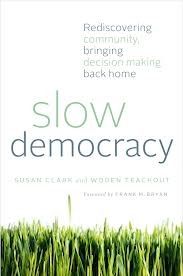
Slow Democracy: Rediscovering Community, Bringing Decision Making Back Home

by Susan Clark and Woden Teachout

Book Review

Slow Democracy is about a process known as “deliberative democracy.” This is a type of direct democracy in which community members play a genuine role in local governance decisions.

The book is mainly about the growing number of communities (in New York, Chicago, Washington State, Oregon, Maine, Gloucester Massachusetts, Boulder Colorado, Austin Texas, Canada, India, Eastern Europe, Australia) that have incorporated deliberative community meetings into decisions involving planning, governance, and budgeting. In the US, the 2008 global meltdown has led to ongoing state and municipal budget deficits. Cutting services is always unpopular. Thus there is strong motivation for local officials to involve the community in tough budgeting decisions.

Clark and Teachout see three alarming trends occurring in industrial society. Both public resources and governance decisions are moving towards increasing centralization and privatization. Increasingly private corporations usurp resources that rightfully belong to the public, while simultaneously making governance decisions that used to be made by elected officials. Meanwhile the public response to the corporate takeover of society has been apathy and disengagement from public life.

The authors see the deliberative democracy movement as the ideal prescription to counteract these destructive trends. The process goes by different names in different areas – study circles, charettes, meetings in a box, Who Decides, Portsmouth Listens, Living Room Conversations. Yet all seem to operate by the same underlying principle: a commitment to identify potential solutions to community problems through a public process based on good information and respectful relationships.

The New England Town Hall Meeting

Clark and Teachout begin their book with a description of the New England town hall meeting, in which residents themselves serve as the legislative branch of government. Hundreds of towns in six New England states still govern themselves via town meetings, as they have done since pre-revolutionary times. This type of direct democracy was hard to transplant to the sparsely populated settlements of the Wild West, though it was revived briefly in the Populist and Progressive movements of the late 19th century. Outside of New England it virtually vanished with the massive expansion of federal government that occurred with the New Deal, World War II, and the Cold War. Between 1945 and 1990, hundreds of thousands of federal, state, and municipal workers gradually took over decisions that were previously made in public meetings.

Slow Democracy’s Track Record

The most dramatic success Clark and Teachout describe is when the residents of Gloucester Massachusetts ousted Suez, the French multinational that ran their water supply, and galvanized the community to start their own water company. Through a similar process, the residents of Boulder Colorado replaced coal-based Xcel Energy with their own renewables-based electric company. Slow Democracy also describes the multiple successes of the local sovereignty movement, in which the Community Environmental Legal Defense Fund has helped communities in the Northeast and on the West Coast pass ordinances banning hog farms, toxic sludge, fracking, GE crops, and aquifer depletion for bottled water plants.

Cultural Cognition

For me the most valuable chapter was about the Yale Law School Cultural Cognition Project  (See earlier post Are Right-Left Labels Obsolete?) and other tools to enhance effective deliberation among groups with opposing political views. The authors begin by dispelling the myth that the US is hopelessly split into left-right ideologues. In 2007 the Cultural Cognition Project interviewed a random sample of 5,000 Americans. As predicted, the interviewees didn’t self-select into neat left-right or liberal-conservative camps. Instead their core beliefs could be plotted on a two dimensional grid depending on their views about hierarchical authority vs egalitarianism and individualism vs collective responsibility. The study results are available at Cultural Cognition Project.

It turns out that living in the same community causes residents to share many of the same concerns, despite profound differences in their worldview. Clark and Teachout give examples of successful community conversations between groups with opposing views on climate change, the Israel-Palestine conflict and abortion. All were successful in finding some areas of agreement, while simultaneously discovering the media was playing a major role in fanning the clash between them.

The book includes valuable appendices on ground rules for local officials and ordinary citizens seeking to set up effective “study circles,” as well as organizations willing to help facilitate the process and publications offering additional tools.

Originally published in Dissident Voice

The Rally

Rebel cover

A Rebel Comes of Age – release date Dec 21, 2013

Another Excerpt from my young adult novel (from Chap 22)

When Clemente finally took the microphone, the stretch of McDonough between Patchen and Malcolm X was wall-to-wall people. The hip-hop activist, an attractive, thirty-something Latino woman with short, curly black hair and enormous gold ear loops, wore a dark blue hoodie in honor of Trayvon Martin.

“Brothers and sisters, look at us,” she proclaimed. “When hip hop fights back, watch out.” At this, the crowd broke into ecstatic applause, accompanied by whistling and cheering. When the uproar died down, she called up all eighteen Freedom House residents and their sixteen Mandela House counterparts and lined them up on either side of her. “This isn’t a building we’re fighting for today. We’re here to support this phenomenal group of young people. They are our soul and conscience. Like Van Jones says, it’s time to change from fighting against something to fighting for something. No matter what we believe, what we all want, nothing advances or happens without organizing. Lots of it.”

Reverend McLeod came to the stage in a dark gray ski jacket rather than his usual suit and overcoat. Ange assumed that this was to distinguish between his activist and ministerial role. He began by complaining how sick he was of Wall Street’s longstanding pattern of theft from the African American community.

“Yah suh,” a woman in the front row came back, as if they were in church.

“First, it was our supermarkets, then our schools and now our homes. Surely the time has come to say enough.”

“Um-hmn,” the woman agreed.

“The time has surely come,” another woman echoed.

“Marches and rallies aren’t enough to check this power. The time has come, brothers and sisters, to put our bodies on the line. As Reverend Martin Luther King did. People of conscience are called on to break unjust laws, just like our brothers and sisters in Occupy Brooklyn who secured a home for brother Carasquillo and his family.”

He paused dramatically for this to sink in. “Where will you be, brothers and sisters, when the sheriff comes to put these young people out in the street? Will you all be comfortably at home watching American Idol or whatever nonsense they are showing now? Or will you be here with them?” His voice soared. “I tell you where I will be, brothers and sisters. I will be here in front of this building. No matter if the sheriff’s officers come at dinner time or midnight or three in the morning, they will have to walk through me.” He paused again. “Who will join me?”

The reaction from the crowd was stunned silence, followed by quiet murmuring. When Ange turned to look around, she saw the ten live-in protestors and six Occupy activists tentatively raise their hands. “Um-hmn-um,” McLeod vocalized reprovingly. “Looks to me like a long, lonely night.”

***

A Rebel Comes of Age can be pre-ordered from the following links:

Cover photo credit: sand_and_sky via photopin cc

Talk About Testicularity

Guardian editor Alan Rusbridger testifying in front of the British Home Affairs Committee about his decision to publish Edward Snowden’s leaked NSA files. When one member accuses him of committing a criminal offense, Rusbridger makes utter mincemeat out of him:

Here is a partial transcript of the testimony published in the December 3 Guardian

[starts at 22:00 minutes on the tape]

Conservative MP Michael Ellis: Mr Rusbridger, you authorised files stolen by [National Security Agency contractor Edward] Snowden which contained the names of intelligence staff to be communicated elsewhere. Yes or no?

Rusbridger: Well I think I’ve already dealt with that.

Ellis: Well if you could just answer the question.

Rusbridger: I think it’s been known for six months that these documents contained names and that I shared them with the New York Times.

Ellis: Do you accept that that is a criminal offence under section 58A of the Terrorism Act, 2000?

Rusbridger: You may be a lawyer, Mr Ellis, I’m not.

Ellis: Now 58,000 documents were sent or communicated by you – as editor-in-chief of the Guardian you caused them to be communicated, and they contained a wealth of information. It was effectively an IT-sharing platform between the United States and the United Kingdom intelligence services wasn’t it?

Rusbridger: I’ll leave you to express those words.

Ellis: So you decline to answer that. Very well. But that was information which contained a wealth of data, protected data, that was both secret and even top secret under the protective classifications of this country.

Rusbridger: They were secret documents.

Ellis: Secret and top-secret documents. And do you accept that the information contained personal information that could lead to the identity even of the sexual orientation of persons working within GCHQ?

Rusbridger: The sexual orientation thing is completely new to me. If you could explain how we’ve done that then I’d be most interested.

Ellis: In part, from your own newspaper on 2 August, which is still available online, because you refer to the fact that GCHQ has its own Pride group for staff and I suggest to you that the data contained within the 58,000 documents also contained data that allowed your newspaper to report that information. It is therefore information now that is not any longer protected under the laws and that jeopardises those individuals, does it not?

Rusbridger: You’ve completely lost me Mr Ellis. There are gay members of GCHQ, is that a surprise?

Ellis: It’s not amusing Mr Rusbridger. They shouldn’t be outed by you and your newspaper.

[Brief inaudible exchange in which both men are talking]

Rusbridger: The notion of the existence of a Pride group within GCHQ, actually if you go to the Stonewall website you can find the same information there. I fail to see how that outs a single member of GCHQ.

Ellis: You said it was news to you, so you know about the Stonewall website, so it’s not news to you. It was in your newspaper. What about the fact that GCHQ organised trips to Disneyland in Paris, that’s also been printed in your newspaper, does that mean if you knew that, information including the family details of members of GCHQ is also within the 58,000 documents – the security of which you have seriously jeopardised?

Rusbridger: Again, your references are lost to me. The fact that there was a family outing from GCHQ to Disneyland  [CUT OFF]

I know I promised to post an excerpt from my new novel A Rebel Comes of Age, but this was too good and I couldn’t resist.