Dark Side of the Greens is about lengthy citizen campaigns in Scotland and Croatia to halt Donald Trump’s efforts to replace pristine ecological heritage sites with golf courses.
The documentary is a sequel to the 2011 film You’ve Been Trumped. It relies heavily on commentary by environmental lawyer Robert F Kennedy Jr, president of the Waterkeeper Alliance. He reminds us that governmental protection of the commons dates back to the Magna Carta and can’t be usurped by wealthy elates. According to Kennedy, the commons is the main source of values, virtue and character of a people.
Aberdeen residents were unsuccessful in preventing Trump from destroying one of Europe’s rarest sand dune formations to build his golf course cum gated resort (the subject of You’ve Been Trumped). However a staunch local farmer led a successful multi-year campaign to prevent Trump from building a second golf course.
Local residents also successfully resisted Trump’s efforts to stop an offshore wind farm which presently supplies 40% of Aberdeen’s residential electricity needs.
Over in Dubrovnak, the citizens successfully organized Croatia’s first citizens referendum to prevent Trump from destroying a world heritage site for a golf course, resort and exclusive gated community.
After 85% of the population voted against the project, the mayor (who has since been indicted on corruption charges) ignored the referendum and signed contracts to proceed with the golf courses.
The film is full of classic Trumpisms, such as “What’s great for golf is good for Scotland.”
While the federal government remains hopelessly mired in endless wars and draconian trade treaties like TPPA, TTIP and TISA, at the local level community rights activists are systematically reclaiming the right to govern themselves. Over the past 20 years, hundreds of communities have passed local ordinances banning factory farms, toxic sludge, GMOs, fracking, toxic contamination, depletion of local aquifers and other corporate abuses.
Some activists have chosen to battle corporate infringement on their communities by establishing their legal right to home rule. At present, 31 states have constitutional amendments that grant cities, municipalities and/or counties the ability to pass laws to govern themselves (so long as they obey the state and federal constitution). The number is constantly growing, with Nevada becoming a home rule state in July 2015.
Most non-home rule states use Dillon’s rule to determine the bounds of a local municipality’s legal authority. Dillon’s rule, written by a federal judge in 1968, states that municipalities only have powers expressly granted to them by state government.
Home Rule for Mendocino County
In California, Mendocino activists are presently circulating a petition to become a charter county. They must collect 4,000 signatures by January 15 to place a citizens initiative granting their county home rule on the November 2016 ballot.
Mendocino wants to join fourteen other California charter counties (Alameda, Butte, El Dorado, Fresno, Los Angeles, Orange, Placer, Sacramento, San Bernardino, San Diego, San Francisco, San Mateo, Santa Clara, Tehama). Acts passed by charter counties are the equivalent of laws passed by the Californian legislative. The California constitution even allows home rule counties to pre-empt state law where significant local interest is served. In contrast, ordinances passed by general or non-charter counties are subordinate to the will of the state legislature.
Other California charter counties are using home rule to ban fracking and to keep toxic pesticides out of their wells and surface water. As a charter county, Mendocino would also have the power to create a publicly owned bank like the Bank of North Dakota.
Preserving their Anti-fracking Ban
The charter initiative is a project of the Community Rights Network of Mendocino Network. In 2014, they successfully lobbied the board of supervisors to pass an ordinance that makes it illegal to engage in fracking in Mendocino County. By becoming a charter county, this ordinance assumes the force of state law. This makes it much harder for the oil and gas industry to overturn in court.
The four part video below features anti-globalization activist Vendana Shiva speaking about Gandhi’s campaign for Indian home rule (if you click on the first link, parts 2-4 will play automatically when the previous segment finishes).
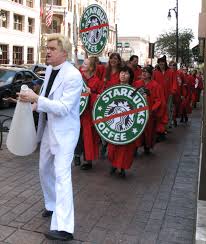
What Would Jesus Buy? is a documentary highlighting the crass commercialization of Christmas in western society. Its main focus is the 2006 Christmas tour of Reverend Billy and the Church of Stop Shopping Gospel Choir. Reverend Billy is one of the culture jamming performance activists featured in the 2001 movie Culture Jam: Hijacking Commercial Culture.*
What Would Jesus Buy? intersperses scenes from the tour with grisly photos of frenzied Black Friday stampedes and interviews with avid consumers as they indulge their compulsive need to shop.
High points include the attempt by Reverend Billy and the Choir to “exorcise” the Walmart home office, their visit to Mall of America in Minnesota (the largest shopping mall in the world) and their appearance at Disneyland on Christmas day. Disney managers (who are world-renowned for their viciousness) had Reverend Billy arrested, and the Church of Stop Shopping Gospel Choir held an overnight vigil outside the Anaheim jail.
In October he and the Church of Stop Shopping Gospel Choir will open for Neil Young for his tour of the Pacific Northwest.
*Culture jamming is a tactic used by anti-consumerist social movements to disrupt or subvert media culture and its mainstream cultural institutions, including (but not limited to) corporate advertising. The term is credited to Kalle Lasn, founder of Adbusters magazineand author of the 1999 book Culture Jam: the Uncooling of America.
The Education Spring uprising against corporate education reform began in Seattle at Garfield High School (my daughter’s former high school) in January 2013. It started with the entire school (teachers and students) walking out rather than take the Measures of Academic Progress (MAP). The latter is standardized test mandated under Obama’s Race to the Top and Common Core initiatives.
The Obama administration has used this heavy emphasis on high stakes testing (a leftover of Bush’s No Child Left Behind policy) exactly as his predecessor did. Low test scores are frequently used as an excuse to demote or fire teachers, to cut the budgets of low performing schools, and even to even close them and replace them with private charter schools.
As Garfield teachers explained in a January 2013 press conference, the MAP is neither an appropriate or useful tool in measuring progress. For numerous reasons: it’s unaligned to the Seattle high school curriculum, it’s biased against English-language learners and special education students and it’s high margin of error makes it statistically invalid at the high school level. The makers of the test caution not to use it to evaluate teachers, as many school districts have been doing.
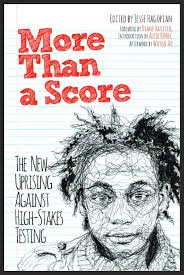
Common Core standardized tests like MAP are also racially biased. As Garfield history teacher Jesse Hagiopian, author of More Than a Score: The New Uprising Against High Stakes Testing states, “they’re a better indicator of a student’s zip code than their aptitude.”
All agree the biggest problem with high stakes testing is that it forces teachers to spend so much time teaching kids to regurgitate on multiple choice bubble tests that there’s no time to teach them valuable analytic and decision-making skills.
The Opt-Out Movement Catches Fire
The boycott against standardized testing quickly spread to other Seattle schools. Over the coming months, Portland students initiated their own boycott of the OAKS tests, some 10,000 parents and students marched in Texas against the overuse of high-stakes tests, and kindergartners and their parents staged a “play-in” at the Chicago School District headquarters against the replacement of the arts with high stakes standardized tests. In Rhode Island , members of the Providence Student Union dressed as as guinea pigs and lab rats to march on the State House.
The Seattle School District initially threatened to punish teachers with a 10-day suspension without pay. They eventually backed off owing to the unanimous support of the Garfield High School PTSA and student government, and after hundreds of phone calls and emails from parents and teachers around the country. After months of rallies, teach-ins, call-ins, and opt-outs, Seattle School Superintendent Jose Banda announced Seattle high schools could legally opt out of standardized testing.
The Education Spring has continued to spread. According to the New York Times , 20% of 3rd through eighth graders (more than 200,000) opted out of New York standardized tests this year. In Washington State more than 62,000 (and approximately half of 11th graders) opted out of the SBAC in 2014-2015.
A Broad Spectrum Populist Movement
As a populist movement, the Education Spring seems to be gaining momentum across the political spectrum. Obama Secretary of Education Arne Duncan initially blamed growing opposition to standardized testing to “Tea Party extremists.” When he could no longer deny the phenomenal strength of the opt-out movement, he blamed it on “white suburban moms who—all of a sudden—their child isn’t as brilliant as they thought they were, and their school isn’t quite as good as they thought they were.”
Hagiopian’s book More Than a Score is a collection of essays, poems, speeches and interviews from teachers, grassroots education activists and education researchers. He talks about his book in the following video:
There’s also a great clip of Jesse suggesting a more reasonable and reliable method of assessing students on NBC News
Since his arrest, students tweeted a school-wide plan to bring clocks to school today and tell the teachers it was in solidarity with their classmate.
More students say they will continue to join in, to keep the pressure on the school until the principal apologizes and removes the suspension from Ahmed’s record.
Read more about the #IStandWithAhmed Twitter campaign at Countercurrent News
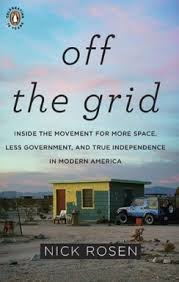
Off the Grid: Inside the Movement for more Space, Less Government, and True Independence in Modern America
by Nick Rosen
Penguin Books (2010)
Book Review
Off the Grid is an exploration of the diverse permutations of the US off-the-grid movement. According to British journalist and documentary filmmaker Nick Rosen, living “off the grid” can have a variety of meanings. For some it means living self-sufficiently without the higher cost and carbon emissions of electric, gas, water and sewage connections. For others, it means living incommunicado without the daily intrusion of cellphones or email. In a few cases, involving political dissidents or those with criminal records, it means escaping the prying eyes of the surveillance society.
The movement includes liberal-leaning environmentalists, who Rosen describes as the “foot soldiers of the eco-revolution,” right wing civil libertarians and survivalists, the homeless and urban homesteaders who capture rainwater and produce their own electricity despite living within city limits.
In 2007, there were 300,000 off the grid households in the US. By 2010, the number had reached 520,000 and was growing by 10-15% annually.
Obama’s Smart Grid
Rosen is clearly a strong supporter – and part time practitioner – of off the grid living. He also strongly opposes Obama’s push to build a multibillion dollar “Smart Grid.” With the latter, power companies use Smart Meters to continuously monitor users’ electricity consumption. Power companies (and Obama) are bending the truth when they claim a government subsidized smart grid is essential to respond to big growth in future electricity demand. Electricity demand is decreasing, due to the economic downturn and big improvements in efficiency.
The real reason power companies want Obama to build them a Smart Grid is to facilitate long distance trading in wholesale electricity. This is where they make their big money (Anyone remember Enron?).
The History of the Grid
The most interesting section of the book explores the historical development of the electrical grid. According to Rosen, it part of a deliberate scheme by Edison and GE (the company he founded) to increase electricity consumption. Both GE and Westinghouse launched massive propaganda campaigns to get people to sign up for the grid and purchase more electrical appliances to increase their consumption.
Although far less profitable for power companies, there’s no question that smaller, decentralized energy supply networks would have been more efficient* and cheaper for consumers.
Intentional Community
The bulk of the book focuses on groups and individuals who have created off-the-grid communities to recapture the social engagement that has disappeared from modern society. People who join them make an intentional decision to rely on one another, rather than technology, to meet their needs.
One prominent example includes the Earthship community architect Mike Reynolds started in New Mexico. An Earthship is an ecologically sustainable home built out of used tires filled with earth or sand and other recycled items. Dennis Weaver’s documentary Garbage Warrior, celebrates Reynold’s creation of the Earthship concept. Another highlight is Rosen’s fascinating visit to an Amish old order Mennonite community in Kentucky.
Belittling 911 Truthers
One part of the book that really irritated me was the chapter belittling civil libertarians who decided to live off-the-grid after discovering the 9-11 attacks were an “inside job.” Rosen makes it appear as if people who reject the Bush administration version of the Twin Tower attacks (as I do) are mentally ill and deluded.
Support for the 9-11 truth movement is in no way limited to paranoid right wing libertarians, as Rosen suggests. Globally the movement has millions of adherents and they represent the entire political spectrum.
*Our current electrical power system loses approximately 8-15% of the electricity it creates between the power plant and the consumer.
On average, Germany obtained 27.8% of their electrical power from renewable sources in 2014, up from 6.2% in 2000. This contrasts with 13.2% renewably produced electricity in the US and 18% in the UK.
Writing in the October 22, 2014 Guardian , Kate Henderson, Chief Executive of the Town and Country Planning Association, attributes much of Germany’s success in greening their power supply to a growing grassroots movement to re-muncipalize power production. Since 2007, 170 German municipalities have bought back their grid from private power companies. This is in addition to 650 energy cooperatives owned by private individuals and cooperatives. Due to the innate inefficiency of power grids,* numerous communities have abandoned large regional grids for local distributed energy projects.
As Nick Rosen writes in Off the Grid, there’s no question that smaller, decentralized energy supply networks are cheaper and more efficient for consumers. Grids only developed because they’re more profitable for power companies.
I totally agree with Henderson’s premise: citizens need to quite relying on dishonest politicians and sociopathic corporations to help them reduce their dependence on fossil fuels. It makes much more sense to take back power generation into local community control.
What I find especially exciting is that it’s already happening.
Taking Back the Grid
In late 2013, the citizens of Hamburg (Germany’s second largest city) voted to buy back their electrical power grid. Two other major cities, Frankfurt and Munich, resisted privatization in the 1990s and retained their electrical supply in public hands. In 2013, Berlin voters also passed a referendum to re-muncipalize their power supply, but the voter turnout was too low for it to take effect.
Several US cities have hosted similar re-municipalization movements. In 2011 owing to Xcel Energy’s reluctance to pursue solar energy alternatives, Boulder Colorado passed two ballot initiatives empowering the city council to buy back the power grid. The process has been stalled fighting Xcel lawsuits challenging the city’s right to buy the energy grid.
The Privatization of US Energy Utilities
Until about the 1980s, most US cities had public utilities. However, the lingering effects of the 1970s energy crisis and the privatization and deregulation frenzy of the Reagan and Clinton years led many cities to sell their power plants and distribution grids in the eighties and nineties. Since that time, large energy conglomerates, most of which are hooked on coal-fired power or fracked gas, have controlled most of America’s energy production.
Santa Fe and Minneapolis are also considering initiatives to buy back their electricity supply.
Sacramento, Austin and Seattle, which never gave theirs up, are far ahead of the rest of the country in their reliance on renewable power generation.
Sacramento derives 38% of its electricity from renewable resources, Austin 20% and Seattle 93.8%.
*According to the EPA. Our current electrical power system operates at approximately 33% efficiency.
An estimated 25,000 marched on Saturday to block New Zealand’s participation in the secret Transpacific Partnership Agreement (aka TPP or TPPA). Kiwis are really sick of being dictated to by the United States
Three hundred people marched in New Plymouth, the largest protest since I’ve lived here.
Momenta is about the growing grassroots movement to stop the coal trains that are creating environmental havoc in the Pacific Northwest. The movement owes its diversity to the devastation the trains create in nearly all the communities they pass through.
Hurt by the rapid shutdown of coal-fired power plants (for environmental and economic reasons), the US coal industry is seeking to cut their losses by selling as much coal as possible to China. Coal exported to China via Pacific deep water ports comes from Montana’s Powder River Basin. The coal trains carrying it it follow a circuitous route through Montana, Idaho, Oregon and Washington. They endanger the health and livelihoods of hundreds of communities along the way. Including Montana ranchers facing catastrophic water shortages as the mining companies deplete the Powder River Basin aquifer.
The number of coal trains varies between 18 and 120 a day depending on the community. The trains are uncovered and each sheds 31 tons of coal dust daily. The coal dust contains high levels of mercury and arsenic. This is in addition to the heavy metals contained in diesel particulates given off by the train engines produced by train engines. The latter substantially increases residents’ risk of asthma, heart attack and stroke.
In urban areas, such as Billings, Spokane, Portland, Longview, Seattle and Bellingham, the trains always travel through the poorest neighborhoods. In more sparsely populated areas, they contaminate pristine waterways essential to recreational fishing, water sports and tourism.
The documentary also emphasizes the need to reduce global reliance on coal to reduce overall carbon emissions. The coal industry is indifferent to these so-called “externalities.”
They refuse to cover their trains to reduce the spread of coal dust and are only willing to pay 5% of the $500 million infrastructure necessary to accommodate the increased train traffic. According to one activist, “all they care about is squeezing the last bit of profit out of a dying industry.”
The documentary concludes with a discussion – and a tour of a Marysville solar panel factory – of the beneficial effects of the renewable energy industry on the US economy. The latter creates far more jobs than exporting coal to China and is less dependent on fluctuations in the Chinese economy.
The documentary McLibel tells the inspiring story of two London Greenpeace activists who stood up to a giant multinational corporation in the longest court battle in English history. Helen Steel and David Morris (the defendants) technically lost their case when the judge awarded McDonald’s (the plaintiffs) 60,000 pounds ($90,000) in damages. Nevertheless they clearly won in the court of public opinion, especially after the European Court of Human rights ruled in their favor in 2004.
For me the best part of the film is the beginning, which examines discovery documents showing that London Greenpeace was infiltrated by 17 spies from two different detective agencies hired by McDonald’s. Infiltration by corporate informants is far more difficult to document than FBI or police spying – private corporations that spy on activists have no accountability under the Freedom of Information Act or comparable state and local laws.
According to court documents, there were as many spies as activists at some meetings and some spies assumed major responsibility for organizing campaigns.
How UK Libel Laws Suppress Free Speech
Britain has very different libel laws than the US, and they have a very chilling effect on free speech. In the UK, an individual sued for making defamatory statements is required to prove – beyond a reasonable doubt – that these statements are true.
In 1990, five London Greenpeace activists received libel writs for a leaflet they were distributing in front of McDonald’s. The writ threatened to take them to court unless they apologized for their actions. Three apologized. Steel and Davis refused to apologize, and in 1994 McDonald’s started court action against them.
As Britain provides no legal aid in liability cases, they had to defend themselves. McDonald’s, in contrast, spent 10 million pounds on lawyers and expert witnesses.
Steel and Davis were fortunate to receive pro bono legal advice from an experienced lawyer, in addition to invaluable assistance from the McDonald’s Support Campaign. In addition to fundraising to pay legal costs and witness airfares, this support group also organized media outreach, support protests and help them start a website, McSpotlight, in 1996. The website launch provided a major breakthrough in the case, as it enabled them to circumvent the corporate media and go directly to the public with their story.
What Steel and Morris Had to Prove
The specific statements (from the leaflet) that Steel and Morris were obliged to prove were
1. That McDonald’s food was unhealthy.
2. That they treated workers badly,
3. That their advertising deliberately manipulated and exploited children
4. That their production practices were detrimental to the environment
5. That their production practices helped perpetuate animal cruelty
Steel, Morris and their supporters persuaded an impressive array of international experts to testify on their behalf, including renowned nutrition researchers, a former Ronald McDonald impersonator and former cattle rancher Howard Lyman.*
A PR Disaster for McDonald’s
After nearly three years, the judge ruled the defendants had proved roughly half their claims. The initial damages he awarded (60,000 pounds) were reduced to 40,000 pounds on an appeal. Nevertheless, the trial was a total PR disaster for McDonald’s. The media storm surrounding the case caused “fringe” concerns raised to be shared by a broad cross section of the public. As a direct result of the McLibel case, McDonald’s began showing quarterly losses and shutting stores in 2002.
They have made no attempt to collect the 40,000 pounds from Steel and Morris.
*Howard Lyman is a former US rancher turned vegetarian and animal rights activists who (along with Oprah Winfrey) was unsuccessfully sued (in 1998) for “food disparagement.”






 The Most Revolutionary Act
