Four States Investigating Exxon for Fraud Over Climate Denial

The following is a presentation by climate activist Bill McKibben about the global Break Free from Fossil Fuels movement. This is a global civil disobedience campaign directed at fossil fuel companies rather than government policy. Its aim is to pressure these companies to leave untapped coal, oil and gas reserves in the ground.

It’s a bad news/good news presentation. First McKibben gives us the bad news: despite all the hype, the outcome of the Paris climate change conference in 2015 was pure rhetoric. The treaty signed at the conference won’t lower carbon emissions sufficiently to prevent catastrophic climate change. See Global Civil Disobedience

However there is good news on two fronts: the speed at which many countries are transitioning to renewable energy and the remarkable success of the global Break Free campaign.

Among the successful actions McKibben describes: the 2015 Keystone civil disobedience at the White House that persuaded Obama to cancel the pipeline; the Australian campaign that blocked construction of the largest coal mine in the world; the Washington State campaign blocking construction of coal terminals in Longview and Cherry Point; the Seattle blockade of Shell’s Arctic drilling rig; and the global anti-fracking movement, which has led to a ban on fracking in New York, Quebec, Wales, Scotland and France.

The best part of the presentation concerns the recent Columbia School of Journalism expose revealing Exxon knew about climate change in 1977 and funded a massive public relations scam to convince the public it was a hoax. According to McKibben, the attorney generals of New York, California, Massachusetts and the Virgin Islands are investigating Exxon for fraud over their role in the climate denial movement.

Q&A’s start at 46:00.

Global Civil Disobedience

Disobedience: the Courage to Break Free

By Kelly Nykes (2016)

Film Review

Disobedience is about the global movement (on six continents) to shut down the fossil fuel industry. The primary aim of the Break Free from Fossil Fuels movement is to end fossil fuel mining and shut down gas-fired power plants.

A major premise of the documentary is that the COP21 climate conference in December 2015 was a public relations stunt. Climate activists believe it accomplished virtually nothing towards preventing catastrophic climate change for two main reasons: 1) the national emissions targets agreed are purely voluntary and unenforceable and 2) despite agreeing to limit average global warming to 1.5 degrees C, the treaty’s carbon budget will result in 3.5 degrees warming.

President Lyndon Johnson was the first to warn the world, in 1965, of the link between heavy fossil fuel combustion, CO2 emissions and global warming. Ten years later, Exxon began planning for global warming by making their drilling rigs “climate proof.” In 1989, they switched tactics by co-founding the Climate Coalition and hiring a public relations firm (the same one that promoted the health benefits of smoking) to launch the climate denial movement.

Filmmakers include coverage from mass civil disobedience actions to shut down coal fired power plants in the Philippines and Turkey, tar sands production and export in Alberta and British Columbia and an open pit coal mine in Germany. Given that Germany is one of the world leaders in renewable energy production,* I was extremely surprised to learn they burn more lignite* *coal than any other country, including China and India.

The film also features footage from the Seattle blockade of a Shell Arctic oil exploration rig – which helped persuade Shell to abandon their plans to drill the Arctic for oil.

For the most part, these actions succeed by increasing the cost of doing business – especially now when low oil and gas prices are already denting profits.


*On  May 16 Germany got nearly all its power from renewable energy.

**Lignite is often referred to as brown or “dirty” coal due to the high level of particulate and heavy metal pollution it produces.


The Fight to Make Medical Knowledge Open Source

sci-hub-thumbnail

Restoring the Commons: Why Should Corporate Publishers Profit at Patients’ Expense?

Owing to growing mistrust of Big Pharma and the corporatization of medical care, patients increasingly rely on Internet research to help us take take responsibility for our own health and wellness. Usually the biggest obstacle we face is the pay wall scientific journals and big name publishers like Elsevier have set up charging $30 a pop for readers to view scientific articles online. Thanks to Alexandra Elbakyan, a Kazakhstanian neuroscientist, millions of scientific papers are now freely downloadable from Sci-Hub, the file sharing site she started in 2011.

Elsevier, along with US courts, views Sci-Hub’s activities as Internet piracy. Ironically, however, Sci-Hub enjoys the support of many researchers. They resent being denied access to state-of-the-art research, while big publishers like Elsevier derive immense profits from their own work. For the most part, scientists surrender the copyright for research papers to academic journals and science publishing houses and recoup no financial reward themselves.*

According to John Bohannon writing in the April 2016 Science, Elsevier is more profitable than Apple, with over 30% of their 2014 revenue going to profit ($1 billion).

Who Uses Sci-Hub?

Sci-Hub now hosts over 50 million research papers. Between September 2015 and March 2016, they provided more than 28 million documents free to health providers, patients and researchers. Most of Sci-Hub’s users (4.4 million) are from China. India, at 3.4 million, is their second largest user. Iran is the third largest user, Russia the fourth and the US the fifth.

Sci-Hub Servers in Russia

In October last year, a New York judge ruled in favor of Elsevier, decreeing that Sci-Hub infringes on the publisher’s legal rights as a copyright holder ordering the website to desist. The injunction had little effect. Although the sci-hub.org web domain was seized in November 2015, the servers that host Sci-Hub are in Russia, which for obvious reasons has little interest in enforcing US intellectual property law. Within days, the site reappeared on a different domain.

Although Elbakyan declines to say exactly how she obtains the papers, she confirms it involves online credentials of academics and institutions with legitimate access to journal content. Her supporters donate the material voluntarily.

Read Bohannon’s article here

People can access Sci-Hub’s search and download service here: http://scihub.org/


*A growing number of scientists publish through the Public Library of Science (PLOS), believing their work should be freely available to health providers, patients and other researchers. PLOS is a nonprofit open access scientific publishing project aimed at creating a library of open access journals and other scientific literature.

Campaigning Against Roundup in New Plymouth

roundup1


Last night Green Party MP Stephen Browning and I presented a petition to the New Plymouth District Council Policy Committee asking them to cease spraying Roundup in our streets and parks. Here’s an excerpt from Taranaki Daily News:

Council Asked to Remove Possible Cancer-Causing Herbicides from Urban Areas

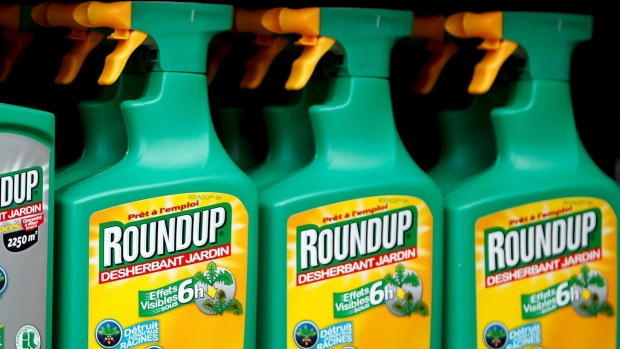
There are concerns about the health effects of Monsanto’s Roundup weedkiller being used in urban areas by New Zealand councils. The New Plymouth District Council is considering its continued use of Roundup in urban areas.

The common weed killer contains glyphosate, a compound which many studies have linked to a raft of health issues, include infertility and cancer, Green Party MP Steffan Browning said.

Browning was campaigning throughout New Zealand to convince local authorities of alternative options to the spray, and to continue to put pressure on the Environmental Protection Agency (EPA) to conduct a review of how dangerous it really was to human health.

“We’re really focused on getting it out of urban areas,” he said.

Browning addressed councillors at Tuesday’s policy committee meeting, encouraging them to reconsider the harm they could be doing to their community.

He said there had not been enough independent research into the effects of glyphosate but the World Health Organisation declared it a “probable carcinogen” in March 2015.

Read more here

Doctors Call for Single Payer Health Care, Cite Need to Move Beyond ACA

MedicareForAllPoydrasProtestNOLA
The American Journal of Public Health publishes physicians’ call for sweeping single-payer reform with detailed proposal signed by over 2,200 doctors nationwide

Unveiling of proposal coincides with heightened debate on ‘Medicare for All’ in presidential primaries

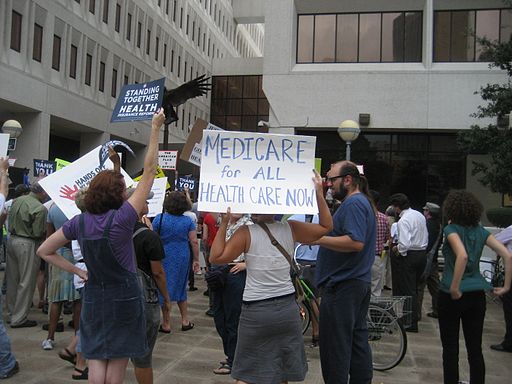
In a dramatic show of physician support for deeper health reform – and for making a decisive break with the private insurance model of financing medical care – 2,231 physicians called today [Thursday, May 5] for the creation of a publicly financed, single-payer national health program that would cover all Americans for all medically necessary care.

Single-payer health reform, often called “Medicare for All,” has been a hotly debated topic in the presidential primaries, thanks in part to it being a prominent plank in the platform of Sen. Bernie Sanders. The new physicians’ proposal is strictly nonpartisan, however.

The proposal, which was drafted by a blue-ribbon panel of 39 leading physicians, is announced today in an editorial titled “Moving Forward from the Affordable Care Act to a Single-Payer System” published in the American Journal of Public Health. The editorial links to the full proposal titled “Beyond the Affordable Care Act: A Physicians’ Proposal for Single-Payer Health Care Reform” and the names of all the signers, and it appeals for additional physicians to add their names as endorsers. The proposal currently has signers from 48 states and the District of Columbia.

“Our nation is at a crossroads,” said Dr. Adam Gaffney, a Boston-based pulmonary disease and critical care specialist, lead author of the editorial and co-chair of the Working Group that produced the proposal.

“Despite the passage of the Affordable Care Act six years ago, 30 million Americans remain uninsured, an even greater number are underinsured, financial barriers to care like co-pays and deductibles are rising, bureaucracy is growing, provider networks are narrowing, and medical costs are continuing to climb.

“Caring relationships are increasingly taking a back seat to the financial prerogatives of insurance firms, corporate providers, and Big Pharma,” Gaffney said. “Our patients are suffering and our profession is being degraded and disfigured by these mercenary interests.”

Dr. Steffie Woolhandler, a co-author of the editorial and proposal who is a professor of public health at the City University of New York’s Hunter College and lecturer at Harvard Medical School, commented: “We can continue down this harmful path – or even worse, take an alternative, ‘free-market’ route that would compound our problems – or we can embrace the long-overdue remedy that we know will work: the creation of a publicly financed, nonprofit, single-payer system that covers everybody. Today we’re saying we must quickly make that shift. Lives are literally at stake.”

Dr. Marcia Angell, a co-author of the editorial and proposal, co-chair of the working group, member of the faculty of global health and social medicine at Harvard Medical School and former editor-in-chief of the New England Journal of Medicine, said: “We can no longer afford to waste the vast resources we do on the administrative costs, executive salaries, and profiteering of the private insurance system. We get too little for our money. It’s time to put those resources into real health care for everyone.”

Under the national health program (NHP) outlined by the physicians:

* Patients could choose to go to any doctor and hospital. Most hospitals and clinics would remain privately owned and operated, receiving a budget from the NHP to cover all operating costs. Physicians could continue to practice on a fee-for-service basis, or receive salaries from group practices, hospitals or clinics.

* The program would be paid for by combining current sources of government health spending into a single fund with modest new taxes that would be fully offset by reductions in premiums and out-of-pocket spending. Co-pays and deductibles would be eliminated.

* The single-payer program would save about $500 billion annually by eliminating the high overhead and profits of insurance firms, and the massive paperwork they inflict on hospitals and doctors.

* The administrative savings of the streamlined system would fully offset the costs of covering the uninsured and upgraded coverage for everyone else, e.g. full coverage of prescription drugs, dental care and long-term care. Savings would also be redirected to currently underfunded health priorities, particularly public health.

* The “single payer” would be in a strong position to negotiate lower prices for medications and other medical supplies, yielding additional savings and reining in costs.

Surveys show strong, rising support for single-payer national health insurance among physicians. A 2008 survey of physicians found that 59 percent supported “legislation to establish national health insurance,” up from 49 percent five years earlier.

###

“Moving Forward From the Affordable Care Act to a Single-Payer System,” by Adam Gaffney, M.D.; Steffie Woolhandler, M.D., M.P.H.; David U. Himmelstein, M.D.; Marcia Angell, M.D. American Journal of Public Health, June 2016, Vol. 106, No. 6, online first May 5, 2016, 1 p.m. Eastern. Includes link to full Physicians’ Proposal. Article available at this link.

The full, six-page Physicians’ Proposal with reference citations and 2,231 signatures (titled “Beyond the Affordable Care Act: A Physicians’ Proposal for Single-Payer Health Care Reform,” written by a 39-member Working Group on Single-Payer Program Design) is also accessible at the following link

PNHP’s summary of the Physicians’ Proposal is available here: summary

PNHP’s fact sheet on U.S. health care is here

Physicians for a National Health Program is a nonpartisan, nonprofit research and education organization founded in 1987. It includes physicians in every state and medical specialty. For local physician contacts or other information, contact PNHP’s headquarters in Chicago at (312) 782-6006. PNHP had no role in funding the articles described above.

Source


Fighting Monsanto in India

Bullshit!

Pea Holmquist and Suzanne Kardalian (2005)

Film Review

Bullshit! is about Indian environmental activist Vendana Shiva. It takes its title from the “Bullshit Award” she received from a pro-Monsanto lobby group in 2004. Despite the intended insult (they sent the cow dung through the mail), Vendana was thrilled. Cow dung is revered in rural India, where it’s used as fuel and mixed with mud to construct water tight walls and flooring.

The film traces how Vendana abandoned nuclear physics in 1985 to start the Novdanya Institute, dedicated to reclaiming native plants and seeds as a commons for people to enjoy collectively – instead of a private commodity to increase the profits of multinational seed companies like Monsanto.

Novdanya runs a seed bank called The School of Nine Seeds. Its primary purpose is to preserve rare and heritage seeds that have been large replaced by a handful of hybrid monoculture crops. With growing water scarcity, Novdanya places special emphasis on drought resistant millets with a high protein content.

Another high priority for Vendana is her battle against Monsanto’s campaign to flood India, an early target starting in the late nineties, with GMO crops. Many Indian farmers have bankrupted themselves purchasing GMO seeds, particularly Roundup-ready varieties. When the high yields they were promised failed to eventuate, thousands committed suicide.*

Bullshit! also profiles Vendana’s role in the antiglobalization movement, particularly the anti-WTO protest in Cancun Mexico in September 2003. The public suicide of Korean farmer Lee Kyung-Hae was instrumental in galvanizing opposition from third world farmers against WTO provisions enabling the US to destroy local markets by dumping cheap agricultural products in third world countries.

In 2000 Vendana collaborated with Greenpeace to force the EU to revoke a patent they had granted Monsanto on the neem tree and an ancient variety of Indian wheat.

The film  ends by highlighting Shiva’s involvement, along with other high profile antiglobalization activists (including Canadian water activist Maude Barlow and French farmer Jose Bove) in a 640-day sit down strike to shut down a Coca Cola bottling plant that was illegal depleting a fresh water aquifer.


*According to New Dehli TV, close to 300,000 Indian farmers have committed suicide since 1995.
** The final breakdown of the so-called “Doha Round” of WTO negotiations in 2008 would eventually lead the US to promote the Transpacific Partnership Agreement (TPPA) and Transatlantic Trade and Partnership Initiative (TTPI) in its place.

The Economic Recolonization of Africa

Land Rush – Why Poverty?

Directed by Hugo Berkeley and Osvalde Lewat (2012)

Film Review

Land Rush is the story of the recolonization of Africa by foreign interests (US, Britain, China, South Korea, Saudi Arabia) and their collaboration with corrupt governments and tribal authorities to drive subsistence farmers and their families off their land. Their goal: to create massive for-profit industrial farms based on monoculture export crops.

Nearly 60% of remaining arable land is in Africa – the industrialized world has either paved theirs over or decimated their soils through factory farming.

The reason Africa is such an easy target is that only 10% of rural Africans own private title to the land they farm. The rest is traditionally viewed as a communally owned commons.

Lifting Africans Out of Poverty By Seizing Their Land

Land Rush specifically focuses on a US sugar baron seeking to create a giant sugar plantation and processing plant in rural Mali. His goal is to kick start industrialization in Mali and help “lift their people out of poverty.”

Prior to the 2008 economic downturn, the Mali government supported the food sovereignty movement and the right of rural farmers to access land to support their families. This has all changed now, with the government (illegally) selling off more than 30 million hectares of farmland to foreign investors in the last five years.

Farmers are told they must give up their land and either go to work for Sosumar (as sugar farmers) and accept a new plot of land elsewhere. The government’s violent mistreatment of farmers who refuse to leave their land makes them highly skeptical of these promises.

The Food Sovereignty Movement

The documentary also profiles a local organizer linked with the global food sovereignty movement. Informed by disastrous experiences elsewhere (Latin America, India and other parts of Asia) with the wholesale expulsion of subsistence farmers for corporate interests, Africa’s food sovereignty movement is growing by leaps and bounds.

The organizer explains that the constitution and laws of Mali recognize the basic right of food sovereignty, ie that countries have the right to produce their own food rather than depending on an unpredictable global market for their food needs. He maintains that Mali has strict guidelines about involuntary displacement – that the government’s contract with Sosumar is illegal, as was the prior handover of 30 million hectares to foreign corporations.

The film ends on a positive note, thanks to a March 2012 military coup that caused Sosumar to withdraw all their workers  from Mali and their CEO Mima Nedelcovych to target Nigeria as the new site for his sugar plantation.

Fighting (and Dying) to Reclaim the Commons in Latin America

Land of Corn

Peace Brigades International (2015)

Film Review

Land of Corn is a documentary by Peace Brigades International about four environmental and land rights activists fighting to protect the commons in Oaxca Mexico, Santa Helena Honduras, Choco Columbia and La Primavera Guatemala. In each case, activists are fighting collusion between US-backed corrupt governments and international corporations to end their communal land rights and destroy their livelihood.

In Oaxca, a multinational corporation seeks to illegally evict residents to construct a giant wind farm.

In Santa Helena Honduras, a US-backed corporate giant seeks to displace local farmers for a giant dam and hydroelectric project. This illegal eviction stems directly from the 2009 US-backed coup, in which Obama and Hillary Clinton supported the overthrow of the democratically elected Honduran president.

In Primavera Guatemala, a multinational seeks to clear cut a rain forest residents’ ancestors have fought for generations to preserve.

In Choco Columbia, land rights activists are seeking to reclaim land they lost in the 1980s and 1990s to a corrupt public-private partnership that converted their land to large scale cattle ranches and palm oil and GMO crop plantations.

It’s extremely dangerous to be a land rights/environmental activist in US-backed Latin American countries. One-hundred-sixteen were assassinated in 2014 alone. Those featured in the film face constant death threats. On March 3, 2016 Honduran activist Berta Caceres was murdered by gunmen in her sleep.

As a woman fighting to reclaim community land in Columbia bitterly observes, non-farm jobs are virtually non-existent in her country. If her family is unsuccessful in reclaiming their land, their only other option is to  illegally immigrate to the US, as so many other displaced Latin American peasants have done.

The Food Sovereignty Prize: Taking Back the Commons

Lucas Benitez, co-director of the Coalition of Immokalee Workers from the United States, makes his acceptance speech after being honored at WhyHunger's 2012 Food Sovereignty Prize, which honors grassroots leaders working for a more democratic food system, New York, Wednesday, Oct. 10, 2012. (Stuart Ramson/Insider Images for WhyHunger)

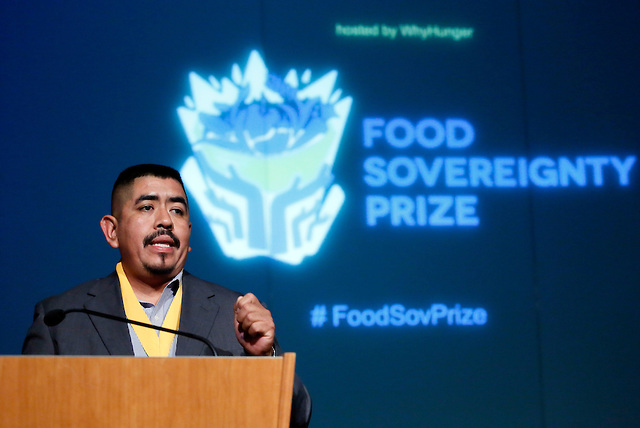
Lucas Benitez, co-director of the Coalition of Immokalee Workers from the United States, makes his acceptance speech after being honored at WhyHunger’s 2012 Food Sovereignty Prize, which honors grassroots leaders working for a more democratic food system, New York, Wednesday, Oct. 10, 2012. (Stuart Ramson/Insider Images for WhyHunger)

While the corporate media slavishly promotes genetic modification and other technological fixes to global hunger, the food sovereignty movement continues to grow by leaps and bounds.

The Food Sovereignty Prize is awarded by the Food Sovereignty Alliance, which works to rebuild local food economies and asserts democratic control over food production. They assert that all human beings deserve a right to determine how and where their food is grown.

The prize was first awarded in 2009 as an alternative to the World Food Prize, a corporate sponsored award for technological fixes – such as genetic modification – promoted by the global elite as a solution to world hunger.

The 2015 Food Sovereignty Prize winners are the US-based Federation of Southern Cooperatives and the Black Fraternal Organization of Honduras (OFRANEH)

The Federation of Southern Cooperatives was created in 1967 as the economic arm of the civil rights movement. Their main purpose has been

• To develop cooperatives and credit unions as a means for people to enhance the quality of their lives and preserve their communities;
• To save, protect and expand the landholdings of Black family farmers in the south;
• To develop, advocate and support public policies to benefit their members and low income rural communities.

At present the federation has over 70 active co-ops across ten southern states, with a membership of more than 20,000 families.

The Black Fraternal Organization of Honduras (OFRANEH) was created in 1979 to protect the economic, social and cultural right of 46 Garifuna communities along the Atlantic coast of Honduras. Land grabs for agrofuels (African palm plantations) and tourist resort development seriously threaten their way of life. Most of these illegal evictions stem directly from the 2009 US-backed coup, in which the Obama administration supported the overthrow of a democratically elected president with a strong land reform agenda.

OFRANEH brings together communities to meet these challenges head-on, through direct-action community organizing, national and international legal action, promotion of Garifuna culture (mixed Afro-descendent and indigenous), and movement building. OFRANEH especially prioritizes the leadership development of women and youth.

The Fight Against a Jobless Economy and a Citizenless Democracy

People Get Ready: The Fight Against a Jobless Economy and a Citizenless Democracy

Robert McChesney and John Nichols (2016)

Film Review

An extremely inspiring public presentation in which McChesney and Nichols talk about their latest book (of the same name)

McChesney begins with research indicating that 50% of current jobs will be eliminated by robots and artificial intelligence in the next 10-20 years. He also talks about the inherent inability of a scarcity/profit based economic system to address this crisis.

For me, the most interesting part of his presentation was a discussion of Franklin D Roosevelt’s Second Bill of Rights.* According to McChesney, both Germany and Japan incorporated this Second Bill of Rights into their constitutions after World War II. This, in his view, explains why both countries have become economic powerhouses.

Both men talk about the crucial need to form a post-capitalist society and economic system. Nichols talks more about the large global movements which have formed to build this new system. He, like McChesney, has been surprised by the popular candidacies of Donald Trump and Bernie Sanders. The book predicts the appearance of proto-fascist and democratic socialist candidates in response to growing popular resistance movements. However neither expected it to happen so quickly.

The best part of Nichols’ talk is his discussion of the massive Luddite and Chartist movements in Britain (and the populist and progressive movements in the US) that would ultimately lead to universal suffrage, honest elections and the rise of the trade union movement.

Nichols stresses that none of these reforms resulted from the heroic efforts of a political savior – they all resulted from the dedicated and persistent mass organizing of ordinary people.


*Roosevelt’s Second Bill of Rights included the basic right of all Americans to

• Employment (right to work)
• Food, clothing and leisure, via enough income to support them
• Farmers’ rights to a fair income
• Freedom from unfair competition and monopolies
• Housing
• Medical care
• Social security
• Education