Stieg Larsson: The Man Who Played with Fire

Stieg Larsson: The Man Who Played with Fire

Directed by Henric Georgsson (2018)

Film Review

This is a fascinating documentary about the late author of the award winning Millenium series. Despite reading all three books and watching both the Swedish and the English versions of The Girl With the Dragon Tattoo, I had no Larsson, an investigative journalist, faced the same threats in real life (from Sweden’s right wing Nazi movement) as his heroine.*

Larsson’s primary occupation was a a graphic designer for TT, a Swedish multimedia news provider. He investigated the Swedish far right in his spare time, founding the Swedish anti-racist magazine Expo. He and other Expo staffers received regular death threats, with one couple nearly dying in a car bombing. He gave all Expo volunteers explicit training in the safe way to open letter bombs.

Larsson died unexpectedly of a heart attack in 2004. His three novels were published posthumously in 2005.


*In 1986, Swedish prime minister Olaf Palme was assassinated by far right extremists

Can be viewed free on Beamafilm.


Hidden History: White House Slaves

The Invisibles: The Untold Story of African American ...

The Invisibles: The Untold Story of African American Slaves in the White House

by Jesse J Holland

First Lyons Press (2017)

Book Review

This fascinating book recounts the personal histories of individuals slaves owned by US presidents between 1789 and 1861. Twelve of the first eighteen presidents owned slaves. Of founding fathers who became president, only John Adams and John Quincy Adam (who were Quakers) didn’t own them. Jefferson and Adams owned slaves despite speaking out against slavery.

Most is known about the individual slaves owned by Washington, Jefferson and Madison. At the time of the revolution, Washington owned 150 slaves. He would bring some of his house slaves with him to New York (the first US capitol) when he assumed the presidency in 1789. Things got more complicated when the US capitol moved to Philadelphia in 1790.  Pennsylvania, which abolished slavery in 1780, had a law automatically granting freedom to any slave who remained in the state longer than six months. This meant Washington had to send his slaves back to his Mount Vernon plantation every six months to retain ownership.* This process likely led to of them to escape.

The chapter on Jefferson’s slaves includes his relationship with 15-year-old Sally Hemmings and the six children he had by her. Sally and her children remained at Jefferson’s Virginia plantation, though her brother James served as a French-trained chef in the Jefferson White House.

Madison owned 100 slaves. Like Washington and Jefferson brought his house slaves to the White House to serve as domestic servants.

In addition to chapters on slaves owned by Monroe, Jackson, Van Buren, Harrison, Tyler, Polk, Taylor, Andrew Johnson and Grant, there are excellent chapters on the history of the transition from indentured servitude to slavery and the early states to abolish slavery (Vermont 1777, Massachusetts 1783 and New York 1827).

One of the best chapters concerns the vital role slaves played in constructing the White House. One of the most important jobs they performed was digging up clay for bricks, although they also quarried stone used in interior walls and served as carpenters. The US paid their owners a wage for their services.


*This six-month rule was largely responsible for the decision to create a separate district as the nation’s capitol (Washington DC). The Southern slave states of Maryland and Virginia gladly gave up some of their state territory to accommodate slave-holding presidents.

Allen Ginsberg and the Long Battle to Preserve Free Speech

Howl

Directed by Rob Epstein and Jeffrey Friedman (2010)

Film Review

Prior to watching this biopic, I had virtually no knowledge of the life or poetry of US poet Allen Ginsberg (1926-1997). The film revolves around the obscenity trial for his 1955 book Howl and Other Poetry. A San Francisco prosecutor brought obscenity charges against the book’s publisher Lawrence Ferlinghetti, rather than Ginsberg himself.

The film intersperses scenes from the obscenity trial with coffee house scenes in which Ginsberg reads excerpts from Howl, with scenes from a interview in which Ginsberg talks about his life, and surreal animations based on passages from the book.

I was previously unaware that Ginsbeg was with friends with Jack Kerouac (Ginsberg had a crush on him even though Kerouac was straight). Nor that Ginsberg found a publisher for Kerouac’s book On the Road after the obscenity trial made Ginsberg and Howl world famous.

Much of Howl relates to the new perspective Ginsberg gained on US society after being locked up in a mental hospital for eight months (he agreed to the admission after being arrested for riding in an unknowingly stolen car – the hospital released him after he promised to become heterosexual).

For me the most moving scene was the closing argument Ferlingetti’s lawyer gives at the obscenity hearing. He states we all have an innate desire to censor things we disagree with or that make uncomfortable – “it takes all the force of reason and the legal system to resist it.”

The film can be viewed free on Beamafilm

That Other Wall Street: Commodities Trading

Floored

James Allen Smith (2009)

Film Review

This documentary concerns commodities trading, which many investors view as a sophisticated form of gambling. The Chicago Board of Trade, which first began operation in 1848, is one of the world’s oldest futures and options exchanges. It’s original purpose was to help provide income upfront for the farming sector. Investors would buy and trade contracts for future delivery of cattle, hogs, corn. wheat and other commodities – guaranteeing farmers and food processors a fixed price for their product. Together with the Chicago Mercantile Exchange, the Board of Trade eventually began trading in non-food commodities, as well as currencies, options,* and other financial instruments.

The film also focuses on the transition that occurred in the late nineties in the late nineties when computerized trading replaced the traditional Pit and the Open Outcry system.  Filmmakers interview many former traders who have lost their livelihoods owing to the shift to electronic trading.

Prior to computerization, it was one of the few ways blue collar individuals could become fabulously wealthy. It was common for Board of Trade pit traders to have no education beyond high school.

In 2007, the Board of Trade merged with the Mercantile Exchange to form the Chicago Mercantile Exchange Group.


*An option is a contract which gives the buyer the right, but not the obligation, to buy or sell an underlying asset or at a specified price prior to or on a specified date.

**Open outcry is the name of a method of communication between professionals on a stock exchange or futures exchange typically on a trading floor. It involves shouting and the use of hand signals to transfer information about buy and sell orders


Solving the Covid Economic Crisis: Taking a Page Out of History

Brother Can You Spare a Billion?

Directed by Eric Strange (2000)

Film Review

This biographical documentary, narrated by Walter Cronkite, concerns the head of Roosevelt’s Reconstruction Finance Corporation (RFC), Houston banker Jesse H Jones. The RFC was a national bank owned and operated by the US government (in contrast to the Federal Reserve, which is privately owned). Under the leadership of Jones, the RFC became the “bank of last resort,” lending money to struggling farmers, small businesses and homeowners when private banks refused to give them loans. HR 6422, a bill introduced by Illinois Representative Danny K Davis in March 2020, seeks to address the COVID economic crisis with a National Infrastructure Bank along the lines of the RFC.  (See HR 6422)

Jones, the son of a Tennessee tobacco farmer, left school after eighth grade to help his father. At 19, he moved to Houston to help run his uncle’s lumber yard. When his uncle died four years later, he became the executor of his uncle’s million dollar estate. He used this capital to leverage millions in bank loans to build a chain of lumber yards and over the years, a chain of Houston hotels and skyscrapers. He also ran a Houston bank and was part owner of the city’s major newspaper.

The major cause of the Great Depression that started in 1929 was a contraction in the global money supply, owing to private banks’ extreme reluctance to issue new loans. Then, as now, the vast majority of money (everything but notes and coins) was created by private banks when they issued loans.*

In desperation, President Herbert Hoover created the RFC in 1932, which initially only issued loans to banks (to encourage them to increase their lending) and railroads (1/3 of railroads were already bankrupt and 2/3 on the verge). For ideological reasons, Hoover vetoed a bill Congress passed to allow the RFC to also issue loans to farmers and businesses.

Jones, who first joined the RFC board under Hoover, became its chair following Roosevelt’s inauguration in 1933. The former Houston banker persuaded Roosevelt to expand lending to businesses and farmers, in addition to banks, railroads, mortgage associations, numerous federal infrastructure projects (eg extending power lines to rural American and building aqueduct supplying water to California and to assist struggling states with relief efforts. Putting more money into circulation generated rapid recovery in numerous sectors of the economy.

Rather than fund the RFC via taxation or increasing government debt, the RFC was capitalized via bonds issued to the general public by the US Treasury. It was then given the same power as private banks to create the vast majority of money it lent out.

With the US entry into World War II, the RFC would finance the massive build-up necessary in armaments manufacture. It would be abolished in 1957.

For more information about the bill that would create a National Infrastructure Bank to fulfill the same role as the RFC, contact the Coalition for a $4 Trillion Infrastructure bank at NIB Coalition


*FDR wasn’t the first president to create a national bank. He was following the example of Alexander Hamilton, John Qunicy Adams and Abraham Lincoln.

**See In Memorium: Monetary Reform Hero Stephen Zarlinga

JSOC: America’s Secret Killing Squads

Dirty Wars: The World is a Battlefield

Directed by Richard Rowley (2013)

Film Review

In this highly troubling documentary (based on Cahill’s book by the same name), investigative journalist Jeremy Cahill describes how he first learned about the Joint Special Operations Campaign (JSOC). He describes in detail how all extrajudicial raids and killings increased substantially under Barack Obama (and Joe Biden, who directed his foreign policy), who used JSOC as their own private assassination squads.

Cahill first crossed paths with JSOC while investigating 2010 night raids killing Afghan civilians in rural areas under Taliban control. He was particularly concerned about a raid that occurred at Gardez, in which a police commander trained by the US and two pregnant women were killed. Surviving families referred to the bearded gunmen (with no apparent link to official US occupying forces) as the American Taliban. The Obama administration totally denied involvement in the Gardez massacre – until a cellphone video surfaced showing bearded English-speaking Americans searching and rearranging the bodies. At this point JSOC admitted responsibility and offered survivors a sacrificial goat as compensation.

During the period Cahill covered Afghanistan, JSOC undertook roughly 1700 night raids a month.

Cahill would go on to investigate similar JSOC night raids in Iraq, as well as illegal US drone strikes in Pakistan and Yemen. The latter occurred well before US ally Saudi Arabia declared war on Yemen in 2015. The prominent Yemeni reporter Abdulelah Haider Shaye was arrested and imprisoned for exposing the U.S. cruise missile attack on the Yemeni village of al-Majalah that killed 41 people, including 14 women and 21 children in December 2009. Then Yemeni President Ali Abdullah Saleh announced his intention to pardon Shaye. However he changed his mind after a personal phone call from Obama.

Scahill published a number of articles in the Nation and elsewhere about illegal CIA and special forces activities in Yemen, especially after the father of US citizen Anwar Alawki filed a 2010 lawsuit (with ACLU support) to stop Obama (who had placed him on the kill list) from assassinating him. Despite the suit and the publicity it generated (and a congressional bill seeking to ban extrajudicial assassinations of US citizens), Obama had no qualms about using JSOC to murder Alawki in with a drone strike September 2011 . Two years later, the president would also kill Alawki’s 16 year old son in a drone strike.

For me, the final section of the film was the most interesting. It begins by tracing Alawki’s history as an extremely popular imam in San Diego. Following 9-11, he and hundreds of other US Muslims faced growing harassment and persecution by the US government. In 2006, at the direction of the US government, Yemeni authorities imprisoned Alawki for 1 1/2 years.

Public library patrons can view the full film free at Beamafield.

https://beamafilm-com.eznewplymouth.kotui.org.nz/watch/dirty-wars

Boris Yeltsin and the Soviet Collapse

Boris Yeltsin - Telegraph

Press TV Presents Boris Yeltsin

Press TV (2016)

Film Review

This fascinating Press TV documentary has been produced largely in response to the 2015 opening of the Boris Yeltsin Presidential Center in Yekaterinburg. The film focuses on the deep corruption and cronyism behind the 50% GDP under Yeltsin. In essence, Yeltsin allowed Russian oligarchs and gangsters and Wall Street capitalists to reduce Russia, over the space of eight years, from a first world to a third world economy.

Russia totally lost major sectors of its economy, including its aviation industry. In 1991, Russia had the second largest aviation industry in the world (second only to the US). It also lost most of its skilled scientists, engineers and IT specialists as economic collapse led 11 million people to migrate to the West.

Yeltsin then handed over any state industries that remained intact to friends and family members for a tiny fraction of their value. As these oligarchs accumulated more and more wealth and power, they opened the door for Wall Street interests to loot the country’s valuable mineral resources. This forced the government to borrow from the World Bank and IMF simply to avoid collapse. In turn, the latter forced Yeltsin to eliminate or privatize any public services that remained.

The filmmakers examine in detail the 1993 military coup Yeltsin launched against the Duma when widespread protests led to an attempt to impeach him. The coup killed over 1,000 protesters and civil servants. They also look at the CIA-assisted electoral fraud that enabled Yeltsin to be re-elected in 1996 with an 8% popularity rating.

In 1999 massive unpopularity forced Yeltsin to resign in favor of Putin (see The Real Boris: Yeltsin Democratic Reformer or Brutal Dictator)

The film can be viewed free at http://presstvdoc.com/post/14873

Yemeni Assassinations: Prelude to Western Oil War

Yemen: The Last Lunch

Al Jazeera (2019)

Film Review

This documentary concerns the 1977 assassination of North Yemen president Ibrahim al-Hamdi. The latter, who came to power in a 1974 bloodless coup, was working on reuniting North and South Yemen, as well as reducing the country’s dependence on Saudi Arabia.

Prior to World War I, Yemen was divided between the British and Ottoman empires. North Yemen achieved independence in 1972, South Yemen in 1967. With a Marxist government, the latter had close ties to the Soviet Union.

Owing to lack of evidence, no charges were ever laid for al-Hamdi’s murder. Al-Hamdi had received advanced warnings that his military chief of staff Ahmad bin Hussein al-Ghashmi was planning to assassinate him. Al-Hamdi, who regarded al-Ghashmi as his closest friend, dismissed them.

Bodyguards last saw Al-Hamdi and his brother alive entering al-Ghashmi’s home for lunch on October 11, 1977. Hours later their bodies were found in a remote location along with the bodies of two French prostitutes/spies. According to French intelligence records, al-Ghashmi recruited the two French women to discredit al-Hamdi. Both French and US intelligence files blame Saudi Arabia for the assassination.

In addition to al-Ghashmi, long time president Ali Abdullah Saleh, Saudi Arabia and tribal leaders who opposed Yemeni reunification are also considered potential suspects.

At the time Saudi Arabia, which still views Yemen as a Saudi colony, openly opposed al-Hamdi’s presidency and policies.*

Al-Ghashmi, who assumed the presidency after Al Hamdi’s murder, would also be assassinated eight months later. Saleh, who succeeded him, openly blamed Saudi Arabia for al-Hamdi’s death.

Saleh’s 33 year presidency would end in 1990 when he, too, was assassinated. This was the same year North and South Yemen were unified (until South Yemen seceded in 1994).


*In her new book The Crash of Flight 3804: A Lost Spy, a Daughter’s Quest, and the Deadly Politics of the Great Game for Oil, Charlote Dennett suggests Yemen’s oil reserves exceed those of the entire Persian Gulf

Hidden History: The Supreme Court Reversal of Muhammad Ali’s Draft Resistance Conviction

The Trials of Muhammad Ali

Directed by Bill Siegel (2013)

Film Review

Although I’ve watched several documentaries about the life of Muhammad Ali, I was previously unaware that the Supreme Court overturned his conviction for violating the Selective Services Act (for refusing to fight in Vietnam) – nor of the highly unusual circumstances under which they did so.

In 1966, world heavyweight champion Muhammad Ali was convicted of draft evasion and sentenced to five years in prison. Although he remained out on bail during his five-year appeal, the felony conviction caused boxing commissions in most states to suspend his license to box. During this period, he supported himself and his family through paid speaking engagements.

Ali claimed conscientious objector status as a Black Muslim (contrary to popular belief, most interpretations of Islam are nonviolent). Giving up his slave name Cassius Clay, he joined the Nation of Islam in 1961. He also rejected the notion of Black Americans killing non-white Vietcong when their real enemies were white Americans. Although Martin Luther King rejected the nationalist stance of the Nation of Islam, he supported Ali’s stance on Vietnam.

The initial Supreme Court vote on Ali’s case was 5 to 3 (African American Thurgood Marshal recused himself) in favor of upholding the conviction. Assigned to write the opinion for the majority, Justice John Harlan learned a prior ruling regarding a Jehovah’s Witness draft evader set a clear precedent. In the end, all eight justices agreed to overturn the conviction.

Ali won a gold medal at age 18 in the light heavyweight division at the 1960 summer Olympics, and he won the heavyweight championship from Sonny Liston at age 22.

He would later disavow the Nation of Islam, adhering to Sunni Islam and supporting racial integration like his mentor Malcolm X.

In 2005, President George W Bush awarded him the medal of freedom.

Public library members can view this film free at Beamafilm.


CIA: Making the World Safe for US Oil for 73 Years


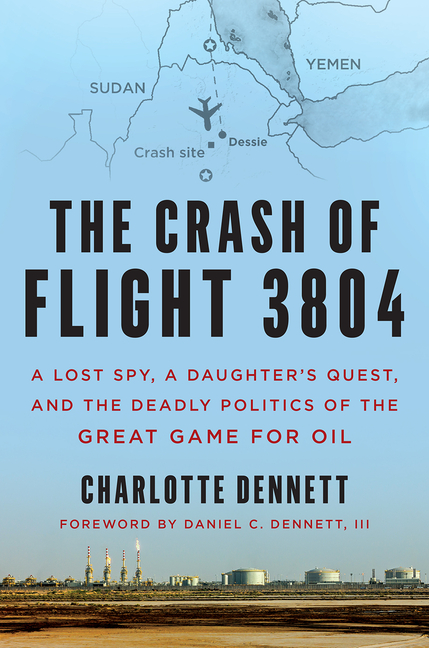
The Crash of Flight 3804: A Lost Spy, a Daughter’s Quest, and the Deadly Politics of the Great Game for Oil

by Charlotte Dennett

Chelsea Green Press (2020)

Book Review

In my view, this books makes a fairly compelling case that US Cold War strategy was more about protecting US oil interests (specifically pipelines) than fighting Communism. In The Crash of Flight 3804, Dennett describes her decades long battle to declassify intelligence records related to the plane crash that killed her father in Ethiopia on March 24, 1947. Daniel Dennett, previously employed by the Office of Strategic Services (OSS), was working for the immediate CIA predecessor the Defense Intelligence Group (DIG) at the time of his death. Although his cover was Beirut State Department Cultural Attache, declassified records indicate he performed a vital counterintelligence role in protecting US strategic oil interests from, not only Russia, but also France and Britain.

Beginning in 1945, Emperor Haile Selassie signed oil deals with Sinclair Oil and TWA to break the British stranglehold* over Ethiopia. Charlotte believes he was flying from Saudi Arabia to Ethiopia to further cement the US oil foothold in that country.

As she describes it, the post World War II years witnessed a mad scramble by the US, France, Britain and Russia to stake claims to key oil resources as Asian, Middle East and African countries declared their independence from European colonizers. Prior to the development of oil supertankers in the 1970s, overland pipelines were the most efficient method of transporting Middle East oil to European and Asian markets.

Within weeks of her father’s death, Truman signed the 1947 National Security Act that created the CIA. The latter would undertake their first-ever coup in 1949 again Syrian President Shukri al-Quwatli, who refused to allow the Trans-Arabian Pipeline (TAPLINE) to transit his country. He was replaced by an army officer who approved the pipeline, and TAPLINE construction began immediately.

Dennett then traces, country by country, how all US military bases and interventions in the Middle East and Mediterranean follow existing and proposed oil pipelines routes.

I especially enjoyed her detailed analysis of the so-called civil war in Syria, starting with Robert F Kennedy’s revelations in 2014 about his grandfather Joseph P Kennedy’s role in a secret committee to investigate CIA coup plots in Jordan, Syria, Iraq and Iran. Although the 1956 Bruce Lovett report has since be declassified, its contents remain unknown to the US public.

Kennedy’s assertions about US backing for militant anti-Assad jihadists were subsequently validated by State Department emails leaked by Wikileaks. Likewise Dennett cites Hillary Clinton emails leaked (by Wikileaks) in 2016 revealing that Saudi Arabia and Qatar were funding ISIS militants in Syria and Iraq with State Department knowledge.

Her analysis of the current war in Yemen (whose oil reserves are believed to exceed those of the entire Persian Gulf) is spellbinding.


*British occupation of Ethiopia began in 1941, following their ouster of Italian troops.