Sir, No Sir examines the GI revolt that effectively ended the Vietnam War. While it’s common to hear about fragging* incidents which occurred in Vietnam, I was totally unaware of the vast GI anti-war movement built by three years of sustained organizing in barracks, on bases, battlefields and ships and at armed forces academies like West Point.
This documentary traces the origin of this GI resistance movement to the 1967 court martial of a dermatologist who refused to train Green Berets how to treat common skin conditions of Vietnamese civilians. Captain Howard Levy took this stand due to his personal conviction that the US torture and murder of Vietnamese civilians was immoral. Levy, who was court-martialed and sentenced to three years in prison, inspired hundreds of other GIs once they realized the US government was at war with the entire civilian population of Vietnam.
Levy’s court martial was followed by many others, as active duty GIs began organizing anti-war meetings and participating in civilian anti-war protests while in uniform. Black GIs could be court-martialed for doing a soul handshake.
Word of the GI anti-war movement spread mainly through underground GI newspapers that sprang up on many bases. However GI coffee houses and Jane Fonda’s FTA (Fuck the Army) shows were also major organizing tools.
Civilian peace activists opened GI coffee houses near bases, where off duty GIs could listen to subversive rock music and get counseling, legal advice and accurate information about Vietnam and the anti-war movement. Although the FTA shows were also held off base, GIs attended in droves.
Refusing to Deploy Against US Civilians
In 1968, Fort Hood GIs newly returned from Vietnam were ordered to police the anti-war protests at the Chicago. Democratic Convention. After a group of black GIs met about refusing to deploy, they were beaten up by MPs and court martialed. The white “subversives” at Ft Hood (including one of my friends from high school) were treated more leniently. They were confined to base instead of being sent to Chicago.
In 1969 a thousand active duty GIs participated in an anti-war march at Fort Hood on Armed Forces Day. A year later 4,000 participated.
1971 Winter Soldier Conference
The Winter Soldier Conference the Vietnam Veterans Against the War organized in 1971 was the real turning point for the GI resistance movement. The purpose of the conference was to establish that the 1968 My Lai massacre wasn’t an isolated incident – that superior officers were ordering the deliberate targeting of civilians. Testimony at the Detroit conference also focused media attention on the government’s genocidal policies towards the Vietnamese. Specific examples included widespread use of the toxic defoliant Agent Orange and the deliberate reconfiguration of Napalm** to make it stick better.
Nixon Forced to “Vietnamize” the War
By 1971, so many GIs were refusing orders, fragging and killing officers and deserting that the Pentagon warned Nixon the military was on the verge of collapse. In response, the latter ordered the “Vietnamization” of the war. This would translate into a massive increase in aerial bombardment, as US troops withdrew, and the gradual transfer of combat duties to the South Vietnamese Army.
*Fragging is the murder or deliberate injury of members of the military, particularly commanders of a fighting unit. The term originates from the fragmentation grenades commonly used in these incidents.
**Napalm is a mixture of a gelling agent and petroleum or a similar fuel for use in an incendiary device. It was initially used against buildings and later primarily as an anti-personnel weapon, as it sticks to skin and causes severe burns when on fire.
Red Cry is about past and present genocide of the Lakota nation.
The first third of the film concerns the ugly history of legalized genocide of Native American peoples. Some of the highlights include
• Columbus’s slaughter of 8 million Arouac in Hispaniola
• The 1823 Supreme Court ruling that the “divine right of discovery” took precedence over the land rights of indigenous peoples.
• The mass slaughter of 1.5 million buffalo by the US army and settlers between 1871 and 1910 with the deliberate intent of destroying the primary Sioux source of food.
• The 1871 Indian Appropriation Act which invalidated the right of Native American tribes to be recognized as sovereign nations and invalidated all prior treaties.
• The criminalization of Native American culture, starting from the 1880s, and forced attendance of Native Americans at “Indian” boarding schools.
• The conscious federal desecration of sacred sites on the Pine Ridge Reservation and the ravaging of native lands with more than 3,000 uranium mines, leading to radioactive contamination of the air, water and food chain.
• The forced sterilization of Native American women by the Indian Health Service in the sixties and seventies.
• The 1973 appointment and arming (by the US government) of half-breed goon squads to terrorize and assassinate tribal elders.
The remainder of the film consists of interviews with tribal leaders describing present day genocidal conditions on the Pine Ridge Reservation, where life expectancy is 44 years for men and 52 years for women (in contrast to 76 years for men and 81 years for women in the general population).
Pine Ridge is plagued with miscarriages, birth defects and the highest cancer rate in the country due to radium, lead, mercury and arsenic contamination of the land and water by the mining industry.
Rape is four times the national average, with only one-third of the perpetrators facing prosecution.
Youth suicide is 1 ½ times the national average.
Eight out of ten families are affected by alcoholism.
One-third of the homes on the reservation lack running water and 40% have no electricity. Eighty percent of families live below the poverty line.
Traditional Lakota governance is matriarchal. For more than a century the US government has deliberately undermined matriarchal rule by only appointing men to positions of tribal authority.
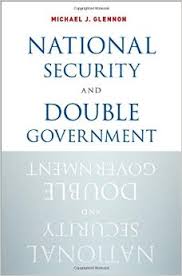
National Security and Double Government is a lengthy article about the highly visible national security bureaucracy that presently runs the US government. The author, Michael J Glennon, is Professor of International Law at the Tufts University Fletcher School of Law and Diplomacy. Glennon disputes the claim by conspiracy theorists that a secret shadow government is attempting to overthrow constitutional democracy. In his view, the deep state is simply a vast, self-serving bureaucracy of technocrats – forty-six (as of 2011) federal departments and agencies engaged in intelligence gathering and analysis, military aggression, cyber operations and weapons development.
Glennon’s description of how the deep state operates, which strikes me as depressingly accurate, shatters any lingering illusions about reforming the US government. It can only be dismantled.
In essence, the real work of the US government is controlled by several hundred officials who run the national security bureaucracy. Removed from public view and the constitutional restrictions that restrain the President, Congress and the judiciary, they make most of the key decisions concerning foreign policy and national security. Although their budget is classified, Glennon estimates it engages millions of employees at an annual cost of $1 trillion.
The “Trumanite” Arm of Government
Glennon calls them the “Trumanite” arm of government because President Harry S Truman created the US national security apparatus. Under Truman, Congress enacted the National Security Act of 1947, which unified the military under a new Secretary of Defense, set up the CIA, created the modern Joint Chiefs of Staff, and established the National Security Council (“NSC”). Truman also set up the National Security Agency (NSA) to monitor communications abroad. Truman’s vision was to create a civilian infrastructure strong enough to address the Soviet threat and rein in an errant military.
Both the Trumanite arm and the constitutional arm work really hard to maintain the fiction that the President is commander-in-chief. The reality is that the president only has the power to appoint 3,000-4,000 of the millions of federal employees nominally under his control. This means the Trumanite bureaucracy continues to operate pretty much under its own steam no matter which party is in office.
As Glennon describes it,
“President Obama could give an order wholly reversing U.S. national security policy, but he would not, because the likely adverse consequences would be prohibitive. Put differently, the question whether the President could institute a complete about-face supposes a top-down policy-making model. The illusion that presidents issue orders and that subordinates simply carry them out is nurtured in the public imagination by media reports of ‘Obama’s’ policies or decisions or initiatives, by the President’s own frequent references to “my” directives or personnel . . . But true top-down decisions that order fundamental policy shifts are rare.
The reality is that when the President issues an “order” to the Trumanites, the Trumanites themselves normally formulate the order. The Trumanites cannot be thought of as men who are merely doing their duty. They are the ones who determine their duty, as well as the duties of those beneath them. They are not merely following orders: they give the orders. They do that by ‘entangling’ the President… To avoid looking like a bystander or mere commentator, the President embraces these Trumanite policies, as does Congress, with the pretense that they are their own.’
Obama Forced to Agree to Drone Policy
As an example, Glennon quotes Vali Nasr’s* description of how the national security network strong armed Obama into expanding his drone policy:
When it came to drones there were four formidable unanimous voices in the Situation Room: the CIA, the Office of the Director of National Intelligence, the Pentagon, and the White House’s counterterrorism adviser, John Brennan.”
Defense Secretary Robert Gates, a holdover from the Bush administration, also strongly supported an increase in drone strikes. All five also suppressed any debate in national security meetings of the broader implications of this policy.
According to Nassr, it was the classic Henry Kissinger model: “You have three options, two of which are ridiculous, so you accept the one in the middle.”
Obama openly complained about the Trumanites only given him one option: “The military was “really cooking the thing in the direction that they wanted. They are not going to give me a choice.”
Obama Also Opposed Increasing Troop Levels in Afghanistan
Obama’s 2009 proposal to lower the military’s proposed troop levels in Afghanistan ran into the same unified opposition. According to Glennon, the Commander of U.S. and International Security Assistance Forces (“ISAF”) in Afghanistan (General Stanley McChrystal), the Commander of U.S. Central Command (General David Petraeus), the Chairman of the Joint Chiefs of Staff (Admiral Michael Mullen), and even Secretary of Defense Gates all threatened to resign over it.
As Glennon observes,
“No president has reserves deep enough to support a frontal assault on the National Security network. Under the best of circumstances, he can only attack its policies one by one, in flanking actions, and even then with no certainty of victory. Like other presidents in similar situations, Obama thus had little choice but to accede to the Pentagon’s longstanding requests for more troops” in Afghanistan.”
Clinton’s “Don’t Ask Don’t Tell” Fiasco
He reminds us of the uproar in the military and Congress when President Bill Clinton moved to end only one national security policy shortly after taking office—the ban on gays in the military. Forced to backtrack, Clinton ultimately enacted his “Don’t Ask, Don’t Tell” policy.
Glennon goes on to explore similar paralysis the President and Congress are experiencing in attempting to curtail spying by the NSA.
The final section of the article reviews possible options for reform and concludes the national security bureaucracy is too powerful (and has too much control over the media) to be reformed by constitutional means. Glennon believes that the only option for change is a bottom-up mobilization by the American people.
*Vali Nasr is dean of the Johns Hopkins School of Advanced International Studies. David E Sanger quotes him in Confront and Conceal: Obama’s Secret Wars and Secret Use of American Power.
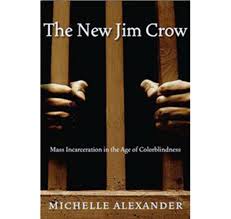
The New Jim Crow: Mass Incarceration in the Age of Colorblindness
by Michelle Alexander (2010)
Book Review
In The New Jim Crow, Michelle Alexander argues that the War on Drugs and mass incarceration of African Americans functions as a racialized caste system similar to Jim Crow segregation laws. She defines caste as “as system in which a stigmatized racial group is locked into inferior position by law and custom.” In addition to the mass imprisonment itself, America’s unusually harsh treatment of ex-felons means extraordinarily high numbers of African Americans face legal discrimination for the rest of their life.
It’s both legal and socially acceptable to discriminate against ex-offenders. Federal agencies are legally required to exclude ex-felons from welfare and food stamp programs, public housing and Pell grants and student loans. Job discrimination against ex-felons is legal in nearly all states, and most states prohibit ex-felons from voting or serving on juries. Unable to find jobs or housing (relatives who take them in risk losing their homes under drug forfeiture* laws), many return to prison when they can’t meet the terms of their probation/parole (which usually includes stable housing and employment).
In addition to tracing the political origins of the War on Drugs, The New Jim Crow also provides a detailed analysis of the complex political and sociological dynamics that underlie white racism and the refusal of a post-racial “colorblind” society to acknowledge the immense damage mass incarceration wreaks on African American families and communities. She also explains the perplexing paradox that leads working class whites to vote against their own economic interests by electing Tea Party conservatives.
The War on Drugs: A Republican Scam
As Alexander elegantly demonstrates, the War on Drugs is part of a deliberate strategy by the Republican Party to play on racial animosity among working class whites to win their votes. The American elite has used this divide and conquer strategy to discourage multiracial coalitions all the way back to Bacon’s Rebellion* in 1676. According to Alexander, the original Jim Crow laws were largely a reaction to a brief multiracial coalition that formed as part of the Populist movement in the late 1800s.
Nixon was the first president to deliberately target the racist vote with the intention of transferring previously Democratic southern states to the Republican column. He pioneered the use of racially coded rhetoric such as “law and order,” “tough on crime” and the “undeserving” vs the “deserving” poor.
Here Alexander emphasizes that the affluent white liberals who championed 1960s civil rights legislation were essentially immune to the economic impact of most civil rights legislation. As professionals and academics, they weren’t competing with African Americans for the same jobs. Moreover, as residents of wealthy suburbs, their kids were excluded from mandatory busing laws.
Targeting the Racist Vote
Thanks to a highly sophisticated public relations campaign by Nixon and Republicans, by 1980 low income whites no longer saw poverty as stemming from a faulty economic system. They now blamed civil rights legislation and an overly generous welfare system. As a result, 22% of registered Democrats voted for Reagan in 1980.
Although Nixon coined the term, it would be Reagan who formerly launched the War on Drugs in 1982. The Reagan administration cut the white collar law enforcement in half to focus on street crime. This was during a period when street crime was rapidly declining and sociologists were predicting a phase-out of US prisons as they didn’t deter crime. Reagan also significantly increased DEA and FBI anti-drug enforcement while drastically decreasing funding for drug treatment. He also instituted financial incentives rewarding local policing units for high numbers of drug arrests. Alexander believes these financial rewards were directly responsible for initiating wholesale street sweeps and stop and frisk laws that have led cops to regularly jack up black motorists and inner city youths in the hope of finding illegal drugs.
Finally in 1985, he launched a major media campaign to sensationalize the crack cocaine epidemic. It worked. In 1980, only 2% of the US population viewed illegal drug use as the most important issue facing the US in 1980. By 1989 this number had reached 64%.
Clinton Escalates the War on Drugs
In 1992 Clinton and the New Democrats tried to recapture the Democratic votes they had lost to Regan and Bush by promising to enact even stricter anti-crime and anti-drug laws. Thus it was under Clinton law enforcement budgets and jail populations exploded. It was also Clinton who ended AFDC (Aid For Dependent Children) started under the New Deal – at precisely the same time inner city communities lost all their manufacturing jobs when factories shut down and moved overseas.
Clinton also initiated the federal programs to militarize local police, providing training to set up SWAT teams and surplus Pentagon tanks, body armor, weapons and helicopters. He also enacted the laws denying former drug felons access to federal programs. Sadly Obama, the first African American president, renewed and increased funding for many of these programs.
Discrimination in the Courts
In addition to discriminatory*** drug policing that focuses nearly exclusively on inner cities, African American defendants fare nearly as badly in court. Alexander cites many instances in which poor defendants receive limited or no access to legal representation. Many innocent clients, totally unaware of the future impact of a felony conviction, are intimidated into pleading guilty in return for a reduced sentence.
Ending the War on Drugs
In addition to outlining the ugly racialized history of the War on Drugs, Alexander also summarizes the conservative Supreme Court decisions that have systematically denied due process to people of color facing drug possessions. She concludes by offering a way forward – to end both the War on Drugs and the mass incarceration of people of color.
In addition to legalizing marijuana (and possibly other drugs), she calls for the total structural reform of the criminal justice system. She believes only a multiracial movement with bottom up advocacy for poor blacks and whites alike can bring this about. This is exactly what Martin Luther king was working for when he was assassinated.
In the following video, Alexander talks about her book
*Drug forfeiture or asset forfeiture laws allow federal and state authorities to confiscate any and all assets (mainly homes, cars and cash) of an individual suspected of a drug-related crime. A subsequent finding of innocence doesn’t guarantee return of the assets, which often requires a lengthy and expensive court process. Some police departments deliberately misuse this law to confiscate cash and belongings of black motorists even where no arrest is made.
**Bacon’s Rebellion was an armed rebellion of white settlers and black and white indentured servants that would lead plantation owners to push for formal slavery laws to discourage further collaboration between whites and blacks.
***Although African Americans constitute only 15% of drug users, they represent 75% of the US prison population. Statistically drug dealers are more likely to be white than black, but local law enforcement authorities make no effort to police white suburbs or university campuses for illegal drug use. In fact, 80% of drug arrests are for possession (in 80% of cases for marijuana). Only 20% of arrests are for sales
The second of two posts about the late political researcher Mae Brussell
Operation Chaos
In addition to her other research, Mae Brussell also played a vital role in bringing the CIA’s Operation CHAOS to public attention. According to Brussell CHAOS, which was launched in 1967, played a significant role in “neutralizing” popular rock musicians who were contributing to the rise of the New Left. According to Brussell, most of these murders were disguised to look like accidental drug overdoses or plane crashes. However, as with the JFK assassination, there was always a typical pattern of lost or destroyed evidence and an official report that was full of contradictions and discrepancies.
The list of prematurely dead rock musicians, entertainers and managers Brussell investigated includes John Lennon, Elvis Presley, Buddy Holly, Otis Redding, Brian Jones, Jimi Hendris, Janis Joplin, Jim Morrison, Duane Allman, Mama Cass Elliot, Phil Oakes, Keith Moon Jim Reaves, Jim Croce, Lenny Bruce, Bon Scott (AC/DC), Bob Marley, Sal Mineo, Rod McKernan (Grateful Dead), Brian Epstein (Beatles manager), Michael Jeffery (Jimi Hendrix’s manager and Donald Rex Jackson (grateful Dead manager).
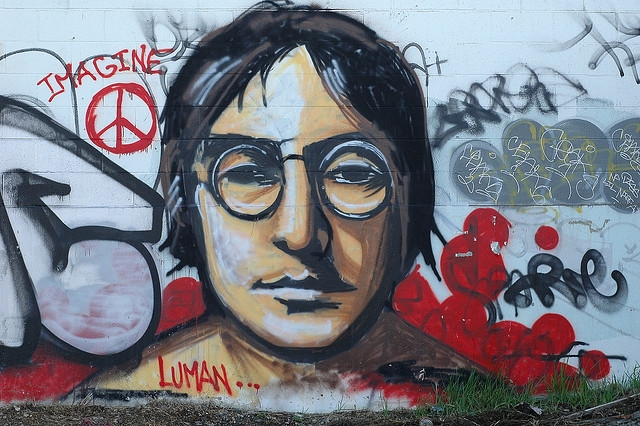
John Lennon’s Assassin Mark Chapman
Brussell had a special interest in John Lennon’s alleged assassin Mark Chapman and all the unanswered questions posed by the “official” police account. In a 1981 interview with Tom Davis, Brussell talks at length about Chapman’s unusual background, which clearly suggests prior intelligence involvement.
She also raises a number of troubling questions the New York police should have investigated (and which likely would have come out at trial if Chapman hadn’t been pressured to plead guilty):
• Why did a security guard Chapman met in DeKalb Georgia arrange for him to spend six months in war torn Lebanon (Brussell believed it was to attend a CIA-run military training camp)?
• Why did Chapman return from Lebanon to Fort Chaffee Arkansas to work at a World Vision camp for Vietnam refugees (World Vision, run by Bush senior’s friend John Hinckley Sr, was closely linked with the CIA, which frequently used their refugee camps to recruit operatives)?
• Who paid for Chapman, who was chronically unemployed, to take a long round the world trip shortly before he shot Lennon?
• Where did Chapman get the money to purchase $7,500 worth of Norman Rockwell lithographs and to stay in expensive hotels?
• How could someone who was hospitalized for mental illness in Hawaii manage to buy a weapon there – and transport it to the mainland? And why did the Federal Bureau of Alcohol, Tobacco and Firearms have no interest in investigating this?
Forced Off the Air by Death Threats
After 17 years on the radio, Brussell left the air in March 1988 as a result of a death threat related to her investigation of followers of satanic cults in the military. She continued to record weekly audiotapes, which she sent to her followers, until June 1988. She died, from breast cancer, in October 1988.
In the following 1971 broadcast, she discusses the 28,000 page cross filing system she used to analyze the Warren Commission report and establish clear links between Oswald, his probable CIA handler George DeMohrenschildt and 28 white Russian CIA assets in Dallas/Fort Worth.
Part I of a two-part post on political researcher Mae Brussell
For more than 25 years, Mae Brussell (1922-1988) was America’s preeminent researcher into the suppressed history of political assassinations, covert operations, mind control, secret societies, organized banking crime and international fascism.
When I first learned of her work in 1992, Brussell had already been dead for four years. I had contacted the Christic Institute* to request copies of the literature they were putting out regarding their lawsuit against CIA operatives involved in either the Iran Contra Affair** or the CIA-backed cocaine trafficking used to finance the Contra war against Nicaragua. The staff member I talked to phone informed me the judge had dismissed their suit as frivolous and stripped them of their non-profit status. They had turned all their literature and tapes over to Prevailing Winds Research (PWR) in Santa Barbara. If I wanted more information, I would need to contact them.
Accessing Suppressed Documents Before the Internet
As I was to learn, PWR was an archival service for political activists, journalists, academics and former intelligence operatives whose writing on government crimes had been suppressed by the mainstream media. In 2015, most of this material is widely available on the Internet. Back in 1992, you had to order it through the PWR catalog.A week after I contacted them, they sent me an astonishing catalog of economically priced books, articles, tapes and monographs that had suppressed by the mainstream media (including, but not limited to, Philip Agee, Peter Dale Scott, Mae Brussell, Ralph Schoenman, Larry Flynt, John Judge, Seymour Hersh, John Stockwell and Abbie Hoffman).Given my strong interest in the JFK assassination, my first order consisted of Nomenclature of an Assassination Cabal by William Torbitt, a collection of interviews with the late JFK assassination researcher John Judge*** and a collection of Mae Brussell’s articles.
Just an Ordinary Housewife (and Mother of Five)
Brussell had doubts about the official version of the JFK assassination from the moment she watched Jack Ruby assassinate Lee Harvey Oswald on live nation televisions. When Brussell’s daughter first saw Oswald in the hallway of the Dallas jail, it was obvious he’d been beaten and she felt sorry for him. She was wrapping up her teddy bear to send him when they saw Ruby shoot him.
Because it also bothered Brussell that the newspaper and TV coverage regarding Oswald’s background was full of discrepancies and contradictions. In 1964 she paid $86 to purchase the 26 volume Warren Commission report of the Kennedy assassination, which contained even more discrepancies and contradictions. As she stated in a 1974 interview with Playgirl Magazine, “Twenty-three adjectives were used to describe him in the Warren Report. They said he had no friends, no meaningful relationships, couldn’t hold a job, and so on. But the evidence all pointed in the opposite direction.”
So she began a seven-year project to cross index all the key witnesses and findings, filling dozens of notebooks with 28,000 pages of files on each witness and their specific link to Oswald. What she ultimately discovered was that the international terror network had gone underground and were continuing their fascist campaign to take over one country after another, including the US.
Thirty-Nine File Cabinets
Her determination to dig deeper into the JFK and other assassinations led her to read 15 newspapers every day and subscribe to more than 150 periodicals. The clippings she cut and saved would eventually fill 39 file cabinets.
As a result of her careful research, Brussell would conclude that the Kennedy assassinations, Martin Luther King’s assassination, the Manson family murders, Ted Kennedy’s Chappaquiddick affair and the Patty Hearst kidnapping were all orchestrated by the far right, the CIA, the FBI and the Mafia with the dual purpose of discrediting the left and establishing a fascist state.
World Watchers International
Starting in 1971, Brussell hosted a weekly radio program called World Watchers International. She broadcast on KLRB in Carmel from 1971 from 1971 to 1983 and on public radio station KAZU in Pacific Grove from 1983-1988. Her program was syndicated to a half dozen stations around the country (including Sacramento, Boston, Syracuse and San Francisco), and hundreds of followers subscribed to her tapes and bibliographies. She also lectured extensively and had articles published in the Realist, People’s Almanac, Berkeley Barb, Penthouse and Hustler.
Other Assassinations
In addition to researching the US intelligence link to the Kennedy assassinations, the Martin Luther King Assassination and the attempted assassinations on Ronald Reagan, George Wallace and Pope John Paul II, assassination researcher Mae Brussell investigated the assassination of John Lennon and the suspicious deaths of dozens of other rock stars.
She was the first to uncover the role of former Nazi war criminals in the JFK assassination, as well as the US intelligence link to the Watergate break-in in June 1972. Brussell always believed Watergate was a coup to remove Nixon from power, a hypothesis corroborated more than thirty years later by Russ Baker in his 2009 book about the Bush family, Family of Secrets. In investigating the assassination attempt on Reagan, Brussell was the first to uncover that the father of the alleged assassin, John Hinkley Sr was an oil tycoon and close family friend and supporter of vice president George H. W. Bush.
Brussell’s friend (and former Chicago 7 defendant****) Paul Krassner published her the article she wrote about Watergate in August 1972, Why Was Martha Mitchell Kidnapped? John Lennon, who had undergone years of FBI surveillance and harassment, paid the $5,000 printing bill.
The following is an early interview with Mae from 7/21/71. In it she discusses the longstanding power struggle between the Eastern banking/oil elite and the Western military/space elite and the role of John Kennedy’s murder in this power struggle. She also discusses Oswald’s role as an intelligence operative.
*The Christic Institute was a public interest law firm founded by Daniel Sheehan in 1980. Christic represented victims of the nuclear disaster at Three Mile Island; they prosecuted KKK members for killing civil rights demonstrators in the Greensboro Massacre, and they defended Catholic workers providing sanctuary to Salvadoran refugees (American Sanctuary Movement). Most famously, the Christic Institute uncovered the Iran Contra Affair, and led the lawsuit at the heart of the scandal.Along with the suit, the Institute launched a massive public education campaign to raise public consciousness about the Iran Contra affair. Their work eventually led to the appointment of Iran Contra special Prosecutor Lawrence Welsh. His investigation led to the convictions of both former National Security Adviser John Poindexter and National Security Council member Oliver North, although both convictions were subsequently reversed.
**The Iran–Contra affair, also referred to as Irangate, was a political scandal in which senior Reagan administration officials secretly facilitated the sale of weapons to Iran, which was illegal under a US embargo. The allowed the CIA to fund efforts by the Nicaraguan Contras to overthrow the Sandinista government in Nicaragua. Under the Boland Amendment, further funding of the Contras by the government had been prohibited by Congress.
***In addition to his work as an independent assassinations researcher, John Judge (1947-2014) was also co-founder of 9-11 Citizen Watch, Special Projects Assistant to former Congresswoman Cynthia McKinney and cofounder of the Coalition on Political Assassination. COPA was founded in 1994 following the release of thousands of classified JFK documents by Clinton’s Assassination Review Board, and Special Projects Assistant former Congresswoman Cynthia McKinney.
****The Chicago Seven were seven defendants charged with conspiracy, inciting to riot, and other charges related to street protests at the 1968 Democratic National Convention.
University of Massachusetts Professor John H Bracey (2011)
Film Review
In his lecture, Professor Bracey blames racism and white privilege for US having the most poorly organized working class in the industrialized world. From the start of Jim Crow after the Civil War to the late sixties, Africa Americans were deliberately excluded from trade unions, a perfect set-up for white bosses to use non-unions black workers to bust strikes and unions. This absence of working class solidarity meant it took American workers until the 1930s to win basic rights and benefits (eg Social Security, unemployment compensation and welfare) that European workers won in the 1880s.
Racism also keeps white people ignorant of their own history. For example they are unaware (I sure was) that the Battle of the Alamo was fought to extend slavery to Texas (slavery was illegal when Mexico owned Texas).
The refusal of northern whites to confront their own racism would ultimately culminate in the Civil War, which would result in more deaths (1 million) than all other US wars combined.
Bracey also blames racist attitudes for the absence of public education in the South until after the Civil War. It would be black Reconstruction governments that established free public education in the South – for all children (black and white). They would also establish the first state universities in Georgia and Mississippi.”
Ironically it was African Americans who founded Ole Miss (University of Mississippi), though they were later excluded when the Ku Klux Kan violently overthrew the southern Reconstruction governments.
It was also black women who organized the southern textile mills and not Norma Ray, as portrayed in the popular film starring Sally Fields.
Continuing racism forces white people to sacrifice education, health, housing and social service programs to cover the phenomenal cost of mass incarceration (of mainly black and Hispanic Americans. At an annual cost of $40,000 per inmate, the cost of incarcerating 2.4 million Americans adds up to $960 billion annually.
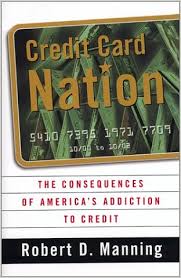
Credit Card Nation is about the role of plastic money in the rise of consumer capitalism. In addition to heartbreaking stories of real people struggling with credit card debt, it provides a comprehensive macroeconimc overview of the credit industry. The two main points Manning emphasizes are 1) marketing credit cards to unemployed college students and the working poor saved all the major banks from insolvency in the 1980s and 2) credit cards increase wealth inequality by offering free credit to the wealthy and usury to the poor.
As Manning describes it, the living standards of wealthy Americans are being subsidized by the usurious interest rates paid by the poor. Banks divide credit card users into two groups: the “convenience” (commonly referred to “deadbeats” by bank managers) users who pay their full balance every month and the “revolvers” who accumulate debt by only paying the minimum charge. As Mann points out, convenience users who pay their full balance are getting a month of free credit.
The Poor Are the Credit Niche Market
When banks first began issuing credit cards in the sixties and seventies, their credit card divisions lost money by only marketing them to the low risk middle class users with sufficient income to pay the full balance every month. This changed when US wages began their steep decline in the 1980s, as Reagan’s deregulatory regime lead to a frenzy of factory closures (as companies shut down and moved overseas) and merger-related downsizing. This enabled banks to discover the “niche” credit card of unemployed students (banks had the brainstorm of waiving parental signatures on credit card applications) and the working poor, a bonanza of consumers who were too poor to pay more than the minimum monthly payment.
Soaking the Poor to Service the Rich
Ratios between convenience and revolver credit card users vary. In 2000, there were 33.5 million convenience users for 44.5 million revolvers. When the percentage of convenience users gets too high, banks typically increase penalties and interest rates on revolvers. Credit card interest rates soared in the late eighties when banks began using credit car fees to subsidize deeply discounted auto and corporate loans.
In the interim, credit card interest rates have skyrocketed. Average annual interest rates on credit card balances increased from 1.4 to 14.3% between 1981 and 1992. By 2000, they had increased to 18.3%.*
The History of Credit
Credit Card Nation also provides an excellent overview of other types of consumer credit, starting with the boom in installment credit that fueled the initial post war consumption engine. Installment credit expanded rapidly as big box malls drove put neighborhood pharmacies and community merchants out of business. Both typically carried informal “open book” credit accounts for established customers.
Manning also traces the devastating effect of banking consolidation – the lost of community banks due to mergers and acquisitions into a handful of “too big to fail” banks. Aside from a one time gain from layoffs and interest-related tax deductions, studies show that big banks are less efficient and less profitable. They’re also deadly for start-up and small businesses, which are the most consistent job creators. Bank loans to small businesses virtually ceased in the early nineties. For both, the only credit option left is risky high interest credit card cash advances.
The Corporate Face of Loan Sharking
The most eye opening chapter is the one on fringe banking and second tier financial services that have moved in as banks have closed their inner city branches. The book examines the full range of fringe banking services, which charge average (annual) interest rates of 180-730%. These include check cashing and pay day loan companies, pawnshops, rent to own companies, sale-leaseback loans, auto title loans and cash leasing.
Many of these enterprises operate as nationwide chains and partner with major banks they rely on for capital. Cash America was the first pawnshop company to trade on the New York Stock Exchange. Ace Cash Express, the largest US check cashing company, trades on the NASDAQ.
Rent-to-own companies charge average interest rates of 180-360%, though most clients typically make only 3-4 payments before the appliance is repossessed.
Cash leasing is the worst. The term “leasing” rather than “loan” is used to evade state usury laws. A borrower pays 30% interest every fifteen days on the loan amount (730% total annual percentage rate). They must have an active checking account and verified ownership of three electronic items (TV, computer, etc) that can be pledged as collateral.
*According to Al Jazeera average US credit card interest rates hit 21% in April 2014
Creating Waldens: An East-West Conversation on the American Renaissance
by Ronald Bosco, Joel Myerson and Daisaku Ikeda
Dialogue Path Press (2009)
Book Review
A Buddhist neighbor loaned me this odd little book. It consists of a series of conversations between 2001 and 2005 between American literature scholars Ronald Bosco and Joel Myerson and Soka schools founder Daisaku Ikeda. The purpose of the conversations was to explore “the poetic heart and reverence for life” in the lives of 18th century American Transcendentalists* Ralph Waldo Emerson, Henry David Thoreau and Walt Whitman; Soka Gakkai International founders Tsunesaburo Makiguchi and Josei Toda and the spirituality of Nichieren Buddhism.
Soka Gakkai International (operating in six countries, including the US) is an alternative system of education that opposes authoritarianism and celebrates the sanctity of life, diversity, intellectual freedom and protection of nature and the environment. Both Makiguchi and Toda were imprisoned in Japan during World War II for opposing Japanese fascism.
For me, the book’s main value was to highlight the shoddy and biased way American history and literature are taught in US high schools. American renaissance? How come no one ever taught us there was an American renaissance? Nor that Emerson and Thoreau were dissidents and social critics – immensely popular ones with a large following.
As part of the American “lyceum movement,”** they gave well-attended public lectures, much as Noam Chomsky, Michael Parenti and other high profile dissidents do today. Besides being fiercely anti-war, both Emerson and Thoreau were extremely critical of the social injustices of early industrial society and the authoritarianism of public education.
Thoreau, in particular, was vehemently opposed to slavery and an active member of the underground railway, which assisted runaway slaves to escape to Canada. In 1846, he publicly manifested his opposition to slavery by refusing to pay his poll tax and was thrown in jail.
His famous essay “On the Duty of Civil Disobedience” inspired Mohandas Gandhi, Martin Luther King, the anti-Nazi resistance, the environmental movement started by Rachel Carson and the pro-democracy movement in cold war Easter Europe. Gandhi would write that he named his “civil disobedience” movement after Thoreau’s essay.
I was also very surprised to learn that both Emerson and Thoreau were heavily influenced by Eastern and Middle Eastern religions and philosophies. Likewise the growing Japanese environmental movement is strongly influenced by Thoreau.
The conversations are facilitated in such a way that they provide a good outline of the lives of Emerson and Thoreau, as well as the ups and downs of their relationship. The former was an early mentor to Thoreau, and Walden Pond*** was on his property.
*Transcendentalism was an American philosophy which taught that people have knowledge about themselves that transcends logic and the senses and can trust themselves to be their own authority on what is right.
**Founded by Joseph Holbrook in 1826, the lyceum movement was an early form of organized adult education popular in the eastern US and Midwest. In addition to Emerson and Thoreau, Frederick Douglass, Daniel Webster, Nathaniel Hawthorne, and Susan B. Anthony were well-known lyceum speakers who traveled from state to state.
**In 1845, Thoreau embarked on an experiment in which he lived in the woods in near total isolation and self-sufficiency for two years, two months and two days. He writes about this in his book 1854 Walden; or, Life in the Woods
Cointelpro 101: The Sabotage of Legitimate Dissent
By Andres Alegria, Prentis Hemphill, Anita Johnson and Claude Marks (2010)
Film Review
Cointelpro is the name given to the illegal counterinsurgency program FBI director J Edgar Hoover launched in the fifties and sixties against the civil rights movement, the American Indian Movement, the Puerto Rican independence movement, the Chicano/Mexicano rights movement, unions and different social justice movements. Its various tactics included illegal surveillance, wiretaps and break-ins, extrajudicial assassinations and plots to frame activists for crimes they didn’t commit.
The program had to be kept secret because it was illegal. The American public only learned about Cointelpro after antiwar activists broke into a Philadelphia office the FBI shared with the Selective Service in 1971. Intending to destroy draft registration documents, they accidentally stumbled across Cointelpro-related letters and memos and leaked them to the press.
Hoover’s War Against Black Empowerment
Cointelpro’s most high profile target was the civil rights and black liberation movement. Hoover openly wrote of his goal of “liquidating” the entire Black Panther leadership. Some Black Panther leaders were killed in cold blood. Chicago leaders Fred Hampton and Mark Clark were shot in their sleep in 1969. The same year the FBI assassinated two Los Angeles Black Panther leaders at UCLA and two San Diego leaders while they were selling newspapers.
When Vietnam veteran Geronimo Pratt assumed leadership of the LA branch, the police (in cooperation with the FBI) tried to kill him via the armed assault and bombing of the LA Black Panther office. When this failed, they framed him on a murder charge, despite FBI surveillance records that placed him in Oakland at the time of the murder. Pratt spent twenty-seven years in prison before these records surfaced and exonerated him.
The Church Committee, a senate committed convened in the mid-seventies, identified more than two hundred criminal FBI attacks against Black Panther leaders, including murder, driving people insane and framing them on phony charges. No FBI operatives were ever prosecuted for these crimes, and more than a dozen black liberation activists (including Mumia Abu Jamal and Mike, Debbie and Janet Africa) remain in prison on trumped up charges.
The Reign of Terror at Pine Ridge
Following the rise of the American Indian Movement (AIM) to demand enforcement of treaty rights, Hoover launched a reign of terror (1973-76) on the Pine Ridge Reservation in South Dakota. During this period, death squads killed or disappeared scores of residents who dared to challenge the corrupt tribal leadership. When reservation elders sought the protection of the AIM leadership, one them, Leonard Peltier, was wrongfully convicted of the double murder of two FBI agents. As in Pratt’s case, the FBI deliberately concealed evidence exonerating him. After nearly forty years, he, too, remains in prison.
Cointelpro Never Ended
Contrary to government claims, Cointelpro didn’t end in 1971 when it was exposed. In 1983, documents came to light revealing that the FBI had illegally infiltrated, spied and disrupted the Committee in Solidarity with the People of El Salvador. The latter, a group I belonged to between 1982 and 1985, was a grassroots organization that campaigned against Reagan’s military support of El Salvador’s right wing dictatorship.
This documentary finishes by pointing out that many previously illegal Cointelpro activities – warrantless surveillance and wiretapping, clandestine break-ins and pre-emptive arrest for dissident political views – are now perfectly legal under the Patriot Act.



 The Most Revolutionary Act