A 241 Year Fairy Tale About American Democracy

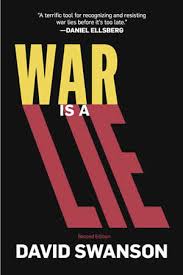
war is a lie


War is a Lie

By David Swanson

Just World Books (2016)

Book Review

In War is a Lie, author David Swanson presents extensive historical evidence that the US has never been a democratic republic – that this is a carefully crafted fairy tale the ruling elite has been telling us since the late 18th century. He also demolishes the myth that warfare is deeply ingrained in human nature. Ninety-eight percent of people are deeply opposed to killing and warfare and require extensive brainwashing to commit to either. Although the species homo sapiens is 60,000 – 1000,000 years old, they have only engaged in war for the last 10,000 years. Many human civilizations (including the people of the Arctic, Northeast Mexico, Australia and Nevada’s Great Basin) had no experience of war prior to contact with Europeans. Among the more astonishing facts Swanson reveals is that 80% of the US troops drafted into World War II declined to kill enemy troops.

Starting with the Revolutionary War, War is a Lie is full of delightful little factoids that are omitted from high school and college US history courses.

Among the high points:

Revolutionary War

The two real goals of the US War of Independence were to 1) remove the King’s representatives from positions of power in North America and replace them with colonial merchants and bankers and 2) to overturn the British ban on western expansion (via the slaughter of indigenous tribes). The Continental Army consisted mainly of poor farmers who were forcibly conscripted, brutally mistreated and rarely paid (even though General Washington was the richest man in the colonies. During and after the war, numerous “democratic reforms” were enacted to motivate these the “recruits, with all being promptly nullified.

War of 1812

Contrary to what we’re taught in school, the US started the War of 1812, with the intention of invading and occupying Canada. They lost this war.

Mexican-American War (1846-48)

Another war about western expansion that resulted in the US annexation of Texas, California, Utah, New Mexico, Arizona, Nevada and parts of Colorado and Oregon. Many Irish and other European immigrants fought for Mexico.

Civil War

Swanson maintains the Civil War was also about western expansion and whether the North or South would control the new western territories. Swanson stresses that Lincoln could have easily freed the slaves without launching a war (other countries did so). The Emancipation Proclamation was issued well after the war started, as public sentiment turned against the war due to high casualties. Swanson reminds us that the Proclamation only applied to states that had seceded – slavery remained legal in Union states.

World War II

Swanson details the deliberate Wall Street strategy of arming Hitler to neutralize the Soviets, highlighting orders US pilots received not to bomb German munitions factories owned by Americans. He also writes at length about the Nazi eugenics experiments that originating in the US under the guidance of Rockefeller, Carnegie and Harrison. I was intrigued to learne the Rockefeller Foundation funded Josef Mengele’s experiments on Jewish prisoners. Swanson attributes Roosevelt’s eagerness to enter World War II to increasing working class militancy in the US (which the compulsory draft ended) and fears of full blown insurrection. He also discusses numerous efforts Hitler made (as late as 1940) to negotiate a peace settlement with the allies – which they rebuffed.

Monsanto Has Known Since 1981 that Glyphosate Promotes Cancer

Great interview with researcher Dr Anthony Samsel from Dr Mercola’s website.

mercola
Researcher Reveals Monsanto Has Known Since 1981 That Glyphosate Promotes Cancer

Dr Anthony Samsel has obtained copies from Monsanto’s original glyphosate studies from the 1970s. After reviewing thousands and thousands of pages of data, this is what he found:

What amazed me was that Monsanto knew in 1981 that glyphosate caused adenomas and carcinomas in the rats that they’ve studied… The highest incidence of tumorigenic growth occurred in the pituitary gland… the second highest levels were in the breasts of the female rats, in the mammary glands… Thirdly, the next highest tumorigenic growth was found in the testicles of male rats.

How did Monsanto and Biodynamics—the company doing the research—hide these inconvenient facts?

According to Dr. Samsel, they cancelled out the controls and the damning findings by using historical control data from unrelated studies. It’s also worth noting that these negative findings were never published in the peer-reviewed literature or submitted to the EPA or the Food and Drug Administration (FDA). Cancer was clearly shown in their 26-month long feeding study, but the only studies Monsanto has published are studies done in less than three months, which hides the consequences of eating glyphosate and genetically engineered foods over the course of a lifetime.

Read more here.


Chernobyl’s $1.4 Billion Containment Dome

Chernobyl +30 – A Look From the Inside with Lucas Hixson

(April 2016)

Chernobyl +30 is a webnar presentation to celebrate the 30th anniversary of the 1986 Chernobyl nuclear disaster. In this segment, US nuclear engineer Lucas Hixson briefly summarizes the causes of the Chernobyl accident, the initial clean-up efforts by the Soviets, and the current extent of nuclear contamination in an exclusion zone the size of Rhode Island.

Hixson spent ten days at the Chernobyl site at the end of 2015 for an update on the $1.4 billion* containment dome Bechtel is building to prevent further radiation release. The largest man made structure ever built, the dome will replace the sarcophagus the Soviets placed over the site in 1987. The latter has become contaminated and is emitting gamma radiation. Bechtel’s $1.4 billion dome is predicted to last 100 years.

For me, the most interesting part of the presentation concerns the precautions taken to minimize tje radiation dose experienced by the 3,500 workers who are dismantling the sarcophagus. As Hixson points out, they are all younger workers with no direct experience of the devastating health problems workers and residents experienced after the Chernobyl explosion. It’s his impression they have minimal awareness of the immense hazards of their work.

Hixson’s presentation begins at 5:23.


* Hixson doesn’t mention how Ukraine (which is currently bankrupt and undergoing IMF restructuring) is paying for the containment done. According to the Washington Post, the European Bank for Reconstruction and Development is managing the project, which they are funding through international donations. The US has contribution $410 million.


A Cuban Novel About Trotsky’s Assassination

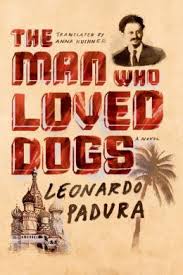
the man who loved dogs

The Man Who Loved Dogs

By Leonardo Padura

Translated by Anna Kushner (2013)

Book Review

The Man Who Loved Dogs is a fictional account of the Stalinist Conspiracy to assassinate Leon Trotsky in Mexico in 1940. Havana author Leonardo Padura uses three distinct perspectives to relate his story: that of Trotsky and his family, that of his assassin Roman Mercader and that of a failed Cuban writer who accidentally encounters Mercader on a Cuban beach in the 1970s as he’s on the verge of death.

The conspiracy is vaguely reminiscent of the JFK assassination conspiracy, in that it was meticulously planned and took three years to set in motion. Mercader was a Spanish Communist recruited by Stalin’s agents and brought to the USSR for specialized intelligence training. Posing as a Belgian journalist, he cultivated an American Trotskyite girlfriend to facilitate his entry into the high security compound where Trotsky’s family lived in Coyoacan Mexico.

The early part of the book contains long sections about the Spanish Civil War. These focus on Stalin’s brutal efforts to undermine the Spanish Revolution by assassinating anarchist and Trotskyite rivals, including members of the International Brigades. He then proceeded to abandon Spain’s Republican government to Franco’s fascists to improve his negotiating position with Hitler.

The History of Trotsky’s Exile

The narrative from Trotsky’s perspective begins with his forced exile to Turkey in 1929. He’s eventually offered asylum in France and Norway, both of which expel him (under pressure from local communists) after a few months. These sections also focus on Trotsky’s dismay regarding Stalin’s decade of show trials and executions, which systematically eliminated the primary Bolshevik luminaries responsible for the 1917 revolution, as well as one-third of the leadership of the Soviet Army.

Prior to 1990 Books About Trotsky Banned in Cuba

The narrative based on the fictional Cuban writer focuses on the intellectual and artistic repression that characterized the early Castro regime and the severe hardship (literal starvation in many cases) that began when the USSR collapsed in 1989 and Cuba ceased to have access to cheap soviet oil essential to their system of industrial agriculture.

Prior to the 1990s, books by or about Trotsky were banned in Cuba, as they were in the USSR. As Padura reminds us in his acknowledgements, Cubans of his generation grew up totally unaware that Trotsky or Trotskyism even existed. From this perspective, one can’t help but marvel at his extensive research into Trotsky’s personal and political history, as well as the Spanish Civil War and Stalin’s show trials.

The US Rape of the Congo

Crisis in the Congo: Uncovering the Truth

Friends of the Congo (2012)

Film Review

Crisis in the Congo is a heart breaking documentary about the invisible US proxy war in the Democratic Republic of Congo. For the last 20 years, the US (and Britain) have been arming and training Rwandan and Ugandan-backed rebels who are plundering DRC’s rich mineral resources (gold, diamonds, cobalt, coltan, copper and tin) for the benefit of the electronic and aerospace industry.

The US has a long ugly history in the Congo, one of the most mineral-rich countries* in the world. After the CIA assassinated Patrice Lamumba, DRC’s first democratically elected president, the US installed the brutal dictator Mobutu Sese Seko. When the cold war ended, the US abandoned their support for Mobutu and sponsored a joint Rwandan/Kenyan invasion to remove him from power.

DRC’s 20+ year civil war has resulted in the death of over six million civilians, the brutal rape of thousands of women and children and the forced induction of thousand of child solders.

Barf alert: there’s a disgustingly hypocritical speech by Obama starting at 18.00, in which he accuses Africans of “pointing the finger” at other countries and reminds them of their responsibility to enact democratic reforms.

Postscript: In 2012. after this documentary was made, Obama briefly reduced aid to Rwanda (based on evidence they were recruiting child solders) but resumed funding in 2013. As of 2015, Rwanda remained dependent on foreign aid (mainly Britain and the US) for 40% of their national budget.

Despite the presence of UN peacekeeping forces, the civil war continues in the eastern DRC. It continues to be regarded as a failed state

Meanwhile, the US continues to increase  military bases and direct troop deployment in Africa and the corporate media largely refuses to report on  it.

Hear Edward Herman talk about his recent book “Enduring Lies,” examining the falsehoods circulated by Western governments about the 1994 Rwandan genocide, and the ongoing use of that event as an excuse for military intervention around the world at Project Censored Radio

How Banks Use Credit Cards to Rip Us Off

secret-history-of-the-credit-card

The Secret of History of the Credit Card

PBS (2004)

Film Review

The Secret History of the Credit Card is an old Frontline documentary featuring Senator Elizabeth Warren when she was still a Harvard law professor and ex-New York governor Elliott Spitzer when he was still state attorney general. It traces the “secret” repeal (and circumvention) of state usury laws that allowed banks to charge as much as 30% on credit card loans. This, in turn, made credit card banks the most profitable companies in the US. In 2003, several of them earned higher profits than MacDonald’s or Microsoft.

In 1981, when Citibank made its infamous deal with South Dakota, high interest rates were causing a massive loss for credit card companies. Although they paid 12% on average to borrow funds from other banks, state usury laws capped the interest they could charge customers at 9%. In return for South Dakota’s pledge to repeal their usury laws, Citibank agreed to move their entire credit card operation to Sioux Falls South Dakota.

The documentary goes on to explore the various marketing ploys the credit card industry employs to con consumers into increasing the credit card debt on which they pay 18-30% interest.

In 2003, approximately 90 million US credit card customers were “revolvers” (paying 18-30% interest on monthly balances), and 51 million were “deadbeats” (the industry term for credit card users who get “free” credit by paying their full balance every month).

The filmmakers are also highly critical of the Office of the Comptroller of the Currency (OCC), the Treasury division charged with regulating banks. They provide several examples of attempts by the OCC to undermine the ability of state prosecutors to protect consumers against credit card companies’ flagrant lawbreaking.

In 2004 when this documentary was made, the Better Business Bureau received more complaints about credit card companies than any other industry.

For copyright reasons, the video can’t be embedded. It can be viewed free at http://topdocumentaryfilms.com/secret-history-of-the-credit-card/

Also see Credit Card Nation – a great book on the credit card rip-off.

How a Few Rich Bastards Hijacked the US Constitution

Local Community Self Government

Excellent talk by Thomas Linzey, executive director of the Community Environmental Legal Defense Fund.

Highlights for me included the hidden history of the US Constitution, including the secret meetings George Washington and others held at Mt Vernon and elsewhere prior to the formal Constitutional Convention.

The goal of the Constitutional Convention, according to Linzey, was to create a framework in which property and commerce rights would take precedence over the local self-government. Even at the time, observers maintained that constitutional government was totally inconsistent with democratic government.

He goes on to explain historical court rulings that give corporations more rights than local government, as well as outlining the great work of the Community Environmental Legal Defense Fund in helping local communities battle corporations that threaten their health and safety with fracking, factory hog farms, toxic sludge, aquifer mining (by bottled water companies) and other environmental destructive enterprises.

I was particularly interested to hear about movements that are amending state constitutions to restore the right of local self government, as well as a national group fighting for a US Constitutional amendment that guarantees the right of local self-government.

Because I have a really slow connection, I had difficulty playing the embedded video.

People can also see the presentation at
https://marioncommunityrights.wordpress.com/tag/thomas-linzey/

A Documentary About Begging

Begging for Life

Al Jazeera (2015)

Film Review

Begging for Life is an Al Jazeera documentary contrasting begging in Manila (Philippines) and Malmo (Sweden).

The segment on Manila, where begging is illegal but tolerated, the beggars are children. Many are parentless and homeless. Except during global conferences, such as APEC, when police arrest them and lock them up.

The Swedish beggars profiled are Roma* migrants unable to find work in Eastern Europe. Many of the women are single mothers who send the money they earn begging home to family members caring for their children.

Although begging is technically legal in Sweden, the Roma migrants face ruthless harassment by local authorities.


*Roma refers to people of Romani ethnicity. English-speaking people commonly refer to them by the ethnic slur “gypsy.”

1967: The Year Interracial Marriage Became Legal

The Richard and Mildred Loving Documentary

BBC (2009)

Film Review

This film is about a 1967 Supreme Court case in which an interracial couple successfully challenged a Virginia law prohibiting miscegenation.

Mildred and Richard Loving legally married in Washington DC in 1958. However they were arrested and thrown in jail when they returned to their home in Central Point Virginia. The court ultimately ordered them to leave Virginia for 25 years or face a one year jail sentence.

Relocating to Washington DC, they were jailed every time they tried to visit Mildred’s family in Central Point.

In the early sixties, Mildred wrote to attorney general Robert F Kennedy, who referred the couple to the ACLU. The latter appealed the Lovings’ sentence in the Virginia Supreme Court and lost. A 1967 appeal to the US Supreme Court prevailed, effectively abolishing the anti-miscegenation laws that remained in sixteen southern states.

As late as 1947, thirty states, including California and Oregon, had laws against interracial marriage.

The documentary is in three parts – Parts 2 and 3 launch automatically.


Britain’s Struggle to Abolish the Slave Trade

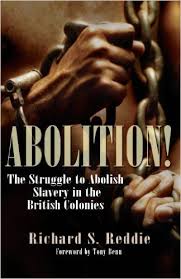
abolition

Abolition: The Struggle to Abolish Slavery in the British Colonies

By Richard S Reddie

Lion Hudson (2007)

Book Review

Reddie devotes most of his book to debunking common myths Europeans perpetuate to justify chattel slavery and the current plight of the African diaspora. First and foremost is the prevailing myth that Africa was a savage and backwards continent prior to the arrival of the first Europeans.

Prior to reading this book, I had never heard of the Nubian, Great Zimbabwe, Ghana, Songhay or Mali civilizations. Archival records suggests that Africa, not the Middle East, was the cradle of civilization. The pioneering Greek scientists Archimedes and Pythagoras both spent their youth studying in Egypt. There’s also fairly strong evidence that East Africans began producing steel before Europeans did.

Of the millions of slaves forcibly transported to the Americas, 40% ended up in Brazil, 40% in the Caribbean, 15% in Spanish territories and 5% in North America. Many Caribbean slaves were subsequently relocated from sugar plantations to North American cotton plantations.

Africans in the New World would outnumber Europeans by five to one until 1820. This population imbalance meant violent slave rebellions were a constant phenomenon.

This is the second myth Reddie debunks: that Europeans were primarily responsible for ending slavery. Citing a wealth of historical sources, he makes an ironclad case that Africans were primarily responsible for liberating themselves.

Even during the horrific Middle Passage, there was a major revolt in approximately one of every ten ships that left Africa. Reddie maintains it was mainly the fear of armed resistance that caused Europeans to terrorize their slaves with beatings, branding and mutilation.

Reddie details the bloody 1791 uprising in St Domingue (now Haiti), in which St Domingue slaves both freed themselves and won independence from France. All the new world colonies experienced frequent slave revolts, with those of Jamaica and Guyana deserving special mention for the number of Europeans killed.

Abolition! also discusses the grassroots organizing led by Quakers, evangelical Methodists and other religious groups leading to the 1807 law banning the British transatlantic slave trade. Although men such as William Wilberforce receive most of the credit, the abolition movement was mostly led by women.

The fight to end slavery altogether in British colonies would take another 27 years. Wilberforce opposed ending slavery itself as he believed slaves needed to be “properly prepared” before being granted their freedom.