Did the CIA Create the Hippie Movement?

george-morrison

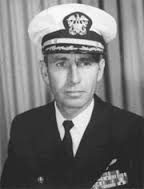
Admiral George Stephen Morrison

Inside the LC: The Strange But Mostly True Story of Laurel Canyon and the Birth of the Hippie Generation

By Dave McGowan (2008)

Free PDF: Inside the LC

Book Review

Inside the LC is a collection of blog posts Dave McGowan published in 2008 about the close relationship between the US military intelligence complex and the rock stars who created the hippy rock culture that emerged from the Laurel Canyon neighborhood of Los Angeles. As he relates the detailed family histories of various rock stars, it’s uncanny how many of them originated from Washington DC and families with military intelligence backgrounds. A few of them had personal intelligence backgrounds.

Examples include

  • Jim Morrison – son of George Stephen Morrison, the admiral piloting the warship involved in the phony Gulf of Tonkin incident used to justify the introduction of ground troops into Vietnam.
  • Frank Zappa – son of chemical warfare specialist at facility implicated in MKUltra.*
  • John Phillips (The Mamas and the Papas) – son of military intelligence officer. By strange coincidence, Philips himself was in Cuba “fighting for Castro” at the time of the Cuban revolution.
  • Stephen Stills (The Byrds/Crosby, Stills and Nash) – product of career military family. Stills himself served in Vietnam (presumably either as CIA or Special Operations) prior to the introduction of ground troops.
  • David Crosby (The Byrds/Crosby, Stills and Nash) – son of military intelligence officer.
  • Jackson Browne – son of OSS** officer.
  • Joan Baez – daughter of CIA officer who worked at MIT
  • John Denver (aka Henry John Deutschendorft) – son of career Air Force officer stationed at Roswell.
  • Emilylou Harris – daughter of career military officer stationed in Washington DC
  • Phil Ochs – openly talked about working for CIA. Also happened to be in Chile in 1973 during CIA coup.

McGowan also explores the intelligence links of the movie stars and Rand Corporation*** employees and supporters who lived in Laurel Canyon. Various movie stars worked clandestinely at the CIA’s secret movie studio the Lookout Mountain Laboratory (in Laurel Canyon). McGowan believes it’s no coincidence that the start of the anti-Vietnam War movement in 1965 was quickly followed by a flood of rock stars moving from Washington DC to Laurel Canyon – to rub shoulders with Hollywood actors who worked for the CIA in their spare time. In fact, he makes a strong case that the whole hippy/drug/sex/music scene was engineered by the CIA (and heavily promoted by CIA-controlled corporate media outlets) to lure young people away from the antiwar movement.

About half the book is devoted to the absurd number of freak uninvestigated deaths (including those committed by singer/songwriter Charles Manson and his followers) in Laurel Canyon. Among the suspicious deaths McGowan covers are those of Jimi Hendrix, Mama Cass Elliot, James Dean, Sal Mineo, Natalie Wood, Brian Jones (Rolling Stones), Ricky Nelson, John Belushi, John Denver, Phil Hartman, Dennis Wilson (Beach Boys) and Jim Morrison.

McGowan also finds it quite strange that a number of these bands came out of nowhere despite having virtually no talent. Jim Morrison, for example, was incarnated virtually overnight as a Sunset Strip rock star with a backing band (which had no prior band experience) and a full repertoire of songs he allegedly wrote before the Doors was even formed. Exactly how he wrote these songs is even more mysterious given that he couldn’t play an instrument or read music, especially given his sudden transformation from a clean cut collegiate conservative to a brooding sex symbol.


*MKUltra – a CIA mind control project that engaged in illegal experimentation on human subjects.

**The Office of Strategic Service (OSS) – the US intelligence agency that morphed into the CIA following World War II

***Rand Corporation – a nonprofit research corporation with close links to the US military-intelligence complex
The Rise and Fall of Britain’s Working Class

the-people

The People: The Rise and Fall of the Working Class 1910-2010

By Selina Todd

John Murray Publishers (2015)

Book Review

The People is about the rise of the British working class during World War I and its systematic erosion during the seventies as the Thatcher government systematically dismantled Britain’s manufacturing base.

British workers first began to see themselves as a cohesive force during 1914-18 as hundreds of thousands left domestic service (where most were employed) for the war industry. Working class consciousness reached its zenith during World War II, in part due to discriminatory treatment by the Churchill government. Working class women were often forced to leave well-paying jobs to be conscripted into the munitions industry. In contrast, middle and upper class women were exempted from conscription because they did “voluntary” work. Middle and upper class families also found it easier to be exempted from the mandatory evacuation scheme. The latter required rural families were required to accept child evacuees from urban centers without compensation.

The Churchill government provided virtually no funding for the mandatory evacuation scheme (which was organized mainly by schools and charitable groups), nor for benefits for families who lost housing, jobs and breadwinners due to German bombing, nor for proper air raid shelters. Government provided shelters were so wet and filthy, Londoners spontaneously seized and occupied the subway system, and there was nothing the government could do to stop them.

According to Todd, the austerity cuts that have turned Britain into a low wage economy actually started in 1976 (three years before Thatcher was elected prime minister) with public spending cuts imposed on the UK as a condition of an IMF loan. For the most part, this “free market” attitude continued under Blair and New Labour.

In her Afterward, Todd sees evidence of a growing popular discontent over inequality in the rise of UKIP (the United Kingdom Independence Party) and the Scottish independence referendum. The latter, she maintains, was actually more about inequality. More recently, this discontent has manifested in the election of left wing Jeremy Corbyn to run the Labour Party and the successful Brexit referendum.

Populism: America’s Largest Mass Democratic Movement


populist-moment

The Populist Moment: A Short History of the Agrarian Revolt in America

by Lawrence Goodwyn

Oxford University Press (1978)

Book Review

The Populist Moment describes the rise and fall of the 19th century populist movement, the largest mass democratic movement in US history. At its zenith during the 1896 election, the populist People’s Party had two million members.

Author Lawrence Goodwyn credits the rise of the agrarian populist movement to two major factors: 1) the unwillingness of the Eastern banking establishment to issue adequate credit to small family farmers and 2) the sudden contraction of the money supply caused by pressure on the post-Civil War government to repay bonds it floated for $450 million of treasury notes (aka Greenbacks) Lincoln used to pay for the Civil War.

Goodwyn also blames the systematic failure of commercial banks to issue adequate credit for the ultimate consolidation and centralization of farming in the US, leading to the eventual rise of industrial agriculture.

The Call to Prohibit Private Banks from Issuing Money

The populist movement started in Texas in 1878 as the Alliance. At first the group focused on forming cooperative buying committees, trade stores and crop insurance schemes to circumvent the crop-lien system that caused so many farmers to lose their land. Their chief organizing strategy was to send farmer-lecturers throughout Texas and eventually other parts of the South, Midwest and West. The banks, railroads, grain elevators and supply merchants responded by secretly conspiring to freeze them out. In turn the Alliance formed the People’s Party, whose main platform called for ending commercial banks’ ability to issue money.*

Goodwyn provides a detailed state-by-state history of the leadership struggles in the Alliance and in the People’s Party. Both made concerted efforts to reach out to Negro farmers and tenant farmers and to industrial workers, represented by the Knights of Labor and the American Federation of Labor, in the cities.

Overcoming Cultural Oppression

The book concludes by tracing the rise of the liberal and progressive movements that followed the demise of the People’s Party. The primary focus of these later movements has been to “humanize” industrial capitalism – as opposed to attacking the fundamental structure of capitalism (like populist movement). Goodwyn blames the absence of comparable mass movements in the twentieth century on the profound psychological oppression that occurs in modern industrialized society.

According to Goodwyn, the values of the corporate state totally dominates modern American intellectual life, as citizens of industrialized society are taught rules of conduct (in schools, churches and the media) that intimidate them and condition them not to rebel.  The Alliance overcame these cultural barriers by training and dispatching farmer-lecturers to teach farmers collective self-confidence and self-assertion – ie that the banks, rather than farmers themselves, were responsible for their predicament. Up to this point in time, no democratic mass movement has attempted a similar program of mass education.


*Contrary to popular belief, money used to run the global economy isn’t issued by governments but by private banks. Although most people think banks only loan out money they hold on deposit, loans are actually  created out of thin air via a bookkeeping entry.  Because this is where roughly 97% of money comes from, private banks have ultimate control over the amount of money in circulation. They exert enormous political power by shrinking the money supply to cause recessions and expanding it to cause inflation. See How Banks Invent Money Out of Thin Air , Stripping Banks of Their Power to Issue Money and 97% Owned

Sharecropping: The Hidden History

and-their-children

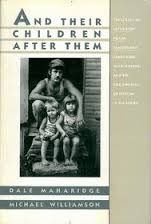
And Their Children After Them: The Legacy of Let Us Now Praise Famous Men – James, Agee, Walker Evans and the Rise and Fall of Cotton in the South

By Dale Maharidge and Michael Williamson

Random House (1990)

Book Review

This book is meant as a sequel to James Agee’s 1941 classic Let Us Now Praise Famous Men. In the original, Agee and Evans documented – though photos and biographical narrative – the profound poverty of white and black sharecroppers in the Cotton Belt. The sequel also provides historical background about the invention of the Cotton Gin* in 1794,  which first made cotton a viable crop in the southern US, and of cotton picking machines, gradually introduced in the 1950s, which ultimately put nine million sharecroppers out of work.

Between 1985-88, Maharidge and Williams revisited the same families that Agee and Evans had interviewed, compiling a coherent account of significant life events befalling children, grandchildren and great grandchildren of the original subjects. Sacramento Bee journalist Dale Marahidge, also provides a detailed analysis of various sharecropping schemes that were deliberately designed set up to keep families in debt. Typically the landlord advanced credit, based on a crop-lien agreement, and charged so high interest (as much as 200%) that families became virtual slaves when they couldn’t pay it. The end result was excruciating poverty, extreme malnutrition and chronic illnesses associated with malnutrition (mainly hookworm and pellagra**).

Despite contributing approximately one billion annually to the global economy, most tenant cotton farmers ended up owing money to the landlord. Maharidge maintains that without slavery and the sharecropping system that replaced it, there would have been no way the South could have produced cotton economically.

The book finishes by exploring develops that would end cotton cultivation in the Cotton Belt. In addition to the total mechanization of cotton farming that occurred after World War II, Maharidge blames the invention of and other synthetics, competition with other countries for cotton export markets and depletion of Cotton Belt soil due to the slash and burn mentality of large landholders.

At present, nearly all US cotton cultivation occurs in Texas and California and is totally mechanized. White tenant farmers displaced by the death of King Cotton could find work in southern factories that sprang up in the fifties and sixties. Owing to racial discrimination they faced from factory owners, former black tenant farmers mainly migrated to northern cities. Many, however, failed to find work, even after five years and longer.

Maharidge subscribes to the role played by massive unemployment of former black sharecroppers in triggering the early sixties civil rights movement.


*The cotton gin is a machine that quickly and easily separates cotton fibers from their seeds, allowing for much greater productivity than manual cotton separation.

**Hookworm is an intestinal parasite and pellagra is a deficiency disease stemming from absence of Vitamin B3 in the diet.

Class Society and Inequality: Debunking the Myth

White Trash: The 400-Year Untold History of Class in America

By Nancy Isenberg

Viking (2016)

Book Review

White Trash is a meticulously documented investigation of the historical roots of class inequality in the US. Despite the warm and fuzzy founding myths all American children are taught in school, the foundation for class inequality was laid during the early colonization of North America. The wealthy English elite who financed the colonies viewed the New World as a giant workhouse for England’s surplus poor (following the Enclosure Acts that drove them off the commons). British vagrants, vagabonds and convicts were both voluntarily and involuntarily transported to North America as apprentices, indentured servants and impressed* seaman. A surprising number of indentured servants, particularly in New England, were teenagers.

Most indentured servants (who functioned as virtual slaves) were promised land on completing their term of servitude. However nearly all went on to lose their land to property speculators and rigged taxation schemes, becoming squatters on the outskirts of established settlements. Comprising at least half of the population of most colonies, they were used by colonial elites as a wedge to encroach on Native American lands – only to be driven off their farms once the land was cleared and planted.

The lifestyle enjoyed by these squatters and their descendants was one of entrenched poverty and malnutrition, as well as hookworm, pellagra and other chronic illnesses associated with malnutrition. The disparaging attitude of wealthy elites and the emerging middle class towards this population clearly debunks ubiquitous corporate media claims about the “classless” nature of US society. Labels applied to them have changed over time, but the most prevalent have included “white trash,” “rednecks,” “mudsills,” and “mudeaters” (mud eating is a common symptom of hookworm). During her recent election campaign, Hillary Clinton referred to them as “deplorables.”

Isenberg reveals that post-World War II industrialization would lead many of these families migrate to northern cities, where they became “trailer trash.”

The wealthy elites have alternated between blaming white trash squatters and their descendants for their miserable circumstances and attributing their problems to genetic aberrations. The latter would lead to the eugenics movement and forced sterilization in the 20th century.

For me the most interesting parts of the book concerned the election of Andrew Jackson, the first “white trash” president, and the effects of slavery and the plantation system in creating a permanent “squatter class.” During his term as President, Jackson was repeatedly mocked by the elite-owned press for his lack of refinement – in much the same way as President-elect Donald Trump.

Isenberg assets that the creation of massive plantations maintained by slave labor created a permanent “squatter class” by driving an unprecedented number of poor white settlers off their land. She also maintains that the secession of seven states (which led to the Civil War) was more about preserving racial and class hierarchies than about preserving states rights. An astonishing number of poor southern whites either fought for the Union side, deserted or participated in food riots to protest shortages stemming from the exclusive dedication of prime agricultural land to cotton (rather than food).


*Impressment refers to the involuntary kidnapping of men, during the 18th and 19th century, into a military or naval force.

Originally published in Dissident Voice

America’s $33 Mercenaries

America’s $33 Mercenaries

Press TV (2013)

Film Review

This is a Press TV documentary about the $33 third world mercenaries lured into the Iraq war by private US private security companies like Blackwater and Triple Canopy. Unbeknownst to the American public, shortly after the 2003 invasion and occupation, the Pentagon began using private security firms to recruit private mercenaries to serve on the front line. In 2008, 70,000 of the western combatants were mercenaries, with 10% from the US and 90% from developing countries like Peru, Uganda and India.

The mercenaries were contracted through extremely profitable private security agencies like Triple Canopy (later renamed Special Operations Consulting), who charged the US government $15,000 a month per mercenary and paid the mercenaries $1,000 a month ($33 a day). By 2011, SOC discovered they could recruit mercenaries from poorer countries for $11 a day and reduced the pay scale even further.

The film follows the plight of Peruvian mercenaries SOC deliberately misled into believing they would be working as security guards in the Baghdad Green Zone (which is protected by US troops). Instead they found themselves deployed to the Basra front line in Basra when they finished their training in Jordan.

Those who were injured were denied proper medical care, resulting in needless deaths and horrendous disabilities. At present, the Peruvians in the film are suing SOC for reneging on the health and disability benefits injured mercenaries were guaranteed in their contract.

The documentary is in 2 parts, with Part 2 starting automatically when Part 1 finishes.

The Cover-Up: BP Deep Water Horizon Oil Spill

The Big Fix: BP Deep Water Horizon Oil Spill Cover-up

Directed by Josh Tickell (2012)

Film Review

The Big Fix is about the extreme corruption in the Louisiana State capitol and Washington DC which resulted in a massive cover-up of the disastrous environmental and health consequences of the 2010 BP oil spill in the Gulf of Mexico.

The documentary begins by exploring the ugly history of the Anglo-Iranian oil company, later renamed BP. It describes the efforts by the Iranian people to reclaim control of their oil with the democratic election of Mohammad Mosaddegh in 1951. Determined to retain British control of Iran’ oil, Winston Churchill approached President Eisenhower, who instigated a CIA-sponsored coup to oust Mosaddegh and install the brutal dictator Shah Mohammad Reza Pahlavi.

It would take the 1979 Islamic revolution to restore the right of the Iranian people to control their own oil.

The Oil Colony Known as Louisiana

Tickell makes the case that Louisiana is an oil colony in much the same way Iran was. Populist governor Huey Long, virtually the only Louisiana governor to stand up to Big Oil, was assassinated in 1935 – two days after announcing plans to run for president.

The Deep Water Horizon Coverup

The film goes on to expose important aspects of the Deep Water Horizon disaster that the corporate media neglect to report on – with special emphasis on BP cost cutting measures that violated safety regulations, including the manual disabling of warning alarms to enable faster drilling.

The role the Obama administration played in lying about the aftermath of the spill is even more shocking. When he opened contaminated areas to fishing, despite the continuing presence of large concentrations of oil, he also participated in a slick PR video him and his daughters swimming in a protected area (St Andrews Bay) unaffected by the spill.

Obama also lied about the health dangers of Corexit, a toxic chemical (banned in Britain since 2002) used to disperse surface oil slicks, as well as claiming BP discontinued aerial Corexit spraying in July 2010.*

The True Extent of Environmental and Human Health Consequences

A highlight of the film is the numerous poignant interviews with fishing families who not only lost their livelihoods as a result of the BP disaster but are suffering life threatening health problems from ongoing exposure to Corexit.

Despite the best efforts by BP and the Coast Guard to keep journalists and scientists out of the spill area, by 2012 a number of scientists (including Jean Costeau) had collected strong documentary evidence that the majority of the oil spill was pooled in enormous oil lakes on the sea bed. These oil lakes, in turn, were systematically killing off all sea life.

When oil geologist Matthew Sims attempted to bring this information to media attention, he mysteriously drowned in his hot tub.


*Numerous investigators have documented that Corexit spraying continued for at least two years after the spill.


Stealing Africa

Stealing Africa – Why Poverty

BBC (2012)

Film Review

Stealing Africa is about the Swiss corporation Glencore and how they have been ripping off Zambia’s copper for the last 16 years.

Despite exporting $29 billion worth of copper annually, Zambia remains one of the twentieth poorest countries in the world. The reason? A Swiss company called Glencore that keeps the vast majority of these profits for themselves. Thanks to creative bookkeeping and major tax evasion, Glencore pays less to the Zambian government in taxes than they pay to provide electricity to their mines.

Glencore has an interesting connection to the Clintons. The company was started in the 1970s by Marc Rich, an American white collar criminal who fled to Switzerland in 1983 to avoid imprisonment on money laundering, tax fraud and trading with the enemy* charges.

In 1994, the company changed their name from Marc Rich and Company to Glencore.- in 2000, Bill Clinton pardoned Rich in return for millions in campaign contributions and donations to the Clinton Library.

The Zambian copper mines were a state owned industry until 2000, when the global price of copper plummeted, leaving Zambia unable to repay its foreign debt. Allegedly under pressure from the International Monetary Fund, President Frederick Chiluba sold all Zambia’s copper mines to Glencore and other foreign companies. In 2007, a case in the British high court found Chiluba (who died in 2011) guilty of conspiracy to defraud.

In 2011, a confidential tax audit of Glencore’s Mopani mine was leaked to Friends of the Earth. It revealed that Glencore (with the collusion of Switzerland) was reducing their tax bill in Zambia by rigging the price of copper and fraudulent profit reporting. Following public release of the audit, the EU investment bank suspended further loans to Glencore. Sadly the company persists in their refusal to pay the tax demands of a government lacking the legal resources to take on a gigantic multinational corporation.

The result is a country in which 64% of the population live below the poverty line and residents adjacent to Glencore copper mines suffer major health problems. These relate mainly to the company’s refusal to abide by World Health Organization standards for sulfur dioxide emissions.

The US Taboo Against Socialism

America’s Unofficial Religion: the War on an Idea

Abby Martin (Empire Files) 2015

Film Review

America’s Unofficial Religion is a documentary about the origin of the American taboo against socialism.

At present, the US is the only western democracy without a prominent socialist party. This hasn’t always been the case. A powerful socialist movement arose alongside the progressive, populist and union movements of the late 19th century. All were a reaction to the brutal industrial oppression that characterized this period.

In 1912, the US had 13 socialist newspapers, 12 socialist monthlies and 57 socialist mayors 23 cities. Socialist Eugene Debs campaigned for president that year and won 6% of the popular vote (at a time when women and blacks were barred from voting).

Concerned about the detrimental effect of strong mass organizing on profits, the corporate elite leaned on president Woodrow Wilson to pass two laws – the Espionage Act, which criminalized dissent, and the Sedition Act, which made it a crime to oppose US involvement in World War I. Following passage of the Sedition Act, Eugene Debs was arrested for making an anti-war speech and sentenced to ten years in prison. The Wilson administration also imprisoned more than 90 International Workers of the World (IWW)* leaders, in addition to sanctioning the murder of IWW members by Pinkerton’s guards and organized lynch mobs.

US Organizing and Strikes in Response to Bolshevik Revolution

The 1917 Bolshevik Revolution would inspire a wave of organizing and strike activity in the US, leading one in five American workers to go out on strike in 1919.

Wilson responded by authorizing Attorney General Mitchell Palmer and his assistant J Edgar Hoover to launch the Palmer Raids, arresting more than 10,000 suspected socialist and communists and deporting thousands more.

In the 1930s, the cruel economic conditions of the Great Depression led to an enormous upsurge in mass organizing. Many historians argue that Roosevelt had no choice but to bring in sweeping New Deal legislation to prevent a socialist revolution.

Taft Hartley, HUAC and Cointelpro

Following World War II, during which US unions won major concessions, a Republican Congress passed the Taft Hartley Act, which made it illegal for union members to be socialists or communists (in 1945, roughly half the union leadership was socialist) and the Smith Act, which made Communist Party membership Illegal.

The enactment of these laws was accompanied by aggressive activity in the House on UnAmerican Activities Committee (HUAC). During the fifties many HUAC subpoenaed Hollywood actors, directors and producers – as well as teachers and college professors. Many were permanently blacklisted from working on the mere suspicion of socialist/communist sympathies.

In 1956 Hoover, a rabid anti-communist, would launch Cointelpro, a program conducting massive illegal surveillance, infiltration and sabotage of civil rights groups and other social change organization. Cointelpro also carried out clandestine assassinations and false imprisonment of numerous black liberation leaders, many of whom are still in prison.


*The International Workers of the World (IWW) is international labor union started in 1905 that has strong ties both to socialism and to anarchism.

Who Stole the American Dream?

The Heist: Who Stole the American Dream and How We Can Get It Back

Directed by Frances Causey and Donald Goldmacher (2012)

Film Review

The Heist traces the banking regulations Roosevelt enacted during the Great Depression – with the goal of preventing future economic cataclysms – and the systematic dismantling of this regulation that commenced in 1971. The documentary credits this deliberate attack on the financial regulatory system for the 2008 meltdown, the decimation of American unions, the total control of federal government by Wall Street corporations, and the most unequal economic system in the world.

The filmmakers date this orchestrated attack on US financial regulation to the Powell Memo,* which the Chamber of Commerce and Business Roundtable seized on to launch twelve right wing pro-business think tanks (including the CATO Institute, the American Enterprise Institutes and the Heritage Foundation). Funded by six families, these foundations were created with the deliberate aim of capturing business schools and the media with fundamentalist free market ideology. They proceeded to lobby all levels of government for tax cuts on the rich, as well as financing focus groups and psychologists to develop propaganda persuading blue collar workers to vote against their own interests.

In 1980, they succeeded in convincing large numbers of blue collar Democrats to vote for Reagan. In addition to implementing tax cuts for the rich that created the largest federal deficit in US history, Reagan also repealed the Fairness Doctrine,** opening the door to a radio talk show market 90% dominated by right wing talk show hosts like Rush Limbaugh.

Guided by the Powell Memo, right wing Democrat Bill Clinton repealed the Glass Steagall Act,***, deregulated derivatives trading, gutted the Federal Communication Commission’s authority to regulate media monopolies, and sped up the outsourcing of US jobs through the enactment of North American Free Trade Agreement (NAFTA), the Global Agreement on Tariffs and Trade (which created the World Trade Organization).

Obama would prove even more pro-business than Clinton, with his refusal to prosecute the banskters he bailed out, his appointment of GE CEO Jeffrey Imelt (a notorious job outsourcer) to head the President’s Council on Jobs and Competitiveness, his promotion of the myth that Social Security is insolvent, his deregulation of private pensions, and his support for the Transpacific Partnership (TPP).

The film features great clips from Elizabeth Warren, Bernie Sanders, Paul Craig Roberts and Ross Perot (speaking out against NAFTA during his 1992 presidential campaign).


* The Powell Memo was a memorandum Lewis Powell prepared at the request of the Chamber of Commerce. It remained secret until after his appointment to the Supreme Court. The Powell Memo

** The Fairness Doctrine was a policy of the United States Federal Communications Commission (FCC), introduced in 1949, requiring the holders of broadcast licenses both to present controversial issues of public importance and to do so in a manner that was—in the Commission’s view—honest, equitable, and balanced.

***The GlassSteagall Act, passed by Congress in 1933, protected customers’ deposits by prohibiting commercial banks from engaging in investments. It was enacted as an emergency response to the failure of nearly 5,000 banks during the Great Depression.