Hidden History: The Abolitionists who Led the European Colonization of Africa

Slavery Trade Routes – Part 3 Slavery’s New Frontiers

Al Jazeera (2018)

Film Review

The final episode in the series begins with the revolution in Saint-Domingue (modern day Haiti) that would signal the beginning of the end for the slave trade. Led by Tousaint L’Ouverture, in 1791 the entire slave population of Saint Domingue (90% of residents) revolted again their plantation owners. It would be Napoleon’s first military defeat.

Although the British Navy succeeded in shutting down much of the slave trade in 1815, they couldn’t stem the flow of slaves to feed the prison-style industrial coffee plantations in Brazil. An additional 2 million Africans were deported to Brazil between 1815 and 1850. At present, Brazil has the second largest population of Africans in the world (with Nigeria at number one).

Although the trafficking of slaves to the US stopped in 1815, the American slave population continued to grow – in part due to the routine rape of female slaves by their white masters.

US Last Country to Abolish Slavery

In 1825, after achieving independence, all former Spanish colonies abolished slavery. French, English and Dutch colonies would gradually follow suit. The US formally abolished slavery in 1865 during the Civil War. In reality slavery continued in southern states with Jim Crow laws that denied Blacks the right to vote, freedom of movement and the right to self-defense. In addition, laws providing for the arrest of unemployed blacks for vagrancy resulted in a de facto involuntary servitude.

European Colonization of Africa

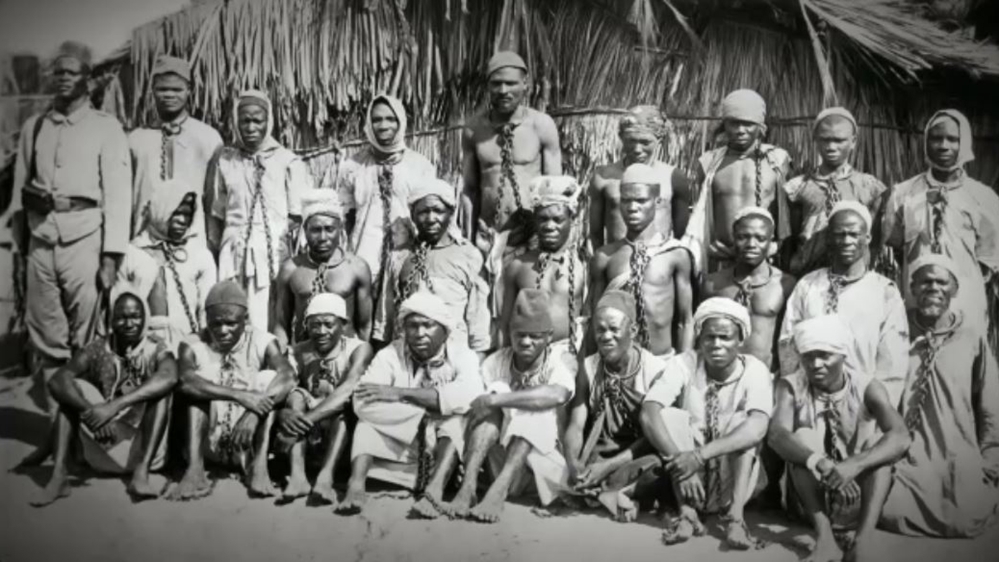
For me, the most interesting part of the film concerns the direct link between the abolition of slavery and the intensive European colonization of Africa. The military adventurers who conquered Africa were all “abolitionists.” Officially the purpose of their missions to Africa were to end the slave trade. In reality, they were deeply committed white supremacists who cut deals with Arab slave traders and local chieftains to put poor African peasants to work (involuntarily) on their African coffee, palm oil, rubber and cotton plantations.

The video can’t be embedded but can be seen free at the following link:

Slavery’s New Frontiers

Hidden History: How 13 Million Kidnapped Africans Built Global Capitalism

Slavery Routes – Part 2 From Sugar to Revolution

Al Jazeera (2018)

Film Review

Part 2 of Slavery Routes covers the so-called “Sugar Wars”* and the entry of the rest of Europe (Holland, Prussia, Denmark, England, Spain, France)  into Portugal’s lucrative slave trade. It also explores the role of European banks and insurance companies in making this expansion possible. Slave traders always undertook cross-Atlantic voyages on credit, which meant they had to be insured against losing their “cargo.” Insurance companies (Lloyd’s of London was the most prominent) were happy to ensure an enterprise in which a trader stood to triple his stake.

In this way, the slave trade provided the financial capital for both European and American capitalism.

Too Valuable to Kill

Rebellions by captive slaves were continual on both sides of the Atlantic. Because it took four years of plantation work to pay off the price of a captive, rebellious slaves were too valuable to kill. Instead ship captains and plantation owners became quite ingenious in devising brutal methods to compel submission.

In 1685 Louis XIV of France (funny I majored in French history and they never mentioned this) enacted the Code Noir, which made it legal to beat slaves but not torture them or mutilate their limbs.

The European Abolition Movement

By the late 1780s there was growing awareness and opposition in European society against the brutal conditions of the Middle Passage.** Britain’s abolition movement gained considerable momentum following the 1783 lawsuit in which a slave trader sued his insurance company for refusing to reimburse him after he threw his cargo of 133 living slaves overboard.

The English outlawed the slave trade in 1807. By 1815 there navy was strong enough to prevent other European nations from engaging in slave trading.

In all, 13 million Africans were kidnapped to the New World between 1520 and 1815.

The video can’t be embedded but can be seen free at the following link:

From Sugar to Revolution


*”Sugar Wars” refers to a series of naval conflicts between European nations seeking the upper hand in the slave market.

**The Middle Passage was the stage of the triangular trade (resulting in large exports of sugar to Europe) in which millions of Africans were shipped across the Atlantic as slaves.

History of Capitalism: The Tragic and Shameful Roots of the African Slave Trade

Slavery Routes – Part 1 For All the Gold in the World

Al Jazeera (2018)

Film Review

This three part documentary explores the ugly, tragic and above all profitable history of the African slave trade. The profound grief, anger and shame I experienced on watching it was compounded by having to wait until age 70 to learn this stuff. This is a history all American and European children should learn by heart in primary and secondary school.

Part 1 focuses around the 15th century European slave market, which was mainly run by the Portuguese. Prior to the fall of Constantinople (to the Turks) in 1453, Europeans sourced their slaves (derived from the word “slav”) from the Balkans.

Following the collapse of the Slavic slave trade, during the 15-17th century the Portuguese kidnapped more than one million Africans were kidnapped for sale in Spain, Italy and Southern France. They were put to work in agriculture, iron works, sailing, fishing and pottery production. Most archeological traces of Lisbon slave trade were destroyed in the Great Lisbon Earthquake in 1755.

In Europe, African slaves were assimilated into European families and communities and many Mediterranean families carry African DNA.

Starting in 1434, the Portuguese established small settlements in the Muslim colonies along the coast of West African that were their initial source of slaves. In 1455, the Portuguese were joined by slave traders from many other European countries. Their despicable activities were supported by a papal bull issued by Pope Nicholas V (allegedly to assist the Crusades in ending Muslim occupation of the holy lands). The latter provided a legal framework for Europeans to “conquer all pagans for perpetual slavery in the name of God.”

The Portuguese also established a profitable trading relationship with the powerful King of Konga, who converted to Christianity and traded African gold for modern European goods for his nobles.

In addition to transporting the slaves they captured to Europe, the Portuguese put them to work in the Elmina gold mines in modern day Ghana and on the first sugar plantations on Sao Tomean Island in the Gulf of Guinea. A series of successful slave uprisings caused the collapse of the Sao Tomean plantations. At this point, the Portuguese began transporting their African slaves to new sugar plantations in Brazil.

I’m unable to embed the video, but you can watch it free at this link:

Slavery Routes: For All the Gold in the World


The Rohyngya Crisis: Is Myanmar the New Syria?

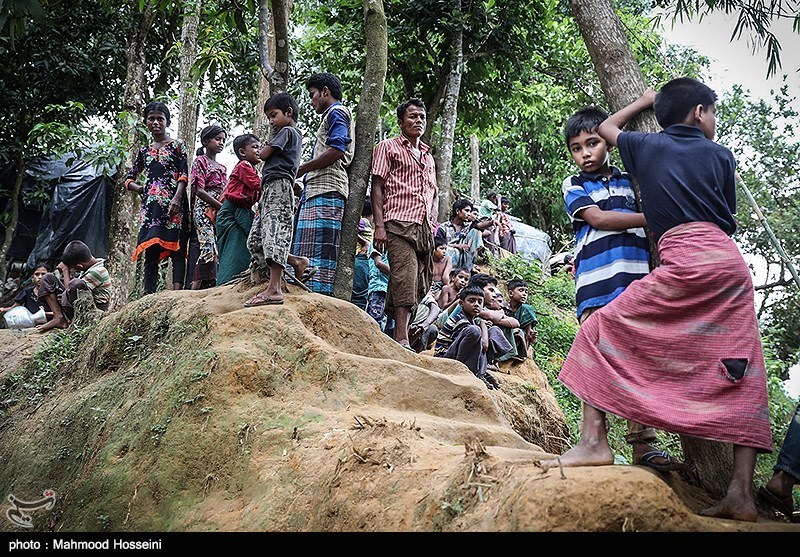
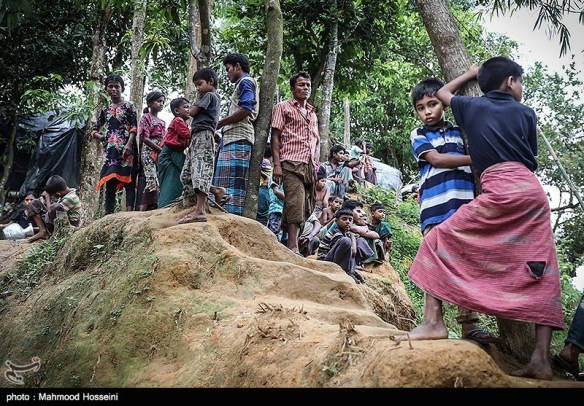
For nearly a year now, the western media has been flooding us with images of Muslim Rohingya fleeing Rakhine state in Myanmar. Since October 2017, an estimated 700,000 (roughly half the Rohingya population) have fled into Bangladesh where they live in primitive refugee camps or in the open air on the roadside. Most of are women fleeing the Myanmar army, which has been burning their villages, gang raping them, killing their husbands and, in some cases, their children. Since 2016, some of the 700,000 Rohingya who remain in Myanmar having been living in camps (some under military force – others voluntarily for protection from Buddhist vigilantes).

We read occasional vague references to the current “civil war” in Rakhine state. And listen to hysterical rants by Amnesty Internationali spokespeople condemning Myanmar president Aung San Suu Kyi for her failure to speak out against the army’s brutal treatment of Rohingya Muslims. AI is also calling for Burmese leaders in the International Criminal Court – which is impossible as Myanmar isn’t an ICC member.

Is a New Proxy War Brewing in Myanmar?

In most cases, the western media tells us virtually nothing about the civil war that is the root cause of the current Rohingya refugee crisis. Why not? In exploring non-western media accounts, I get the uncomfortable inkling I am witnessing a burgeoning proxy war in Myanmar, similar to the civil war in Syria, with Saudi Arabia and possibly other US client states supporting the Rohingya rebels. Obviously this background in no way justifies recent terrorism by the Myanmar army against Rohingya civilians. At the same time, the world is growing weary of the US and their allies using human rights violations as justification for military intervention. In Myanmar, as in Syria, the only sustainable solution is a political settlement, ie an international agreement that protects Rohyngya autonomy and human rights while ending interference by foreign players.

Myanmar’s 70-Year Civil War

The current Rohyngya crisis was triggered in August 2017 when the Arakanii Army (AA) and the Arakan Rohingya Salvation Army (ARSA), a new extremist group, launched a concerted attack on Myanmar army and police. The government of Myanmar has been fighting armed Rohingya separatists since it first won independence in 1948. During World War II when Japan occupied Burma, local Buddhists supported the Axis forces and the Bengali Muslims remained loyal to the British crown. Tens of thousands died during mass mutual reprisals. As Burma negotiated independence from the UK, Muslims in northern Arakan appealed to East Pakistan (now Bangladesh) to annex this area. When the both Burmese independence hero Aung San and Pakistan’s founder Muhammed Ali Jinnaha rejected this appeal, Arakan Muslims launched a mujahideen insurgency

Simultaneously fighting communist and ethnic insurgencies among the Karensiii, the Kachensiv and other marginalized groups, the Burmese army could only control major cities and towns in Arakan. The mujahideen controlled large parts of rural Arakan, leading many Buddhist villagers to flee to the southern part of the state.

It wasn’t until late 1954 that the last mujahideen camps fell to the Burmese army, with most insurgents retreating into East Pakistan. The Burma/East Pakistan (Bangladesh) border has always been extremely porous (like the border between Afghanistan and Pakistan) with Rohingya militants moving in and out of northern Burma to launch attacks on police and army outposts.

Two years after Burma’s 1962 military coup, Muslim youth from rural Arakan formed an underground movement called the Rohingya Independence Force (RIF). In 1998 various RIF factions united to form the Arakan Roningya National Organization (ARNO). It was at this point they began receiving financial and material support from the International Islamic Relief Organization (IIRO), which operates out of Saudi Arabia.

The Rise of the Arakan Army

The 2004 downfall of Prime Minister Kihn Nunt and the collapse of his military intelligence network would result, in 2012, in the emergence of the Arakan Army (AA). Recruiting Rakhine laborers working in Phakant jade plants in Kachine state, the AA agreed to open a new western front in Rakhine state when the ceasefire between the Myanmar military and the Kachine Independence Army (KIA) broke down in 2013, Between March 2015 and April 2016, the AA killed 13 Myanmar troops, which, in turn, captured 57 AA troops.

At present, the government estimates there are 300 AA and ARSA troops operating along the Myanmar-India-Bangladesh border and another 200 fighting with the KIA. They enjoy strong support from the civilian population. Rohingya refugees describe young villagers picking up clubs, knives and sticks to join attacks against Myanmar police and military.

Saudi Support and the Methamphetamine Trade

According to the Muslim World League website, the Kingdom of Saudi Arabia continues to support the Rohingya with financial and material support. According to International Crisis Group, Rohingya separatists also get major financial support from wealthy Rohingya refugees living in Saudi Arabia.

Rohingya militants also seem to be involved in methamphetamine smuggling, with the army seizing 26.7 million meth tabs from suspected militants in 2015 and 37.7 million tablets in 2017. There are also concerns they may have links with the Pakistani Taliban and possibly Islamic State militants.


i Amnesty International is increasingly playing a cheerleading role for US military intervention in Syria and non-aligned countries exhibiting “human rights” violations. See Amnesty International: Trumpeting for War . . . Again

ii Arakan (now known as Rakhine state) is a historic region bordering the Bay of Bengal to its west, Bangladesh to its north and Myanmar to its east.

iii The Karen, Kayin, Kariang or Yang people encompass a number of individual Sino-Tibetan language speaking ethnic groups, many of which do not share a common language or culture. These Karen groups reside primarily in Karen State, in southern and southeastern Myanmar.

iv The Kachins are a coalition of six tribes whose homeland encompasses territory in Yunnan, China, Northeast India and Kachin State in Myanmar.

I originally published this article in OpEd News

(Image by Tasnim News Agency [CC BY 4.0 (creativecommons.org/licenses/by/4.0)], via Wikimedia Commons)

Hidden History: Roosevelt Opts for Austerity

The Great Depression – Part 7 Arsenal of Democracy

PBS (1993)

Film Review

For me the most significant segment of this final episode concerns the austerity cuts Roosevelt enacted in 1937, in response to business critics who attacked the burgeoning national debt.

As FDR laid off half the workers employed by the Works Progress Administration (WPA), the effects rippled throughout the economy. The stock market crashed in October 1937, even faster than in 1929. Businesses failed in record numbers and unemployment climbed to 20%. Once again, thousands of unemployed Americans were on the brink of starvation.

The 1937-38 depression is known as the “Roosevelt Depression.”

Part 7 also explores the mass migration of indigent Americans to California, under the misguided belief they would find plentiful food and jobs. Like 20 or so other states, California enacted laws to keep out the unemployed. With the help of local residents groups, police patrolled California’s borders for six weeks in 1938. They turned back all newcomers without $10 on their person.

Many of the state’s new migrants were housed in giant federal camps, as there was nowhere else for them to live.

After Eleanor Roosevelt testified to Congress about her fact finding tour to the camp, FDR introduced (and passed) a $5 billion spending bill.

In September 1939, Britain declared war on Germany following the invasion of Poland. By May 1940, Denmark, Norway, Holland and Belgium had fallen to the Nazis and Hitler was bombing the UK.

A year later, FDR initiated the first peace time draft in US history. Jobless men flocked to enlist because there were still no jobs. Forty percent failed their physicals due to lingering health effects of starvation.

A few weeks before the November 1940 presidential election (which he won), FDR authorized $7 billion in military aid to Britain, opening up thousands of jobs in the defense industry.

Yet it would take another three years – and US entry into the war – before the country returned to full employment.

Why FDR Opposed the 1937 Anti-Lynching Bill

The Great Depression – Part 7 To Be Somebody

PBS (1993)

Film Review

This episode covers Depression-era lynching, racial segregation and antisemitism.

The 1930s saw a big increase in southern lynchings of African Americans. In 1935, this would lead to a major campaign by the National Association of Colored People to win FDR’s support for a federal anti-lynching bill. Still fearful of southern Democrats, Roosevelt declined to support the bill when it passed the house in 1937 and was blocked by a Senate filibuster.

In 1937 the Daughters of the American Republic (DAR) blocked African American opera singer Marion Anderson from performing at Constitution Hall. Instead Eleanor Roosevelt arranged for her to sing at the Lincoln Memorial before an audience of 25,000.

This episode also explores the 100+ Nazi groups that emerged during the thirties in the US. They would hold marches in full Nazi regalia in 19 cities. Without a following of over 10 million listeners, antisemitic radio host Father Coughlan delivered weekly rants about “America for Americans.”

After the November 1938 Kristalnacht* resulted in the mass destruction of Jewish businesses, the arrest of 20,000 Jews and the death of 38, human rights advocates pressed FDR to accept Jewish refugees from Germany. He refused.


*Kristallnacht was a pogrom against Jews throughout Nazi Germany on 9–10 November 1938, carried out by SA paramilitary forces and German civilians.

Hidden History: How the New Deal Ripped Off Farmworkers and Blacks

The Great Depression – Part 5 Mean Things Happening

PBS (1993)

Film Review

While the National Recovery Administration, created in 1933, theoretically guaranteed workers the right to unionize, company bosses continued to fire (and shoot) employees who went on strike for the right to form unions.

In 1933 John L Lewis formed the Congress of Industrial Organizations (CIO). Unlike the American Federation of Labor (AFL), membership in the CIO was open to blacks, immigrants and communists (women continued to be shut out of the union movement until World War II).

For political reasons, the New Deal right to unionize didn’t extend to agricultural workers. The primary New Deal farm program was the Agriculture Adjustment Act, which gave plantation owners direct payments for destroying surplus cotton crops. Despite federal requirements that owners share their payments with tenant farmers* and sharecroppers,** they rarely did so.

Both approached socialist leader Norman Thomas, who helped them organize the Southern Tenant Farmers Association (STFA), which had 1,000 members by the end of 1935. Arkansas lawmakers responded by evicting tenant farmers and share croppers suspected of organizing, murdering black members and passing ordinances banning public gatherings.

Despite white terrorism, the STFA organized a successful cotton pickers strike (for higher wages) in 1935.

By 1935, the STFA had 25,000 members in Arkansas, Mississippi, Missouri and Tennessee and ongoing terrorist activities by whites began to receive national attention. The same year, FDR declined to meet with union leaders during a trip to Little Rock.***

In 1938, Congress finally passed legislation granting direct federal relief to tenant farmers and sharecroppers – plantation owners responded by evicting 251 families in order to keep the relief payments for themselves.


*A tenant farmer used his own seed and animals to cultivate an owner’s land and paid him 1/4 of his crop for this privilege.

**A sharecropper used the landowner’s seed and animals and paid him 1/2 of his crop for this privilege.

*** Aside from FDR’s inherent racism, southern tenant farmers and sharecoppers didn’t vote because they couldn’t afford the $1 poll tax. More importantly the President relied on the votes of southern Democrats to pass New Deal legislation.

Hidden History: How FDR Blocked Upton Sinclair’s Election as California Governor

The Great Depression – Part 4 We have a Plan

PBS (1993)

Film Review

Part 4 is largely about famous author Upton Sinclair’s campaign for California governor. This is something they definitely don’t teach in school. Because he nearly won.

The parallels with Bernie Sanders 2016 presidential campaign are uncanny. Sinclair, also a socialist, registered as a Democrat for the 1934 campaign. He received the same massive popular response from Californian workers that Sanders and UK Labour leader Jeremy Corbyn have received. Thousands of young people flocked to join the California Democratic Party, which hadn’t won a gubernatorial race in  35 years.

Sinclair easily won the Democratic primary and polled ahead of his Republican opponent until he was betrayed by the Roosevelt administration. After trying to pressure him to quit the race in favor of the third party candidate, they made a deal for California Democrats to support Sinclair’s Republican opponent – in return for the latter’s support of Roosevelt’s New Deal legislation.

In the last weeks of the campaign, Sinclair was also hurt by the massive media smear campaign launched by MGM studio boss Louis B Meyer.

Although Sinclair lost the election, 27 members of Sinclair’s EPIC (End Poverty in California) organization team won seats in the California legislature.

This episode also covers San Francisco’s 1934 general strike and FDR’s unsuccessful attempt to create a national health service as New Zealand did in 1938.

FDR and the New Deal: 10 New Federal Agencies in First 100 Days

The Great Depression: Part 3 New Deal New York

PBS (2013)

Film Review

Part 3 is mainly about the collaboration between New York City mayor Fiorello La Guardia and Roosevelt to end joblessness, hunger and starvation in Depression-era New York.

One of the first things FDR did following his 1933 inauguration was to close banks for four days (to end the bank runs responsible for an epidemic of bank failures) and pass a $2 billion emergency banking bill to pay off depositors who lost savings due to bank failures.

He also created 10 new agencies during his first 100 days to address the economic crisis caused by the Great Depression. The first three were the Civilian Conservation Corps (CCC) which used federal money to put 250,000 jobless Americans to work restoring the national forests; the Federal Emergency Relief (FER) agency, which provided direct financial relief to the unemployed and their families; and the National Recovery Administration (NRA), which set profit and wage limits for businesses.

During the winter of 1933-34, FDR and La Guardia worked together to establish the Public Works Administration, a temporary jobs program that employed 1.5 million jobless Americans in infrastructure projects (building roads, bridges, hospitals, schools, etc). One-fifth of these new jobs went to New York, America’s largest city. Under the leadership of Reverend Adam Clayton Powell, New York’s black community organized to protest overt discrimination against black workers, especially by white-owned businesses in Harlem.

In 1935, the NRA, which was very unpopular with the business community was overturned by the Supreme Court and replaced with the Works Progress Administration (WPA). The latter banned racial discrimination, as well as creating numerous jobs for writers, actors and artists, as well as infrastructure projects.

One-seventh of WPA funding went to New York City.

This episode neglects to mention the attempted 1933 Wall Street-initiated coup against Roosevelt foiled by General Smedley Butler.


The Great Depression: More Stuff You Didn’t Learn in School

The Great Depression Part 2 – The Road to Rock Bottom

PBS (1993)

Film Review

The second episode of the PBS Great Depression series deals mainly with the near collapse of the farm economy, when farmers burned their crops because they couldn’t cover their costs by selling them. The depression in the farm economy had started in the mid-twenties, prior to the 1929 Wall Street crash. World War I  created large demand for US agricultural exports. This led to a crisis of overproduction when the war ended.

With Hoover unwilling to provide government aid, the Red Cross took primary responsibility for providing food aid to starving families in Arkansas and other southern states.

This episode also explores the exploits of Pretty Boy Floyd, known as the Sage Brush Robin Hood, for sharing the proceeds of his bank robberies with families who couldn’t feed their children.

It finishes with the Bonus Army saga, in which 20,000 homeless World War I veterans and their families camped out in Washington DC to pressure Hoover and Congress to authorize early payment of the bonus they were promised in 1945. Under Hoover’s orders, Generals MacArthur, Patton and Eisenhower led a military assault on the encampment. They burnt all the tents and shacks protestors were living in, injuring 55 veterans and killing a 12-week-old baby.