Expose: US Concentration Camps in Post-War Germany

Other Losses: An Investigation into the Mass Deaths of German Prisoners at the Hands of the French and Americans After World War II

by James Bacque

General Paperbacks (1991)

Book Review

This book is a mind boggling expose about the 5 million German soldiers and civilians crammed into barbed wire cages in Allied occupied Germany. According to reliable witnesses, as many as three million of these detainees were civilians, ie had no military status. Survivors, military personnel and camp visitors reported seeing pregnant women in the camps, as well as children as young as six. The prisoners had no access to shelter, warm clothing, sanitation or medical facilities. Many were deliberately given starvation rations.

War Department records reveal the camps had death rates of approximately 30% annually from exposure and starvation related illnesses – though the US Army officially recorded them as “other losses.” For the most part they were buried in mass graves, some of which were later uncovered by German construction crews and grave diggers. Because the US military made no effort to identify them, by 1947 German families were reporting one million loved ones missing and unaccounted for.

How Eisenhower Circumvented the Geneva Convention

Military personnel who worked closely with Eisenhower and his aides believe this policy (to imprison large numbers of Germans in concentration camps) was devised in 1944. In April 1945, Eisenhower announced to the Combined Chiefs of Staff (CCS)* that he was creating a new category of military prisoner – Disarmed Enemy Forces (DEF).**

Although other generals in the CCS advised him against capturing any more DEFs after VE Day,*** Eisenhower went on to capture an additional 2 million.

In addition to denying them any form of shelter or adequate rations, Eisenhower also prohibited the Red Cross (ICRC), Quakers, Unitarians, YMCA and concerned German civilians from providing them food parcels.

Heavy Censorship: How the Camps Were Kept Secret

Owing to heavy censorship in US-occupied Germany, the deplorable conditions of these camps were kept secret outside of Germany until the US began transferring prisoners to French camps for slave labor assignments (which also violated the Geneva Convention). The French camps were allowing ICRC visits. Horrified by the extreme emaciation and poor health (with many on the verge of death) of the former US prisoners, Red Cross representatives made formal complaints with the US and French government and the press.

US Blames Fictitious “World Food Shortage”

In response, the US government launched a massive PR offensive shifting the blame for the prisoners’ horrendous condition first to the French and then to a non-existent “world food shortage.” There is incontrovertible evidence there were global surpluses of wheat, maize and potatoes in both 1945 and 1946. There were also hundreds of thousands of food parcels piled up in US Army and ICRC warehouses that the Red Cross was prohibited from delivering. There were also hundreds of thousands of unused tents captured form the German army.

There was absolutely no military reason for the Allies to keep millions of disarmed Germans in prison camps after Germany surrendered. The French kept them for slave labor and, where possible, to recruit them to the Foreign Legion to fight in Vietnam and Algeria. According to Bacque (based on actual statements by Eisenhower), the sole purpose of the US camps was a perverted and sadistic desire to take revenge on German soldiers and civilians.

Low Death Rates in Canadian and British POW Camps

The experience of POWs in Canadian and British camps was markedly different from that in the US and French camps. In the former, all inmates were provided tends or other shelter and, in all but one case, adequate food rations. The Canadian and British military also provided hospital care for sick and wounded inmates. The result was death rates comparable to the general population.

The US had only released 40% of their prisoners by January 1946. A year later 24,834 remained in custody.


*The Combined Chiefs of Staff (CCS) was the supreme military command of the military forces of the US and Great Britain during World War II.

**Clearly Eisenhower hoped that by calling them DEFs instead of Prisoners of War (POWs), he would avoid violating the Geneva Conventions governing POW treatment. It was for this exact reason, George W Bush declared all the detainees at Guantanamo Bay Enemy Combatants, rather than POWs.

***Victory over Europe Day (May 7, 1945) – the day the Allies accepted the German terms of surrender.
Lies My Teacher Told Me

Lies My Teacher Told Me: Everything Your American History Textbook Got Wrong

By James W Loewen

Touchstone (1996)

Book Review

This book is a treasure trove of hidden US history. Loewen’s primary goal is to analyze why high school students universally hate US history. He mainly blames US history textbooks. The way they filter out embarrassing facts makes them incredibly dull and boring ir tendency to filter out embarrassing facts makes them dull and boring, especially given their unrelenting promotion of corporate capitalism, American exceptionalism*, growth, progress and unconditional optimism about the future.

As he so handily demonstrates, real US history (of the kind you find in primary sources**) is both exciting and compelling. Yet because it sometimes portrays the Europeans who colonized North America in an unfavorable light, it rarely finds its way into high school textbooks.

The sections I found most interesting concerned Columbus, the first Thanksgiving, Woodrow Wilson and Helen Keller.

  • Prior to reading this book, I was unaware that Columbus started the North Atlantic slave trade – nor that he was responsible for kidnapping and transporting more slaves (5,000 Native American slaves) than any other slave trader in history.
  • Prior to reading the section on the first Thanksgiving, I was unaware that only 35 of the 102 passengers on the Mayflower were Pilgrims. The other 67 thought they were headed for Virginia tobacco plantations and, according to Loewen, were most likely “kidnapped” by the Pilgrims and forced to sail to Massachusetts against their will. He believes the purpose of the Mayflower Compact (which gave them a democratic voice in governance) was to keep them from rebelling and overpowering the Pilgrims. When the ship arrived at Plymouth Rock, the settlers found nearly the entire indigenous village of Patuxet had been wiped out by plague (which they caught from European fisherman several years earlier). This meant the Europeans could take over indigenous fields without clearing new land – which they did with the help of Squanto, the sole indigenous survivor.
  • The chapter on Woodrow Wilson gave me new insight into the president who promised not to embroil the US in World War I during his campaign and promptly reversed himself once he took office. Wilson holds the record for the most Latin American interventions of any period in history. He also invaded and occupied Haiti, as well as invading the Soviet Union (which was concealed from the American public via an elaborate coverup).
  • I was previously aware that the renowned humanitarian Helen Keller was a socialist. The information that she quit the socialist party to join the anarchosyndicalist International Workers of the World (IWW) was totally new to me.

*American exceptionalism is an  ideological belief that the US outpaces all other countries in nearly every field of endeavor.

**A primary source is an artifact, document, diary, manuscript, autobiography, recording, or any other source of information that was created at the time under study.

How Einstein Set Back Quantum Mechanics Three Decades

Einstein’s Quantum Riddle

Directed by Jamie Lochhead (2019)

Film Review

This fascinating documentary tries to explain, in ordinary language, the scientific principles behind quantum mechanics the and the apparently bizarre theory of quantum entanglement. The latter was a mathematical theory first put forward by Danish physicist Neils Bohr in 1927.

Quantum mechanics, which is the study of subatomic particles, shows that 1) very small particles behave more like energy than mass and 2) all you can really know about them is the probability they will be found in specific locations or possess specific properties.

Quantum entanglement refers to the ability of paired subatomic particles to affect each other over great distances. Largely because the father of relativity Albert Einstein rejected it, quantum entanglement fell out of favor until the 1960’s. This was when experimental physicists John Bell and John Clauser first developed methodology to test its validity.

Humankind’s understand of quantum mechanics made possible the development of lasers and the transistors and disk drivers essential to running personal computers.

Scientists are using quantum entanglement to develop quantum computers that run on “qubits” and are capable of exponentially faster processing than super computers or even networks of supercomputer.

Google Labs leads this work in the US. However China, which has recently launched a quantum communications satellite, is far and away the world leader in this area.


*A qubit is a two-state quantum entangled mechanical system. An example would be a polarized photon (an elementary particle or quantum of light) that ceases to be entangled if a hacker tries to hack it.

How Britain’s Bronze Age Created the UK’s First Wealthy Elite

The World of Stonehenge – Part 4 The Age of Bronze

BBC (2018)

Film Review

Episode 4 is about Britain’s Bronze Age, which began about 2,200 BC. Bronze is an alloy of copper and tin. Archeological evidence suggests the first British copper came from western Ireland. It was transported to Britain to be combined with Cornish tin to make bronze.

Skeletal DNA evidence suggests that Irish copper and Cornish tin were discovered by European metal prospectors who taught the British how to extract copper and tin from ore, combine the molten metals to craft tools weapons and jewelry.

Copper alone is no stronger than the greenstone used for Stone Age tools and must be combined with tin to produce strong and durable swords and axe heads. The film contains fascinating shots of metallurgists reproducing the ancient technologies used to smelt copper and tin and combine them to make bronze.

The discovery of metallurgy in Britain led to the development of an entire industry made up of metal workers, metal traders and middlemen who controlled the main trade routes. It also created the opportunity for some families to become ostentatiously rich, as they acquired bronze tools (poor people could only afford stone tools) and gold and jet* jewellery. Because tin was relatively scarce, by 2,000 BC Britain was setting fashion trends for the rest of Europe.

Prior to the Bronze Age, there is no evidence of permanent settlement in Britain – farmers typically worked fields and pastures until they exhausted the soil and moved on. However beginning in 2,220 BC, Britons began building permanent dwellings (single room Bronze Age roundhouses) that could last as long as 1,000 years. The first evidence of villages also dates to this period.

Despite the clear emergence of a wealthy elite during the Bronze Age, skeletal remains reveal no evidence of a malnourished underclass.


*Jet is a type of lignite, a precursor to coal, a gemstone of organic, rather than mineral, origin.


Archeologists Find Indoor Stone Toilet from 3,300 BC

The World of Stonehenge – Part 3 The Age of Cosmology

BBC (2018)

Film Review

The Age of Cosmology describes Britain’s late Neolithic Age between 4,000 and 3,00 BC. The age Stonehenge dates from, this period is mainly characterized by the rise of a priestly class and an interest in spirituality and cosmology. Both Britain and Ireland are home to hundreds of large stone monuments like Stonehenge. They are all astronomically aligned to the summer and winter solstice and are unknown anywhere else. Some of Ireland’s neolithic stone monuments predate the Egyptian pyramids.

In addition to circular stone monuments, archeologists also find remains of large green stone axe “factories” and stone beads from this period, along with evidence of cremation. The latter was reserved for the priestly classes, to hasten their journey to the afterlife.

Archeologists have also found the remains of an indoor stone toilet in the Orkney Islands dating from 3,300 BC.


The Advent of Agriculture in Britain: The Archeological Evidence

The World of Stonehenge – Part 2 the Age of Ancestors

BBC (2018)

Film Review

The Age of Ancestors is about the advent of the agricultural revolution (aka the Neolithic Age) to Britain. The Neolithic began spreading across Europe around 5,000 BC and covered the continent by 4,500 BC. It took several hundreds years for neolithic technology to cross the English Channel to Britain and Ireland.

The best evidence of evidence of this transformation is preserved under peat bogs in western Ireland. It includes an elaborate network of stone walls from 3,500 BC. They were most likely used to separate cows from bulls and calves, suggesting that dairy herding was extensive. There are also pottery containers and hand millstones from the same period. Pollen evidence suggests our neolithic ancestors were growing wheat, oats and barley. There is also evidence, from skeletal remains, of violent conflict, presumably over land claims.

Other archeological evidence suggests that isolated pockets of forest needed to be cleared to create grain fields and pasture. However hunter gatherer groups persisted in remaining forest areas. Skeletal evidence indicates that hunter gatherers were much healthier on a diet of fish and red deer, than farming families relying on a diet of dairy products and grains.

Oldest UK Human Remains 400,000 Years Old

The World of Stonehenge: Episode 1 The Age of Ice

BBC (2018)

Film Review

In this documentary, Scottish archeologist Neil Oliver explores the archeological evidence for the earliest human settlement of the UK.

The oldest remains he presents are those of Boxgrove Man (or Woman), whose relatives left thousands of tools (mainly hand axes). Carbon dating reveals the remains (and tools) to be 400,000 years old. Genetic testing reveals that Boxgrove Man/Woman was distinct from Homo sapiens, the human species that evolved in Africa. He/she may or may not be related to the Neanderthals.

The next oldest human remains are 33,000 years old and are genetically identical to Homo sapiens (ie modern man). Homo sapiens hunters migrated to Europe from African around 40,000 years ago. These 33,000 year-old remains, which predate the last Ice Age, stem from a period during which Britain was still a peninsula attached to the European mainland and 20,000 to 30,000 Homo sapiens hunters populated all of Europe.

According to Oliver, the last Ice Age began 30,000 years ago and reached its peak 18,000 years ago. However by 12,000 BC, the ice sheets retreated sufficiently for a few human hunters to return to the UK. Archeologists have discovered human artifacts and cave art dating from 14,000 years ago.

A second Big Freeze engulfed all of Europe between 13,000 and 11,000 years ago. Geological evidence reveals Britain, which was still a peninsula, was repopulated with hunters around 10,000 years ago and has been continuously populated ever since.

Around 4,000 BC years ago, one of the largest tsunamis ever recorded with set off by a giant landslide in Norway. Creating ten meter high waves, it traveled 40 kilometers inland, killing all human settlers on the west coast of Britain. It also created the English Channel, which presently separates the UK from Western Europe.


The 24-Hour Day, Anesthesia, Juries and Other Important Medieval Inventions

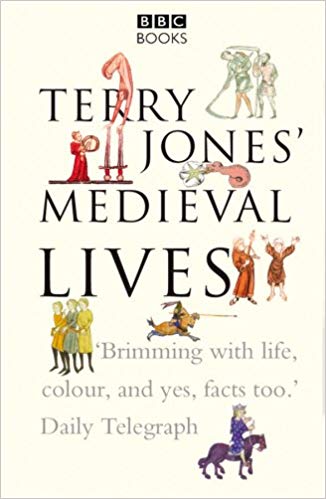
Terry Jones’ Medieval Lives

BBC Books (2007)

Book Review

The main purpose of this book is to challenge the prevailing notion that the Middle Ages was a period totally devoid of intellectual, technological, political or social advances. Focusing primarily on England, the authors cover the period between the 1066 Norman invasion and Henry VIII’s confiscation of the monasteries.

According to Jones and Ereira, among the substantive changes occurring in the Middle Ages are a massive increase in urbanization (in 1066 only 10% of the English population lived in towns or villages) and literacy (prior to 1066 only monks and priests were literate).

Prior to reading this book, I had no idea that despite taxes residents paid to the king and local monasteries, most medieval villages were totally self-governing. I was also surprised to learn that most medieval discoveries were made by monks, including Roger Bacon, a man who was 500 years ahead of Newton in discovering the refraction of white light into colors. Other medieval inventions include time standardization into a 24-hour day, the first mechanical clock, anesthesia, and strong acids, such as hydrochloric and sulfuric acid.

Women enjoyed more rights and had more careers open to them between 1066 and 1400 than they did 500 years later during the Victorian era.

For me, the most significant development in the period described was the codification of “common law” and “juries.” Initially juries were members of the local community required to assist in prosecuting criminals by compiling evidence. Henry I (1068-1135) was the first monarch to grant his magistrates the authority to judge civil matters in the name of the Crown. Prior to his reign, victims of kidnappings, rapes, thefts and murders (ie their surviving families) could only file suit in royal courts against perpetrators in courts run by royal magistrates.

Henry I also introduced trial by jury, in which local juries gained the authority to determine innocence or guilt, in addition to assembling evidence.

Secret Societies: How Oligarchs Rule the World


An Introduction to Skull and Bones and Other Secret Societies

Kris Millegan (2012)

Millegan is the founder of TrineDay, a small Oregon publishing house dedicated to publishing suppressed books that mainstream publishers refuse to print. Titles include John Potash’s Drugs as Weapons Against Us, Judith Vary Baker’s Me and Lee: How I Came to Know, Love and Lose Lee Harvey Oswald and Dr. Mary’s Monkey: How the Unsolved Murder of a Doctor, a Secret Laboratory in New Orleans and Cancer-Causing Monkey Viruses are Linked to Lee Harvey Oswald, the JFK Assassination and Emerging Global Epidemics

I suspect most people will balk at watching the entire video summarizing Millegan’s 30 years of research into what many commentators refer to as the Deep State. For this reason, I have highlighted the two best sections. I have also attached a reading list Millegan recommends for people seeking a deeper understanding of the oligarchs who rule the US via their secret societies.

00.21 For me the best part of the talk concerns Millegan’s father, who worked for the State Department, OSS and later for the CIA and military intelligence. Lloyd Millegan was in charge of the Philippines desk for OSS and in this role he trained Philippine guerillas resisting Japanese occupation and later spied on General Douglas MacCarthur. MacCarthur’s father MacCarthur was the first military governor of the American-occupied Philippines in 1900. Douglas, who was raised in the Philippines, was suspected of supporting the Philippines oligarchy, who were collaborating with the Japanese.

In 1956, the CIA transferred Lloyd to Vietnam, where he worked with Edward Lansdale, who orchestrated a shoot out between US and French intelligence over control of Southeast Asia’s opium trade.

Lloyd eventually left the CIA to become a junior high school teacher. He tried to explain some of his intelligence work to Kris when turned 20. Very little of it made sense until Kris began researching some of Lloyd’s more outlandish statements (eg that the Vietnam War was all about drugs, that secret societies were behind it, that communism was also a sham created by secret societies, that the Vietnam War was part of a conspiracy to opiate the entire baby boom generation, and that CIA analysts informed Eisenhower in 1954 that US victory in Vietnam was impossible).

1.00 The other really interesting part of the talk directly relates to the history of Skull and Bones, a secret undergraduate fraternity started at Yale University in 1832 by William Huntington Russell and Alfonso Taft. Russell was the head of the largest opium smuggling network in the world. Taft was attorney general in the corrupt Ulysses S Grant administration and would be sent to Philippines as the first civilian governor after Arthur MacArthur was dismissed. Teddy Roosevelt’s family owed their wealth to opium smuggling and Warren Delano, Franklin Delano Roosevelt’s grandfather was chief of operations for Russell & Co, a trading company that did big business in opium smuggling in Canton. Numerous members of the Rockefeller family belonged to Skull and Bones, both before and after they founded Standard Oil. Opium smuggling also enabled Skull and Bones members to gain control of the global steel industry and American railroads.

Millegan has a good summary of the corporate elite families who have belonged to Skull and Bones at Skull and Bones families

READING LIST

Perfectabilists: The 18th Century Bavarian Order of the Illuminati by Terry Melanson – According to Millegan, this is one of the few historically accurate books in English about the Illuminati. Most of the material available in English is disinformation.

Devious Elites by Sterling Seagrave

Gold Warriors: the Covert History of Yamashita’s Gold by Steling Seagrave – refers to gold Japanese looting during World War II and allegedly hid in caves in the Philippines, how Washington secretly recovered it to set up giant Cold War slush funds and manipulate foreign governments

America’s Secret Establishment: An Introduction to the Order of Skull and Bones by Anthony Sutton – describes the battle between French and US intelligence over Southeast Asia’s opium trade.

Unholy Alliance: A History of Nazi Involvement with the Occult by Peter Lavenda

Unfriendly Skies : Saga of Corruption by Rodney Stich, Former FAA investigator

Defrauding America: Trojan Horse Corruption by Rodney Stitch – about a “deep-cover CIA officer” assigned to a counter-intelligence unit, code-named Pegasus. This unit had tape-recordings of plans to assassinate Kennedy” from a tap on the phone of J. Edgar Hoover. The voices on the tapes belonged to were Nelson Rockefeller, Allen Dulles, Lyndon Johnson, George H W Bush and J Edgar Hoover.

Fleshing Out Skull and Bones: An Investigation into America’s Most Powerful Secret Society – collection of essays edited by Millegan


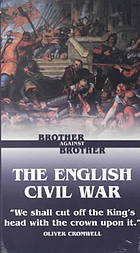
Stuff I Wish I Learned in School: The English Civil Wars

The English Civil Wars

Directed by Graham Holloway (1992)

Film Review

This documentary describes the three English civil wars that occurred during the 17th century. The first, between 1639-40, was the Bishops’ Wars; the second, between 1642-45, when Parliament’s forces seized London and King Charles I ruled from Oxford; and the third, between 1645-46, when Parliament held the King prisoner in London.

The film is very sketchy on the background of the Civil Wars, which Holloway blames on religious differences and the refusal of Charles I to recognize the power of Parliament. Under Charles I, the Church of England resumed many features of Catholic ritual that they had abandoned when Henry VIII split from Rome. This was especially unpopular in London where 50% of the population were Puritans.

When the King attempt to impose a new book of common prayer on Scotland, the Scottish army drove all the Church of England bishops out of Scotland, chasing the English army all the way to Newcastle.

Charles I was forced to recall Parliament (which he dissolved in 1628) to raise taxes to pay the debt he incurred for the Bishops’ Wars. Angered by his refusal to honor their sovereignty, Parliament refused. When the people of London rioted in support of Parliament, the King fled north to Hull to raise an army.

Most of the film focuses on the primitive weapons technology used in 17th century wars and the battlefield tactics employed as the King tried to recapture the south of England and Parliament’s army tried to wall the King’s troops up in the north. The musket, which was only recently introduced, took a minimum of 30 seconds to reload, with gunpowder and a musket ball, before being lighted with a match.

Oliver Cromwell, who would become Britain’s Lord Protector after the King was executed, first came to prominence in 1645 at the Battle of Glaston Moor. It was here his skilled leadership of Parliament’s cavalry won them their first decisive victories.

In the 1645-46 Civil Wars, Welsh and Irish troops supported the King and the Scottish military supported Parliament. During the two years he was a prisoner, Charles I secretly schemed with Scottish forces to invade England on his behalf. Following their defeat by Cromwell, this would lead to the King’s trial and execution for treason.

Although the film can’t be embedded for copyright reasons, it can be viewed free at the Christie Books site:

https://christiebooks.co.uk/anarchist_films/the-english-civil-wars/

*The Puritans were English Reformed Protestants in the 16th and 17th centuries who sought to “purify” the Church of England from its “Catholic” practices, maintaining that the Church of England was only partially reformed.